
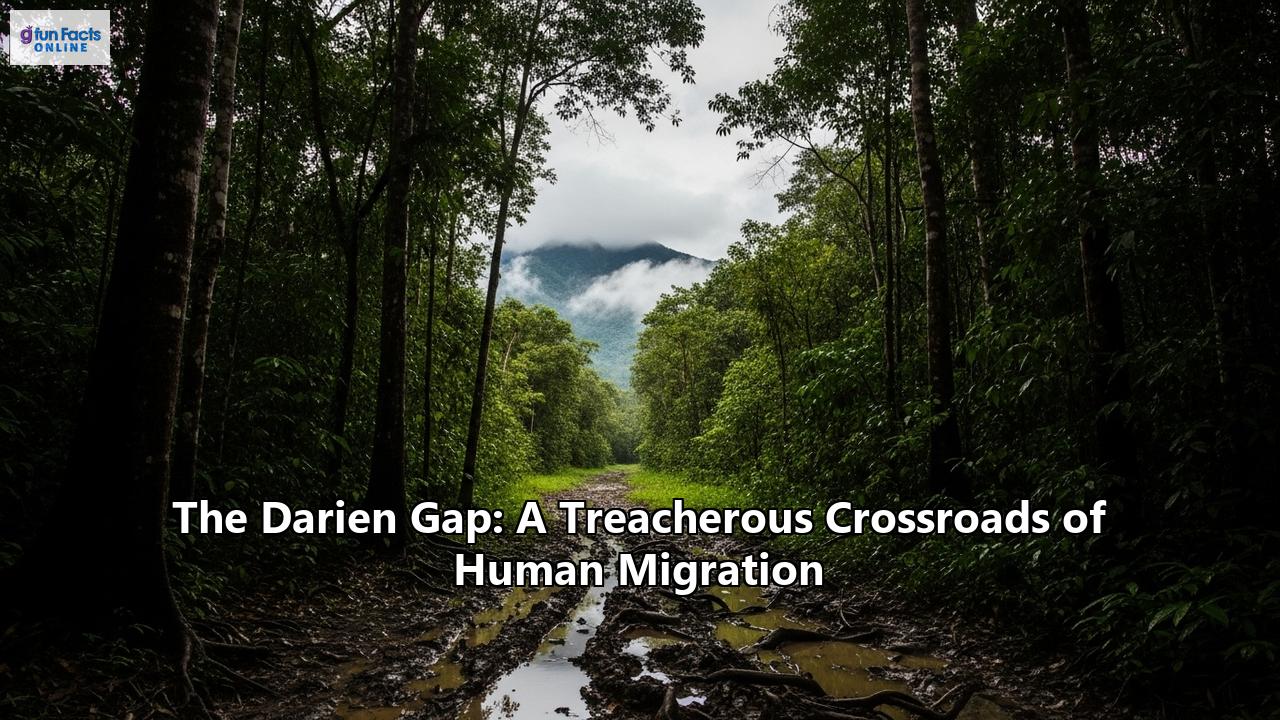
The Darien Gap: A Treacherous Crossroads of Human Migration
The Darien Gap, a name that resonates with a mixture of awe and trepidation, represents one of the planet's most formidable natural barriers. This untamed wilderness, a sprawling expanse of dense rainforests, steep mountains, and vast swamps, marks the only break in the Pan-American Highway, a network of roads that otherwise stretches from the icy reaches of Alaska to the southern tip of Argentina. For centuries, this roadless chasm straddling the border of Colombia and Panama has been a realm of myth, a testament to nature's raw power, and a land inhabited by resilient indigenous communities. In recent years, however, the Darien Gap has taken on a new and tragic identity: it has become a treacherous crossroads of human migration, a desperate artery for hundreds of thousands of people fleeing poverty, violence, and political turmoil in search of a better life.
This grueling passage, once considered impenetrable by all but the most intrepid explorers and the indigenous peoples who call it home, is now a well-trodden, albeit perilous, route for migrants from across the globe. The journey is a brutal testament to the desperation that fuels modern migration, a narrative written in the mud-caked boots of the weary, the whispered prayers of the fearful, and the silent graves of those who do not make it. This article delves into the multifaceted story of the Darien Gap, exploring its historical significance, the daunting geography that defines it, the human tide that now flows through it, the profound environmental consequences, and the complex political and humanitarian responses to this escalating crisis.
A History Etched in Ambition and Failure
The history of the Darien Gap is a long and storied one, marked by ambitious dreams of conquest and commerce that were ultimately swallowed by its unforgiving landscape. Long before it became a focal point of modern migration, it was a land that both beckoned and repelled outsiders.
The First Encounters: Spanish Conquistadors and Indigenous Resistance
The Darien was first settled by indigenous people more than 10,000 years ago, and by the time of European arrival, it was home to a significant population, including the ancestors of the present-day Guna, Wounaan, and Emberá peoples. The first European settlement on the American mainland, Santa María la Antigua del Darién, was founded in 1510 by Spanish conquistador Vasco Núñez de Balboa. This settlement served as a jungle training school for the conquistadors, a launching point for their expeditions into the interior in search of gold and glory. It was from here, in 1513, that Balboa, guided by local indigenous people, led an arduous expedition across the mountains and jungles to become the first European to lay eyes on the Pacific Ocean, which he named the "South Sea."
This monumental discovery cemented the strategic importance of the Isthmus of Panama, but it also ushered in a brutal era of conquest. The Spanish, in their insatiable quest for riches, met with fierce resistance from the indigenous populations. The term "Indios Bárbaros" was used by the Spanish to describe those who resisted conversion and colonization. The Cueva people, one of the primary groups in the region at the time of Spanish arrival, were driven to extinction by a combination of violent conquest, European diseases, and conflict with other indigenous groups. Spanish efforts to control the region were a continuous struggle against a hostile environment and the resilient indigenous communities who knew the land intimately. Colonial administration was a tenuous affair, often relying on fragile alliances with co-opted indigenous leaders.
Despite the violence and upheaval, the indigenous peoples of the Darien were not passive victims. They proved remarkably successful in resisting Spanish domination for extended periods. They formed alliances with European rivals of the Spanish, such as English and French buccaneers who used the Darien as a haven to launch attacks on Spanish interests. The very impenetrability that had frustrated the Spanish also provided a sanctuary for those who sought to escape their rule.
The Darien Scheme: A Scottish Dream Dashed
One of the most infamous chapters in the Darien's history is the ill-fated Darien Scheme of the late 1690s. This ambitious undertaking was the brainchild of Scottish financier William Paterson, a founder of the Bank of England, who envisioned a Scottish colony called "New Caledonia" on the Isthmus of Panama. The goal was to establish an overland trade route between the Atlantic and Pacific, a move that Paterson believed would elevate Scotland to a position of global economic power.
In 1698, the first of two expeditions set sail from Scotland, carrying around 1,200 settlers filled with hope and national pride. The Company of Scotland, which financed the venture, had raised a staggering sum equivalent to about a fifth of the wealth of Scotland at the time. However, the dream quickly turned into a nightmare. The settlers were ill-prepared for the harsh tropical environment. They struggled to cultivate their European crops, and their trade goods were of little interest to the local indigenous tribes. Disease, particularly malaria and dysentery, ran rampant, and the mortality rate soared.
To make matters worse, the scheme faced political opposition from England, which was wary of antagonizing Spain, who claimed the territory. The English colonies in the Americas were forbidden from trading with or assisting the Scottish settlers. A second expedition arrived in 1699, unaware of the dire state of the first colony, only to find themselves blockaded by a Spanish fleet. By 1700, the colony was abandoned, with only a small fraction of the 2,500 settlers ever making it back to Scotland. The Darien Scheme was a catastrophic failure, bankrupting the Scottish economy and playing a significant role in persuading Scotland to enter into the Act of Union with England in 1707.
The Unfinished Highway: A Dream Deferred
The idea of a land route connecting North and South America persisted. At the Fifth International Conference of American States in 1923, the concept of a Pan-American Highway was first proposed. In 1937, fourteen countries, including the United States, signed the Convention on the Pan-American Highway, committing to the construction of a road stretching from Alaska to Patagonia. Over the ensuing decades, the highway became a reality, with one glaring exception: the Darien Gap.
Efforts to bridge this final 66-mile (106 km) gap have been repeatedly thwarted by the formidable terrain and a confluence of political, environmental, and public health concerns. A major push to construct the "Darien Highway" in the 1970s, with significant funding from the United States, was ultimately halted due to protests from environmentalists and fears about the spread of foot-and-mouth disease from South America to the north. The indigenous communities of the Darien have also consistently protested the highway's construction, fearing the destruction of their ancestral lands and way of life.
The failure to complete the Pan-American Highway has had a profound impact on the region. On one hand, it has preserved the Darien as one of the most biodiverse regions on the planet. On the other, the absence of a formal road network has created a lawless and ungoverned space, a vacuum that has been filled by criminal organizations and now, a desperate stream of humanity.
The Human Tide: A Perilous Journey of Hope and Despair
In recent years, the Darien Gap has transformed from a sparsely populated wilderness into one of the world's most active and dangerous migration corridors. Once a journey undertaken by only a few thousand people annually, the number of migrants crossing the gap has surged to unprecedented levels. In 2021, over 133,000 people made the trek, a figure that nearly doubled to almost 250,000 in 2022. In 2023, a record-breaking 520,000 migrants crossed the Darien, a number that is more than 40 times the annual average between 2010 and 2020.
A Diverse and Desperate Population
The migrants who brave the Darien Gap come from a startling diversity of backgrounds, their journeys a testament to the global nature of modern displacement. Initially, the route was primarily used by Cubans and Haitians. Following the devastating 2010 earthquake in Haiti, tens of thousands of Haitians relocated to South American countries like Brazil and Chile, where they faced discrimination and economic hardship, eventually leading many to make the journey north through the Darien.
In recent years, the demographics of the migrant flow have shifted dramatically. Venezuelans now constitute the largest group, fleeing economic collapse, political repression, and a deep humanitarian crisis in their home country. In 2023, Venezuelans, along with Ecuadorians and Haitians, accounted for approximately 84% of all migrants crossing the Darien. The number of Ecuadorians has also surged as they escape growing insecurity and political instability.
Beyond the Americas, the Darien Gap has become a transit point for a significant number of "extracontinental" migrants from Asia and Africa. Since 2015, Panama has registered over 100,000 migrants from at least 60 African and Asian countries. In 2023, the most common extracontinental nationalities included Chinese, Indian, and Afghan migrants. The number of Chinese migrants, in particular, has seen a dramatic increase, with many fleeing China's strict COVID-19 lockdowns, increasingly repressive rule, and a faltering economy. They often fly to Ecuador, which does not require a visa for Chinese nationals, and then make their way to the Darien. Migrants from countries as far-flung as Angola, Bangladesh, and Pakistan have also been recorded making the perilous journey.
The Gauntlet of Dangers
The journey through the Darien Gap is a life-threatening ordeal, a gauntlet of natural and human-made dangers that pushes migrants to their physical and emotional limits. The trek, which can take anywhere from three to ten days or more, is a harrowing experience.
The natural environment itself is a formidable adversary. The Darien is one of the wettest regions in the world, and frequent, heavy rainfall can trigger deadly landslides and flash floods. The terrain is a punishing mix of steep mountains, which can reach heights of over 6,000 feet, and vast, muddy swamps. Temperatures often soar above 95°F (35°C) with high humidity, leading to severe dehydration. The jungle is also home to venomous snakes, crocodiles, and disease-carrying insects.
The human dangers are often even more terrifying. The absence of state authority has created a breeding ground for criminal organizations, including Colombia's Gulf Clan, a powerful drug cartel and neo-paramilitary group. These groups control the smuggling routes, extorting migrants for large sums of money to act as "guides." Robbery, kidnapping, and physical and sexual assault are rampant. Médecins Sans Frontières (MSF) treated 676 victims of sexual assault in the Darien in 2023 alone, and the actual number is believed to be much higher. The stories of survivors paint a horrifying picture of a lawless land where the most vulnerable are preyed upon with impunity.
The Toll on Human Life
The exact number of people who have died in the Darien Gap is unknown, as many deaths go unrecorded. Between 2014 and 2021, at least 253 migrants were reported dead or missing. Panamanian authorities found 124 bodies between January 2021 and April 2023. Drowning in the fast-flowing rivers is a leading cause of death, but many also succumb to disease, exposure, and violence. The jungle is littered with the bodies of those who did not make it, a grim testament to the high stakes of this desperate journey.
Children are among the most vulnerable. UNICEF has reported that one in five of the migrants crossing the Darien is a child, and in the first half of 2023, half of the children who made the crossing were under the age of five. These children are exposed to the same dangers as the adults, and many arrive in Panama malnourished, dehydrated, and traumatized.
The Environmental Scars of Migration
The massive and unrelenting flow of migrants through the Darien Gap is inflicting a heavy toll on one of the most biodiverse and pristine rainforests in the world. The Darien National Park, a UNESCO World Heritage site and the largest protected area in Central America, is under severe threat. The region is considered the most important "natural lung" in the Western Hemisphere after the Amazon.
The environmental damage is multifaceted. Migrants leave behind an enormous amount of waste, including plastic bottles, food containers, clothing, and human waste. It is estimated that each migrant leaves behind approximately 9 kilograms of solid waste. In 2023 alone, with over 500,000 migrants, this equates to millions of pounds of trash left in the jungle. This garbage pollutes the rivers and soil, contaminating the drinking water of the indigenous communities and harming the wildlife that depends on these delicate ecosystems. There are reports of up to 300,000 tons of garbage near the border of the national park.
The sheer number of people traversing the jungle also leads to deforestation. Migrants and their guides cut down undergrowth to widen the trails, and the constant foot traffic compacts the soil and damages vegetation. While large-scale deforestation is not yet visible from satellite imagery, the cumulative impact of hundreds of thousands of people moving through the forest is undeniable. There is also evidence of increased hunting of wildlife by migrants for subsistence.
The influx of people and the money associated with the migration trade are also disrupting the traditional ways of life of the indigenous communities. The local economy is shifting away from sustainable agriculture towards a migrant-driven service economy. This has led to concerns about the erosion of traditional knowledge and cultural practices. The pollution of the rivers, a vital source of life for these communities, is causing illness and forcing them to rely on imported, processed foods.
A Complex Web of Political and Humanitarian Responses
The escalating crisis in the Darien Gap has prompted a complex and often contradictory set of responses from national governments, international organizations, and local communities. The situation has become a high-stakes political issue, a humanitarian emergency, a criminal enterprise, and an environmental disaster, all rolled into one.
The Shifting Policies of Panama, Colombia, and the United States
The governments of Panama, Colombia, and the United States are the key state actors in the Darien crisis. Their policies have a direct impact on the flow of migrants and the conditions they face. In recent years, there has been a push towards stricter enforcement and deterrence.
In July 2024, the United States and Panama signed an agreement to curb the flow of migrants through the Darien Gap. Under this agreement, the US will provide funding for Panama to repatriate migrants who enter the country illegally. Panama's new president, José Raúl Mulino, has vowed to "close" the Darien Gap to irregular migration, citing the humanitarian and environmental crisis. In August 2024, Panama began deporting Colombian migrants with alleged criminal records under this new agreement.
These stricter policies have been met with criticism from humanitarian organizations, who argue that they do little to deter migration but significantly increase the risks and suffering of migrants. The tightening of immigration policies in other Central and South American countries has also been a major driver of the increase in Darien crossings, as it has closed off safer, legal pathways for migrants.
Colombia, as the primary departure point for migrants entering the Darien, also plays a crucial role. The country has been criticized for not doing enough to dismantle the criminal networks that profit from the migrant smuggling trade. However, the Colombian government has also called for a tripartite meeting with Panama and the United States to address the humanitarian situation.
The Vital Role of Humanitarian Organizations
In the face of government inaction or inadequate responses, a number of international and local humanitarian organizations have stepped in to provide life-saving assistance to migrants. Organizations like Médecins Sans Frontières (MSF), the International Organization for Migration (IOM), the United Nations High Commissioner for Refugees (UNHCR), and the Red Cross have established a presence in the Darien region, providing medical care, food, water, shelter, and psychosocial support to migrants who emerge from the jungle.
These organizations operate in a challenging and often dangerous environment. In March 2024, the Panamanian government suspended the humanitarian work of MSF in the Darien, accusing the organization of encouraging illegal migration by providing information to migrants. This move was widely condemned by the international community and highlighted the growing tensions between humanitarian imperatives and government policies of deterrence.
The humanitarian response is also severely underfunded. The United Nations and other NGOs have reported a significant funding gap for their operations in the region, which limits their ability to meet the overwhelming needs of the migrant population.
The Economic Double-Edged Sword for Local Communities
For the impoverished and historically neglected communities living on the fringes of the Darien Gap, the surge in migration has been a double-edged sword. The influx of hundreds of thousands of people in need of services has created a booming, albeit informal, economy.
In towns like Villa Caleta and Bajo Chiquito, indigenous residents have largely abandoned their traditional agricultural practices to work in the migrant trade. They provide boat transportation, food, water, and other supplies to migrants, earning significantly more than they ever could from farming. This new source of income has brought unprecedented wealth to some communities, allowing them to build new homes, install electricity, and invest in their children's education.
However, this newfound prosperity is precarious and comes at a cost. The dependence on the migrant economy has made these communities vulnerable to shifts in migration patterns and government policies. The recent crackdown on migration has led to a dramatic drop in the number of crossings, causing the local economy to crash and leaving many residents struggling to make a living. There are also concerns that the focus on the migrant trade is leading to the erosion of traditional culture and a growing dependence on imported goods.
Conclusion: A Crossroads of Crisis and a Call for a More Humane Future
The Darien Gap, a land of breathtaking beauty and terrifying danger, has become a microcosm of the complex and often brutal realities of 21st-century migration. It is a place where the desperation of those fleeing poverty and violence intersects with the cold calculus of international politics, where the resilience of the human spirit is tested against the unforgiving forces of nature, and where the pristine wilderness is being scarred by the footsteps of a desperate humanity.
The current approach, which has largely focused on deterrence and enforcement, has proven to be both ineffective and inhumane. It has not stopped the flow of migrants, but it has made their journey more perilous and has pushed them further into the hands of criminal organizations. A more comprehensive and humane approach is urgently needed, one that addresses the root causes of migration, expands legal pathways for asylum and refuge, and provides adequate protection and assistance to those who are forced to make this treacherous journey.
The future of the Darien Gap hangs in the balance. It can continue to be a symbol of a broken and reactive international migration system, a place where human suffering and environmental degradation go hand in hand. Or, it can become a catalyst for a new approach, one that recognizes the shared responsibility of the international community to protect the most vulnerable and to manage migration in a way that is safe, orderly, and respects the rights and dignity of all people. The choice we make will not only determine the fate of the hundreds of thousands who cross this perilous crossroads each year, but it will also be a testament to our own humanity.
Reference:
- https://www.wilsoncenter.org/article/through-darien-gap-new-path-chinese-asylum-seekers-united-states
- https://www.biography.com/history-culture/vasco-nunez-de-balboa
- https://www.emerald.com/insight/content/doi/10.1108/oxan-db290734/full/html
- https://www.google.com/search?q=time+in+CN
- https://www.csis.org/analysis/mind-darien-gap-migration-bottleneck-americas
- https://www.aljazeera.com/features/2024/3/19/how-migration-transformed-an-indigenous-town-in-panamas-darien-gap
- https://newsroompanama.com/2022/11/01/passage-of-migrants-causes-environmental-damage-to-national-park/
- https://www.history.com/articles/vasco-nunez-de-balboa
- https://americasquarterly.org/article/the-darien-gaps-fearsome-reputation-has-been-centuries-in-the-making/
- https://www.ebsco.com/research-starters/history/balboa-reaches-pacific-ocean
- https://muse.jhu.edu/article/12301
- https://en.wikipedia.org/wiki/Indios_B%C3%A1rbaros
- https://repository.brynmawr.edu/cgi/viewcontent.cgi?article=1013&context=history_pubs
- https://repository.brynmawr.edu/history_pubs/14/
- https://www.theguardian.com/world/2023/mar/09/growing-numbers-of-chinese-citizens-set-their-sights-on-the-us-via-the-deadly-darien-gap
- https://www.greaterbelize.com/us-and-panama-sign-deal-to-curb-migration-through-darien-gap/
- https://www.africanews.com/2021/02/11/hundreds-of-migrants-stranded-along-darien-gap-near-panama-s-border-with-colombia//
- https://exploration.marinersmuseum.org/subject/vasco-de-balboa/
- https://www.ohchr.org/en/stories/2025/05/monitoring-motion-migrants-darien-gap
- https://www.aljazeera.com/economy/2024/2/22/disillusioned-about-china-more-chinese-aim-for-us-via-risky-darien-gap
- https://www.thenewhumanitarian.org/maps-and-graphics/2024/01/15/darien-gap-migration-crisis-six-graphs-and-one-map
- https://www.migrationpolicy.org/article/darien-gap-migration-crossroads
- https://www.hrw.org/news/2023/10/10/how-treacherous-darien-gap-became-migration-crossroads-americas
- https://www.cfr.org/article/crossing-darien-gap-migrants-risk-death-journey-us
- https://www.latinamericareports.com/what-the-us-panama-agreement-over-the-darien-gap-means-for-colombia/9279/
- https://news.mongabay.com/2025/06/panama-boosts-protections-in-the-darien-gap-but-deforestation-threats-still-loom/
- https://globalconservation.org/news/global-conservations-work-in-the-darien-gap-panama
- https://www.theguardian.com/world/article/2024/jul/02/panama-to-shut-down-darien-gap-migrants-usa
- https://www.aljazeera.com/news/2024/8/20/panama-deports-29-colombian-migrants-from-darien-gap-under-us-deal
- https://www.refugeesinternational.org/reports-briefs/after-the-darien-aid-and-pathways-for-migrants-in-panama-and-costa-rica/
- https://www.padf.org/our-migration-response/supporting-migrants-in-the-darien/
- https://civil-protection-humanitarian-aid.ec.europa.eu/news-stories/stories/crossing-darien-gap-uncertain-journey-migrants-reaching-panama_en
- https://ticotimes.net/2024/03/11/panama-accuses-aid-groups-of-encouraging-illegal-migration-in-darien-gap
- https://newsroom.ap.org/detail/MigrationoncefueledaneconomicboomintheDarienGapNowthatlifelineisgone/e7f00c7f28fb4dc0aebe57dbedb8ae48/video
- https://apnews.com/article/migration-darien-gap-trump-panama-colombia-ba393b4cf8caecdcf24556f7f84be508
- https://san.com/cc/economic-bust-follows-drop-in-migration-through-darien-gap-ap/