
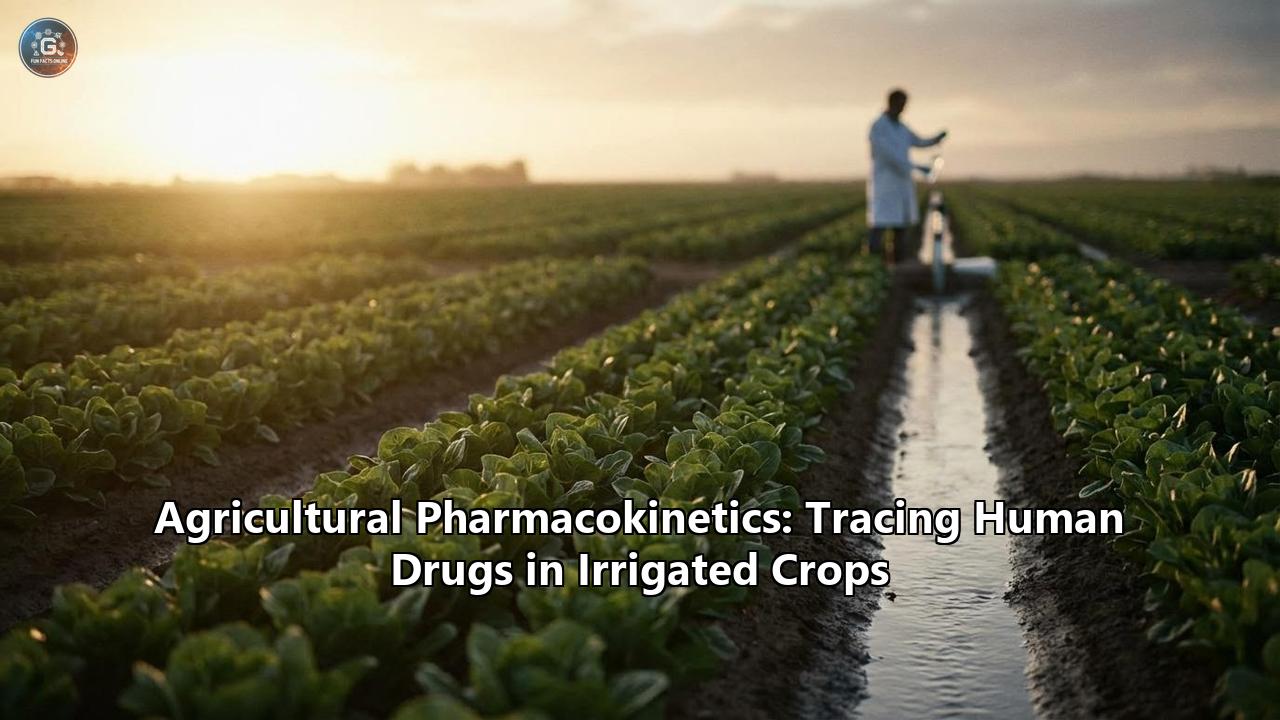
The global water crisis has forced a profound reimagining of agricultural practices. As freshwater aquifers run dry and erratic weather patterns disrupt historic rainfall, farmers worldwide have increasingly turned to an abundant, drought-resistant alternative: reclaimed wastewater. In arid regions—such as Israel, where over 60% of agricultural crops are grown using treated effluent, or in parts of California and Spain—wastewater reclamation is hailed as a triumph of modern engineering and resource conservation. However, this closed-loop water cycle has birthed a startling and invisible phenomenon. The water we flush down our drains is heavily laden with the chemical residue of modern human life, most notably prescription and over-the-counter pharmaceuticals.
These drugs, designed to be persistent in the human body, are remarkably adept at surviving municipal wastewater treatment plants. When this water is sprayed over fields of tomatoes, lettuce, and root vegetables, the crops do not merely act as passive recipients. They actively absorb, transport, and metabolize these human medications. This complex interaction has given rise to a novel and rapidly expanding scientific discipline: Agricultural Pharmacokinetics.
By applying the principles of human pharmacology—absorption, distribution, metabolism, and excretion (ADME)—to agronomy, scientists are tracing the hidden journey of pharmaceuticals from our medicine cabinets to the soil, up through the roots of crops, and ultimately back onto our dinner plates.
The Origins of the Chemical Harvest
To understand how human drugs end up in a salad bowl, one must trace the lifecycle of a pill. When a patient consumes a medication—be it an anticonvulsant, an antidepressant, a painkiller, or a course of antibiotics—the human body rarely utilizes 100% of the active pharmaceutical ingredient. A significant portion is excreted via urine and feces, either entirely unchanged or as biologically active metabolites.
This medicated waste flows into municipal sewage systems and arrives at wastewater treatment plants (WWTPs). Traditional WWTPs were engineered in the 20th century to manage organic matter, suspended solids, and pathogens. They were never designed to filter out complex, synthetic, micro-scale chemical compounds. Consequently, a vast array of "Compounds of Emerging Concern" (CECs) slips through the filtration screens, survives the aeration tanks, and defies chemical disinfection.
When this treated, nutrient-rich, but chemically tainted water is repurposed for agricultural irrigation, the soil becomes a repository for thousands of distinct pharmaceutical compounds. These include analgesics like ibuprofen and diclofenac, anticonvulsants like carbamazepine, psychiatric drugs like fluoxetine (Prozac), blood pressure medications, synthetic hormones from birth control pills, and broad-spectrum antibiotics. Once in the soil matrix, these compounds face a crossroads: they can bind to soil particles, be broken down by soil microbes, leach into the groundwater, or be taken up by the roots of thirsty crops.
The Mechanics of Plant Absorption
In human pharmacokinetics, absorption refers to how a drug enters the bloodstream. In agricultural pharmacokinetics, absorption is the process by which a drug breaches the protective barriers of a plant’s root system. Plants are essentially solar-powered hydraulic pumps; they draw water from the soil to facilitate nutrient uptake and drive photosynthesis. As water moves into the roots, it carries dissolved pharmaceutical hitchhikers with it.
The rate and extent of this absorption depend on a complex triad of factors: the physicochemical properties of the drug, the biological characteristics of the plant, and the environmental conditions of the soil.
First, the molecular weight and size of the drug dictate its mobility. Smaller molecules can easily slip through the pores of root cell walls. Second, the drug's lipophilicity—its affinity for fats versus water, measured by its octanol-water partition coefficient (Log Kow)—plays a critical role. Highly water-soluble (hydrophilic) drugs are easily swept up in the mass flow of water entering the roots. Conversely, highly fat-soluble (lipophilic) drugs tend to bind stubbornly to the organic matter in the soil or stick to the waxy exterior of the root epiderm, rarely penetrating deep into the plant’s vascular system. The "Goldilocks" zone for plant absorption belongs to moderately lipophilic compounds. These molecules are soluble enough to travel dissolved in soil water, yet fat-soluble enough to passively diffuse across the lipid bilayer of the plant's root cell membranes.
Soil pH also dramatically alters absorption. Many pharmaceuticals are ionizable; they can carry a positive or negative electrical charge depending on the acidity of the surrounding soil. Plant roots generally repel negatively charged molecules (anions) because the root cell walls themselves carry a negative charge. Therefore, a drug that is neutral or positively charged in a specific soil pH is far more likely to be absorbed than one that is negatively charged.
The Transpiration Stream: Distribution Within the Crop
Once a human drug crosses the root threshold, it enters the plant's vascular highway: the xylem. In this phase of agricultural pharmacokinetics—distribution—the drug is swept upward by the transpiration stream.
Transpiration is the process by which water evaporates from small pores, called stomata, on the underside of leaves. This evaporation creates a negative pressure that acts like a straw, pulling water (and dissolved drugs) up from the roots, through the stem, and into the canopy.
Because the transpiration stream flows strictly toward the areas of highest water loss, pharmaceutical compounds disproportionately accumulate in the leaves of plants. Recent research conducted at Johns Hopkins University demonstrated this phenomenon vividly. Scientists grew tomatoes, carrots, and lettuce in controlled chambers, irrigating them with water spiked with psychoactive medications like carbamazepine, lamotrigine, and fluoxetine. The researchers found that the leaves of the tomato plants contained over 200 times the concentration of pharmaceuticals compared to the actual tomato fruits. Similarly, carrot leaves held seven times the drug levels found in the edible orange taproots.
This distribution pattern has massive implications for agricultural planning and food safety. It suggests that crops where the leaf is the primary edible portion—such as spinach, lettuce, cabbage, and kale—pose a significantly higher risk of pharmaceutical accumulation than fruiting crops (like tomatoes, cucumbers, and peppers) or root crops (like carrots, radishes, and potatoes). In regions heavily reliant on reclaimed wastewater, agronomists are beginning to recommend that this water be restricted to orchards or fruiting vines, keeping it away from leafy greens destined for raw consumption.
The "Green Liver" Model: Plant Metabolism of Human Medicine
Perhaps the most fascinating aspect of agricultural pharmacokinetics is how plants react to the presence of human drugs. Plants do not have kidneys or an excretory system to flush out toxins. Instead, they rely on a highly evolved, localized detoxification mechanism to survive chemical exposure. Because this process biochemically mirrors the way the human liver metabolizes toxins, scientists refer to it as the "Green Liver" model.
When a plant detects a foreign chemical (a xenobiotic), it triggers a three-phase defense sequence:
Phase I: FunctionalizationJust as in the human liver, the first line of defense in a plant is driven by a family of enzymes known as Cytochrome P450s. These enzymes attack the pharmaceutical molecule, typically by adding an oxygen atom (hydroxylation) or removing an alkyl group. This modification makes the drug more reactive and slightly more water-soluble. For example, when a plant absorbs the painkiller diclofenac, its P450 enzymes will rapidly convert it into hydroxy-diclofenac.
Phase II: ConjugationThe plant then seeks to neutralize the newly reactive molecule. In Phase II, enzymes attach a large, bulky, water-soluble molecule—usually a sugar (like glucose) or a peptide (like glutathione)—to the Phase I metabolite. This process, known as conjugation, drastically increases the molecule's size and polarity. By attaching a sugar to the drug, the plant effectively "tags" the toxin, neutralizing its biological activity and preventing it from interfering with the plant's own cellular machinery.
Phase III: CompartmentationBecause the plant cannot urinate or sweat the neutralized drug out of its system, it must store it. In the final phase, molecular transporters pump the bulky, conjugated drug-sugar complex into the cell's vacuole (a large, fluid-filled storage sac) or embed it directly into the rigid cell wall. Here, the drug is permanently quarantined, locked away where it cannot harm the plant.
While the Green Liver model allows the crop to survive the chemical assault, it creates a hidden danger for human consumers. When we eat a piece of produce, we are not just ingesting the original, parent pharmaceutical. We are also eating an array of unknown, plant-modified metabolites. In some cases, human digestion can strip away the plant's protective sugar tag, reactivating the drug inside the human gut. Furthermore, standard laboratory tests designed to detect pharmaceuticals in food often look only for the parent compound, meaning the true load of plant-metabolized drugs in our food supply is likely vastly underestimated.
The Poster Child of Contamination: Carbamazepine
If there is a flagship compound that perfectly illustrates the mechanics and risks of agricultural pharmacokinetics, it is carbamazepine. Originally developed in the 1950s, carbamazepine is a globally prescribed anticonvulsant and mood-stabilizing drug used to treat epilepsy, bipolar disorder, and nerve pain.
Carbamazepine is uniquely problematic in the environment. It is highly resistant to biodegradation in both human bodies and wastewater treatment plants. Only about 7% of the drug is filtered out during traditional sewage treatment. Furthermore, its physicochemical properties—specifically its moderate lipophilicity and long environmental half-life (up to 328 days in soil)—make it perfectly suited for root absorption. Once in the soil, it defies microbial breakdown and is rapidly sucked up by the roots, riding the transpiration stream directly into the stems and leaves of crops.
The ubiquitous presence of carbamazepine in irrigated crops led to a landmark 2016 study by researchers at the Hadassah-Hebrew University in Jerusalem, published in Environmental Science & Technology. The researchers sought to prove, for the first time, whether humans could inadvertently dose themselves with pharmaceuticals simply by eating standard, market-grown vegetables.
The scientists organized a crossover dietary trial with 34 healthy adults who did not take any medications. For the first week, one group was fed a diet of fresh tomatoes, cucumbers, lettuce, and peppers exclusively irrigated with treated wastewater. The other group ate produce watered with pristine freshwater. After the first week, the groups switched diets. Throughout the experiment, the researchers monitored the participants' urine for traces of carbamazepine.
The results were paradigm-shifting. Prior to the study, some participants had low, baseline trace levels of the drug. However, after just one week of eating the wastewater-irrigated vegetables, 100% of the participants in that group showed a quantifiable, statistically significant spike in carbamazepine and its metabolites in their urine. When they were switched back to freshwater-irrigated produce, their urine levels rapidly dropped back to baseline.
This study unequivocally proved the existence of a continuous, closed-loop cycle of exposure—often colloquially referred to as the "pee-food-pee" cycle. A patient takes an epilepsy pill, excretes the excess, it travels through the sewers to a farm, a plant absorbs it, a healthy person eats the plant, and the healthy person then excretes the drug, starting the cycle anew.
While the levels of carbamazepine detected in the volunteers’ urine were roughly 10,000 times lower than a therapeutic clinical dose, the research confirmed that the agricultural transfer of human drugs is not just a theoretical laboratory concept; it is actively occurring in our food supply right now.
The Soil Microbiome and Agronomic Ripple Effects
The introduction of human pharmaceuticals into agricultural fields does not just affect the crops and the humans who eat them; it also fundamentally alters the ecological balance of the soil itself. A handful of healthy agricultural soil contains billions of microorganisms—bacteria, fungi, and archaea—that are essential for nutrient cycling, nitrogen fixation, and plant immunity.
When antibiotics, antifungals, and other potent medications continually rain down on these fields via irrigation water, the soil microbiome undergoes intense selective pressure. Broad-spectrum antibiotics, such as ciprofloxacin and sulfamethoxazole, can decimate beneficial bacterial populations in the soil. Even more alarmingly, the constant presence of sub-lethal concentrations of antibiotics creates the perfect breeding ground for Antimicrobial Resistance (AMR). Soil bacteria that survive the exposure mutate and share resistance genes with one another via horizontal gene transfer. These antibiotic-resistant "superbugs" can colonize the roots and surfaces of crops, potentially transferring resistant pathogens directly into the human food chain.
Other classes of drugs also disrupt the soil ecosystem. Research into the biodegradation of diclofenac (an anti-inflammatory) and triclocarban (an antibacterial agent) reveals that these chemicals force the soil microbiome to alter its metabolic pathways. While some microbes can successfully use diclofenac as a food source, breaking it down within days under aerobic conditions, other drugs like carbamazepine suppress microbial diversity and linger in the dirt for nearly a year, accumulating to toxic levels over successive growing seasons.
The crops themselves can also suffer from this chemical barrage. While plants possess the Green Liver mechanism to detoxify drugs, this process demands a massive amount of metabolic energy. Energy spent producing Cytochrome P450 enzymes and conjugating sugars is energy diverted away from growth, flowering, and fruiting. High concentrations of persistent drugs have been shown to induce phytotoxicity—stunting root growth, causing the yellowing of leaves (chlorosis), disrupting photosynthesis, and reducing overall crop yields. In a world facing unprecedented population growth and food security challenges, the unintended suppression of agricultural yields by our own medicinal waste is a pressing concern.
The Question of Chronic, Low-Dose Human Exposure
The discovery of human drugs in the edible tissues of plants inevitably leads to the most critical question: Is it dangerous to eat them?
Toxicologists and public health officials are quick to point out that acute poisoning from eating an irrigated carrot is practically impossible. As noted in the Hebrew University study and similar quantitative risk assessments, a person would have to eat hundreds of pounds of lettuce a day to ingest a full, therapeutic dose of a drug like carbamazepine or ibuprofen. From the perspective of acute toxicity, the risk to human health is generally considered negligible.
However, the framework of acute toxicity is ill-equipped to evaluate the reality of agricultural pharmacokinetics. The true threat lies in chronic, sub-therapeutic exposure. What happens to the human body when it is exposed to micro-doses of a complex cocktail of neurotoxins, hormones, and antibiotics every single day, from childhood through old age?
For certain populations, even micro-doses can be impactful.
- Pregnant Women and Fetuses: Many pharmaceuticals are known teratogens (compounds that cause birth defects). Fetal development is exquisitely sensitive to minute chemical disruptions, particularly from endocrine-disrupting compounds like synthetic estrogen from birth control pills, which are frequently found in irrigated crops.
- Allergic Individuals: Trace amounts of antibiotics, such as penicillin derivatives or sulfa drugs, sequestered in plant tissues could theoretically trigger hypersensitivity reactions in highly allergic individuals.
- The Cocktail Effect: In a clinical setting, doctors carefully monitor patients to prevent dangerous drug-drug interactions. But reclaimed wastewater contains a chaotic mixture of dozens of different pharmaceuticals. We currently have no toxicological models that can accurately predict the long-term health effects of continuously ingesting low doses of mixed antidepressants, blood pressure medications, and painkillers simultaneously.
Forging Solutions: Technology and Agronomy
Addressing the crisis of agricultural pharmacokinetics requires a multi-faceted approach, spanning from the municipal sewer to the farmer's field.
Advanced Wastewater Treatment:The most direct solution is to stop the drugs from reaching the fields in the first place. This requires upgrading municipal wastewater treatment plants from secondary or tertiary treatment to Advanced Oxidation Processes (AOPs). Technologies such as ozonation, UV-hydrogen peroxide treatment, and reverse osmosis (RO) can effectively break down or filter out almost all pharmaceutical compounds. However, these technologies are immensely expensive to install and require vast amounts of electricity to operate, making them economically unfeasible for many developing regions or cash-strapped municipalities.
Agronomic Interventions:Given that perfectly clean water is an economic luxury, farmers and regulators can use the principles of agricultural pharmacokinetics to manage the risk. By understanding where drugs accumulate, we can implement targeted irrigation policies. As research has proven that drugs like carbamazepine move with the transpiration stream to accumulate in leaves, reclaimed water should be banned for use on leafy greens (spinach, lettuce) and root vegetables that absorb the water directly into their edible flesh. Instead, reclaimed wastewater can be safely diverted to irrigate orchards (where the fruit is biologically isolated from the main transpiration flow) or non-food crops like cotton, biofuels, and ornamental flowers.
Breeding and Biotechnology:Looking to the future, plant geneticists are exploring ways to breed "low-uptake" crop varieties. By identifying the specific aquaporins (water channels) and root transporter proteins that inadvertently pull pharmaceuticals into the plant, scientists could use CRISPR gene-editing technology to modify these gateways, effectively locking drugs out of the root system without hindering the uptake of vital nutrients. Alternatively, crops could be engineered to hyper-express the enzymes of the Green Liver model, allowing them to completely obliterate pharmaceutical compounds into harmless base elements before they ever reach the edible leaves or fruits.
Soil Amendments and Precision Agriculture:Field management can also play a role. Adding biochar—a highly porous form of charcoal—to agricultural soils has shown immense promise. Biochar acts as a molecular sponge, aggressively binding to pharmaceutical compounds in the soil matrix and preventing them from becoming bioavailable to plant roots. When combined with precision irrigation systems, such as subsurface drip irrigation (which delivers water directly to the root zone, minimizing evaporation and excessive mass water flow), farmers can dramatically reduce the rate of drug uptake.
A New Era of Food Safety and Ecological Awareness
The revelation that our crops are silently absorbing our medicines is a humbling reminder of the inescapable interconnectedness of the global ecosystem. The boundaries we have drawn between human health, municipal infrastructure, and agricultural environments are entirely artificial. The chemicals we put into our bodies inevitably shape the earth that sustains us.
Agricultural pharmacokinetics bridges the gap between medicine and botany, illuminating a hidden cycle that will define the future of food safety. As climate change accelerates and the reliance on reclaimed wastewater transitions from an alternative practice to an absolute necessity, ignoring the chemical footprint of our water is no longer an option. Securing the integrity of our food supply will require unprecedented collaboration between pharmacologists, environmental engineers, agronomists, and policymakers. We must evolve our infrastructure, adapt our farming practices, and expand our understanding of plant biology to ensure that the produce we grow remains a source of nourishment, rather than a reflection of our collective medical history.
Reference:
- https://www.chromatographytoday.com/news/lc-ms/48/breaking-news/using-treated-wastewater-to-irrigate-crops-could-harm-human-health-says-study/39069
- https://www.sciencealert.com/prescription-drugs-end-up-in-our-crops-thanks-to-our-medicated-pee-new-study-finds
- https://scitechdaily.com/scientists-discover-where-drug-residues-end-up-inside-crops/
- https://ttu-ir.tdl.org/server/api/core/bitstreams/1cb7f150-f41d-4de0-806a-7aa39792d174/content
- https://pmc.ncbi.nlm.nih.gov/articles/PMC8023655/
- https://pubmed.ncbi.nlm.nih.gov/7894495/
- https://www.researchgate.net/publication/229525728_Uptake_and_Metabolism_of_Organic_Compounds_Green-Liver_Model
- https://www.mdpi.com/2223-7747/14/14/2165
- https://pubmed.ncbi.nlm.nih.gov/30021306/
- https://www.iflscience.com/using-wastewater-irrigate-crops-could-be-feeding-pharmaceutical-drug-cycle-35217
- https://www.researchgate.net/publication/325287144_Absorption_of_carbamazepine_and_diclofenac_in_hydroponically_cultivated_lettuces_and_human_health_risk_assessment
- https://www.sciencenews.org/article/crops-take-drugs-recycled-water