
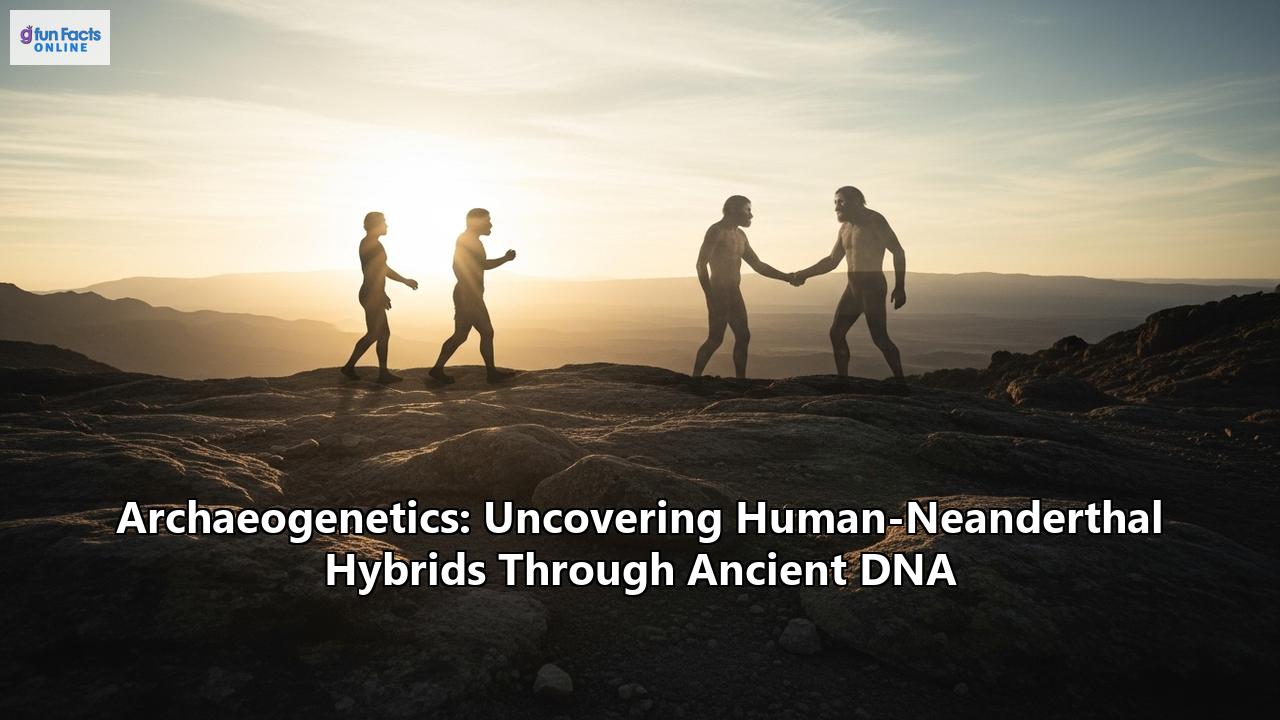
The Ghost in Our Genes: How Archaeogenetics Unearthed the Hidden Legacy of Human-Neanderthal Hybrids
In the intricate tapestry of human evolution, the threads of our ancestry have long been a subject of intense debate and speculation. For centuries, the fossilized remains of our ancient relatives, particularly the Neanderthals, were viewed as evolutionary dead ends—primitive beings who were simply outcompeted and replaced by the intellectually superior Homo sapiens. However, a revolutionary scientific discipline, archaeogenetics, has shattered this simplistic narrative, revealing a far more complex and intimate story of our shared past. By unlocking the secrets held within ancient DNA, scientists have not only resurrected the genomes of our extinct cousins but have also uncovered compelling evidence of interbreeding, revealing that the ghosts of these ancient hominins live on within the very fabric of our being. This is the story of how cutting-edge technology, painstaking research, and a few precious fragments of bone have rewritten the history of our species, unmasking the human-Neanderthal hybrids that walk among us today.
The Dawn of a New Science: Reading the Blueprints of the Past
The journey into the genetic history of ancient humans was once considered the stuff of science fiction. DNA, the molecule of life, is remarkably fragile and begins to degrade almost immediately after an organism's death. Over thousands of years, it breaks down into tiny, fragmented pieces, often swamped by the genetic material of bacteria and fungi that colonize the remains. For decades, these technical hurdles seemed insurmountable.
The origins of archaeogenetics can be traced back to the study of human blood groups in the mid-20th century, which provided early hints about the relationships between different ethnic and linguistic groups. However, the true revolution began in the 1980s with the invention of the Polymerase Chain Reaction (PCR). This groundbreaking technique allowed scientists to amplify minute quantities of DNA, making it possible to study the scant genetic material that survived in ancient remains.
One of the pioneers in this nascent field was the Swedish biologist Svante Pääbo. In 1985, he made headlines by sequencing DNA from a 2,400-year-old Egyptian mummy, demonstrating that genetic information could indeed be retrieved from ancient tissues. This early success, though fraught with challenges of contamination, laid the groundwork for decades of research that would push the boundaries of what was thought possible.
The initial focus of ancient DNA research was on mitochondrial DNA (mtDNA). Unlike the nuclear DNA housed in the cell's nucleus, which contains the vast majority of our genetic code, mtDNA is a small, circular genome found in the mitochondria—the powerhouses of the cell. Crucially, each cell contains thousands of copies of mtDNA, significantly increasing the chances of its survival over millennia.
In 1997, while at the University of Munich, Pääbo and his team achieved a major breakthrough by sequencing mtDNA from the original Neanderthal specimen found in Germany's Neander Valley in 1856. The results were tantalizing: the Neanderthal mtDNA was distinct from that of any modern human, suggesting that the two lineages had diverged long ago. This finding, while monumental, seemed to support the "out of Africa with replacement" model, which posited that modern humans spread out of Africa and completely replaced archaic populations like the Neanderthals without any significant interbreeding. For a time, it seemed that our connection to Neanderthals was one of cousins, not of direct ancestors. However, the story was far from over.
The Neanderthal Genome Project: A Revelatory Undertaking
The limitations of mtDNA, which is inherited solely from the mother and represents only a tiny fraction of an individual's genetic makeup, meant that it could not definitively rule out the possibility of interbreeding. To truly understand the relationship between humans and Neanderthals, scientists needed to sequence the entire nuclear genome—a far more daunting task.
In 2006, Svante Pääbo, now at the newly founded Max Planck Institute for Evolutionary Anthropology in Leipzig, Germany, initiated the Neanderthal Genome Project. This ambitious endeavor, a collaboration with the biotechnology company 454 Life Sciences, aimed to do the impossible: reconstruct the complete genetic sequence of a Neanderthal from fragments of ancient bone.
The challenges were immense. The team had to develop new, highly sensitive methods to extract and sequence the degraded DNA while preventing contamination from modern human DNA, which is ubiquitous in laboratory environments. They sourced their primary samples from the Vindija Cave in Croatia, where exceptionally well-preserved Neanderthal bones, dating back around 38,000 years, had been discovered.
After years of meticulous work, the team published a draft of the Neanderthal genome in 2010. The findings, published in the journal Science, were nothing short of revolutionary. When compared to the genomes of modern humans from different parts of the world, a clear pattern emerged. People of non-African descent—Europeans, Asians, and people from the Americas and Oceania—all carried a small but significant percentage of Neanderthal DNA, typically ranging from 1% to 4%. Indigenous African populations, however, had little to no Neanderthal DNA.
The conclusion was inescapable: modern humans and Neanderthals had interbred. The most likely scenario was that as Homo sapiens migrated out of Africa around 60,000 to 80,000 years ago, they encountered and mixed with Neanderthal populations in the Middle East. These early human-Neanderthal hybrids then continued to spread across the globe, carrying with them the genetic legacy of this ancient encounter. The "replacement" model was overturned in favor of a more nuanced "leaky replacement" model, where interbreeding, though perhaps not rampant, had clearly occurred.
Subsequent research, including the sequencing of a high-quality Neanderthal genome from a 50,000-year-old toe bone found in the Altai Mountains of Siberia in 2013, has further refined our understanding of these interactions. We now know that the human and Neanderthal lineages diverged around 550,000 to 760,000 years ago, but their paths would cross again in a way that left a lasting imprint on our species.
The Denisovans: A Ghost Lineage Revealed by DNA Alone
The technological advancements born out of the Neanderthal Genome Project soon led to another astonishing discovery, one that introduced a new and mysterious player to the stage of human evolution. The setting was Denisova Cave, a remote rock shelter in the Altai Mountains of Siberia that had been occupied by various hominins over hundreds of thousands of years.
In 2008, Russian archaeologists unearthed a tiny fragment of a pinky finger bone. It was too small to be identified based on its morphology, so it was sent to Svante Pääbo's lab in Leipzig for genetic analysis. What the team found was astounding. The mtDNA from the bone was unlike that of any known Neanderthal or modern human. It belonged to a previously unknown lineage of archaic humans. They were named the Denisovans, after the cave where they were discovered.
The subsequent sequencing of the Denisovan nuclear genome revealed another layer of complexity in our ancestral history. Not only had Denisovans interbred with Neanderthals, but they had also contributed to the gene pool of modern humans. Traces of Denisovan DNA are found in present-day populations, particularly in Melanesians, who carry up to 5-6% Denisovan ancestry. This suggested that as modern humans spread eastward across Asia, they encountered and interbred with Denisovan populations.
Denisova Cave, it turned out, was a remarkable nexus of hominin interaction. Over its long history, it had been home to Neanderthals, Denisovans, and later, modern humans. The genetic evidence painted a picture of a world where different human groups coexisted and occasionally interacted, their encounters leaving a tangled web of genetic connections that scientists are still working to unravel.
Case Studies in Hybridization: Meeting the Ancients
The statistical evidence for interbreeding found in the genomes of living people was compelling, but the discovery of actual ancient individuals with mixed ancestry brought the reality of these encounters into sharp focus. Several key fossil finds have provided us with a direct glimpse into the lives of human-Neanderthal hybrids and their kin.
Denny: The First-Generation Hybrid
Perhaps the most extraordinary discovery to come out of Denisova Cave was the analysis of a small bone fragment, designated "Denisova 11" and affectionately nicknamed "Denny". Found in 2012, the bone belonged to a girl who was at least 13 years old when she died around 90,000 years ago.
When Viviane Slon and Svante Pääbo's team analyzed her genome, they were stunned. Denny was a first-generation hybrid: her mother was a Neanderthal, and her father was a Denisovan. This was the first time scientists had found the direct offspring of two different archaic human groups. The finding was a testament to the power of archaeogenetics, a discovery that would have been impossible without the ability to sequence ancient DNA.
Denny's genome also held another surprise. Her Denisovan father had at least one Neanderthal ancestor further back in his family tree. This suggested that interbreeding between Neanderthals and Denisovans was not a one-off event, but may have occurred more frequently when the two groups came into contact.
The Lapedo Child: A Mosaic of Traits
Long before the advent of paleogenomics, a discovery in Portugal sparked a fierce debate about the possibility of human-Neanderthal hybridization. In 1998, in the Lapedo Valley, archaeologists unearthed the nearly complete skeleton of a four-year-old child who had been ritually buried around 28,000 years ago.
The "Lapedo Child" exhibited a curious mosaic of features. Its chin and inner ear were similar to those of modern humans, but its robust build and the proportions of its lower limbs were distinctly Neanderthal-like. The discovery ignited a controversy, with some researchers arguing that the child was clear evidence of interbreeding, while others maintained that it was simply a stocky modern human.
The debate raged for years, and while ancient DNA has not yet been successfully recovered from the remains, the growing body of genetic evidence for interbreeding has lent new weight to the initial interpretation. Recent advances in radiocarbon dating have also refined the timeline of the burial, confirming its age and placing it in a period when modern humans with Neanderthal ancestry were known to be in Europe. The Lapedo Child remains a powerful, albeit debated, symbol of a shared human-Neanderthal past.
Oase 1: A Recent Neanderthal Ancestor in Romania
Another crucial piece of the puzzle came from a cave in southwestern Romania called Peștera cu Oase ("The Cave with Bones"). In 2002, a 40,000-year-old jawbone, known as "Oase 1," was discovered. Morphologically, it showed a combination of modern human and archaic traits.
In 2015, genetic analysis of the jawbone revealed that the Oase 1 individual had a significant amount of Neanderthal DNA—between 6% and 9% of its genome. The segments of Neanderthal DNA were unusually long, indicating that the interbreeding event had occurred very recently in its family history. Scientists calculated that Oase 1 had a Neanderthal ancestor just four to six generations back.
This remarkable finding proved that interbreeding was not limited to the Middle East tens of thousands of years earlier. It had also occurred in Europe, and much more recently than previously thought. Interestingly, the Oase 1 individual does not appear to have any direct descendants in modern European populations, suggesting that he may have been part of a pioneering group of modern humans who interacted with Neanderthals but whose lineage eventually died out.
The Neanderthal Within: A Lasting Genetic Legacy
The discovery that many of us carry Neanderthal DNA has opened up a new frontier of research: understanding the functional significance of this ancient genetic inheritance. What traits did we inherit from our Neanderthal cousins, and how do they affect us today? The answers are complex, revealing a mixed bag of advantages and disadvantages.
When modern humans first migrated out of Africa, they encountered new environments, new pathogens, and new dietary challenges. Neanderthals, having lived in Eurasia for hundreds of thousands of years, were already well-adapted to these conditions. Interbreeding with them may have provided a crucial adaptive advantage for the newcomers.
Some of the most significant contributions from Neanderthals are found in genes related to our immune system. Modern humans inherited variants of Toll-like receptors from Neanderthals, which play a key role in the body's first line of defense against pathogens. These genes may have helped modern humans fight off new diseases they encountered in Europe and Asia. However, this heightened immune response may also be a double-edged sword, as some of these same gene variants are associated with an increased risk of allergies.
Neanderthal DNA has also left its mark on our skin and hair. Gene variants affecting keratin, a protein that makes up our skin, hair, and nails, were passed down from Neanderthals. These may have helped our ancestors adapt to the different levels of ultraviolet radiation found outside of Africa. However, some of these variants are also linked to a higher risk of developing sun-induced skin lesions and an increased sensitivity to sunlight.
The legacy of Neanderthal DNA extends to a wide range of other traits and health conditions. Studies have linked Neanderthal gene variants to:
- COVID-19: A major genetic risk factor for severe COVID-19 is inherited from a Neanderthal DNA segment on chromosome 3.
- Chronic Diseases: Neanderthal variants have been associated with an increased risk for conditions like type 2 diabetes, Crohn's disease, and lupus.
- Blood Clotting: A Neanderthal variant that increases blood coagulation may have been beneficial for our ancestors in quickly sealing wounds, but in modern society, it increases the risk of stroke and pulmonary embolism.
- Neurological and Psychiatric Traits: Snippets of Neanderthal DNA have been linked to an increased risk for depression and nicotine addiction.
It is important to note that these are associations, not deterministic outcomes. Having a particular Neanderthal gene variant does not mean an individual will definitely develop a certain condition. Our health is a complex interplay of genetics, environment, and lifestyle. Nevertheless, it is clear that our ancient encounters with Neanderthals have had a subtle but significant and lasting impact on human biology.
Unanswered Questions and the Future of Archaeogenetics
The field of archaeogenetics has fundamentally reshaped our understanding of human origins, but it has also opened up a host of new questions. While we now know that interbreeding occurred, the social and cultural dynamics of these interactions remain largely a mystery. Were these encounters peaceful exchanges or violent conflicts? How were hybrid individuals and their offspring treated within their respective societies?
The archaeological record provides some tantalizing clues. In some regions of France and Spain, it appears that modern humans and Neanderthals may have coexisted for as long as 2,900 years, potentially sharing ideas and tool-making techniques. The careful burial of the Lapedo Child, stained with ochre and accompanied by pierced shells, suggests a level of symbolic behavior and care that transcends species boundaries.
The future of archaeogenetics promises even more incredible discoveries. As techniques for ancient DNA extraction and sequencing continue to improve, scientists will be able to analyze older and more degraded samples, potentially uncovering the genomes of even more ancient hominins. Research is also shifting from analyzing single individuals to studying population-level genetic changes over time, which will provide a more detailed picture of human migrations, adaptations, and interactions.
The story of human-Neanderthal hybrids is a powerful reminder that our past is not a simple, linear progression, but a rich and tangled web of connections. The Neanderthals did not simply vanish; a part of them lives on in us. Through the remarkable lens of archaeogenetics, we are not only learning more about them, but we are also gaining a deeper and more profound understanding of ourselves. The ghosts in our genes have a story to tell, and we are finally beginning to listen.
Reference:
- https://pmc.ncbi.nlm.nih.gov/articles/PMC4537386/
- https://pmc.ncbi.nlm.nih.gov/articles/PMC9956214/
- https://dergipark.org.tr/en/download/article-file/1489695
- https://pmc.ncbi.nlm.nih.gov/articles/PMC10078171/
- https://www.nobelprize.org/prizes/medicine/2022/press-release/
- https://www.mpg.de/13894984/neandertal-genome-project
- https://en.wikipedia.org/wiki/Neanderthal_genome_project
- https://www.tandfonline.com/doi/full/10.2144/btn-2022-0121
- https://www.genome.gov/27539119/2010-release-complete-neanderthal-genome-sequenced
- https://news.harvard.edu/gazette/story/2014/01/neanderthals-dna-legacy-linked-to-modern-ailments/
- https://en.wikipedia.org/wiki/Denny_(hybrid_hominin))
- https://english.cas.cn/Special_Reports/fqm/news/201507/t20150731_151007.shtml
- https://www.mpg.de/7666848/neandertal-genome-project
- https://www.iflscience.com/humans-but-not-quite-denisova-cave-shows-the-strange-backstory-of-us-68425
- https://leakeyfoundation.org/new-studies-denisova-cave/
- https://www.msichicago.org/science-at-home/science-news/century-of-science/the-human-story
- https://www.the-scientist.com/svante-p-bo-awarded-nobel-for-paleogenomics-70579
- https://www.uow.edu.au/media/2021/dna-from-sediment-reveals-epic-history-of-denisova-cave.php
- https://australian.museum/learn/science/human-evolution/the-denisovans/
- https://www.iflscience.com/meet-denny-the-only-human-hybrid-remains-ever-unearthed-71239
- https://www.sciencefocus.com/the-human-body/ancient-human-hybrid-unearthed-in-siberian-cave
- https://www.ancient-origins.net/human-origins-science/lapedo-child-00903
- https://dailygalaxy.com/2025/03/scientists-thought-neanderthals-extinct/
- https://www.anthropology.net/p/the-lapedo-child-a-28000-year-old
- https://www.popsci.com/science/lapedo-child-age/
- https://en.wikipedia.org/wiki/Interbreeding_between_archaic_and_modern_humans
- https://en.wikipedia.org/wiki/Pe%C8%99tera_cu_Oase
- https://dash.harvard.edu/bitstreams/7312037d-c516-6bd4-e053-0100007fdf3b/download
- https://www.cbsnews.com/news/neanderthal-dna-affects-health-of-modern-humans/
- https://www.livescience.com/health/genetics/10-unexpected-ways-neanderthal-dna-affects-our-health
- https://news.vanderbilt.edu/2016/02/11/neanderthal-dna-has-subtle-but-significant-impact-on-human-traits/
- https://news.feinberg.northwestern.edu/2016/02/12/inherited-neandertal-dna-influences-human-disease-risk-today/
- https://www.discovermagazine.com/the-sciences/modern-humans-and-neanderthals-may-have-cohabitated-for-2-900-years
- https://www.sci.news/othersciences/anthropology/neanderthals-homo-sapiens-co-existence-11292.html