
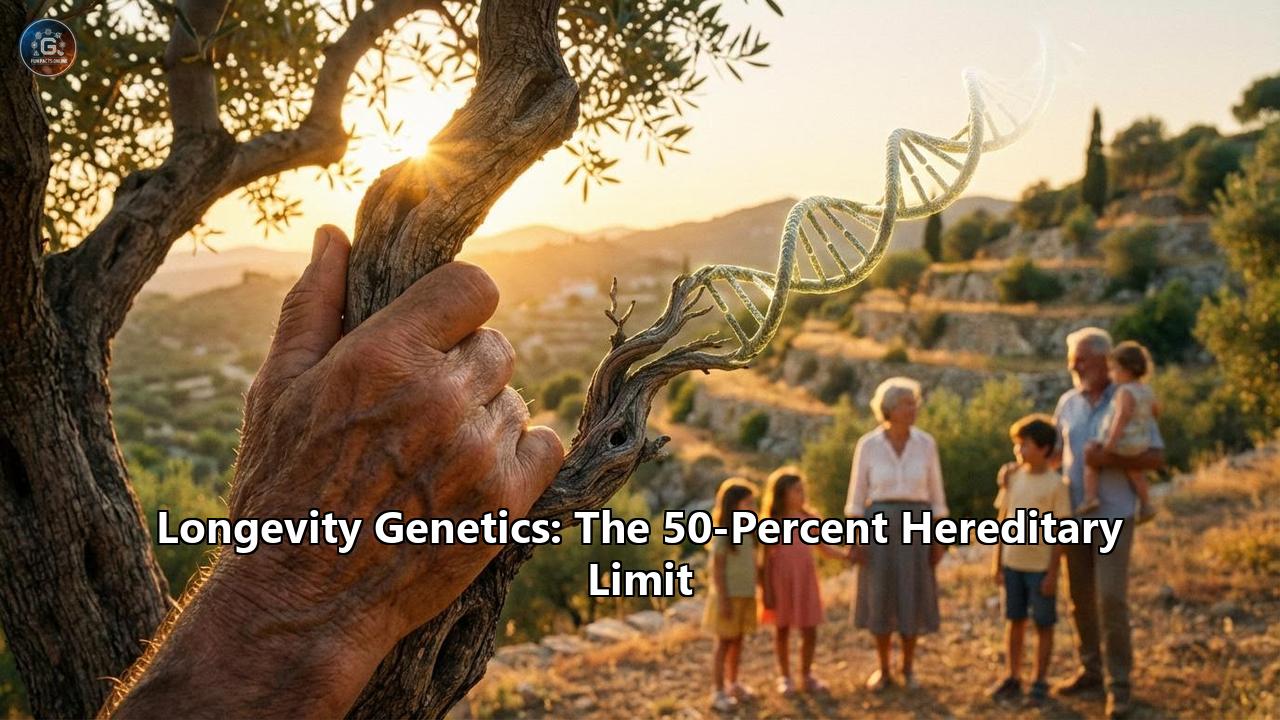
For decades, humanity’s quest to understand the biology of aging was trapped in a statistical paradox. If you looked at the centenarians of Okinawa or the rugged shepherds of Sardinia, long life seemed to run in families, whispering of a powerful genetic blueprint. Yet, when geneticists actually crunched the numbers from massive population databases—such as a landmark 2018 analysis of hundreds of millions of Ancestry.com family trees—they arrived at a surprisingly bleak conclusion: genetics appeared to account for a meager 7% to 10% of human lifespan. For a while, the scientific consensus was settled. Your DNA was not your destiny; it was barely a suggestion.
But science, much like the human body, is constantly evolving. In a monumental paradigm shift emerging from recent computational biology and genetic modeling in 2025 and 2026, researchers have completely upended the old dogma. By painstakingly separating the "noise" of environmental accidents from the "signal" of biological aging, scientists have revealed that the intrinsic heritability of human lifespan is actually roughly 50%.
This revelation has birthed what gerontologists now call the 50-Percent Hereditary Limit. It is a beautifully balanced biological equation: half of your aging trajectory is hardwired into your genetic code, written in the ancestral alleles you inherited. The other half is governed by epigenetics, environment, lifestyle, and sheer luck.
Understanding this 50/50 split is the ultimate key to unlocking human longevity. If we want to extend not just our lifespan, but our "healthspan"—the years we spend free of chronic disease—we must understand both the genetic hardware we are born with and the epigenetic software we program every single day through our choices.
The Flaw in the Old Dogma: Intrinsic vs. Extrinsic Mortality
To understand how scientists "lost" and then "found" the genetic basis of longevity, we have to look at how humans die. Historically, longevity studies suffered from a massive confounding variable: the failure to distinguish between extrinsic and intrinsic mortality.
Extrinsic mortality refers to deaths caused by external environmental factors. This includes fatal accidents, homicides, famines, and infectious diseases like cholera or tuberculosis. If a person born in 1850 possessed the perfect genetic code for longevity—a biological engine capable of humming along for 110 years—but died of typhoid fever at age 32, early demographic models simply recorded a short lifespan. Intrinsic mortality, on the other hand, refers to the physiological deterioration of the body from within. It is the biological clock ticking down. It encompasses cellular senescence, telomere attrition, DNA damage accumulation, and age-related chronic conditions like cardiovascular disease, neurodegeneration, and metabolic decline.When researchers from the Weizmann Institute of Science and the Karolinska Institute re-analyzed massive twin registries from Sweden, Denmark, and the U.S., they used advanced mathematical modeling to strip away extrinsic mortality. They set a "cutoff age" of 15—the point at which intrinsic mortality begins its slow, post-pubertal climb—and mathematically zeroed out deaths from external hazards.
The results were staggering. Once the statistical noise of accidents and historical infections was removed, the correlation of lifespans among identical twins skyrocketed. The heritability of intrinsic lifespan (HIL) adjusted to approximately 54%. This aligns perfectly with the heritability of lifespan observed in laboratory mice and mirrors the genetic weight of most other complex human physiological traits, such as height or psychiatric predisposition.
The implications are profound: genes explain the majority of the variation in our baseline biological aging rate. However, the 50-percent limit also serves as a stark warning. You can possess the greatest longevity genes in human history, but a toxic environment, chronic stress, or a sedentary lifestyle can easily override your biological advantages.
The Genetic Blueprint: The Heavyweights of Longevity
If 50% of our lifespan potential is dictated by our DNA, what exactly is written in that code? Over the last two decades, genome-wide association studies (GWAS) have hunted for the genetic variants that distinguish centenarians (those who live to 100) and supercentenarians (those who live past 110) from the rest of the population.
What they found was not a single "fountain of youth" gene, but rather a complex orchestra of alleles governing metabolism, cellular repair, and cardiovascular resilience.
FOXO3: The Master Regulator of Resilience
If there is a superstar in the realm of longevity genetics, it is the FOXO3 gene. Present across the evolutionary tree from the seemingly immortal Hydra (a freshwater polyp that does not undergo senescence) to microscopic roundworms, to human supercentenarians, the FOXO (Forkhead box O) family of transcription factors acts as the ultimate cellular defense system.
FOXO3 proteins are cellular sentinels. Under normal, comfortable conditions, they remain relatively quiet. But when a cell experiences stress—such as nutrient deprivation, oxidative damage, or DNA breaks—FOXO3 springs into action. It translocates into the cell nucleus and acts as a master switch, turning on a cascade of protective genes.
Individuals who carry a specific variant of this gene (particularly the G allele at the rs2802292 SNP) exhibit a vastly increased probability of living past 95. But what exactly is FOXO3 doing?
- Autophagy Activation: FOXO3 triggers autophagy, the cellular "pac-man" process that clears out misfolded proteins and dysfunctional organelles. This prevents the toxic buildup of cellular garbage that leads to neurodegenerative diseases like Alzheimer's and Parkinson's.
- Antioxidant Defense: It upregulates the production of endogenous antioxidants, such as superoxide dismutase (SOD) and catalase, neutralizing the reactive oxygen species that erode our DNA.
- Stem Cell Maintenance: As we age, our stem cell pools become exhausted, leading to tissue decay. FOXO3 is critical for maintaining the regenerative capacity of adult stem cells, particularly in the blood and cardiovascular system.
APOE: The Double-Edged Sword of Aging
While FOXO3 is protective, the APOE (Apolipoprotein E) gene is highly predictive of age-related frailty. The APOE gene primarily regulates lipid (fat) metabolism and cholesterol transport in the bloodstream and the brain. It comes in three common variants: E2, E3, and E4.
- APOE4 (The Frailty Allele): Carrying one or two copies of the APOE4 variant is the strongest known genetic risk factor for late-onset Alzheimer’s disease and a significant driver of cardiovascular disease. In demographic studies, the prevalence of APOE4 drops off a cliff in populations over the age of 85, simply because carriers experience much higher mortality rates in their 70s and early 80s.
- APOE3 (The Neutral Allele): The most common variant in the human population, serving as the standard baseline for aging risk.
- APOE2 (The Longevity Allele): This rare variant is fiercely protective. Centenarians are highly enriched with the APOE2 allele. Recent studies have shown that APOE2 provides immense longevity benefits completely independent of its protection against Alzheimer's. It promotes robust lipid clearance, preserves physical activity levels in deep old age, and radically reduces the risk of cardiovascular mortality.
The Sirtuin Family (SIRT1-7): The Epigenetic Bridge
The Sirtuins are a family of NAD+-dependent deacetylases that act as the crucial bridge between our genetic blueprint and our lifestyle choices. Of the seven mammalian sirtuins, SIRT1 and SIRT6 are the most heavily implicated in longevity.
Sirtuins function as metabolic sensors. When energy is scarce—such as during fasting or rigorous exercise—cellular levels of a molecule called NAD+ (Nicotinamide adenine dinucleotide) rise. This surge in NAD+ acts as the fuel that activates SIRT1. Once active, SIRT1 removes acetyl groups from histones (the spools around which DNA is wrapped), effectively silencing certain genes while activating repair pathways.
SIRT1 essentially tells the body: "Times are tough. Stop spending energy on rapid growth and reproduction, and divert all resources to cellular repair and survival." It decreases systemic inflammation by suppressing NF-κB, stimulates mitochondrial biogenesis, and, importantly, interacts directly with FOXO3 to enhance oxidative stress resistance. While genetic variants in the SIRT genes themselves contribute to the 50% hereditary limit, their true power lies in how easily they can be manipulated by our behavior.
CETP and the IGF-1 Axis
Other notable players in the 50% genetic blueprint include the CETP (Cholesteryl ester transfer protein) gene, which regulates the size of cholesterol particles. Favorable variants result in exceptionally large HDL and LDL particles, which are less likely to lodge in arterial walls, granting carriers virtual immunity to early heart attacks.
Additionally, genetic mutations that gently dial down the Insulin-like Growth Factor 1 (IGF-1) pathway are heavily correlated with longevity. In biological terms, size and speed are the enemies of longevity. Genetic variants that slightly reduce growth hormone signaling slow the cellular engine, lowering cancer risk and preventing the rapid cellular burnout that characterizes intrinsic aging.
The Centenarian Lottery: Extreme Longevity vs. Average Aging
It is crucial to understand that the 50-percent hereditary limit operates on a curve. If your goal is to live to the average life expectancy of 80 to 85, genetics play a relatively minor role (perhaps 20% to 30%). Reaching your 80s is largely a triumph of modern medicine, safe environments, and reasonably healthy lifestyle choices.
However, as you move into the extreme tails of human survival—the nonagenarians (90+), centenarians (100+), and supercentenarians (110+)—the genetic contribution skyrockets.
Gerontological studies of the New England Centenarian Study have proven that survival beyond 100 requires a formidable genetic tailwind. It is not merely that centenarians lack disease-causing genes (though they do have fewer of them); they possess an overwhelming abundance of protective "longevity variants" that actively buffer them against environmental damage.
Fascinatingly, researchers studying Ashkenazi Jewish centenarians found that these individuals did not lead unusually healthy lives compared to the general population. Many were overweight, rarely exercised, and some had smoked for decades. Yet, they sailed past 100 with their cognition and mobility largely intact. Their genetic armor—the 50% limit running at absolute peak efficiency—was so powerful that it absorbed decades of lifestyle abuse that would have killed an average person in their 60s.
They also exhibit a phenomenon known as the "compression of morbidity." Centenarians do not just suffer through an extra 20 years of age-related disease. Instead, their genetic blueprint delays the onset of diseases like cancer, heart disease, and dementia by decades. When they finally do decline, the period of sickness is incredibly brief.
Epigenetics: The Other 50 Percent
If genetics forms the piano keys, epigenetics is the pianist. You cannot change the keys you were born with, but you have immense control over the song that is played.
Epigenetics translates literally to "above genetics." It refers to the biochemical modifications that turn genes on or off without altering the underlying sequence of DNA letters (A, C, T, G). The most well-documented epigenetic mechanism is DNA methylation—the attachment of chemical methyl groups to specific regions of the genome, essentially acting as biological "stop" signs that silence gene expression.As we age, our epigenome begins to fray. The precise, youthful pattern of DNA methylation degrades. Genes that should be silenced (like pro-inflammatory genes or retrotransposons) accidentally get turned on, and genes that should be active (like DNA repair genes) become smothered and silenced. This epigenetic drift is considered one of the primary drivers of intrinsic aging.
The Epigenetic Clocks
The power of the non-genetic 50% was made visible to the naked eye by Dr. Steve Horvath, who in 2013 developed the first "Epigenetic Clock". By analyzing the DNA methylation status of specific sites across the genome, researchers can now calculate a person's biological age—which often differs significantly from their chronological age.
Studies tracking thousands of individuals across the U.S. and Europe have shown that people whose epigenetic clocks tick faster than their chronological age have a 50% higher risk of all-cause mortality, regardless of their genetic background. Identical twins, who share 100% of their DNA, are born with nearly identical epigenetic patterns. But as they age, their epigenomes diverge drastically. If one twin smokes, suffers chronic stress, and eats a heavily processed diet, while the other exercises and manages stress, their epigenetic clocks will show two vastly different biological ages by the time they are 60.
This is the manifestation of the 50-Percent Hereditary Limit in real-time. The twin with the accelerated clock is actively smothering their protective FOXO3 and SIRT1 genes through epigenetic silencing.
Hacking the Remaining 50%: The Science of Lifestyle
Knowing that half of your aging trajectory is firmly within your grasp is deeply empowering. But how do we optimize the environmental and behavioral inputs to maximize gene expression? The secret lies in simulating the mild, acute stressors that human biology evolved to thrive on—a concept known as hormesis.
What doesn't kill a cell, biochemically speaking, makes it younger.
1. Nutritional Biochemistry: Caloric Restriction and the mTOR Pathway
The single most robust, reproducible intervention to extend lifespan across multiple species—from yeast to monkeys—is caloric restriction (CR) without malnutrition. When caloric intake is reduced by 15% to 25%, the body undergoes a profound metabolic shift.
At the cellular level, eating constantly keeps a nutrient-sensing pathway called mTOR (Mechanistic Target of Rapamycin) permanently switched on. mTOR is the pathway of growth and proliferation. When it is active, the cell builds proteins and divides. But high mTOR activity suppresses autophagy and accelerates aging.
By fasting intermittently or restricting calories, you inhibit mTOR and activate AMPK (the cellular energy sensor) and the Sirtuins. This biochemical flip signals the body to stop growing and start repairing. Autophagy kicks in, FOXO3 translocates to the nucleus to boost antioxidant defenses, and the epigenome stabilizes. For those who cannot strictly restrict calories, specific dietary components like polyphenols (e.g., resveratrol from grapes, fisetin, and quercetin) have been shown to act as "CR mimetics," chemically tricking SIRT1 into activating without starvation.
2. Physical Hormesis: Exercise as a Genetic Switch
Exercise is the ultimate epigenetic modulator. It is not just about burning calories or building muscle; it is about sending survival signals to your DNA.
During vigorous cardiovascular and resistance training, the temporary hypoxia, micro-tearing of muscle fibers, and spikes in reactive oxygen species serve as the exact type of acute stress required to activate longevity genes. Exercise induces the expression of PGC-1α, a protein that works hand-in-hand with SIRT1 to stimulate the creation of brand new, highly efficient mitochondria. Furthermore, exercise directly alters the DNA methylation patterns of metabolic genes in skeletal muscle, effectively "reprogramming" the tissue to a younger state.
3. Circadian Rhythms and the Architecture of Sleep
Longevity genes do not operate in a vacuum; they run on a strictly regimented 24-hour clock. The expression of NAD+ and SIRT1 is highly cyclical, peaking at specific times of the day.
When we disrupt our circadian rhythms through late-night blue light exposure, shift work, or chronic sleep deprivation, we fundamentally break the cycle of cellular repair. During deep, slow-wave sleep, the brain actively flushes out amyloid-beta and tau proteins (the hallmarks of Alzheimer's) via the glymphatic system. Simultaneously, growth hormone is released to repair peripheral tissues. Chronic sleep deprivation acts as an epigenetic poison, rapidly increasing the methylation age of the blood and brain.
4. Psychosocial Environment: The Biology of Connection
Perhaps the most overlooked aspect of the non-genetic 50% is the profound impact of chronic psychological stress and social isolation on our biology. The famous "Roseto Effect" and studies of the "Blue Zones" (regions with unusually high concentrations of centenarians) have repeatedly highlighted the biological power of community.
Chronic psychological stress keeps the sympathetic nervous system and the HPA axis in overdrive, flooding the body with cortisol and adrenaline. Over time, this leads to chronic systemic inflammation—often dubbed "inflammaging"—which accelerates telomere shortening and heavily suppresses immune function. Conversely, strong social bonds, a sense of purpose, and psychological resilience have been shown to maintain telomerase activity (the enzyme that rebuilds the end-caps of our DNA) and promote a favorable epigenetic profile.
The Future of Longevity Medicine: Pushing Past the Limit
If we are currently bound by the 50-Percent Hereditary Limit, what happens when medicine learns to rewrite the rules? The next frontier of aging research is not just about optimizing the lifestyle half; it is about fundamentally upgrading the genetic and epigenetic hardware we were born with.
Senolytics: As we age, a subset of our cells becomes "senescent"—often called zombie cells. They stop dividing but refuse to die, secreting a toxic soup of inflammatory cytokines (SASP) that accelerates the aging of surrounding healthy tissue. New classes of drugs called senolytics (like Dasatinib and Quercetin) are currently in human trials, designed to selectively hunt down and destroy these zombie cells, dramatically reducing intrinsic mortality risk. Epigenetic Reprogramming: In 2006, scientist Shinya Yamanaka won the Nobel Prize for discovering a set of four transcription factors (the Yamanaka Factors) that could take an adult, aged cell and revert it entirely back to an embryonic stem cell state. Today, biotech companies are experimenting with "partial cellular reprogramming." By temporarily exposing living animals to these factors, scientists have successfully reversed the epigenetic clocks of old mice, restoring youthful vision, muscle regeneration, and cardiovascular function without causing tumors. If successfully translated to humans, we could essentially "wipe clean" the epigenetic damage that comprises the non-genetic 50% of aging. Gene Therapy and CRISPR: For individuals burdened with the APOE4 allele, the future holds immense promise. CRISPR-based gene editing tools are being developed to convert the APOE4 gene into the neuro-protective APOE2 variant directly within the brain of living adults. By rewriting the DNA code, we may eventually allow anyone to participate in the genetic lottery previously reserved for centenarians.The Beautiful Balance
The discovery that human lifespan heritability rests at approximately 50% is not a limitation; it is an incredible liberation. It shatters the fatalistic view that our health is entirely predetermined, while also correcting the hubris of believing we have absolute control over our biological destiny.
The 50-Percent Hereditary Limit teaches us that aging is an intricate, lifelong dance between nature and nurture. Your genetics provide the scaffolding—the innate capacity of your FOXO3 genes to handle stress, the efficiency of your APOE alleles to clear cholesterol, the baseline reserves of your stem cells. That is the hand of cards you were dealt when the universe rolled the dice at your conception.
But the remaining 50% is a blank canvas. Every time you lace up your running shoes, every time you choose nutrient-dense foods that starve the mTOR pathway, every time you prioritize a restorative night of sleep, and every time you foster deep social connections, you are actively speaking to your genome. You are pulling the epigenetic levers that summon SIRT1, repair your DNA, and silence the agents of cellular decay.
We cannot change the genetic limit we are bound to, but through the mastery of the epigenetic half, we have the profound ability to dictate the quality, vitality, and vibrancy of the time we have. You are 50% destiny, and 50% architect. Act accordingly.
Reference:
- https://www.mdpi.com/2073-4425/10/3/222
- https://www.fightaging.org/archives/2020/11/apoe2-correlates-with-increased-life-expectancy-independently-of-effects-on-alzheimers-disease-risk/
- https://elifesciences.org/articles/62199
- https://pmc.ncbi.nlm.nih.gov/articles/PMC5403515/
- https://pmc.ncbi.nlm.nih.gov/articles/PMC7295567/
- https://www.genesunveiled.com/post/the-fox-gene-family-unlocking-the-keys-to-longevity-disease-and-cellular-health
- https://www.ovid.com/journals/bsms/fulltext/10.1093/gerona/glaa175~the-impact-of-apolipoprotein-e-genetic-variability-in-health
- https://longevitan.com/blogs/all/sirtuin-a-bridge-between-epigenetics-and-longevity
- https://pmc.ncbi.nlm.nih.gov/articles/PMC8733402/
- https://www.oreateai.com/blog/scientific-analysis-of-the-foxo3-gene-and-human-longevity-mechanisms/2fcfa9a0c197a5406529fef758ecffa6
- https://pmc.ncbi.nlm.nih.gov/articles/PMC2813047/
- https://pmc.ncbi.nlm.nih.gov/articles/PMC11043508/
- https://pmc.ncbi.nlm.nih.gov/articles/PMC7951659/
- https://www.frontiersin.org/journals/genetics/articles/10.3389/fgene.2024.1393181/full
- https://www.researchgate.net/publication/8923674_The_APOE_Gene_and_Differences_in_Life_Expectancy_in_Europe