
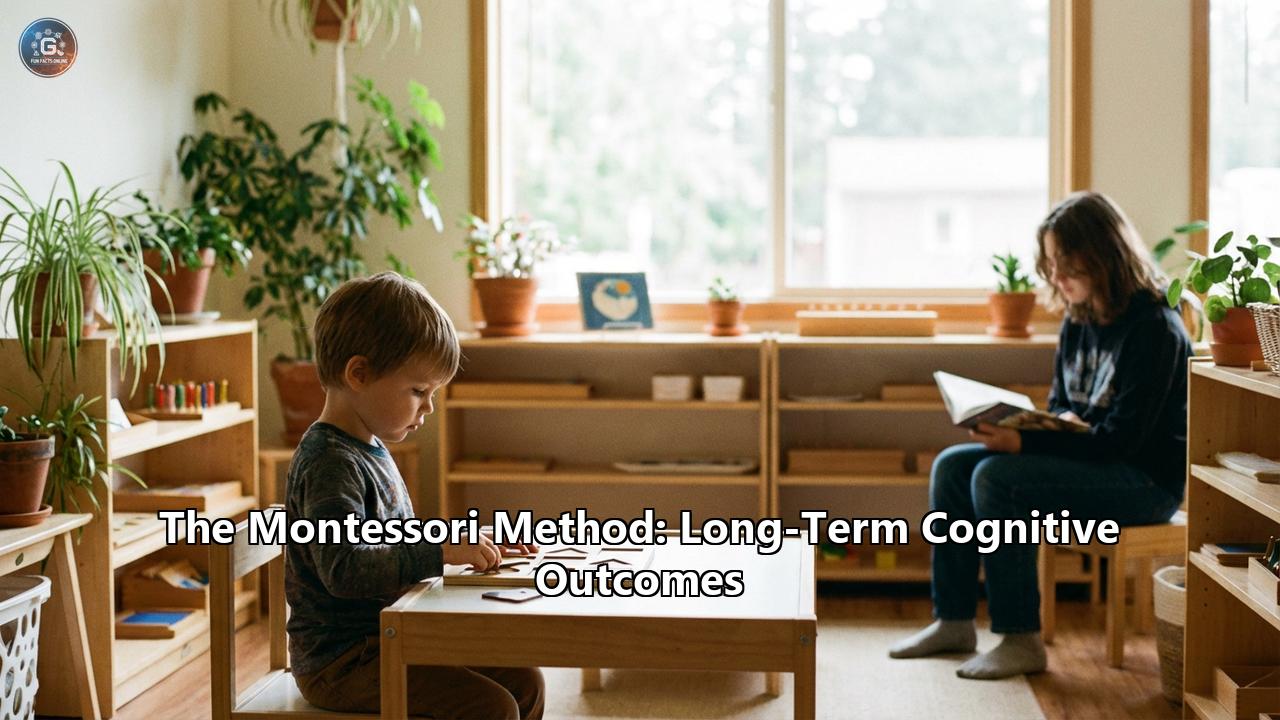
In the high-stakes world of modern education, where standardized testing often dictates the rhythm of childhood and rote memorization is frequently mistaken for learning, a quiet revolution has been simmering for over a century. It takes place in classrooms that look less like instructional factories and more like living rooms or laboratories—spaces where children move freely, choose their own work, and engage in deep, uninterrupted concentration. This is the Montessori method.
For decades, this educational philosophy was often dismissed by traditionalists as "just play" or a niche privilege for the elite. But today, as we stand in 2026, the narrative has shifted dramatically. A tidal wave of longitudinal research, neuroscientific imaging, and economic analysis has confirmed what Maria Montessori hypothesized in 1907: that this specific pedagogical approach does not merely teach children what to learn, but fundamentally alters how their brains develop, creating cognitive architectures that pay dividends well into adulthood.
From the "Montessori Mafia" of Silicon Valley innovators to the measurable closing of the achievement gap in low-income public districts, the evidence is no longer anecdotal. It is empirical. This article delves into the long-term cognitive outcomes of Montessori education, dissecting the mechanisms of executive function, the neuroscience of embodied cognition, and the profound implications for a 21st-century workforce that demands adaptability over obedience.
Part I: The Cognitive Architecture of "Play"
To understand the long-term outcomes, one must first understand the machine that generates them. The popular image of a Montessori classroom is one of wooden toys and hushed voices. The reality is a sophisticated environment designed to leverage the brain’s natural plasticity.
The Hand is the Instrument of the Brain
Dr. Maria Montessori, a physician and scientist, famously declared, "The hand is the instrument of man's intelligence." Modern cognitive science calls this embodied cognition—the idea that our thinking is deeply rooted in our physical interactions with the world.
In a traditional classroom, a child learns math by looking at abstract symbols on a whiteboard ($1 + 1 = 2$). In a Montessori classroom, a four-year-old learns "addition" by physically joining a golden bead bar of one with another bar of one. They feel the weight, the texture, and the union. The concept of "two" is not just a visual symbol; it is a sensory reality encoded in the motor cortex as well as the visual cortex.
This multi-sensory encoding creates "deep traces" in the brain. When that child later encounters algebra in high school, the neural pathways for quantity manipulation are already paved and reinforced with myelin. They aren't just memorizing formulas; they possess an intuitive "number sense" that researchers have correlated with higher achievement in advanced mathematics.
The Executive Function Superpower
If there is a single "secret sauce" to the Montessori long-term advantage, it is Executive Function (EF). EF is the brain’s air traffic control system—a set of mental skills that include working memory, flexible thinking, and self-control. It is the ability to plan a task, ignore distractions, and persist through difficulty.
In a conventional setting, the teacher provides the executive function. The teacher decides what to do, when to do it, and when to stop. The child’s EF muscles remain passive.
In a Montessori environment, the burden of executive function is shifted to the child. A three-year-old enters the room and must ask: What will I work on? Where will I get the mat? Who will I work with? How long will I stick with this difficult puzzle?
Every single day, for hours at a time, the child is performing "reps" of executive function training. A 2006 study published in the journal Science by Dr. Angeline Lillard compared 5-year-old Montessori students to lottery-losers who attended traditional schools. The Montessori students showed significantly higher executive function capabilities. They could adapt to changing rules faster, solve complex puzzles more efficiently, and regulate their impulses better.
This is the cognitive foundation that predicts adult success more reliably than IQ. It is the ability to manage oneself in a chaotic world—a skill that, once encoded in early childhood, appears to be remarkably durable.
Part II: The Evidence Base — A Century of Data
For years, critics argued that Montessori students did well simply because they came from wealthy, supportive families. This "selection bias" plagued early research. However, the last two decades have seen the emergence of "Gold Standard" studies—randomized controlled trials (RCTs) that eliminate these variables.
The Lottery Studies
The most compelling data comes from "lottery studies," particularly those led by Dr. Angeline Lillard and her colleagues at the University of Virginia. In these studies, researchers track families who applied to public Montessori magnet schools. Some got in (the treatment group) and some didn't (the control group). Since all families were motivated enough to apply, the background variables were neutralized.
The results, solidified by the massive 2025/2026 National Randomized Controlled Trial published in PNAS, were unequivocal. By the end of kindergarten, public Montessori students had pulled ahead of their peers in reading, math, and social cognition.
But the "Sleeper Effect" is what fascinates researchers most. In many educational interventions, gains "fade out" by third grade. Montessori gains often show a different trajectory. While some academic scores level out in middle elementary, the underlying cognitive advantages—adaptability, problem-solving, and self-regulation—often re-emerge with force in adolescence and adulthood, when the scaffolding of the classroom is removed and independent thought is required.
Closing the Gap: The Equity Engine
Perhaps the most socially significant finding is the impact on the "achievement gap." In traditional education, the gap between low-income and high-income students typically widens as they age. High-income children have more resources at home to supplement their schooling.
In high-fidelity Montessori programs, the data tells a different story. Low-income children in Montessori schools often show a steeper trajectory of improvement, effectively "catching up" to their wealthier peers by the end of the primary cycle.
Why? The theory is that the Montessori environment provides the structure, order, and sensory richness that might be lacking in a chaotic home environment. It levels the playing field not by lowering the bar, but by providing individual scaffolds for every child to climb at their own maximum pace. The "individualized instruction" means a child who is behind isn't forced to move on with the class, leaving holes in their understanding. They stay with the material until they master it, building a solid foundation that supports rapid acceleration later.
Part III: The Transition — The "Wobble" and the Recovery
One of the most persistent anxieties for parents is the "Transition Question." If my child spends their life choosing their own work and moving freely, how will they survive sitting at a desk in a traditional high school or university?
The data indicates a phenomenon often called "The Wobble." When Montessori students first transfer to a traditional setting (often in 9th grade), they can experience a brief period of culture shock. They may be baffled by the inefficiency of lectures, frustrated by the lack of autonomy, or confused by arbitrary rules like asking for permission to use the restroom.
However, studies tracking these students show that this wobble is typically short-lived—often lasting only a few months. Once they decipher the "system," their executive function skills kick in. They treat the traditional school structure as just another material to be mastered.
Research by Rathunde and Csikszentmihalyi (the father of "Flow" theory) found that Montessori adolescents reported significantly higher engagement and "flow" in their academic work compared to traditional peers. They didn't just do the work to get the grade; they did it because they found it interesting.
This intrinsic motivation becomes a superpower in high school and college. While traditional students often burn out or struggle when the external validation of "gold stars" is removed or the workload becomes unmanageable, Montessori alumni often step up. They are the students who form study groups without being asked, who approach professors to discuss topics off-syllabus, and who know how to manage their time without a teacher hovering over them. They have internalized the locus of control.
Part IV: Adult Outcomes — The "Montessori Mafia" and Beyond
The phrase "Montessori Mafia" was coined to describe the disproportionate number of creative innovators who attended Montessori schools: Larry Page and Sergey Brin (Google), Jeff Bezos (Amazon), Will Wright (The Sims), Gabriel Garcia Marquez (Nobel Laureate), and Julia Child, among others.
Is this just coincidence? Or is there a causal link between the method and the mindset of an innovator?
Divergent Thinking vs. Convergent Thinking
Traditional education excels at "Convergent Thinking"—finding the single correct answer to a standard question. What is the capital of France? What is 6 times 7?
Innovation, however, requires "Divergent Thinking"—the ability to generate multiple novel solutions to an open-ended problem. How many ways can you use a brick? How can we organize the world's information?
Montessori education is structurally designed to foster divergent thinking. There are no test papers with one right answer. A child building a tower with the Brown Stair is experimenting with physics, balance, and aesthetics all at once. If the tower falls, it is not an "F"; it is data.
A study using the "Evaluation of Potential Creativity" (EPoC) compared Montessori and traditional students. The Montessori students scored significantly higher on divergent-exploratory tasks. When given a stimulus, they produced more original drawings and more varied ideas. They were less afraid of being "wrong" and more interested in exploring the "possible."
In the adult workforce, this translates to the "Google" mindset: a comfort with ambiguity, a willingness to iterate, and a fundamental belief that problems are solvable if you approach them from enough angles.
The Social Brain: Empathy and Leadership
The long-term cognitive outcomes are not strictly academic. Social cognition—the ability to understand others' minds—is a critical cognitive skill.
In a Montessori classroom, children are grouped in 3-year age spans (3-6, 6-9, 9-12). This is intentional. The third-year students (the "leaders") reinforce their own knowledge by teaching the younger ones. This "teaching to learn" is one of the most effective ways to cement cognitive mastery (the protégé effect).
Simultaneously, this dynamic builds profound social intelligence. A 5-year-old helping a 3-year-old zip their coat is learning empathy and leadership, not as abstract concepts, but as daily practice.
Longitudinal surveys of Montessori adults often highlight superior conflict resolution skills. The "Peace Table"—a standard fixture in classrooms where children resolve disputes without adult intervention—trains the brain to approach conflict as a problem to be negotiated rather than a battle to be won. In the corporate boardroom, this ability to navigate complex social hierarchies and foster collaboration is arguably more valuable than raw technical skill.
Part V: The 21st-Century Workforce Alignment
The World Economic Forum (WEF) publishes a regular "Future of Jobs" report, listing the top skills required for the modern economy. The lists typically include:
- Complex Problem Solving
- Critical Thinking
- Creativity
- People Management
- Coordinating with Others
- Emotional Intelligence
It is striking—almost eerie—how perfectly this list overlaps with the core curriculum of a century-old educational method.
- Complex Problem Solving: Built through the use of self-correcting materials that require the child to figure out the error without teacher intervention.
- Critical Thinking: Fostered by the freedom to question and the emphasis on "research" over textbooks in the elementary years.
- Creativity: Nurtured by the lack of standardized output requirements.
- People Management/Coordination: Developed in the mixed-age environment where older children manage the classroom community.
We are moving from an "Industrial Economy" (which required obedience, rote repetition, and punctuality—things traditional schools teach well) to a "Knowledge Economy" (which requires adaptability and innovation). In this context, the Montessori method is not "quaint" or "retro"; it is arguably the most futurist educational model available. It produces the exact cognitive profile the global economy is desperate for.
Part VI: The Fidelity Crisis — A Warning
It is crucial to note that not all Montessori is created equal. The name "Montessori" is not trademarked. Any daycare can buy a wooden puzzle, put it on a shelf, and call itself a "Montessori School."
Research consistently shows that the benefits described above—the executive function gains, the academic boosts, the creativity—are strongly correlated with High Fidelity implementation.
High Fidelity means:
- Mixed Age Groups: Full 3-year spans (e.g., ages 3-6 together).
- Uninterrupted Work Periods: 3-hour blocks where children are not interrupted by "circle time" or "specials."
- Trained Teachers: Educators with rigorous credentials (AMI or AMS) who understand the nuance of the method.
- The Full Suite of Materials: Not just a few items, but the complete, scientifically designed curriculum.
"Montessori-ish" or "Montessori-Lite" programs often show no benefit over traditional schools, and in some cases, worse outcomes due to the confusion of mixed philosophies. For parents and policymakers, the lesson is clear: purity of method matters. You cannot replicate the cognitive outcomes of the system if you break the system's rules.
Part VII: The Neuroscience of "Normalization"
Dr. Montessori used the term "Normalization" to describe a child who has found their focus. A normalized child is calm, grounded, happy, and capable of intense concentration.
Modern neuroscience offers a window into this state. It appears to involve the regulation of the Default Mode Network (DMN)—the brain network active when we are daydreaming or distracted. When a child engages in deep, manual work (like polishing silver or solving a trinomial cube), they switch off the DMN and engage the Task Positive Network (TPN).
The ability to toggle efficiently between these networks is a hallmark of a healthy, high-performing brain. By practicing this deep concentration daily, Montessori children may be physically strengthening the neural switches that allow for "Flow" states. In an age of fracturing attention spans and dopamine-addicted screens, the ability to deep-dive into a task is perhaps the ultimate cognitive advantage.
Conclusion: The Long View
The Montessori method was born in the slums of Rome in 1907, designed for children who had been written off by society. That it has become the preferred education of the tech elite is a paradox, but a telling one.
The long-term cognitive outcomes of Montessori education are not magic. They are the biological result of a system that respects the laws of human development. By treating the child as an autonomous agent, by linking the hand to the brain, and by prioritizing executive function over rote memorization, Montessori builds a mind that is resilient, adaptable, and perpetually curious.
As we navigate the uncertain waters of the mid-21st century—an era of AI, automation, and rapid change—the ability to retrain oneself, to collaborate with others, and to think divergently will be the currency of survival. The data suggests that the children of the "Children's House" are already packing their bags with this currency, ready for a future they will not just inhabit, but help to design.
Deep Dive: The Mechanisms of Change
To truly appreciate the long-term cognitive impact, we must look closer at the specific mechanisms that drive these outcomes. It is not enough to say "it works"; we must understand why.
1. The Myth of the "Gifted" Child vs. The Prepared Environment
One of the most persistent criticisms of Montessori success stories is the "Elite Effect." Skeptics argue that because private Montessori schools are expensive, the students are already genetically or environmentally advantaged.
However, the 2017 Frontiers in Psychology study by Lillard shattered this assumption. By looking at high-poverty public Montessori schools, the study isolated the method from the money. The "catch-up" effect observed in low-income students suggests that the cognitive benefits are actually more pronounced in children who lack enriched home environments.
The mechanism here is the Prepared Environment. In a chaotic world, the Montessori classroom is an oasis of order. Everything has a place. The materials are logical. The rules are consistent. For a developing brain, this external order helps facilitate internal order. A child from a background of toxic stress, whose cortisol levels might be chronically high (which damages the hippocampus and learning), finds a place where they have agency and safety. This lowers the stress response, opening the neural gates for learning.
2. The Mathematics of the Mind
Consider the "Binomial Cube." To the uninitiated, it looks like a 3D puzzle for a 4-year-old. In reality, it is a physical representation of the algebraic formula $(a+b)^3$. The child does not know the formula. They are just matching colors and shapes.
But ten years later, when a math teacher writes $(a+b)^3$ on the board, the Montessori child has a "deja vu" moment. They have felt this formula in their hands. The abstract symbols map onto a pre-existing concrete neural model. This is why longitudinal studies often show Montessori students outperforming peers in math and science in high school—they are not learning from scratch; they are retrieving archived sensory data.
3. Freedom Within Limits: The Discipline of the Will
Cognitive discipline in adulthood—the ability to force oneself to work when one would rather watch TV—is rooted in the early experiences of "inhibition."
In a Montessori classroom, a child cannot just take a toy another child is using. They must wait. They cannot just throw work on the floor; they must return it to the shelf. But crucially, these constraints are not screamed by a teacher; they are enforced by the culture of the room.
Because the child chooses their work, they are motivated to follow the rules to keep doing it. This builds "Self-Regulation." A 2021 study on adult well-being found that Montessori alumni scored higher on "Self-Confidence" and "Social Trust." The researchers hypothesize that this stems from years of experiencing the world as a place where your choices matter, but where you must also respect the choices of others. It is the perfect training for a democratic citizen.
The Adolescent Bridge: Navigating the 9th Grade Cliff
The transition from a Montessori 8th grade to a traditional 9th grade is a pivotal moment in the longitudinal data. It acts as a stress test for the cognitive skills built in the early years.
Interviews with these transitioning students reveal a common theme: Frustration with Inefficiency.
Montessori students are used to moving at their own pace. If they understand a math concept, they move to the next. In traditional high school, they must wait for the lecture to finish, then wait for the rest of the class to catch up.
This boredom is the primary risk factor. However, the "resilience" data points to a fascinating adaptation. Instead of checking out, Montessori students often "hack" their high school experience. They negotiate independent projects with teachers. They start clubs. They use their spare mental energy for creative pursuits outside of school.
This "adaptive agency" is a direct result of the "Erdkinder" (Earth Children) philosophy of the adolescent years, even if they didn't attend a farm school. They view themselves as co-creators of their educational journey, not passive recipients.
The Consumer Guide: Finding the Real Deal
For parents reading this article and wondering how to secure these cognitive outcomes for their children, the market is confusing. Here is a brief guide based on the fidelity research:
- Look for the Certifications: AMI (Association Montessori Internationale) and AMS (American Montessori Society) are the two major accrediting bodies. A school without these affiliations might be good, but the risk of "low fidelity" is higher.
- Count the Kids: If the class size is small (10-12 kids), run away. Authentic Montessori relies on larger classes (25-30) to force the children to rely on each other rather than the teacher. A small ratio turns the teacher into a helicopter parent, destroying the autonomy that builds executive function.
- Watch the Teacher: The teacher should be hard to find in the room. They should be observing, sitting low on a chair, or working with just one child. If they are standing at the front lecturing to the whole group, it is not Montessori.
- The Work Cycle: Ask, "How long is the uninterrupted work period?" If the answer is "We do 45 minutes of work, then snack, then circle time, then recess," it is not high fidelity. The brain needs 2-3 hours to enter the deep concentration states that rewire neural pathways.
Final Thoughts: The Future of Education
As we look toward 2030 and beyond, the "factory model" of education—designed to produce assembly line workers who could follow instructions and tolerate boredom—is obsolete. The economy no longer rewards compliance; it rewards invention.
The Montessori method, with its century-long track record, offers a proven alternative. It suggests that if we want adults who can think deeply, empathize with others, and solve the unsolvable problems of the future, we must start by trusting the child. We must give them the keys to their own cognitive development and step back.
The long-term outcomes are clear: The children of the "Children's House" do not just survive the real world; they are uniquely equipped to lead it. The investment in "play," it turns out, is the smartest work we can do.
Reference:
- https://www.imamontessori.org/montessori-versus-traditional-education
- http://montessorinurseries.com/wp-content/uploads/2017/12/Montessori-Outcomes-for-Disadvantaged-Children.pdf
- https://montessoriacademy.com.au/montessori-an-education-for-the-21st-century-four-c-of-success/
- https://kidsusamontessori.org/why-21st-century-skills-matter-for-your-child-a-montessori-perspective/
- https://archive.news.virginia.edu/content/study-montessori-education-erases-income-achievement-gap/
- https://www.berkshiremontessori.org/msb-blog/does-montessori-support-creativity
- https://austinchildrensacademy.org/blog/montessori-learning-impact-on-modern-world/
- https://www.genevamontessori.org/how-do-montessori-students-do-in-high-school
- https://www.montessoripublic.org/2017/11/new-study-public-montessori-raises-achievement-closes-gaps/
- https://pearlilymontessori.com/2024/05/19/transitioning-from-montessori-to-traditional-schools/
- https://themontessoriplace.org.uk/resources/montessori-research/
- https://montessori.org.au/sites/default/files/downloads/issues/MAFeArticle0901.pdf
- https://amshq.org/wp-content/uploads/2019/02/montessori-and-creativity-the-impact-of-montessori-on-creative-potential-2018-conference.pdf
- https://www.kanatamontessori.com/post/montessori-and-21st-century-learning
- https://thenaturalparentmagazine.com/how-montessori-method-helps-develop-21st-century-skills-in-your-child/