
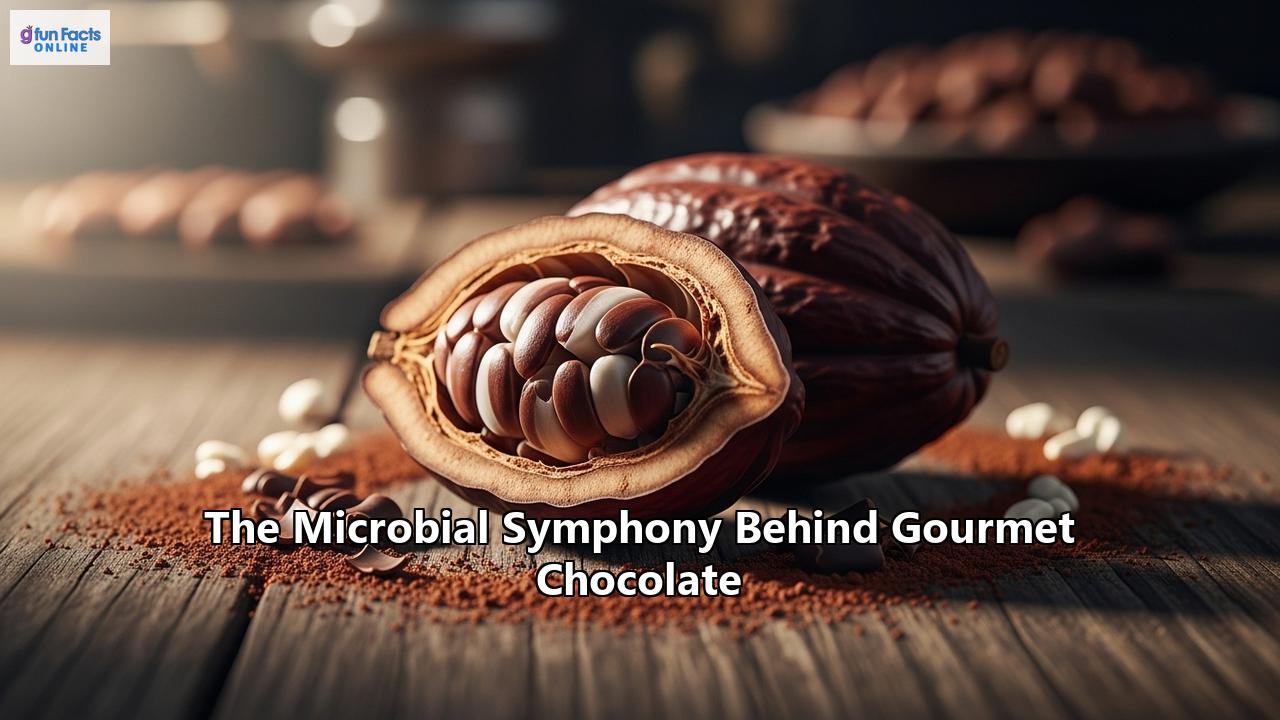
An odyssey of flavor, a journey from a humble tropical fruit to the exquisite luxury of a gourmet chocolate bar, is a tale not of a single ingredient, but of a microscopic multitude. This is the story of the microbial symphony behind gourmet chocolate, an intricate and harmonious collaboration of invisible organisms that transform the raw, bitter seeds of the Theobroma cacao tree into the complex and celebrated confection we cherish. It is a process of profound transformation, a carefully orchestrated dance of yeasts, bacteria, and enzymes that unlock the very soul of the cacao bean.
The Unfermented Bean: A Diamond in the Rough
Before this remarkable microbiological intervention, the cacao bean is a shadow of its future self. Encased in a sweet, mucilaginous pulp within a vibrant pod, the raw bean is intensely bitter and astringent. It lacks the characteristic aromas and flavors we associate with chocolate. If one were to simply dry and roast these beans, the result would be a flat, unpalatable product, a mere ghost of the rich, nuanced experience of fine chocolate. The potential for greatness lies dormant, locked within the bean's complex chemistry. The key to unlocking this potential is a process that has been practiced for centuries, often with little understanding of the intricate science at play: fermentation.
The first stage of this magical transformation begins immediately after the cacao pods are harvested and cracked open. The beans, still enveloped in their sugary pulp, are traditionally heaped into piles or placed in wooden boxes and covered with banana leaves. This is where the magic begins, as naturally occurring microbes from the farm's environment—the air, the hands of the farmers, the surfaces of the pods and equipment—begin to colonize the sweet, sticky mass.
The Overture: The Rise of the Yeasts
The initial phase of fermentation is an anaerobic one, meaning it occurs in the absence of oxygen. The dense, wet pulp creates an environment where yeasts, the first musicians in our microbial orchestra, can thrive. The high sugar content and low pH of the pulp are ideal conditions for these single-celled fungi to begin their work.
A diverse array of yeast species participates in this initial stage, with genera like Saccharomyces, Pichia, Hanseniaspora, and Candida being the most prominent. Among the most important players are Saccharomyces cerevisiae, the very same species renowned for its role in baking and brewing, along with Pichia kudriavzevii and Hanseniaspora opuntiae.
These yeasts immediately set to work on the abundant sugars—glucose, fructose, and sucrose—in the cacao pulp. Through alcoholic fermentation, they convert these sugars into ethanol and carbon dioxide. The production of carbon dioxide helps to create the anaerobic environment that characterizes this early stage of fermentation.
But the yeasts' contribution extends far beyond simply producing alcohol. They also play a crucial role in breaking down the pectin-rich pulp that surrounds the beans. Some yeast species produce pectinolytic enzymes that liquefy the mucilage, allowing it to drain away. This process is vital for the subsequent stages of fermentation, as it allows for increased aeration of the bean mass.
Furthermore, as they metabolize the pulp's components, yeasts generate a host of volatile organic compounds (VOCs) that are the initial building blocks of chocolate's complex flavor profile. These include higher alcohols and esters, which contribute to the fruity and floral notes found in many fine chocolates. For instance, the production of acetate esters and fatty acid ethyl esters is essential for developing these desirable aromas. Studies have shown that in the absence of yeast, these crucial flavor precursors are not formed, resulting in a final product that lacks the characteristic chocolate taste.
The metabolic activity of the yeasts also begins to alter the environment within the fermentation mass. Their consumption of sugars and production of ethanol and other byproducts initiate a cascade of changes that will pave the way for the next wave of microorganisms.
The Harmony: The Lactic Acid Bacteria Take the Stage
As the initial yeast-driven fermentation progresses, typically after the first 24 to 48 hours, the conditions within the fermenting mass begin to shift. The environment becomes more favorable for another group of microorganisms to rise to prominence: lactic acid bacteria (LAB). These bacteria, including species like Lactobacillus fermentum and Lactobacillus plantarum, are facultative anaerobes, meaning they can thrive in both low-oxygen and oxygen-rich environments.
The LAB continue the breakdown of the remaining sugars in the pulp, but their primary contribution is the production of lactic acid. This further increases the acidity of the fermenting mass. In addition to fermenting sugars, some LAB species are also capable of metabolizing the citric acid naturally present in the cacao pulp. This consumption of citric acid causes the pH to rise slightly, a critical change that will influence the subsequent microbial succession.
The role of LAB in chocolate flavor development has been a subject of some debate among scientists. Some studies have suggested that they may not be strictly necessary for a successful fermentation. However, a growing body of evidence indicates that LAB play a significant role in enhancing the complexity and depth of the final chocolate flavor. The lactic acid they produce, along with other metabolic byproducts, contributes to the overall acidity of the beans and can lead to the development of unique flavor notes. For example, the use of specific LAB starter cultures has been shown to increase the presence of honey and red fruit notes in the final chocolate.
Furthermore, the metabolic activities of LAB contribute to the breakdown of proteins and complex carbohydrates within the beans, releasing additional flavor precursors. They also produce a range of compounds, such as diacetyl and esters, which can elevate the sensory profile of the chocolate.
The Crescendo: The Acetic Acid Bacteria's Fiery Performance
As the fermentation continues and the pulp continues to drain away, air begins to penetrate the bean mass. This introduction of oxygen marks a pivotal transition in the microbial symphony, setting the stage for the third and final major group of microorganisms: the acetic acid bacteria (AAB). These bacteria, which are strictly aerobic, thrive in the newly oxygenated environment.
The most prominent species of AAB in cacao fermentation include Acetobacter pasteurianus, Acetobacter tropicalis, and Acetobacter okinawensis. These bacteria take the ethanol produced by the yeasts in the initial phase of fermentation and oxidize it into acetic acid—the main component of vinegar. This process is highly exothermic, meaning it releases a significant amount of heat. As the AAB population flourishes, the temperature of the fermenting mass can rise dramatically, often reaching 45-50°C (113-122°F).
This combination of increased acidity from the acetic acid and the elevated temperature has a profound effect on the cacao beans. The acetic acid permeates the cotyledon, or the nib of the bean, effectively killing the embryo and preventing it from germinating. This is a crucial step, as it triggers a cascade of biochemical reactions within the bean itself. The cell walls within the bean break down, allowing previously separated enzymes and substrates to mix.
This is where the true magic of flavor development begins. The acidic environment created by the AAB activates endogenous enzymes within the cacao bean. Specifically, proteases begin to break down the storage proteins into smaller peptides and free amino acids. These amino acids, particularly hydrophobic ones like leucine, valine, and phenylalanine, are essential precursors to the Maillard reaction, a chemical reaction between amino acids and reducing sugars that occurs during roasting and is responsible for creating many of the characteristic flavors of chocolate.
Simultaneously, the acidic conditions promote the oxidation of polyphenols, the compounds responsible for the bitterness and astringency of the raw cacao bean. This process not only reduces the harshness of the beans but also leads to the formation of o-quinones, which contribute to the rich, nutty flavors and the characteristic brown color of chocolate. Without the intervention of the AAB, the beans would remain intensely bitter and purple.
The acetic acid itself also contributes to the final flavor profile, imparting a distinct tanginess that, when balanced correctly, adds to the complexity of the chocolate. However, an overabundance of acetic acid can lead to a sour, vinegary taste, highlighting the delicate balance required in a successful fermentation.
The Symphony of Flavors: A Chemical Masterpiece
The entire fermentation process, from the initial action of the yeasts to the final flourish of the acetic acid bacteria, is a complex interplay of microbial activity and biochemical transformation. The result is a bean that has been fundamentally altered, now brimming with the potential for exquisite flavor. The bitter, astringent seed has been transformed into a repository of flavor precursors.
These precursors are the raw materials that the chocolate maker will work with during the subsequent stages of processing, particularly roasting. During roasting, the amino acids and reducing sugars created during fermentation undergo the Maillard reaction, generating hundreds of new aromatic compounds, including pyrazines, which are responsible for the nutty, roasted, and chocolatey notes we crave. The fruity esters and floral alcohols produced by the yeasts also evolve and interact with other compounds during roasting, further adding to the complexity of the final flavor profile.
The Influence of Terroir: A Microbial Fingerprint
Just as the soil, climate, and geography—the terroir—of a wine region influence the character of the grapes, the local microbial environment of a cacao-growing region imparts a unique fingerprint on the flavor of the chocolate. The specific strains of yeasts, lactic acid bacteria, and acetic acid bacteria that colonize the cacao beans during spontaneous fermentation can vary significantly from one farm to another, and even from one harvest to the next.
This microbial terroir is a key factor in the distinct flavor profiles of single-origin chocolates. A chocolate from Madagascar might be known for its bright, citrusy notes, while one from Ecuador might have a more floral and nutty character. These differences can be directly attributed, in large part, to the unique microbial communities that conducted the fermentation.
This inherent variability, while celebrated by connoisseurs of fine chocolate, has also posed a challenge for large-scale chocolate producers who strive for consistency. The unpredictable nature of spontaneous fermentation can lead to variations in quality and flavor, with some batches being exceptional and others falling short.
The Future of Chocolate: Conducting the Microbial Symphony
In recent years, there has been a growing interest in understanding and controlling the microbial dynamics of cacao fermentation to achieve more consistent and even enhanced flavor profiles. This has led to the development of starter cultures, which are specific strains of yeasts and bacteria that are intentionally introduced to the cacao pulp at the beginning of fermentation.
The use of starter cultures offers several potential advantages. It can help to standardize the fermentation process, leading to a more consistent final product. It can also reduce the risk of spoilage from undesirable microorganisms, such as molds or certain species of Bacillus that can produce off-flavors.
More excitingly, the use of carefully selected starter cultures opens up the possibility of "designer chocolate," where the microbial consortium is intentionally manipulated to produce specific flavor profiles. For example, by selecting yeast strains known for their high production of fruity esters, chocolate makers could create a chocolate with a pronounced berry or citrus character. Similarly, the use of specific LAB strains could enhance notes of honey or red fruit.
Recent scientific breakthroughs have shed even more light on the potential for controlled fermentation. Researchers have been able to identify the key microbial species and the precise environmental conditions (such as temperature and pH) that are associated with the development of fine-flavor chocolate. By recreating these conditions in a laboratory setting, scientists have successfully mimicked the natural fermentation process and produced high-quality chocolate with a defined microbial community. This research signals a shift from a largely uncontrolled, artisanal process to a more science-driven approach that could revolutionize the chocolate industry.
This newfound control does not necessarily mean the end of the unique character of single-origin chocolates. Rather, it provides chocolate makers with another tool in their arsenal. They can choose to continue with traditional, spontaneous fermentation to capture the unique terroir of a particular region, or they can use starter cultures to achieve a specific, desired flavor profile with greater consistency.
The Final Bow: A Masterpiece of Microbial Artistry
The journey from the cacao tree to the chocolate bar is a testament to the power of the unseen world. The microbial symphony that unfolds during fermentation is a process of breathtaking complexity and elegance. It is a story of succession, of one group of microorganisms creating the perfect conditions for the next to thrive, each playing its indispensable role in the grand transformation.
From the fruity and floral notes introduced by the yeasts, to the complex acidity shaped by the lactic acid bacteria, to the profound biochemical changes triggered by the heat and acid of the acetic acid bacteria, every step is crucial. This intricate dance of microbes is what transforms a bitter, unpalatable seed into the rich, aromatic, and deeply satisfying experience of gourmet chocolate.
So, the next time you savor a piece of fine chocolate, take a moment to appreciate the invisible artists behind its creation. For in every bite, you are not just tasting chocolate; you are experiencing the final, delicious notes of a microbial symphony.
Reference:
- https://repository.uaeh.edu.mx/bitstream/items/de2843fb-ff18-4ad8-8247-cf2c8fc83fa5
- https://source.colostate.edu/chocolates-secret-ingredient-is-the-fermenting-microbes-that-make-it-taste-so-good/
- https://pmc.ncbi.nlm.nih.gov/articles/PMC3957632/
- https://bioengineer.org/microbial-community-mimics-fine-chocolate-fermentation-traits/
- https://www.ijsr.net/archive/v12i6/SR23614230652.pdf
- https://pmc.ncbi.nlm.nih.gov/articles/PMC4148806/
- https://www.mdpi.com/2036-7481/16/4/75
- https://pmc.ncbi.nlm.nih.gov/articles/PMC7171043/
- http://www.ifrj.upm.edu.my/20%20(04)%202013/46%20IFRJ%2020%20(04)%202013%20Afoakwa%20(413).pdf%202013/46%20IFRJ%2020%20(04)%202013%20Afoakwa%20(413).pdf)
- https://www.researchgate.net/figure/Acetic-acid-bacteria-growth-dynamic-during-cocoa-fermentation-Samples-of-fermenting-bean_fig1_272560584
- https://www.myfoodresearch.com/uploads/8/4/8/5/84855864/_40__fr-2020-526_peralta.pdf
- https://jfrm.ru/issues/1594/1600
- https://www.researchgate.net/publication/316451498_Influence_of_acetic_acid_bacteria_on_the_acidity_of_the_cocoa_beans_during_fermentation
- https://www.mdpi.com/2311-5637/10/8/405
- https://www.salondelchocolate.com/unraveling-the-role-of-microbes-in-creating-excellent-chocolate-flavors.html