
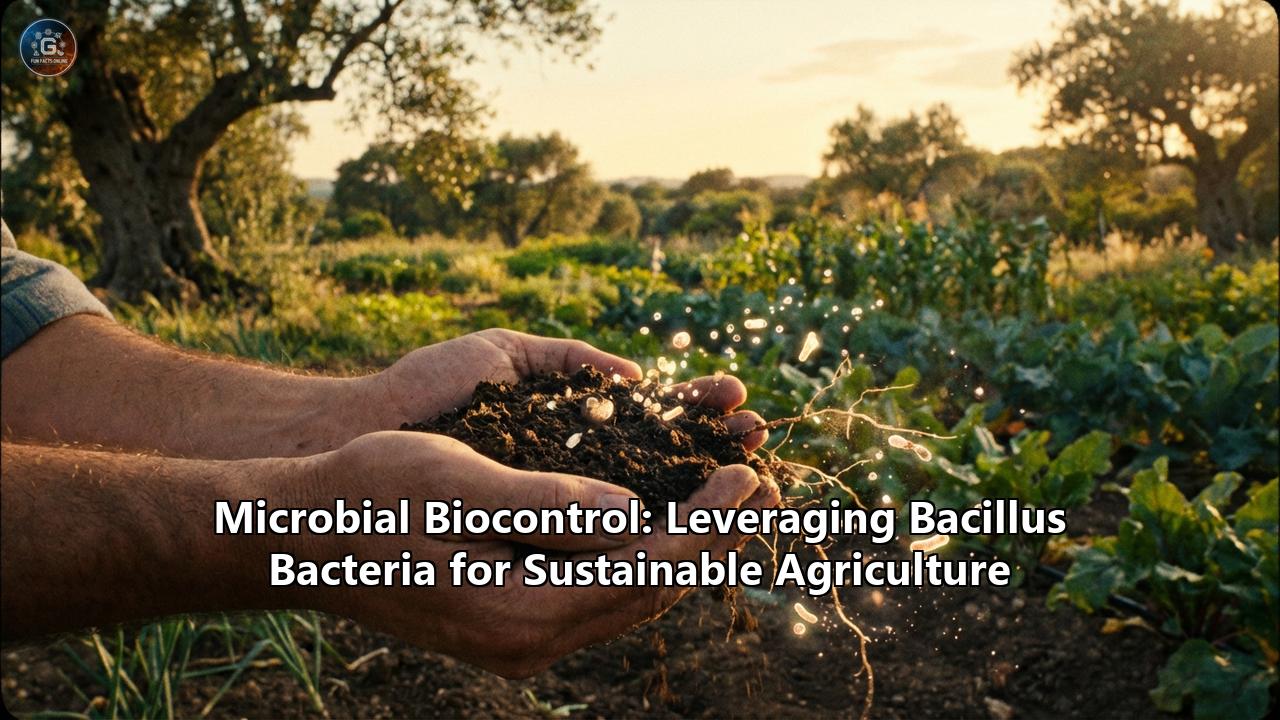
Beneath the surface of every thriving agricultural field lies a hidden, microscopic metropolis. For decades, modern agriculture treated soil as an inert medium—a mere physical anchor for roots and a blank canvas for chemical fertilizers and synthetic pesticides. While the chemical-intensive paradigm of the mid-20th century Green Revolution undeniably multiplied global food yields and averted mass starvation, it came with a staggering ecological cost. The relentless application of synthetic agrochemicals has degraded soil vitality, polluted groundwater, decimated beneficial non-target insect populations, and triggered the rapid evolution of pesticide-resistant super-pests.
As the global population hurtles toward a projected 9.7 billion by 2050, the agricultural sector faces an unprecedented ultimatum: we must increase food production by up to 70% without pushing our planetary boundaries into ecological collapse. This existential challenge has catalyzed a profound paradigm shift. The future of farming is moving away from synthetic eradication and toward ecological management. At the absolute forefront of this biological renaissance is a genus of ubiquitous, rod-shaped bacteria: Bacillus.
Microbial biocontrol—the strategic use of naturally occurring microorganisms to suppress plant diseases and pests—is rapidly transitioning from a niche organic farming practice into a cornerstone of mainstream commercial agriculture. Among the myriad of fungi, viruses, and bacteria explored for this purpose, Bacillus species stand unchallenged as the premier champions of sustainable crop protection. Through a sophisticated blend of chemical warfare, immune system stimulation, and symbiotic growth promotion, these microbes offer a comprehensive, residue-free alternative to toxic agrochemicals.
The Evolutionary Marvel of the Bacillus Genus
To understand why Bacillus dominates the biocontrol landscape, we must first look at its evolutionary biology. Bacillus species are Gram-positive, soil-dwelling bacteria that possess a unique biological superpower: the ability to form endospores.
When environmental conditions become hostile—whether due to extreme heat, drought, UV radiation, or nutrient depletion—a Bacillus cell undergoes a remarkable transformation. It halts its standard reproductive cycle and packages its DNA and essential cellular machinery into a highly durable, tightly armored dormant structure known as an endospore. These spores can survive for years, decades, or even centuries in extreme environments.
From a commercial and agricultural standpoint, this endospore-forming capability is the holy grail. The greatest historical hurdle for microbial biopesticides has been shelf life and field stability. Non-spore-forming bacteria, such as Pseudomonas, are highly effective in the lab but often die during the formulation process, in transport, or immediately upon exposure to harsh sunlight in the field. Bacillus endospores, conversely, can be processed into dry powders, liquid suspensions, and seed coatings that remain viable on a warehouse shelf for years. Once applied to the soil or crop foliage, the spores detect the presence of water and root exudates, rapidly germinating into active, multiplying vegetative cells ready to protect the plant.
The Titans of Biocontrol: A Roster of Superstar Species
The Bacillus genus is vast, encompassing hundreds of recognized species, but a select few have risen to international prominence as the workhorses of the biopesticide industry.
1. Bacillus thuringiensis (Bt): The King of Insect Control
If microbial biocontrol has a global ambassador, it is Bacillus thuringiensis, commonly known as Bt. First discovered in Japan in 1901, Bt currently accounts for a staggering 90% of the biopesticide market in the United States alone. This bacterium is an entomopathogenic (insect-killing) powerhouse used to control a diverse range of agricultural and forestry pests, particularly caterpillars (Lepidoptera), beetles (Coleoptera), and flies/mosquitoes (Diptera).
The genius of Bt lies in its production of specialized crystalline proteins, known as Cry and Cyt toxins, during its sporulation phase. When a susceptible insect consumes plant tissue treated with Bt, the alkaline environment of the insect’s midgut dissolves the crystal, activating the toxin. The toxin then binds to specific receptors on the gut lining, punching microscopic holes in the cellular membrane. The insect stops feeding within minutes and dies of starvation and sepsis within days. Because the toxins require specific gut pH levels and precise molecular receptors found only in certain insect orders, Bt is remarkably safe for humans, mammals, birds, and beneficial insects like bees and ladybugs.
Today, Bt is applied both as a foliar spray and through genetic engineering (Bt crops), dominating the global shift toward residue-free, high-quality agricultural produce.
2. Bacillus subtilis: The Broad-Spectrum Defender
While Bt commands the insecticidal market, Bacillus subtilis is the reigning monarch of biofungicides. Naturally abundant in the soil and the plant rhizosphere (the zone of soil directly influenced by root secretions), B. subtilis forms dense, protective biofilms over plant roots. These biofilms act as a living shield, physically blocking soil-borne pathogens like Fusarium, Pythium, and Rhizoctonia from accessing the plant’s vulnerable tissues. Beyond physical exclusion, B. subtilis is a prolific factory of antimicrobial compounds, seamlessly managing fungal outbreaks that would otherwise require heavy doses of synthetic copper or sulfur-based fungicides.
3. Bacillus velezensis: The Rising Star
In recent years, modern genomic sequencing has brought a new superstar to light: Bacillus velezensis. Originally identified in 2005 from the Vélez River in Spain, this species has absorbed several strains previously classified under other names due to its extraordinary genetic capacity for secondary metabolite production.
Genome mining reveals that up to 10% of the B. velezensis genome is dedicated entirely to synthesizing bioactive antimicrobial compounds. Strains like B. velezensis HC6 and UTB96 have shown unmatched efficacy in producing a trifecta of potent lipopeptides: surfactins, iturins, and fengycins. This species is highly aggressive against notorious fungal pathogens, including those that cause devastating diseases in maize, soybeans, and citrus. Furthermore, B. velezensis doesn't just kill fungi; it actively degrades mycotoxins—such as aflatoxins and ochratoxins—which are highly carcinogenic fungal byproducts that frequently contaminate global grain supplies.
4. Bacillus amyloliquefaciens and Bacillus firmus
Other notable mentions include B. amyloliquefaciens, highly valued for its exceptional root colonization abilities and production of lytic enzymes, and B. firmus, which has carved out a specialized, highly lucrative niche as a biological nematicide. Root-knot nematodes cause billions of dollars in crop damage annually, and synthetic nematicides are among the most toxic chemicals used in agriculture. B. firmus offers a green alternative, breaking down nematode eggs and paralyzing adult worms without poisoning the surrounding soil biome.
The Masterclass in Microbial Warfare: Mechanisms of Action
The success of Bacillus in agricultural systems is not the result of a single trait, but rather a sophisticated, multi-layered defense strategy. When deployed in the field, these bacteria execute a complex molecular choreography designed to outcompete, starve, and poison invaders, while simultaneously bolstering the host plant.
1. Antibiosis: The Lipopeptide Arsenal
The most direct mechanism of Bacillus biocontrol is antibiosis—the production of inhibitory compounds. The heavy artillery in this chemical warfare consists of cyclic lipopeptides, primarily surfactins, iturins, and fengycins.
These molecules are amphiphilic, meaning they have both a water-loving (hydrophilic) and a fat-loving (lipophilic) component. This structure allows them to insert themselves directly into the lipid bilayer of fungal cell membranes. Iturins and fengycins are particularly lethal to fungi; they create pores in the pathogen's membrane, causing cellular contents to leak out, leading to rapid cell death. Surfactins, on the other hand, act as powerful biosurfactants. While they have antibacterial properties, their primary role is to reduce surface tension, allowing the Bacillus colony to rapidly swarm, spread over root surfaces, and construct impenetrable biofilms.
In addition to lipopeptides, Bacillus species produce polyketides (such as macrolactin and bacillaene) and lytic enzymes (like chitinases and glucanases) that quite literally digest the structural cell walls of pathogenic fungi and the exoskeletons of pest insects.
2. Niche and Nutrient Competition: The Iron Thieves
In the highly competitive environment of the rhizosphere, space and food are limited resources. Bacillus species are exceptionally rapid colonizers. By swiftly consuming available carbon-rich root exudates and physically covering the root epidermis in a biofilm, they execute a strategy of spatial exclusion. If a pathogen cannot physically reach the root, it cannot cause an infection.
Furthermore, Bacillus bacteria are masters of chemical resource hoarding, particularly when it comes to iron. Iron is an essential micronutrient for the growth of almost all living organisms, including pathogenic fungi. In the soil, bioavailable iron is scarce. To secure their supply, Bacillus species secrete high-affinity iron-binding molecules called siderophores. These siderophores scavenge free iron from the environment with such efficiency that they effectively starve neighboring pathogens of this vital element, stunting their growth and rendering them harmless.
3. Quorum Sensing Interference: Jamming Enemy Communications
Bacteria do not operate as isolated individuals; they communicate through chemical signaling to coordinate group behaviors, a process known as quorum sensing (QS). Pathogenic bacteria often rely on QS to launch synchronized attacks, only releasing their virulence factors when their population density is high enough to overwhelm the plant's immune system.
Many biocontrol Bacillus strains have developed the astonishing ability to disrupt this communication through a mechanism called quorum quenching. They secrete enzymes, such as lactonases, that degrade the signaling molecules (autoinducers) of the pathogens. By jamming the enemy's communication lines, Bacillus prevents the pathogens from realizing they have enough numbers to attack, keeping them in a benign, uncoordinated state.
The Plant-Microbe Alliance: ISR and the "Cry for Help"
Perhaps the most fascinating aspect of Bacillus biocontrol is that the bacteria do not just fight battles on behalf of the plant; they teach the plant how to fight for itself.
When a Bacillus colony establishes itself on a plant's roots, the plant detects the presence of the beneficial microbe through specific molecular patterns (like surfactins or flagellin proteins). This interaction acts as a mild "vaccination," triggering a state of heightened alert throughout the entire plant—from the roots all the way up to the leaves. This phenomenon is known as Induced Systemic Resistance (ISR).
When a plant is in a state of ISR, its immune system is "primed." If a foliar pathogen (like powdery mildew) or a chewing insect attacks the leaves weeks later, the primed plant responds much faster and more aggressively. It rapidly reinforces its cell walls with lignin, seals off infected areas to prevent the spread of disease, and floods its tissues with defensive toxins and pathogenesis-related (PR) proteins. Bacillus essentially arms the plant’s natural defenses, providing whole-canopy protection from a soil-level application.
Even more remarkable is the plant's active role in this symbiosis. Recent microbiome research has unveiled the "Cry for Help" mechanism. When a plant is attacked by a pathogen, it does not suffer passively. The plant's roots actively alter the chemical composition of their exudates, releasing specific organic acids (such as malic acid and citric acid) and polysaccharides into the soil. These specific chemical signals act as a distress beacon, inducing chemotaxis (directed movement) in surrounding Bacillus populations. The beneficial bacteria "smell" the distress signals, swim toward the roots, and rapidly form defensive biofilms specifically where the plant needs them most. This dynamic, real-time feedback loop represents a pinnacle of evolutionary synergy between flora and microbes.
Beyond Defense: The PGPR Effect (Plant Growth Promotion)
While their pesticidal and fungicidal traits make headlines, Bacillus species are equally celebrated as Plant Growth-Promoting Rhizobacteria (PGPR). The goal of sustainable agriculture is not just to prevent crop loss, but to actively enhance yields, vigor, and soil fertility. Bacillus achieves this through multiple synergistic avenues:
1. Phytohormone Production: Bacillus species actively synthesize and secrete plant growth hormones directly into the root zone. They produce auxins (such as Indole-3-Acetic Acid, or IAA), which stimulate massive secondary root branching and elongation. A larger, denser root system allows the plant to explore a greater volume of soil, drastically improving water and nutrient uptake. They also produce gibberellins, which drive stem elongation, and abscisic acid, which helps regulate plant responses to stress. 2. Unlocking Hidden Nutrients: Modern soils are often saturated with phosphorus from decades of fertilizer use, but this phosphorus is chemically locked in insoluble complexes (like calcium phosphate or iron phosphate) that plants cannot absorb. Bacillus acts as a microscopic miner. By releasing organic acids (like gluconic and oxalic acid) and phosphatase enzymes, they break these complex bonds, solubilizing the phosphorus and feeding it directly to the plant. This mechanism, alongside their ability to enhance nitrogen fixation and mobilize potassium, allows farmers to drastically reduce their reliance on expensive, environmentally damaging synthetic fertilizers. 3. Environmental Stress Buffering: Climate change is increasing the frequency of severe droughts, heatwaves, and soil salinization. Bacillus species mitigate these abiotic stresses by secreting exopolysaccharides (EPS) that increase the moisture-holding capacity of the soil immediately surrounding the roots. Furthermore, under salt stress, they regulate the plant’s sodium uptake and boost antioxidant enzyme production, allowing crops to thrive in degraded, highly saline soils where they would otherwise perish.Formulation, Commercialization, and Market Dynamics
The science of Bacillus biocontrol is spectacular, but translating petri-dish miracles into field-ready agricultural products requires immense industrial ingenuity. The global biopesticides market is experiencing explosive growth. Valued at over $8 billion in 2023, the sector is expanding at a compound annual growth rate (CAGR) of over 10%, projected to surpass $21.8 billion by 2033. This surge is driven by stringent government regulations limiting chemical pesticide residues (such as those by the EPA and EFSA), soaring consumer demand for organic food, and the integration of biologicals into precision agriculture frameworks.
To meet this demand, biotechnology companies have mastered massive-scale liquid fermentation, cultivating trillions of Bacillus cells in multi-story stainless steel bioreactors. The process is meticulously controlled to induce the bacteria to form endospores before harvest.
However, the true frontier of commercialization lies in formulation technology. A raw bacterial spore is vulnerable to UV degradation and rapid desiccation once sprayed on a leaf. To combat this, modern formulations utilize cutting-edge nanoencapsulation and microencapsulation technologies. Spores are coated in bio-based polymers, UV-protectants, and moisture-retaining adjuvants that shield the bacteria from harsh environmental elements. These advanced emulsifiable concentrates extend the decay resistance time of the biopesticide on the leaf surface, ensuring that the Bacillus remains viable long enough to eliminate the target pest or pathogen.
Farmers are deploying these advanced formulations across a variety of application methods. Seed treatments represent the most efficient and cost-effective approach; coating a seed with Bacillus spores ensures that the beneficial microbes establish their protective biofilm the moment the first root emerges. In orchards and broadacre crops, foliar sprays are utilized to combat airborne blights and chewing insects. Meanwhile, modern drip irrigation systems allow for "fertigation"—injecting liquid Bacillus formulations directly into the root zone to continuously replenish the soil microbiome.
The Next Generation: Synthetic Biology and Microbial Consortia
As powerful as individual Bacillus strains like Bt or B. velezensis are, nature rarely relies on a single organism. The rhizosphere is a complex, interacting community. A major limitation of first-generation biocontrol products has been inconsistency; a single Bacillus strain that performs perfectly in a controlled greenhouse might struggle when introduced to the wildly variable pH, temperature, and native microbiome of a real-world farm.
To overcome this, the cutting-edge of agricultural microbiology is shifting from single-strain products to synthetic microbial consortia—carefully engineered teams of microbes designed to work synergistically.
Recent breakthroughs in 2024 and 2025 have illuminated the profound impact of bacterial social interactions within these consortia. Researchers have discovered that when assembling synthetic Bacillus communities, phylogenetic relationships matter immensely. Interestingly, combining moderately related (MR) Bacillus strains has been shown to produce superior plant growth-promoting (PGP) effects compared to highly related strains. Because moderately related strains occupy slightly different metabolic niches, they avoid directly competing for the exact same carbon sources, while still engaging in cooperative behaviors like coordinated biofilm construction and shared extracellular enzyme production.
These sophisticated consortia act as highly resilient biological units. If one strain falters due to an unexpected temperature drop, another strain in the consortium compensates. Furthermore, Bacillus species serve as "keystone" taxa that actively drive the functional state of the entire root microbiome. Through quorum sensing and robust biofilm architectures, introduced Bacillus inoculants can actually reshape the native microbial community, recruiting other beneficial native bacteria and physically crowding out opportunistic pathogens.
Coupled with advances in precision agriculture, the future will likely see farmers taking rapid DNA swabs of their soil, allowing artificial intelligence algorithms to recommend a custom-blended synthetic consortium of Bacillus tailored specifically to the exact micro-climate, soil type, and pathogen pressures of their individual farm.
The Microscopic Revolution
The transition toward sustainable agriculture is not a step backward into pre-industrial farming; it is a massive leap forward into applied ecology and biotechnology. We are finally learning to harness the ancient, microscopic wars that have been waging beneath our feet for hundreds of millions of years.
By leveraging the unrivaled survival mechanics, chemical ingenuity, and plant-symbiotic nature of the Bacillus genus, we are developing an agricultural system that works with nature rather than against it. From the insecticidal precision of Bacillus thuringiensis to the broad-spectrum antifungal lipopeptides of Bacillus velezensis, these biological titans offer a viable, highly effective off-ramp from our reliance on toxic, synthetic agrochemicals.
As regulatory landscapes continue to favor green chemistry, and as synthetic biology unlocks the potential of multi-strain microbial consortia, the application of Bacillus in farming will only deepen. In the vital quest to feed a rapidly warming, increasingly populated world, our greatest allies may very well be the invisible, resilient, and extraordinarily powerful bacteria waiting quietly in the soil.
Reference:
- https://www.mdpi.com/2223-7747/15/3/516
- https://www.databridgemarketresearch.com/reports/global-bacillus-thuringiensis-bio-pesticides-market
- https://pmc.ncbi.nlm.nih.gov/articles/PMC11541078/
- https://pmc.ncbi.nlm.nih.gov/articles/PMC7662345/
- https://www.researchgate.net/publication/336091737_Antimicrobial_Bacillus_velezensis_HC6_production_of_three_kinds_of_lipopeptides_and_biocontrol_potential_in_maize
- https://www.mdpi.com/2076-2607/10/11/2225
- https://www.researchgate.net/publication/374735717_Biocontrol_mechanisms_of_Bacillus_Improving_the_efficiency_of_green_agriculture
- https://www.plantarchives.org/article/59-%20Role%20of%20Bacillus%20species%20in%20Sustainable%20Crop%20Production.pdf
- https://pmc.ncbi.nlm.nih.gov/articles/PMC10686189/
- https://www.espublisher.com/uploads/article_pdf/esfaf1321.pdf
- https://www.researchgate.net/publication/399256902_Biopesticides_for_Sustainable_Agriculture_Formulations_Mechanisms_Regulations_and_Market_Trends
- https://pubmed.ncbi.nlm.nih.gov/40860443/
- https://www.researchgate.net/publication/392509817_Bacterial_social_interactions_in_synthetic_Bacillus_consortia_enhance_plant_growth
- https://biomesolutions.com.br/wp-content/uploads/2024/06/1-s2.0-S104996442400001X-main.pdf
- https://pubmed.ncbi.nlm.nih.gov/40926211/
- https://www.biorxiv.org/content/10.1101/2025.03.30.646149v1