
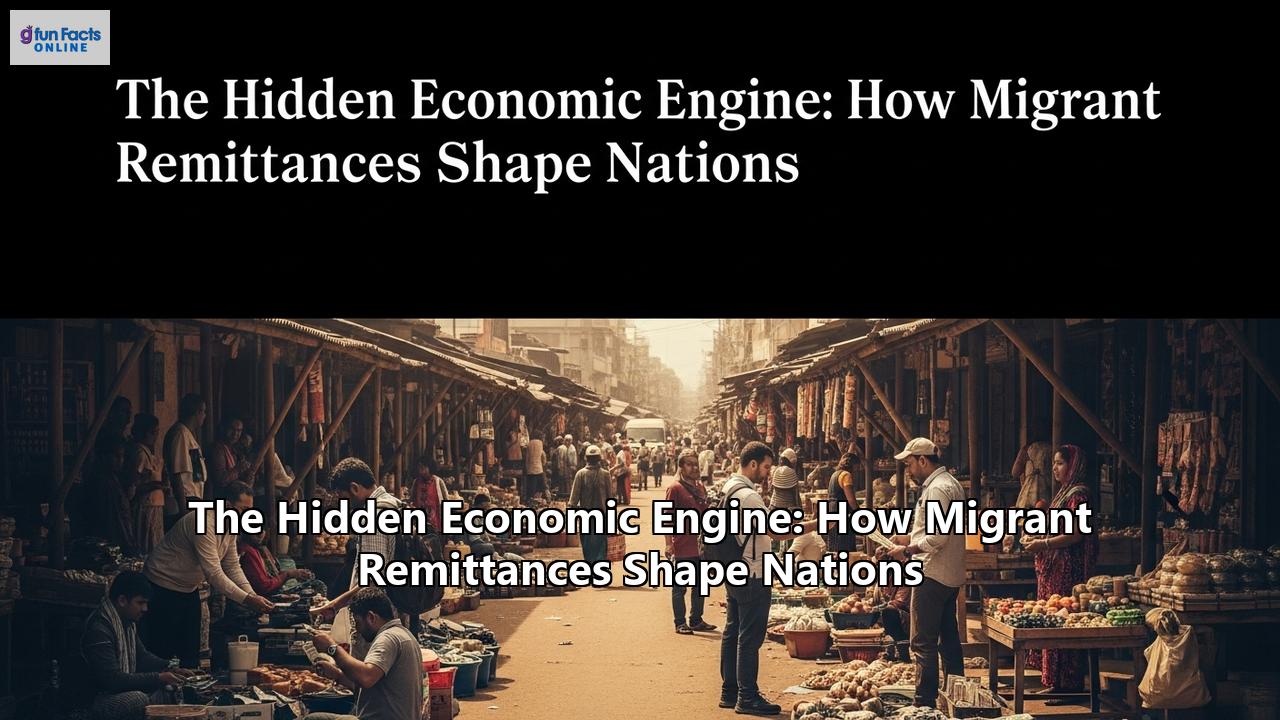
The Unseen Hand: How Migrant Money Flows Shape the Fortunes of Nations
In the quiet, unassuming queues of money transfer offices worldwide, a powerful economic force is at play. It’s a force that doesn't make headlines in the same way as foreign direct investment or official development aid, yet its impact on the lives of millions and the economies of nations is arguably more profound and direct. This is the world of migrant remittances—the money sent home by workers toiling in foreign lands. These are not mere financial transactions; they are lifelines of hope, engines of change, and the invisible threads that weave together a global tapestry of interconnected destinies.
This article delves into the multifaceted world of migrant remittances, exploring their staggering scale and their intricate dance with economic development, social dynamics, and cultural evolution. We will journey from the bustling metropolises where these funds originate to the remote villages where they bring about transformation, uncovering the stories of the people behind the numbers and the policies that seek to harness this potent force for good.
A River of Gold: The Global Flow of Remittances
The sheer volume of money that migrants send home is staggering. In 2023, officially recorded remittances to low- and middle-income countries (LMICs) reached a record $656 billion. Projections for 2024 estimate a rise to $685 billion, a figure that is expected to climb to $690 billion in 2025. To put this into perspective, remittance flows to developing countries are more than triple the amount of official development assistance (foreign aid) and often surpass foreign direct investment (FDI).
In 2024, India is projected to be the top recipient of remittances, with an astonishing $129 billion flowing into the country. Following India are Mexico ($68 billion), China ($48 billion), the Philippines ($40 billion), and Pakistan ($33 billion). While these absolute numbers are impressive, the true significance of remittances is often most keenly felt in smaller, more vulnerable economies. In countries like Tajikistan, remittances are expected to account for a staggering 45.4% of the Gross Domestic Product (GDP) in 2024. Similarly, in Tonga, Samoa, Lebanon, and Nicaragua, these financial inflows represent a substantial portion of their national economies.
These figures, as colossal as they are, likely underestimate the true scale of global remittances. A significant portion of these funds travels through informal channels, unrecorded in official statistics. These informal systems, while often cheaper for the sender, lack the security and transparency of formal channels.
The journey of these remittances is a global one, with distinct corridors of financial flow. High-income countries are overwhelmingly the primary source of these transfers. For decades, the United States has been the world's top remittance-sending nation.
The Economic Ripple Effect: From Households to National Economies
The impact of remittances on developing nations is both a micro and a macroeconomic story. It begins at the household level, where these funds are a crucial lifeline, and ripples outwards to influence national economic landscapes.
A Lifeline for Families: Alleviating Poverty and Fueling Consumption
For millions of families in developing countries, remittances are the primary source of income, a financial buffer that helps them navigate economic shocks and daily hardships. These funds are often the difference between poverty and a life of dignity. Research has consistently shown a strong correlation between remittances and poverty reduction. A study focusing on several Latin American countries found that a 10% increase in remittances was associated with an approximate 7% decrease in the number of people living in extreme poverty.
These funds are typically first directed towards meeting basic needs: food, clothing, and shelter. With these necessities secured, families are then able to invest in their well-being and future.
Investing in People: Education and Healthcare
One of the most significant impacts of remittances is on human capital development. Numerous studies have demonstrated a positive link between remittance inflows and increased spending on education and healthcare. Families receiving remittances are more likely to keep their children in school, particularly girls, and can afford better quality education, including private schooling.
In the realm of healthcare, remittances provide access to better medical services, medicines, and improved nutrition. This leads to tangible improvements in health outcomes, such as increased life expectancy and reduced child mortality rates. By investing in the health and education of their children, migrants are not just supporting their families in the present; they are laying the groundwork for a more prosperous future generation.
A study in Bangladesh, a country where remittances are a major source of foreign exchange, confirmed a long-run relationship between remittance inflows and an increase in the Human Development Index (HDI), a composite measure of health, education, and standard of living.
Fueling Entrepreneurship and Small Businesses
Beyond consumption and human capital, remittances are increasingly recognized as a vital source of funding for entrepreneurship and small business development. In many developing countries, access to formal credit and capital is severely limited, creating a significant barrier for aspiring entrepreneurs. Remittances can fill this void, providing the seed money needed to start a small business, such as a retail shop, a small restaurant, or a service-oriented venture.
Research has shown that remittances are more likely to be channeled into small businesses in rural and remote areas, where access to traditional financing is most constrained. A study of 47 developing countries found that increased remittances led to a higher rate of new business creation, particularly in countries with larger informal economies. These remittance-funded enterprises not only generate income for the entrepreneurs and their families but also create jobs and stimulate local economic activity.
The Macroeconomic Powerhouse: A Stable Source of Foreign Exchange
At the national level, remittances are a powerful stabilizing force for the economies of recipient countries. They are a significant source of foreign exchange, which is crucial for paying for imports and servicing foreign debt. Unlike other capital inflows like FDI, which can be volatile and are often concentrated in a few large economies, remittances are a more stable and predictable source of external financing.
This stability was particularly evident during the 2008 global financial crisis and the COVID-19 pandemic. While other financial flows faltered, remittances remained remarkably resilient, providing a crucial economic cushion for many developing nations. The steady inflow of remittances can also improve a country's creditworthiness in international markets, making it easier and cheaper to borrow money for development projects.
The Arteries of the Global Economy: Remittance Channels and Costs
The journey of a remittance from sender to receiver is facilitated by a complex network of formal and informal channels. Understanding these channels and the costs associated with them is crucial for maximizing the developmental impact of these financial flows.
Formal vs. Informal: A Tale of Two Systems
Formal remittance channels include banks, money transfer operators (MTOs) like Western Union and MoneyGram, and post offices. These channels are regulated, secure, and offer a clear paper trail for transactions. However, they can also be expensive, with fees and exchange rate margins eating into the amount of money the recipient ultimately receives.
Informal channels, on the other hand, operate outside of the official financial system. These can range from a friend or relative carrying cash on a trip home to more sophisticated underground networks like the Hawala system. The primary appeal of informal channels is their lower cost. However, they come with significant risks, including the potential for theft, loss, and a lack of legal recourse if something goes wrong. Despite these risks, a substantial portion of global remittances, estimated to be between 35% and 75% of official flows, travels through informal channels, particularly in regions like Sub-Saharan Africa and Eastern Europe.
The High Cost of Sending Money Home
The cost of sending remittances remains a significant challenge. The global average cost to send $200 was 6.4% in the fourth quarter of 2023, more than double the United Nations' Sustainable Development Goal target of 3%. Costs can be even higher in certain corridors, with Sub-Saharan Africa being the most expensive region to send money to. In some of the most expensive corridors, costs can be exorbitant. For instance, the average cost to send $200 to Tanzania can be as high as $115.
Several factors contribute to these high costs, including a lack of competition among service providers, limited transparency in pricing, and underdeveloped payment systems in some recipient countries. These high costs mean that less money reaches the families who need it most, diminishing the overall impact of remittances.
The Digital Revolution: A Path to Lower Costs and Greater Inclusion
Technology is emerging as a powerful tool to address the challenges of high remittance costs and financial exclusion. Digital remittance services, including online platforms and mobile money applications, are transforming the landscape. The average cost of sending a digital remittance is significantly lower than traditional methods, at around 3.93%.
Mobile money, in particular, has the potential to revolutionize remittances, especially in rural and remote areas where traditional banking infrastructure is lacking. Mobile money platforms allow people to send and receive money using their mobile phones, bypassing the need for a traditional bank account. This not only reduces costs but also increases convenience and provides a gateway to a wider range of financial services, such as savings and credit.
Blockchain technology also holds promise for the future of remittances. By creating a transparent and secure shared ledger, blockchain can simplify international transactions, reduce the need for intermediaries, and lower costs.
The Human Dimension: Stories of Hope and Sacrifice
Behind the staggering statistics and economic analyses are the deeply personal stories of migrants and their families. These stories paint a vivid picture of the sacrifices made, the hopes nurtured, and the lives transformed by the steady flow of remittances.
In Timor-Leste, Joanita's husband works in South Korea to support their family. The money he sends home covers their daily needs, his mother's care, and Joanita's university tuition. For her, remittances are a lifeline that provides not just for their basic needs but also hope for the future. However, she, like many others, faces the challenge of high transfer fees, a common barrier that reduces the impact of these hard-earned funds.
In Tunisia, a young man's brother migrated and now sends money home regularly. These remittances have allowed their parents to perform the Hajj pilgrimage to Mecca and have provided a safety net for the family in a country with limited economic opportunities.
These stories, and countless others like them, highlight the profound human impact of remittances. They are a testament to the enduring bonds of family and the lengths to which people will go to provide a better life for their loved ones.
The Social and Cultural Fabric: How Remittances Reshape Communities
The impact of remittances extends beyond the economic sphere, weaving its way into the social and cultural fabric of sending communities. This influence is complex and multifaceted, bringing both positive changes and new challenges.
Shifting Gender Dynamics and Women's Empowerment
Remittances can be a powerful catalyst for gender equality and women's empowerment. When women are the direct recipients of remittances, they often gain greater control over household finances and a larger say in decision-making. This financial autonomy can translate into increased confidence and a more prominent role in the community.
Furthermore, women who migrate and become the primary breadwinners for their families often challenge traditional gender roles. Research shows that female migrants tend to remit a higher proportion of their income than their male counterparts, and they are more likely to direct these funds towards the health and education of their children, with a significant positive impact on family well-being.
However, the picture is not uniformly positive. In some contexts, the absence of male migrants can place a heavy burden on the women left behind, who must manage the household and raise children alone. There can also be pressure on female migrants to remit a large portion of their earnings, sometimes leading them to accept difficult working conditions.
The Flow of Ideas: Social Remittances
Beyond financial flows, migrants also transmit what are known as "social remittances" – the ideas, values, norms, and skills they acquire in their host countries. These can include new perspectives on democracy, gender equality, human rights, and civic engagement.
Social remittances can have a significant impact on political participation in origin countries. Studies have shown that in some contexts, remittance recipients are more likely to engage in non-electoral political activities, such as contacting government officials or participating in protests. This can be attributed to both the increased financial resources that remittances provide, which can free up time for political engagement, and the new political ideas and knowledge transferred by migrants.
However, the impact of remittances on political participation can be complex and context-dependent. In some cases, remittances may reduce incentives for political engagement by insulating recipients from local economic conditions and weakening their dependence on the state.
The Rise of a "Culture of Remittances"
In many migrant-sending communities, a "culture of remittances" has emerged, where sending and receiving money has become a deeply ingrained social norm and expectation. This culture can have a powerful influence on community life, shaping consumption patterns, social status, and aspirations.
On one hand, this can lead to positive outcomes, such as collective remittances being used to fund community development projects like schools, clinics, and infrastructure improvements. Hometown associations (HTAs), organizations of migrants from the same community, often play a crucial role in pooling resources for such projects.
On the other hand, a strong culture of remittances can also create social pressure and dependency. Families may come to rely on remittances as their primary source of income, which can stifle local economic initiative and create vulnerability to disruptions in remittance flows. There can also be a "keeping up with the Joneses" effect, where families feel pressured to display their newfound wealth through conspicuous consumption, which can exacerbate social inequalities.
Navigating the Challenges: The Double-Edged Sword of Remittances
While the benefits of remittances are undeniable, it is crucial to acknowledge the challenges and potential negative consequences that can accompany them.
The Brain Drain vs. Brain Gain Debate
A long-standing concern for migrant-sending countries is the "brain drain" – the emigration of highly skilled and educated individuals, such as doctors, nurses, and engineers. The loss of this human capital can have a detrimental impact on the delivery of essential services and the overall development of the country.
However, a growing body of research suggests that migration can also lead to a "brain gain." The prospect of higher wages and better opportunities abroad can incentivize more people to invest in education and skills training at home. This can result in an overall increase in the number of skilled workers in the origin country, even after accounting for those who emigrate.
The case of the Philippines provides a compelling example. In response to a high demand for nurses in the United States, the number of nursing graduates in the Philippines surged. While many nurses did emigrate, a significant number remained, leading to a net increase in the country's nursing workforce.
The Perils of Dependency
A heavy reliance on remittances can create economic vulnerability for both families and nations. For families, a sudden disruption in remittance flows due to a job loss, illness, or change in immigration policy in the host country can have devastating consequences. At the national level, an over-reliance on remittances can disincentivize governments from pursuing necessary economic reforms and can make the economy susceptible to external shocks.
This is a particular concern for Small Island Developing States (SIDS), which are often highly dependent on remittances. Their small economies and vulnerability to climate change make them particularly susceptible to the negative impacts of remittance dependency.
Inequality and Social Stratification
Remittances can also have a mixed impact on inequality. While they can lift many households out of poverty, they can also exacerbate existing inequalities. Households with members abroad are often better off than those without, leading to a widening gap between the two groups. This can create social tensions and a sense of relative deprivation among non-recipient households.
Harnessing the Power: Policies for a Brighter Future
Given the immense potential of remittances to drive development, a growing number of governments and international organizations are implementing policies and initiatives to maximize their positive impact.
These efforts focus on several key areas:
- Reducing Remittance Costs: A primary focus is on lowering the cost of sending money. This includes promoting competition among service providers, increasing price transparency, and supporting the adoption of low-cost digital remittance technologies.
- Promoting Financial Inclusion: Efforts are being made to link remittances to a broader range of financial services. This involves encouraging remittance recipients to open bank accounts and providing them with access to savings, credit, and insurance products. Financial literacy programs are also being implemented to help families manage their finances more effectively.
- Channeling Remittances into Productive Investments: Governments are creating incentives for migrants and their families to invest remittances in productive activities, such as small businesses and community development projects. This includes matching-fund programs, where the government co-finances projects initiated by diaspora groups.
- Engaging the Diaspora: There is a growing recognition of the importance of engaging with diaspora communities not just as sources of finance, but also as partners in development. This involves creating platforms for knowledge and skills transfer, and supporting diaspora philanthropy and investment.
A Force for Global Good
The story of migrant remittances is a story of human endeavor, familial devotion, and global interconnectedness. It is a story of a hidden economic engine that is quietly and powerfully shaping the destinies of nations. While challenges and complexities remain, the overwhelming evidence points to the transformative power of these financial flows. By understanding the intricate ways in which remittances work, and by implementing policies that harness their potential, we can ensure that this river of gold continues to be a powerful force for good in the world, building bridges of opportunity and a more prosperous and equitable future for all.
Reference:
- https://www.federalreserve.gov/econres/notes/feds-notes/global-remittances-cycle-20250227.html
- https://blogs.worldbank.org/en/peoplemove/in-2024--remittance-flows-to-low--and-middle-income-countries-ar
- https://visionias.in/current-affairs/monthly-magazine/2025-02-22/economics-(macroeconomics)/news-in-shorts/news-in-shorts)
- https://www.statista.com/chart/13659/the-countries-who-depend-on-remittances-the-most/
- https://scholarsbank.uoregon.edu/server/api/core/bitstreams/bfd790d7-f87b-4c82-ae59-e7277d10d7ea/content
- https://pmc.ncbi.nlm.nih.gov/articles/PMC6816756/
- https://blogs.worldbank.org/en/peoplemove/making-remittances-work-poor-three-lessons-learned-three-greenback-20-remittance-champion-cities
- https://www.imf.org/en/Publications/fandd/issues/Series/Back-to-Basics/Remittances
- https://databank.worldbank.org/source/remittance-prices-worldwide-(corridors))
- https://gsdrc.org/document-library/another-resource-curse-the-impact-of-remittances-on-political-participation/
- https://files.econ.cam.ac.uk/people-files/faculty/km418/partIIb/Reading/Shen_180212.pdf
- https://www.researchgate.net/publication/389280023_Remittances_and_poverty_in_ASEAN
- https://nvsquarterly.org/2024/10/07/how-and-why-do-diaspora-give/
- https://www.fao.org/4/j2815e/j2815e02.htm
- https://www.ircres.cnr.it/pubblicazione/the-role-of-collective-remittances-in-community-development-the-case-of-hometown-associations/
- https://ideas.repec.org/p/zbw/glodps/609.html
- https://www.migrationpolicy.org/article/migrant-hometown-associations-and-opportunities-development-global-perspective
- https://www.migrationdataportal.org/themes/remittances-overview
- https://www.iom.int/sites/g/files/tmzbdl486/files/2019-01/S-19-6%20-%20Socioeconomic%20opportunities%20and%20challenges%20of%20remittances.pdf
- https://www.visualcapitalist.com/sp/pla01-countries-with-the-highest-remittance-costs/
- https://www.tandfonline.com/doi/full/10.1080/1369183X.2024.2357833
- https://lup.lub.lu.se/luur/download?func=downloadFile&recordOId=9175233&fileOId=9175234
- https://www.ircres.cnr.it/en/pubblicazione/the-role-of-collective-remittances-in-community-development-the-case-of-hometown-associations/
- https://www.econstor.eu/bitstream/10419/222445/1/GLO-DP-0609.pdf
- https://thefinancialexpress.com.bd/views/social-impact-of-remittances-on-family-dynamics-in-bd
- https://www.gfmd.org/sites/g/files/tmzbdl1801/files/documents/gfmd_brussels07_contribution_unicef_remittance_children_en.pdf
- https://www.researchgate.net/publication/386107777_The_Role_of_Family_Remittances_in_Africa_Challenges_Opportunities_and_Pathways_to_Sustainability
- https://www.migrationpolicy.org/research/diaspora-philanthropy-private-giving-and-public-policy
- https://jda.africasocialwork.net/wp-content/uploads/2024/10/4-Assessment-of-the-use-of-remittances-as-a-community-development-tool-in-Abia-State-Nigeria.pdf
- https://www.econstor.eu/bitstream/10419/46674/1/565335251.pdf
- https://diasporadigitalnews.com/a-philanthropist-diary-of-an-african-diaspora/
- https://thedialogue.org/blogs/2025/05/migrant-remittances-to-central-america-and-options-for-development
- http://pdf.wri.org/ref/lowell_00_the_developmental.pdf
- https://www.cafamerica.org/wp-content/uploads/DPS_Report18_v5.pdf