The technology landscape underwent its most significant strategic realignment since the dawn of the smartphone era as Apple began rolling out its highly anticipated iOS 27 developer beta 2, paving the way for the public beta launch. This development marks the formal, system-wide implementation of a dramatic corporate pivot: Apple has officially handed over the cognitive core of its signature virtual assistant to Alphabet, embedding a custom-built Google Gemini model directly into the operating system.
For a company that built its empire on strict vertical integration, closed-loop proprietary systems, and fierce independence from its primary platform rival, the move is a stunning reversal. Rather than relying entirely on its own foundation models to power the most critical consumer-facing elements of Apple Intelligence, Apple is paying Google an estimated $1 billion annually to license a custom 1.2 trillion-parameter Gemini model. This massive, multi-year partnership establishes Apple Siri Google Gemini as the dominant technological alliance in consumer artificial intelligence, redefining how more than two billion active devices process context, reasoning, and multi-step actions.
The rollout of the developer preview and the imminent launch of the public beta have moved this alliance from the realm of corporate strategy to physical silicon. As users begin interacting with the entirely rebuilt "Siri AI"—which replaces the old voice assistant with a deeply integrated, conversational chatbot interface—the industry is beginning to digest the immense downstream consequences of this deal.
An impact analysis reveals how this decision was made, who stands to gain and lose, how Apple engineered a way to bypass Google’s privacy trap, and what this means for the immediate and long-term future of personal computing.
The Anatomy of the Deal: Inside the $1 Billion Brain Transplant
To understand why Apple decided to outsource Siri's core reasoning engine, one must look at the immense pressure mounting on the company's executive team. Despite launching Apple Intelligence with great fanfare, Apple spent much of the past two years battling chronic development delays, accuracy issues, and a widening capabilities gap between its in-house models and frontier systems like OpenAI’s GPT-4 and Google's Gemini.
Siri, which debuted on the iPhone 4S in 2011 as a revolutionary promise of voice-driven computing, had spent over a decade relegated to a basic task-runner—useful for setting kitchen timers and checking the weather, but fundamentally incapable of understanding natural human dialogue or executing complex, multi-step actions. While rivals rapidly built massive, cloud-scale generative AI models, Apple's insistence on on-device, small-parameter models limited its ability to compete in the cognitive arms race.
Why Apple Capitalized on Google's Infrastructure
The licensing agreement, which Bloomberg first reported in late 2025 and Apple officially confirmed at its Worldwide Developers Conference (WWDC), is a pragmatic solution to an engineering emergency. Under the terms of the multi-year deal, Google provides a custom-tuned version of its frontier Gemini model architecture specifically optimized for Siri's cognitive pipeline.
| Deal Element | Detail / Specification |
|---|---|
| Annual Licensing Cost | Approximately $1 billion |
| Contract Value | Up to $5 billion over a multi-year term |
| Model Scale | Custom 1.2 trillion parameter model |
| Underlying Architecture | Mixture-of-Experts (MoE) |
| Primary Tasks | Contextual reasoning, planning, multi-step orchestration, summarization |
| Execution Environment | Apple Private Cloud Compute (PCC) |
This 1.2 trillion-parameter model is a colossal leap forward from Apple’s in-house cloud foundation models, which hovered around 150 billion parameters. Google engineered this specific variant using a Mixture-of-Experts (MoE) architecture. Instead of activating all 1.2 trillion parameters for every simple question—a process that would be catastrophically expensive and slow—the model dynamically routes queries to specialized sub-networks.
If a user asks Siri to summarize a long thread of emails, only the text-processing expert network fires up. If the request involves synthesizing data from a photo and a calendar event, the multimodal and planning networks are engaged.
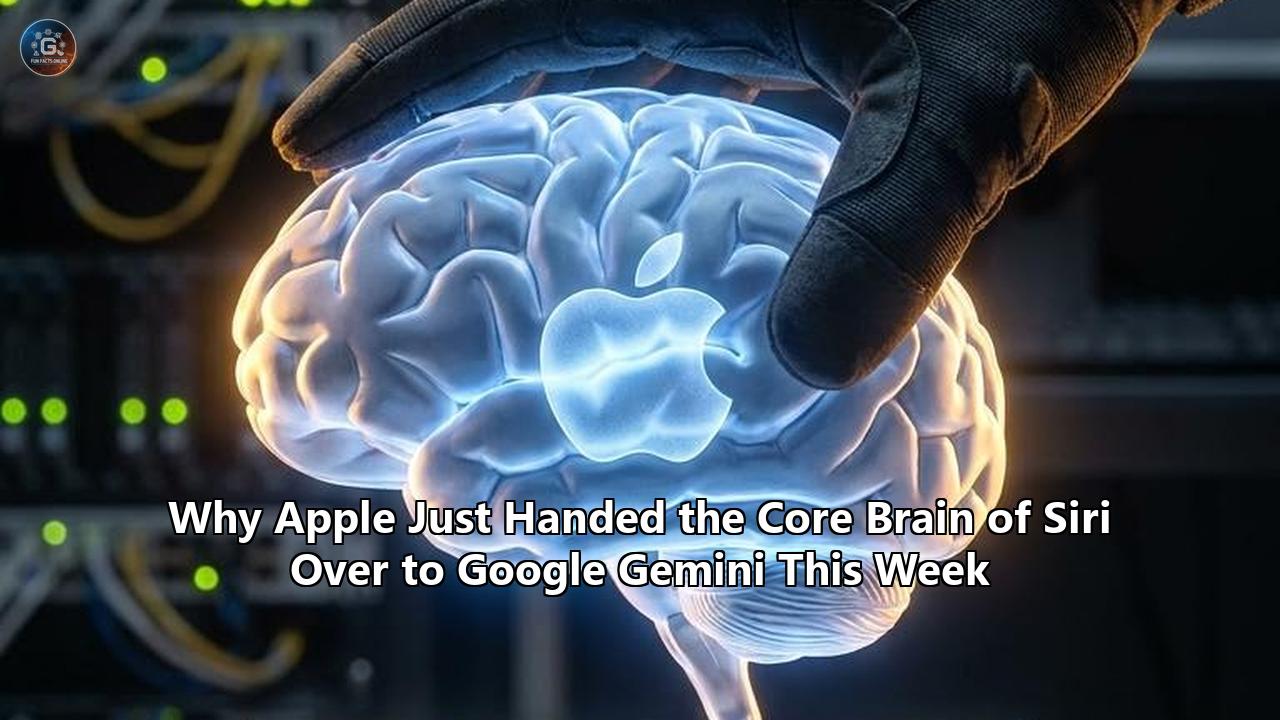
This hybrid design gives the rebuilt Siri the conversational fluency of Google's frontier models while keeping response latencies low enough to feel native to an operating system. Google provides the logical scaffolding (the brain), while Apple retains absolute control over the user interface, system integration, and on-device execution (the skull).
How Siri AI Changes the User Experience in iOS 27
For years, Apple’s virtual assistant felt like a legacy utility duct-taped to a modern operating system. With the release of iOS 27, that utility has been replaced by "Siri AI". When users activate the new assistant, the traditional glowing orb at the bottom of the screen is gone, replaced by a "Liquid Glass" animation that ripples outward from the Dynamic Island across the borders of the display.
The integration of Apple Siri Google Gemini transforms the assistant's mechanics from a rigid, voice-triggered search tool into an active, on-screen agent capable of complex reasoning. Under the hood, Siri's operations are divided into three distinct layers:
- Planning: Understanding what the user wants to accomplish and mapping out the necessary actions to achieve it.
- Knowledge Retrieval: Fetching relevant data from on-device local databases, emails, messages, photos, and the live web.
- Summarization & Generation: Synthesizing that information into a cohesive, conversational response.
[ User Request ] ──> [ Liquid Glass UI / Dynamic Island ]
                          │
                          ▼
             [ Step 1: On-Device Context ] (Parses Screen, Messages, Photos)
                          │
                          ▼
             [ Step 2: Private Cloud Compute ] (Secure Apple Servers)
                          │
             ┌────────────┴────────────┐
             ▼                         ▼
  [ Local Apple Models ]     [ Custom 1.2T Gemini MoE Model ]
  (On-Device Tasks)          (Reasoning, Planning & Summarizing)
             │                         │
             └────────────┬────────────┘
                          ▼
             [ Step 3: Action Execution ] (App Intents & API Orchestration)
In practice, this means Siri AI can process contextual, multi-step requests that previously required manual app-switching. If a user tells Siri, "My sister is visiting next Thursday; find that restaurant recommendation she texted me, check if I'm free that evening, and book a table for two," the assistant executes this sequentially.
It scans messages to identify the restaurant, queries the Calendar app to verify availability, cross-references open tables via integrated booking APIs, and presents a finalized booking card within a new, standalone Siri app.
Furthermore, Siri AI is equipped with deep on-screen awareness. If a user is looking at a photo of an unfamiliar landmark in the Photos app or reading an article in Safari, they can summon Siri and say, "What is this and how far is it from my hotel?" Siri AI reads the pixels on the screen, identifies the subject using Visual Intelligence, queries the user's booking details in the Mail app to find their hotel, and maps the route—all without requiring the user to copy-paste a single line of text.
Who is Affected? Mapping the Power Shifts
An alliance of this magnitude does not happen in a vacuum. By deeply integrating Google's engine into the Apple ecosystem, the two tech giants have sent shockwaves through the consumer tech industry, fundamentally altering the competitive calculus for developers, silicon manufacturers, and rival AI companies.
1. Consumers and the Steep Hardware Cliff
The average iPhone user will immediately notice a massive leap in Siri's capability, but that intelligence comes with a steep hardware tax. Processing hybrid local-cloud AI workloads requires significant system memory and neural processing power. As a result, Siri AI and the broader suite of advanced Apple Intelligence features are locked behind a strict hardware compatibility wall.
Only users with an iPhone 15 Pro, iPhone 15 Pro Max, any iPhone 16 model, or newer devices can access these capabilities. iPad and Mac users must possess M1-series silicon or later.
For the hundreds of millions of users holding older devices like the iPhone 11, 12, or 13, iOS 27 will offer general operating system refinements and security patches, but the "Liquid Glass" Siri AI will remain entirely out of reach. This has effectively divided the iOS user base into two classes: the legacy offline tier and the premium AI tier.
2. OpenAI and Anthropic: Relegated to the Margins
When Apple first detailed its AI ambitions at WWDC 2024, OpenAI was positioned as the primary external partner, with ChatGPT acting as the default destination for complex world-knowledge queries. The Apple Siri Google Gemini deal fundamentally shifts that dynamic.
By designating Gemini as the "preferred cloud provider" and the foundational intelligence layer of Apple Foundation Models, Apple has demoted OpenAI to a supporting role. While ChatGPT and Anthropic's Claude remain available as opt-in, third-party integrations for specific, highly complex tasks, Gemini is now the default engine running silently in the background.
When a user asks Siri AI a question, it is Gemini that plans the response, synthesizes the context, and coordinates the execution. OpenAI and Claude are only summoned if the user explicitly requests them or if the system hits a highly niche prompt that the primary model is not configured to handle.
  ┌─────────────────────────────────────────────────────────┐
  │                   Siri AI Architecture                  │
  └────────────────────────────┬────────────────────────────┘
                               │
            Is the query simple or highly personal?
             ┌─────────────────┴─────────────────┐
             ▼ YES                               ▼ NO
  ┌──────────────────────┐             ┌─────────────────────┐
  │ On-Device Processing │             │    Does Siri need   │
  │  (Apple Local ML)    │             │   world knowledge?  │
  └──────────────────────┘             └──────────┬──────────┘
                                                  │
                                       ┌──────────┴──────────┐
                                       ▼ YES                 ▼ NO
                             ┌──────────────────┐  ┌─────────────────┐
                             │  Custom Google   │  │   Is a niche    │
                             │  Gemini 1.2T     │  │  model needed?  │
                             │ (Implicit Engine)│  └────────┬────────┘
                             └──────────────────┘           │
                                                   ┌────────┴────────┐
                                                   ▼ YES             ▼ NO
                                         ┌──────────────────┐  ┌─────────────┐
                                         │  Opt-In Partners │  │ Apple Local │
                                         │ (ChatGPT/Claude) │  │  Fallback   │
                                         └──────────────────┘  └─────────────┘
For Google, this is a monumental commercial and reputational victory. It effectively neutralizes OpenAI’s early first-mover advantage by installing Gemini as the default brain for both Android and iOS—covering virtually the entire global smartphone market.
3. Apple App Developers: Adapting to the "Agentic" Interface
For iOS developers, the introduction of a Gemini-powered Siri AI rewrite represents a massive structural shift in how apps are discovered and utilized. Under previous versions of iOS, developers focused heavily on App Store Optimization (ASO) and user retention within their custom interfaces.
With iOS 27, the primary entry point for user interaction is shifting to the Siri AI chatbot and the system-wide App Intents API. If Siri AI can execute multi-app workflows natively—such as reading a travel confirmation from an email, booking a ride-share, and adjusting a smart thermostat—users will spend far less time interacting with individual app UIs.
Developers must meticulously map out their app features as "App Intents" that the Gemini planning model can easily index and execute. Those who fail to adapt risk their applications becoming invisible background utilities, bypassed by Siri's orchestrator in favor of competitors with cleaner API integrations.
The Technical Paradox: Bypassing the Google Privacy Trap
When news of the Apple-Google partnership first broke, privacy advocates and tech purists voiced intense skepticism. For years, Apple’s entire marketing engine was built on a single, uncompromising promise: What happens on your iPhone, stays on your iPhone.
Google, by contrast, operates one of the world's most pervasive data-harvesting networks, funding its multi-billion-dollar enterprise by indexing user behavior to serve highly targeted advertising.
How could Apple hand the "brain" of Siri over to Google without completely compromising its privacy-first brand identity?
The answer lies in the technical architecture of Apple’s Private Cloud Compute (PCC). Under the hood, the integration is not a simple API call that forwards user prompts to Google’s corporate data centers. Instead, the custom 1.2 trillion-parameter Gemini model weights are hosted and executed inside Apple's own secure, hardware-isolated cloud infrastructure.
  [ iPhone User Query ] ──(End-to-End Encrypted Tunnel)──> [ Apple Secure Enclave Server ]
                                                                       │
                                                       (Loads Local Gemini 1.2T Weights)
                                                                       │
                                                                       ▼
                                                       [ Cryptographically Isolated Memory ]
                                                                       │
                                                            (Processes Prompt & Runs
                                                             Inference inside PCC)
                                                                       │
                                                                       ▼
  [ Google Corporate Servers ] <──(Strictly No Data Shared)── [ Destroy Session Keys ]
                                                                       │
  [ Cryptographic Auditing ]   <──(Verifiable OS Log)─────────── [ Return Answer to iOS ]
1. Hardware-Isolated Enclaves
The servers powering Private Cloud Compute are built using custom Apple Silicon (designed using the same security concepts as the Secure Enclave inside the iPhone and Mac). When a query requires cloud-scale processing, Siri packages the request, de-identifies the user data, and transmits it via an end-to-end encrypted tunnel to a PCC node.
The custom Gemini model weights run inside these hardware-isolated secure enclaves. At no point does the raw query, the user's location, or their identity leave Apple's physical hardware.
2. Cryptographic Attestation and No Persistent Storage
PCC relies on a mechanism known as cryptographic attestation. Before an iPhone sends any data to a PCC server, it cryptographically verifies that the server is running a verifiably secure, audited operating system image.
This operating system is designed without persistent storage. Once the Gemini model processes the prompt, generates the response, and returns the result to the user's device, the virtual session is wiped from the server's memory.
3. The Strict Training Ban
Under the legally binding agreement between the two firms, Google is explicitly prohibited from using any Siri interactions, user prompts, or metadata to train future Gemini models. The interaction is strictly an inference-only licensing deal.
Your personal context—your emails, calendar events, and private text messages—never touches Google's servers, is never indexed by Google's spiders, and can never leak into public Gemini search results.
Economic and Supply Chain Side Effects
While the technical architecture of the deal successfully addresses the privacy conundrum, it has triggered unexpected volatility in the global hardware supply chain. Layering a massive, cloud-scale model like Gemini onto on-device personal context requires an unprecedented amount of high-speed random-access memory (RAM).
To run the local context-caching, localized vector databases, and on-device embedding models necessary to feed Siri AI, Apple’s upcoming hardware lineup requires significantly more memory. Rumors from the supply chain indicate that the upcoming iPhone 17 series will standardize a baseline of 12GB of RAM across its entire Pro lineup, a sharp increase from the 8GB baseline found in the iPhone 16.
This sudden, massive spike in demand for high-density mobile DRAM has sent shockwaves through the semiconductor market. Micron Technology reported that DRAM prices climbed more than 60% in a single quarter, driven primarily by smartphone manufacturers rushing to upgrade their memory specifications to support agentic AI features.
This supply-side volatility has directly impacted Apple's device Bill of Materials (BOM) economics. To protect its industry-leading gross margins from these skyrocketing memory costs, Apple made a quiet but significant tactical adjustment: it announced price increases on several high-tier MacBook and iPad configurations.
                                  [ Apple Siri Google Gemini Deal ]
                                                 │
                                                 ▼
                             [ Heavy Local Context & RAM Requirements ]
                                                 │
                                                 ▼
                             [ Massive Demand for High-Density Mobile DRAM ]
                                                 │
                                                 ▼
                             [ DRAM Prices Spike 60%+ (Micron Data) ]
                                                 │
                                                 ▼
                             [ Apple Device BOM Economics Squeezed ]
                                                 │
                                                 ▼
                             [ Apple Raises MacBook & iPad Prices ]
                                 (Protects Gross Margins for Wall Street)
This economic chain reaction highlights a critical reality of the consumer AI era: intelligence is not free. Even if the cloud computing portion is offset by licensing agreements, the localized hardware required to route and process those transactions places massive structural demands on global supply chains.
Short-Term Consequences: Regulatory Roadblocks and Waitlist Realities
While the engineering and economic structures of the deal are locked in, the practical, real-world rollout of Siri AI faces significant speed bumps over the coming months.
1. The Regional Fragmentations: EU and China Lockouts
The most immediate consequence of the Apple Siri Google Gemini alliance is a highly fragmented global user experience. Because this deal represents an unprecedented concentration of AI power—with Google essentially controlling the default intelligence layer for both Android and iOS—regulators are already circling.
The European Union, under the strict provisions of the Digital Markets Act (DMA) and the AI Act, is closely scrutinizing the partnership. Due to regulatory uncertainty and ongoing antitrust investigations into Google's search default payments to Apple (historically valued at $20 billion per year), Apple has taken a highly cautious approach.
Siri AI and the broader suite of advanced Apple Intelligence features will be completely blocked in the European Union on iOS and iPadOS at launch. While Mac users in the EU can access the features under certain language configurations, millions of European iPhone owners will find their devices locked out of the "Liquid Glass" assistant this fall.
Similarly, the feature is blocked in China. Google’s services are banned in mainland China, and Beijing's domestic regulations require all generative AI models to be pre-approved by the Cyberspace Administration of China (CAC). Apple is currently working with local Chinese AI firms to find a domestic alternative to power Siri's brain in that region, but until a deal is struck, the Chinese iPhone market will remain an AI dead zone.
2. The Waitlist Bottleneck
For users in compatible regions (such as the United States), installing the upcoming iOS 27 public beta does not guarantee immediate access to Siri AI. Due to the immense computing requirements of scaling a 1.2 trillion-parameter model to millions of concurrent users, Apple is implementing a phased waitlist system.
Upon upgrading to the beta, users must navigate to their Settings app and request access to Siri AI. Apple is letting users in in structured waves, prioritizing those with newer hardware (like the iPhone 16 Pro) and active iCloud+ subscriptions. This managed rollout is designed to prevent a catastrophic collapse of Apple's Private Cloud Compute infrastructure under the initial weight of public adoption.
Long-Term Consequences: Bridge Strategy or Golden Handcuffs?
In the long run, the decision to rely on Google Gemini represents one of the most critical fork-in-the-road moments in Apple’s modern history. It can be interpreted in two diametrically opposed ways: as a quiet admission of defeat, or as a masterfully calculated bridge strategy.
The Case for "The White Flag"
Critics argue that by outsourcing Siri's brain, Apple has surrendered its autonomy in the most critical technological shift of the 21st century. For a company that once prided itself on controlling both the hardware and the software of its products, relying on its fiercest rival for core operating system intelligence is a massive compromise.
                             [ Apple's AI Strategic Crossroads ]
                                              │
                     ┌────────────────────────┴────────────────────────┐
                     ▼                                                 ▼
        [ Scenario A: The White Flag ]                   [ Scenario B: The Bridge Strategy ]
                     │                                                 │
    - Outsources core cognitive layers               - Licenses Gemini to buy critical time
    - Surrenders key AI research frontier             - Leverages ecosystem & UX advantages
    - Becomes dependent on rival's brain             - Builds custom "Baltra" server chips
    - Yields strategic AI lead to Google             - Mass-produces proprietary models (2027)
By paying Google $1 billion a year, Apple is essentially conceding that its internal AI research division was simply unable to build a competitive, frontier-class large language model.
This creates a dangerous dependency: if Google’s Gemini model family continues to outpace Apple’s internal development, Apple may find itself permanently locked into these "golden handcuffs," unable to sever the tie without severely degrading the user experience of its flagship devices.
The Case for "The Bridge Strategy"
However, close observers of Apple’s supply chain see a much more calculated play. Rather than a surrender, the Gemini deal is a brilliant bridge strategy designed to buy Apple the time it needs to scale its own infrastructure without falling behind in the market today.
Apple is currently aggressively developing its own custom AI server chips (codenamed "Baltra"), utilizing advanced 3nm architecture, with mass production scheduled for the second half of 2026. These proprietary chips are designed to power a massive expansion of Apple’s Private Cloud Compute data centers, which are projected to come online at scale in 2027.
By licensing Gemini today, Apple achieves several critical strategic goals:
- Saves Billions in Early Capital Expenditure: It avoids spending tens of billions of dollars rushing to build sub-par data centers today using highly marked-up, short-supply commercial GPUs.
- Maintains Device Sales: It delivers a competitive, state-of-the-art AI assistant to consumers immediately, preserving the premium appeal of the iPhone 16 and upcoming iPhone 17 lineups.
- Keeps Talent on Board: It establishes a world-class playground for AI engineers to build user-facing agentic workflows, helping Apple attract top-tier machine learning talent.
- Builds Proprietary Models Quietly: It gives Apple's internal research team a multi-year window to train its own proprietary, highly specialized models, which can eventually replace the licensed Gemini models once the "Baltra" server infrastructure is fully deployed in 2027.
Tim Cook’s Final Act and the Ternus Era
The timing of this massive AI shift carries deep symbolic weight. The rollout of Siri AI and the transition to iOS 27 mark the final chapters of Tim Cook’s historic tenure as Apple’s Chief Executive Officer.
Cook, who took over from Steve Jobs in 2011—the very year Siri was introduced—is scheduled to officially step down on September 1, 2026, handing the keys of the world’s most valuable consumer technology brand to Senior Vice President of Hardware Engineering John Ternus.
  Tim Cook's Final Act (WWDC 2026 Keynote)
  │
  ├─► Officially hands over Siri's brain to Google Gemini
  ├─► Preserves immediate ecosystem premium via strategic partnerships
  │
  ▼
  John Ternus Takes the Reins (September 1, 2026)
  │
  ├─► Must manage the global rollout of Siri AI
  ├─► Oversees the debut of the iPhone 17 with 12GB RAM standard
  ├─► Scales custom "Baltra" AI server chip deployment
  └─► Steers the ship through impending EU and DOJ antitrust crosswinds
By cementing the Apple Siri Google Gemini deal as his final major strategic play, Cook has effectively derisked the transition for his successor.
He took the uncomfortable, pragmatically honest step of admitting Apple needed outside help to catch up in AI, shielding Ternus from the immediate investor blowback of Siri's historical development delays.
Ternus takes the reins of a company that is no longer lagging behind in the consumer AI experience. Instead, he inherits a highly capable, Gemini-powered operating system ecosystem that is ready to ship to billions of devices, giving him a stable, competitive platform from which to build the next decade of Apple’s hardware-software vision.
What to Watch For Next
As the iOS 27 public beta prepares to open to the general public this month, the tech community will be watching several critical indicators to see if this historic gamble pays off:
- The Waitlist Throughput: How quickly can Apple scale its Private Cloud Compute nodes to transition users from the waitlist to active Siri AI access?
- Consumer Adoption and Real-World Latency: Will the custom 1.2 trillion parameter model prove as responsive and useful in real-world, multi-app workflows as Apple's curated WWDC demos suggested?
- Antitrust Backlash: How quickly will the U.S. Department of Justice and European regulators move to investigate the consolidation of AI power represented by this landmark smartphone alliance?
- BOM Cost Impacts on the iPhone 17: Will the rising cost of high-density DRAM force Apple to raise iPhone pricing this September, and how will consumers respond to the hardware compatibility cliff?
By replacing Siri’s outdated brain with Google’s state-of-the-art Gemini model, Apple has chosen pragmatism over pride. It is a stark reminder that in the hyper-accelerated era of artificial intelligence, even the world’s most powerful companies must occasionally borrow intelligence to survive.
Whether this deal is remembered as a brilliant bridge to Apple’s ultimate self-reliance or the moment it permanently surrendered its core software autonomy remains the most critical question John Ternus must answer. For now, as the Liquid Glass interface begins to ripple across screens worldwide, the era of a truly smart Siri has finally begun.
Reference:
- https://www.pcmag.com/news/how-to-get-apple-ios-27-developer-beta-2-right-now
- https://9to5mac.com/2026/06/22/heres-whats-new-with-ios-27-beta-2/
- https://www.ithinkdiff.com/install-ios-27-public-beta-iphone/
- https://ecorpit.com/is-ios-27-launched-status/
- https://www.youtube.com/watch?v=HoN5qowXsL8
- https://twit.tv/posts/tech/how-apples-google-gemini-deal-will-shape-siri-and-ai-iphone
- https://applemagazine.com/apple-google-gemini-ai-siri-deal/
- https://introl.com/blog/apple-google-gemini-partnership-siri-ai-infrastructure-2026
- https://www.cdomagazine.tech/aiml/apple-taps-googles-gemini-to-power-next-generation-siri-in-multi-year-ai-deal
- https://dev.to/kunal_d6a8fea2309e1571ee7/wwdc-2026-developer-preview-gemini-powered-siri-iphone-fold-apis-and-the-end-of-intel-macs-3f3n
- https://www.apple.com/newsroom/2026/06/apple-intelligence-brings-powerful-ai-capabilities-into-everyday-experiences/
- https://qz.com/apple-siri-ai-google-gemini-wwdc-2026-060826
- https://kersai.com/apple-siri-google-gemini-upgrade-2026-complete-guide-ios-26-ios-27/
- https://www.theguardian.com/technology/2026/jun/08/apple-debuts-siri-ai-child-safety-features-wwdc
- https://counterpointresearch.com/en/insights/apple-google-gemini-partnership-a-step-forward-for-apple-intelligence
- https://www.macrumors.com/2026/04/22/google-gemini-powered-siri-2026/
- https://www.techradar.com/ai-platforms-assistants/report-apple-considers-squeezing-gemini-into-the-siri-brain
- https://enterprisedna.co/resources/news/apple-wwdc-2026-gemini-siri-ios27-enterprise-2026/
- https://www.apple.com/newsroom/2026/06/apple-introduces-siri-ai-a-profoundly-more-capable-and-personal-assistant/
- https://aiempiremedia.com/siri-ai-2026/
- https://appleinsider.com/articles/26/06/08/new-more-personal-siri-ai-is-set-to-arrive-in-2026
- https://www.apple.com/newsroom/2026/06/apple-unveils-next-generation-of-apple-intelligence-siri-ai-and-more/
- https://qz.com/apple-siri-ai-google-gemini-wwdc-2026-060826
- https://www.kavout.com/market-lens/apple-and-google-ai-partnership-2026-everything-you-need-to-know-about-gemini-powered-siri
- https://letsdatascience.com/news/apple-integrates-gemini-faces-memory-price-pressure-d47d5542
- https://www.tradingkey.com/analysis/stocks/us-stocks/261955653-wwdc-2026-siri-rebirth-apple-partners-google-gemini-cook-farewell-tradingkey
- https://www.briefs.co/news/apple-puts-googles-gemini-in-siri-as-tim-cook-steps-down/
- https://www.forbes.com/sites/davidphelan/2026/06/17/how-to-download-the-ios-27-developer-beta-for-free-on-your-iphone-now/