
Part I: The Deceptive Mask
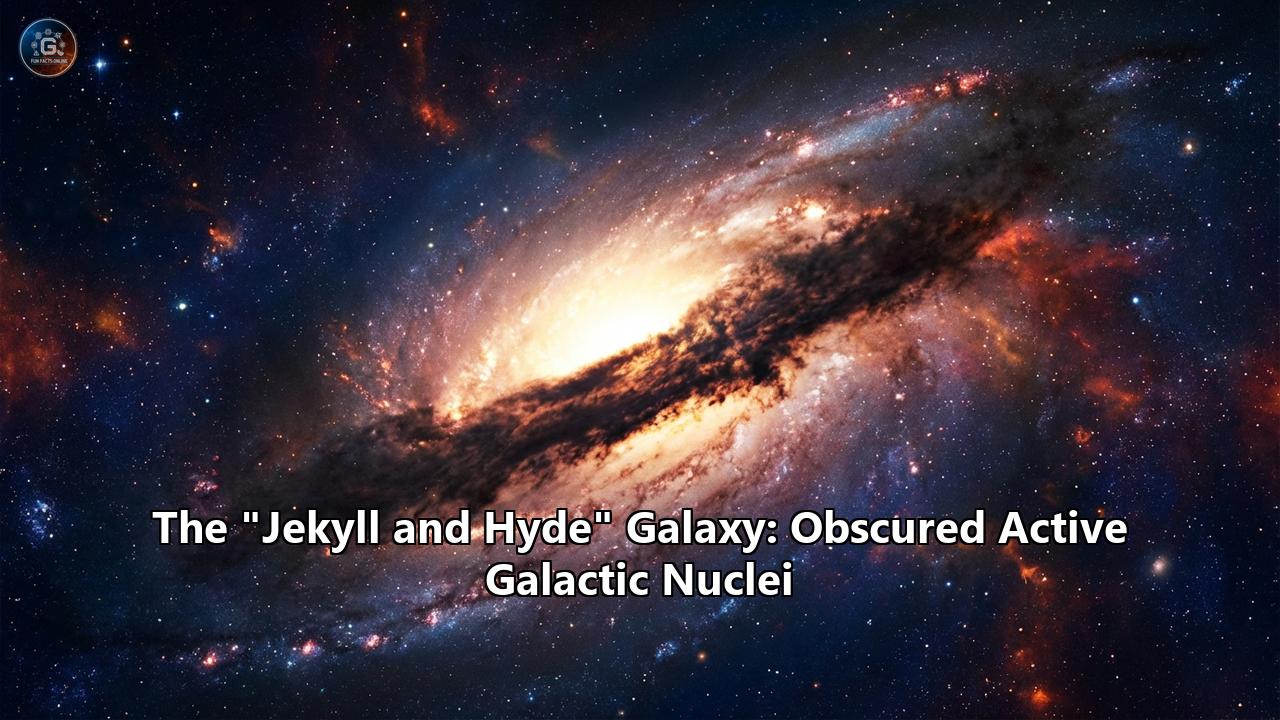
The Cosmic MasqueradeTo the casual observer scanning the night sky, the universe appears as a collection of serene islands of light. Galaxies, those majestic archipelagos of stars, spin in dignified silence, their spiral arms laced with the blue fire of young suns or their elliptical bodies glowing with the golden hue of ancient populations. In visible light—the narrow slice of the electromagnetic spectrum our biological eyes evolved to see—these structures often appear peaceful, stable, and mathematically elegant. They are the Dr. Jekylls of the cosmos: respectable, orderly, and seemingly benign.
But astronomy is a discipline of peeling back layers, and when we strip away the comforting veneer of starlight and look at the universe through the piercing eyes of X-ray observatories or the heat-seeking gaze of infrared telescopes, a terrifying transformation occurs. The calm galactic disk fades, and from the very heart of the system emerges a source of violence so profound it defies easy comprehension. This is the "Hyde"—the Active Galactic Nucleus (AGN).
In many cases, this monster is brazenly visible, shining as a quasar that outshines its entire host galaxy. But there exists a more insidious class of monsters: the Obscured Active Galactic Nuclei. These are the hidden beasts, the cosmic Hydes that lurk behind thick veils of gas and dust. They are the "monsters hiding in plain sight." In optical telescopes, their host galaxies might look like standard star-forming spirals or innocent "little red dots" in the early universe. Yet, deep within, a supermassive black hole is consuming matter at a rate that borders on the physical limit, screaming into the void with high-energy radiation that is suffocated by its own environment before it can reach us.
The study of Obscured AGN is the detective story of modern astrophysics. It is the hunt for the missing energy of the universe, a quest that has forced astronomers to rewrite the history of galaxy evolution and led to the realization that every respectable galaxy may have a dark, violent period in its past.
The Illusion of NormalityImagine looking at a house from the street. The lights are on, the lawn is manicured, and smoke drifts lazily from the chimney. It looks like a standard, happy home. This is the view of a galaxy like NGC 1068 (Messier 77) through a backyard telescope. It appears to be a beautiful, albeit slightly bright, spiral galaxy in the constellation Cetus.
Now, imagine you put on special glasses that allow you to see through the walls, revealing that the basement is a raging inferno, powered by a nuclear reactor running without containment. This is NGC 1068 in X-rays. It is the archetype of the "Seyfert 2" galaxy—a galaxy with an obscured active nucleus.
For decades, astronomers were fooled by these objects. In the early 20th century, we classified galaxies by their shapes—Hubble's Tuning Fork. We measured their colors and counted their stars. But we were missing the most energetic processes because they were happening behind a curtain. The "Jekyll" face of the galaxy is composed of its stars. Stars are relatively cool objects; even the hottest ones radiate mostly in the ultraviolet and visible spectrum. They live for millions or billions of years, evolving slowly. The "Hyde" face is the Supermassive Black Hole (SMBH) at the center. It is compact—often no larger than our solar system—yet it can outshine the trillion stars of the rest of the galaxy combined.
The obscuration is key to the duality. If the black hole were not obscured, we would see a Quasar or a Type 1 Seyfert. We would see the violence immediately: the broad spectral lines of gas moving at thousands of kilometers per second, the blinding blue continuum radiation. But in an Obscured AGN, we see none of this. The monster is gagged and blindfolded. The galaxy looks normal, perhaps a bit dusty, but fundamentally "safe." It is only by analyzing the faint whispers that escape the dust—the hard X-rays that punch through the wall, or the infrared heat signature of the wall itself warming up—that we realize we are looking at a monster.
Part II: The Anatomy of the Abyss
The Engine: Accretion PhysicsTo understand the obscured AGN, we must first understand the engine that powers it. At the center of every massive galaxy sits a Supermassive Black Hole, with a mass ranging from millions to billions of times that of our Sun. A black hole in isolation is dark and silent; it is only when it feeds that it becomes an Active Galactic Nucleus.
The feeding mechanism is the accretion disk. As gas and dust fall toward the event horizon, they carry angular momentum. They cannot fall straight in; instead, they spiral inward, forming a flattened disk of material. Friction within this disk—caused by magnetic turbulence and viscosity—heats the gas to millions of degrees.
This is the most efficient energy generator in the universe. While nuclear fusion (the power source of stars) converts about 0.7% of mass into energy, accretion onto a spinning black hole can convert up to 42% of the infalling mass into pure energy, in accordance with Einstein’s $E=mc^2$. The inner regions of the disk glow with intense ultraviolet and X-ray radiation. This is the primal scream of the AGN.
The Mask: The Dusty TorusIf every AGN has an accretion disk, why do some look like blazing Quasars (Type 1) while others appear as obscured "Jekyll and Hyde" objects (Type 2)? The answer lies in the Unified Model of AGN.
The Unified Model posits that Type 1 and Type 2 AGNs are essentially the same physical object, viewed from different angles. Surrounding the central accretion disk, far further out (at distances of parsecs rather than astronomical units), lies a massive, donut-shaped structure known as the dusty torus.
This torus is not a smooth, polished ring like Saturn’s. It is a chaotic, clumpy swarm of molecular gas clouds and graphite/silicate dust grains.
- The Type 1 View: If we view the galaxy "face-on" (looking down into the donut's hole), we have a clear line of sight to the central engine. We see the blinding light, the swirling gas, and the broad spectral lines. We see the monster.
- The Type 2 View (The Obscured View): If we view the galaxy "edge-on," our line of sight passes through the dough of the donut. The dust grains in the torus absorb the ultraviolet and optical light from the engine. The monster is hidden.
However, energy cannot be destroyed, only converted. The dust grains in the torus absorb the high-energy photons from the central engine, heat up to temperatures of a few hundred to a thousand Kelvin, and re-radiate that energy in the infrared. This is the first clue to the "Jekyll and Hyde" nature: a galaxy that looks dim in optical light but blazes like a beacon in the infrared.
Compton-Thick: The Ultimate ConcealmentThe obscuration can be light, like a morning mist, or it can be impenetrable, like a concrete wall. Astronomers quantify this using "Column Density" ($N_H$)—essentially a count of how many hydrogen atoms act as a screen between the observer and the source per square centimeter.
- Compton-Thin: If the column density is high ($10^{22}$ to $10^{24}$ cm$^{-2}$), the source is obscured in optical light, but X-rays can still punch through.
- Compton-Thick: When the column density exceeds $1.5 \times 10^{24}$ cm$^{-2}$, the gas is so dense that it becomes opaque even to high-energy X-rays. At this point, the material is as thick as a brick wall on a subatomic scale. The photons undergo Compton scattering—bouncing off electrons repeatedly until they lose their energy or are absorbed.
Compton-Thick AGNs are the true "Hydes." They are deeply buried. The central engine is so heavily shrouded that almost no direct light escapes. These are the hardest objects in the universe to find, yet they are crucial. Models suggest that a significant fraction—perhaps 50%—of all black hole growth happens in this heavily obscured phase. We have been missing half the story of the universe because it was hiding behind a curtain.
Part III: The Detective’s Toolkit
Since the human eye is blind to the "Hyde" phase, astronomers have had to build new eyes—telescopes designed to detect the specific signatures of obscuration.
1. Hard X-Rays: Piercing the VeilSoft X-rays (like those used in medical imaging) are easily stopped by dust and gas. But hard X-rays (very high energy) have the penetrating power to pass through the torus. Missions like NASA's NuSTAR (Nuclear Spectroscopic Telescope Array) were launched specifically to hunt for these "hard" photons. NuSTAR provided the first focused views of the high-energy X-ray universe, revealing clumpy, obscured black holes that appeared as mere background noise to earlier telescopes. When NuSTAR looks at a "Jekyll" galaxy, it often sees a bright, hard X-ray point source at the center—the gun smoke of the hidden weapon.
2. The Infrared Revolution: JWSTThe James Webb Space Telescope (JWST) has been a game-changer for identifying obscured AGN. Because the dust torus absorbs the AGN's light and re-emits it as heat, obscured AGNs are incredibly bright in the mid-infrared.
JWST’s instrument, MIRI (Mid-Infrared Instrument), looks at the universe in exactly the wavelengths where this dust glows. In 2024 and 2025, JWST began uncovering a population of high-redshift galaxies dubbed "Little Red Dots" (LRDs). In visible light (seen by Hubble), these look like faint, red, compact blobs. But JWST spectra revealed that many of these are not just red because of age or dust-obscured star formation; they are red because they host massive, dust-choked black holes.
One famous example, nicknamed "Virgil," was described in late 2025 as a "cosmic Jekyll and Hyde." To Hubble, it was an innocent Lyman-alpha emitter. To JWST, it was a raging monster, an AGN hidden behind so much dust that it mimicked the appearance of a normal galaxy until the infrared data unmasked it.
3. The Iron LineOne of the smoking guns of a Compton-thick AGN is the Iron K-alpha line. When X-rays from the black hole slam into the surrounding dense gas, they can knock electrons out of iron atoms, causing the iron to fluorescence at a specific energy (6.4 keV). Seeing this strong spike in a spectrum is like finding a fingerprint on a weapon. It tells astronomers that there is a powerful X-ray source illuminating a thick wall of gas, even if we can't see the source directly.
Part IV: Evolution and the "Changing Look"
The term "Jekyll and Hyde" in astronomy is sometimes applied to a specific, rare class of objects called "Changing-Look AGNs." These are galaxies that physically transform from Type 1 (unobscured) to Type 2 (obscured), or vice versa, on human timescales—sometimes in just a few years.
This phenomenon challenges the static "Unified Model" (which says viewing angle is everything). If a galaxy can switch, it means the obscuration is moving. It suggests that the dusty torus is not a rigid donut, but a swirling, chaotic storm of clouds. A single massive cloud passing in front of the black hole can turn a blazing Quasar into a mild-mannered Seyfert 2. Conversely, a gust of radiation might blow the dust away, revealing the monster that was hidden.
The Evolutionary PhaseMore broadly, the "Obscured Phase" is likely a necessary stage in the life of every massive galaxy. The leading theory of galaxy evolution, the "Merger-Driven Scenario," paints a violent picture:
- The Collision: Two gas-rich galaxies collide (two Jekylls meet).
- The Starburst: The collision compresses gas, triggering a massive burst of star formation. The galaxy becomes dusty and chaotic.
- The Feeding: Gas is funneled to the center, feeding the black hole. The AGN turns on, but it is buried under the debris of the collision. This is the Obscured AGN phase. The "Hyde" is growing, eating in the dark.
- The Blowout: The AGN becomes so powerful that its radiation pressure and jets blow the remaining gas and dust out of the galaxy. The obscuration is cleared. The AGN shines briefly as a naked Quasar.
- The Death: The gas is gone. Star formation stops. The black hole starves. The galaxy becomes a "red and dead" elliptical.
In this narrative, the "Jekyll and Hyde" obscured phase is the crucial teenage growth spurt of the galaxy. It is when the black hole gains most of its mass. If we ignore the obscured sources, we miss the primary era of black hole construction.
Part V: Case Studies of the Hidden
NGC 1068: The Patient ZeroNGC 1068 (Messier 77) is the Rosetta Stone of obscured AGN. Located 47 million light-years away, it looks like a barred spiral. In 1985, astronomer Antonis Antonucci made a breakthrough. He looked at NGC 1068 not in direct light, but in polarized light. Dust grains scatter light like tiny mirrors. Antonucci found that if you looked at the scattered light reflecting off gas clouds far above the galaxy's disk, you could see the reflection of the central engine. It was like using a mirror to look around a corner. The reflection showed broad spectral lines—the signature of a Type 1 Quasar. The monster was there, hidden behind a torus, but its reflection gave it away. This confirmed the Unified Model and established the duality of these systems.
Cygnus A: The Radio Loud MonsterCygnus A is one of the brightest radio sources in the sky. In optical light, it is a fuzzy, split blob that looks like two colliding galaxies. For years, it was a puzzle. We saw the massive jets of radio plasma shooting out into intergalactic space, implying a colossal engine, but the center was dark. It wasn't until X-ray astronomy matured that we confirmed Cygnus A hosts a quasar-class nucleus, completely hidden from optical view by a dust lane. It is a "Hyde" that screams in radio waves but whispers in visible light.
Z 229-15: The Identity CrisisIn 2023, the Hubble Space Telescope released an image of Z 229-15, a spiral galaxy that defied classification. The European Space Agency called it "Everything, in one place, all at once." It fits the definition of a Seyfert Galaxy, a Quasar, and an AGN simultaneously. It is a local example of the complexity of these classifications. It is a transition object, where the mask is slipping, allowing us to see both the star-forming disk (Jekyll) and the brilliant nucleus (Hyde) simultaneously.
Virgil and the High-Redshift UniverseDiscovered/Characterized around 2024-2025, "Virgil" represents the new frontier. At redshift $z \approx 7$, the universe was less than a billion years old. Virgil appeared as a standard "break" galaxy in Hubble fields. But JWST revealed it was ultra-red and incredibly compact. The analysis showed it was a "Little Red Dot"—a galaxy dominated by a hidden black hole. The existence of such massive, obscured black holes so early in the universe is a major problem for cosmology. How did "Hyde" get so big, so fast? Theories suggest "Direct Collapse Black Holes" or super-Eddington accretion rates (eating faster than the theoretical limit) might be possible within these dusty cocoons. The dust traps the radiation, potentially altering the physics of accretion itself.
Part VI: Why We Must Unmask Them
Why does it matter if a black hole is hiding? Why do astronomers spend billions on space telescopes to pierce this dust?
1. The Cosmic X-ray Background (CXB)In the 1960s, rocket-based experiments detected a diffuse glow of X-rays coming from all directions in the sky. For decades, the origin of this "Cosmic X-ray Background" was a mystery. We knew it had to come from millions of unresolved sources. However, when we added up all the known (unobscured) Quasars, they only accounted for the soft X-ray background. They failed to explain the peak energy of the background at 30 keV.
The missing piece was the Obscured AGN. Because Compton-thick AGNs absorb soft X-rays and let hard X-rays leak out, they have exactly the spectral shape needed to explain the background. The CXB is effectively the integrated light of millions of hidden monsters. We are bathed in the radiation of "Hydes" we cannot see.
2. Galaxy Feedback and DeathWe cannot understand why galaxies stop forming stars without understanding obscured AGNs. "Feedback" is the process where the black hole injects energy back into the galaxy. This energy can heat up the gas, preventing it from cooling to form stars, or blow it out entirely.
Recent simulations suggest that the "obscured" phase is when this feedback is most efficient. The dust and gas cocoon traps the energy of the AGN jets and winds, like a pressure cooker. Eventually, the pressure becomes too great, and the cocoon explodes outward, clearing the galaxy of star-forming fuel. The "Hyde" effectively kills the "Jekyll." By studying obscured AGN, we are witnessing the mechanism of galactic suicide.
3. The Assembly of MassIf we only count the bright, visible Quasars, we underestimate the number of supermassive black holes in the universe. Censuses of the local universe show that almost every galaxy has a black hole. To account for all this mass, there must have been a phase of rapid, hidden growth. The "Little Red Dots" found by JWST are likely the ancestors of the black holes we see today in galaxies like Andromeda and the Milky Way.
Part VII: The Future of the Hunt
We are currently in a Golden Age of obscured AGN research. The synergy between JWST (Infrared), NuSTAR (Hard X-ray), and ALMA (Sub-millimeter radio) is allowing us to build a 3D picture of these hidden worlds.
Future missions like ESA’s Athena (Advanced Telescope for High-ENergy Astrophysics) and NASA’s proposed Lynx X-ray Surveyor will go even deeper. They will be able to detect the faint X-ray whispers of Compton-thick AGNs at the dawn of time, unmasking the very first generation of monsters.
Furthermore, we are entering the era of Multi-Messenger Astronomy. We might soon detect obscured AGNs not by light, but by particles. The IceCube neutrino observatory in Antarctica has begun to associate high-energy neutrinos with active galaxies like NGC 1068. Neutrinos pass through dust walls as if they weren't there. For the most heavily obscured, Compton-thick "brick wall" sources, neutrinos might be the only way to verify the engine within.
ConclusionThe "Jekyll and Hyde" galaxy is a reminder that the universe is not always what it seems. The serenity of the night sky is an illusion maintained by distance and the limitations of human vision. Behind the mask of spiraling starlight and dust lanes lie engines of unimaginable power, shaping the destiny of the cosmos from the shadows.
By studying these obscured Active Galactic Nuclei, we are learning that darkness is not empty; it is often where the most important work of the universe takes place. The monster is not just a destroyer; it is a regulator, a sculptor, and an essential component of the galactic ecosystem. In unmasking the Hyde, we come to understand the true nature of the Jekyll.
Detailed Technical Addendum: The Physics of Obscuration
(For the reader seeking a deeper dive into the mechanisms mentioned above) 1. The Torus Structure: Clumpy vs. SmoothEarly models envisioned the obscuring torus as a smooth, donut-shaped distribution of gas. However, modern hydrodynamical simulations and observations indicate the torus is "clumpy." It consists of discrete clouds orbiting the black hole. This explains the variability seen in some AGN. An X-ray eclipse occurs when a specific cloud passes the line of sight. This clumpiness also allows some ionizing radiation to leak out even in obscured systems, creating the "ionization cones" seen in images of galaxies like the Circinus Galaxy.
2. The K-Correction and RedshiftDetecting obscured AGN at high redshift (early universe) is tricky due to the K-correction. As the universe expands, the light from distant objects is stretched (redshifted).
- Visible light shifts to Infrared (hence why JWST is crucial).
- Soft X-rays shift to UV (which gets absorbed).
- Hard X-rays shift to Soft X-rays.
This means that to find a Compton-thick AGN at $z=3$, we need to observe in very hard X-rays (20-40 keV) to catch the emitted 10-20 keV photons. This pushes the limits of current technology.
3. Specific Spectral Signatures- [O III] 5007Å: A forbidden line of doubly ionized oxygen. It is produced in the "Narrow Line Region" (NLR), which is usually far enough from the nucleus to be outside the obscuring torus. Therefore, the strength of the [O III] line is a good proxy for the intrinsic power of the AGN, even if the continuum is hidden. Comparing the [O III] luminosity to the observed X-ray luminosity helps identify Compton-thick candidates (if X-ray is weak but [O III] is strong, it's heavily obscured).
- Silicate Absorption: In the mid-infrared (9.7 microns), silicate dust grains absorb light. A deep "dip" in the spectrum at this wavelength is a tell-tale sign of a deeply embedded source.
- PAH Deficit: Polycyclic Aromatic Hydrocarbons (PAHs) are large molecules found in star-forming regions. They glow brightly in the IR. However, the harsh radiation of an AGN often destroys PAHs. A galaxy with bright hot dust emission but no PAH features is a prime candidate for an obscured AGN (the "Hyde") rather than a Starburst (the "Jekyll").
The energy released by the AGN heats the surrounding Interstellar Medium (ISM).
- Radiative Mode (Quasar Mode): High luminosity drives winds that sweep gas out.
- Kinetic Mode (Radio Mode): Jets inject mechanical energy into the galactic halo, preventing hot gas from cooling and falling back in.
Obscured AGNs are typically associated with the "Radiative Mode" phase, where the black hole is growing rapidly (high Eddington ratio) and actively blowing out its cocoon. This is the mechanism that likely creates the correlation between the mass of the black hole and the velocity dispersion of the host galaxy's bulge (the M-sigma relation). The monster regulates the size of its cage.
The study of the "Jekyll and Hyde" galaxies—the Obscured Active Galactic Nuclei—remains one of the most vibrant fields in astrophysics. As we peer closer at these masked giants, we find that the boundary between the creator and the destroyer, the star-former and the black hole, is blurred. They are locked in a cosmic dance, and it is only by watching the steps of both partners that we can understand the music of the universe.
Reference:
- https://ned.ipac.caltech.edu/level5/March04/Comastri/Comastri1.html
- https://www.researchgate.net/figure/Spectra-and-imaging-of-Jekyll-Hyde-Top-left-ALMA-spectrum-of-Hyde-Bottom-left_fig1_319662344
- https://research-management.mq.edu.au/ws/portalfiles/portal/96693853/96620904.pdf
- https://edutalktoday.com/space/jwst-reveals-a-hidden-supermassive-black-hole-inside-an-ordinary-looking-early-galaxy/
- https://www.sciencedaily.com/releases/2025/11/251127102115.htm
- https://www.eurekalert.org/news-releases/1109388
- https://academic.oup.com/mnras/article/540/4/3827/8162767
- https://www.space.com/hubble-telescope-mystery-object-lyra-Z-229-15
- https://en.wikipedia.org/wiki/Z_229-15
- https://science.nasa.gov/missions/hubble/hubble-views-an-intriguing-active-galaxy/
- https://www.sci.news/astronomy/hubble-very-luminous-seyfert-galaxy-11776.html