
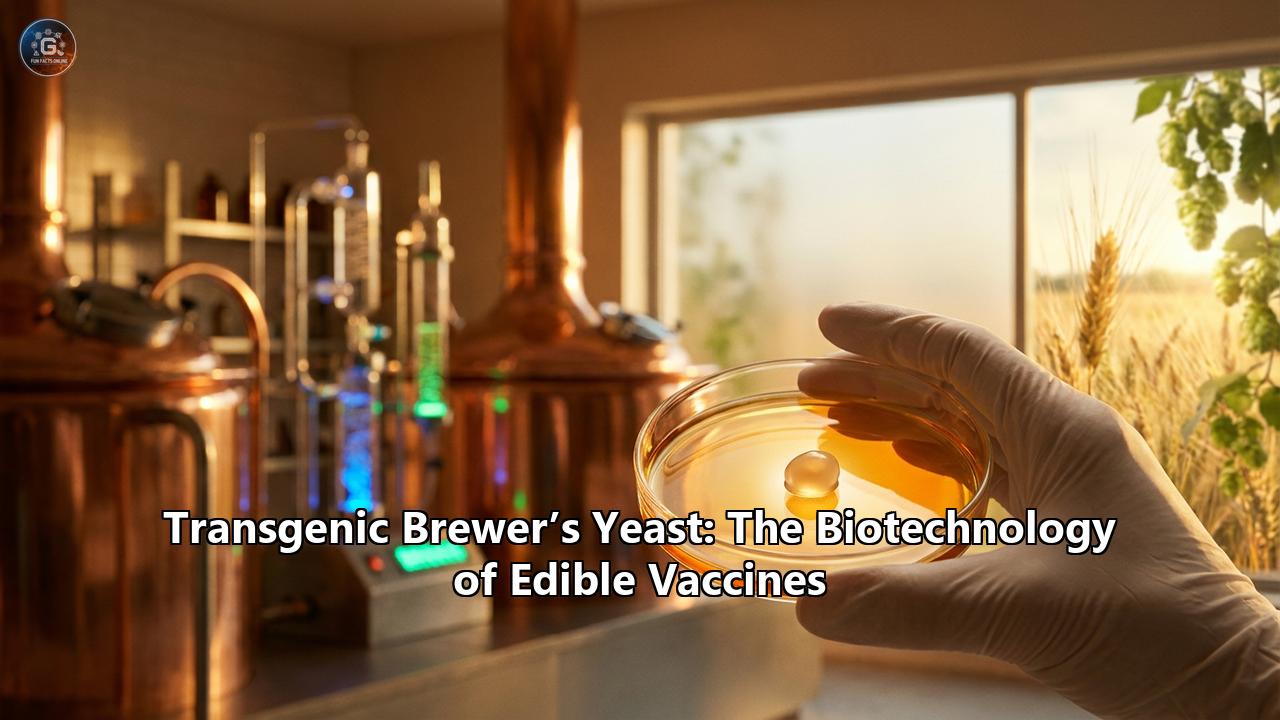
The syringe has long been the undeniable hero of public health, eradicating diseases and managing global pandemics. However, the needle comes with profound limitations: a reliance on strict, ultracold-chain logistics, prohibitive manufacturing bottlenecks, and widespread vaccine hesitancy driven by injection phobia. Furthermore, while injectable vaccines are excellent at creating systemic immunity, they often struggle to mount defenses at the body's mucosal surfaces—the exact entry points for respiratory and enteric pathogens. What if the future of immunization did not involve a sterile clinic and a sharp jab, but simply swallowing a freeze-dried capsule or drinking a fermented beverage?
Enter a radically different paradigm: edible vaccines. At the forefront of this biotechnology revolution is transgenic brewer's yeast (Saccharomyces cerevisiae) alongside its probiotic relatives like Saccharomyces boulardii and industrial counterparts like Pichia pastoris (also known as Komagataella phaffii). The humble fungus, historically responsible for human civilization's bread and beer, is undergoing a high-tech renaissance. Through advanced genetic engineering, yeast is being transformed into a programmable biological factory and delivery vehicle, capable of surviving the human digestive tract to deliver life-saving immunizations directly to the gut.
The Biological Armor: Surviving the Hostile Gut Environment
The concept of an oral vaccine is historically challenging because the gastrointestinal (GI) tract is engineered to destroy complex biological molecules. The human stomach is a cauldron of hydrochloric acid with a highly corrosive pH, followed by intestines awash in bile salts and proteolytic enzymes. A standard naked protein subunit vaccine or a fragile mRNA lipid nanoparticle would be completely obliterated within minutes in this environment. This harsh physiological reality is why the few oral vaccines available today generally rely on live-attenuated pathogens.
However, brewer's yeast is uniquely equipped for this perilous journey. The yeast cell boasts a robust, complex outer wall composed primarily of thick layers of $\beta$-glucans, mannans, and chitin. This microscopic architectural marvel acts as an impenetrable biological vault. It shields the delicate, genetically engineered viral or bacterial antigens housed within the cell or displayed upon its surface from acidic and enzymatic degradation. Consequently, the yeast guarantees safe passage for its vaccine cargo through the stomach and directly into the lower intestine, which serves as the epicenter of the gut's immune system.
Nature’s Syringe: Engaging the Gut’s Immune Network
Delivering an antigen to the gut is only half the battle; the immune system must be provoked to recognize it and respond. The human intestine is lined with Gut-Associated Lymphoid Tissue (GALT), an extensive and highly active network of immune cells. Within the GALT lie Peyer's patches—specialized lymphoid nodules covered by uniquely adapted Microfold (M) cells.
When the transgenic yeast arrives in the intestine, M cells readily recognize, capture, and engulf these particles, translocating them across the intestinal barrier to underlying antigen-presenting cells, such as macrophages and dendritic cells. Here, a fascinating biological synergy occurs. The yeast cell wall does not merely act as a protective vehicle; it functions as a powerful, innate immune adjuvant. The $\beta$-glucans on the yeast surface bind directly to pattern recognition receptors (such as Dectin-1) on the surface of macrophages, setting off a targeted immunological alarm. This means the yeast naturally stimulates a robust immune response without the need for controversial chemical adjuvants, like aluminum salts, which are required in many traditional injections.
Crucially, oral yeast-based vaccines have the unique ability to trigger a dual-layered immune response. They stimulate both strong systemic immunity (circulating IgG antibodies in the blood) and high levels of Secretory Immunoglobulin A (sIgA) at mucosal sites. This mucosal immunity acts as a frontline barrier, neutralizing pathogens in the respiratory or gastrointestinal tracts before they can successfully cross the epithelial lining and establish an infection.
The Biotechnology Behind the Brew: Engineering Transgenic Yeast
How exactly is a baker's microbe transformed into a prophylactic biotherapeutic? The magic lies in recombinant DNA technology. Scientists utilize several elegant strategies to arm yeast with pathogen-specific antigens.
One of the most prominent and successful techniques is Yeast Surface Display (YSD). By exploiting the yeast's natural cell wall proteins—most commonly utilizing the a-agglutinin Aga1p-Aga2p system—biotechnologists can genetically fuse a viral or bacterial antigen to these native anchor proteins. As the yeast grows and divides, it literally wears the vaccine on its exterior, presenting the target antigen directly to the host's immune cells upon ingestion.
Alternatively, researchers employ intracellular expression, prompting the yeast to manufacture and accumulate antigens internally. In some cutting-edge designs, these internal proteins self-assemble into Virus-Like Particles (VLPs)—hollow protein shells that mimic the precise three-dimensional architecture of a real virus without containing any infectious genetic material.
To ensure the genetic stability of these transgenic yeasts, modern bioengineering favors permanent genome integration over traditional plasmid vectors. Plasmids (circular loops of DNA) can be lost during large-scale industrial fermentation unless they are maintained by adding antibiotics to the yeast's food source—a practice that is heavily restricted by health regulators. By using targeted tools like CRISPR-Cas9 or homologous recombination to integrate the antigen-producing gene directly into the yeast's chromosomes (e.g., Chromosome IV), scientists create highly stable strains that can be cultivated in massive, antibiotic-free bioreactors.
Frontline Applications: From Global Pandemics to the Barnyard
The versatility of the transgenic yeast platform has sparked a golden age of immunological research, showing immense promise across both human and veterinary medicine.
Conquering COVID-19 and Respiratory InvadersDuring the COVID-19 pandemic, the logistical nightmares of ultracold-chain mRNA vaccines became glaringly apparent, especially in low- and middle-income countries (LMICs). In response, global researchers pivoted to yeast. Multiple candidate vaccines were rapidly developed using Saccharomyces cerevisiae and Pichia pastoris to express the SARS-CoV-2 Spike Receptor Binding Domain (RBD) and Nucleocapsid proteins. When administered orally to mice, these yeast vaccines elicited robust neutralizing antibodies and a mixed Th1/Th2-type cellular immune response, with a distinct Th1 bias.
In a fascinating twist, oral administration of the SARS-CoV-2 yeast vaccine achieved an unexpected secondary therapeutic benefit: gut microbiota reconstruction. COVID-19 infections frequently cause severe gastrointestinal distress and dysbiosis (a harmful imbalance of the microbiome). Studies revealed that the yeast vaccine not only provided specific viral immunity but also fostered a more complex, healthier gut flora in animal models, effectively acting as an immunoregulatory probiotic while fighting off the virus.
Safeguarding Agriculture: Poultry and Swine SolutionsVeterinary medicine is currently the most active proving ground for edible yeast vaccines. The global agricultural sector faces staggering economic losses from infectious livestock diseases and is under immense legislative pressure to reduce antibiotic usage. Transgenic yeast offers a highly scalable, feed-based solution that can be seamlessly integrated into animal diets.
For example, researchers successfully engineered yeast to express the capsid protein VP2 of the Infectious Bursal Disease Virus (IBDV), a highly contagious, immunosuppressive poultry disease. Oral administration in chickens induced specific antibodies and protective mucosal immunity without requiring individual injections. Similarly, to combat pullorum disease—a devastating illness in broiler chickens caused by Salmonella pullorum—scientists bioengineered yeast to display the bacteria's outer membrane and fimbriae proteins. A 2026 study demonstrated that this orally administered vaccine increased chick survival rates and drastically reduced Salmonella loads in their muscle and tissues, promoting the vital 'One Health' ecosystem approach.
In the swine industry, multidrug-resistant F4+ enterotoxigenic Escherichia coli (ETEC) causes fatal post-weaning diarrhea in piglets, representing a massive threat to animal welfare and food security. A recent breakthrough utilized a recombinant yeast strain (EBY100/pYD1-FaeG) displaying the bacterial FaeG protein. Fed directly to animals, the vaccine significantly enhanced intestinal health, upregulated mucosal immune factors (including IL-2, IL-4, and IFN-$\gamma$), and provided crucial, life-saving protection against ETEC infection.
Tackling Human Enteric and Viral DiseasesBeyond respiratory viruses, the technology is being adapted for challenging human pathogens. Researchers at institutions like the Vilnius University Life Sciences Center are exploring yeast-based oral vaccines for polyomaviruses using yeast that intracellularly generates major capsid proteins to form VLPs. Furthermore, studies utilizing yeast-derived $\beta$-glucan microparticles to deliver DNA and mRNA directly to macrophages are showing immense promise, hinting at a future where even complex genetic therapies could be administered orally, circumventing the rapid degradation that usually plagues mRNA in the GI tract.
Beyond the Pill: Lyophilization and the "Beer Vaccine"
One of the most attractive attributes of yeast-based vaccines is their remarkable physical resilience, which liberates global health initiatives from the tyranny of the cold chain. Traditional vaccines require constant, uninterrupted refrigeration—an infrastructural hurdle that severely limits access in remote, rural, or developing regions. Transgenic yeast, conversely, can be lyophilized (freeze-dried) into stable powders, capsules, or "crisps" that endure high temperatures and boast an exceptionally long shelf life.
Because Saccharomyces cerevisiae holds a GRAS (Generally Recognized As Safe) status in the food industry, the potential delivery formats border on science fiction. Experiments have shown that animal models willingly consume dried yeast vaccine preparations as part of their normal diet. For human applications, while pharmaceutical-grade clinical capsules offer the most precise dosing, researchers have successfully demonstrated the "proof-of-principle" for integrating vaccine-antigen-producing yeast into everyday fermented beverages. Virologists have colloquially dubbed this the "beer vaccine," actively exploring whether probiotic drinks or non-alcoholic fermented beverages like kvass could theoretically double as accessible, population-level immunization tools.
Navigating the Bottlenecks: Challenges and Regulatory Hurdles
Despite its revolutionary potential, the journey of edible yeast vaccines from the laboratory bench to the local pharmacy is fraught with biological and bureaucratic challenges.
The first biological hurdle is navigating oral tolerance. The human digestive tract is evolutionarily designed to tolerate vast quantities of foreign dietary proteins without launching a systemic inflammatory immune attack. A successful oral vaccine must strike a highly delicate balance: it must be sufficiently immunogenic to break this default tolerance and provoke active immunity, but not so aggressive that it triggers runaway mucosal inflammation or food allergies.
Regulatory frameworks pose an equally daunting obstacle. A live, transgenic yeast cell is, by legal definition, a Genetically Modified Organism (GMO). While the medical use of GMOs is widely accepted in closed manufacturing environments (such as the vats used to produce synthetic human insulin), the intentional release of a live, replicating GMO into the human digestive system—and subsequently into the environment via wastewater—triggers stringent environmental and safety regulations. Simplifying and standardizing these legislative pathways for Advanced Therapy Medicinal Products (ATMPs) will be critical before large-scale human clinical trials can proceed.
Furthermore, standardizing dosage is inherently complex. Unlike a sterile injection, which delivers a precise, quantified microgram measurement of an antigen directly into muscle tissue, the surviving payload of an oral yeast vaccine can vary drastically from patient to patient. Efficacy can be influenced by an individual's stomach acid pH, pre-existing gut microbiome composition, and intestinal transit time. Establishing reliable pharmacokinetic models for a living, digesting microbe remains a primary focus of ongoing clinical research.
The Future of Edible Biotherapeutics
The concept of swallowing a vaccine rather than receiving an injection represents a profound paradigm shift in preventive medicine. Transgenic brewer's yeast has evolved from a simple agent of culinary fermentation into a sophisticated, programmable nanobot. It is capable of surviving the biological gauntlet of the human gut, naturally stimulating the mucosal immune system, and delivering life-saving antigens right where they are most effective.
As biotechnology research rapidly advances into areas like glycan humanization, thermostable formulations, and highly localized mucosal delivery, yeast platforms stand ready to democratize global health. They promise a future where pandemic preparedness does not rely on acquiring expensive ultracold freezers and sterile syringes, but rather on scalable, decentralized bioreactors capable of producing low-cost, shelf-stable, and entirely edible immunizations. The same humble microbe that helped ancient civilizations bake bread and brew beer is now being drafted to fortify the human immune system against the pathogens of tomorrow.
Reference:
- https://www.frontiersin.org/journals/microbiology/articles/10.3389/fmicb.2023.1150412/full
- https://pmc.ncbi.nlm.nih.gov/articles/PMC12838998/
- https://pubmed.ncbi.nlm.nih.gov/40981324/
- https://hospitalnews.com/from-injection-to-ingestion-can-yeast-make-vaccines-more-accessible/
- https://pubmed.ncbi.nlm.nih.gov/24553259/
- https://www.tandfonline.com/doi/full/10.1080/21655979.2021.1985816
- https://pmc.ncbi.nlm.nih.gov/articles/PMC10149678/
- https://www.tandfonline.com/doi/full/10.1080/01652176.2026.2614711?src=
- https://pmc.ncbi.nlm.nih.gov/articles/PMC10747824/
- https://www.frontiersin.org/journals/microbiology/articles/10.3389/fmicb.2022.792532/full
- https://journals.asm.org/doi/10.1128/aem.01817-24
- https://www.researchgate.net/publication/360340529_Developing_a_COVID-19_Yeast_Oral_Vaccine_for_Low_Income_Countries
- https://www.researchgate.net/publication/351356291_Immune_response_induced_by_oral_administration_with_a_Saccharomyces_cerevisiae-based_SARS-CoV-2_vaccine_in_mice