
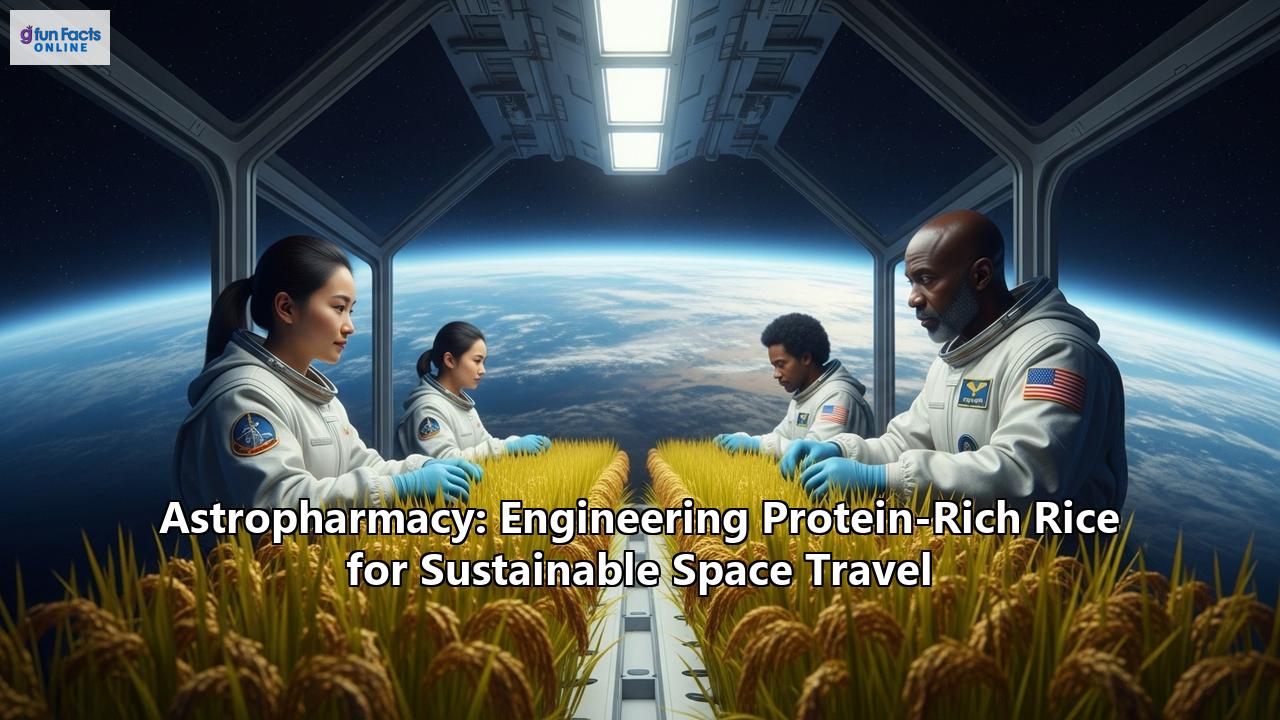
As humanity stands on the precipice of a new era of cosmic exploration, the dream of long-duration missions to the Moon, Mars, and beyond is rapidly becoming a tangible reality. Yet, the vast, unforgiving expanse of space presents a formidable array of challenges to the human body and mind. The very essence of what it means to be human—our biology, our psychology, our need for sustenance and care—is tested in the extreme environment of space. To conquer these challenges, we need more than just powerful rockets and sophisticated spacecraft; we need a paradigm shift in how we approach life support, a fusion of biology and engineering that can create a sustainable home away from home. This is where the burgeoning field of astropharmacy and the humble rice grain converge, heralding a future where our food is not just a source of calories, but a life-sustaining,-on-demand pharmacy.
The concept of "astropharmacy" revolves around the on-demand production of pharmaceuticals in space, a critical capability for long-duration missions where resupply from Earth is impractical and the stability of pre-packaged medicines is a major concern. In parallel, the quest for a sustainable food source in space has led scientists to a familiar crop: rice. But this is no ordinary rice. Through the marvels of genetic engineering, researchers are crafting a new breed of "space rice"—compact, resilient, and, most importantly, packed with protein. The synergy of these two fields offers a revolutionary solution: a single, versatile crop that can serve as both a complete nutritional source and a bioreactor for producing essential medicines. This article delves into the intricate world of astropharmacy, exploring how protein-rich rice is being engineered to become the cornerstone of sustainable space travel, a testament to human ingenuity in our quest to reach the stars.
The Gauntlet of Space: A Hostile Environment for the Human Body
Long-duration space travel exacts a heavy toll on the human body. The absence of gravity, or microgravity, triggers a cascade of physiological changes, many of which are detrimental to long-term health. One of the most significant challenges is the impact on the musculoskeletal system. Without the constant pull of gravity, our bones and muscles are no longer subjected to the mechanical stress that is essential for their maintenance.
Bone and Muscle Deterioration
In the weightless environment of space, astronauts experience a phenomenon known as spaceflight osteopenia, a rapid loss of bone density. This occurs because the balance between bone formation by osteoblasts and bone resorption by osteoclasts is disrupted, leading to a net loss of bone mass. Studies have shown that astronauts can lose bone mass at a rate of 1-2% per month, a rate comparable to that of post-menopausal women with osteoporosis. This significant bone loss increases the risk of fractures, a potentially catastrophic event during a space mission.
Similarly, muscles atrophy in microgravity due to the lack of load-bearing activity. The antigravity muscles, such as those in the legs and back, are particularly affected, with astronauts experiencing a significant reduction in muscle mass, strength, and endurance. This muscle wasting not only impairs physical performance but also contributes to the overall deconditioning of the body.
The Invisible Threats: Radiation and Immune System Dysfunction
Beyond the visible effects on bones and muscles, the space environment harbors invisible threats that can have profound consequences for astronaut health. Outside the protective cocoon of Earth's magnetic field, astronauts are exposed to higher levels of ionizing radiation from galactic cosmic rays and solar particle events. This radiation can damage DNA, increasing the long-term risk of cancer and other degenerative diseases.
The immune system is also compromised in space. The complex interplay of microgravity, radiation, and psychological stress can lead to immune system dysregulation, making astronauts more susceptible to infections. Bacteria can become more virulent in space, while the effectiveness of antibiotics may be reduced, creating a perfect storm for difficult-to-treat illnesses.
The Psychological Toll of Isolation and Confinement
The challenges of long-duration space travel are not purely physical. The psychological strain of living in a confined, isolated environment for extended periods can be immense. Astronauts face the potential for "menu fatigue," a phenomenon where the limited variety and repetitive nature of pre-packaged space food leads to a loss of appetite and inadequate nutritional intake. This can exacerbate the physiological problems already faced by astronauts.
The monotony of the environment can also lead to stress, boredom, and a sense of disconnection from Earth. Providing astronauts with fresh, appealing food is not just a matter of nutrition; it's a matter of psychological well-being. The act of cultivating plants and enjoying fresh produce has been shown to have significant positive psychological benefits for astronauts, reducing stress, improving mood, and providing a tangible link to home.
The Rise of Astropharmacy: A Pharmacy in the Stars
The challenges of maintaining astronaut health on long-duration missions have given rise to the innovative field of astropharmacy. The core concept is simple yet revolutionary: instead of carrying a vast and heavy pharmacy of pre-packaged drugs, which are prone to degradation from radiation and have limited shelf lives, why not produce medicines on-demand, as needed?
The Limitations of Pre-Packaged Pharmaceuticals
For missions to Mars and beyond, which could last for years, relying solely on pre-packaged medicines is not a viable solution. Many pharmaceuticals, particularly biologics such as protein-based drugs, have a limited shelf life, even with refrigeration. The constant exposure to space radiation can further degrade these medicines, reducing their efficacy and potentially producing harmful byproducts. Furthermore, the logistical challenge of predicting every possible medical contingency and packing the corresponding medications is immense, adding significant mass and volume to the spacecraft.
On-Demand Production: A Paradigm Shift
Astropharmacy proposes a paradigm shift towards in-situ resource utilization (ISRU) for medical care. The idea is to use biological systems, such as genetically engineered microbes or plants, as "bioreactors" to produce specific pharmaceuticals on demand. This approach offers several advantages:
- Reduced Mass and Volume: Instead of carrying bulky supplies of drugs, astronauts would carry a small, lightweight "bio-foundry" with the necessary genetic templates and a minimal amount of a starter culture.
- Extended Shelf Life: The genetic information for producing a drug can be stored for long periods without degradation, effectively extending the shelf life of the "pharmacy" indefinitely.
- Flexibility and Adaptability: An on-demand system would allow astronauts to produce a wide range of pharmaceuticals to address unforeseen medical issues.
- Personalized Medicine: In the future, it may be possible to tailor medications to an individual astronaut's specific needs, based on real-time physiological monitoring.
NASA and other space agencies are actively investing in astropharmacy research, exploring various platforms for on-demand drug production, including genetically engineered bacteria and, increasingly, plants.
The Promise of Protein-Rich Rice: The Ultimate Space Crop
While the concept of astropharmacy is compelling, it requires a robust and reliable bioreactor. This is where the humble rice grain enters the picture. Rice is a staple food for a significant portion of the world's population, and it is a crop that has been extensively studied and cultivated. Through the power of genetic engineering, scientists are transforming this familiar grain into the ultimate space crop, one that can provide both complete nutrition and on-demand pharmaceuticals.
The Moon-Rice Project: Engineering the Perfect Space Food
A pioneering initiative in this field is the "Moon-Rice" project, a collaboration between the Italian Space Agency and several Italian universities. The goal of the project is to create a "super-dwarf" variety of rice that is perfectly suited for cultivation in the confined environment of a spacecraft or a planetary habitat. The ideal space rice needs to be:
- Compact: With limited space available, the rice plants must be small, ideally no taller than 10 centimeters.
- Productive: The plants must have a high yield to provide a sufficient amount of food for the crew.
- Nutritious: The rice must be rich in essential nutrients, particularly protein, to combat the muscle atrophy experienced by astronauts.
Researchers on the Moon-Rice project are using a combination of traditional breeding techniques and cutting-edge genetic engineering tools like CRISPR-Cas9 to achieve these goals. They are identifying genes that control plant height, growth efficiency, and nutrient content, and then manipulating these genes to create the desired traits. One of the key objectives is to increase the protein content of the rice by altering the ratio of protein-rich embryo to starch.
Beyond Nutrition: Rice as a Bioreactor
The true genius of using rice as a space crop lies in its dual-purpose potential. The same genetic engineering techniques that are being used to enhance its nutritional value can also be used to turn the rice plant into a "molecular pharming" factory. By introducing specific genes into the rice genome, scientists can program the plant to produce a wide range of therapeutic proteins, such as:
- Hormones to Combat Bone Loss: Researchers at the University of California, Davis, have successfully engineered lettuce to produce a parathyroid hormone (PTH) that stimulates bone growth. A similar approach could be used with rice to provide astronauts with an on-demand treatment for osteoporosis.
- Growth Factors to Counter Radiation Damage: Filgrastim, a granulocyte colony-stimulating factor (G-CSF), is a drug used to treat low white blood cell counts, a potential consequence of radiation exposure. Engineering rice to produce filgrastim would provide a critical countermeasure for radiation sickness.
- Antibodies for Treating Infections: As the immune system is weakened in space, the ability to produce specific antibodies to fight off infections would be a significant advantage. Plants have already been used to produce antibodies for diseases like Ebola.
The beauty of this approach is that the production of these pharmaceuticals would be integrated into the food production system. The therapeutic proteins could be expressed in the edible parts of the rice grain, offering the possibility of oral delivery, which is far less invasive than injections. This would simplify the process of drug administration and reduce the need for complex purification equipment.
The Intricate Dance of Bioregenerative Life Support
To make the dream of a sustainable space habitat a reality, it's not enough to simply grow plants; we need to create a closed-loop ecosystem where resources are continuously recycled and reused. This is the goal of bioregenerative life support systems (BLSS), which aim to mimic the natural cycles of Earth in a controlled, artificial environment.
Closing the Loop: The Role of Waste Recycling
A key challenge in designing a BLSS is the efficient recycling of waste. Human waste, such as urine and feces, and inedible plant biomass are valuable sources of nutrients that can be used to fertilize the next generation of crops. However, the process of breaking down these wastes and converting them into a form that is usable by plants is complex.
The European Space Agency's MELiSSA (Micro-Ecological Life Support System Alternative) project is a leading initiative in this field. MELiSSA is a multi-compartment system that uses a combination of microbial bioreactors and higher plants to recycle waste, produce food, and revitalize the atmosphere. The system is designed to create a closed-loop ecosystem where the waste from one compartment becomes the resource for the next.
The Challenges of a Closed Ecosystem
Creating a stable and efficient BLSS is a formidable engineering challenge. Some of the key hurdles include:
- Nutrient Balance: Ensuring that the recycled nutrients are in the correct balance for optimal plant growth is crucial. For example, human urine is rich in nitrogen and phosphorus, but it also contains high levels of sodium, which can be toxic to plants.
- Contamination Control: In a closed system, the risk of contamination from harmful microbes is a significant concern. The system must be carefully monitored and controlled to prevent the spread of pathogens.
- Gravity and Fluid Management: In microgravity, the behavior of fluids is different, which presents challenges for water delivery to plants and for the operation of bioreactors.
- Long-Term Stability: The long-term stability of the ecosystem is a major unknown. Over time, there is a risk of genetic mutations in both the plants and the microbes, which could affect the performance of the system.
Despite these challenges, the development of BLSS is essential for the future of long-duration space exploration. By creating self-sustaining habitats, we can reduce our reliance on Earth and pave the way for true human independence in space.
The Ethical Frontier: Navigating the Implications of GMOs in Space
The use of genetically modified organisms (GMOs) in a closed and isolated environment like a spacecraft or a Martian colony raises a host of ethical and safety considerations that must be carefully addressed. While the potential benefits of this technology are immense, we must also be mindful of the potential risks and ensure that we are proceeding in a responsible and ethical manner.
The Specter of Unintended Consequences
One of the primary concerns with introducing GMOs into a closed ecosystem is the risk of unintended consequences. The space environment is unique, with its own set of stressors, and we do not yet fully understand how genetically modified plants will behave over multiple generations in this environment. There is a risk of unforeseen genetic mutations that could alter the characteristics of the plant, potentially affecting its nutritional value or even producing harmful compounds.
There is also the risk of "genetic escape," where the modified genes could be transferred to other organisms in the ecosystem, with unpredictable consequences. While the risk of this is low in a contained environment, it is not zero, and robust containment strategies must be in place.
Governance and Regulatory Frameworks
To address these risks, we need to develop a comprehensive governance and regulatory framework for the use of GMOs in space. This framework should be based on the precautionary principle, which advocates for taking preventative action in the face of uncertainty. It should also be transparent, inclusive, and based on the best available scientific evidence.
International agreements such as the Cartagena Protocol on Biosafety provide a useful starting point for developing such a framework. This protocol establishes procedures for the safe transfer, handling, and use of living modified organisms, with a focus on protecting biodiversity and human health. However, the unique challenges of the space environment will require the development of specific guidelines and protocols that are tailored to this context.
The Human Factor: Autonomy and Psychological Well-being
Beyond the technical and regulatory challenges, we must also consider the human factor. The astronauts who will be living in these closed ecosystems will be responsible for managing their own food and medicine supply. This will require a high degree of autonomy and a deep understanding of the biological systems they are working with.
There are also psychological implications to consider. The ability to grow fresh food and produce their own medicines could have a significant positive impact on astronaut morale and well-being. However, there is also the potential for stress and anxiety if something goes wrong with the system. We need to ensure that astronauts are properly trained and supported to manage these challenges.
The Dawn of a New Era: From Earth to the Stars and Back
The convergence of astropharmacy and protein-rich rice is more than just a clever solution to the challenges of space travel; it is a testament to the power of human ingenuity and our relentless drive to explore the unknown. The technologies that are being developed for space have the potential to have a profound impact here on Earth as well.
The development of super-dwarf, protein-rich rice could help to address food security challenges in resource-scarce environments on our own planet. The ability to produce pharmaceuticals in plants could make life-saving medicines more accessible and affordable, particularly in developing countries. And the insights we gain from studying closed-loop ecosystems in space could help us to better understand and manage our own planet's precious resources.
As we venture further into the cosmos, we are not just exploring new worlds; we are also exploring new ways of living, new ways of sustaining ourselves, and new ways of caring for one another. The journey to the stars is a long and challenging one, but with the power of science, technology, and a little bit of help from a humble grain of rice, we are well on our way to making our dreams of a multiplanetary future a reality. The seeds of this future are being sown today, in laboratories and research centers around the world, and they hold the promise of a brighter and more sustainable future for all of humanity, both on Earth and in the stars.
Reference:
- https://www.google.com/search?q=time+in+Nyong-et-Kell%C3%A9,+CM
- https://www.tandfonline.com/doi/full/10.1080/07388551.2021.1888070
- https://pubmed.ncbi.nlm.nih.gov/33715563/
- https://www.sciencedaily.com/releases/2025/07/250710113159.htm
- https://www.universetoday.com/articles/lunar-astronauts-could-eat-moon-rice
- https://pmc.ncbi.nlm.nih.gov/articles/PMC6071031/
- https://english.cas.cn/newsroom/cas_media/202411/t20241107_693870.shtml
- https://www.clinicaltrialsarena.com/features/medicine-in-space/
- https://scispace.com/pdf/molecular-pharming-to-support-human-life-on-the-moon-mars-4yx73tre26.pdf
- https://www.labiotech.eu/in-depth/space-medicine-plants/
- https://www.frontiersin.org/journals/astronomy-and-space-sciences/articles/10.3389/fspas.2021.711550/full
- https://www.nasa.gov/exploration-research-and-technology/growing-plants-in-space/
- https://pmc.ncbi.nlm.nih.gov/articles/PMC9240807/
- https://pmc.ncbi.nlm.nih.gov/articles/PMC7125906/
- https://www.nasa.gov/overview-in-situ-resource-utilization/
- https://www.factoriesinspace.com/space-resources
- https://www.synbiobeta.com/read/how-biomanufacturing-can-make-living-on-mars-a-reality
- https://www.greenqueen.com.hk/sustainable-food-in-space-precision-fermentation-protein/
- https://www.researchgate.net/publication/360505449_Molecular_farming_using_transgenic_rice_endosperm
- https://ntrs.nasa.gov/api/citations/19850021219/downloads/19850021219.pdf
- https://www.globalspaceexploration.org/wordpress/wp-content/uploads/2021/04/ISECG-ISRU-Technology-Gap-Assessment-Report-Apr-2021.pdf
- https://pubmed.ncbi.nlm.nih.gov/35562237/
- https://www.birminghamtimes.com/2022/03/out-of-this-world-lettuce-grown-in-space-might-resist-astronauts-bone-loss/
- https://pmc.ncbi.nlm.nih.gov/articles/PMC10449850/
- https://royalsocietypublishing.org/doi/10.1098/rsif.2014.0715
- https://www.frontiersin.org/journals/plant-science/articles/10.3389/fpls.2021.771985/full
- https://portals.iucn.org/library/efiles/documents/pgc-001.pdf
- https://pmc.ncbi.nlm.nih.gov/articles/PMC11225911/
- https://www.researchgate.net/publication/382076615_Ensuring_Biosafety_of_Genetically_Modified_Organisms_GMOs_Regulatory_Frameworks_and_Risk_Assessments_in_India