
Prologue: The Black Box of the Body
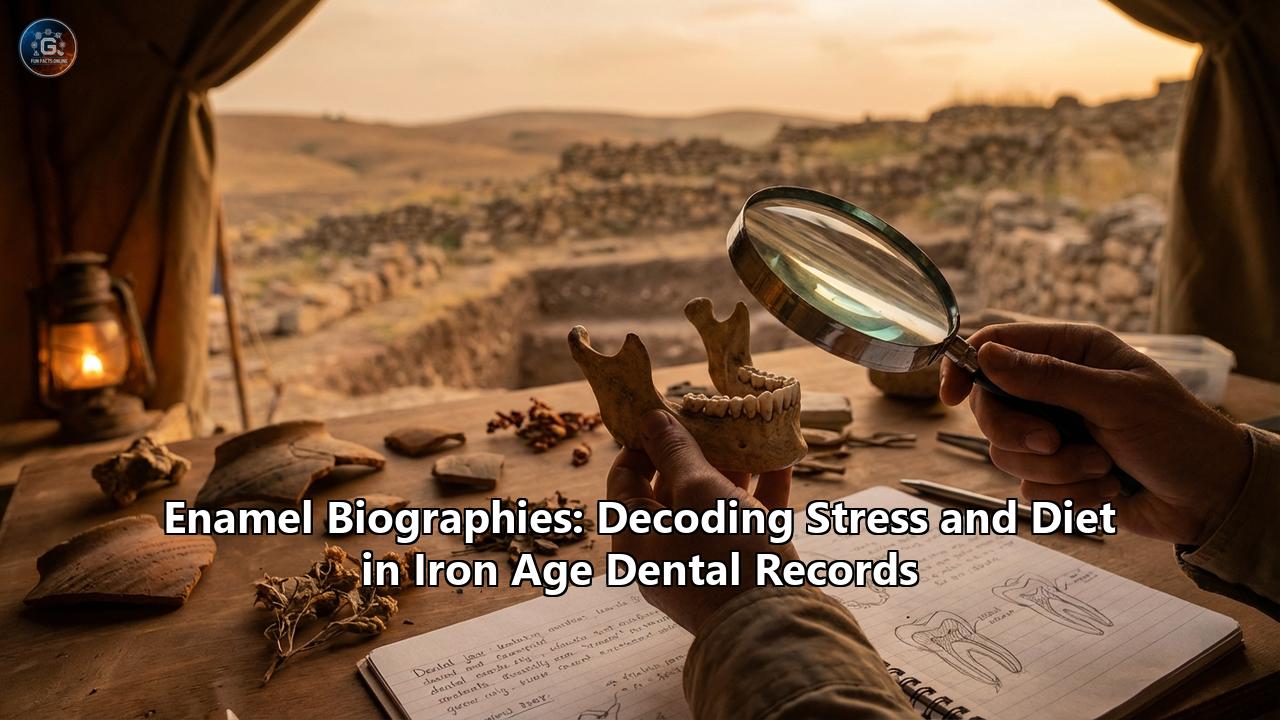
In the silence of the laboratory, a bioarchaeologist holds a single molar up to the light. To the untrained eye, it is merely a relic—a stained, worn piece of calcium phosphate that has survived twenty-five centuries in the damp earth of a European burial ground. It belongs to a man who died in the Iron Age, perhaps a warrior of the Hallstatt culture, a farmer in southern Britain, or a trader on the chaotic Italian peninsula. His name is lost, his language forgotten, his soft tissues long since dissolved into the soil.
But the tooth is not silent. It is a biological black box, a geological record of a human life that began forming in the womb and continued, layer by microscopic layer, throughout his childhood and adolescence. Unlike bone, which remodels and overwrites itself roughly every ten years, dental enamel is immutable. Once formed, it does not change. It locks in the chemical signature of the water he drank, the food he ate, and the specific days he suffered from high fevers or malnutrition.
Welcome to the era of "Enamel Biographies," a revolutionary frontier in archaeology where the microscopic structures of teeth are being decoded to reconstruct not just general trends of the past, but the intimate, day-by-day life histories of individuals who lived 2,500 years ago.
Recent breakthroughs in 2025 and early 2026, including the landmark study of the Pontecagnano site in Italy and the proteomic analysis of Scythian warriors in Ukraine, have shattered our previous understanding of the Iron Age. We can now see the moment a child was weaned, the weeks they spent fighting off a fever at age four, and the exact source of the milk they drank as adults. We are no longer looking at piles of bones; we are reading the diaries of the dead, written in stone.
Chapter 1: The Archives of Childhood
To understand how a tooth can record a biography, one must understand the biology of amelogenesis—the formation of enamel.
Enamel is the hardest substance in the human body, composed almost entirely of hydroxyapatite crystals. It is formed by cells called ameloblasts, which secrete the enamel matrix in a rhythmic, clock-like fashion. This process is one of the most precise biological rhythms in nature.
The Daily Clock: Cross-StriationsEvery single day, as an ameloblast deposits enamel, it pauses. This pause creates a microscopic line known as a cross-striation. If you were to slice a tooth thinly and place it under a high-powered microscope, you would see these lines stacked like the rungs of a ladder. Each rung represents exactly 24 hours of life. By counting them, researchers can literally count the days of a child's growth.
The Weekly Rhythm: Retzius LinesSuperimposed on this daily rhythm is a longer-period rhythm, typically occurring every 6 to 11 days (most commonly 7 or 8 in humans). These form darker, more pronounced lines known as the Striae of Retzius. When these lines reach the surface of the tooth, they form ridges called perikymata.
These lines are the pages of the biography. When a child experiences severe physiological stress—such as a high fever, a bout of starvation, or the shock of being weaned off breastmilk—the ameloblasts are disrupted. They stop secreting enamel properly, or the matrix composition changes. This leaves a permanent scar in the rock of the tooth, known as a Wilson Band or, if visible to the naked eye, Linear Enamel Hypoplasia (LEH).
By mapping these stress lines against the daily cross-striations, bioarchaeologists can pinpoint, often to the week, when a traumatic event occurred in an Iron Age child’s life.
Chapter 2: The Pontecagnano Project (Italy, 7th-6th Century BC)
In January 2026, a team led by researchers from Sapienza University of Rome published a study that serves as the gold standard for this new science. They focused on the Iron Age site of Pontecagnano in southern Italy, a bustling hub of the Picentini culture during a time of intense Greek and Etruscan influence.
The team selected teeth from individuals who lived between the 7th and 6th centuries BC. By combining histological analysis (studying the growth layers) with chemical analysis of the dental calculus (plaque), they reconstructed the first six years of life for these individuals with startling clarity.
The Weaning CrisisThe study revealed a consistent pattern of physiological stress clustering around two specific ages: one year and four years.
The stress at age one is interpreted as the "weaning crisis." In Iron Age Italy, as in many ancient societies, the introduction of solid foods was a dangerous time. Breastmilk provides passive immunity; weaning removes that shield while simultaneously introducing potential pathogens found in water and food. The enamel records of the Pontecagnano children show jagged, darkened Wilson bands at this age—evidence of the body fighting for survival against diarrhea or bacterial infections caused by contaminated gruel.
The Four-Year-Old SurvivorThe stress peak at age four is more enigmatic but likely points to a social transition. In many ancient Mediterranean cultures, this is the age where children became more independent, perhaps venturing outside the immediate care of the mother, exposing them to new viral loads or participating in labor that taxed their growing bodies.
One individual, a male identified as "T7," showed a massive stress event lasting nearly three months during his third year. His enamel growth slowed drastically. Yet, he survived. The very fact that we have his adult teeth tells us he recovered. This highlights the "Osteological Paradox": often, the skeletons with the most stress markers are the survivors, the biologically resilient ones who lived long enough to record the damage, whereas those with pristine teeth may have died so quickly from acute infection that the enamel never had time to stop growing.
Chapter 3: The Milk of the Steppe (The Scythian Connection)
While the Italians were decoding stress, another team was rewriting the menu of the Eurasian steppes. The Scythians, the legendary horse-warriors who dominated the Iron Age from the Black Sea to Siberia, have long been described by Greek historians like Herodotus as "mare-milkers." For centuries, this was dismissed as exoticizing rumor.
In 2026, a groundbreaking study using palaeoproteomics—the analysis of ancient proteins—proved Herodotus right.
The Proteomic BreakthroughResearchers analyzed dental calculus from Scythian-era sites in Ukraine (Bilsk and Mamai-Gora). Dental calculus is essentially fossilized plaque. During life, it traps bacteria, food particles, and proteins, then mineralizes, preserving them for millennia. Unlike DNA, which degrades relatively quickly, proteins are robust.
The study identified specific milk proteins (beta-lactoglobulin and casein) trapped in the plaque of these warriors. Crucially, mass spectrometry allows scientists to distinguish between the amino acid sequences of different animals. Cow milk looks different from goat milk, which looks different from horse milk.
The Horse-MilkerIn the calculus of one individual from the Bilsk settlement, the team found the "smoking gun": peptides specific to Equus caballus—the horse.
This is a profound discovery. Milking a horse is not like milking a cow; it requires a high degree of animal handling skill and a specific cultural adaptation (mares must usually be milked often and with the foal present). It confirms that the horse was not just a vehicle of war for the Scythians, but a mobile dairy. The presence of sheep, goat, and cattle milk proteins in other individuals paints a picture of a complex, multi-species economy. These "warriors" were also sophisticated pastoralists who relied on a "portable pantry" of dairy to fuel their mobile lifestyle across the steppe.
Chapter 4: The Silent Migrants
The Iron Age was not a time of stasis; it was an era of mass migration. The Celtic expansion, the movement of Germanic tribes, and the trade networks of the Mediterranean churned the genetic and cultural map of Europe. Enamel biographies track these movements using stable isotopes, specifically Strontium (Sr) and Oxygen (O).
The Geology of the SelfStrontium is a geological marker. As water flows through bedrock, it picks up a specific ratio of Strontium-87 to Strontium-86. This ratio enters the food chain—into the plants and the animals that eat them. When a human eats that food, the strontium replaces calcium in their forming teeth.
Because enamel does not remodel, the strontium ratio in a person's first molar (formed at birth) reflects the geology of where they were born. The ratio in their third molar (wisdom tooth, formed in late adolescence) reflects where they were living as a teenager.
The Stranger in the GraveRecent large-scale meta-analyses of British Iron Age burials have utilized this technique to identify "first-generation migrants." In a cemetery in East Yorkshire, isotopes identified individuals whose childhood signature matched not the local chalk wolds, but the granite geology of Scandinavia or the volcanic soils of the Massif Central in France.
These were not invaders in the Roman sense, arriving in legions. They were often individual travelers—perhaps foster children sent to align noble families, specialized craftsmen, or brides married into distant tribes. The isotope data frequently shows that these "aliens" were buried with the same rites and honors as the locals, suggesting an Iron Age society that was, in some places, surprisingly integrative.
One particularly poignant case involved an individual buried with a "chariot burial" rite. While the chariot is a quintessential British Iron Age symbol, the isotopes in his teeth whispered of a childhood spent hundreds of miles away on the continent. He had crossed the English Channel, integrated into the local elite, and died a chieftain.
Chapter 5: The Menu of the Past
Stress and migration are dramatic, but what about dinner? The everyday diet of the Iron Age has been illuminated by analyzing the microscopic debris trapped in dental calculus.
The Micro-Botanical TrapCalculus is a sticky trap. When an Iron Age farmer ate a piece of bread, microscopic starch granules were caught in the plaque. When he drank beer, yeast cells and phytoliths (silica structures from plant cells) were trapped.
In the Pontecagnano study, researchers found starch granules from wheat and barley, but also from legumes like lentils and fava beans. This confirms a "Mediterranean Diet" was already well-established by the 7th century BC.
The Mystery of the FishOne of the most enduring puzzles of the British Iron Age, confirmed by Carbon and Nitrogen isotope analysis, is the "Fish Avoidance." Despite living on islands surrounded by rich seas and rivers, British Iron Age populations ate almost no fish. Their isotope signatures are overwhelmingly terrestrial—beef, lamb, pork, and grains.
Theories abound: was the sea considered sacred? Was there a cultural taboo against eating "creatures of the underworld"? Or was the agricultural yield of the land simply so high that dangerous deep-sea fishing was unnecessary? The dental records are stubborn; they show high protein consumption, but it is almost entirely from land animals.
The Alcohol Archaeological RecordPerhaps the most "humanizing" find in recent years is the direct evidence of fermentation. The Pontecagnano calculus contained yeast spores and specific markers of fermented cereals. This wasn't just accidental spoilage; this was beer.
In the Iron Age, beer was not a recreational luxury; it was a caloric staple and a way to purify water. The evidence of consistent fermentation products in the teeth of both adults and sub-adults suggests that low-alcohol "small beer" or fermented porridges were a standard part of the daily caloric intake, fueling the labor that built the hillforts and harvested the fields.
Chapter 6: Reading the Scars (Linear Enamel Hypoplasia)
If isotopes tell us where they lived and calculus tells us what they ate, Linear Enamel Hypoplasia (LEH) tells us how much they suffered.
LEH manifests as horizontal grooves on the tooth surface. These are chronological maps of starvation or disease. In one study of an Iron Age cemetery in Hampshire, England, researchers found that nearly 40% of the population had at least one LEH defect.
The Seasonal StarvationBy measuring the position of these lines, researchers can determine the season of the stress. In many northern European Iron Age populations, stress lines appear regularly during the late winter/early spring months. This is the "Hungry Gap"—the time when the stored grain from the previous harvest is running out, but the new crops have not yet come in.
The teeth reveal a cyclical battle with hunger. We see children who suffered malnutrition every February for three years in a row. Those who survived this gauntlet often grew up to be shorter in stature but seemingly robust.
The Warrior's ToothInterestingly, LEH is also found in the graves of the elite. A high-status warrior buried with a sword and shield might have teeth riddled with stress lines. This challenges the notion that the elite were insulated from hardship. In the Iron Age, a bad harvest hit the chieftain as hard as the commoner, or perhaps the "fostering" practice meant that elite children were sent to live in other households where they were exposed to different pathogens.
Chapter 7: The Future of the Past
We are currently standing at the precipice of a new "Golden Age" of bioarchaeology. The techniques used in the 2026 studies—proteomics and high-resolution isotopic incremental analysis—are just the beginning.
Metagenomics and the Oral BiomeThe next frontier is the reconstruction of the ancient oral microbiome. By sequencing the DNA of the bacteria trapped in the calculus, we can see exactly which pathogens plagued the Iron Age mouth. We are finding the ancestors of Streptococcus mutans (the cavity causer) and Porphyromonas gingivalis (gum disease).
But more importantly, we are finding systemic pathogens. DNA from the plague bacterium (Yersinia pestis) and tuberculosis has been found in dental pulps of Bronze and Iron Age individuals. We are moving toward a capability where we can diagnose the exact cause of death for an individual who died 2,500 years ago, linking a specific famine stress line in their enamel to a subsequent fatal infection.
The Ethics of the DeadAs we extract more information, the ethical considerations grow. These were people—mothers, fathers, children. They did not consent to have their biological biographies read by future scientists. The move toward "Osteobiography" is, in part, an attempt to honor them. Instead of treating them as statistics, we are retelling their individual stories, restoring their humanity through the very record of their struggles.
Epilogue: Re-Humanizing the Iron Age
The Iron Age is often depicted through its metal: cold swords, heavy ploughs, and bronze shields. It is a period defined by technology and war.
But the dental record tells a softer, more fragile story. It tells the story of a mother in Pontecagnano worrying as her one-year-old child burns with fever during weaning. It tells the story of a Scythian rider on the windy steppe, pausing to drink fermented mare's milk. It tells the story of a migrant crossing the English Channel, carrying the chemical memory of a Scandinavian childhood in their jaw.
Teeth are the most enduring part of the human body, the only part that fossilizes while we are still alive. In decoding them, we bridge the 2,500-year gap, realizing that while their technology was iron, their biological struggles—with hunger, disease, migration, and child-rearing—were indistinguishable from our own.
The dead are speaking. And for the first time in history, we have the tools to listen to every word.
Reference:
- https://pmc.ncbi.nlm.nih.gov/articles/PMC12822928/
- https://www.sciencenews.org/article/christina-warinner-sn-10-scientists-to-watch
- https://news.umich.edu/got-milk-mineralized-dental-plaque-from-the-iron-age-provides-insight-into-the-diet-of-the-scythians/
- https://www.shh.mpg.de/1012969/proteins-dental-calculus
- https://storage.googleapis.com/plos-corpus-prod/10.1371/journal.pone.0339464/1/pone.0339464.s006.docx?X-Goog-Algorithm=GOOG4-RSA-SHA256&X-Goog-Credential=wombat-sa%40plos-prod.iam.gserviceaccount.com%2F20260129%2Fauto%2Fstorage%2Fgoog4_request&X-Goog-Date=20260129T001921Z&X-Goog-Expires=86400&X-Goog-SignedHeaders=host&X-Goog-Signature=3191e7a8ce9c319484b8fd632e75c8a8221cedee6cebc572f3b42ab1712c395e472f5c5aed85c2cfa3f11800d9af25fb07f57328823a8a804dcfe6e2dda65569147322a12776e33233213db4c6efba21cd12daf0b9a24a2a1a68970bd78e5bc4cb1f59c0ab167954875f96cf9c243ad35f082a3110dcbcf12de117f0ba2a7afc0b011765ab4a89c71b0cc09e340ddcd90eb736b98e3c2c4b7446fc46344230ccd75d2e3a78c03356de4fdcd9cb991629e08fc63890d1c4b805527894253b73ca38b41fbd14a969c0c2660d128f569f779f0a6a06e642827f2ecad5ffbae26222cff09eea08c10cb53518c57a2a8a1fa371e35ba67da30ab9220450d73e3f3c95