
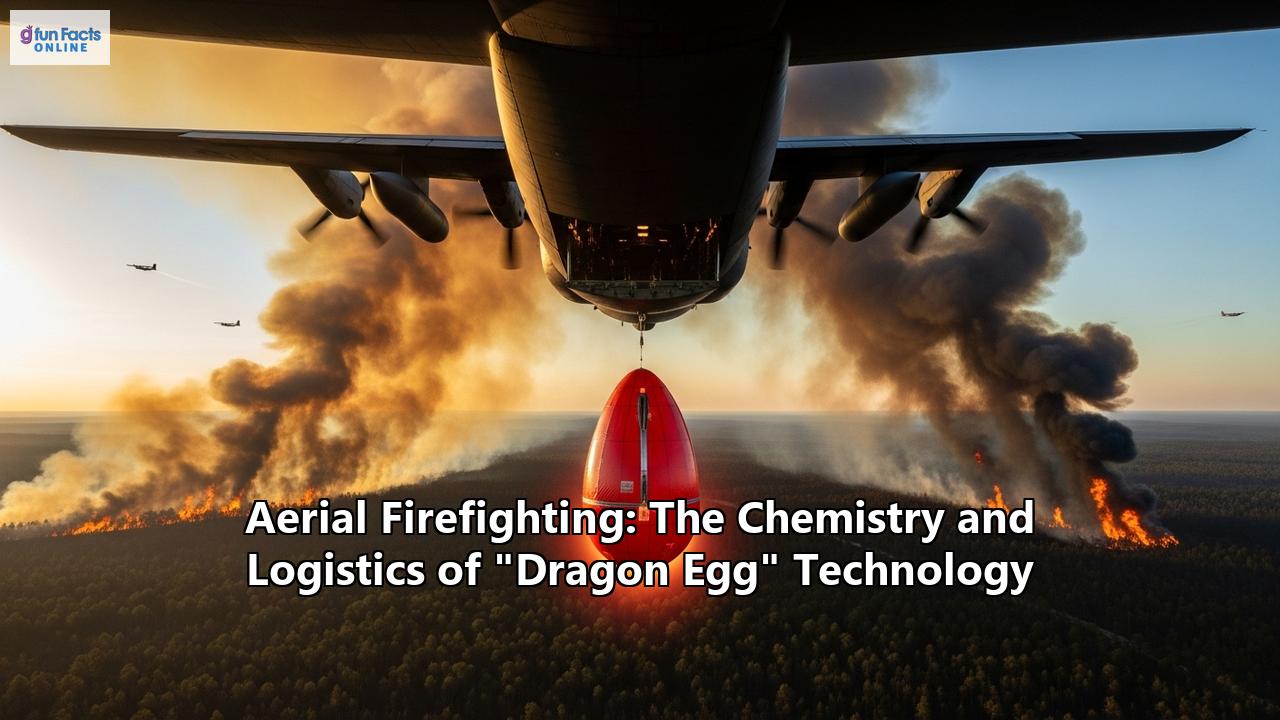
The Unseen Arsenal: Unpacking the Chemistry and High-Stakes Logistics of "Dragon Egg" Aerial Firefighting
In the ever-escalating battle against catastrophic wildfires, the tools of the trade are evolving at a breathtaking pace. Towering air tankers dropping vibrant red plumes of retardant and the roar of helicopter rotors beating back the flames have long been the iconic images of aerial firefighting. Yet, a quieter, more precise, and strategically revolutionary technology is now operating on the front lines, often under the cover of smoke or darkness. It’s a system that fights fire with fire, delivered by an unmanned aerial drone, and it goes by the evocative name of "Dragon Egg" technology.
These are not tools of extinguishment, but of ignition. Deployed with pinpoint accuracy, these small, unassuming spheres are at the heart of a sophisticated strategy to control the spread of modern megafires. They are the key components in prescribed burns and backburning operations—complex, high-stakes maneuvers designed to starve an advancing wildfire of its fuel. The use of "Dragon Eggs," formally known as Plastic Sphere Dispensers (PSD), represents a paradigm shift in wildland fire management, blending advanced chemistry, robotics, and intricate logistics to give firefighters a crucial edge.
This article delves deep into the world of "Dragon Egg" technology, exploring the potent chemical reaction that gives them their fiery birth, the complex logistical chain that brings them to the fire line, and the transformative impact they are having on how we confront and manage the ever-growing threat of wildland fire.
The Spark of an Idea: The Chemistry Behind the Ignition
At its core, "Dragon Egg" technology is a marvel of applied chemistry, harnessing a powerful exothermic reaction to create a delayed, reliable source of ignition. The spheres themselves are deceptively simple: typically about one inch in diameter, the size of a ping-pong ball, and made of a high-impact polystyrene shell. Inside this unassuming plastic orb is the primary chemical component: potassium permanganate (KMnO₄).
Potassium permanganate is a strong oxidizing agent, a crystalline solid with a vibrant purple hue. It is this chemical's powerful ability to donate oxygen that makes it so reactive. However, on its own, it is relatively stable. The magic happens when it is introduced to the second key ingredient: ethylene glycol (C₂H₆O₂), a common industrial chemical best known as the primary component of automotive antifreeze.
The moment these two substances meet, a vigorous redox (reduction-oxidation) reaction begins. Ethylene glycol acts as a reducing agent, or fuel, and is oxidized by the potassium permanganate. The reaction is highly exothermic, meaning it releases a significant amount of energy in the form of heat. This heat builds rapidly, causing the mixture to smoke, bubble, and, after a predictable delay, burst into flame.
The simplified chemical process involves the potassium permanganate breaking down the ethylene glycol. The initial reaction oxidizes the ethylene glycol into intermediate compounds like oxalic acid and formic acid. As the reaction accelerates and temperatures soar, these intermediates are further oxidized, ultimately producing carbon dioxide (CO₂), water (H₂O), and manganese oxide (MnO), a harmless, naturally occurring mineral. A TikTok video by a user named Apoptosis, which demonstrates the reaction, notes that the final byproducts are simply CO2, water, and manganese (II,III) Oxide, which is described as a "harmless naturally occurring mineral".
The Critical Delay: Engineering the ReactionFor aerial firefighting applications, the most crucial aspect of this chemical reaction is its predictability. The ignition cannot be instantaneous. The "Dragon Egg" must be dropped from an aircraft, fall through the forest canopy, and settle on the ground before it ignites. This requires a built-in delay.
This delay, typically between 20 and 60 seconds, is meticulously engineered based on several factors:
- Particle Size of Potassium Permanganate: Finer powders of potassium permanganate have a larger surface area and react much more quickly. Manufacturers use granules of a specific size to control the reaction speed.
- Concentration of Ethylene Glycol: The reaction requires concentrated ethylene glycol. Diluted solutions may not generate enough heat to achieve ignition at all. Therefore, full-strength antifreeze is used.
- Stabilizing Additives: As revealed in safety bulletins, a slowing additive is mixed with the potassium permanganate to help stabilize and control the reaction time. The absence of this additive in some manufacturing batches has led to dangerously fast reactions.
This controlled delay is what makes the technology safe and effective. It allows an operator to precisely time and place ignitions across a landscape from a safe distance, a feat that would be impossible with a more volatile or instantaneous ignition source.
From Helicopter to Drone: The Evolution of Aerial Ignition
The concept of starting fires from the air is not new. It has been a critical component of wildland fire management for over half a century. The practice, known as aerial ignition, is used for two primary purposes:
- Prescribed Burns: These are controlled, intentionally set fires under specific weather conditions to reduce fuel loads, restore ecosystems, and prevent future catastrophic wildfires.
- Backburning (or Firing Out): This is a tactical maneuver during an active wildfire where firefighters intentionally burn the fuel between the main fire front and a control line (like a road or a bulldozed firebreak). This robs the advancing wildfire of its fuel, effectively stopping its spread.
The earliest forays into aerial ignition, dating back to the late 1960s, involved "aerial drip torches." These were essentially large, fuel-filled canisters slung beneath a helicopter, dripping a stream of flaming fuel onto the ground. While effective, they were cumbersome and could be imprecise.
The major breakthrough came with the development of the helicopter-mounted Plastic Sphere Dispenser (PSD), an apparatus often nicknamed the "ping pong ball machine." One of the most well-known systems is the "Red Dragon," manufactured by SEI Industries. This machine is installed in the passenger compartment of a helicopter and is operated by a specially trained crew member. The machine houses a hopper of "Dragon Eggs," injects each sphere with glycol as it passes through the mechanism, and then dispenses it out the door.
The PSD offered significant advantages over the drip torch. It allowed for more precise placement of fire, enabling complex ignition patterns that could better control fire behavior. The operator could adjust the drop rate, from 45 to 130 spheres per minute, to create fire lines of varying intensity. This helicopter-based system became the standard for large-scale prescribed burns and tactical firing operations for decades.
The Drone Revolution: The Birth of the IGNIS SystemWhile helicopters revolutionized aerial ignition, they have significant limitations. They are expensive to operate, require highly trained pilots and crew, and cannot fly in dense smoke, at night, or in other hazardous conditions. These limitations created a clear need for a new solution, and the answer came in the form of Unmanned Aircraft Systems (UAS), or drones.
The development of a drone-based PSD was pioneered by researchers at the University of Nebraska-Lincoln, which led to the founding of a startup called Drone Amplified. Their flagship product is the IGNIS system, now in its second generation (IGNIS 2). This system miniaturized the helicopter-based technology into a lightweight, sophisticated payload that could be mounted on a powerful commercial drone.
The IGNIS system represents a quantum leap in aerial ignition technology. It combines a hopper, which holds up to 450 ignition spheres, with a mechanism that punctures and injects each sphere with glycol before dropping it. The entire operation is controlled remotely by a pilot on the ground, often miles away from the fire line.
This shift from manned helicopters to unmanned drones has been transformative, offering unparalleled improvements in safety, cost-effectiveness, and operational flexibility.
The Modern Arsenal: Aircraft and Dispenser Technology
Today's "Dragon Egg" technology is a tightly integrated system of a high-powered drone, a specialized dispenser payload, and sophisticated control software. The combination of these elements provides fire managers with an unprecedented level of precision and control.
The Workhorse in the Sky: The Freefly Alta XOne of the most common drone platforms used for aerial ignition is the Freefly Alta X. This American-made drone is a heavy-lifter, designed for industrial and professional cinematography applications, making it perfectly suited for carrying the IGNIS payload.
Key specifications of the Alta X that make it ideal for this role include:
- Payload Capacity: The Alta X can carry a maximum payload of up to 35 pounds (15.9 kg), more than enough for a fully loaded IGNIS system.
- Flight Time: Depending on the payload and conditions, the Alta X can achieve flight times of over 30 minutes. A typical mission with a 20lb payload allows for about 22 minutes of flight, giving crews ample time to execute burn patterns.
- Durability and Performance: It is built to operate in a wide range of temperatures, from -20°C to +50°C, and is tested to an IP43 ingress protection rating, meaning it can withstand some degree of dust and water spray. Its powerful motors and 33-inch propellers provide stability and agility even in challenging, turbulent air conditions often found near wildfires.
The IGNIS 2 system by Drone Amplified is the heart of the technology. Weighing just over 4 pounds (1.8 kg) empty and about 9.3 pounds (4.2 kg) fully loaded with 450 spheres and glycol, it is a compact and efficient piece of engineering.
Its key features include:
- High Capacity and Drop Rate: The system can carry a maximum of 450 "Dragon Eggs" and dispense them at a variable rate of up to 120 spheres per minute. This allows the operator to lay down a dense line of fire when needed or space out ignitions for a slower, less intense burn.
- Rapid Reloading: On the ground, a single operator can reload the dispenser in 2 to 5 minutes, minimizing downtime between flights and maximizing efficiency.
- Integrated Sensors: The IGNIS 2 is equipped with onboard sensors that monitor for obstructions, resistance, and temperature, providing critical feedback and ensuring reliable operation. It also features fault-tolerant subsystems and a remote emergency release system for safety.
- Software Integration: The system is controlled via a custom Android application that runs on a tablet connected to the drone's controller. This software is the critical link that allows fire managers to plan and execute their strategies with precision.
The software controlling the drone and dispenser is what truly unlocks the strategic potential of "Dragon Egg" technology. The Drone Amplified app provides a comprehensive mission planning and execution interface designed specifically for firefighters.
Capabilities of the control software include:
- Geofencing: Before a mission, operators can draw a digital boundary (a geofence) on a map. The IGNIS system is programmed to only drop spheres within this designated area, preventing errant ignitions and ensuring fire is only placed where it is intended.
- Autonomous Mission Planning: Fire managers can import burn plans and maps as geo-referenced PDFs or KMZ files. They can then create autonomous flight paths, programming the drone to fly specific lines and drop spheres at a set spacing and altitude. This allows for the creation of perfectly uniform burn patterns that would be nearly impossible to replicate with manned aircraft or ground crews.
- Real-Time Monitoring and Control: The operator has a live video feed from the drone, often including both visual and thermal imagery. This allows them to see through smoke, monitor fire behavior in real-time, and make immediate adjustments to the flight path or drop rate as conditions change. The Firing Boss can stand safely on the ground with the pilot, observing the fire's progress without the stress and noise of being in a helicopter.
- Offline Capability: The software allows for the downloading of satellite imagery and elevation maps, enabling crews to operate effectively in remote, backcountry areas with no internet connectivity.
This combination of a robust aircraft, an intelligent dispenser, and powerful software gives fire managers a level of control and situational awareness that was unimaginable just a decade ago.
The Logistical Backbone: From Factory to Fire Line
The journey of a "Dragon Egg" from its point of manufacture to its final, fiery purpose on a wildfire is a carefully managed logistical process governed by strict safety and hazardous materials regulations. The effectiveness of the entire system hinges on this often-unseen supply chain.
Manufacturing and Quality ControlThe ignition spheres are manufactured by a few specialized companies, with SEI Industries being a prominent name. The process involves creating the two halves of the polystyrene sphere, placing a measured amount of potassium permanganate powder inside, and sealing them together.
Quality control is paramount. As an Interagency Aviation Tech Bulletin from October 2023 highlighted, a batch of "Dragon Eggs" manufactured over a four-day period was found to be missing the crucial slowing additive. This resulted in dangerously fast reaction times of less than 10 seconds, leading to "non-ignition bursts or significant aerial propulsion"—essentially, the spheres were exploding or rocketing into the air. Such a malfunction could cause the fire to breach control lines or create a direct hazard to personnel. This incident underscores the critical importance of rigorous testing and quality control in the manufacturing process.
Storage and Handling: A Hazardous MaterialDue to the potassium permanganate content, "Dragon Eggs" are classified as a hazardous material (oxidizer). Their storage and transport are subject to strict regulations outlined in guides like the "Everyday Hazmat User's Training Guide."
Proper storage procedures include:
- Controlled Environments: Spheres must be stored in designated areas, separated from fuels and other reactive materials. Regulations limit the quantity that can be stored in one area without specialized fire suppression systems, such as a "1-hour" firewall or automatic sprinklers.
- Protection from Moisture: Humidity can cause the potassium permanganate to clump inside the spheres, potentially leading to malfunctions. It is recommended to shake the boxes and rotate them periodically to keep the powder loose.
- First-In, First-Out: While the spheres have a long shelf life (some units report using spheres over five years old), it is standard practice to use the oldest stock first. Older spheres can become brittle, which, while generally acceptable, can increase the likelihood of the dispenser machine getting dirty or jamming.
When deployed to an incident, crews must conduct a "bench test" before any operational mission. This involves injecting a few spheres from the batch to be used and timing the reaction. This crucial step verifies that the spheres are performing as expected and provides the actual ignition delay time, which can then be factored into the mission planning (e.g., adjusting flight altitude to ensure the sphere ignites on the ground, not in the air). If any spheres are found to be defective or overly volatile, the entire box is removed from service and the issue is reported.
The entire logistical chain, from the chemical additives used in the factory to the final bench test in the field, is a system built on precision, safety, and a deep understanding of the powerful chemistry being harnessed.
The Strategic Impact: Redefining the Rules of Engagement
The adoption of "Dragon Egg" technology delivered by drones is not just an incremental improvement; it is fundamentally changing wildland fire strategy and operations. The benefits extend across safety, cost, efficiency, and effectiveness.
Unprecedented Safety ImprovementsThe single greatest advantage of using drones for aerial ignition is the removal of humans from high-risk environments. Traditionally, aerial ignition involved pilots flying helicopters low and slow over a fire, often in turbulent, smoky conditions—one of the most dangerous jobs in firefighting. Ground crews lighting fires by hand with drip torches must hike through rugged, remote terrain, often with an active fire nearby.
Drones eliminate these risks. The pilot and fire manager operate from a safe location, potentially miles from the flames. This drastically reduces the exposure of personnel to the inherent dangers of the fire environment, including smoke inhalation, burns, and aviation accidents.
Dramatic Cost ReductionsThe economic benefits are staggering. A 2020 briefing paper from the USDA Forest Service, based on operations in the Southern Region, found that using a drone for prescribed burning costs approximately $1,800 per day. In stark contrast, a Type III "Call-When-Needed" helicopter to perform the same task costs around $16,000 per day. This represents a nearly 90% reduction in daily operational costs.
These savings are driven by lower fuel consumption, reduced maintenance needs, and significantly smaller crew requirements compared to manned helicopters. This cost-effectiveness allows land managers to conduct more prescribed burns, treating more acres and making landscapes more resilient to wildfire with the same or even a smaller budget.
Enhanced Efficiency and EffectivenessDrones enable firefighters to be more effective in several key ways:
- 24/7 Operations: Unlike helicopters, which are typically grounded at night and in very smoky conditions, drones can operate in the dark and through dense smoke, thanks to their GPS navigation and integrated thermal cameras. This allows crews to conduct burning operations during more favorable weather conditions, such as the higher humidity and lower temperatures often found overnight, leading to more controlled and effective burns.
- Precision and Control: The ability to program exact flight paths and drop rates allows for the creation of intricate ignition patterns that can manipulate fire behavior with incredible finesse. This is particularly useful in complex terrain or near sensitive areas. The IGNIS 2's ability to adjust drop spacing in real-time gives the Firing Boss a level of control that is impossible with a helicopter.
- Access to Remote Areas: Drones can easily reach remote or rugged terrain that would be dangerous or inaccessible for ground crews and difficult for helicopters to operate in. This allows for the application of fire in landscapes that have been previously untreated, breaking up large, continuous fuel beds.
- Improved Fire Effects: Studies have shown that the precision of drone-based ignition can lead to better fire outcomes. One analysis comparing UAS and non-UAS burns found that drone-ignited fires resulted in slightly less severe fire effects, with lower scorch heights and less crown scorch. This suggests that drone ignitions can achieve the desired fuel reduction with less damage to mature trees, promoting a healthier and more resilient forest structure.
During the 2021 Dixie Fire in California, the second-largest in the state's history, drone-based aerial ignition played a crucial role. In one instance, a drone was deployed to conduct a burnout operation down a steep, inaccessible gully. The drone's thermal camera first provided critical intelligence, helping fire managers determine if it was safe to attempt to hold the fire at that location. Once the decision was made, "Dragon Eggs" were used to ignite a backfire, creating a control line in an area that would have been far too dangerous for ground crews to enter. This operation demonstrated the dual-use capability of the system: first as a reconnaissance tool for situational awareness, and then as a tactical tool for direct fire suppression action.
Navigating the Hurdles: Safety, Regulation, and Environmental Questions
Despite its immense promise, the widespread adoption of "Dragon Egg" technology faces several challenges, primarily centered around safety, aviation regulations, and environmental concerns.
Regulatory Landscape: The FAA and Airspace ControlThe biggest regulatory hurdle is managing airspace. During a wildfire, the Federal Aviation Administration (FAA) typically establishes a Temporary Flight Restriction (TFR) around the incident. This creates a "no-fly zone" for all unauthorized aircraft, including civilian drones. The principle, heavily promoted by fire agencies, is simple: "If you fly, we can't." An unauthorized drone in the airspace can force the grounding of all firefighting aircraft—helicopters and air tankers—out of fear of a mid-air collision, halting critical suppression efforts and putting lives at risk.
For official operations, fire agencies work under strict protocols. Drone pilots must be certified under FAA Part 107 regulations and often receive additional, specialized training that adheres to standards set by the National Wildfire Coordinating Group (NWCG). All flights are conducted in coordination with the Air Operations Branch Director on the incident, ensuring that drone missions are deconflicted with all other manned aircraft.
Safety and VolatilityAs the incidents with overly reactive spheres have shown, the chemicals involved are powerful and must be handled with extreme care. The reliance on a stable chemical reaction demands stringent quality control from manufacturers and diligent pre-operational checks by crews in the field. The development of standard operating procedures, robust training programs, and clear safety bulletins like those from the Interagency Aviation Working Group are essential to mitigating these risks.
Environmental ConsiderationsWhile the byproducts of the "Dragon Egg" reaction are generally considered benign, questions about the environmental impact of introducing any chemical into an ecosystem are valid. The primary byproduct of concern is manganese oxide.
Manganese is a naturally occurring element and is essential for plant and animal life in small amounts. However, exposure to high concentrations of manganese dust, particularly through inhalation, is linked to neurological and respiratory health issues in humans, a condition known as manganism. While the amount of manganese oxide deposited during a burn is spread over a large area, the long-term ecological effects of this deposition on soil and water quality are an area that warrants ongoing monitoring. Studies on the environmental fate of manganese show that it can be soluble in water and its movement depends on local environmental conditions. However, the consensus within the wildland fire community is that the risk posed by the small amounts of manganese oxide is far outweighed by the immense ecological benefits of restoring fire to the landscape and preventing the devastating, soil-sterilizing effects of a high-intensity megafire.
The Future of Fire: A Fully Integrated System
The "Dragon Egg" is more than just a fire-starting device; it is a component of a larger, integrated system of aerial intelligence and land management. The future of this technology lies in greater automation and data integration.
Researchers are already developing systems that use a swarm of drones to autonomously ignite, monitor, and even suppress a fire. These systems would use advanced AI and machine learning to analyze real-time thermal data, predict fire spread, and adjust ignition patterns on the fly without human intervention. The same drones used for ignition can be equipped with thermal cameras to conduct post-burn monitoring, precisely mapping hotspots and ensuring the fire is completely extinguished before crews leave the area. This provides a "cradle-to-grave" solution for managing a prescribed burn, from ignition to final mop-up.
As we face a future with a hotter, drier climate and more extreme fire behavior, tools that enhance our ability to safely and effectively manage fire will be more critical than ever. "Dragon Egg" technology, born from a simple but powerful chemical reaction, has armed firefighters with a revolutionary new capability. It allows them to be proactive, precise, and strategic in ways that were previously impossible. By fighting fire with fire from a safe distance, this unseen arsenal is helping to restore balance to our fire-adapted landscapes and protect our communities from the growing threat of wildfire.
Reference:
- https://openreview.net/forum?id=f7M9ZFobco
- https://wildfiretoday.com/faa-wildfires-and-drones-dont-mix/
- https://www.google.com/search?q=time+in+Philadelphia,+PA,+US
- https://www.fs.usda.gov/t-d/pubs/htmlpubs/htm11512312/
- https://freeflysystems.com/alta-x/specs
- https://droneamplified.com/drone-prescribed-burning-saves-14000-a-day-usda/
- https://nepis.epa.gov/Exe/ZyPURL.cgi?Dockey=910080BF.TXT
- https://fs-prod-nwcg.s3.us-gov-west-1.amazonaws.com/s3fs-public/publication/pms501.pdf
- https://www.commercialuavnews.com/los-angeles-fires-highlight-the-promise-and-problems-of-using-drones-for-firefighting
- https://droneamplified.com/wp-content/uploads/2020/10/IGNIS-2.0-Datasheet-November-2019.pdf
- https://www.doi.gov/sites/default/files/iatb-2024-01.pdf
- https://chadronradio.com/drone-usage-during-wildfires-growing-common-but-remain-illegal/
- https://www.mdpi.com/2072-4292/12/8/1295
- https://dronespec.dronedesk.io/freefly-alta-x
- https://frontierprecision.com/wp-content/uploads/Frontier-Precision-Freefly-Alta-X-Flyer.pdf
- https://www.faa.gov/uas/public_safety_gov/uas-wildfire-response
- https://ntrs.nasa.gov/api/citations/20240010585/downloads/20240010585_Autonomous-Drone-Integration-Final.pdf
- https://droneamplified.com/ignis-system-datasheet/
- https://www.3fbaerworx.com.au/ignis_aerial_incendiary_system
- https://freefly.gitbook.io/freefly-public/products/alta-x/untitled-3/technical-specs
- https://www.youtube.com/watch?v=7zLUFc2QoyE
- https://www.fs.usda.gov/t-d/pubs/pdfpubs/pdf11512312/pdf11512312dpi72.pdf
- https://ftp.wildfire.gov/public/incident_specific_data/n_rockies/IncidentAviationManagers/Forms/Aerial%20Ignition/burn%20plan/PSDAvSafetyPlan.doc
- https://cinemoves.com/freefly-alta-x/
- https://archaerial.com/2025/02/drones-vs-traditional-methods-a-comparative-analysis/
- https://marketing.unleashlive.com/blog/the-ultimate-guide-to-utility-inspections-helicopters-vs-drones
- https://www.youtube.com/watch?v=oWOLTNMi7bc
- https://www.nasa.gov/aeronautics/at-california-blazes-nasa-team-observes-how-drones-fight-wildfire/
- https://www.faa.gov/sites/faa.gov/files/uas/resources/community_engagement/FAA_drones_wildfires_toolkit.pdf
- https://flightsafety.org/drone-interference/
- https://dronelaunchacademy.com/resources/firefighting-drones-the-ultimate-guide/
- https://www.nwcg.gov/positions/unmanned-aircraft-systems-pilot
- https://www.epa.gov/sites/default/files/2016-10/documents/manganese.pdf
- https://iris.who.int/bitstream/handle/10665/42992/9241530634.pdf?sequence=1