
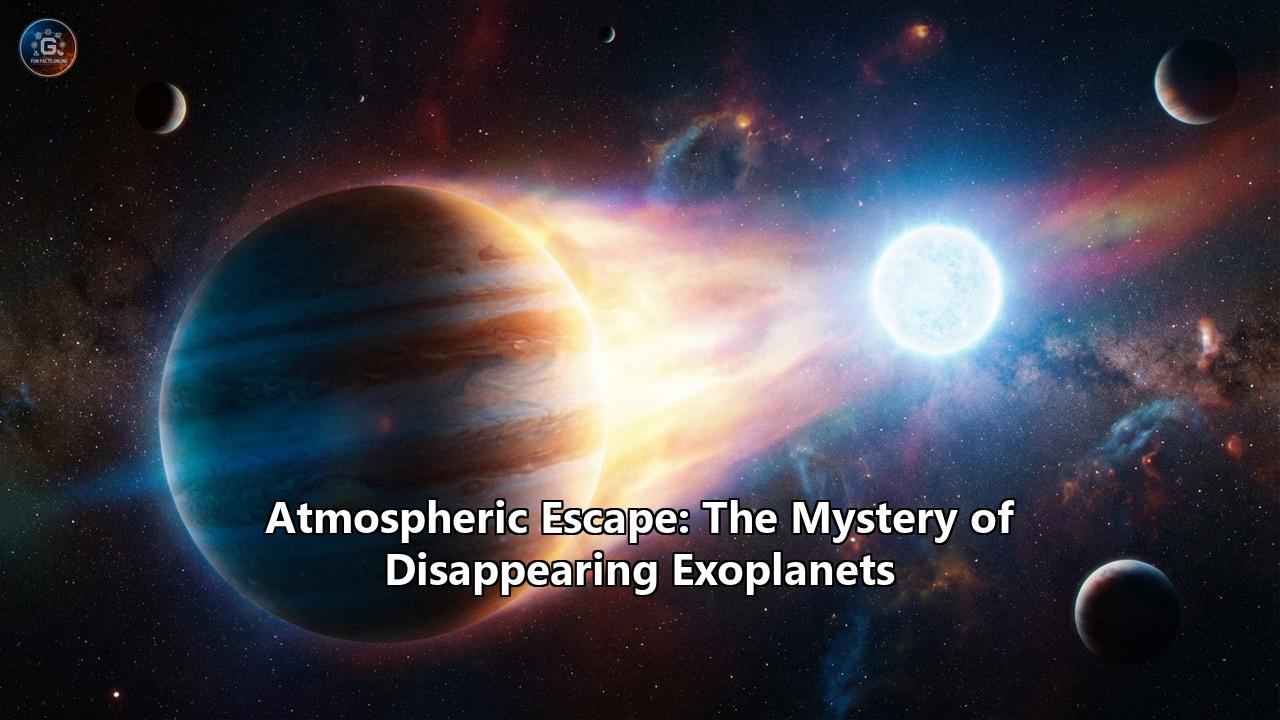
Introduction: The Case of the Missing Worlds
In the grand celestial census of our galaxy, a peculiar silence echoes through the data. For decades, astronomers have trained their telescopes on the stars, tallying the population of worlds that orbit them. We have found gas giants larger than Jupiter roasting in orbits tighter than Mercury’s; we have found "super-Earths," rocky worlds massive enough to crush a human frame; we have even found planets with three suns. But as the catalogue of thousands of exoplanets grew, a pattern emerged—or rather, a lack of one. In the region close to stars, where orbital periods are measured in days rather than years, there is a conspicuous absence. Medium-sized planets, those roughly the size of Neptune, are missing.
This void in the cosmic demographics has been christened the "Neptune Desert." It is not a barren wasteland of space, but a statistical ghost town, a region where our models suggest planets should exist, yet they do not. Where are they? The answer lies in a violent and invisible drama playing out across the galaxy, a process of planetary destruction and transformation known as atmospheric escape.
This is not merely a story of evaporation. It is a detective story involving X-ray lasers, magnetic shields that may act as swords, and planets that are stripped to their very cores, leaving behind naked, rocky husks—the theoretical "Chthonian" worlds. To understand the mystery of the disappearing exoplanets is to understand the life and death of planetary systems, a saga that rewrites the history of our own solar system and redefines the boundaries of habitability in the universe.
Part I: The Crime Scene
1.1 The Neptune Desert
The discovery of the Neptune Desert was not a singular "eureka" moment but a realization that dawned slowly as the Kepler Space Telescope beamed back its treasure trove of data. Astronomers began plotting the size of planets against their distance from their host stars. They expected a scatter plot, a random distribution reflecting the chaotic nature of planetary formation. Instead, they found boundaries.
Hot Jupiters—massive gas giants orbiting very close to their stars—were rare but present. Super-Earths—rocky planets slightly larger than our own—were abundant in these tight orbits. But in the middle ground, for planets with radii between 2 and 4 times that of Earth (roughly the size of Neptune) and orbital periods of less than four days, the chart was empty.
Why is this strange? In the cold outer reaches of planetary systems, Neptune-sized worlds are common. We have two in our own solar system (Uranus and Neptune). Formation models suggest that protoplanetary disks should easily churn out worlds of this mass. If they migrate inward, as Hot Jupiters do, we should see them. Their absence implies that they either cannot form there, or more likely, they cannot survive there.
1.2 The Radius Valley (Fulton Gap)
Deepening the mystery was the discovery of the "Radius Valley," also known as the Fulton Gap, named after astronomer Benjamin Fulton who characterized it in 2017. When looking at small planets close to their stars, the data showed a bimodality. There were plenty of planets around 1.3 Earth radii (likely rocky super-Earths) and plenty around 2.4 Earth radii (likely gas-shrouded mini-Neptunes). But there were very few in between, around 1.7 Earth radii.
This gap is the "smoking gun" of atmospheric escape. It suggests that planets of this intermediate size are unstable. They don't stay that size for long. They either start larger and lose their atmosphere to shrink down to a rocky core, or they never accrete enough gas to jump the gap to become a mini-Neptune. The Fulton Gap provided the first clear population-level evidence that exoplanet atmospheres are not static; they are dynamic, evolving, and ephemeral features that can be stripped away entirely.
Part II: The Suspects — Mechanisms of Destruction
If the Neptune Desert and Radius Valley are the crime scenes, we must identify the perpetrators. The primary suspect is the host star itself, waging a war of radiation and gravity against its own offspring.
2.1 Photoevaporation: The X-Ray Assault
The most widely accepted mechanism for atmospheric escape is photoevaporation. This process is driven by high-energy radiation—specifically X-rays and Extreme Ultraviolet (XUV) photons—emitted by the host star.
When XUV photons slam into the upper atmosphere of a planet, they deposit immense amounts of energy. This energy heats the gas, primarily hydrogen and helium, to temperatures of tens of thousands of degrees. As the gas heats up, it expands. If the thermal velocity of the gas molecules exceeds the planet's escape velocity, the atmosphere simply flows away into space.
This is a hydrodynamic process, meaning the atmosphere doesn't just lose individual particles; it flows out like a fluid, a "planetary wind" blowing into the void. For a planet the size of Neptune close to a Sun-like star, the mass loss can be catastrophic. The star acts like a cosmic hair dryer, blasting away the planet's volatile envelope.
- The Critical Threshold: Photoevaporation is most efficient for low-mass planets with thick atmospheres (like hot Neptunes). Gas giants like Jupiter have gravity strong enough to hold onto their gas despite the heating. Rocky planets like Earth have atmospheres too thin to absorb enough XUV radiation to drive a massive outflow. Neptunes are in the "Goldilocks" zone of destruction: enough gas to absorb the energy, but too little gravity to hold onto it.
2.2 Core-Powered Mass Loss: The Enemy Within
In recent years, a second suspect has emerged: Core-Powered Mass Loss. This theory suggests that the star doesn't need to fire the gun; the planet might be doing it to itself.
When a planet forms, its core is incredibly hot, a relic of the violent accretion process. For billions of years, this rocky core radiates heat outward into the gaseous envelope surrounding it. If the planet is close to its star, the outer boundary of the atmosphere is already hot and tenuous. The additional heat pushing from the core below can "puff up" the atmosphere, reducing its density and making it easier for gas to escape the planet's gravitational well.
While photoevaporation relies on external XUV radiation (which fades as a star gets older), core-powered mass loss is driven by the planet's own internal cooling luminosity and the bolometric (total heat) luminosity of the star. Recent studies in 2024 and 2025 have attempted to distinguish between these two by looking at planet populations around stars of different masses, but the verdict is still out. It is likely that both mechanisms work in tandem to carve the Radius Valley.
2.3 Hydrodynamic Escape vs. Jeans Escape
To understand the scale of this loss, we must distinguish between "Jeans Escape" and "Hydrodynamic Escape."
- Jeans Escape: This is the slow leak we see on planets like Earth. Individual molecules in the upper atmosphere randomly gain enough speed (via collisions or solar wind interaction) to zip away. It’s a trickle.
- Hydrodynamic Escape: This is a flood. The atmosphere absorbs so much energy that it expands as a bulk fluid. It drags everything with it—not just light hydrogen, but heavier elements like carbon, oxygen, and even magnesium. This is the mechanism responsible for the Neptune Desert. It effectively "peels" the planet.
Part III: The Victims — Case Studies in Disappearance
The theory is compelling, but the proof lies in observation. Astronomers have caught several planets in the act of vanishing.
3.1 GJ 436b: The Comet-Planet
GJ 436b was the first "warm Neptune" to reveal the violence of atmospheric escape. Orbiting a red dwarf star just 33 light-years away, this planet is roughly the size of Neptune but much hotter. When astronomers observed it with the Hubble Space Telescope, they saw something shocking.
In visible light, the transit (the planet passing in front of the star) lasted about an hour. But in Lyman-alpha light (a specific ultraviolet wavelength absorbed by hydrogen), the transit lasted hours longer. The planet was being trailed by a colossal tail of hydrogen gas, millions of kilometers long, giving it the appearance of a gigantic comet.
GJ 436b is losing its atmosphere, but relatively slowly. It is in the "Neptune Savanna," a region just outside the Desert where planets can survive but still bear the scars of their environment. The gas tail is composed of material that has escaped the planet's gravity but is still being pushed back by the pressure of the star's light.
3.2 GJ 3470b: The Rapid Evaporator
If GJ 436b is leaking, GJ 3470b is hemorrhaging. This dwarf-star-orbiting Neptune is losing its atmosphere at a rate 100 times faster than GJ 436b. It is much lower in density, meaning its gravitational hold on its atmosphere is weaker.
Observations have shown that GJ 3470b is essentially "naked" to the X-rays of its young, active parent star. It offers a grim preview of the ultimate fate of hot Neptunes. In a few billion years, it may shrink significantly, perhaps crossing the gap to become a mini-Neptune or even a super-Earth.
3.3 AU Microscopii b: The Hiccuping Planet
One of the most fascinating recent discoveries involves AU Mic b, a young Neptune orbiting a very active, flaring star. Observations published in 2023 and 2024 revealed that its atmospheric escape is not constant. It is variable, appearing to turn on and off.
This "hiccup" behavior is likely due to the extreme variability of the host star. AU Microscopii is a "toddler" star, prone to violent tantrums (flares) and a chaotic stellar wind. The interplay between the planet's magnetic field and the star's erratic wind creates a dynamic environment where the outflow of gas can be suppressed or enhanced dramatically over short timescales. This challenges our simple models of steady-state evaporation.
3.4 HAT-P-11b: Heavy Metal Skies
HAT-P-11b provided another piece of the puzzle. Observations of its escaping atmosphere revealed not just hydrogen, but heavier elements. This confirms the hydrodynamic nature of the escape. The outflow is so powerful that it drags heavy atoms like oxygen and carbon up from the lower atmosphere and flings them into space. This "aerodynamic drag" is critical evidence that we are witnessing a bulk flow, not just surface evaporation.
Part IV: The Survivors and The Transformed — Chthonian Planets
What happens when the process finishes? If a hot Neptune loses its entire gaseous envelope, what is left?
4.1 The Legend of the Chthonian Worlds
The term "Chthonian" (from the Greek chthonios, meaning "of the earth" or "subterranean") was coined to describe a hypothetical class of planets: the stripped cores of gas giants. These would be worlds of metal and rock, likely covered in oceans of lava, orbiting perilously close to their stars. They would look like super-Earths but would have a very different origin story. Instead of forming from rock, they were born as giants and humbled by their stars.
4.2 TOI-849b: The Core That Shouldn't Exist
For years, Chthonian planets were theoretical. Then came TOI-849b. Discovered by the TESS mission, this planet is an anomaly. It has the mass of Neptune (about 40 Earth masses) but the radius of a mini-Neptune. Its density is incredibly high, similar to Earth's.
A planet with 40 times Earth's mass should be a gas giant. Its gravity is strong enough to gobble up huge amounts of hydrogen during formation. The fact that it has almost no atmosphere suggests it is the exposed core of a failed Jupiter or a massive Neptune that was stripped clean. TOI-849b sits right in the heart of the Neptune Desert, the one survivor that tells the tale of the massacre that likely occurred there. It is the strongest candidate yet for a Chthonian world.
4.3 CoRoT-7b: The First Candidate
Before TOI-849b, there was CoRoT-7b. Discovered in 2009, it was the first super-Earth with a measured density consistent with rock. Its extremely short orbit (20 hours) places it in the zone of maximum destruction. While debates continue about whether it formed as a rocky planet or is a remnant core, it remains a prototype for the kind of "cinder" world that photoevaporation produces.
Part V: The Shield or The Sword? The Magnetic Field Paradox
For decades, science fiction and popular science have held that magnetic fields are shields. Earth's magnetic field protects us from the solar wind, preventing our atmosphere from being stripped away like Mars'. Therefore, we assumed that exoplanets with strong magnetic fields would be safe from atmospheric escape.
5.1 The New Paradigm: Magnetic Funnels
New research, including seminal papers from 2018 through 2025, has turned this assumption on its head. Detailed Magnetohydrodynamic (MHD) simulations suggest that for close-in exoplanets, a magnetic field might actually accelerate atmospheric loss.
The mechanism is counter-intuitive. While a magnetic field does deflect the stellar wind, it also creates "open" field lines at the planet's poles (the polar caps). In the intense environment of a hot Neptune, the ionized atmosphere can travel along these field lines like beads on a string. The magnetic field effectively creates a highway for gas to escape from the poles, shielding the equator but funneling the atmosphere out into space at the poles.
5.2 The "Cusp" Escape
Furthermore, the interaction between the planet's magnetic field and the star's magnetic field (reconnection events) can tear open the planet's magnetosphere, allowing huge bursts of plasma to escape through the "cusps" of the field. This means that a magnetized hot Neptune might lose its atmosphere faster than an unmagnetized one. The "shield" becomes a funnel, and the "protection" becomes a mechanism for efficient extraction.
Part VI: The Tools of the Trade — How We See the Invisible
How do we study these invisible winds blowing light-years away? The primary tool is Transmission Spectroscopy.
6.1 Lyman-Alpha and the "Shadow"
When a planet passes in front of its star (transits), it blocks a tiny fraction of the light. If the planet has an atmosphere, that atmosphere blocks specific wavelengths of light. Hydrogen gas is opaque to Ultraviolet Lyman-alpha light.
When astronomers look at a hot Neptune in visible light, they see a small dip in brightness. But in Lyman-alpha, the planet appears enormous—sometimes 50% of the star's size. This "giant shadow" is the cloud of escaping hydrogen surrounding the planet. It’s like seeing a small rock surrounded by a massive fog bank.
6.2 Helium Triplets: A New Window
Lyman-alpha has a drawback: it is easily absorbed by interstellar gas, meaning we can only use it for nearby stars. Recently, astronomers have developed a new technique using a specific infrared signature of Helium (the "helium triplet" at 1083 nanometers).
This helium line is not absorbed by the interstellar medium, allowing us to probe atmospheric escape in planets much further away. It traces the high-energy, escaping upper atmosphere. The detection of escaping helium from WASP-107b and HAT-P-11b opened a new era in studying these dying worlds.
6.3 The JWST Revolution
The James Webb Space Telescope (JWST) is currently rewriting the textbooks. Unlike Hubble, which struggled with the noise of data, JWST provides pristine infrared spectra. It can detect the subtle chemical fingerprints of heavier elements being dragged into space. In 2024, observations of the "Neptunian Ridge" (the border of the desert) began to show detailed atmospheric compositions, helping us understand exactly when and how these atmospheres begin to fail.
Part VII: The Bigger Picture — Habitability and Evolution
The story of disappearing exoplanets is not just about gas giants; it’s about us. It’s about the stability of habitable worlds.
7.1 The Mini-Neptune to Super-Earth Transition
The most profound implication of atmospheric escape is that Super-Earths and Mini-Neptunes may be the same objects at different stages of life.
A rocky world formed with a thick gas envelope might start as a mini-Neptune. If it orbits a calm star, it stays a mini-Neptune (potentially a "Hycean" world with a hydrogen ocean). If it orbits an active star, it loses the gas and becomes a rocky Super-Earth. This means that when we look for habitable planets, we must consider their history. A "rocky" planet in the habitable zone might actually be a stripped core. Would such a world be habitable? Or would the violence of its stripping leave it desiccated and dead?
7.2 The Solar System Context
This research casts our own solar system in a new light. Why doesn't Earth have a thick hydrogen atmosphere? Why is Mars so thin? We are the survivors. The "Hydrodynamic Escape" that is currently destroying hot Neptunes likely happened to Earth and Venus in the first 100 million years of the solar system. The extreme UV flux of the young Sun stripped our primordial hydrogen envelopes, leaving behind the secondary atmospheres (nitrogen, CO2, water) that we enjoy today. Watching hot Neptunes die is like watching a replay of Earth's violent infancy.
Part VIII: Future Horizons — ARIEL and Beyond
The detective story is far from over. The next decade promises a revolution in this field.
8.1 ARIEL: The Census Taker
While JWST is a sniper, targeting specific interesting worlds, the European Space Agency's ARIEL mission (launching 2029) will be a shotgun. It is designed to survey the atmospheres of thousands of exoplanets. ARIEL will give us the statistical power to map the Neptune Desert with unprecedented precision. It will tell us exactly where the "shoreline" of the desert is, and how it changes with stellar age and metallicity.
8.2 The Search for Tails
Future large ground-based telescopes (like the ELT) will look for the tell-tale spectral signatures of "comet tails" behind smaller planets. If we can detect atmospheric escape on Earth-sized planets, we will finally answer the question of how robust terrestrial atmospheres really are.
Conclusion: The Cosmic Sculptor
The "Neptune Desert" is not an emptiness; it is a monument to the power of stellar evolution. It teaches us that planets are not static sculptures fixed in time, but dynamic bodies constantly interacting with their environment. The mystery of the disappearing exoplanets has revealed that the universe is a place of violent transformation.
From the evaporating cometary tails of GJ 436b to the exposed metallic core of TOI-849b, we are witnessing the cosmic sculptor at work, chiseling away at gas giants to reveal the rocky worlds beneath. In studying these dying atmospheres, we learn the fragility of our own. We learn that an atmosphere is a gift, held in place by the delicate balance of gravity and magnetic fields against the relentless fury of a star. The missing planets are not truly gone; they have simply been transformed, their ghosts drifting through the galaxy as clouds of hydrogen, whispering the secrets of planetary evolution to anyone with the tools to listen.
Reference:
- https://www.youtube.com/watch?v=X0JWagyFr70
- https://en.wikipedia.org/wiki/Small_planet_radius_gap
- http://umu.diva-portal.org/smash/record.jsf?pid=diva2:1211137
- https://the-universe-of-the-universe.fandom.com/wiki/Chthonian_Planet
- https://en.wikipedia.org/wiki/Chthonian_planet
- https://www.herbertgunell.se/pdfpapers/GMNSSLHD18.pdf
- https://www.eoportal.org/satellite-missions/ariel
- https://sci.esa.int/web/ariel/-/ariel-moves-from-blueprint-to-reality
- https://arxiv.org/html/2509.02657v1