
The Emerging Field of Neuroarchaeology: A Journey into the Minds of Our Ancestors
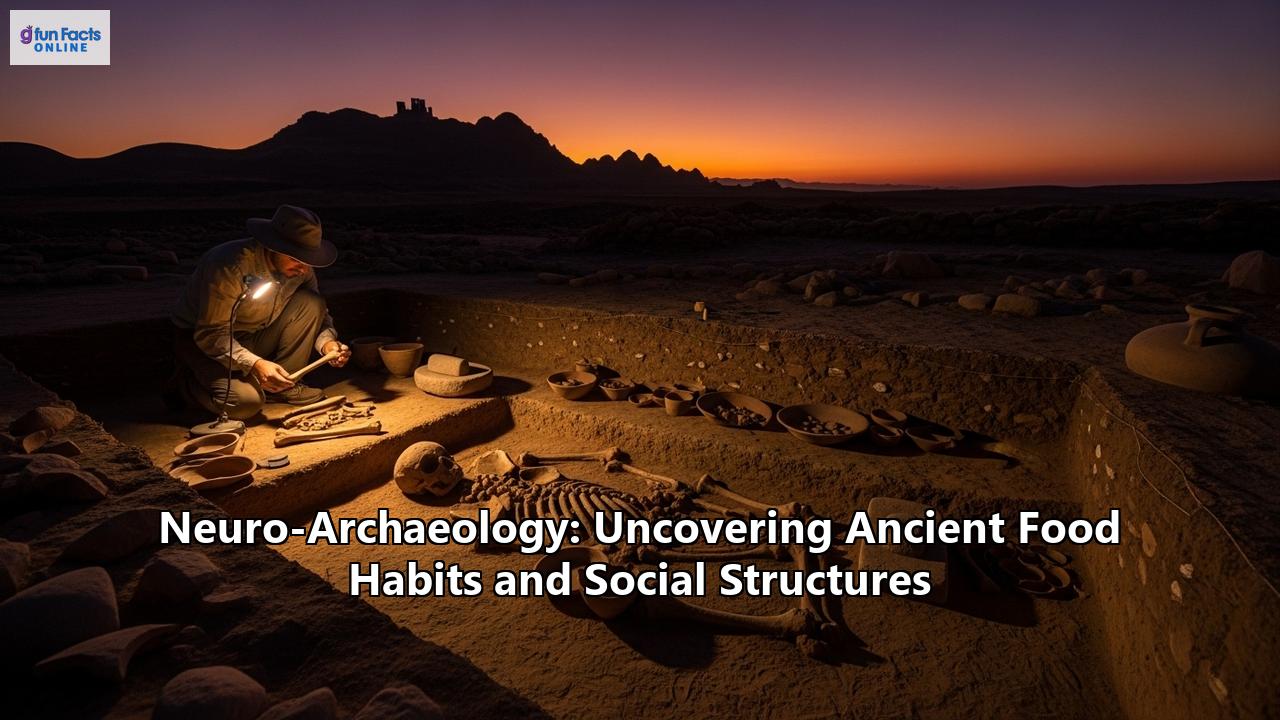
In the fascinating quest to understand our past, a new scientific frontier is emerging, one that delves not just into the artifacts and bones of our ancestors, but into the very workings of their minds. This captivating discipline, known as neuroarchaeology, stands at the intersection of neuroscience and archaeology, promising to unlock the cognitive secrets of ancient humans. By combining the tangible evidence of the past with our ever-growing understanding of the human brain, neuroarchaeology offers a revolutionary lens through which to view the evolution of our species, from our most basic survival strategies to the complex social tapestries we weave. This article will explore the depths of neuroarchaeology, revealing how it is illuminating the ancient food habits that fueled our evolution and the intricate social structures that defined early human societies.
Neuroarchaeology is a sub-discipline of archaeology that employs neuroscientific data and methodologies to make inferences about the brain and cognitive functions of our hominin ancestors. The term, coined by researchers like Colin Renfrew and Lambros Malafouris, represents a significant leap forward from traditional archaeological interpretation. For decades, cognitive archaeology has sought to understand the thought processes of past peoples by analyzing material culture such as tools, art, and settlements. Neuroarchaeology builds upon this foundation by integrating insights from modern neuroscience, including the use of neuroimaging techniques like fMRI (functional magnetic resonance imaging) and PET (positron emission tomography).
At its core, neuroarchaeology operates on the principle that the human brain and the material world are not separate entities, but are instead entwined in a dynamic relationship of co-evolution. This concept is central to the Material Engagement Theory (MET), a theoretical framework that posits that our minds are not confined to our skulls but extend into the world through our interactions with objects and our environment. In this view, the tools we create, the food we prepare, and the social spaces we inhabit are not merely byproducts of our cognition, but active participants in shaping it.
Unearthing Ancient Food Habits: The Brain on the Prehistoric Diet
The old adage "you are what you eat" takes on a profound new meaning within neuroarchaeology. The evolution of the human brain is inextricably linked to our ancestors' dietary shifts. The remarkable expansion of the human brain, particularly the neocortex, would have been metabolically impossible without a transition to a more nutrient-dense diet. This is where the story of our cognitive evolution truly begins, with the fundamental need for sustenance.
The Cognitive Leap of a High-Quality Diet
The human brain is an incredibly expensive organ, consuming about 20% of our total energy budget, a significantly higher proportion than in other primates. To fuel this energy-hungry organ, our ancestors needed to move beyond a diet of raw, low-quality plants. The incorporation of meat and, later, cooked foods, provided the necessary calories, proteins, and fats to support brain growth. This dietary shift is not just a matter of sustenance; it represents a significant cognitive leap. The skills required to hunt, butcher, and process meat are far more complex than those needed for foraging plants.
Neuroarchaeological studies, often involving experiments where modern participants replicate ancient tasks, have shed light on the cognitive demands of these activities. For example, studies on the creation of Oldowan and Acheulean stone tools, the earliest implements used by our ancestors, reveal a great deal about their minds.
- Oldowan tools, simple stone flakes and choppers dating back to around 2.6 million years ago, required basic cognitive functions such as hand-eye coordination and an understanding of fracture mechanics.
- Acheulean tools, which appeared around 1.7 million years ago, are more sophisticated, symmetrical hand-axes that demonstrate a higher level of cognitive function. Neuroimaging studies of modern individuals crafting these tools show activation in brain regions associated with planning, working memory, and complex motor control.
These findings suggest that the very act of creating tools to acquire and process food was a driving force in our cognitive evolution. The need for better tools spurred the development of more complex cognitive abilities, which in turn allowed for the creation of even more advanced technologies. This feedback loop between diet, technology, and brain development is a cornerstone of our evolutionary story.
The Neuroscience of Taste and Memory: A Flavorful Past
Neuroarchaeology also allows us to explore the more subtle aspects of ancient food habits, such as taste preferences and the emotional significance of food. Our sense of taste and smell are deeply intertwined with our emotions and memories, a connection rooted in the architecture of our brains. The olfactory bulb, which processes smells, has direct connections to the amygdala (involved in emotion) and the hippocampus (crucial for memory). This explains why a particular smell can trigger a vivid, emotionally charged memory.
This has profound implications for understanding the past. The development of taste aversion, for example, is a powerful survival mechanism that would have been essential for our ancestors. A negative experience with a particular food, such as becoming ill after eating it, would create a lasting memory, ensuring that the individual avoided that food in the future. Conversely, positive experiences with food, such as the feeling of satisfaction and energy after a good meal, would also be encoded in memory, encouraging the seeking out of those foods.
While we cannot directly measure the taste preferences of our ancestors, neuroarchaeology provides a framework for making informed inferences. By studying the context in which food remains are found, the tools used to process them, and even the art that depicts them, we can begin to piece together the sensory and emotional world of ancient peoples. The presence of certain spices or the careful preparation of specific foods might indicate a desire for particular flavors, suggesting a more complex and nuanced relationship with food than simple survival.
The Embodied Cognition of Cooking: A Recipe for a Smarter Brain
The advent of cooking was a revolutionary step in human evolution. Cooking not only makes food safer and easier to digest, but it also unlocks more nutrients and calories. From a neuroarchaeological perspective, the process of cooking itself is a cognitively demanding task that would have further spurred our mental development.
The preparation of a meal involves a sequence of actions, a "chaîne opératoire," that requires planning, memory, and an understanding of cause and effect. It is a form of embodied cognition, where the mind and body work together in a dynamic interplay with the materials at hand. The simple act of preparing a meal, from gathering ingredients to controlling fire and timing the cooking process, engages a wide range of cognitive skills. The transmission of these culinary skills from one generation to the next would have also played a crucial role in social learning and cultural development.
Reconstructing Ancient Social Structures: The Social Brain in the Material World
Humans are, at their core, social creatures. The evolution of our large brains is not just about our ability to find food; it is also about our ability to navigate complex social landscapes. The Social Brain Hypothesis suggests that the primary driver of primate brain evolution is the need to manage social relationships. Neuroarchaeology provides a powerful set of tools for exploring the material manifestations of these ancient social worlds.
Feasting and Social Bonding: The Neuroscience of Commensality
Feasting, the communal consumption of food and drink, is a universal human behavior that has deep evolutionary roots. From a neuroarchaeological perspective, feasting is not just about eating; it is a powerful mechanism for social bonding, the negotiation of status, and the reinforcement of group identity.
The act of sharing a meal with others has a profound effect on our brains. It can trigger the release of neurochemicals like oxytocin, which is associated with feelings of trust and social bonding. This neurobiological response would have been a powerful force in forging alliances and strengthening social cohesion in ancient societies. The cooperative act of food sharing, which can be a risky proposition in a world of scarce resources, is thought to be a key element in the development of reciprocal altruism. Neuroimaging studies have shown that cooperative behavior activates reward centers in the brain, suggesting that we are neurologically wired to find cooperation pleasurable.
Archaeological evidence of feasting, such as large hearths, accumulations of animal bones, and specialized pottery, can be interpreted through a neuroarchaeological lens to understand the social dynamics at play. The scale of a feast, the types of food consumed, and the way it was served can all provide clues about the social status of the participants and the nature of their relationships.
Ritual, Music, and the Collective Mind
Ritual and ceremony are fundamental aspects of human social life, and they often involve a rich tapestry of sensory experiences, including music, dance, and chanting. Neuroarchaeology is beginning to uncover the cognitive and emotional underpinnings of these powerful social practices.
Music, for example, is a universal human trait with ancient origins. The discovery of a flute made from a bear's femur, dating back tens of thousands of years, is a testament to the long history of human musicality. From a neuroscientific perspective, music has a profound effect on the brain. It can activate reward centers, evoke strong emotions, and even enhance memory. In a group setting, music and rhythmic movement can create a sense of synchrony and "collective effervescence," a feeling of shared emotional intensity that strengthens group bonds. This synchronization of brains and bodies is a powerful force for social cohesion.
The study of ancient ritual spaces can also benefit from a neuroarchaeological approach. The layout of a ceremonial site, the acoustics of a cave, or the visual properties of a monument can all be analyzed for their potential cognitive and emotional impact on the participants. The placement of a ritual object in a visually prominent location, for example, might be intended to focus attention and create a shared emotional experience.
Landscapes of the Mind: Settlement Patterns and Social Cognition
The way ancient peoples organized their living spaces can also provide insights into their social structures and cognitive abilities. The study of settlement patterns and the use of landscape is a key area of cognitive archaeology that is being enriched by neuroscientific perspectives.
The arrangement of dwellings within a settlement can reflect the social relationships of the inhabitants. For example, a settlement with a central, open space might suggest a more communal social structure, while a settlement with clearly demarcated private spaces might indicate a more hierarchical society. The ability to plan and construct these settlements would have required sophisticated cognitive abilities, including spatial reasoning, planning, and cooperation.
The broader landscape would have also been imbued with meaning. Certain places, such as hilltops, caves, or water sources, may have been considered sacred or significant for other reasons. The ability to navigate and remember these features of the landscape would have been essential for survival and would have been encoded in the collective memory of the group.
The Future of Neuroarchaeology: Peering Deeper into the Past
Neuroarchaeology is still a young field, but it holds immense promise for transforming our understanding of the human past. As neuroscientific techniques become more sophisticated and our understanding of the brain continues to grow, we can expect to see even more exciting discoveries in the years to come.
Future research may involve more immersive virtual reality experiments that allow us to simulate ancient environments and tasks with greater fidelity. This could provide even more detailed insights into the cognitive and emotional experiences of our ancestors. Advances in ancient DNA analysis may also allow us to identify genetic markers associated with specific cognitive traits, providing another layer of evidence for our neuroarchaeological interpretations.
By bridging the gap between the material remains of the past and the inner workings of the human mind, neuroarchaeology is not just uncovering what our ancestors did, but also how they thought and felt. It is a journey into the very essence of what it means to be human, a journey that is just beginning.
Reference:
- https://www.psychologon.cz/component/content/article/481-cognitive-neuroscience-of-social-behavior
- https://getenophone.com/blogs/news/music-in-ancient-greece-the-science-of-harmony-and-the-mind
- https://hugoribeiro.com.br/biblioteca-digital/Peretez_Zatorre-Neuroscience_of_Music.pdf
- https://thesis.unipd.it/retrieve/4913b225-e09b-4979-91ac-04534736d826/Y%C4%B1ld%C4%B1r%C4%B1m_Mustafa_CN2.pdf
- https://www.researchgate.net/publication/330328462_How_Things_Shape_the_Mind_A_Theory_of_Material_Engagement
- https://academic.oup.com/book/3962/chapter/145578649
- https://pubmed.ncbi.nlm.nih.gov/26263068/
- https://www.psychologytoday.com/us/blog/parenting-from-a-neuroscience-perspective/202403/the-evolutionary-roots-of-music
- https://www.isita-org.com/jass/Contents/2022vol100/Bruner/36511800.pdf
- https://yorkspace.library.yorku.ca/server/api/core/bitstreams/90f7ae60-8fc8-4bb2-bbcf-49ab9b1a2fcb/content
- https://www.cambridge.org/core/books/abs/social-archaeology-of-food/food-and-identity-the-potentials-of-food-archaeology/C42EC1A9C92DAD836713EAA2C9F4B498
- https://journals.lib.unb.ca/index.php/MCR/article/view/18165/19559
- https://www.researchgate.net/publication/265179094_The_Mindful_Kitchen_The_Embodied_Cook_Tools_Technology_and_Knowledge_Transmission_on_a_Greek_Island_Mindful_Eating_Mindful_Cooking
- https://www.researchgate.net/publication/342962074_The_archaeology_of_the_social_brain_revisited_rethinking_mind_and_material_culture_from_a_material_engagement_perspective
- https://pmc.ncbi.nlm.nih.gov/articles/PMC3906952/