
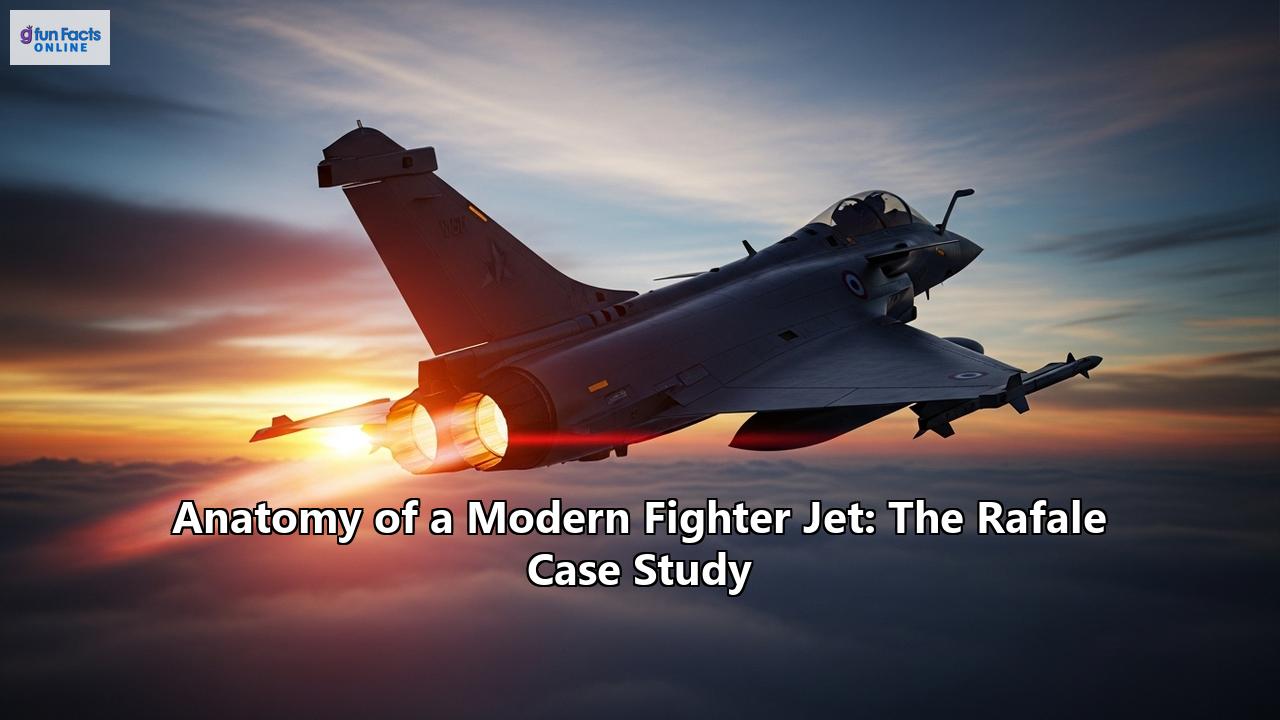
In the ever-evolving theater of aerial warfare, a select few aircraft represent the pinnacle of aeronautical engineering and combat capability. These machines are not merely flying platforms but a complex symphony of power, precision, and survivability. To truly understand what constitutes a modern fighter jet, one must dissect its very essence—from the aerodynamic skin to the digital soul. This in-depth analysis will explore the anatomy of such a machine through the lens of a remarkable case study: the Dassault Rafale.
The Rafale, whose name translates to "gust of wind" or "burst of fire" in a military context, is a French twin-engine, canard delta-wing, multirole fighter aircraft that stands as a testament to independent and advanced aerospace design. Referred to as an "omnirole" aircraft by its manufacturer, Dassault Aviation, the Rafale is engineered to perform a vast array of missions, including air supremacy, deep-strike interdiction, aerial reconnaissance, ground support, anti-ship strikes, and even nuclear deterrence. This versatility is not a mere marketing term; it is the result of a meticulously crafted airframe, powerful engines, a sophisticated neural network of avionics, and a formidable arsenal of weapons.
Born from a divergence in European fighter development in the late 1970s and 1980s, France chose to pursue its own path when disagreements arose over the requirements for the "Future European Fighter Aircraft," a project that would eventually produce the Eurofighter Typhoon. France's vision was for a lighter, carrier-capable multirole aircraft, a vision that culminated in the Rafale. Uniquely, the Rafale is almost entirely built by a single country, a collaborative effort of France's leading defense contractors like Dassault, Thales, and Safran. Its first technology demonstrator flew in 1986, and after extensive development, the Rafale officially entered service with the French Navy in 2004 and the French Air Force in 2006.
This article will peel back the layers of the Rafale, examining each critical component to reveal how they synergize to create one of the world's most capable 4.5 generation fighters. We will explore its aerodynamic design, the heart of its power in the Snecma M88 engines, the pilot's command center in its advanced cockpit, the sensory prowess of its radar and electronic warfare systems, and the decisive impact of its diverse weaponry. Through this comprehensive case study, the intricate anatomy of a modern fighter jet will be laid bare.
The Airframe: A Masterpiece of Aerodynamics and Composite Engineering
At the core of the Rafale's exceptional performance lies its advanced airframe, a structure that is both aerodynamically sophisticated and remarkably robust. The design philosophy marries the inherent advantages of a delta wing with the agility afforded by close-coupled canards, all while extensively utilizing advanced materials to reduce weight and enhance stealth.
The Canard-Delta Wing Configuration: A Symphony of Lift and AgilityThe most visually striking feature of the Rafale is its canard-delta wing layout. This configuration was deliberately chosen by Dassault to maximize maneuverability and maintain stability across a wide flight envelope. The large, triangular delta wing is structurally efficient, strong, and light, offering a large internal volume for fuel without a significant drag penalty. This design is inherently good for high-speed flight, a hallmark of Dassault's Mirage series of fighters.
However, a pure delta wing can have limitations in terms of low-speed handling and takeoff and landing performance. This is where the canards—small, forward-mounted wings located just behind the cockpit—come into play. The Rafale employs a "close-coupled" canard design, meaning the canards are positioned just ahead of and slightly above the main wing. This precise placement is critical. At high angles of attack, the canards generate a powerful vortex that flows over the main wing, energizing the airflow and preventing it from separating. This interaction delays the stall, allowing the Rafale to perform extreme maneuvers and maintain control at very low speeds. In fact, while in flight, airspeeds as low as 15 knots (17 mph) have been observed during training missions.
This aerodynamic synergy provides several key benefits:
- Exceptional Agility: The Rafale is capable of withstanding g-forces from -3.6g up to 9g, with an emergency limit of 11g. The canard-delta wing design, combined with a digital fly-by-wire flight control system, makes the aircraft inherently unstable, which paradoxically grants it extreme agility.
- Excellent Low-Speed Performance: The canards significantly reduce the minimum landing speed to as low as 115 knots (132 mph), a crucial attribute for carrier operations.
- Enhanced Lift: The canards contribute to the overall lift of the aircraft, which improves takeoff performance and allows for a higher payload capacity.
To achieve the desired combination of strength, agility, and low weight, the Rafale's airframe makes extensive use of advanced composite materials. A remarkable 70% of the aircraft's wetted area (the surface exposed to airflow) is made of composites. These materials also account for a 40% increase in the max take-off weight to empty weight ratio compared to traditional airframes built primarily of aluminum and titanium. Carbon fiber composites, titanium alloys, and aluminum-lithium alloys are key components, carefully selected for their specific properties. This widespread use of composites not only reduces the aircraft's overall weight but also contributes to its stealth characteristics.
Stealth by Design: Reducing the Radar Cross-SectionWhile not a full-stealth aircraft in the vein of the F-22 or F-35, the Rafale was designed from the outset with a significantly reduced radar cross-section (RCS). Dassault opted for a balanced approach, incorporating stealth features without incurring the prohibitive costs and maintenance complexities of a true stealth design. This "discretion" is achieved through a combination of methods:
- Fuselage Shaping: The overall shape of the airframe has been carefully sculpted to deflect radar waves away from the emitter, rather than reflecting them back.
- Serrated Edges: The trailing edges of the wings and canards feature serrated or "saw-toothed" patterns. This design element helps to scatter radar energy, reducing the strength of the return signal.
- Radar-Absorbent Materials (RAM): The Rafale incorporates RAM in key areas of its airframe to absorb incoming radar energy.
- Canopy Treatment: The cockpit canopy is coated with a thin layer of gold, which is highly effective at reflecting radar waves and preventing them from entering the cockpit, a significant source of radar reflection.
- S-Shaped Air Intakes: The engine air intakes are designed with a serpentine "S" shape, which conceals the highly reflective engine compressor blades from frontal radar.
These features collectively give the Rafale an estimated RCS of around one square meter, comparable to other advanced 4.5-generation fighters. This reduced signature, combined with its advanced electronic warfare suite, significantly enhances its survivability by delaying detection and complicating enemy targeting.
Navalized Variant: The Rafale MA testament to the versatility of the basic airframe design is the existence of the Rafale M, a carrier-based variant. The Rafale M shares about 95% commonality with its land-based counterparts, the single-seat Rafale C and the two-seat Rafale B. However, to withstand the rigors of naval operations, the Rafale M features a reinforced undercarriage, a "jump strut" nosewheel for catapult takeoffs, and an arrestor hook for carrier landings. These modifications add approximately 500 kg (1,100 lbs) to its weight.
In essence, the Rafale's airframe is a carefully balanced equation of aerodynamic innovation and material science. It provides the foundational strength and agility that, when paired with its powerful engines and advanced systems, makes it a truly omnirole fighter.
The Heart of the Beast: The Snecma M88 Engines
A fighter jet is only as potent as its power source, and at the heart of the Dassault Rafale are two Snecma (now Safran Aircraft Engines) M88 afterburning turbofan engines. These powerplants are a marvel of modern engineering, designed to be compact, powerful, reliable, and efficient across the entire flight envelope, from low-altitude penetration missions to high-altitude interception.
Performance and SpecificationsThe M88-2 variant, which powers the current fleet of Rafales, is a testament to French engine technology. Each engine provides a dry thrust of approximately 50 kilonewtons (kN), or 11,250 pounds-force (lbf). With the afterburners engaged, this thrust increases to 75 kN (roughly 17,000 lbf). This power gives the Rafale a maximum speed of Mach 1.8.
Key specifications of the M88-2 engine include:
- Type: Afterburning turbofan
- Length: 353.8 cm (139.3 in)
- Diameter: 69.6 cm (27.4 in)
- Dry Weight: 897 kg (1,978 lb)
- Overall Pressure Ratio: 24.5:1
- Thrust-to-Weight Ratio: Approximately 8.5:1 with afterburner
This high thrust-to-weight ratio is a critical factor in the Rafale's impressive performance, contributing to its acceleration, climb rate, and maneuverability.
Advanced Technology for a Demanding RoleThe M88 is not simply about raw power; it incorporates a suite of advanced technologies to ensure efficiency, durability, and ease of maintenance:
- Single-Crystal Turbine Blades: The high-pressure turbine blades are made from single-crystal alloys. This advanced metallurgy allows the blades to withstand extremely high temperatures, leading to greater engine efficiency and performance.
- Blisks (Bladed Disks): The M88 utilizes "blisks," where the compressor blades and the disk they are attached to are manufactured as a single piece. This reduces weight, improves aerodynamic efficiency, and eliminates the need for complex blade attachment mechanisms.
- Powder Metallurgy Disks: Key rotating components are made using powder metallurgy, a process that allows for the creation of stronger and more durable parts compared to traditional casting or forging methods.
- Ceramic Coatings and Composite Materials: The engine incorporates advanced ceramic coatings for thermal insulation and utilizes composite materials to reduce weight and enhance durability.
- Full Authority Digital Engine Control (FADEC): The M88 is managed by a redundant FADEC system. This digital brain constantly monitors and adjusts engine parameters, ensuring optimal performance, fuel efficiency, and carefree handling for the pilot. It allows the pilot to slam the throttle from idle to full afterburner in less than three seconds without fear of engine stalls or surges.
A key performance feature enabled by the M88 engines is "supercruise"—the ability to maintain supersonic flight without the use of fuel-guzzling afterburners. The Rafale can achieve supercruise at speeds of up to Mach 1.4 while carrying missiles. This capability offers a significant tactical advantage, allowing the aircraft to cover long distances quickly, reduce its infrared signature (as afterburners are extremely hot), and conserve fuel for combat.
Modularity and MaintainabilityFrom its inception, the M88 was designed with ease of maintenance in mind. It has a modular construction, consisting of 21 interchangeable modules. This design allows for the rapid replacement of sub-assemblies in the field without the need for complex recalibration or balancing, significantly improving the aircraft's operational availability and reducing lifecycle costs. A complete M88 engine can be removed and reinstalled in about an hour.
Future Evolution: The T-REX ProgramSafran is continuously working on upgrading the M88 to meet future operational demands. The T-REX (Thrust Range Extension) program aims to increase the engine's thrust to around 90 kN to support the enhanced capabilities of the future Rafale F5 standard. This demonstrates the inherent growth potential of the core M88 design.
In conclusion, the Snecma M88 engines are the powerful, technologically advanced heart of the Rafale. They provide the thrust and performance necessary for the aircraft's demanding "omnirole" mission set, while also offering the efficiency, reliability, and growth potential required of a modern fighter engine.
The Cockpit: A Pilot-Centric Command Center
If the airframe is the Rafale's skeleton and the engines its heart, then the cockpit is undeniably its brain and nervous system. Dassault designed the Rafale's cockpit with a pilot-centric philosophy, focusing on maximizing situational awareness while minimizing workload. This is achieved through an advanced "glass cockpit" layout, intuitive controls, and a groundbreaking level of data fusion that transforms the pilot from a mere operator into a true tactical decision-maker.
A Symphony of Screens: The Glass CockpitThe Rafale's cockpit is a clean, uncluttered space dominated by a suite of advanced displays. This "glass cockpit" moves away from traditional analog gauges, presenting information to the pilot in a clear, prioritized, and easily digestible format.
- Wide-Angle Holographic Head-Up Display (HUD): Positioned directly in the pilot's forward line of sight, the HUD projects critical flight and combat information, such as altitude, airspeed, and weapon-aiming cues, onto a transparent screen. This allows the pilot to maintain "eyes out" of the cockpit, focused on the tactical situation. The Rafale's HUD offers a wide 30° by 22° field of view.
- Head-Level Display (HLD): Located just below the HUD, the HLD is a large, collimated display that presents the "big picture" of the tactical environment. It shows a fused, color-coded view of data from all the aircraft's sensors, allowing the pilot to grasp the tactical situation at a glance. Crucially, the HLD is focused at the same optical distance as the HUD, enabling rapid and seamless eye transitions between the two displays and the outside world.
- Multi-Function Displays (MFDs): Flanking the HLD are two lateral color MFDs. These displays are often touch-sensitive, providing an intuitive interface for managing aircraft systems, communications, and sensor information. The latest F4 standard Rafales are being equipped with larger, higher-resolution digital multifunction displays.
To manage the immense capabilities of the aircraft without being overwhelmed, the pilot utilizes a highly ergonomic control setup.
- Hands-On-Throttle-And-Stick (HOTAS): The Rafale features a right-handed sidestick controller and a left-handed throttle, both of which are covered in an array of buttons and switches. This HOTAS system allows the pilot to control nearly all critical functions—from flight maneuvers to radar modes and weapon deployment—without taking their hands off the primary controls.
- Direct Voice Input (DVI): The Rafale incorporates a sophisticated DVI system, allowing the pilot to perform a range of non-critical functions using spoken commands. This can include tasks like changing radio frequencies, managing navigation waypoints, or selecting display modes. The system has a vocabulary of several hundred words and a high recognition rate, further reducing the pilot's manual workload. For safety, critical actions like weapon release cannot be performed by voice command.
The true genius of the Rafale's cockpit lies in its data fusion capabilities. The core of the Rafale's avionics is an Integrated Modular Avionics (IMA) architecture, centered around a powerful Modular Data Processing Unit (MDPU). This central computer is the heart of the data fusion process, taking in information from all of the aircraft's sensors—the RBE2 AESA radar, the SPECTRA electronic warfare suite, the Front Sector Optronics system, IFF (Identification Friend or Foe), and data links from other assets—and integrating it into a single, coherent tactical picture for the pilot.
This multi-sensor data fusion provides several key advantages:
- It reduces pilot workload by automating the process of correlating data from different sensors.
- It provides more accurate and reliable target tracks by overcoming the limitations of any single sensor.
- It unclutters the displays by presenting a single, unified view of the battlespace.
This allows the pilot to make faster, better-informed decisions in the heat of combat.
Advanced Sights: The Helmet-Mounted DisplayTo further enhance the pilot's situational awareness and targeting capabilities, the Rafale is being equipped with the Thales SCORPION Helmet-Mounted Display (HMD). The HMD projects critical symbology directly onto the pilot's helmet visor, effectively "slaving" the aircraft's sensors and weapons to the pilot's line of sight. This means the pilot can aim and fire at a target simply by looking at it, even if the target is far off the aircraft's nose. This capability is particularly crucial for maximizing the effectiveness of high-off-boresight air-to-air missiles.
In essence, the Rafale's cockpit is a highly advanced, pilot-focused environment. It leverages cutting-edge display technology, intuitive controls, and a powerful data fusion engine to ensure that the pilot remains in complete command of the aircraft and the tactical situation, even in the most complex and demanding combat scenarios.
The Senses and Shield: Radar, Sensors, and Electronic Warfare
A modern fighter jet's effectiveness is defined by its ability to see the battlefield, identify threats, and protect itself from attack. The Dassault Rafale is equipped with a sophisticated suite of sensors and a powerful electronic warfare system that work in concert to provide unparalleled situational awareness and survivability. This "nervous system" is built around the RBE2 AESA radar, the passive Front Sector Optronics (FSO), and the integrated SPECTRA electronic warfare suite.
The Eyes of the Rafale: RBE2 AESA RadarThe primary sensor of the Rafale is the Thales RBE2 Active Electronically Scanned Array (AESA) radar. As Europe's first operational AESA radar on a fighter jet, the RBE2 represents a significant leap in capability over traditional mechanically scanned radars. An AESA radar consists of hundreds of small transmit/receive (T/R) modules that can be steered electronically, allowing the radar beam to be moved almost instantaneously without any mechanical parts.
This technology gives the RBE2 radar a host of advanced capabilities:
- Multi-Target Tracking: The RBE2 can detect and track up to 40 air targets simultaneously, while engaging up to 8 of them. Its agile beam allows it to track targets both inside and outside the main search volume, providing a significant advantage in air combat.
- Extended Range and Low-Observable Target Detection: The AESA technology provides a longer detection range, which is crucial for maximizing the effectiveness of long-range missiles like the Meteor. It also enhances the ability to detect low-observable (stealth) targets.
- High-Resolution Ground Mapping: The RBE2 features advanced air-to-ground modes, including Synthetic Aperture Radar (SAR) for creating high-resolution 2D maps for navigation and targeting, and Ground Moving Target Indication and Tracking (GMTI/T) to detect and follow vehicles on the ground.
- Terrain Following: In a unique capability for a modern fighter, the radar can generate real-time 3D maps of the terrain ahead, enabling the aircraft to fly at very low altitudes and high speeds automatically, even in zero visibility conditions.
- Jamming Resistance: The agility of the AESA beam makes it highly resistant to electronic jamming.
Future upgrades for the RBE2 radar are already in development, incorporating Gallium Nitride (GaN) technology, which promises to further increase its range and power.
The Silent Hunter: Front Sector Optronics (FSO)Supplementing the active emissions of the radar is the passive Front Sector Optronics (FSO) system, developed by Thales. Fully integrated into the airframe just in front of the cockpit, the FSO operates in the optical and infrared wavelengths, making it immune to radar jamming.
The FSO system consists of two main components:
- Infrared Search and Track (IRST): The IRST can passively detect the heat signatures of air targets at ranges of up to 100 km and ground or sea targets up to 6 km. This allows the Rafale to search for and track adversaries without revealing its own position by emitting radar signals.
- TV/Laser Rangefinder: A powerful TV sensor allows for the visual identification of targets at long distances (up to 40 km), which is often required by the rules of engagement before firing. The integrated laser rangefinder provides highly accurate targeting data.
The FSO is a critical tool for stealthy engagements and for operating in dense electronic warfare environments.
The Shield of the Rafale: The SPECTRA Electronic Warfare SuiteThe cornerstone of the Rafale's survivability is the SPECTRA (Self-Protection Equipment to Counter Threats for Rafale Aircraft) system, a fully integrated electronic warfare (EW) suite jointly developed by Thales and MBDA. SPECTRA provides a 360-degree protective bubble around the aircraft, designed to detect, identify, locate, and counter a wide range of threats.
SPECTRA's key components and functions include:
- Multi-Spectral Threat Detection: It incorporates radar warning receivers (RWR), laser warning receivers (LWR), and missile launch detectors (the DDM-NG) to provide comprehensive warning of incoming threats from any direction.
- Precise Threat Localization: Using interferometry techniques, SPECTRA can pinpoint the exact location of enemy radar emitters with high accuracy. This data can be used for avoidance or for targeting with anti-radiation missiles.
- Advanced Jamming: SPECTRA features phased-array radar jammers that can concentrate jamming energy in specific directions, effectively blinding enemy radars. It employs advanced techniques like Digital Radio Frequency Memory (DRFM) to create and transmit false target signals.
- Decoy Dispensing: The system includes dispensers for releasing chaff (to counter radar-guided missiles) and flares (to counter infrared-guided missiles).
- Data Fusion and Automated Response: All sensor data within SPECTRA is fused and analyzed by a central processor, which can automatically prioritize threats and deploy the most effective countermeasures.
The integration of SPECTRA is so deep that it not only provides self-protection but also contributes to the Rafale's offensive capabilities. It can be used to gather electronic intelligence (ELINT) and to provide targeting information for the suppression of enemy air defenses (SEAD) missions. This level of integration and capability allows Rafale pilots to operate with a high degree of confidence, even in the most hostile and contested airspace.
Together, the RBE2 AESA radar, the FSO, and the SPECTRA EW suite form a powerful and integrated sensory and self-protection system. They give the Rafale the ability to see first, understand the battlespace, and dominate the electromagnetic spectrum, ensuring that it is not just a capable fighter, but a highly survivable one.
The Talons: A Versatile and Deadly Arsenal
A fighter jet, no matter how agile or technologically advanced, is ultimately judged by its ability to deliver ordnance on target. The Dassault Rafale's "omnirole" capability is most evident in its vast and versatile arsenal. With 14 hardpoints on the B and C models (13 on the naval M model) and a total external load capacity of over nine tonnes, the Rafale can be configured for a wide spectrum of missions, often carrying a mix of weapons that allows it to engage both air and ground targets in a single sortie.
Air-to-Air DominanceFor securing air superiority, the Rafale is equipped with some of the most advanced air-to-air missiles in the world.
- MBDA Meteor: The Meteor is a game-changing beyond-visual-range air-to-air missile (BVRAAM). Powered by a ramjet engine, it can maintain high speeds throughout its flight, giving it a very large "no-escape zone" for enemy aircraft at ranges exceeding 150-200 km. The combination of the Rafale's RBE2 AESA radar and the Meteor missile provides a decisive advantage in long-range air combat.
- MBDA MICA: The MICA (Missile d'Interception, de Combat et d'Autodéfense) is a highly versatile missile that can be used for both short-range dogfights and medium-range BVR engagements. Uniquely, it is available with two different seeker heads—an active radar (EM) version and an imaging infrared (IR) version—allowing the pilot to launch missiles that are immune to different types of countermeasures. The next-generation MICA NG, currently being integrated, will offer even greater performance.
The Rafale's capabilities against ground targets are equally impressive, with a wide array of precision-guided munitions.
- SCALP-EG / Storm Shadow: This is a long-range, stealthy cruise missile designed for deep-strike missions against high-value, heavily defended targets. With a range of over 300 km, the SCALP allows the Rafale to strike from a safe standoff distance.
- AASM Hammer: The AASM (Armement Air-Sol Modulaire), or "Hammer," is a family of rocket-boosted smart bombs. A guidance kit and a rocket motor are attached to standard bomb bodies (from 125 kg to 1,000 kg), turning them into long-range, precision-guided weapons with a range of over 70 km. The AASM comes with various guidance options, including GPS/INS, infrared imaging, and laser homing, making it effective against a wide variety of stationary and moving targets.
- Laser-Guided Bombs: The Rafale can carry a range of laser-guided bombs, such as the GBU-12, GBU-22, and GBU-24 Paveway series, for precision strikes when guided by a targeting pod or ground forces.
The Rafale's mission set extends to the maritime domain and strategic deterrence.
- AM39 Exocet: The Rafale is cleared to carry the AM39 Exocet, a combat-proven, sea-skimming anti-ship missile. This "fire-and-forget" missile flies at very low altitudes to evade ship defenses, delivering a powerful warhead to disable or destroy enemy vessels.
- ASMP-A Nuclear Missile: As a key component of France's nuclear deterrent, the Rafale is capable of carrying the ASMP-A (Air-Sol Moyenne Portée-Amélioré), a medium-range, supersonic nuclear cruise missile. This gives the Rafale a strategic strike capability that is possessed by very few aircraft.
For close-in engagements and ground strafing, the Rafale is equipped with a Nexter 30M791 30 mm revolver cannon. This powerful gun has an exceptionally high rate of fire of 2,500 rounds per minute, firing specially designed semi-armor-piercing high-explosive incendiary rounds at a muzzle velocity of over 1,000 meters per second. A single M791 cannon is considered as effective as the two cannons on the older Mirage 2000.
The Rafale's ability to carry such a diverse and potent mix of weaponry, combined with its advanced sensors and data fusion, solidifies its status as a true "omnirole" fighter. It is an aircraft that can adapt to any mission, delivering precise and lethal force wherever it is needed, making its armament a critical component of its overall anatomy.
Conclusion: A Synergy of Systems
The Dassault Rafale is far more than the sum of its parts. It is a masterful integration of cutting-edge technologies, a testament to a design philosophy that prioritizes versatility, survivability, and lethality. Our deep dive into its anatomy reveals a machine where every component is meticulously engineered to work in concert with the others, creating a fighter that is truly "omnirole" in nature.
The aerodynamic brilliance of its canard-delta wing design, crafted from advanced composites, provides a foundation of supreme agility and stability. This allows the Rafale to excel in both high-speed interceptions and low-speed, high-angle-of-attack dogfights. Powering this performance are the twin Snecma M88 engines, technological jewels that deliver the raw thrust for supersonic flight and the efficiency for supercruise, giving the aircraft both speed and endurance.
In the pilot-centric cockpit, a revolution in human-machine interface unfolds. The glass cockpit, with its intuitive displays and HOTAS controls, is governed by a powerful data fusion engine. This system synthesizes information from a host of sensors, transforming a deluge of data into clear, actionable intelligence and freeing the pilot to command the battlespace. The Rafale's "senses" are embodied in the formidable RBE2 AESA radar and the passive FSO, providing the ability to see adversaries long before being seen. Its "shield" is the SPECTRA electronic warfare suite, a sophisticated guardian that detects, identifies, and neutralizes threats, ensuring the Rafale can penetrate even the most contested airspace.
Finally, the "talons" of this aerial predator are its diverse and deadly arsenal. From the long-range lethality of the Meteor air-to-air missile to the pinpoint precision of the SCALP and AASM Hammer munitions, the Rafale can be configured to dominate in any combat scenario.
In dissecting the Rafale, we have explored the very anatomy of a modern fighter jet. It is a complex ecosystem where airframe, propulsion, avionics, sensors, and weapons are not just co-located but deeply intertwined. The Rafale stands as a powerful example of how these elements, when masterfully integrated, create an aircraft that is not just a weapon of war, but a symbol of technological prowess and strategic independence. As it continues to evolve with future upgrades, the Rafale's story is a compelling chapter in the ongoing narrative of air power.
Reference:
- https://en.wikipedia.org/wiki/Dassault_Rafale
- https://theaviationist.com/2024/11/28/dassault-rafale/
- https://www.mbda-systems.com/products/air-dominance/meteor
- https://www.deagel.com/Components/30%20M%20791/a001571
- https://www.zona-militar.com/en/2025/06/22/a-french-air-and-space-force-rafale-fighter-successfully-carried-out-the-first-test-firing-of-the-new-mbda-mica-ng-air-to-air-missile/
- https://idrw.org/first-rafale-marine-meteor-missile-launch-raises-questions-about-indian-air-forces-rafale-capabilities/
- https://www.armyrecognition.com/military-products/navy/naval-aircraft/rafale-m-marine
- https://euro-sd.com/2023/06/news/32470/pas-2023-nexter-to-deliver-300th-30-mm-cannon-for-rafale/
- https://www.mbda-systems.com/products/deep-strike/exocet-family/exocet-am39
- https://www.quora.com/What-types-of-weapons-can-the-Rafale-carry-and-how-does-its-payload-flexibility-make-it-effective-in-various-missions
- https://idrw.org/indian-navy-plans-to-locally-expand-anti-ship-capabilities-for-rafale-m/
- https://www.dassault-aviation.com/en/defense/rafale/adapt-and-deliver/
- https://knds.com/en/press-releases/nexter-a-company-of-knds-produces-the-300th-rafale-gun
- https://vajiramandravi.com/upsc-exam/rafale-fighter-jet/
- https://en.wikipedia.org/wiki/Exocet
- https://www.mbda-systems.com/products/air-dominance/mica-family/mica
- https://simpleflying.com/eight-4-5-generation-fighter-jets/
- https://www.defensemagazine.com/article/exocet-the-french-navys-most-feared-missiles
- https://bulgarianmilitary.com/2025/03/09/300-meteor-missiles-arm-uaes-rafales-in-bold-french-team-up/
- https://www.safran-group.com/products-services/aasm-hammer-tm-highly-agile-modular-munition-extended-range