
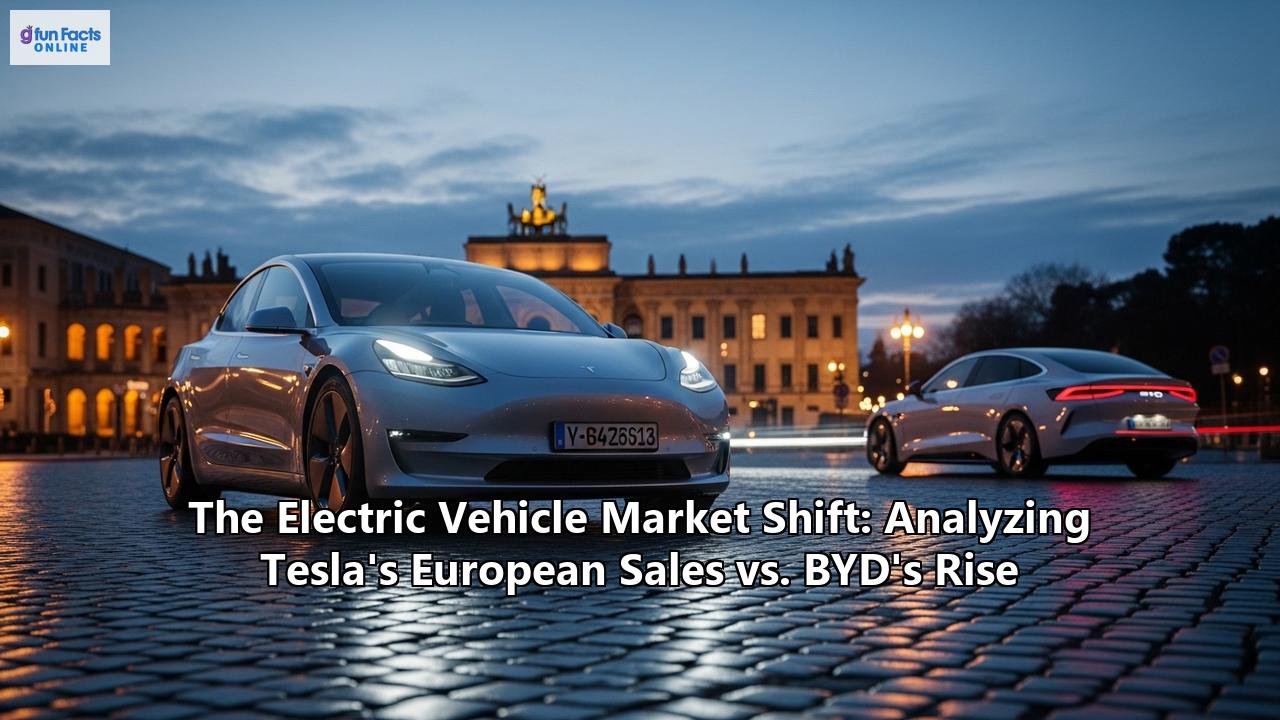
An unmistakable tremor is shaking the very foundations of the European electric vehicle (EV) market. For years, one name has been synonymous with electric mobility, casting a long shadow over all competitors: Tesla. The American innovator, led by the mercurial Elon Musk, single-handedly catalyzed the EV revolution and enjoyed a period of seemingly unassailable dominance. However, the landscape of 2025 tells a story of a dramatic and accelerating shift. A new challenger from the East, China's BYD (Build Your Dreams), is not just rising; it is surging, fundamentally altering the competitive dynamics and forcing a re-evaluation of what European consumers want from their electric cars.
This is not merely a tale of two companies, but a broader narrative about evolving consumer preferences, strategic recalibrations, and the geopolitical currents shaping the future of mobility. While Tesla grapples with a complex web of challenges—from an aging model lineup to the controversial public profile of its CEO—BYD is executing a multi-pronged offensive, leveraging aggressive pricing, a diverse product portfolio, and a savvy localization strategy. The result has been a startling reversal of fortunes, with BYD's sales skyrocketing while Tesla's have entered a sustained decline. This article will delve into the intricate factors driving this market shift, analyzing the strategies of both titans, the role of legacy European automakers, the critical influence of consumer perception, and the long-term implications for the continent's electric future.
The Tipping Point: A Tale of Two Sales Trajectories
The most telling evidence of this market convulsion lies in the sales figures from mid-2025. According to data from the European Automobile Manufacturers' Association (ACEA), Tesla has experienced a significant and sustained downturn. In July 2025, the company's new vehicle registrations in Europe plummeted by a staggering 40% year-over-year, with only 8,837 units sold. This marked the seventh consecutive month of declining sales for the American automaker, a worrying trend that contrasts sharply with the overall growth of the European EV market.
In the same period, BYD's performance was nothing short of explosive. The Chinese automaker saw its registrations surge by an astonishing 225%, selling 13,503 vehicles in July 2025 alone. This allowed BYD to decisively overtake Tesla in monthly sales, capturing a 1.2% share of the total European car market, compared to Tesla's 0.8%. This moment, which saw BYD first outsell Tesla in Europe in the spring of 2025, has been described by market analysts as a "watershed moment for Europe's car market."
The trend holds true when looking at the year-to-date figures for 2025. In the first seven months of the year, Tesla's sales in the EU fell by 43.5%. While Tesla had still sold more vehicles overall in that period (77,446 to BYD's 58,434), BYD's year-over-year growth of over 251% paints a clear picture of its rapid ascent and Tesla's struggle to maintain its footing. This is happening while the broader market for battery-electric vehicles (BEVs) and plug-in hybrids (PHEVs) continues to expand, indicating that the market's growth is no longer lifting all boats equally; instead, it is selectively rewarding new challengers.
Tesla's European Predicament: A Giant Stumbles
Tesla's current woes in Europe are not the result of a single misstep but a confluence of internal and external pressures that have eroded its once-unshakeable position.
An Aging Portfolio and a Stalled Refresh
A primary factor cited by numerous analysts is Tesla's aging vehicle lineup. The Tesla Model Y and Model 3, the brand's workhorses and long-time best-sellers, have been on the market without a fundamental redesign for several years. While a revamped Model Y was introduced, it has failed to reverse the sales slump. In a market where novelty and technological advancement are key purchase drivers, this lack of newness has made Tesla vulnerable. The company's focus on other ventures, such as artificial intelligence, robotics, and the Cybertruck—a vehicle with little market relevance in Europe—has been perceived as a distraction from its core automotive business.
The promise of a more affordable, mass-market Tesla, codenamed "Redwood," is not expected to see volume production until the second half of 2025 at the earliest, leaving a critical gap in its portfolio that competitors are eagerly filling. Furthermore, a key technological differentiator for Tesla in the US, its "Full Self-Driving" (FSD) software, is still awaiting regulatory approval in Europe, depriving the brand of a major selling point.
The Musk Factor: A Double-Edged Sword
For years, CEO Elon Musk's celebrity and vision were invaluable marketing assets for Tesla. However, his increasingly polarizing public statements and political engagements have become a significant liability in Europe. Musk's wading into European politics, including his endorsement of far-right parties in Germany, has angered and alienated a substantial portion of the European consumer base, a demographic that often values social and political progressivism.
This has led to a tangible shift in brand perception, with the Tesla brand becoming increasingly associated with controversy. Protests have occurred in several European cities, and consumer surveys indicate a growing discomfort with being associated with Elon Musk. One report noted that one in four drivers was considering abandoning the brand due to this discomfort, a stark illustration of how a CEO's personal brand can directly impact corporate performance.
The Squeeze of Competition
Tesla is no longer the only serious player in the EV game. The competition is coming not just from BYD but also from established European automakers. Volkswagen, BMW, and Renault all recorded sales increases in July 2025, a period when Tesla's sales were in freefall. The Volkswagen ID.4, for instance, even overtook the Tesla Model Y as the best-selling EV in Europe in January 2025. This demonstrates that European legacy brands are successfully fighting back on their home turf, offering credible and desirable alternatives to Tesla's offerings.
BYD's European Gambit: A Strategy of Strategic Encirclement
BYD's stunning rise in Europe is a textbook example of a well-researched and dynamically executed market-entry strategy. The company initially faced challenges, including a limited dealer network and a failure to appreciate regional market nuances, but it has adapted with remarkable speed and precision.
Diversification: The Power of Choice
Unlike Tesla's focused lineup of four main models, BYD offers a wide and growing range of vehicles that cater to different segments and price points. This includes:
- The Atto 3: A direct competitor to the Tesla Model Y in the popular compact SUV segment.
- The Seal: A sleek sedan aimed squarely at the Tesla Model 3.
- The Dolphin: A more affordable hatchback that opens the brand up to a wider, more budget-conscious audience.
- The Seal U DM-i: A plug-in hybrid model that has become a runaway success.
This diverse portfolio allows BYD to capture a much broader swath of the market, from premium buyers to those seeking value.
The Hybrid Pivot: A Stroke of Genius
Perhaps the most astute part of BYD's strategy has been its embrace of plug-in hybrid electric vehicles (PHEVs). Recognizing that many European consumers still have concerns about the charging infrastructure and range anxiety associated with pure BEVs, BYD made a strategic decision to heavily promote its PHEV models. This was based on advice from newly hired European executives who understood that a BEV-only approach would not work across all of Europe, especially in southern regions.
The results have been spectacular. BYD's PHEV registrations in Europe surged by a staggering 546% in April 2025 alone. Models like the Seal U DM-i have become top sellers, even tying with the Volkswagen Tiguan as the best-selling PHEV in June 2025. This hybrid strategy not only addresses consumer hesitancy but also provides a crucial advantage in navigating EU trade policies.
Localization: Building a European Identity
BYD is aggressively working to shed its image as a foreign importer and establish itself as a local European player. The cornerstones of this strategy are its planned manufacturing plants in Szeged, Hungary, and Izmir, Turkey. The Hungarian plant is slated to eventually produce 300,000 vehicles annually, while the Turkish facility will add another 150,000 units of capacity.
This move is strategically brilliant for two key reasons:
- Tariff Circumvention: The European Union has imposed additional tariffs on Chinese-made EVs, citing unfair state subsidies. For BYD, this tariff is 17.4%. By producing vehicles within the EU (Hungary) or within the EU's Customs Union (Turkey), BYD can bypass these import duties, allowing it to maintain its competitive price advantage. Vehicles built in Turkey can be exported to the EU tariff-free.
- Brand Building: Producing cars in Europe for Europeans allows BYD to create local jobs and integrate into the continent's industrial fabric. This "Made in Europe, for Europe" narrative is a powerful tool for building trust and countering potential consumer prejudice against Chinese-made goods.
Alongside production, BYD is rapidly expanding its dealer network, with plans to grow from 27 to 120 locations in Germany alone, and has been poaching experienced executives from European rivals to deepen its local market expertise.
Aggressive Pricing and Brand Building
Underpinning BYD's entire strategy is its ability to offer advanced technology at a competitive price. Research shows that European consumers often expect a significant discount on Chinese brands compared to domestic ones, and BYD delivers on this expectation. Its vehicles are often priced 10-20% lower than comparable Tesla models.
To combat low initial brand recognition—where prompted awareness was just 12% compared to Tesla's 89%—BYD has invested heavily in marketing. A high-profile sponsorship of the Euro 2024 soccer championship is a prime example of its effort to embed the BYD name in the European consciousness and build brand favorability.
Head-to-Head: The Models in the Arena
The competition between Tesla and BYD is most clearly seen in the direct model-to-model matchups that are now playing out in showrooms across Europe.
The SUV Battle: Tesla Model Y vs. BYD Atto 3
The compact SUV segment is a key battleground. The Tesla Model Y has long been the dominant force, but the BYD Atto 3 presents a compelling challenge.
- Performance: The Model Y generally offers superior power and acceleration.
- Range & Efficiency: The Model Y also tends to have a longer WLTP range and better efficiency, a testament to Tesla's mature drivetrain technology.
- Practicality: While both are spacious, the Model Y boasts significantly more cargo space, including a large "frunk" (front trunk) that the Atto 3 lacks.
- Technology: Tesla's minimalist interior is dominated by a large central touchscreen and is known for its user-friendly software and over-the-air updates. The Atto 3 has a more conventional interior but includes features Tesla lacks, such as wireless Android Auto and Apple CarPlay.
- Price: This is where the Atto 3 lands a major blow. In the UK, the Atto 3 starts at a considerably lower price point than the Model Y, making it an attractive value proposition.
The Sedan Showdown: Tesla Model 3 vs. BYD Seal
In the electric sedan segment, the refreshed Tesla Model 3 faces the stylish BYD Seal.
- Performance: The dual-motor versions of both cars offer blistering acceleration, with the Seal in some configurations being slightly quicker from 0-62 mph than the comparable Model 3 Long Range.
- Range: Here, the contest is tight. Depending on the specific trim, the Seal can offer a longer WLTP range than the base Model 3, though the Model 3 Long Range variant often still has an edge.
- Driving Dynamics & Comfort: Reviewers often praise the Model 3 for its sharp, go-kart-like handling and precise steering. The BYD Seal, conversely, is often described as being more comfortable, with a softer suspension that better absorbs bumps.
- Interior and Tech: The Seal features a more traditional cabin with physical stalks and a drive selector, which some drivers prefer over the Model 3's minimalist, button-and-screen-based controls. A standout feature of the Seal is its large rotating central touchscreen.
- Price: Pricing is highly competitive. In some European markets, the base Model 3 can be cheaper, while in the dual-motor category, the Seal can undercut the Model 3 Long Range, making the choice highly dependent on local pricing and incentives.
The Value Proposition: The BYD Dolphin
A key part of BYD's strategy is its ability to compete at lower price points where Tesla currently has no offering. The BYD Dolphin, a compact hatchback, is priced to compete with smaller European EVs like the Renault Megane E-Tech and is significantly cheaper than any Tesla. The recently launched Dolphin Surf model in the UK starts at a price point that places it among the most affordable new vehicles on the market, a space Tesla cannot contest until its own cheaper model arrives.
The Legacy Automakers' Counter-Attack
The battle is not just a two-way contest. Europe's legacy automakers are no longer standing still. The Volkswagen Group, in particular, has emerged as a formidable competitor. With a portfolio that includes the VW ID.3 and ID.4, the Skoda Enyaq, and the Audi Q4 e-tron, it has the scale and product breadth to challenge both Tesla and BYD. As noted, the VW ID.4 even managed to claim the top sales spot in Europe in early 2025.
The Skoda Enyaq, for example, is a highly competitive rival to the Tesla Model Y, offering a comfortable ride and a practical, well-built interior that many families prefer, even if it doesn't match the Tesla's outright performance or massive boot space. Similarly, Renault is finding success with models like the Megane E-Tech and the retro-styled Renault 5, which compete effectively against BYD's more affordable offerings.
The Road Ahead: Geopolitics, Tariffs, and the Consumer
The future of the European EV market will be shaped by several powerful forces. The EU's tariffs on Chinese EVs are a significant factor, but analysts believe they may not be enough to halt BYD's advance, especially for a company with the lowest tariff rate (17.4%) and the ability to absorb the cost due to high profit margins on its European exports. Furthermore, BYD's production plans in Hungary and especially Turkey provide a clear and effective long-term strategy to circumvent these trade barriers entirely.
Consumer perception will remain a crucial battleground. Can Tesla repair its brand image in Europe and win back disillusioned customers? Will the refresh of its core models and the eventual launch of a cheaper car be enough to reignite its sales growth? Conversely, can BYD continue to build brand trust and overcome any lingering skepticism about Chinese quality? Its "Made in Europe" strategy and high-profile marketing efforts will be vital in this regard.
What is certain is that the era of single-brand dominance in the European EV market is over. A new, more complex, and fiercely competitive chapter has begun. Tesla, the company that ignited the EV fire, now finds itself in an unfamiliar position: on the defensive, fighting a multi-front war against a strategically brilliant Chinese challenger and a resurgent cohort of European legacy giants. The seismic shift is underway, and the aftershocks will continue to reshape the automotive world for years to come.
Reference:
- https://www.carscoops.com/2024/07/byd-builds-new-1b-turkish-ev-factory-to-bypass-eu-tariffs/
- https://www.commonspace.eu/news/chinese-manufacturer-byd-build-factory-turkiye-and-avoid-eu-import-duties
- https://www.carmoola.co.uk/blog/skoda-enyaq-vs-tesla-model-y
- https://electrek.co/2024/06/12/how-new-eu-tariffs-impact-chinese-ev-makers-byd-nio/
- https://www.fastcompany.com/91394903/byd-continues-to-surge-past-tesla-in-europe
- https://technode.com/2025/05/26/byd-surpasses-tesla-in-europe-ev-sales-for-the-first-time-jato/
- https://evxl.co/2024/08/11/chinese-ev-giant-byd-aims-to-bypass-eu-tariffs-through-turkish-factory/
- https://www.fxempire.com/forecasts/article/why-is-byd-more-popular-than-tesla-in-europe-1544566
- https://trans.info/en/eu-customs-duties-394536
- https://www.newsweek.com/elon-musk-tesla-update-2120929
- https://qz.com/byd-electric-vehicle-factory-turkey-china-eu-us-tariffs-1851582307
- https://shortyawards.com/17th/ev-brand-drives-greater-awareness-in-europe
- https://mlq.ai/news/tesla-european-sales-plummet-byd-overtakes-with-triple-digit-growth/
- https://carboncredits.com/byd-byddy-beats-tesla-tsla-in-europe-the-ev-shift-no-one-saw-coming/
- https://testecar.com/tesla-in-crisis-what-does-the-future-hold-for-the-brand-in-2025/?lang=en
- https://electricdrives.tv/volkswagen-id-4-overtakes-tesla-model-y-as-best-selling-ev-in-europe/
- https://www.reddit.com/r/electricvehicles/comments/1j2ya99/the_volkswagen_id4_surpasses_the_tesla_model_y_as/
- https://www.scmp.com/business/china-business/article/3266509/eus-tariffs-may-stall-saics-exports-ev-do-little-keep-byd-bay-analysts-say
- https://www.spglobal.com/automotive-insights/en/blogs/2025/02/byd-in-europe-expansion
- https://www.ainvest.com/news/tesla-european-market-woes-byd-ascendancy-strategic-shift-global-ev-landscape-2508/
- https://cnevpost.com/2024/06/24/eu-ev-tariffs-minor-speed-bump-for-byd/
- https://www.accio.com/business/hot-selling-europe-byd-car
- https://www.ainvest.com/news/shifting-ev-power-dynamics-europe-byd-outpacing-tesla-means-investors-2508/
- https://www.youtube.com/watch?v=_O29Q9wL5fs
- https://www.carsguide.com.au/skoda/enyaq/vs/tesla-model-y