
Imagine standing at the edge of a dormant volcano, looking down at the dark, hardened rivers of stone that once flowed as liquid fire. To the untrained eye, this is simply basalt—the most common rock in the Earth's crust. But to modern engineers and materials scientists, this unassuming dark rock is the foundation of a revolutionary leap in advanced manufacturing. Welcome to the era of Basalt Fiber Composites (BFCs), where the raw, primal power of volcanic rock is spun into threads of extraordinary strength, flexibility, and sustainability.
For decades, the advanced materials sector has been dominated by a well-known duopoly: glass fiber and carbon fiber. Glass fiber offered affordability but had structural and environmental limitations. Carbon fiber offered unparalleled strength but came with eye-watering costs and a heavy carbon footprint. Today, as we navigate the complex engineering demands of 2026 and beyond, a new contender has not just entered the arena—it is actively redefining it. Basalt Fiber-Reinforced Polymers (BFRP) have emerged as the ultimate "Goldilocks" material, perfectly bridging the gap between cost-efficiency, extreme mechanical performance, and profound environmental sustainability.
From the reinforcing tendons of next-generation smart bridges to the ultra-lightweight chassis of electric vehicles and the colossal spinning blades of offshore wind turbines, basalt fibers are quite literally building the future from the ashes of the past. Let us dive deep into the science, manufacturing, properties, and mind-bending applications of basalt fiber composites in modern engineering.
The Alchemy of Manufacturing: Turning Stone into Silk
The journey of a basalt fiber begins with a deceptively simple process that feels closer to ancient alchemy than modern chemistry. Unlike glass fiber, which requires a complex cocktail of silica, boric acid, and various chemical additives to produce, basalt fiber relies on a single raw ingredient: pure, crushed basalt rock.
The production process, known as melt spinning, involves heating the crushed basalt in a furnace to searing temperatures between 1,400°C and 1,600°C. At this thermal extreme, the rock liquefies into a glowing, molten state. This liquid stone is then extruded through specially designed platinum-rhodium bushings containing thousands of microscopic nozzles. As the molten rock is pulled through these nozzles, it rapidly cools and solidifies into continuous, incredibly fine filaments—often thinner than a human hair.
This single-step manufacturing process is where basalt fiber claims its first major victory over its synthetic rivals: energy efficiency and eco-friendliness. The production of basalt fiber requires significantly less energy—typically consuming around 3 to 4 kW·h/kg, compared to the 6 to 8 kW·h/kg required to manufacture traditional E-glass fibers. Furthermore, because basalt is a naturally occurring mineral devoid of toxic additives, the manufacturing process releases zero harmful greenhouse gases or chemical byproducts. It is a 100% natural, bio-compatible, and highly recyclable material, positioning it as a cornerstone of green engineering in the 21st century.
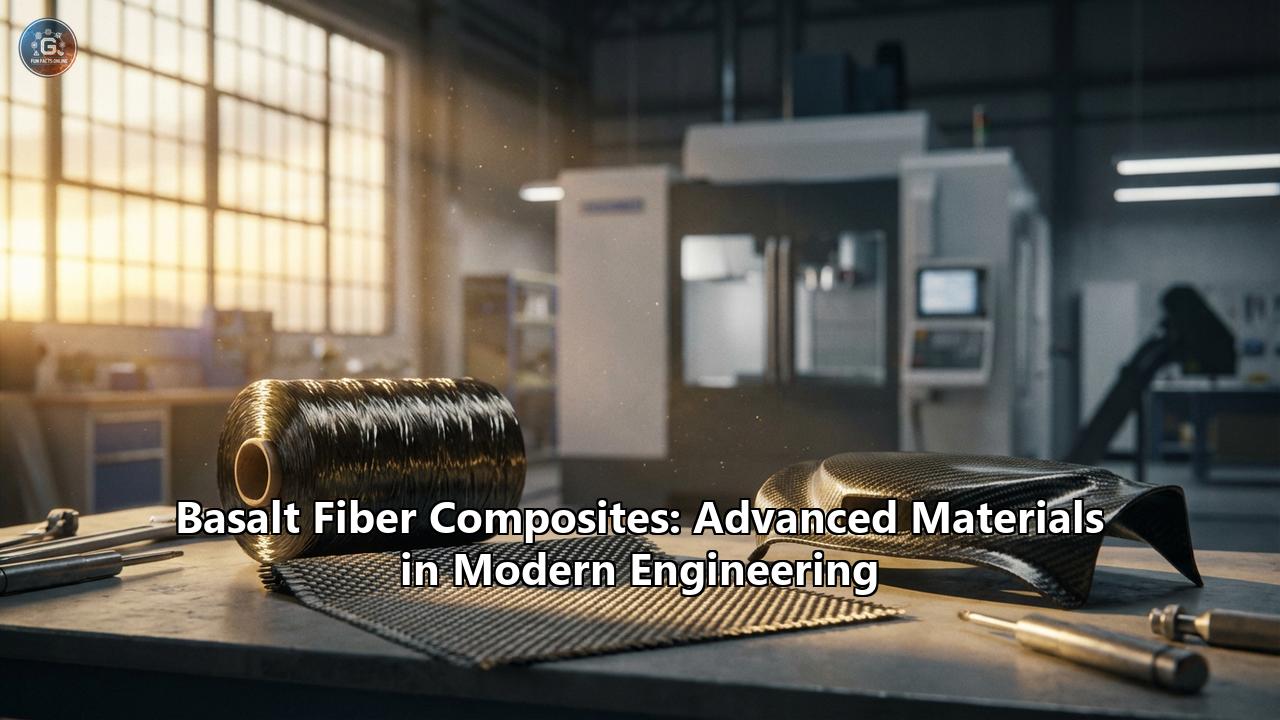
Once spun, these filaments are bundled into various product forms to suit diverse industrial needs, including continuous basalt fibers (CBF), chopped strands for injection molding, twistless rovings, and intricate woven fabrics ready to be infused with advanced polymer resins.
The Science of Superiority: Why Basalt Outperforms
To understand why aerospace, automotive, and civil engineers are eagerly pivoting to basalt, one must examine its formidable physical, mechanical, and chemical properties. When these volcanic fibers are embedded into polymer matrices (such as epoxy, vinyl ester, or high-performance thermoplastics like polycarbonate and polypropylene), the resulting composite behaves like a structural superpower.
1. Unyielding Mechanical Strength and ElasticityBasalt fibers inherently possess exceptional tensile strength that significantly exceeds that of standard E-glass fibers. In rigorous comparative studies, basalt fiber composites have demonstrated flexural strengths soaring past 500 MPa and impressive interlaminar shear strength (ILSS) up to 50% greater than equivalent glass/epoxy laminates. Furthermore, the elastic modulus of basalt is roughly 10% to 25% higher than that of glass, meaning it can absorb more stress and deformation before reaching its breaking point. This makes BFRP an ideal candidate for load-bearing structures subjected to dynamic forces.
2. Extreme Thermal Stability and Fire ResistanceVolcanic rock is born in fire, so it is only fitting that its fiber derivative exhibits supreme thermal stability. Basalt fibers easily withstand continuous operating temperatures up to 600°C to 700°C without significant degradation, retaining their mechanical integrity long after glass fibers would have melted or carbon fibers would have oxidized. They are naturally non-combustible. When applied to aerospace interiors, high-performance automotive engine bays, or industrial fireproof panels, BFRP provides a critical layer of safety, effectively acting as an impenetrable thermal shield.
3. Total Immunity to Chemical and Environmental DegradationOne of the most devastating enemies of modern infrastructure is corrosion. Traditional steel reinforcements rust, and even glass fibers degrade when exposed to the highly alkaline environment of wet concrete. Basalt fiber, rich in natural alkaline elements like magnesium, titanium, sodium, and potassium, is practically immune to alkaline and acidic attacks. In exhaustive accelerated aging tests involving submersion in sodium chloride (saltwater) and sodium hydroxide (alkali) solutions, basalt fibers consistently maintain higher residual tensile strength compared to glass. Furthermore, they do not absorb moisture, rendering them impervious to the devastating freeze-thaw cycles that tear conventional concrete apart.
4. Electromagnetic and Acoustic TransparencyIn a world increasingly dominated by wireless communication, radar, and 5G/6G networks, material interference is a massive engineering hurdle. Carbon fiber, being electrically conductive, blocks radio frequency signals. Basalt fiber is an exceptional electrical insulator and is highly permeable to electromagnetic waves. This makes it the material of choice for protective radomes, smart-city infrastructure housing IoT sensors, and military stealth applications. Additionally, its dense, mineral nature gives it profound vibration-damping and acoustic-insulation properties, a massive boon for noise-reduction in vehicles and wind turbines.
The Art of the Matrix: Advanced BFRP Manufacturing Techniques
The true magic of a composite lies in the synergy between the reinforcing fiber and the polymer matrix binding it together. In recent years, manufacturing techniques for BFRP have evolved from simple hand lay-ups to highly automated, precision-engineered processes.
- Pultrusion: Used to create continuous, uniform profiles like BFRP rebars and structural beams. Fibers are pulled through a resin bath and then through a heated die, creating lengths of composite that are lighter than aluminum but stronger than steel.
- Vacuum-Assisted Resin Transfer Molding (VARTM): This method uses a vacuum to pull liquid resin into a dry basalt fabric preform. It ensures perfect resin impregnation with zero air voids, resulting in aerospace-grade composite panels with staggering strength-to-weight ratios.
- Thermoplastic Integration & 3D Printing: Moving beyond traditional thermosets like epoxy, modern engineers are now compounding short, chopped basalt fibers with thermoplastics (like PC and PP). This advancement not only allows for rapid injection molding of complex automotive parts but has also opened the door to large-scale 3D printing, enabling the additive manufacturing of ultra-strong, recyclable components on demand.
One of the most exciting frontiers in composite engineering is the development of hybrid laminates. By strategically weaving basalt fibers alongside carbon or glass fibers, engineers can tailor a material’s exact behavioral profile. For example, carbon fiber is incredibly stiff but brittle; it shatters under localized impact. By adding alternating layers of basalt fiber—which has incredible impact-energy absorption—engineers create a "bionic" composite. These hybrid structures harness the extreme stiffness of carbon alongside the shock-absorbing toughness of basalt, yielding a material perfectly optimized for crash-resistant automotive safety cells and aerospace fuselages.
Transforming Modern Industries: Basalt in Action
The theoretical benefits of basalt fiber are undeniably impressive, but its real-world applications in the modern engineering landscape are where its true disruptive potential is realized.
Civil Engineering and Next-Generation InfrastructureThe global construction industry is undergoing a paradigm shift, trading heavy, corrosive materials for smart, resilient composites. BFRP rebars are rapidly replacing traditional steel reinforcements in bridges, seawalls, and high-rise foundations. Because BFRP does not rust, concrete structures no longer require thick, heavy cover layers to protect the reinforcement from moisture. This drastically reduces the amount of concrete needed, slashing weight and carbon emissions simultaneously.
The integration of chopped basalt fibers into asphalt pavements has yielded miraculous results for civil engineers. Adding just 0.3% to 0.4% mass fraction of basalt fibers to asphalt can increase its fatigue cracking resistance by an astonishing 600%. It significantly boosts rutting resistance and low-temperature flexibility, potentially extending the lifespan of modern highways by decades and saving billions in maintenance costs. In cutting-edge structural engineering, we are now seeing the deployment of long-span bridges utilizing BFRP cables, which offer the high tensile strength of steel cables at a fraction of the weight, free from the creeping threat of rust.
Automotive and TransportationThe global push towards electric vehicles (EVs) hinges on one critical factor: lightweighting. Every kilogram shed from a vehicle's chassis translates to extended battery range and improved efficiency. Basalt fiber composites are heavily utilized in the production of EV body panels, undercarriage shields, and structural crash zones. Beyond lightweighting, the tribological (friction and wear) properties of basalt make it an exceptional, eco-friendly alternative to asbestos and metallic compounds in high-performance brake pads and clutch linings. Furthermore, its acoustic damping properties create whisper-quiet cabin interiors, blocking out tire and wind noise without the need for heavy sound-deadening mats.
Renewable Energy and Power GridsAs the world scales up its renewable energy infrastructure, the physical limits of materials are being pushed to the extreme. Offshore wind turbines are growing larger, with blade spans exceeding 100 meters. These blades endure relentless aerodynamic stress, moisture, and UV radiation. Manufacturers are increasingly turning to basalt fiber composites for turbine blades due to their superior fatigue resistance, vibration damping, and immunity to saltwater corrosion.
In the electrical sector, BFRP is modernizing aging power grids. High-voltage transmission lines are being upgraded with BFRP composite cores. These new conductors are lighter, carry more electrical load, and suffer from significantly less thermal sag than traditional steel-reinforced aluminum conductors (ACSR). Basalt's natural non-conductive properties also make it the ultimate material for insulating pull rods and composite cross-arms on utility poles, ensuring grid resilience in extreme weather.
Marine and AerospaceThe marine industry battles a constant war against osmotic blistering and saltwater decay. Basalt fiber composites offer boat builders a material that is structurally robust, completely hydrophobic, and immune to the harsh marine environment, making it ideal for hulls, bulkheads, and tidal energy harvesting turbines. In aerospace, while carbon fiber remains king for primary load-bearing structures, BFRP is dominating the design of aircraft interiors, cargo linings, and engine shielding. Its ability to block fire propagation while emitting zero toxic smoke during high-heat events makes it an invaluable asset in aviation safety.
Navigating the Future: Overcoming Challenges and Looking Ahead
Despite its meteoric rise, the mass adoption of basalt fiber has not been without its hurdles. Historically, the primary challenge lay in standardizing the raw material. Because basalt is a natural rock, its chemical composition can vary slightly depending on the volcanic quarry it is mined from, leading to minor fluctuations in the final fiber's properties. However, as of 2026, state-of-the-art multi-stage refinement processes and rigorous AI-driven quality control systems have largely mitigated these inconsistencies, allowing for reliable, continuous industrial-scale production.
Research and development are currently exploring breathtaking new avenues. Nanotechnology is playing a pivotal role; recent studies have demonstrated that infusing BFRP epoxy matrices with tourmaline micro/nano-particles or carbon nanotubes exponentially increases interlaminar shear strength and overall toughness. Meanwhile, the development of fully bio-based resin systems is paving the way for 100% recyclable, cradle-to-cradle composite materials, perfectly aligning with global zero-waste initiatives.
Market forecasts project the basalt fiber composite industry to grow at a staggering compound annual growth rate (CAGR) of over 10% through the 2030s. Driven by massive infrastructure investments in regions like China and Eastern Europe, and the global imperative to decarbonize manufacturing, economies of scale are rapidly bringing the cost of basalt fiber down to rival that of standard commercial glass fiber.
We are standing at the precipice of a new material age. Basalt fiber composites represent a profound, almost poetic evolution in engineering: taking the ancient, fiery lifeblood of the Earth and cooling it into a sophisticated, sustainable fabric that will propel human innovation into the next century. From the bridges we cross to the cars we drive and the energy that powers our world, the future isn't just being built better—it is being built from the ground up, born from rock, and engineered for perfection.
Reference:
- http://openaccess.journals4promo.com/id/eprint/1602/1/Ravikiran742024JMSRR125190.pdf
- https://sdiopr.s3.ap-south-1.amazonaws.com/2024/Nov/05-Nov-24/2024_JMSRR_125190/Ms_JMSRR_125190.pdf
- https://pmc.ncbi.nlm.nih.gov/articles/PMC9227501/
- https://pmc.ncbi.nlm.nih.gov/articles/PMC8950946/
- https://www.mdpi.com/2075-5309/15/14/2525
- https://www.intelmarketresearch.com/basalt-fibre-market-22024
- https://scispace.com/pdf/a-review-on-basalt-fiber-and-basalt-fiber-reinforced-polymer-1udwm6uz.pdf
- https://www.researchgate.net/publication/361005078_Basalt_fiber_and_its_composite_manufacturing_and_applications_An_overview
- https://www.researchgate.net/publication/381256588_Basalt_fibers_An_environmentally_acceptable_and_sustainable_green_material_for_polymer_composites
- https://memi.ub.ac.id/index.php/memi/article/download/25/17
- https://www.datainsightsmarket.com/reports/basalt-fiber-composite-1146313