
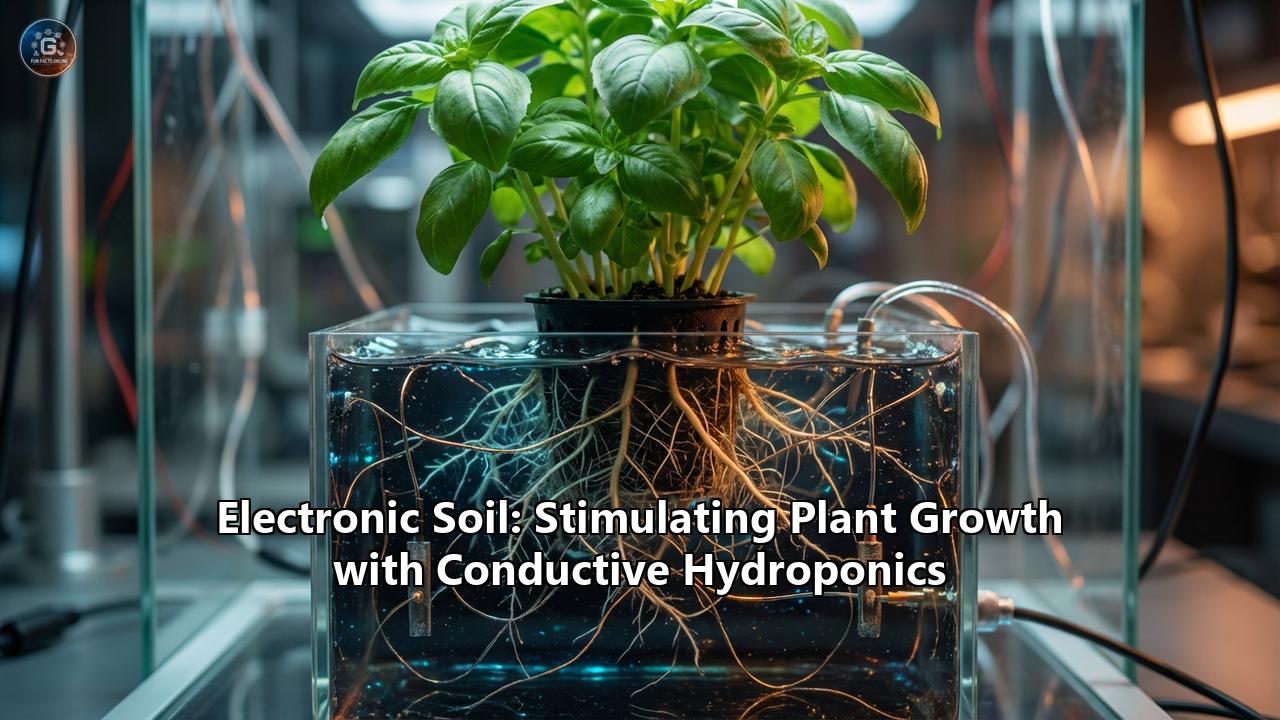
Imagine a world where the soil itself is "alive"—not just with microbes and roots, but with a hum of electricity that actively encourages plants to grow faster, stronger, and more efficiently. This is not the setting of a science fiction novel set in a cyberpunk future; it is the reality of a groundbreaking agricultural technology emerging from the laboratories of Sweden. It is called eSoil, and it promises to change the way we feed our growing planet.
As humanity faces the twin titans of climate change and a population surging toward 10 billion, the pressure on our agricultural systems is unprecedented. Traditional farming is straining under the weight of soil degradation, water scarcity, and fertilizer runoff. Enter bioelectronics: a fusion of biology and technology that has birthed a conductive, electrically stimulating growth medium capable of boosting plant growth by an astonishing 50%.
In this deep dive, we will explore the genesis of electronic soil, the complex chemistry of conductive polymers, the secret electrical language of plants, and how this "hydroponics on steroids" could be the key to sustainable urban farming—and perhaps even farming on Mars.
Chapter 1: The Hydroponic Revolution and the "Soil" Problem
To understand why eSoil is such a pivotal invention, we must first look at the context in which it was born: the booming industry of hydroponics.
The Rise of Soilless Farming
Hydroponics is the practice of growing plants without soil. Instead of extracting nutrients from the earth, plant roots hang suspended in nutrient-rich water or are supported by an inert medium. This method has already revolutionized agriculture by allowing for Vertical Farming—stacking crops in high-tech towers in the middle of dense cities. The benefits are undeniable:
- Water Efficiency: Hydroponics uses up to 90% less water than traditional field farming because the water is recirculated.
- Space Optimization: We can grow food in skyscrapers, abandoned subway tunnels, or shipping containers.
- Control: Every variable, from light spectrum to pH balance, can be fine-tuned.
The Dirty Secret of Clean Farming
However, hydroponics has a hidden environmental cost. Plants need something to anchor their roots, a physical substrate that mimics the support of dirt. For decades, the industry standard has been mineral wool (often known by the brand name Rockwool).
Mineral wool is made by melting volcanic rock at incredibly high temperatures (around 1,600°C) and spinning it into fibers, much like cotton candy. While effective, it has major downsides:
- Energy Intensive: The production process consumes vast amounts of energy and releases significant carbon emissions.
- Non-Biodegradable: Once a crop cycle is finished, the mineral wool cannot be composted. It often ends up in landfills, where it sits indefinitely.
- Inert: Mineral wool does nothing for the plant other than hold it up. It is a "dumb" material in a "smart" farm.
This is where the researchers at Linköping University in Sweden saw an opportunity. What if the substrate wasn't just a passive holder? What if it could actively participate in the plant's growth? What if it could be biodegradable and electronic?
Chapter 2: The Genesis of eSoil
Led by Professor Eleni Stavrinidou of the Electronic Plants group (ePlants), a team of scientists set out to create a better substrate. Their goal was to engineer a material that was porous, biodegradable, and—crucially—electrically conductive.
The Recipe: Cellulose and PEDOT:PSS
The researchers turned to nature for the structural component. They chose cellulose, the most abundant biopolymer on Earth. Cellulose is what gives plant cell walls their stiffness; it is the primary ingredient in paper and cotton. By using cellulose nanofibers, the team created a sponge-like scaffold that roots could easily penetrate.
But cellulose acts as an insulator; it doesn't conduct electricity. To electrify the soil, they coated the cellulose fibers with a conductive polymer known as PEDOT:PSS.
What is PEDOT:PSS?- Full Name: Poly(3,4-ethylenedioxythiophene):polystyrene sulfonate.
- Function: It is a mixed ionic-electronic conductor. This means it can conduct both electrons (like a metal wire) and ions (like the salts in a plant's body). This dual capability makes it the perfect bridge between the rigid world of electronics and the fluid world of biology.
- Safety: Unlike many other conductive materials, PEDOT:PSS is chemically stable and non-toxic to plants, allowing for safe integration into the food chain.
The result was eSoil: a dark, porous, sponge-like material that looks like rich, black earth but functions like a bio-electronic circuit board.
Chapter 3: The Experiment – A 50% Surge in Growth
To test their creation, the Linköping team conducted a rigorous study using barley seedlings (Hordeum vulgare). Barley was chosen not just because it is a staple grain, but because grains are rarely grown in hydroponic systems, which are usually reserved for leafy greens like lettuce and basil. Proving that grains could thrive in eSoil would open up vast new possibilities for food security.
The Setup
The scientists set up two groups of barley seedlings:
- The Control Group: Grown in the eSoil substrate but without any electrical stimulation.
- The Stimulated Group: Grown in the eSoil substrate with a low-voltage electrical field applied to the root zone.
The Stimulation Protocol
Unlike early "electroculture" experiments of the 19th century that blasted plants with high voltage (often killing them), the eSoil system used a gentle, precise touch. The voltage was extremely low, ensuring it was safe for both the plants and any humans handling them. The electrical stimulation wasn't constant; it was applied during specific windows of the plant's growth cycle.
The Results
After 15 days, the difference was undeniable.
- The barley seedlings in the electrically stimulated eSoil showed up to 50% more growth (measured in dry weight) compared to the control group.
- The roots were longer, more complex, and healthier.
- The shoots were more robust.
"We can get seedlings to grow faster with less resources," Professor Stavrinidou explained. This wasn't a minor percentage improvement; it was a statistical leap that stunned the scientific community.
Chapter 4: Decoding the Mechanism – How Does it Work?
Here lies the most intriguing mystery of eSoil. We know that it works, but science is still untangling exactly how it works. However, we have strong clues based on plant physiology.
Plants are Electric Beings
We often think of animals as the "electric" organisms—nerves firing, hearts beating via electrical impulses. But plants utilize electricity too.
- Action Potentials: When a Venus Flytrap snaps shut, it is triggered by an electrical impulse. Even regular plants use slow-moving electrical waves to signal stress, injury, or the presence of food.
- Ion Transport: Plants "eat" by moving ions (charged particles like Nitrate NO3- or Potassium K+) across their root membranes. This movement creates electrical gradients.
The Nitrogen Connection
The Linköping study revealed a crucial insight: Nitrogen Assimilation.
Nitrogen is the most critical nutrient for plant growth; it is the building block of chlorophyll and amino acids. The study found that the electrically stimulated plants were significantly more efficient at processing nitrogen.
The Hypothesis:The electrical field generated by the eSoil likely interacts with the ion channels in the plant's root cells. It may "open the gates," allowing the plant to uptake nutrients more easily, or it might energize the enzymes responsible for converting nitrate into usable biological compounds. Essentially, the electricity acts as a metabolic "turbocharger," allowing the plant to do more with the nutrients it has.
Low Power, High Impact
Crucially, the energy required to achieve this is minuscule. Because PEDOT:PSS is such an efficient conductor, the system consumes micro-watts of power. You could potentially run an entire tray of eSoil seedlings on the energy stored in a small battery. This makes it incredibly viable for commercial use, where energy costs are a major concern.
Chapter 5: eSoil vs. Traditional Substrates
How does this new technology stack up against the current giants of the industry?
| Feature | Mineral Wool (Rockwool) | eSoil (Bioelectronic) |
| :--- | :--- | :--- |
| Composition | Basalt rock / Slag | Cellulose + PEDOT:PSS |
| Production | High Energy (1600°C furnace) | Low Energy (Chemical synthesis) |
| Biodegradability | Non-biodegradable (Landfill waste) | Fully Biodegradable |
| Function | Passive physical support | Active electrical stimulation |
| Growth Effect | Standard baseline | +50% Growth rate |
| Reusability | Difficult to sanitize/reuse | Potential for multiple cycles |
The environmental argument alone makes eSoil a superior choice. Replacing a non-degradable industrial waste product with a cellulose-based material aligns perfectly with the principles of the Circular Economy.
Chapter 6: Future Applications and "Cyborg" Farms
The implications of eSoil extend far beyond growing barley a little faster. This technology represents a platform—a foundational layer upon which the future of agriculture could be built.
1. Vertical Grain Farming
Currently, vertical farms mostly grow salad greens because they have short cycles and high value. Grains like wheat and barley are too slow and cheap to justify the cost of indoor lighting and climate control.
However, if eSoil can boost growth rates by 50%, the economics change. We could see "Bread Towers" in cities—growing staple calories locally, reducing the carbon footprint of shipping wheat across oceans.
2. Urban Food Security
As urbanization accelerates, cities need to become self-sufficient. eSoil allows for highly controlled, efficient food production in small spaces. It could be integrated into "smart home" gardens, allowing families to grow their own super-charged vegetables in a kitchen appliance.
3. Space Agriculture
This is perhaps the most exciting frontier. On missions to Mars or the Moon, resources will be incredibly scarce. You cannot bring heavy bags of soil, and you cannot afford to waste water or fertilizer.
eSoil is lightweight, dry (until watered), and highly efficient. The electrical stimulation means astronauts could grow more food with less time and fewer nutrients. It is the perfect substrate for the hydroponic bays of a starship or a lunar colony.
4. Interactive "Smart" Plants
Because eSoil is conductive, it creates an electronic interface with the plant. This could lead to two-way communication.
- Sensors: The soil could "read" the plant. If the plant is stressed, thirsty, or lacking a specific nutrient, the electrical signature in the soil would change. The farm's computer could instantly adjust the water or nutrient mix in response.
- Stimulation on Demand: If a heatwave hits, the system could send a specific electrical signal that primes the plants to close their stomata and conserve water.
Chapter 7: A Note on History – The Return of Electroculture
It is important to acknowledge that the idea of using electricity in farming is not new. In the 1700s, a French physicist named Abbé Nollet observed that plants grew faster when electrified. This sparked a movement called "Electroculture."
In the 19th and early 20th centuries, it was a fad. Farmers erected giant copper antennas to channel atmospheric electricity into the ground. While some claimed miraculous results, the science was inconsistent, anecdotal, and often drifted into pseudoscience. The mechanisms were poorly understood, and the voltage was uncontrolled.
How eSoil is Different:eSoil is the "Science" to Electroculture's "Magic."
- Material Science: It uses a specifically engineered molecular material (PEDOT:PSS).
- Control: It uses precise, low-voltage regulation, not random atmospheric static.
- Peer Review: The results are published in prestigious journals like PNAS (Proceedings of the National Academy of Sciences), backed by rigorous control groups and statistical analysis.
We are finally fulfilling the promise of those early pioneers, but with the precision of modern nanotechnology.
Chapter 8: Challenges and the Road Ahead
Despite the excitement, eSoil is still an emerging technology. Several hurdles remain before you can buy a bag of it at your local garden center.
- Scaling Production: Creating cellulose-PEDOT nanofibers in a lab is different from manufacturing tons of it for commercial farms. The process needs to be industrialized.
- Cost: Currently, conductive polymers are more expensive than melted rock. As with all tech, costs will drop with scale, but early adoption will be pricey.
- Long-Term Effects: We know it works for 15 days on seedlings. We need to know how it affects the full life cycle of a plant. Does the fruit taste different? Is the nutritional profile changed? (Early data suggests nitrogen use is better, which is a good sign).
- Crop Variety: So far, barley has been the star. Research is needed to customize the electrical signals for tomatoes, strawberries, soy, and maize.
Conclusion: The Electric Future of Food
We are standing on the precipice of a new agricultural era. For 10,000 years, farming has been a chemical process—sun, water, and nutrients reacting in the soil. Now, we are adding a new variable: Physics.
Electronic Soil represents a shift from treating plants as passive biological machines to treating them as active, responsive systems that can be integrated with technology. It offers a solution that uses less water, less fertilizer, and less space, all while biodegrading safely back into the earth.
As we look toward a future where we must feed more people with less land, the solution might not just be in better seeds or stronger fertilizers. The solution might be under our roots, humming with the quiet, invisible power of the electron.
The soil of the future is here, and it is electric.
Reference:
- https://www.goshenacres.com/post/electroculture
- https://www.researchgate.net/publication/371234815_The_Grow_Impact_of_Electrical_Stimulation_and_Grow_Lights_on_Lettuce_Plant_Lactuca_Sativa_in_Hydroponics_System
- https://www.earth.com/news/electric-soil-esoil-boosts-crop-production-by-50-in-just-15-days/
- https://trendingscript.medium.com/whats-an-electronic-soil-how-this-technology-boost-crop-yield-by-50-a7a291e7a5ae
- https://future4200.com/uploads/short-url/7hdyL6AOPpFfPOfO3TkTihX7Psl.pdf
- https://www.engadget.com/swedish-researchers-develop-electronic-soil-that-speeds-up-plant-growth-205630538.html
- https://globalplantcouncil.org/researchers-develop-electronic-soil-that-enhances-crop-growth/
- https://www.hindustantimes.com/lifestyle/health/what-is-esoil-and-how-does-it-work-heres-everything-you-need-to-know-about-this-electrically-conductive-substrate-101703575962974.html
- https://www.iasgyan.in/daily-current-affairs/electronic-soil
- https://www.miragenews.com/digital-soil-boosts-crop-growth-1149704/
- https://www.jumpstartmag.com/meet-esoil-what-are-the-pros-and-cons-of-electronic-soil-in-urban-hydroponic-farming/
- https://liu.se/en/news-item/elektronisk-jord-okar-tillvaxten-hos-grodor
- https://www.growingproduce.com/production/electronic-soil-scientists-break-new-ground-to-stimulate-hydroponics/
- https://thefarmersjournal.com/electronic-soil-or-esoil-the-future-of-sustainable-agriculture/
- https://orion.tec.ac.cr/en/publications/pedotpss-a-conductive-and-flexible-polymer-for-sensor-integration/
- https://pubmed.ncbi.nlm.nih.gov/35163031/
- https://www.mdpi.com/1422-0067/23/3/1107
- https://vajiramandravi.com/current-affairs/what-is-esoil/
- https://www.pnas.org/doi/10.1073/pnas.2304135120
- https://agribusiness.africa/electronic-soil-that-can-enhance-crop-growth-by-50-developed-by-scientists/
- https://tinsaeberhanu.com/electroculture-history/
- https://descworld.org/electroculture-the-future-of-agriculture-a-technological-renaissance/