
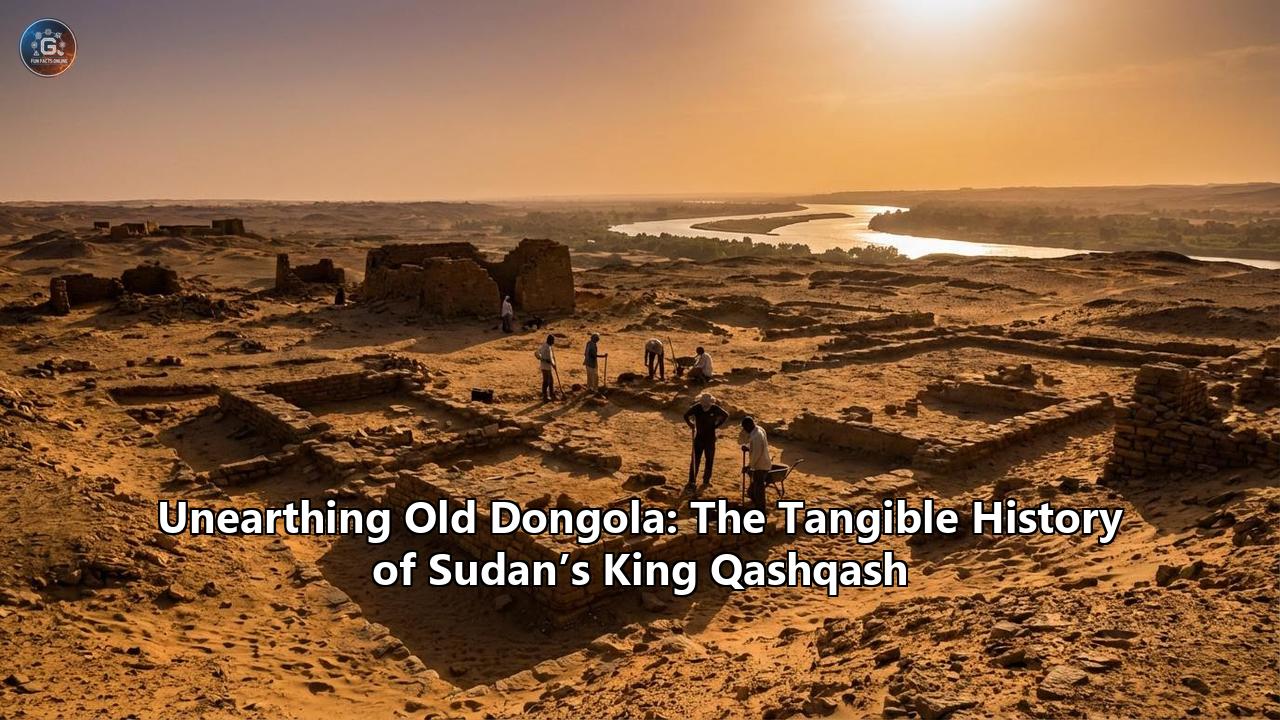
The sands of northern Sudan have long guarded the secrets of a transitional, largely undocumented epoch in African history. Nestled on the eastern bank of the Nile River, the archaeological site of Old Dongola—historically known as Tungul—stands as a monument to the complex cultural, religious, and political shifts that shaped the continent over millennia. For centuries, historians and archaeologists have grappled with a localized "Dark Age" spanning the collapse of the medieval Nubian states and the eventual nineteenth-century Turco-Egyptian conquest. During this time, the once-mighty Christian Kingdom of Makuria fractured, leading to a slow but inexorable process of Arabisation and Islamisation. Written records from this era are exceptionally rare, forcing scholars to rely on oral traditions, later hagiographies, and the often-biased accounts of foreign travelers.
However, a groundbreaking discovery made by researchers from the Polish Centre of Mediterranean Archaeology (PCMA) at the University of Warsaw has recently shattered the historical silence. Found buried in a centuries-old rubbish heap within a fortified citadel, a fragile, irregularly shaped slip of paper measuring merely 10 by 9 centimeters has achieved what archaeologists always hope for but rarely witness: it has transformed a myth into tangible history. The artifact is an administrative order issued in the name of King Qashqash, a semi-legendary Nubian monarch whose status in Sudanese folklore rivaled that of Britain’s King Arthur. Prior to this find, Qashqash was known solely through ancestral lineages recorded in much later texts. Today, he stands as a verified, historical ruler, and the document that bears his name offers an unprecedented window into the socio-economic life, linguistic evolution, and royal patronage networks of pre-colonial Sudan.
The Majesty of Makuria and the Twilight of Christian Nubia
To understand the sheer magnitude of the discovery of King Qashqash’s decree, one must first understand the world from which he emerged. Old Dongola was not always a city in transition. From the fifth to the fourteenth centuries, it served as the vibrant, pulsing capital of the Christian Kingdom of Makuria. Makuria was a powerhouse of the Middle Nile Valley, a state capable of halting the southward expansion of early Islamic armies in the seventh century and subsequently negotiating the Baqt, a unique non-aggression and trade treaty that maintained a relatively peaceful coexistence with Islamic Egypt for centuries.
During its golden age, Old Dongola was adorned with monumental churches, a sweeping royal palace, and wealthy monasteries. The artistic and architectural achievements of the city were staggering. Recent excavations funded by the European Research Council under the UMMA project (Urban Metamorphosis of the community of a Medieval African capital city) have continually revealed the depth of Makuria's religious and cultural sophistication. In 2023, the Polish team uncovered an enigmatic complex of sun-dried brick chambers dating to roughly 1276 CE. Inside these confined spaces, located mysteriously seven meters above medieval ground level, archaeologists found vivid, unprecedented murals.
These paintings offered a staggering look at Nubian Christian iconography. One mural depicted the Virgin Mary in a dignified, dark monochromatic robe, holding a cross and a book—a representation utterly unique in the Christian world. Another deeply intimate and dynamic scene showed the Nubian King David bowing submissively before Christ, kissing his hands and begging for divine protection over Dongola, while the Archangel Michael shielded them both with his sprawling wings. Dr. Artur Obłuski, the director of the PCMA UW, noted that these artworks challenged the traditional bias that African kingdoms merely copied northern Mediterranean art; rather, they adapted and innovated, demanding a "Nubio-and Afrocentric" paradigm.
But the glory of Makuria could not last forever. By the late fourteenth century, the kingdom faced economic decline, internal political fragmentation, and increasing pressure from nomadic Arab tribes moving southwards. The royal court abandoned Old Dongola, and the centralized Christian authority fractured. What followed was a poorly documented transitional era. As Arabic slowly supplanted the Old Nubian language and Islam began to weave itself into the fabric of local society, the region entered a shadowy phase of localized power struggles and minor kings. It is out of this historical fog that the legend of King Qashqash was born.
The African King Arthur: A Monarch Bound in Legend
When a society’s central administration collapses, history is often entrusted to the memory of the people. For generations, King Qashqash existed purely in the realm of inherited tradition and folklore. In the cultural consciousness of northern Sudan, his name echoed through the centuries, much like King Arthur in British mythology—a revered ancestral figure of a bygone era whose actual historical footprint was impossible to verify.
Before the recent excavations at Old Dongola, the only written references to Qashqash came from much later texts, most notably the Kitab al-Tabaqat (The Book of Classes). Compiled in the nineteenth century, the Tabaqat is a comprehensive Sudanese biographical dictionary that chronicles the lives, miracles, and lineages of Islamic holy men, Sufi mystics, and scholars. In this revered text, King Qashqash is not detailed as a ruling monarch of contemporary record, but rather cited as a prestigious ancestor to subsequent rulers and prominent religious figures.
The Tabaqat records, for instance, that King Hasan—identified as the son of Qashqash—married his daughter to a highly respected religious leader named Muhammad b. 'Isa Suwar al-Dhahab. Because this religious leader was known to be active in the Old Dongola region during the early to mid-seventeenth century, historians deduced that if Qashqash were real, his reign must have occurred in the latter half of the sixteenth century or the very early seventeenth century. Yet, without contemporary administrative documents, coins, or inscriptions bearing his name, Qashqash remained suspended in the ether of myth.
The absence of hard evidence led some scholars to question the nature of authority during Sudan's Islamisation period. Who really governed the fragmented remnants of Makuria before the Turco-Egyptian invasion of 1820?. The answers lay buried in a rubbish heap within the ancient citadel.
Unearthing the House of the Mekk
The PCMA UW has a long, storied relationship with Old Dongola, having begun excavations there in 1964 following the UNESCO International Campaign to Save the Monuments of Nubia. Over decades of meticulous work, the team has transitioned from uncovering monumental churches to exploring the domestic and administrative realities of the city’s later inhabitants.
The breakthrough regarding King Qashqash occurred within the citadel of Old Dongola, in a sprawling structure designated by archaeologists as "Building A.1". Interestingly, local oral traditions had long referred to this specific site as the "House of the Mekk" (Beit al-Mak) or the "King's House". Mekk is an indigenous title utilized in late pre-colonial Sudan to denote a minor, localized king or ruler, often subordinate to the greater Funj Sultanate of Sennar.
Archaeological investigations of Building A.1 quickly confirmed its elite status. The architectural layout was highly complex and significantly larger than surrounding contemporary dwellings. Sifting through the stratigraphy of the building, the team uncovered a treasure trove of high-status artifacts. Among the discoveries were fine textiles woven from imported silk, cotton, and linen. They found meticulously crafted leather footwear, a dazzling gold ring, and the handle of a dagger carved from either rhinoceros horn or ivory. Furthermore, the presence of musket balls and a powder horn indicated that the inhabitants had access to modern firearms, a definitive marker of elite wealth and military authority in the region during the transitionary period.
It was within a refuse layer—a seemingly mundane pile of rubbish accumulated over the centuries inside this royal residence—that the Polish team struck historical gold. Often, archaeologists find the most authentic reflections of daily life in the trash of the ancients. Amidst more than twenty other Arabic manuscripts, letters, legal notes, and magical amulets, the researchers discovered a remarkably intact, fragile sheet of paper. Unlike many of the fragmented texts that require heavy interpolation, this document was complete, offering a direct, unadulterated voice from the seventeenth century.
Deciphering the Royal Order
The translation and analysis of the document were spearheaded by Tomasz Barański, an Arabist and lead researcher from the PCMA UW, alongside his colleagues. Published in the peer-reviewed journal Azania: Archaeological Research in Africa, the study of this small artifact has radically shifted our understanding of late Nubian history.
The text of the document is a straightforward administrative order. It reads:
"From King Qashqash to Khiḍr, son of ŠHDT/ŠHB(T?). As soon as Muhammad al-ʿArab comes to you, take from him three ʾRDWYĀT and give him a sheep with its offspring, and collect it from ʿAbd al-Jābīr; and give it to the owner without delay. Do not hesitate! This is my letter/instruction to you. His scribe, Ḥamad, wrote it. Greetings. And you, Khiḍr, give ʿAbd al-Jābīr three pieces of cotton and a hat (or three cotton hats) and collect the sheep with its offspring for the owner."Though the transaction may seem pedestrian to the modern eye, its historical implications are explosive. Firstly, it provides absolute, contemporary proof that King Qashqash was a living, breathing monarch who exercised direct, granular authority over the economic affairs of his domain.
Secondly, the cast of characters mentioned in the brief text illuminates the administrative network of the kingdom. The king delegates his authority to a subordinate, Khidr, who acts as an intermediary or local governor. We are introduced to Muhammad al-'Arab, likely a merchant or a key political ally, who is bringing three ʾRDWYĀT (a term requiring further linguistic deciphering, potentially indicating a specific type of cloth or currency). The transaction involves a multi-party coordination of goods, bringing in another individual named 'Abd al-Jabir to supply the livestock. Finally, the document is authenticated by the king's official scribe, Hamad.
The Language of Transition: Linguistic and Cultural Metamorphosis
The artifact serves as a critical linguistic timestamp for the Arabisation of Sudan. After the fall of Makuria, the Old Nubian language, which had been written using an adapted Greek and Coptic alphabet, gradually fell out of administrative use. The order from King Qashqash is one of the earliest securely attested documents showing the successors of Makuria utilizing Arabic as their primary administrative language.
However, the Arabic used by the scribe Hamad is not the flawless, classical Arabic of the Quran or the scholarly courts of Cairo. Barański notes that the text is written with clear colloquial influences, exhibiting an imperfect scribal practice and a vernacular form. This is indicative of a society in the throes of linguistic transition. Arabic was being adopted and molded by native Nubian speakers, resulting in a unique regional dialect that merged local traditions with the incoming Islamic culture. The terminology used in the document acts as a gateway to understanding how the diverse traditions of Ottoman Egypt, the Funj Sultanate, and indigenous Nubia collided and synthesized.
Dating the manuscript required a multidisciplinary approach, as the paper itself bore no explicit year. Researchers combined the genealogical estimates from the Tabaqat with hard archaeological evidence. Within the same stratigraphic deposit in the House of the Mekk, archaeologists found coins minted during the reign of the Ottoman Sultan Murad IV, who ruled from 1623 to 1640. This numismatic evidence confirmed that the refuse layer could not be older than the seventeenth century, perfectly aligning with the historical estimates that King Qashqash ruled in the late sixteenth or early seventeenth century, with the document being discarded shortly thereafter.
Rulers at Work, Not at War
Beyond proving the existence of an African "King Arthur," the royal decree forces a reevaluation of the nature of kingship in post-medieval Sudan. For centuries, the prevailing European understanding of Nubian monarchs during this era was heavily influenced by the writings of Leo Africanus, a sixteenth-century Moorish diplomat and author. In his widely read accounts, Leo Africanus painted a picture of a chaotic, militaristic region, famously claiming that the King of Nubia was "always at war".
King Qashqash’s order actively contradicts this violent stereotype. The authors of the study beautifully paraphrase this correction, asserting that the document reveals a king "at work, not at war". Far from a warlord consumed by endless tribal conflict, Qashqash is depicted as a sovereign deeply involved in the complex, peaceful administration of social and commercial networks.
The exchange of textiles, sheep, and cotton hats was not merely a matter of simple commercial trade. In the context of traditional African kingship, the distribution of material goods was intrinsically tied to the distribution of social prestige. By coordinating these exchanges, Qashqash was actively managing a system of royal patronage. He was reinforcing loyalty, maintaining diplomatic ties, and balancing the local economy. A king’s power in this era was measured not just by the strength of his armies, but by his ability to act as the ultimate benefactor and arbiter of wealth within his community. The decree is a tangible manifestation of a monarch holding a fractured society together through the calculated giving of gifts.
Engaging the Descendants: Archaeology as a Living Dialogue
The unearthing of King Qashqash’s decree is not merely a triumph of academia; it is a profoundly personal revelation for the modern inhabitants of northern Sudan. Archaeology in the twenty-first century is evolving from an extractive science into a collaborative effort. Two years prior to the recent discoveries, the PCMA UW initiated a community engagement program appropriately named the "Dialogue" project. This initiative aims to bridge the gap between foreign archaeological missions, local Sudanese archaeologists, and the everyday residents of the Dongola region.
According to Artur Obłuski, the local communities are viewed as full partners in the research. "We learn from each other and exchange knowledge," Obłuski explained. It was through this continuous dialogue that the true significance of King Qashqash was understood. The Polish researchers discovered that Qashqash does not just live in nineteenth-century manuscripts; he survives in the vibrant, living memory of the local populace. Astonishingly, individuals who trace their direct lineage to King Qashqash still live in the Dongola region today.
For these descendants, the unearthing of the Arabic decree is a validation of their ancestral pride. It bridges the gap between folklore and objective reality, proving that the stories passed down from parent to child in the shadow of the ancient citadel were rooted in historical truth. Preserving these artifacts and the structural remains of Old Dongola is an immense challenge. The conservators working in Sudan often face sweltering temperatures and confined spaces, yet they labor diligently to secure fragile layers of mud-brick and paper, ensuring that the legacy of Makuria and its successors remains intact.
A New Chapter in African History
The discovery at Old Dongola represents a monumental shift in the historiography of pre-colonial Africa. It serves as a stark reminder of how much of the continent’s history remains waiting beneath the earth, obscured by time, environmental factors, and historical biases. The transitional period of Sudan—once dismissed as a "Dark Age" characterized only by decline and fragmentation—is slowly being illuminated as an era of vibrant cultural adaptation, economic resilience, and dynamic leadership.
King Qashqash, the legendary monarch who was once relegated to the status of myth, now takes his rightful place in the pantheon of documented African rulers. The small, colloquial Arabic document rescued from a pile of 400-year-old rubbish proves that the history of Old Dongola did not end with the fall of its Christian kings. Instead, it metamorphosed. Through the careful management of trade, the patronage of local leaders, and the slow integration of Islamic culture, rulers like Qashqash paved the way for the modern Sudanese identity.
As excavations by the Polish Centre of Mediterranean Archaeology continue, the ruins of Tungul are expected to yield even more secrets. Dozens of other Arabic documents recovered from the House of the Mekk are currently undergoing careful analysis and translation. Whether they contain more orders from Qashqash, correspondence with neighboring sultanates, or intimate details of daily life, they are guaranteed to further flesh out the story of this pivotal kingdom.
For now, the story of King Qashqash stands as a profound testament to the power of archaeology. It demonstrates that myths are often the echoes of real men and women, and that even a discarded scrap of paper can echo across centuries, demanding that a forgotten king be remembered not as a legend, but as a man who ruled, worked, and shaped the destiny of the Middle Nile Valley.
Reference:
- https://thedebrief.org/archaeologists-discover-ancient-kings-order-that-confirms-a-semi-legendary-nubian-king-was-real/
- https://www.medievalists.net/2026/03/newly-discovered-document-confirms-a-legendary-african-king/
- https://royalcentral.co.uk/royal-news/buried-in-rubbish-for-centuries-the-exciting-breakthrough-that-proves-a-lost-king-existed-216909/
- https://www.labrujulaverde.com/en/2026/03/a-16th-century-arabic-document-found-in-sudan-demonstrates-the-existence-of-a-legendary-king-of-nubia-who-besides-waging-war-also-traded-in-textiles-and-livestock/
- https://www.the-express.com/news/world-news/201035/mythical-african-king-proven-to-be-real
- https://pcma.uw.edu.pl/en/2026/03/05/old-dongola-manuscript-legendary-ruler/
- https://www.dabangasudan.org/en/all-news/article/archaeologists-discover-unique-christian-art-in-northern-sudan
- https://www.oreateai.com/blog/unearthing-the-past-the-remarkable-discoveries-of-old-dongola-sudan/6ea3d9a0f0a5ef053a60295a6f1a56ec
- https://www.gazetaexpress.com/en/lost-african-kingdom-qashqash-king-arthur-of-sudan/
- https://arkeonews.net/arabic-document-found-in-17th-century-rubbish-heap-confirms-semi-legendary-nubian-king-qashqash/
- https://thesudantimes.com/sudan/discovery-in-dongola-links-legendary-king-qashqash-to-history/
- https://www.jpost.com/archaeology/article-889013
- https://tvpworld.com/91995821/polish-researchers-find-proof-of-legendary-african-king