
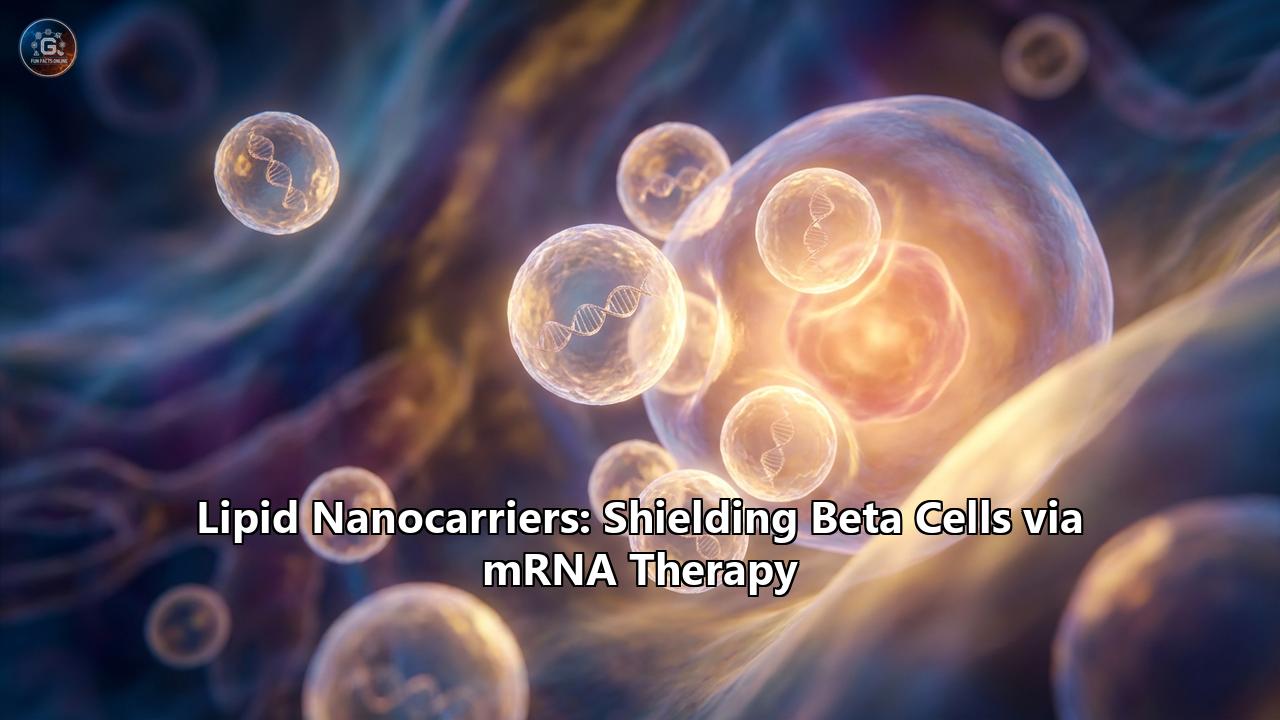
The advent of messenger RNA (mRNA) technology has irrevocably altered the landscape of modern medicine. While the global public was introduced to the power of mRNA via the life-saving COVID-19 vaccines, researchers in the fields of gene therapy, immunology, and bioengineering understood that viral immunization was merely the prologue. The true, paradigm-shifting potential of mRNA lies in its ability to temporarily reprogram the machinery of human cells to treat, and perhaps cure, chronic and incurable diseases. Today, one of the most remarkable frontiers in this domain is the use of lipid nanocarriers (LNPs) to shield pancreatic beta cells from immune destruction, offering a revolutionary strategy for the prevention and treatment of Type 1 Diabetes (T1D).
To appreciate the magnitude of this breakthrough, one must first understand the biological battlefield of diabetes. Type 1 Diabetes is an autoimmune condition characterized by the selective targeting and destruction of insulin-producing beta cells, which are situated within the islets of Langerhans in the pancreas. For decades, the therapeutic orthodoxy has centered heavily on exogenous insulin replacement—a treatment, not a cure, that comes with the lifelong burden of rigorous glucose monitoring and the constant specter of severe hypoglycemic events. Experimental attempts to halt the autoimmune attack at its root have traditionally relied on broad-spectrum immunosuppressants. However, whole-body immunosuppression is a blunt instrument; it leaves patients highly vulnerable to opportunistic infections and increases the risk of malignancies, making it unsuitable for lifelong management.
The scientific community has long sought a more elegant solution: rather than disarming the body's entire immune system, what if we could simply make the beta cells "invisible" to the attacking T-cells? This concept of localized immune tolerance is now being realized through the precise delivery of synthetic mRNA, utilizing lipid nanoparticles as stealth delivery vehicles.
The Delivery Dilemma: Breaching the Pancreatic FortressThe human body is an incredibly hostile environment for naked genetic material. If free mRNA is injected into the bloodstream, it is rapidly destroyed by omnipresent enzymes known as ribonucleases before it can ever reach a target cell. To survive the journey, mRNA must be encapsulated in a protective shell. Lipid nanoparticles—spherical vesicles typically 50 to 100 nanometers in diameter—have emerged as the gold standard for this task. The standard LNP formulation comprises four key components: ionizable cationic lipids, helper phospholipids, cholesterol, and polyethylene glycol (PEG)-lipids.
The ionizable lipids are the linchpin of this delivery system. At the physiological pH of the bloodstream, they remain neutral, which prevents toxic interactions with anionic cell membranes and avoids rapid clearance. However, once an LNP is taken up by a target cell via endocytosis, the acidic environment of the endosome causes these lipids to become positively charged. This sudden protonation triggers an interaction with the endosomal membrane, facilitating the release of the encapsulated mRNA directly into the cellular cytoplasm, where the cell's ribosomes can translate it into functional proteins.
Yet, even with robust LNPs, reaching the pancreas has historically been the Achilles' heel of nanomedicine. When administered intravenously, the vast majority of nanoparticles are sequestered by the liver, spleen, and lungs—organs that comprise the body's reticuloendothelial system (RES). The liver acts as a highly efficient biological vacuum, absorbing these nanoparticles before they can circulate to peripheral tissues. Conquering this physiological barrier required innovative chemical engineering.
A critical breakthrough was achieved by researchers at Carnegie Mellon University (CMU). The CMU team, led by Dr. Kathryn Whitehead, discovered that altering both the chemical composition of the LNPs and the route of administration allowed them to bypass the liver's filtration system. By utilizing intraperitoneal (IP) injection and formulating the LNPs with specific cationic helper lipids like DOTAP, the nanocarriers successfully reached the pancreas. Astonishingly, the researchers found that the delivered mRNA was overwhelmingly concentrated in the insulin-producing beta cells within the pancreatic islets. Furthermore, they uncovered an entirely unexpected delivery mechanism: the transfer of mRNA to the pancreas was heavily dependent on horizontal gene transfer mediated by exosome secretion from peritoneal macrophages.
The Armor: PD-L1 and the Invisibility CloakOnce the delivery vehicle could reliably breach the pancreatic fortress, the next question became: what payload should it carry? In a landmark study published in Cell Reports Medicine in February 2026, scientists at the University of Chicago engineered a breathtakingly elegant solution. Rather than attempting to suppress the circulating autoreactive T-cells, they decided to equip the beta cells with an active immunological shield.
The researchers loaded their LNPs with mRNA that encodes for Programmed Death-Ligand 1 (PD-L1). PD-L1 is a vital transmembrane protein that plays a crucial role in regulating the adaptive immune system. When it binds to the PD-1 receptor on the surface of T-cells, it transmits a powerful "stand down" signal, effectively halting T-cell proliferation and preventing the destruction of healthy tissue. In nature, this checkpoint is essential for preventing autoimmune diseases, but it is also notoriously hijacked by cancerous tumors to evade immune detection—which is why many modern cancer immunotherapies are designed to block PD-L1.
The University of Chicago team, led by postdoctoral scholar Dr. Jacob Enriquez alongside experts Raghu Mirmira, Yun Fang, and Zhengjie Zhou, flipped this biological script. By delivering PD-L1 mRNA specifically to beta cells, they temporarily engineered the cells to express high levels of this immune-inhibitory protein on their surfaces. In experiments involving both murine models and human beta cells transplanted into mice, the targeted LNP system successfully triggered robust PD-L1 expression. The results were profound: the treated mice experienced a significant delay in the progression of Type 1 diabetes. As Dr. Enriquez noted, the platform not only provided a successful vehicle for targeted pancreatic delivery, but it conclusively proved that beta cells could be engineered in vivo to protect themselves from autoimmune destruction.
Precision Homing: GLP-1 Peptides and RNA AptamersA paramount concern with localized gene therapy is off-target effects. If PD-L1 expression were inadvertently upregulated in other tissues throughout the body, it could severely compromise the immune system's ability to fight off infections or allow nascent tumors to grow unchecked. To ensure absolute precision, the UChicago researchers integrated an active targeting mechanism into their nanocarriers.
The team decorated the surface of their LNPs with a specialized peptide designed to bind to the Glucagon-Like Peptide-1 (GLP-1) receptor. The GLP-1 receptor is heavily and specifically expressed on the surface of pancreatic beta cells—a biological feature famously exploited by blockbuster weight-loss and diabetes drugs like semaglutide (Ozempic and Wegovy). During in vitro testing, this GLP-1-tagged LNP demonstrated a profound ability to selectively enrich PD-L1 expression in beta cells without affecting neighboring exocrine cell types, successfully avoiding dangerous systemic immunosuppression.
Complementing this peptide-based targeting approach, other institutions are exploring nucleic acid-based homing beacons. Investigators at the University of Miami Miller School of Medicine, led by Dr. Serafini, successfully designed RNA aptamers—short, single-stranded RNA molecules that fold into complex 3D structures—that bind exclusively to specific transmembrane proteins on human pancreatic beta cells. This aptamer technology allows for the precise delivery of therapeutic payloads directly to beta cells while entirely ignoring other organ tissues. Such high-fidelity targeting opens the door to modifying beta cells in vivo with unprecedented safety margins, preventing systemic side effects.
Expanding the Arsenal: Regeneration and Cellular ReprogrammingThe implications of targeted LNP-mRNA delivery to the pancreas extend far beyond the localized expression of immune checkpoints for Type 1 Diabetes. The same technology holds massive potential for the treatment of Type 2 Diabetes (T2D) and other severe pancreatic conditions.
In the pathology of Type 2 Diabetes, beta cells are not destroyed by autoimmunity but are instead gradually exhausted by chronic peripheral insulin resistance and glucotoxicity, leading to severe cellular stress, dedifferentiation, and eventual apoptosis. Targeted mRNA therapy could theoretically deliver anti-apoptotic proteins, antioxidant enzymes, or cellular cycle regulators to rescue and rejuvenate failing beta cells. Polymeric and lipid nanocarriers are already being actively investigated for delivering compounds that boost key cell-cycle regulators (such as cyclin D1) and pancreatic progenitor markers (like Pdx1) to promote active islet regeneration.
Furthermore, the horizon of this technology includes the ambitious goal of cellular transdifferentiation. Because beta cells are heavily depleted in advanced Type 1 Diabetes, simply shielding the remaining cells may not be enough for patients who have already suffered from the disease for decades. Dr. Whitehead’s laboratory at CMU envisions utilizing their pancreas-targeting LNPs to deliver mRNA that reprograms pancreatic alpha cells (which normally produce the hormone glucagon) into insulin-producing beta cells. If successful, this "alpha-to-beta transdifferentiation" could effectively replace the lost beta cell mass from within the patient's own pancreas, circumventing the need for complex, risky, and scarce whole-organ or islet cell transplants. Because these reprogrammed cells would still face the underlying autoimmune threat in a T1D patient, they could theoretically be co-administered with PD-L1 mRNA to ensure the newly minted beta cells are born with their immunological shields already raised.
Challenges and the Road to the ClinicDespite the staggering promise of these preclinical triumphs, the translation of beta-cell-targeted mRNA therapy from animal models to human clinical trials faces several formidable hurdles. First and foremost is the inherently transient nature of mRNA. Because mRNA is a temporary instruction manual that is naturally degraded by cellular mechanisms within hours to days, the protective PD-L1 shield—or any regenerative protein it produces—will eventually fade. Unlike permanent gene-editing techniques like CRISPR-Cas9, mRNA therapy would likely require repeated administration to maintain therapeutic efficacy. For a lifelong condition like T1D, determining the optimal dosing schedule that balances continuous localized immunosuppression against patient compliance will be a critical phase of clinical research.
Furthermore, while the LNP vehicle is generally well-tolerated, repeated dosing can sometimes trigger innate immune responses. The lipid components, particularly the PEGylated lipids utilized to extend circulation time, can occasionally induce anti-PEG antibodies. This can lead to the accelerated blood clearance of subsequent doses or mild inflammatory reactions. Optimizing the lipid chemistry to be as stealthy and non-immunogenic as possible—particularly in patients who already possess a hyperactive autoimmune profile—remains a top priority for pharmaceutical engineers.
Manufacturing at scale also presents a logistical challenge. The precise decoration of LNPs with targeting ligands like GLP-1 peptides or RNA aptamers adds layers of complexity to the synthesis and purification processes. Ensuring batch-to-batch consistency, thermal stability for global distribution, and rigorous quality control will be essential before these therapies can reach the wider public.
A New Paradigm in Cellular DefenseThe deployment of lipid nanocarriers for targeted mRNA therapy represents a profound philosophical shift in how we approach autoimmune and degenerative diseases. For generations, medicine has treated the symptoms of cellular destruction or attempted to blindfold the entire immune system to stop the damage. Today, nanotechnology allows us to operate at the very source of the conflict. By outfitting vulnerable beta cells with the biochemical armor they need to survive, we are moving from a reactive model of disease management to a proactive model of cellular empowerment.
As researchers continue to refine the precision of lipid chemistry and uncover new genetic payloads, the fortress of the pancreas is finally being breached—not by disease, but by medicine. The successful shielding of beta cells via mRNA therapy stands as a testament to the incredible versatility of nanomedicine, offering actionable hope that the days of incurable autoimmune diabetes may finally be numbered.
Reference:
- https://www.mt.com/library/stories/laboratory-division/mrna-therapies-advancements.html
- https://engineering.cmu.edu/news-events/news/2023/01/30-mrna.html
- https://biologicalsciences.uchicago.edu/news/nanoparticle-system-shows-promise-delivering-mrna-prevent-type-1-diabetes
- https://www.researchgate.net/publication/396797422_The_Role_of_Gene_Therapy_and_RNA-Based_Therapeutic_Strategies_in_Diabetes
- https://trial.medpath.com/news/30a22494a05decad/university-of-chicago-develops-targeted-mrna-nanoparticle-system-to-prevent-type-1-diabetes-progression
- https://news.uchicago.edu/story/new-tech-shows-promise-engineering-cells-prevent-type-1-diabetes
- https://www.researchgate.net/publication/394535780_Harnessing_mRNA-lipid_nanoparticles_as_innovative_therapies_for_autoimmune_diseases
- https://pmc.ncbi.nlm.nih.gov/articles/PMC11432440/
- https://pmc.ncbi.nlm.nih.gov/articles/PMC11564800/
- https://www.academicjobs.com/us/research-publication-news/mrna-nanoparticles-prevent-diabetes-or-uchicago-study-7220
- https://pmc.ncbi.nlm.nih.gov/articles/PMC9882987/
- https://www.researchgate.net/publication/367498280_Ionizable_lipid_nanoparticles_deliver_mRNA_to_pancreatic_b_cells_via_macrophage-mediated_gene_transfer
- https://www.cmu.edu/news/stories/archives/2023/february/delivering-mrna-therapeutics-to-the-pancreas
- https://www.news-medical.net/news/20220407/Researchers-design-RNA-molecules-for-delivering-therapies-directly-to-beta-cells.aspx
- https://www.spandidos-publications.com/10.3892/ijmm.2026.5736?text=fulltext