
ever discovered.
This vibrantly colored artifact provides an unprecedented window into the visual culture of Gallo-Roman worship. It reminds us that ancient temples were not the stark, white, bare-stone environments we often imagine today. They were explosions of color, brightly painted and heavily decorated, designed to inspire awe and create a vivid, immersive atmosphere for the ritual participants. The painted Sucellus, gazing out over the banqueting elite, served as the vibrant, watchful host of their sacred meals.
Twilight of the Gods: Devotion in the Ruins
The final chapter of Temple M3 is perhaps its most poignant. By the late fourth century AD, the Roman Empire was undergoing seismic shifts. The economy was faltering, political instability was rampant, and Christianity was rapidly displacing the old polytheistic traditions as the state religion.
At Mancey, this era of transition is recorded in the soil. The grand temple of Sucellus met a dramatic end; it was systematically dismantled, stripped of its valuable roof tiles, and thoroughly looted of its most precious cult items. The walls began to collapse, and the once-glorious monument was reduced to a shell of rubble.
Yet, the sacred resonance of the hilltop could not be easily erased from the local consciousness. In a powerful testament to human resilience and the deep-rooted nature of ancestral faith, the archaeological record shows that ritual activity did not cease when the roof fell in. Even as the structure lay in ruins, worshippers continued to make the arduous trek up the forested ridge.
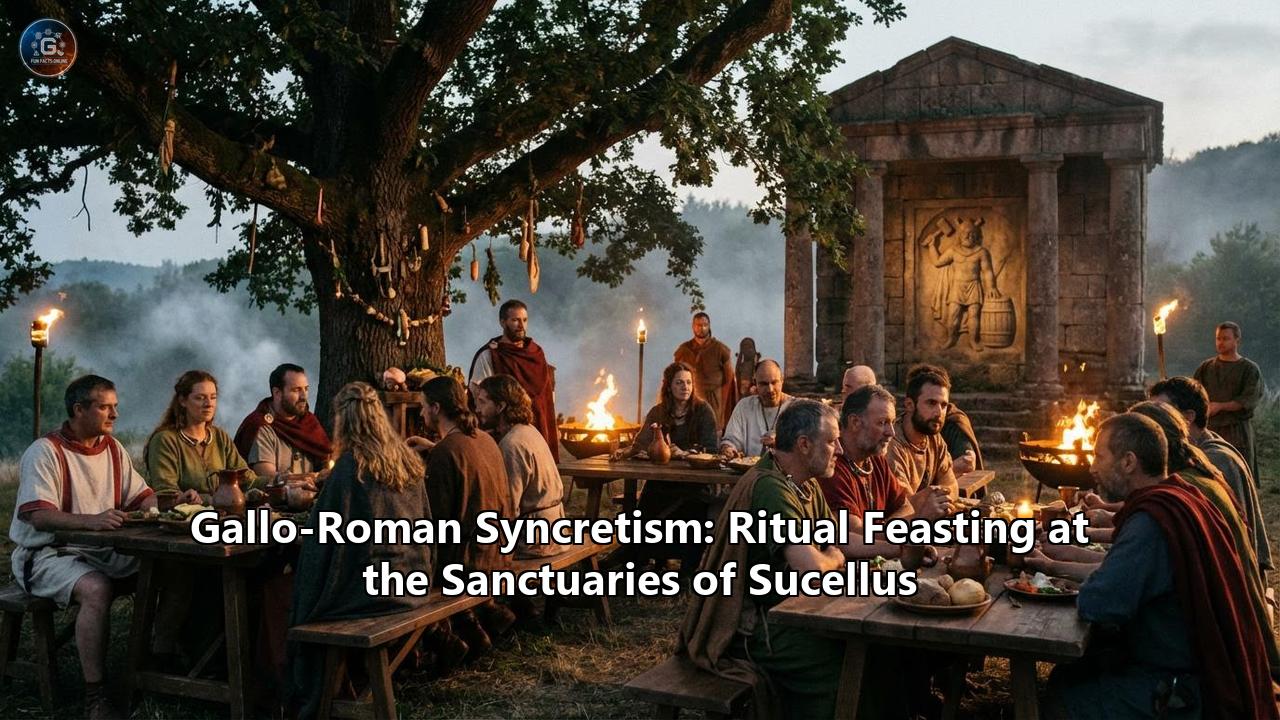
Among the collapsed masonry and shattered pedestals, these late adherents constructed makeshift hearths directly upon the debris. Around these humble fires, archaeologists discovered the familiar markers of the cult: animal bones, scattered coins, and the fragments of drinking vessels. In the twilight of the ancient world, as their gods were being driven into the shadows by new theological orders, the people of Burgundy continued to gather in the ruins of Sucellus’s temple. They shared final ceremonial meals, pouring out wine and breaking bread in the damp chill of the ruined sanctuary, clinging to the communal rituals that had defined their ancestors for centuries.
The Enduring Echoes of the Strikers' Feast
The story of the Gallo-Roman sanctuary at Mancey is a profound narrative of cultural synthesis, elite pageantry, and unyielding devotion. It demonstrates that syncretism was never just a top-down imperial policy; it was a deeply emotional and communal reality. By merging the Celtic reverence for nature and agriculture with Roman architectural and ritual sophistication, the worshippers of Sucellus created a religious tradition uniquely their own.
The tens of thousands of banqueting remnants left upon the floors of Temple M3 serve as a powerful reminder of what religion meant in the ancient world. It was not a solitary, silent pursuit. It was loud, colorful, and intensely physical. It smelled of roasting pork and burning incense; it sounded like the clatter of fine glass and the murmur of political maneuvering; it looked like the vibrantly painted face of a mallet-wielding god illuminated by the flickering light of a hearth.
As modern archaeology continues to peel back the layers of the forest floor, deities like Sucellus are brought back into the light, not just as mythological curiosities, but as the focal points of vibrant, living communities. The ritual feasts held in his name transcended mere sustenance. They were the very glue of Gallo-Roman society—a mechanism through which humans sought to tame the wilderness, understand the divine, and, ultimately, connect with one another in the shadow of eternity.
Reference:
- http://www.deomercurio.be/en/syncretismus.html
- https://arkeonews.net/elite-ritual-banquets-and-two-temples-archaeologists-uncover-a-vast-gallo-roman-sanctuary-in-burgundy/
- https://en.wikipedia.org/wiki/Sucellus
- https://arkeonews.net/first-ever-painted-depiction-of-celtic-god-sucellus-discovered-at-gallo-roman-sanctuary/
- https://today.uconn.edu/2017/12/archaeological-dig-provides-clues-feasting-became-important-ritual/
- https://www.thearchaeologist.org/blog/the-role-of-feasting-in-ancient-rituals
- https://needtoknow.co.uk/2026/03/17/real-life-asterix-the-gaul-site-that-hosted-rituals-for-nearly-500-years-uncovered/
- https://greekreporter.com/2026/03/17/painted-altar-celtic-god-sucellus-roman-sanctuary-france/
- https://www.labrujulaverde.com/en/2026/03/a-large-gallo-roman-sanctuary-discovered-in-burgundy-a-ritual-complex-with-two-temples-and-banquets-reserved-for-a-local-elite-for-nearly-five-centuries/