
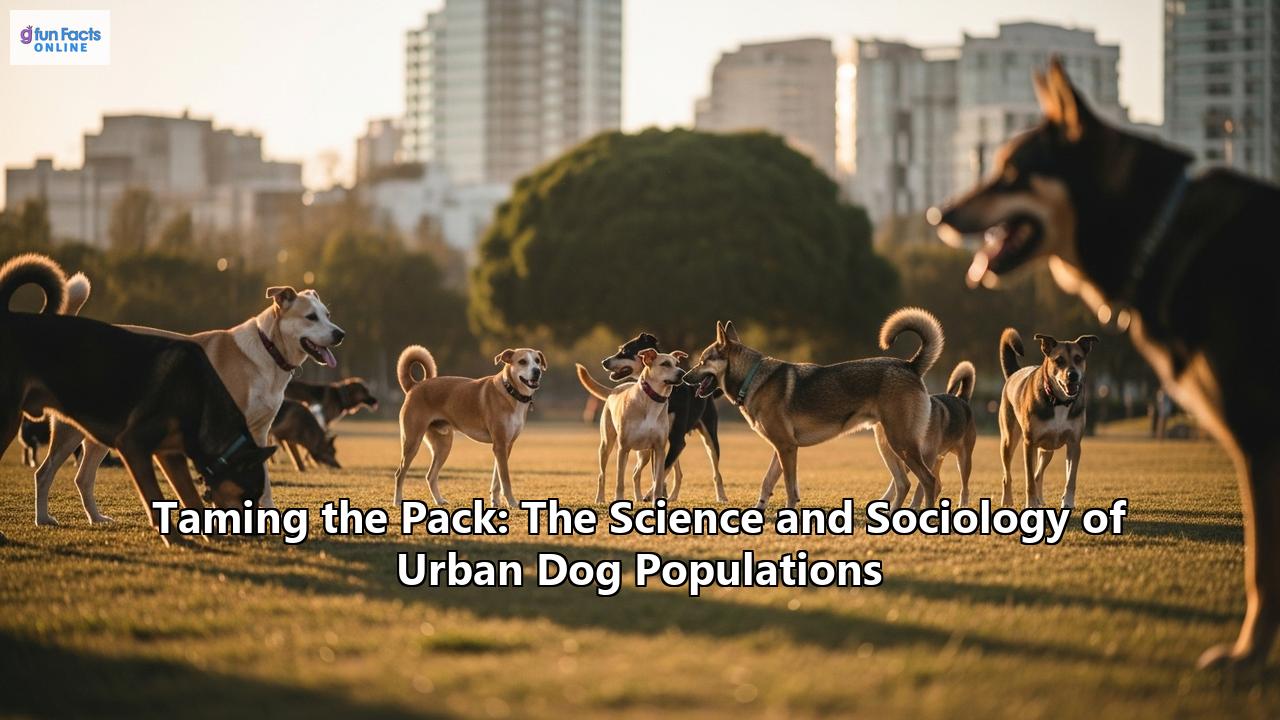
From Stray to Stay: The Intricate World of Urban Dog Populations
The silhouette of a dog trotting alongside a person is an image as old as human civilization itself. But transfer that image to the bustling, concrete canyons of a modern metropolis, and the picture becomes infinitely more complex. Today, dogs are a significant feature of urban life, their presence woven into the very fabric of our cities. They are cherished family members, jogging partners, and the furry faces that greet us in pet-friendly cafes. This ever-growing population of city canines presents a fascinating intersection of biology, sociology, and public policy. The story of urban dogs is not just about pets; it's a narrative that reflects our own societal shifts, our evolving relationship with nature, and the challenges of creating harmonious, multispecies communities.
The Urban Dog Through Time: A Historical Perspective
The presence of dogs in human settlements is not a new phenomenon; in fact, it predates the agricultural revolution. Archaeological evidence, such as the 12,000-year-old burial of a human with a puppy in what is now Israel, points to a long and intertwined history. As humans transitioned from nomadic lifestyles to settled communities and eventually to sprawling cities, dogs evolved alongside them.
In the 19th century, cities were teeming with animals, including dogs that served various purposes. Some were working dogs, like rat terriers that controlled vermin in factories and bullmastiffs that guarded warehouses. Others were strays, roaming in packs and scavenging for food in a world with minimal sanitation. The 19th-century New York City, for instance, saw dogs as both a nuisance and a public health concern, leading to the establishment of dog pounds and even the grim practice of paying bounties for their capture and disposal.
The Victorian era also saw the rise of the middle class and with it, the emergence of dogs as status symbols. Breeds like the Cavalier King Charles Spaniel became fashionable among the wealthy, signifying refinement and a shift from a purely utilitarian relationship to one of companionship. This period also marked the beginning of organized animal welfare, with the establishment of organizations like the ASPCA that fought against the cruel treatment of animals.
The 20th and 21st centuries have witnessed a profound transformation in the role of urban dogs. They have moved from the barn and the factory to the living room and the foot of the bed, becoming integral members of the family. This "third wave of domestication," as some evolutionary anthropologists call it, reflects a rapid adaptation to modern urban life. The shrinking of natural spaces has pushed dogs to adapt to smaller living quarters like apartments, a change that has happened in a remarkably short evolutionary timeframe.
The Science of the City Dog: Behavior and Psychology Under Pressure
Life in the city is a world away from the environments in which dogs evolved. The constant barrage of stimuli, the limited space, and the altered social dynamics all have a profound impact on a dog's psyche and behavior.
The Anxious Urbanite: Stress and Fear in the Concrete Jungle
Research has shown that urban living can be a significant source of stress for dogs. A study from the University of Helsinki, which analyzed data from nearly 6,000 dogs, found a surprising link between urban environments and social fearfulness. Dogs raised in cities were observed to be more fearful than their rural counterparts. The study revealed that dogs in the most urbanized settings had fearfulness scores approximately 45% higher when encountering strangers and a staggering 70% higher in their fear of other dogs compared to dogs in rural areas.
This heightened anxiety can be attributed to several factors. The urban environment is a sensory overload of sights, sounds, and smells that can overwhelm a dog's highly developed senses. Traffic noise, for example, can disrupt sleep and lead to a spike in the stress hormone cortisol, a phenomenon also observed in humans. The confined living spaces in many cities can also lead to frustration and behavioral problems like excessive barking or destructive tendencies.
Socialization: A Critical Window in the Urban Environment
The importance of early socialization for puppies is a well-established principle in animal behavior. However, this is even more critical for dogs destined for a life in the city. The close quarters of urban living mean that unwanted behaviors are more evident and can quickly become problematic. A lack of exposure to the myriad stimuli of the city during the critical developmental window can lead to anxiety and aggression later in life.
Paradoxically, while cities offer numerous opportunities for socialization, they also present risks. Crowded streets and busy dog parks can be overwhelming for some dogs, leading to negative encounters that can exacerbate fear and reactivity. For many dogs, especially former strays, the transition from a life of freedom to the confines of a home in a bustling city can be incredibly stressful.
The Sociology of the Urban Canine: More Than Just a Pet
The proliferation of dogs in cities is not just an animal welfare issue; it's a sociological phenomenon with far-reaching implications for human communities.
The Canine Social Catalyst: Dogs as Community Builders
One of the most significant roles of dogs in urban settings is their ability to act as social catalysts. Dog owners are more likely to interact with their neighbors, whether during daily walks or at the local dog park. These seemingly small interactions can build trust and a sense of community, transforming anonymous city dwellers into familiar faces. Studies have shown that dog ownership is associated with higher levels of social capital, the networks of relationships among people who live and work in a particular society, enabling that society to function effectively.
Dog parks, in particular, serve as important social hubs. They are the new town squares, where people from different backgrounds can connect and form friendships. This "bridging social capital" is crucial for fostering tolerance and understanding in diverse urban populations.
Who Owns a City Dog? The Demographics of Urban Pet Ownership
Socio-economic factors play a significant role in pet ownership in urban areas. Studies have shown that people with higher incomes and those living in less densely populated areas of a city are more likely to own pets. This suggests that the financial and spatial resources required for responsible pet ownership can be a barrier for some.
The reasons for getting a dog also vary across different demographics. For some, it's about companionship and emotional support, while for others, it's a way to encourage a more active lifestyle. Research also indicates that the human-animal bond can be particularly strong for individuals who are single, divorced, widowed, or childless, highlighting the important role dogs play in mitigating loneliness in the often-anonymous landscape of a city.
The Challenges of a Canine Metropolis
The rise of urban dog populations is not without its challenges. From overpopulation and public health concerns to animal welfare issues, cities around the world are grappling with the complexities of managing their four-legged residents.
The Stray and the Unwanted: Overpopulation and Shelters
One of the most pressing challenges is the overpopulation of stray and free-ranging dogs, particularly in developing countries. These dogs often face harsh living conditions, including a lack of food, shelter, and medical care. Overpopulation can also lead to conflicts with humans, including dog bites and the spread of zoonotic diseases like rabies.
Even in developed countries, animal shelters are often overwhelmed with unwanted pets. Behavioral problems, often stemming from a lack of socialization or the stresses of urban life, are a common reason for surrender.
Public Health and Safety
The presence of a large number of dogs in a densely populated area inevitably raises public health and safety concerns. Dog bites are a significant issue, and the transmission of diseases like rabies remains a serious threat in many parts of the world. Improper waste disposal also poses a public health risk and can lead to environmental contamination.
The Impact of Urban Design on Animal Welfare
The very design of our cities can pose a threat to animal welfare. The "urban heat island" effect, where concrete and asphalt absorb and radiate heat, can be dangerous for dogs, increasing the risk of heatstroke. The lack of green spaces can limit a dog's ability to exercise and engage in natural behaviors, impacting both their physical and mental health. Furthermore, urban development and construction can displace stray animals and destroy their habitats.
Taming the Pack: Strategies for Humane and Effective Management
In response to these challenges, cities around the world are developing and implementing a range of management strategies aimed at creating a safe and humane environment for both humans and dogs.
From Culling to Compassion: The Evolution of Population Control
Historically, the primary method for controlling stray dog populations was culling. However, this approach is not only inhumane but also largely ineffective in the long term. Today, there is a growing consensus that humane and sustainable methods are the only way forward.
One of the most widely adopted strategies is Trap-Neuter-Return (TNR) or Catch-Neuter-Vaccinate-Release (CNVR). These programs involve humanely trapping stray dogs, sterilizing them to prevent further breeding, vaccinating them against diseases like rabies, and then returning them to their original territory. The "Lucknow Model" in India is a notable example of a successful CNVR program that has been recognized for its effectiveness in reducing the stray dog birth rate.
The Role of Shelters and Adoption
Animal shelters and rehoming programs play a crucial role in managing urban dog populations. By providing a safe haven for stray and surrendered animals, they offer a second chance at a loving home. Adoption programs, like Singapore's Project ADORE, are helping to destigmatize stray dogs and encourage people to adopt rather than shop for a pet.
The Power of Education and Responsible Ownership
Ultimately, the most effective long-term solution lies in promoting responsible pet ownership. Public education campaigns can raise awareness about the importance of spaying and neutering, proper training and socialization, and the lifelong commitment that comes with owning a pet. Educating children about animal welfare and responsible pet ownership can foster a more compassionate and informed future generation of pet owners.
Designing for Dogs: The Pet-Friendly City
There is a growing recognition that urban planning and design must take into account the needs of pets. This includes creating more dog-friendly public spaces, such as well-maintained dog parks and green corridors that allow for safe movement. Pet-friendly housing policies are also essential, as restrictions on pet ownership in rental properties can be a major barrier for many people. Cities that embrace pet-friendly design are not only improving the lives of their animal residents but are also making themselves more attractive to a growing demographic of pet owners.
A Future of Coexistence
The story of dogs in our cities is a dynamic and evolving one. As our urban centers continue to grow and our relationship with animals continues to change, the need for thoughtful and compassionate management of urban dog populations will only become more critical. By combining scientific understanding with sociological insights and implementing humane and effective management strategies, we can create cities where both humans and their canine companions can not only coexist but thrive. The well-being of our urban dogs is, in many ways, a reflection of our own humanity and our ability to create truly inclusive and livable communities for all.
Reference:
- https://mymountainhound.com/blogs/news/the-evolution-of-the-dog-human-relationship
- https://www.archdaily.com/1029582/designing-for-companionship-reimagining-urban-life-with-pets
- https://www.petfoodindustry.com/regions/article/15666447/6-ways-urbanization-influences-global-pet-food-industry
- https://www.theirhealingpaws.com/articles/exploring-pets-urban-communities-mental-health/
- https://www.tandfonline.com/doi/abs/10.1080/07352166.2020.1779006
- https://www.discovermagazine.com/dogs-have-co-evolved-with-humans-like-no-other-species-42978
- https://publ.iss.it/ITA/Items/GetPDF?uuid=60ef1630-c22d-48a8-b80b-f5270938e355
- https://worldmindhub.tistory.com/3280
- https://bramlettpartners.com/blog/6-reasons-you-should-live-in-a-pet-friendly-city
- https://noticiasambientales.com/animals/how-do-dogs-evolve-to-adapt-to-urban-life/
- https://biopetex.com/stress-in-the-city/
- https://newatlas.com/biology/study-urban-dogs-more-fearful-rural-dogs/
- https://www.psychologytoday.com/ca/blog/canine-corner/202004/are-city-dogs-more-anxious-country-dogs
- https://www.researchgate.net/publication/255648499_The_Influence_of_Urbanization_on_the_Behaviour_of_Dogs_in_the_Czech_Republic
- https://www.wagbar.com/urban-dog-ownership-guide-complete-guide-to-city-life-with-dogs
- https://www.happydoggo.com/blog/street-dog-population-management-a-case-study-singapore
- https://www.youtube.com/watch?v=1MSvEoG7iHU
- https://www.dogtrainermanhattan.com/the-social-paw-sitive-impact-how-owning-a-dog-strengthens-community-and-connections/
- https://www.nadigroup.com/insights/five-reasons-dog-parks-build-brighter-communities
- https://everydaytourist.ca/city-planning-101/2013/9/8/dogs-as-a-catalyst-for-healthier-cities
- https://pubmed.ncbi.nlm.nih.gov/38350165/
- https://www.researchgate.net/publication/377937605_Pet_ownership_a_sign_of_superior_socioeconomic_position_Evidences_from_six_cities_in_China
- https://www.tandfonline.com/doi/full/10.1080/08927936.2024.2384211
- https://pmc.ncbi.nlm.nih.gov/articles/PMC10930686/
- https://www.civicdesigncenter.org/all-projects-blog/9uqhp4y8we2evrg35bek6il8a24y8n
- https://www.bettercitiesforpets.com/resource/pets-in-businesses/
- https://www.gatewaytohell.net/reinstatement-and-animal-welfare-ensuring-safe-spaces-for-stray-animals-in-urban-development
- https://www.orfonline.org/expert-speak/of-street-dogs-and-city-pigeons-law-sentiment-and-public-health
- https://www.hindustantimes.com/cities/lucknow-news/lucknow-model-for-dog-population-control-to-be-replicated-across-up-101755885988210.html
- https://dogbehavior.it/dogbehavior/article/view/192
- https://therightanglejournal.com/animal-architecture/blog-post-title-three-g5b8h
- https://www.petfriendlyplanning.com/blog-1/what-role-do-pets-play-in-urban-planning
- https://mahdiseno.com/what-can-a-dog-teach-urban-design/