
For decades, the trajectory of technological advancement has been governed by a singular philosophy: extracting raw, inanimate materials from the earth and forging them into rigid, unyielding machines. From the silicon wafers that power our smartphones to the metallic probes used to test the safety of our drinking water, our tools have always been fundamentally disconnected from the biological world they are designed to monitor. But what if we could build machines not out of dead matter, but out of living, breathing, and self-replicating organisms? What if a sensor could heal itself, draw its own power from its environment, and adapt to chemical threats with the same evolutionary elegance as a living cell?
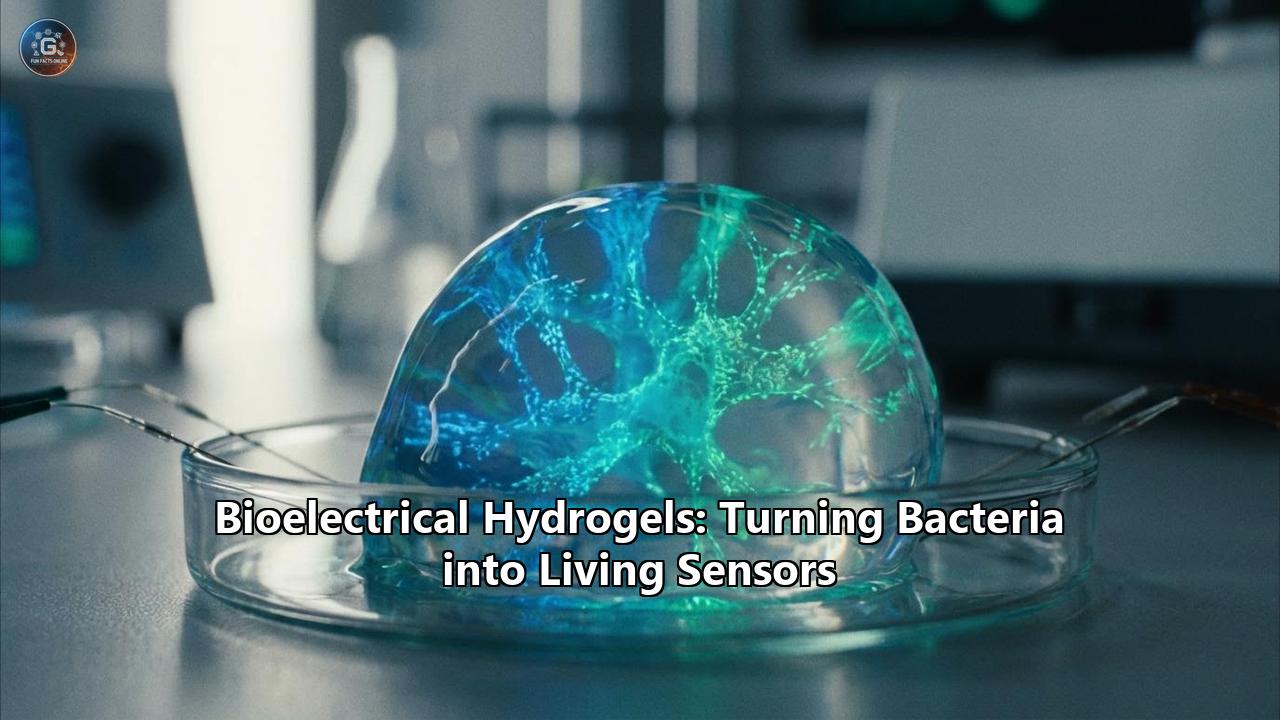
Welcome to the frontier of Engineered Living Materials (ELMs) and bioelectronics. At the intersection of synthetic biology, materials science, and electrical engineering, researchers have unlocked a revolutionary paradigm: bioelectrical hydrogels. By encapsulating genetically reprogrammed, electricity-producing bacteria within highly conductive, water-rich polymer networks, scientists are quite literally turning microbes into living sensors. These hybrid devices possess the analytical precision of modern electronics combined with the dynamic, self-sustaining features of biological life.
This deep dive explores the profound science, the material breakthroughs, and the world-altering applications of bioelectrical hydrogels—a technology that promises to redefine environmental monitoring, wearable medical diagnostics, and the very definition of what we consider a "machine."
The Biological Engine: Electrifying the Microscopic World
To understand how a living sensor works, we must first look at the biological engine powering it. Nature is teeming with microorganisms that possess extraordinary sensory capabilities. Bacteria have spent billions of years evolving intricate molecular pathways to detect nutrients, avoid toxins, and adapt to extreme environments. However, the traditional challenge in leveraging these bacterial "senses" for human technology has been one of communication: how do we get a microbe to tell a computer what it has found?
The answer lies in a phenomenon known as Extracellular Electron Transfer (EET). Certain species of bacteria, known as exoelectrogens or electroactive bacteria (such as Geobacter sulfurreducens and Shewanella oneidensis), possess the natural ability to generate electrons during their metabolic processes and transfer them outside of their cell bodies. In nature, these bacteria typically use solid minerals, like iron oxides in the soil, as terminal electron acceptors. They literally "breathe" rocks, exhaling electricity in the process.
While naturally electroactive bacteria are fascinating, the true breakthrough in living sensors has come from the realm of synthetic biology—specifically, genetically engineering widely understood microbes, such as Escherichia coli (E. coli), to become electroactive upon encountering specific targets.
A landmark achievement in this space comes from researchers at Rice University. A team of synthetic biologists successfully engineered E. coli to act as an electrical switch. They accomplished this by designing an extraordinarily complex, eight-component synthetic electron transport chain within the bacteria. To picture how this works, imagine a microscopic electrical wire inside the cell that is intentionally severed in the middle. Under normal conditions, no current flows. However, when the engineered bacteria encounter a specific target molecule—such as a toxic environmental contaminant—the molecule acts as a biological bridge, reconnecting the wire and electrifying the entire pathway.
Within minutes of detecting the target, the bacteria begin releasing a measurable electrical current to the outside world. By swapping out a single protein in this genetic pathway, scientists can customize the bacteria to detect an almost infinite variety of chemical invaders, translating biological recognition directly into an electrical language that our devices can read.
The Perfect Matrix: Why Hydrogels?
If the engineered bacteria are the processors of this living machine, they still require a chassis—a physical housing that keeps them alive, protects them from the harsh outside world, and efficiently captures the electricity they produce. Enter the hydrogel.
Hydrogels are three-dimensional polymer networks that are highly infiltrated with water, often containing more than 70% to 90% liquid. If you wear soft contact lenses or have ever eaten Jell-O, you are intimately familiar with hydrogels. Because the human body is largely composed of biological hydrogels (like muscle tissue, cartilage, and the extracellular matrix), synthetic hydrogels are remarkably biocompatible. They act simultaneously like solids, providing structural integrity, and like liquids, allowing for the rapid diffusion of molecules.
For a living sensor, a hydrogel is the ultimate synthetic habitat. The passive hydrogel matrix allows vital resources—like water, nutrients, and the chemical targets the sensor is designed to detect—to diffuse freely into the material and reach the embedded bacteria. Crucially, the hydrogel network is tight enough to prevent the genetically engineered bacteria from leaking out into the environment, effectively solving one of the most pressing bioethical and ecological concerns of deploying synthetic biology in the wild.
Pioneering work from research groups like the Zhao Lab at MIT has birthed the concept of "Hydrogel Machines". Historically, hydrogels were considered too weak and brittle to be used in durable technological applications. However, modern engineering has led to the creation of tough, fatigue-resistant hydrogels that can stretch to multiple times their original length, resist tearing, and maintain their structural integrity even in highly dynamic environments, such as the human gastrointestinal tract or turbulent river waters. By utilizing these robust, water-rich matrices, scientists can bridge the vast mechanical gap between soft, squishy biological cells and hard, rigid electronic electrodes.
Making it Conductive: The Alchemy of Bioelectronics
There is, however, one glaring problem: traditional hydrogels, while excellent at transporting ions and water, are terrible conductors of electricity. If our engineered bacteria are spitting out electrons in response to an environmental toxin, those electrons will simply pool around the cell or be lost if the surrounding hydrogel matrix cannot shuttle them to an external electrode.
To solve this, materials scientists have engaged in a sophisticated form of modern alchemy, transforming inert, watery gels into highly conductive bioelectronic bridges. They do this by embedding conductive fillers into the hydrogel matrix, creating Continuous Polymer Hydrogels (CPHs) or composite conductive hydrogels.
The strategies to achieve this are incredibly diverse:
- Carbon Nanotubes (CNTs) and Graphene: By uniformly dispersing carbon nanotubes within a polyelectrolyte hydrogel (such as alginate), researchers create microscopic conductive highways. Studies have shown that bacteria like Geobacter will readily colonize the walls of these conductive hydrogel structures, using the CNTs as an anode to deposit their electrons. However, because CNTs tend to clump together in water, researchers often use surfactant-assisted dispersion or incorporate other two-dimensional nanomaterials.
- MXenes: A recent darling of the materials science world, MXenes are two-dimensional inorganic compounds made of transition metal carbides, nitrides, or carbonitrides. They possess superior electrical conductivity, exceptional hydrophilicity (water-loving nature), and a massive surface area. Integrating MXenes into hydrogels creates highly sensitive, stretchable materials capable of capturing the faintest electrical whispers from embedded microbes.
- Metallic Nanoparticles: Silver (Ag) and Copper (Cu) nanoparticles are frequently used to enhance conductivity. Interestingly, these metals also impart secondary properties. For example, Copper nanoparticles (CuNPs) provide robust antimicrobial properties, which is crucial when designing sensors meant for the human body, ensuring that pathogenic, unwanted bacteria do not hijack the sensor's real estate.
- Conductive Polymers: Polyaniline (PANI), polypyrrole (PPy), and PEDOT:PSS are polymers that inherently conduct electricity. By hybridizing these with hydrogels like polyvinyl alcohol (PVA), scientists create a three-dimensional, soft matrix that is uniformly conductive, acting as a giant, squishy sponge for electrons.
When engineered electroactive bacteria are suspended in these conductive hydrogels, the result is a true cyborg material. The microbes sense the environment and generate an electrical charge; the conductive nanomaterials instantly catch these electrons and funnel them through the hydrogel matrix directly into a digital readout.
Real-World Marvels: The "Lollipop" and the "Microbe-on-a-Chip"
The leap from theoretical lab bench science to practical, deployable technology is already underway, yielding some truly remarkable devices.
The Rice University "Lollipop" Sensor
One of the most vivid examples of this technology in action is the bioelectronic sensor developed by researchers at Rice University. The team set out to solve a major environmental problem: if a chemical spill occurs in a river, standard testing methods often involve collecting water samples, driving them to a lab, and waiting days for results. By the time the contamination is confirmed, the ecological damage is done.
To create a real-time early warning system, the researchers engineered E. coli to detect thiosulfate, a dichlorination agent heavily used in water treatment facilities. An accidental over-release of thiosulfate into natural waterways can trigger devastating algae blooms that choke out aquatic life.
The team encapsulated their synthetic E. coli inside a hydrogel made of agarose (a derivative of red seaweed). To ensure the sensor could be easily deployed and retrieved, they designed the hydrogel in the shape of a "lollipop," with a stick containing the electrode extending into the gel matrix. The agarose lollipop allowed water and contaminants to easily diffuse inside while keeping the engineered bacteria safely trapped, drastically reducing background electrical "noise" and preventing environmental contamination.
To boost the signal, the researchers incorporated custom-synthesized conductive nanoparticles directly into the lollipop. The results were staggering. The living sensor could detect thiosulfate at concentrations of less than 0.25 millimoles per liter—a level far lower than what is toxic to fish. In a secondary experiment, the team reprogrammed the bacteria to detect a dangerous endocrine disruptor. The bioelectrical hydrogel sensor detected the chemical up to 10 times faster than the previous state-of-the-art synthetic devices.
These encapsulated living sensors are entirely self-contained miniature electrical switches. As the researchers noted, "You put the probes into the water and measure the current. It's that simple."
IBM's "Microbe-on-a-Chip"
While environmental monitoring represents a massive use case, the medical and diagnostic potential of ELMs is equally breathtaking. Tech giant IBM has been developing a "microbe-on-a-chip" technology platform that marries the biological sensing power of ELMs with the immense computational power of modern semiconductors and Artificial Intelligence.
In IBM's approach, engineered bacteria are housed within specialized, microfluidic hydrogel chambers directly atop an advanced semiconductor. When these living cells interact with specific disease biomarkers in a fluid sample, they generate an electrical signal. Because the biological material is intimately bound to the semiconductor via the conductive hydrogel, the electrical output is captured instantaneously, entirely bypassing the need for bulky and expensive optical detection equipment (like fluorescence microscopes).
What makes the "microbe-on-a-chip" truly revolutionary is the integration of machine learning. IBM employs AI algorithms to continuously analyze the raw, real-time electrical data streaming from the bacterial sensors. The AI sifts through the biological "noise," dramatically improving detection accuracy and nearly eliminating false positives. By arranging arrays of differently programmed bacteria on a single chip, this system can perform multiplexed sensing—detecting a dozen different disease markers simultaneously from a single drop of fluid.
Epidermal Wearables and Smart Wound Healing
The application of bioelectrical hydrogels extends far beyond fluid analysis into the realm of wearable technology and regenerative medicine. Because hydrogels can be formulated to mimic the physical properties of human skin—being flexible, stretchable, and adhesive—they make perfect "epidermal sensors".
When attached to the human body, conductive hydrogel sensors can track physical movements (like joint bending or breathing) by measuring changes in electrical resistance as the material stretches. But when you introduce engineered living materials into these wearable gels, they transition from merely tracking physical motion to dynamically monitoring biochemistry. Wearable ELM sensors are being developed to continuously monitor biomarkers in human sweat or interstitial fluid, searching for signs of physiological stress, changing glucose levels, or specific metabolites.
Furthermore, these materials are revolutionizing chronic wound care, particularly for diabetic patients. Diabetic ulcers are notoriously difficult to heal, often suffering from poor blood circulation, bacterial infection, and cellular stagnation. Researchers have engineered intrinsically antibacterial, conductive hydrogels specifically for wound dressing.
In a recent breakthrough, scientists designed a bacterial cellulose hydrogel functionalized with Copper nanoparticles (CuNPs) and MXene. This hydrogel boasts an incredible 1120% tensile strain capability and adheres perfectly to living tissue. The CuNPs provide greater than 99% antibacterial efficacy, protecting the open wound from pathogens. But the true magic lies in its conductivity, which perfectly matches that of human skin (41.25 ms/m).
When applied to a diabetic wound, this conductive hydrogel facilitates both endogenous (internal cellular) and exogenous (externally applied) electrical stimulation (ES). The hydrogel acts as a bioelectronic conduit, conducting micro-currents across the entire surface of the wound. This electrical stimulation directly promotes cell migration, collagen deposition, and angiogenesis (the formation of new blood vessels), fundamentally accelerating the skin tissue remodeling process. In clinical trials on diabetic models, these conductive living dressings reduced chronic wound areas to just 24.3% of their original size within 7 days—a miraculous acceleration of the body's natural healing timeline.
Self-Sustaining and Self-Healing: The Ultimate Edge
One of the greatest limitations of conventional silicon-based IoT (Internet of Things) sensors is power. A chemical sensor deployed in a remote river or an ingestible sensor swallowed to monitor the gastrointestinal tract eventually runs out of battery. Replacing batteries in thousands of distributed environmental sensors is logistically impossible.
Bioelectrical hydrogels solve this by scavenging their own energy. Because the electroactive microbes embedded within the gel naturally produce electricity as a byproduct of their metabolic consumption of organic matter, these living sensors can literally power themselves. As long as the hydrogel matrix allows trace nutrients from the surrounding environment (such as wastewater, river sludge, or the human gut) to diffuse into the gel, the bacteria will continue to eat, survive, and generate a baseline electrical current. When the target contaminant hits, the signal spikes. This creates the possibility for autonomous, zero-maintenance "smart" devices that can monitor water security or industrial farm runoff indefinitely.
Moreover, because these materials are built on a living foundation, they exhibit a property entirely alien to standard electronics: self-healing. Traditional materials degrade over time; if a plastic sensor cracks, it is permanently broken. However, living biological systems, such as biofilms, naturally regenerate. By engineering the microbes to continually secrete biological polymers (like bacterial cellulose), the hydrogel matrix can actively repair microscopic tears and structural damage.
Researchers are even exploring ways to use extracellular carbonic anhydrase secreted by photosynthetic microbes within a hydrogel matrix. This enzyme pulls calcium and carbon from the environment to create calcium carbonate, effectively allowing the hydrogel to biomineralize and reinforce its own structure when subjected to mechanical stress, much like how human bones increase their density in response to weight-lifting. This results in highly durable bioelectronics capable of surviving in turbulent, aggressive environments for years.
Navigating the Challenges: Bioethics, Scaling, and Viability
Despite the euphoric promise of bioelectrical hydrogels, the road to mass commercialization is paved with immense biological and regulatory challenges.
- Cellular Longevity and Viability: A sensor is only as good as the living cells inside it. While hydrogels provide an excellent matrix, keeping bacteria alive, metabolically active, and genetically stable over long periods in extreme temperatures or highly acidic environments remains difficult. If the bacteria die, the sensor goes blind. Advancements in freeze-drying (lyophilization) techniques and the incorporation of robust extremophile bacteria are currently being researched to extend the shelf-life of these devices.
- The Signal-to-Noise Ratio: Real-world environments are incredibly messy. A river is filled with millions of naturally occurring chemicals, changing pH levels, and competing wild bacteria. Ensuring that the bioelectronic signal produced by the engineered microbes can pierce through the environmental "noise" without generating false positives is a complex challenge. IBM's application of AI and machine learning to filter these electrical signals is a vital step forward, but requires vast amounts of training data.
- Biocontainment and Bioethics: The most significant hurdle is regulatory. ELMs inherently rely on Genetically Modified Organisms (GMOs). Releasing billions of genetically reprogrammed bacteria into the ocean, the water supply, or the human body carries the theoretical risk of genetic contamination or unintended ecological consequences. While the physical encapsulation provided by tough hydrogel matrices (like the Rice University agarose lollipop) prevents physical leakage, regulatory bodies require fail-safes. Synthetic biologists are implementing "kill switches"—genetic codes built into the microbes that cause them to self-destruct if they escape the hydrogel or if a specific nutrient is removed—to ensure absolute biocontainment.
The Future: Smart Cities, Cyborg Materials, and Beyond
As we look toward the remainder of the decade, the convergence of bioelectronics and hydrogel machines points toward a future that borders on science fiction.
Imagine a smart city where the water infrastructure is lined not with rigid, dead plastics, but with bioelectrical hydrogel coatings. These living pipes continuously monitor themselves, instantly alerting grid operators to the presence of lead, viral pathogens (much like the successful strategy of testing wastewater for SARS-CoV-2), or chemical spills, all powered by the ambient energy of the flowing waste.
In healthcare, the development of ingestible hydrogel devices will offer an unprecedented window into the human body. A patient might swallow a small hydrogel capsule populated by engineered living sensors. As it travels through the digestive tract, it continuously measures the gut microbiome, detects inflammatory biomarkers associated with Crohn's disease or colon cancer, and transmits real-time electrical data to a wearable patch on the patient's abdomen, all before safely dissolving.
At an industrial level, these materials could revolutionize manufacturing and bioremediation. We could deploy massive sheets of self-healing, electroactive hydrogels across polluted lakes. The embedded microbes would simultaneously break down toxic oil spills or microplastics while generating electricity to power nearby cleanup infrastructure, turning an ecological disaster into a localized power plant.
The Dawn of Living Technology
The development of bioelectrical hydrogels represents one of the most profound shifts in the history of human engineering. We are no longer limited to the static, unyielding properties of silicon and steel. By learning to speak the electrical language of bacteria and providing them with a highly conductive, biocompatible hydrogel home, we are blurring the line between life and machine.
These living sensors—capable of autonomously detecting toxins in a matter of minutes, accelerating the healing of human tissue, and drawing their power directly from the world around them—prove that the technology of the future will not merely be built. It will be grown.
Reference:
- https://dspace.mit.edu/bitstream/handle/1721.1/143221/liu-xinyliu-phd-meche-2022-thesis.pdf?sequence=1
- https://www.techbriefs.com/component/content/article/47689-bioelectronic-devices-enable-real-time-sensing
- https://dspace.mit.edu/handle/1721.1/143221
- https://eureka.patsnap.com/report-elms-as-living-sensors-for-detecting-specific-biomarkers
- https://news.rice.edu/news/2022/bacterial-sensors-send-jolt-electricity-when-triggered
- http://zhao.mit.edu/wp-content/uploads/2020/06/125.pdf
- https://www.xinyueliu.net/publications
- https://pubs.acs.org/doi/10.1021/accountsmr.2c00026
- https://www.independent.co.uk/climate-change/news/scientists-rice-university-nature-one-b2216206.html
- https://www.the-microbiologist.com/news/bacteria-can-be-programmed-as-fast-responding-pollution-sensors/332.article