
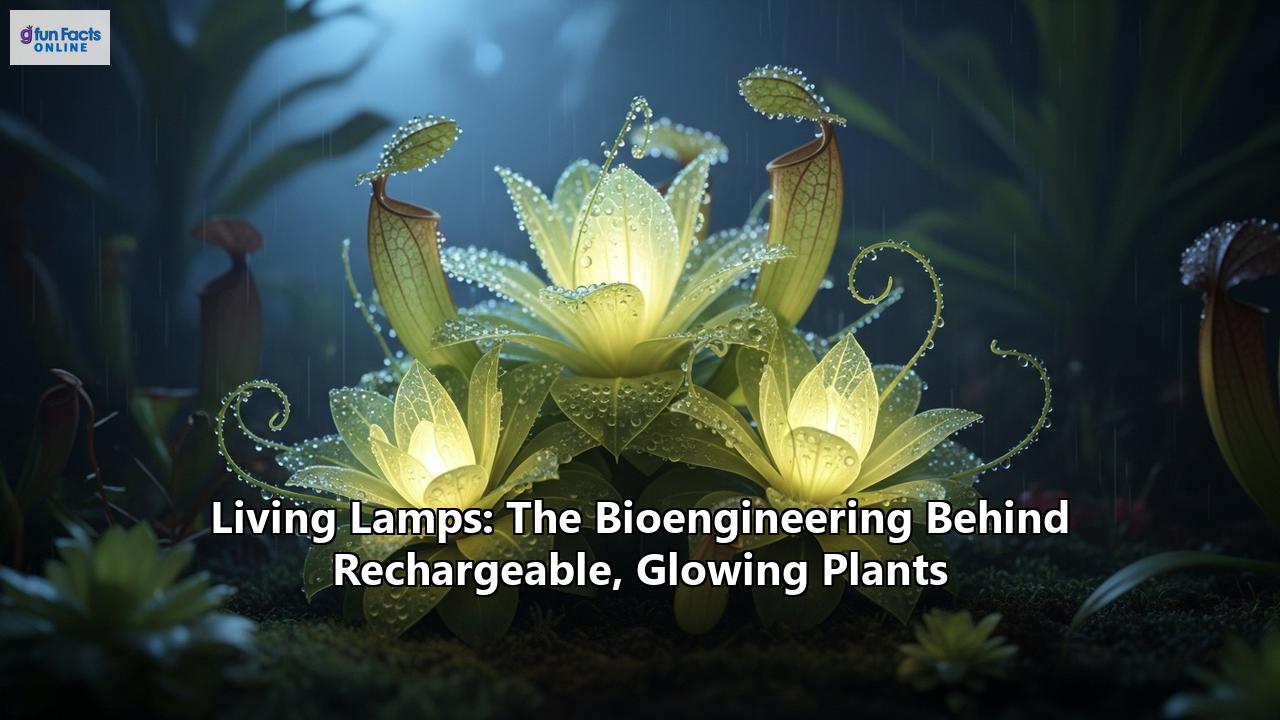
An enchanting glow emanates not from a bulb, but from the delicate petals of a living plant. This is not a scene from a science fiction movie; it is the reality of a burgeoning field of bioengineering that is turning plants into "Living Lamps." Scientists and engineers are at the forefront of a remarkable journey to create rechargeable and self-glowing plants, a development that promises to revolutionize our relationship with light and nature. This exploration delves into the intricate bioengineering behind these luminous flora, from the genetic modifications that allow them to produce their own light to the nanotechnologies that enable them to be recharged like a battery.
The Dawn of an Idea: Harnessing Nature's Light
The concept of a plant that can produce its own light is rooted in a natural phenomenon called bioluminescence. This "living light" is a chemical process that allows various organisms, from the familiar firefly to deep-sea creatures and certain fungi, to emit their own glow. The mechanism is broadly conserved across these diverse life forms: a class of molecules called luciferins are oxidized by enzymes known as luciferases, releasing energy in the form of light.
For decades, scientists have been captivated by the idea of transferring this ability to plants. While no known plants are naturally bioluminescent, the dream of creating them has driven a fascinating quest at the intersection of botany, genetics, and engineering. Early attempts to create these "living lamps" have explored different avenues, each with its own set of breakthroughs and challenges.
The Genetic Revolution: Engineering Plants that Glow from Within
One of the most ambitious approaches to creating living lamps has been through genetic engineering. The goal is to integrate the genetic blueprint for bioluminescence directly into a plant's DNA, enabling it to produce its own light autonomously.
Early Forays with Firefly and Bacterial Genes
The journey to create a self-sustaining glowing plant began decades ago. One of the pioneering efforts involved using the luciferase gene from the North American firefly, Photinus pyralis. In the 1980s, scientists successfully created the first glowing plant by inserting the gene for the firefly enzyme into a plant. However, a significant limitation was that the plant needed to be supplied with the corresponding luciferin substrate to glow. While a groundbreaking achievement, this method did not result in a truly self-sustaining luminescent plant.
Other early approaches utilized genes from bioluminescent bacteria. While this method did lead to plants that could produce their own light without an external substrate, the glow was often very faint, and the process could be toxic to the plants. These initial hurdles highlighted the complexity of transplanting a complete and efficient bioluminescence pathway into a plant's metabolism.
A Fungal Breakthrough: The "Firefly Petunia"
A major leap forward in the field came from an unexpected source: glowing mushrooms. Researchers discovered a fungal bioluminescence pathway in the mushroom Neonothopanus nambi that was surprisingly compatible with plant metabolism. This pathway involves four genes that work together to convert caffeic acid, a molecule commonly found in all plants, into a luciferin and then recycle it.
This discovery paved the way for the creation of plants that could glow continuously and much more brightly than previous attempts. The startup company Light Bio, in collaboration with synthetic biology specialist Ginkgo Bioworks, has been at the forefront of commercializing this technology. Their "Firefly Petunia" is a genetically engineered petunia that contains the genes from these bioluminescent mushrooms.
This innovation represents a significant milestone because the plants produce their own light without the need for any external chemicals. The glow emanates from the plant itself as a natural part of its life cycle. The brightness of the glow can even change, often being most prominent in the flower buds. The U.S. Department of Agriculture (USDA) has determined that these genetically engineered petunias can be safely grown and bred in the United States, making them one of the first commercially available bioluminescent houseplants.
The work with the fungal bioluminescence pathway has been hailed as a transformative step. Scientists have been able to enhance the brightness of these plants by up to 100 times by optimizing the inserted genes. This ongoing research suggests that in the future, we could see a wider variety of glowing plants with different colors and even greater luminosity.
The Nanobionic Approach: Creating Rechargeable "Living Lamps"
In parallel with genetic engineering, a different and equally exciting approach has emerged from the field of plant nanobionics. This area of research focuses on augmenting plants with novel functions by embedding them with nanoparticles. Instead of creating plants that generate their own light, this method turns them into living, rechargeable light sources.
The "Light Capacitor" Plant
Engineers at the Massachusetts Institute of Technology (MIT) have pioneered this innovative technique. They have created light-emitting plants that can be charged by an LED and then glow brightly for several minutes, with the ability to be recharged repeatedly. These "rechargeable" plants can produce light that is ten times brighter than the first generation of glowing plants developed by the same research group in 2017.
The technology behind these rechargeable plants is based on a "light capacitor." This is achieved by using a material called a phosphor, which can absorb light and then slowly release it over time. The specific phosphor used is strontium aluminate, a compound known for its use in glow-in-the-dark toys.
Here's how it works:
- Nanoparticle Preparation: The strontium aluminate is formed into nanoparticles, which are thousands of times smaller than the width of a human hair. These nanoparticles are then coated with silica to protect the plant from any potential damage.
- Infusion into the Plant: The nanoparticles are infused into the plant's leaves through their stomata, the tiny pores on the leaf surface that are responsible for gas exchange. The particles accumulate in a spongy layer of tissue within the leaf called the mesophyll, forming a thin film.
- Charging and Glowing: This film of nanoparticles can then absorb photons from a light source, such as an LED or even sunlight. After a brief exposure to light—as little as 10 seconds of a blue LED—the plant can emit a glow for up to an hour. The light is at its brightest for the first five minutes and then gradually fades. These plants can be recharged continuously for at least two weeks.
A significant advantage of this nanobionic approach is its versatility. The researchers have successfully demonstrated this technology in a variety of plant species, including basil, watercress, tobacco, and the large-leafed Thailand elephant ear. Importantly, studies have shown that the nanoparticles do not appear to interfere with the plants' normal functions, such as photosynthesis and water evaporation, over a 10-day period.
The Promise of Living Lamps: Applications and Benefits
The development of both autonomously glowing and rechargeable plants opens up a world of possibilities, with potential applications ranging from sustainable lighting to advanced agricultural tools.
Sustainable and Eco-Friendly Lighting
One of the most compelling applications of this technology is in creating sustainable and eco-friendly lighting solutions. Traditional electric lighting is a significant contributor to global electricity consumption and carbon dioxide emissions. Bioluminescent plants could offer a natural and renewable source of light, reducing our reliance on the grid and our carbon footprint.
Imagine streets lined with glowing trees instead of electric lamps, or homes and gardens illuminated by the soft, ambient light of living plants. This would not only save energy but also reduce light pollution, which can have negative impacts on wildlife. Companies like Bioo in Spain are already exploring the use of bioluminescent landscaping technology in urban environments, with projects in cities like Dubai and Riyadh.
Enhancing Agriculture and Food Security
Beyond lighting, bioluminescent technology has the potential to revolutionize agriculture. Genetically engineered glowing plants can serve as real-time sensors for plant health. By linking the bioluminescence genes to a plant's stress-response pathways, scientists could create plants that glow in a specific way to indicate drought, nutrient deficiencies, or pest infestations. This could provide farmers with an early warning system, allowing them to address problems before they impact crop yield.
Furthermore, the ethereal glow of these plants can attract nocturnal pollinators like moths and bats, potentially increasing pollination rates and boosting fruit and seed production. This could be particularly beneficial for certain crops and contribute to supporting biodiversity.
A Deeper Connection with Nature
On a more aesthetic and personal level, glowing plants offer a unique way to connect with the natural world. They bring a touch of the magical into our homes and gardens, transforming familiar spaces into something enchanting. The ever-changing luminosity of these plants can also provide a visual representation of the intricate rhythms of plant life.
Challenges and Ethical Considerations
As with any groundbreaking technology, the development of living lamps comes with its own set of challenges and ethical considerations that need to be carefully addressed.
The GMO Debate
The creation of autonomously glowing plants through genetic engineering falls under the umbrella of genetically modified organisms (GMOs). This has sparked a debate about the potential risks and long-term consequences of releasing these organisms into the environment. Concerns include the potential for unforeseen health effects, the transfer of modified genes to wild relatives, and the impact on ecosystems.
While the USDA has deemed the "Firefly Petunia" safe for cultivation, the broader conversation about the ethics of "unnatural" life forms and corporate control over agriculture remains. Proponents argue that genetic modification is not fundamentally different from conventional breeding and that there is an ethical obligation to explore the potential benefits of the technology, especially for addressing global challenges like food security.
Technical and Practical Hurdles
For both genetic and nanobionic approaches, there are still technical hurdles to overcome. For genetically engineered plants, a key challenge is increasing the brightness of the glow to a level that is practical for everyday lighting. While there have been significant improvements, making a plant as bright as a standard light bulb is still a long way off.
For the nanobionic plants, researchers are working on improving the duration and intensity of the glow. They are also exploring ways to make the process of infusing the nanoparticles more efficient and scalable for larger applications.
The Future is Bright and Green
The journey to create living, glowing, and rechargeable plants is a testament to human ingenuity and our enduring fascination with the natural world. From the intricate dance of genes in a petunia to the clever application of nanoparticles in a leaf, bioengineers are pushing the boundaries of what is possible.
Whether these living lamps will one day light up our cities remains to be seen, but their development is already illuminating new possibilities for sustainable living, advanced agriculture, and a deeper appreciation for the beauty and complexity of plant life. The "Firefly Petunia" is just the beginning, a single spark in what promises to be a bright and green future. As research continues to advance, we may soon find ourselves living in a world where our light comes not from a switch on the wall, but from the gentle, living glow of the plants around us.
Reference:
- https://medium.com/@oscar.garrett54/glow-in-the-dark-plants-progress-in-engineered-plant-bioluminescence-eb0e2836f290
- https://www.wisdomlib.org/science/journal/world-journal-of-pharmaceutical-research/d/doc1374307.html
- https://pmc.ncbi.nlm.nih.gov/articles/PMC7164954/
- https://www.biorxiv.org/content/10.1101/809533v1.full-text
- https://neurophysics.ucsd.edu/courses/physics_173_273/Leeuwen.pdf
- https://agfundernews.com/natures-night-lights-light-bios-bioluminescent-plants-show-magic-of-biotech-says-ceo
- https://www.theguardian.com/science/2020/apr/27/scientists-create-glowing-plants-using-mushroom-genes
- https://pmc.ncbi.nlm.nih.gov/articles/PMC7610436/
- https://www.environmentenergyleader.com/stories/illuminating-innovation-the-bright-business-potential-of-bioluminescent-plants,973
- https://www.greenhousegrower.com/crops/varieties/glowing-plants-the-next-big-opportunity/
- https://ag.ginkgo.bio/resources/blog/making-bioluminescent-plants-even-brighter-with-light-bio
- https://www.earth.com/news/bioluminescent-plants-gene-discovery-now-available-for-any-home/
- https://news.mit.edu/2021/glowing-plants-nanoparticles-0917
- https://www.independent.co.uk/news/science/glow-in-dark-plants-led-mit-b1923915.html
- https://www.popularmechanics.com/science/green-tech/a37887181/glowing-plant-lamp-light-source/
- https://www.earth.com/news/glowing-plants-could-replace-street-lamps-in-future-cities/
- https://www.sciencealert.com/rechargeable-glow-in-the-dark-plants-could-soon-be-used-for-ambient-lighting
- https://www.floraqueen.com/blog/the-magic-of-bioluminescent-flowers
- https://www.arabianbusiness.com/startup/this-spanish-biotech-startup-makes-plants-glow-in-the-dark-and-dubai-is-next
- https://farmonaut.com/blogs/bioluminescent-plants-7-innovations-for-farming
- https://research.library.fordham.edu/cgi/viewcontent.cgi?article=1071&context=environ_theses
- https://byjus.com/biology/genetically-modified-organisms-ethical-issues/
- https://web.colby.edu/st112a-fall20/2020/11/07/are-there-questionable-ethics-behind-genetically-modified-foods/
- https://pubmed.ncbi.nlm.nih.gov/20850572/
- https://plantae.org/ethical-considerations-in-genetic-engineering/
- https://www.youtube.com/watch?v=_uX8V_kecns