
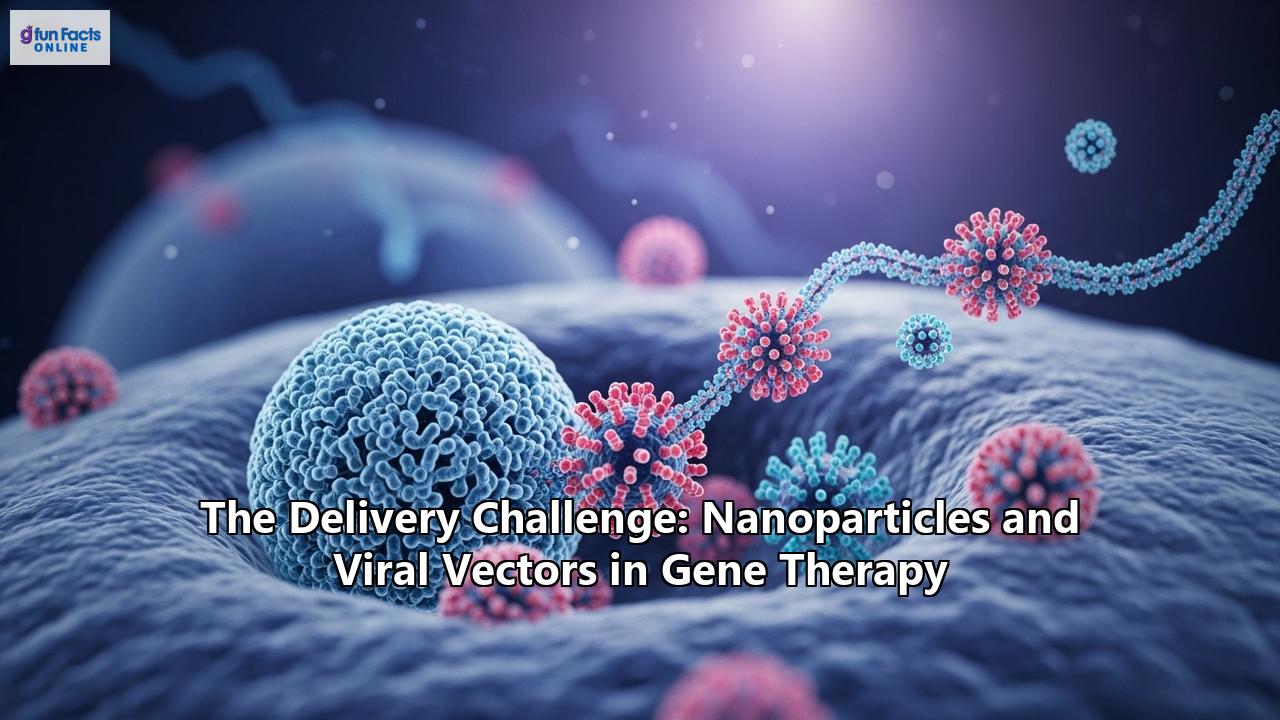
The Delivery Challenge: Nanoparticles and Viral Vectors in Gene Therapy
Gene therapy, a revolutionary approach that introduces genetic material into cells to compensate for abnormal genes or to make a beneficial protein, holds the promise of curing a vast array of diseases. From rare genetic disorders to common complexities like cancer and cardiovascular diseases, the potential is immense. However, the journey of a therapeutic gene from the lab to the nucleus of a target cell is fraught with challenges, the most significant of which is delivery. The effectiveness of gene therapy is fundamentally dependent on the vehicle—or vector—used to transport the genetic payload. This has led to the development and intense investigation of two primary classes of delivery systems: viral vectors and non-viral nanoparticles. Each presents a unique set of advantages and disadvantages, shaping the landscape of modern medicine.
The Gatekeepers of Gene Therapy: An Overview of Delivery Systems
At its core, gene therapy aims to correct or mitigate disease at its genetic source. This can involve replacing a mutated gene, inactivating a malfunctioning gene, or introducing a new gene to fight disease. But to do so, the therapeutic gene must navigate a complex biological obstacle course. It must travel through the bloodstream, evade the immune system, identify and enter the correct target cells, and finally, reach the nucleus to be expressed. This is where delivery vectors come into play, acting as sophisticated couriers for their precious genetic cargo.
Initially, viral vectors were the go-to solution, leveraging the natural ability of viruses to infect cells and insert their genetic material. Over eons, viruses have evolved to become highly efficient at this very task. However, concerns over safety, including immune responses and the potential for causing disease, have spurred the development of non-viral alternatives. Among the most promising of these are nanoparticles, engineered materials designed to mimic the efficiency of viruses without their inherent risks.
The choice between a viral or non-viral vector is not a simple one and depends on a multitude of factors, including the specific disease, the target tissue, and the desired duration of gene expression. As the field of gene therapy continues to mature, the development of safer and more effective delivery systems remains a critical area of research.
Viral Vectors: Nature's Gene Delivery Experts
Viruses are nature's original nanomachines, perfected through evolution to deliver genetic material to host cells. In gene therapy, scientists have harnessed this ability by removing the viral genes responsible for causing disease and replacing them with therapeutic genes. This creates a recombinant viral vector that can efficiently ferry the desired genetic information into target cells. The most commonly used viral vectors in gene therapy are adeno-associated viruses (AAVs), lentiviruses, and adenoviruses.
Adeno-Associated Viruses (AAVs): The Popular Workhorse
AAVs have become a popular choice for gene therapy due to their excellent safety profile and ability to transduce a wide range of dividing and non-dividing cells. Wild-type AAVs are not known to cause any human disease, and the recombinant versions used in gene therapy have been engineered to be even safer.
Advantages of AAVs:- Safety: AAVs are considered to have a superior biosafety rating and low pathogenicity. They generally do not integrate into the host genome, instead existing as stable, circular pieces of DNA called episomes in the nucleus, reducing the risk of insertional mutagenesis (unintended changes to the host's DNA).
- Low Immunogenicity: AAVs typically provoke a milder immune response compared to other viral vectors.
- Broad Tissue Tropism: Different serotypes (versions) of AAVs have natural affinities for different tissues, allowing for some level of targeted delivery.
- Stable and Long-lasting Expression: The episomal nature of the AAV genome can lead to long-term expression of the therapeutic gene, potentially for years.
- Limited Packaging Capacity: AAVs are small viruses and can only carry a limited amount of genetic material, typically less than 4.7 kilobases (kb). This restricts their use for diseases caused by mutations in large genes.
- Pre-existing Immunity: AAVs are common in the environment, and many people have been exposed to them, developing neutralizing antibodies. These pre-existing antibodies can render the gene therapy ineffective.
- Immune Response to the Capsid: Even with their low immunogenicity, the AAV capsid (the protein shell of the virus) can still trigger an immune response, which can lead to the loss of transduced cells and prevent re-dosing.
- Manufacturing Complexity: Producing large quantities of high-quality AAV vectors for clinical use is a complex and expensive process.
Lentiviruses: Integrating Powerhouses
Lentiviruses, a type of retrovirus that includes the human immunodeficiency virus (HIV), have the unique ability to integrate their genetic material directly into the host cell's genome. This makes them particularly useful for treating diseases that require permanent gene expression in dividing cells.
Advantages of Lentiviruses:- Stable Integration: By integrating into the host genome, lentiviral vectors can provide long-term, stable expression of the therapeutic gene that is passed on to daughter cells during cell division.
- Large Packaging Capacity: Lentiviruses can carry larger genetic payloads than AAVs, typically around 8-10 kb.
- Transduction of Non-dividing Cells: Like AAVs, lentiviruses can effectively transduce non-dividing cells, such as neurons.
- Insertional Mutagenesis: The random integration of the lentiviral genome into the host's DNA carries a risk of disrupting essential genes or activating oncogenes, potentially leading to cancer. However, newer generations of lentiviral vectors have been engineered to have a better safety profile.
- Immunogenicity: Lentiviral vectors can trigger an immune response, although they are generally considered to have low immunogenicity.
- Manufacturing Challenges: Scaling up the production of lentiviral vectors for clinical applications presents several challenges.
- Public Perception: The fact that many lentiviral vectors are derived from HIV can be a concern for patients, although the vectors are engineered to be replication-incompetent and cannot cause AIDS.
Adenoviruses: The Versatile Veterans
Adenoviruses were among the first viral vectors to be used in gene therapy and are known for their ability to efficiently transduce a wide variety of cell types.
Advantages of Adenoviruses:- High Transduction Efficiency: Adenoviruses are very effective at delivering genes to a broad range of cells.
- Large Packaging Capacity: They can accommodate relatively large genes.
- Well-Established Production Methods: The methods for producing adenoviral vectors are well-established.
- High Immunogenicity: Adenoviruses are known to provoke a strong immune response, which can lead to inflammation and limit the duration of gene expression. This was a major factor in the tragic death of a patient in a 1999 gene therapy trial, which was a significant setback for the field.
- Transient Gene Expression: Adenoviral DNA does not typically integrate into the host genome, resulting in transient, or short-term, gene expression. This makes them less suitable for treating chronic diseases.
Nanoparticles: The Engineered Alternative
The safety concerns associated with viral vectors have driven significant research into non-viral delivery systems, with nanoparticles emerging as a promising alternative. These are tiny particles, typically less than 100 nanometers in size, that can be engineered to carry a variety of therapeutic payloads, including DNA, messenger RNA (mRNA), and the CRISPR-Cas9 gene-editing system.
Lipid Nanoparticles (LNPs): The mRNA Delivery Stars
Lipid nanoparticles (LNPs) are perhaps the most well-known type of nanoparticle, having gained widespread recognition for their crucial role in the successful delivery of mRNA in the COVID-19 vaccines. They are essentially tiny fat globules that can encapsulate and protect delicate genetic material.
How LNPs Work:LNPs are typically composed of a mixture of lipids, each with a specific function. These lipids self-assemble into a spherical structure that can enclose the genetic payload. When the LNP reaches a target cell, it fuses with the cell membrane and releases its contents into the cytoplasm.
Advantages of LNPs:- Low Immunogenicity: LNPs are generally less likely to trigger an immune response than viral vectors, making them suitable for therapies that may require repeated dosing.
- Scalable Manufacturing: The production of LNPs is relatively straightforward and can be easily scaled up for commercial production.
- Versatility: LNPs can be designed to carry a wide range of genetic materials, including mRNA, siRNA, and CRISPR-Cas9 components.
- Safety: As they are made of biodegradable materials, LNPs have a good safety profile.
- Targeting: While LNPs can be engineered to target specific tissues, their targeting capabilities are currently less precise than those of viral vectors. They have a natural tendency to accumulate in the liver, which is beneficial for treating liver diseases but a limitation for targeting other organs.
- Delivery Efficiency: In some cases, LNPs may be less efficient at delivering their payload to target cells compared to viral vectors.
- Endosomal Escape: A significant hurdle for LNP-mediated delivery is ensuring that the genetic payload can escape from the endosome, a small vesicle within the cell, before it is degraded.
Other Nanoparticle Platforms
Beyond LNPs, researchers are exploring a variety of other nanoparticle platforms for gene delivery, each with its own unique properties:
- Polymeric Nanoparticles: These are made from biodegradable polymers and can be designed to release their payload in a controlled manner.
- Inorganic Nanoparticles: These include materials like gold nanoparticles and quantum dots, which offer unique physical and chemical properties that can be exploited for drug delivery.
- Hybrid Systems: Some researchers are developing hybrid systems that combine the best features of both viral and non-viral vectors. For example, a proteolipid vehicle (PLV) has been developed that attaches a viral fusion protein to a lipid core, which has shown improved distribution and reduced toxicity.
Head-to-Head: A Comparative Look at Delivery Systems
| Feature | Viral Vectors | Nanoparticles |
| :--- | :--- | :--- |
| Delivery Efficiency | High | Moderate to High |
| Immunogenicity | Can be high, depending on the vector | Generally low |
| Packaging Capacity | Limited, especially for AAVs | Can be large and versatile |
| Gene Expression | Can be long-term and stable | Often transient, but can be tailored |
| Targeting | Can be highly specific | Can be engineered, but less precise |
| Manufacturing | Complex and expensive | More straightforward and scalable |
| Safety | Concerns about insertional mutagenesis and immunogenicity | Generally considered safer, but still requires extensive testing |
The Road Ahead: Overcoming the Delivery Hurdles
The future of gene therapy hinges on our ability to overcome the challenges associated with delivery. While significant progress has been made, several key hurdles remain.
Taming the Immune System
Immunogenicity remains a major obstacle for both viral and non-viral vectors. The immune system is exquisitely designed to recognize and eliminate foreign invaders, and both viruses and nanoparticles can trigger an immune response. Researchers are exploring several strategies to overcome this, including:
- Vector Engineering: Modifying the vector to make it less visible to the immune system. This can involve altering the viral capsid or the surface of the nanoparticle.
- Immunosuppression: Using drugs to temporarily suppress the immune system during gene therapy treatment.
- Inducing Tolerance: Developing methods to "teach" the immune system to tolerate the vector.
Hitting the Right Target
Delivering the therapeutic gene to the correct cells and tissues is crucial for both efficacy and safety. Off-target delivery can lead to unwanted side effects and reduce the effectiveness of the treatment. Scientists are working on a variety of strategies to improve targeting, including:
- Capsid Engineering: Modifying the viral capsid to enhance its affinity for specific cell types.
- Ligand-Based Targeting: Attaching molecules (ligands) to the surface of nanoparticles that bind to specific receptors on target cells.
- Stimuli-Responsive Nanoparticles: Designing nanoparticles that release their payload only in response to specific triggers, such as the unique microenvironment of a tumor.
Scaling Up for a New Era of Medicine
As more gene therapies move from the lab to the clinic, the demand for high-quality vectors is skyrocketing. However, manufacturing both viral and non-viral vectors at a large scale presents significant challenges.
For viral vectors, the manufacturing process is complex and requires specialized facilities and expertise. Ensuring the purity, potency, and safety of each batch is a major undertaking.
For nanoparticles, while the manufacturing process is generally more scalable, ensuring batch-to-batch consistency and long-term stability can be challenging.
Innovations in bioprocessing, such as the use of single-use bioreactors and automated manufacturing platforms, are helping to address these challenges and pave the way for the widespread availability of gene therapies.
The Future is Bright and Collaborative
The delivery challenge is a complex and multifaceted problem, and it is unlikely that a single "one-size-fits-all" solution will emerge. Instead, the future of gene therapy will likely involve a diverse toolkit of delivery systems, with the choice of vector tailored to the specific needs of each patient and disease.
The convergence of nanotechnology, virology, and artificial intelligence is driving a new wave of innovation in drug delivery. AI and machine learning are being used to design novel viral capsids and nanoparticles with improved properties, accelerating the development of next-generation delivery systems.
As our understanding of the intricate biology of gene delivery continues to grow, so too will our ability to design safer, more effective, and more precise therapies. The ongoing collaboration between academic researchers, biotech companies, and regulatory agencies will be crucial in unlocking the full potential of gene therapy and ushering in a new era of medicine.
Reference:
- https://www.susupport.com/knowledge/biopharmaceutical-products/drug-delivery/viral-vectors-gene-therapy-lnps-spotlight
- https://pmc.ncbi.nlm.nih.gov/articles/PMC10823087/
- https://drug-dev.com/gene-therapy-the-role-viral-vectors-play-in-current-gene-therapy-development/
- https://www.bmglabtech.com/en/blog/gene-delivery-current-applications-and-future-potential/
- https://blog.drugbank.com/from-nanotechnology-to-gene-therapy-innovations-in-drug-delivery/
- https://www.helixbiotech.com/post/lipid-nanoparticles-vs-viral-vectors-a-comparison-for-gene-therapy
- https://www.numberanalytics.com/blog/nanotech-driven-gene-therapy-innovations
- https://pmc.ncbi.nlm.nih.gov/articles/PMC8418317/
- https://pmc.ncbi.nlm.nih.gov/articles/PMC8284997/
- https://www.tandfonline.com/doi/abs/10.1080/17425247.2017.1292248
- https://www.the-scientist.com/introduction-to-aav-gene-therapies-71193
- https://pubmed.ncbi.nlm.nih.gov/40454374/
- https://www.mckinsey.com/industries/life-sciences/our-insights/gene-therapy-innovation-unlocking-the-promise-of-viral-vectors
- https://www.susupport.com/knowledge/biopharmaceutical-products/drug-delivery/adeno-associated-virus-gene-therapy
- https://www.uvm.edu/d10-files/documents/2024-12/aav_vectors_fact_sheet.pdf
- https://www.genemedi.net/i/advantage-drawbacks-aav-vector
- https://pmc.ncbi.nlm.nih.gov/articles/PMC7773343/
- https://www.frontiersin.org/journals/immunology/articles/10.3389/fimmu.2021.674021/full
- https://www.mckinsey.com/industries/life-sciences/our-insights/viral-vector-therapies-at-scale-todays-challenges-and-future-opportunities
- https://www.insights.bio/cell-and-gene-therapy-insights/journal/article/375/scaleup-of-lentiviral-vectors-for-gene-therapy-advances-and-challenges
- https://pmc.ncbi.nlm.nih.gov/articles/PMC2837622/
- https://www.news-medical.net/life-sciences/Lentivirus-Applications.aspx
- https://lifesciences.danaher.com/us/en/library/viral-vectors-for-gene-therapy.html
- https://pmc.ncbi.nlm.nih.gov/articles/PMC9600891/
- https://pubs.acs.org/doi/10.1021/acsptsci.3c00185
- https://www.the-scientist.com/a-nanoparticle-delivery-system-for-gene-therapy-72483
- https://www.researchgate.net/publication/382395041_Advancements_in_Nanoparticle-Based_Gene_Delivery_Systems_for_Therapeutic_Applications_A_Comprehensive_Review
- https://www.cellandgene.com/doc/the-future-of-gene-therapy-depends-on-new-delivery-vehicles-0001
- https://www.numberanalytics.com/blog/immunogenicity-gene-therapy-neurobiology
- https://www.infinixbio.com/future-gene-therapy-immunogenicity-assessment/
- https://www.nih.gov/news-events/news-releases/scientists-design-gene-delivery-systems-cells-brain-spinal-cord
- https://www.mdpi.com/1999-4923/17/1/70
- https://pmc.ncbi.nlm.nih.gov/articles/PMC4802372/
- https://www.bioprocessonline.com/doc/five-overlooked-challenges-in-viral-vector-manufacturing-0001
- https://anemocyte.com/the-future-of-advanced-therapies-emerging-innovations-in-cell-and-gene-therapies/
- https://pubmed.ncbi.nlm.nih.gov/40086770/