
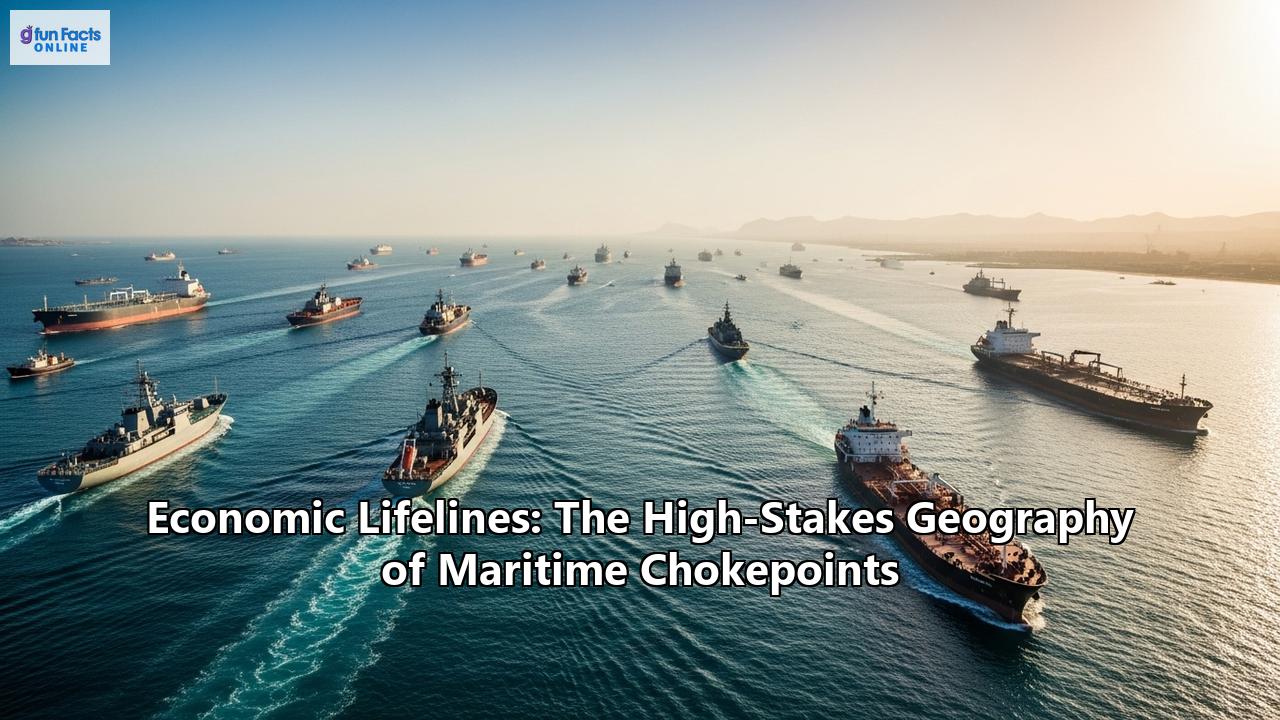
An unseen network of maritime arteries pulses with the lifeblood of the global economy. These vital channels, known as maritime chokepoints, are narrow passages that connect vast oceans and facilitate the seamless flow of international trade. Their strategic geography, however, makes them vulnerable to a myriad of threats, turning these economic lifelines into high-stakes geopolitical flashpoints. Any disruption, whether by nature or by human design, can trigger a cascade of economic consequences, underscoring the fragile interdependence of our modern world.
The Double-Edged Sword of Strategic Waterways
Maritime chokepoints are, by their very nature, double-edged swords. They offer the shortest and most cost-effective shipping routes, but their narrowness also makes them susceptible to blockades, conflict, piracy, and accidents. With approximately 90% of globally traded goods moved by sea, the security of these passages is paramount to economic stability. From the oil that fuels our industries to the food that graces our tables, a significant portion of these goods navigates through a handful of critical chokepoints.
The Strait of Hormuz: The World's Oil Jugular
Connecting the Persian Gulf to the Arabian Sea, the Strait of Hormuz is arguably the most critical oil chokepoint on the planet. A staggering 20% of global petroleum liquids consumption, amounting to about 20 million barrels per day in 2024, passes through this narrow waterway. It is the main artery for oil exports from major producers like Saudi Arabia, the UAE, Iraq, Kuwait, and Iran. Furthermore, about a fifth of the world's liquefied natural gas (LNG) also transits the strait.
A History of Tension and a Future of UncertaintyThe strait's strategic importance has long made it a focal point of geopolitical maneuvering. Iran, which controls the northern coast, has repeatedly threatened to close the strait in response to international pressure. Any disruption, however temporary, could have devastating consequences. Analysts have warned that a closure could cause oil prices to surge dramatically, potentially reaching $120-$150 per barrel. Such a spike would have a ripple effect across the global economy, from increased transportation costs to higher inflation.
For nations in Asia, the stakes are particularly high, as a vast majority of the crude oil and LNG transiting Hormuz is destined for their markets. While alternative pipelines exist, they have limited capacity and cannot fully compensate for a closure of the strait.
The Suez Canal: A Man-Made Marvel and a Global Bottleneck
The Suez Canal, a 193-kilometer artificial waterway in Egypt, provides the shortest maritime route between Europe and Asia. It handles approximately 12-15% of global trade and about 30% of global container traffic, with over a trillion dollars in goods transiting annually. An average of 50 to 60 ships pass through the canal daily, carrying an estimated $3 billion to $9 billion worth of cargo. The canal is also a critical conduit for about 10% of global seaborne oil and 8% of LNG.
Vulnerability on Full DisplayThe world witnessed the canal's vulnerability firsthand in March 2021 when the container ship Ever Given ran aground, blocking the passage for six days. The incident caused a "traffic jam" of hundreds of ships and was estimated to have held up nearly $9 billion in trade each day. The recent attacks on commercial vessels in the Red Sea by Houthi militants have once again highlighted the canal's fragility. These attacks have forced many shipping companies to reroute their vessels around the Cape of Good Hope, adding 10 to 14 days to their journey and significantly increasing costs due to higher fuel consumption, wages, and insurance premiums. These disruptions have a direct impact on global supply chains and can contribute to inflation.
The Panama Canal: A Battle Against Climate Change
Connecting the Atlantic and Pacific Oceans, the Panama Canal is a linchpin of trade in the Western Hemisphere, with an estimated 5% of international trade and 40% of all U.S. container traffic passing through it. However, this engineering marvel is facing a new and formidable challenge: climate change.
A Thirsty CanalA severe drought, exacerbated by the El Niño phenomenon, has led to alarmingly low water levels in the canal, forcing the Panama Canal Authority to reduce the number of daily transits. This has resulted in a significant backlog of ships waiting to cross, causing delays and driving up shipping costs. The restrictions have a direct impact on the United States, as a large percentage of its commodity exports and imports rely on this route. The situation serves as a stark reminder of how climate change can directly impact and disrupt global trade infrastructure.
The Strait of Malacca: A Crowded Corridor with a Piracy Problem
The Strait of Malacca, linking the Indian and Pacific Oceans, is one of the busiest shipping lanes in the world. It is the shortest sea route between the Persian Gulf and the booming markets of Asia, and it is a vital artery for the economies of China, Japan, and South Korea.
Navigating a Treacherous PathAt its narrowest point, the strait is only about 2.7 kilometers wide, creating a natural bottleneck that is prone to collisions and groundings. Its geography also makes it a hotspot for piracy and armed robbery. While incidents have decreased from their peak, the threat remains, forcing shipping companies to take costly security measures.
For China, the Strait of Malacca is a significant strategic vulnerability, as a substantial portion of its energy imports pass through this chokepoint. This dependence has led Beijing to explore alternative routes, including the development of overland pipelines and the "String of Pearls" strategy of investing in ports throughout the Indian Ocean.
The Bab el-Mandeb Strait: The "Gate of Tears"
The Bab el-Mandeb Strait, located between Yemen on the Arabian Peninsula and Djibouti and Eritrea in the Horn of Africa, connects the Red Sea to the Gulf of Aden and the Indian Ocean. Its name, which translates to "Gate of Tears," has proven tragically apt in recent times.
A Region in TurmoilThe ongoing conflict in Yemen has spilled into the maritime domain, with Houthi militants launching attacks on commercial vessels. These attacks, coupled with the persistent threat of piracy emanating from Somalia, have made this a high-risk area for international shipping. As with the Suez Canal, the instability in the Bab el-Mandeb has forced many ships to take the longer and more expensive route around Africa. This not only impacts the global economy but also threatens food security in the region, as delayed shipments of perishable goods can lead to shortages and price hikes. The strait's strategic location has also led to a concentration of foreign military bases in nearby Djibouti, as global powers vie for influence in this critical region.
The Turkish Straits: A Gateway Between East and West
The Bosphorus and Dardanelles, collectively known as the Turkish Straits, connect the Black Sea to the Mediterranean. They are the only maritime passage for the Black Sea nations of Bulgaria, Georgia, Romania, Russia, and Ukraine to access global oceans.
A Historic and Geopolitical CrossroadsThe strategic importance of the Turkish Straits has been recognized for centuries. Their control has been a source of conflict throughout history, and today, their transit is governed by the 1936 Montreux Convention, which grants Turkey control over the passage of warships while guaranteeing free passage for civilian vessels in peacetime. The straits are a significant route for the export of Russian and Caspian Sea oil and grain to world markets. Any disruption to traffic through the Turkish Straits could have a significant impact on global energy and food prices.
The Ripple Effect: An Interconnected System
The world's maritime chokepoints do not exist in isolation. A disruption in one can have a domino effect on the others. For example, the attacks in the Red Sea have not only impacted the Suez Canal but have also increased demand for the longer route around Africa, putting a strain on shipping capacity and global supply chains. Similarly, the drought in the Panama Canal has diverted some traffic to the Suez Canal, adding to the congestion there.
Navigating a Volatile Future: The Search for Resilience
The increasing vulnerability of these critical arteries has prompted a search for greater resilience in global supply chains. Key strategies being explored include:
- Diversifying Shipping Routes: The development of alternative routes, such as the Northern Sea Route through the Arctic and overland rail corridors, is gaining traction. However, these alternatives come with their own set of challenges, including environmental concerns and geopolitical complexities.
- Investing in Infrastructure: Expanding the capacity of existing chokepoints, such as the recent expansion of the Suez Canal, can help to alleviate congestion and reduce the risk of blockages.
- Enhancing Maritime Security: International cooperation is crucial to combatting threats like piracy and terrorism. Naval patrols and intelligence sharing are essential tools for safeguarding these vital waterways.
- Technological Solutions: The use of artificial intelligence and advanced analytics can help to optimize shipping routes and anticipate potential disruptions.
The high-stakes geography of maritime chokepoints is a stark reminder of the intricate and often fragile nature of the globalized world. As geopolitical tensions simmer and the impacts of climate change become more pronounced, ensuring the security and stability of these economic lifelines will require a concerted and collaborative effort from the international community. The free flow of goods across the world's oceans is not just a matter of economic convenience; it is a cornerstone of global prosperity and security.
Reference:
- https://timesofindia.indiatimes.com/world/middle-east/what-would-happen-to-uae-and-global-energy-markets-if-iran-closed-the-strait-of-hormuz/articleshow/122025996.cms
- https://unctad.org/news/suez-and-panama-canal-disruptions-threaten-global-trade-and-development
- https://www.eia.gov/todayinenergy/detail.php?id=65504
- https://www.eia.gov/todayinenergy/detail.php?id=61002
- https://time.com/7296861/strait-of-hormuz-function-iran-closure-threat-impact-trade/
- https://www.cbsnews.com/news/strait-of-hormuz-iran-oil-trade-route-what-to-know/
- https://www.scmp.com/economy/global-economy/article/3315463/trumps-strikes-irans-strait-hormuz-threat-fuel-global-economy-fears-analysts
- https://www.ainvest.com/news/strait-hormuz-geopolitical-flashpoint-fueling-energy-market-volatility-investment-opportunities-2506/
- https://www.britannica.com/topic/Suez-Canal
- https://www.atlanticcouncil.org/in-depth-research-reports/issue-brief/a-lifeline-under-threat-why-the-suez-canals-security-matters-for-the-world/
- https://oec.world/en/blog/suez-canal
- https://iea.blob.core.windows.net/assets/0a3c8da7-43ad-4511-a0ff-932fd8d0825a/SuezCanal-Factsheet.pdf
- https://mepei.com/the-geopolitical-importance-of-bab-el-mandeb-strait-a-strategic-gateway-to-global-trade/
- https://mondointernazionale.org/focus-allegati/navigating-the-socioeconomic-currents-the-significance-and-consequences-of-the-suez-canal-crisis
- https://www.europarl.europa.eu/thinktank/en/document/EPRS_BRI(2024)760390760390)
- https://www.hermes-investment.com/uk/en/intermediary/insights/alternatives/how-do-red-sea-disruptions-affect-global-supply-chains/
- https://www.focus-economics.com/blog/how-will-the-panama-canal-drought-affect-the-economy-and-global-trade/
- https://english.elpais.com/economy-and-business/2023-08-24/the-economic-impact-of-the-panama-canal-jam-inflation-and-shipping-losses.html
- https://www.google.com/search?q=time+in+Melaka,+MY
- https://repositorio.grupoautonoma.pt/server/api/core/bitstreams/0b1b99d9-a95e-4e94-b43c-c9ea986d864b/content
- https://www.med-or.org/en/news/le-vulnerabilit%C3%A0-degli-stretti-strategici-di-hormuz-e-bab-el-mandeb
- https://www.coface.ch/news-publications-insights/bab-el-mandeb-strait-tension-at-a-global-trade-route
- https://www.wam.ae/en/article/15diaun-terrorism-bab-al-mandab-straining-global-economy
- https://www.imf.org/en/Blogs/Articles/2024/03/07/Red-Sea-Attacks-Disrupt-Global-Trade
- https://www.downtoearth.org.in/economy/red-sea-crisis-suez-canal-is-not-the-only-choke-point-that-threatens-to-disrupt-global-supply-chains-93932