
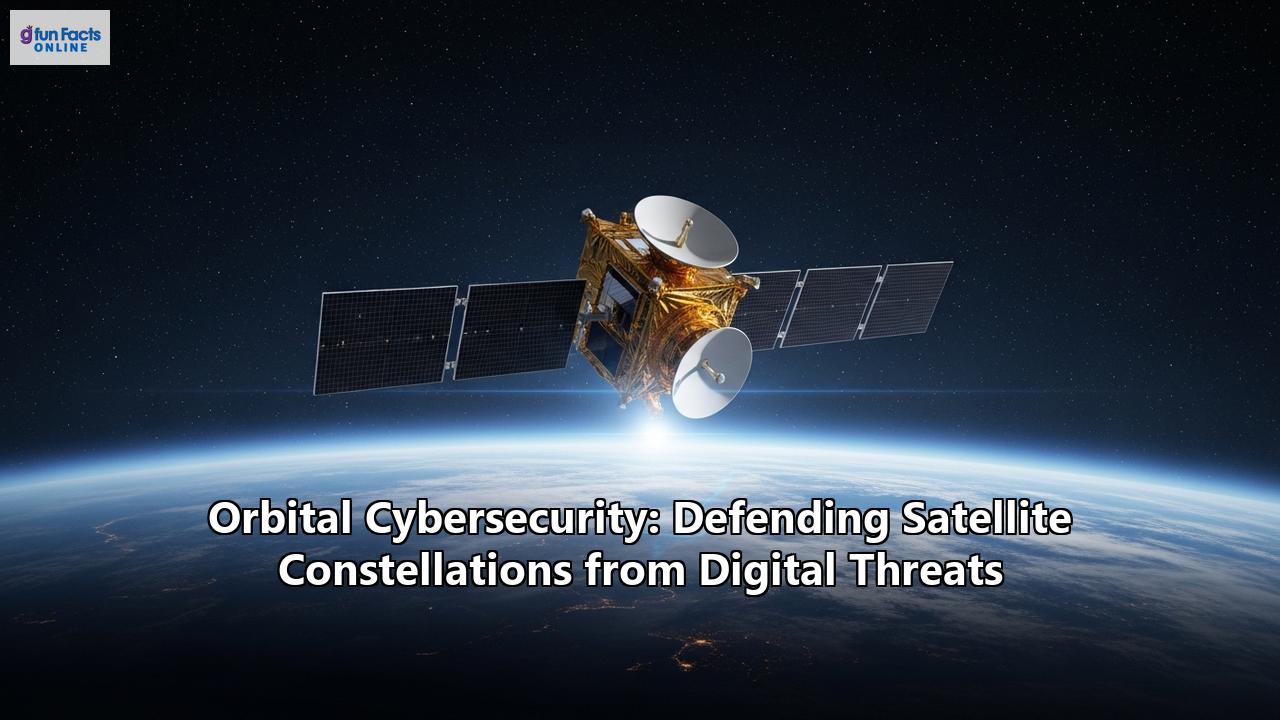
Our world is intricately woven with the invisible threads of satellite technology. From the GPS that guides our journeys to the financial transactions that power our economies, these celestial assets form the backbone of modern society. However, as our reliance on satellite constellations grows, so does a new and alarming threat: cyberattacks targeting our orbital infrastructure. This emerging battleground of orbital cybersecurity is a critical frontier, demanding innovative defenses to protect our vital assets from digital adversaries.
The Expanding Threat Landscape: A New Era of Vulnerabilities
The digital transformation of space has opened a Pandora's box of cyber threats. What was once the realm of physical tampering and espionage has evolved into a complex landscape of sophisticated digital attacks. The very nature of satellites—remote, difficult to physically access, and reliant on wireless communication—makes them uniquely vulnerable.
The Avenues of Attack:
- Ground Segment: The Earth-based control stations and networks are prime targets for hackers. By infiltrating these ground systems, malicious actors can potentially gain control of a satellite's operations, leading to catastrophic consequences. The 2022 cyberattack on the KA-SAT network, which disrupted services across Europe, serves as a stark reminder of this vulnerability. This incident, suspected to be state-sponsored, highlighted how ground station breaches can have far-reaching economic and security implications.
- Link Segment: The communication links between satellites and Earth are susceptible to a variety of attacks. Jamming, the act of overpowering satellite signals with noise, can disrupt communication and navigation services. Spoofing, a more insidious threat, involves broadcasting false signals to deceive receivers, potentially misguiding aircraft, ships, or even military assets. Reports of widespread GPS spoofing in the Black Sea and the Middle East underscore the reality of this threat. Eavesdropping and data interception also pose significant risks, as sensitive information transmitted via satellite can be stolen and exploited.
- Space Segment: The satellites themselves are not immune to attack. Malware can be uploaded to a satellite's onboard systems, potentially allowing attackers to hijack the spacecraft, disrupt its functions, or even use it for malicious purposes. The increasing complexity of satellite software and the use of commercial off-the-shelf components create a larger attack surface for these kinds of exploits. Furthermore, legacy satellites, designed for long lifecycles, often run on outdated software that is difficult to patch, leaving them exposed to known vulnerabilities.
Real-World Incidents: A Wake-Up Call
The theoretical threats to satellite constellations have become a disturbing reality. Several high-profile incidents have demonstrated the tangible dangers of orbital cyberattacks:
- The Viasat KA-SAT Attack (2022): This sophisticated cyberattack on Viasat's satellite network had a cascading effect across Europe. It disabled tens of thousands of modems, disrupting internet access and impacting various sectors, including wind turbines in Germany. The attack, which began just as Russia's invasion of Ukraine was starting, underscored the potential for cyberattacks on satellites to be used as a tool of warfare.
- GPS Spoofing Incidents: Multiple instances of GPS spoofing have been reported globally. In one notable case, over 20 ships in the Black Sea had their navigation systems manipulated to show false locations. These incidents highlight the vulnerability of global navigation satellite systems (GNSS) and the potential for chaos in transportation and logistics.
- Hacking of Starlink: A Belgian researcher successfully hacked into the Starlink satellite internet constellation using a simple, inexpensive device. This demonstrated that even heavily funded and technologically advanced systems are not impervious to determined attackers.
Defending the Final Frontier: A Multi-Layered Approach to Orbital Cybersecurity
Securing our satellite constellations requires a comprehensive and multi-layered defense strategy that addresses vulnerabilities across all segments of the space ecosystem.
Strengthening the Ground Segment:
- Robust Access Control: Implementing stringent authentication and authorization protocols for ground station networks is paramount to preventing unauthorized access.
- Intrusion Detection and Prevention: Advanced intrusion detection systems (IDS) can monitor network traffic for suspicious activity and block potential threats in real time.
- Regular Penetration Testing: Proactively identifying and patching vulnerabilities in ground systems through simulated attacks, known as penetration testing, is a critical defensive measure.
Securing the Link Segment:
- Advanced Encryption: Employing strong encryption algorithms is essential to protect data transmitted between satellites and ground stations from interception and tampering. The development and adoption of post-quantum cryptography (PQC) is becoming increasingly crucial to defend against the future threat of quantum computers that could break current encryption standards.
- Quantum Key Distribution (QKD): This cutting-edge technology uses the principles of quantum mechanics to create un-hackable encryption keys, offering a new level of security for satellite communications.
Hardening the Space Segment:
- Secure-by-Design Principles: Cybersecurity must be integrated into the design and development of satellites from the very beginning. This includes using secure coding practices and hardening onboard systems against potential attacks.
- Onboard Anomaly Detection: Implementing AI-powered intrusion detection systems directly on satellites can enable them to autonomously detect and respond to threats in real time.
- Resilient Architectures: Designing satellite constellations with redundancy and self-healing capabilities can help them withstand and recover from attacks. This includes the ability for satellites to share threat information and dynamically adjust their defenses.
The Future of Orbital Cybersecurity: A Glimpse into Tomorrow's Defenses
The field of orbital cybersecurity is rapidly evolving, with new technologies and strategies emerging to counter the growing threat.
- Artificial Intelligence and Machine Learning: AI will play a pivotal role in the future of satellite defense. AI-driven systems will be able to predict potential attacks, identify anomalies in satellite behavior, and automate incident response, enabling faster and more effective protection.
- The "Cloudification" of Space: As satellite payloads become rentable and data centers are considered for deployment in space, new security challenges arise. Strict security measures will be needed to prevent malicious code from being executed on these orbital platforms.
- International Collaboration and Standardization: The global nature of space requires international cooperation to establish common cybersecurity standards and share threat intelligence. Organizations like the European Space Agency (ESA) are already investing heavily in cybersecurity operations centers to protect their assets.
A Call to Action
Securing our satellite constellations is not just a technical challenge; it is a strategic imperative for national security, economic stability, and the continued functioning of our increasingly connected world. As we continue our journey into the final frontier, we must remain vigilant and proactive in defending our orbital assets from the ever-present and evolving digital threats. The future of our secure and prosperous society may very well depend on it.
Reference:
- https://www.business-reporter.co.uk/technology/cybersecurity-for-satellites-is-a-growing-challenge-as-threats-to-space-based-infrastructure-grow
- https://akitra.com/protecting-satellite-communications-and-data/
- https://www.weforum.org/stories/2025/05/securing-space-why-we-need-to-address-cyber-risks-in-orbit/
- https://cybersecuritycoalition.be/resource/cybersecurity-in-orbit-protecting-critical-space-assets/
- https://www.cyberhive.com/insights/what-cyber-risks-are-present-in-the-satellite-communication-infrastructure/
- https://www.secureworld.io/industry-news/space-final-cybersecurity-frontier
- https://nextnav.com/gps-cybersecurity-threat/
- https://www.globalsinc.com/the-growing-threat-of-cyberattacks-on-gps-systems/
- https://www.cyberdefensemagazine.com/cybersecurity-threats-in-global-satellite-internet/
- https://connectivity.esa.int/opportunity-cybersecurity-enabler-secure-satellite-communications-and-resilient-applications
- https://terrasatinc.com/securing-satcom-networks-the-urgent-need-for-cyber-hardened-solutions/
- https://www.ijrti.org/papers/IJRTI2503122.pdf
- https://www.cyberhive.com/insights/understanding-satellite-cyber-security/
- https://www.mdpi.com/2226-4310/12/5/431
- https://sscspace.com/the-future-of-space-cybersecurity-a-new-era-of-threats-and-innovations/
- https://bisresearch.com/insights/cybersecurity-in-orbit-empowering-the-future-of-space-and-satellites-security
- https://www.researchgate.net/publication/388075698_SECURING_THE_FINAL_FRONTIER_CYBERSECURITY_STRATEGIES_FOR_SATELLITES_AND_SPACE_COMMUNICATIONS
- https://www.ussc.edu.au/the-importance-of-satellite-cybersecurity
- https://themunicheye.com/esa-advances-satellite-cybersecurity-rising-threats-22081