
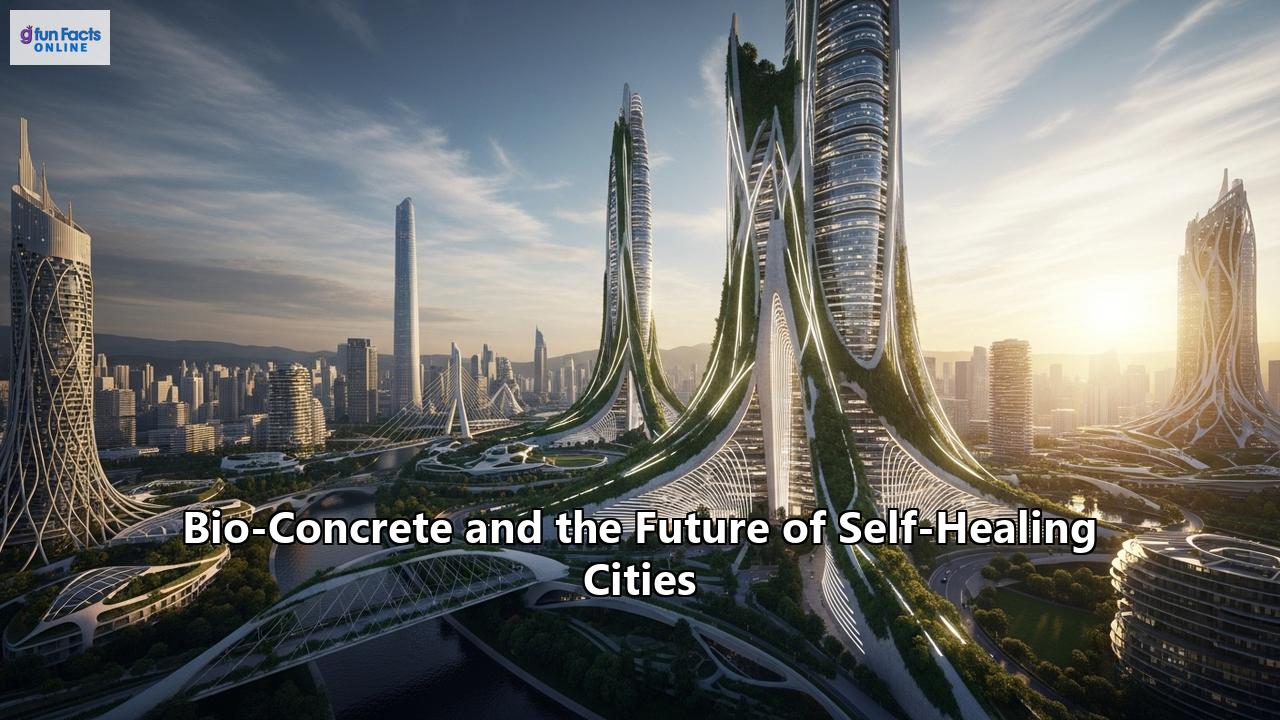
Our cities, the sprawling hubs of human civilization, are built on a foundation of concrete. From the soaring skyscrapers that touch the clouds to the intricate network of roads, bridges, and tunnels that form their arteries, concrete is the silent, ubiquitous material that underpins modern life. Yet, this stalwart of construction is not as enduring as it may seem. It cracks, it weathers, and it succumbs to the relentless forces of nature and time. The constant need for repair and replacement of deteriorating concrete infrastructure is a colossal undertaking, draining economies of billions of dollars annually and carrying a heavy environmental toll. But what if our buildings and infrastructure could heal themselves? What if our cities could mend their own wounds, much like a living organism? This is not a fanciful dream from the realm of science fiction; it is the promise of bio-concrete, a revolutionary material that is poised to redefine the future of construction and pave the way for self-healing cities.
The Living Concrete: Unveiling the Science of Self-Healing
At its core, bio-concrete is a marvel of biomimicry, drawing inspiration from the innate ability of living organisms to repair themselves. This "living" concrete has the remarkable capacity to autonomously seal its own cracks, preventing the ingress of water and other harmful substances that lead to the corrosion of steel reinforcement and the degradation of the structure. The secret to this incredible feat lies in the incorporation of specific microorganisms, typically bacteria, into the concrete mix.
The concept of self-healing concrete first began to take shape in the early 1990s, with researchers like Carolyn Dry at the University of Illinois at Urbana-Champaign exploring the idea. However, it was in the mid-2000s that the technology truly began to mature, thanks to the pioneering work of microbiologist Hendrik "Henk" Jonkers and his team at the Delft University of Technology in the Netherlands. Jonkers envisioned a bionic approach to improve the tensile strength and eco-friendly properties of concrete. His research led to the development of a bio-concrete that incorporates limestone-producing bacteria capable of surviving in the harsh alkaline environment of concrete for up to 200 years.
The mechanism behind this self-healing process is a fascinating interplay of biology and chemistry known as Microbially Induced Calcite Precipitation (MICP). When cracks form in the concrete, they create pathways for water to seep in. This ingress of water acts as a trigger, "awakening" the dormant bacterial spores that have been embedded within the concrete matrix.
Once activated, these bacteria begin to feed on a nutrient source that is also incorporated into the concrete. A common nutrient used is calcium lactate. Through their metabolic processes, the bacteria convert the calcium lactate into calcium carbonate, more commonly known as limestone or calcite. This newly formed calcite precipitates and crystallizes within the cracks, effectively sealing them and restoring the concrete's integrity. The process is analogous to how a scab forms over a wound on the skin, naturally healing the damage.
The selection of the right bacteria is crucial for the success of bio-concrete. These microorganisms must be able to withstand the extreme conditions within concrete, including its high alkalinity (pH levels of 12 to 13) and the mechanical stresses of mixing. For this reason, spore-forming bacteria from the Bacillus genus are often the preferred choice. These bacteria can form robust spores that allow them to remain dormant and viable for extended periods until they are needed for repair. Some of the commonly used strains include Bacillus subtilis, Bacillus sphaericus, Bacillus cohnii, and Bacillus pseudofirmus. Researchers are continually exploring a range of bacterial strains, including psychrotrophic bacteria isolated from limestone caves that can initiate crack healing at low temperatures.
To protect the bacteria and their nutrient source from the harsh environment of the concrete during mixing and hardening, various encapsulation techniques have been developed. These methods are designed to be strong enough to withstand the mixing process but fragile enough to rupture when a crack occurs, releasing the healing agents. Some of the most promising encapsulation methods include:
- Porous Clay Aggregates: Lightweight aggregates (LWA) made of porous clay can be used to embed the bacteria and calcium lactate. These aggregates act as a protective carrier and can also serve as an internal source of moisture to support the bacterial precipitation process.
- Hydrogels: These water-absorbent polymers can encapsulate bacterial spores and nutrients. Hydrogels have the advantage of retaining moisture, which facilitates bacterial activity and the precipitation of calcium carbonate.
- Polymers and Microcapsules: Polymeric microcapsules, such as those made from polyurethane or urea-formaldehyde, can be used to encapsulate various healing agents, including bacteria and chemical solutions like sodium silicate.
- Diatomaceous Earth (DE): This naturally occurring, porous siliceous rock has also been investigated as an effective encapsulation agent for bacteria in self-healing concrete.
The effectiveness of the self-healing process can vary depending on several factors, including the type of bacteria, the nutrient source, the encapsulation method, and the environmental conditions, particularly the availability of moisture. Research has shown that bio-concrete can heal cracks up to 0.8mm in width, and in some cases, even larger. This is a significant improvement over the autogenous healing capabilities of traditional concrete, which is typically limited to cracks smaller than 0.2mm.
From Lab to Landmark: The Genesis of Bio-Concrete
The journey of bio-concrete from a theoretical concept to a tangible construction material is a testament to decades of dedicated research and innovation. The idea of self-healing materials is not entirely new; even traditional concrete possesses a limited, inherent ability to heal very small cracks through a process called autogenous healing. This occurs when unhydrated cement particles react with water that enters a crack, leading to further hydration and the formation of calcium carbonate. However, this natural process is slow and only effective for micro-cracks.
The quest for a more robust and reliable self-healing mechanism led researchers to explore the potential of embedding healing agents within the concrete. The 1990s saw early explorations into this field, with Carolyn Dry's work on self-healing polymers being a notable milestone. However, the focus soon shifted towards a more biological approach, inspired by the efficiency and sustainability of natural processes.
The mid-2000s marked a significant turning point with the groundbreaking research led by Henk Jonkers at TU Delft. His team's work on bacterial concrete demonstrated the feasibility of using microorganisms to precipitate calcite and seal cracks. This research culminated in the development of a functional bio-concrete, and in a testament to their success, the world's first building constructed with their bacterial self-healing concrete was erected, providing invaluable data on its real-world performance.
Since then, the field of bio-concrete has seen a surge in research and development activities across the globe. Numerous universities and research institutions are now actively involved in refining the technology, exploring new bacterial strains, optimizing nutrient compositions, and developing more efficient encapsulation methods. This collective effort has led to the emergence of several commercial ventures that are bringing bio-concrete products to the market.
One notable example is Green Basilisk, a spin-off from TU Delft, which supplies a healing agent containing Bacillus spores and nutrients that can be mixed into new concrete or applied as a liquid repair system. Their products have been used in various projects, including the repair of concrete floor slabs, demonstrating significant life-cycle cost reductions and a substantial decrease in CO2 emissions compared to traditional repair methods.
Another innovative company, BioMason, is taking a slightly different but equally revolutionary approach. They use bacteria to "grow" bricks and tiles at ambient temperatures, eliminating the need for the energy-intensive firing process required for traditional bricks. This process, which takes only a few days, creates a "biological cement" with strength comparable to conventional masonry units, offering a significant sustainability advantage.
These pioneering efforts are not just confined to the laboratory. Bio-concrete and related technologies are finding their way into real-world construction projects, providing a glimpse into the future of sustainable and resilient infrastructure.
Bio-Concrete in Action: Real-World Applications and Case Studies
The true test of any new technology lies in its performance in real-world applications. Bio-concrete is now beginning to be deployed in a variety of projects, showcasing its potential to enhance the durability and sustainability of our built environment.
One of the most cited examples of bio-concrete in action is a lifeguard station in the Netherlands. This structure, constantly exposed to the harsh coastal environment of wind and saltwater, was an ideal candidate for testing the long-term performance of self-healing concrete. The application of bio-concrete has shown remarkable longevity, with minimal need for crack repairs over an extended period, demonstrating its resilience in a corrosive environment.
In another compelling case study, a liquid repair system based on bacterial healing was used to treat cracked concrete floor slabs. Instead of resorting to the costly and disruptive process of demolition and recasting, the cracked slabs were treated with the bacterial agent. Over time, the autonomous healing mechanism sealed the network of cracks, restoring water-tightness and preventing further degradation of the steel reinforcement. Project reports indicated a life-cycle cost reduction of approximately 33% and a staggering 90% reduction in CO2 emissions compared to a full repair or replacement.
The application of bacterial healing agents has also shown promise in extending the design life of airport pavements. In one such project, it was estimated that the use of a bacterial healing agent could extend the pavement's life by 15 years, avoiding an early rebuild and resulting in a greater than 90% reduction in CO2 emissions associated with repairs.
Beyond these specific projects, bio-concrete has a wide range of potential applications across the construction industry:
- Bridges and Tunnels: These critical infrastructure components are often difficult to access for inspection and repair. The autonomous healing capability of bio-concrete can significantly enhance their durability and safety, reducing the need for costly and disruptive maintenance.
- Highways and Roads: The constant traffic loading on roads and highways leads to the formation of cracks. Self-healing concrete can reduce the need for frequent repairs, minimizing traffic disruptions and improving road safety.
- Buildings: In both residential and commercial buildings, bio-concrete can improve sustainability and resilience, reducing the need for costly repairs and renovations. It can also enhance insulation capabilities by sealing cracks and preventing air leakage, leading to energy savings.
- Water Infrastructure: Bio-concrete can be used in water treatment plants, pipelines, and other water infrastructure to prevent leaks and damage, ensuring the integrity of these vital systems.
- Marine Structures: Coastal and marine structures are particularly vulnerable to corrosion due to their exposure to saltwater. The ability of bio-concrete to seal cracks and prevent the ingress of chlorides makes it an ideal material for these applications.
- Historical Monument Restoration: Bio-concrete has been explored for the repair of historical monuments constructed from limestone, offering a compatible and gentle method of restoration.
While the widespread adoption of bio-concrete is still in its early stages, these case studies and potential applications provide a clear indication of its transformative potential. As the technology continues to mature and become more cost-effective, we can expect to see bio-concrete playing an increasingly important role in the construction of our future cities.
The Bottom Line: An Economic Perspective on Bio-Concrete
The promise of self-healing concrete is undoubtedly alluring, but for any new technology to gain widespread acceptance in the construction industry, it must be economically viable. A thorough analysis of the costs and benefits of bio-concrete reveals a compelling, albeit complex, economic case.
The most significant hurdle to the widespread adoption of bio-concrete is its higher initial cost compared to traditional concrete. Various studies and reports indicate that the production cost of bio-concrete can be 30% to 100% higher, and in some cases, even more. This cost premium is primarily attributed to the expense of cultivating the bacteria, the cost of the nutrient sources, and the materials and processes involved in encapsulation. One study estimated the cost of a cubic meter of bio-concrete at approximately €200 (about $239), compared to €75-100 for standard concrete.
However, focusing solely on the initial investment would be a myopic view. The true economic value of bio-concrete lies in its long-term performance and the significant savings it can offer over the entire lifecycle of a structure. The ability of bio-concrete to autonomously repair cracks translates into a host of long-term economic benefits:
- Reduced Maintenance and Repair Costs: The need for manual inspection and repair of cracks is significantly reduced, leading to substantial savings on labor and materials. In the United Kingdom, for instance, maintenance and repair of existing structures account for approximately 45% of the annual construction costs. By minimizing these costs, bio-concrete can offer a significant return on the initial investment.
- Extended Lifespan of Structures: By preventing the propagation of cracks and protecting the steel reinforcement from corrosion, bio-concrete can significantly extend the service life of buildings and infrastructure. This longevity reduces the need for premature replacement, which is a major capital expenditure. The bacteria used in some bio-concrete formulations are reported to have the potential to remain viable for up to 200 years, suggesting a dramatically extended lifespan for the concrete.
- Increased Durability and Resilience: The enhanced durability of bio-concrete makes structures more resilient to environmental stressors, such as freeze-thaw cycles and chemical attacks. This increased resilience can prevent catastrophic failures and the associated economic and social costs.
- Reduced Downtime: For critical infrastructure like bridges and highways, repairs often necessitate closures, leading to significant economic losses due to traffic disruptions. The self-healing nature of bio-concrete minimizes the need for such disruptive maintenance activities.
A comprehensive economic evaluation of bio-concrete requires a Life-Cycle Cost (LCC) analysis. This methodology considers all the costs associated with a structure over its entire lifespan, from construction to maintenance and eventual demolition or recycling. When viewed through the lens of LCC, the higher initial cost of bio-concrete can be offset by the long-term savings in maintenance and the extended service life of the structure.
Furthermore, the economic benefits of bio-concrete extend beyond direct cost savings. The environmental benefits, such as reduced CO2 emissions from cement production and fewer repairs, have indirect economic advantages in the form of carbon credits and a healthier environment. As the production of bio-concrete is scaled up and the technology is further refined, the initial cost is expected to decrease, making it an even more economically attractive option for a wider range of applications.
Hurdles to Widespread Adoption: Challenges and Limitations
Despite its immense potential, the path to the widespread adoption of bio-concrete is not without its challenges. Several hurdles, both technical and economic, need to be addressed before this innovative material can become a mainstream construction solution.
- High Initial Cost: As previously discussed, the higher upfront cost of bio-concrete remains a significant barrier to its adoption, particularly for large-scale projects where cost is a primary consideration.
- Scalability of Production: The mass production of bacterial spores and the development of cost-effective and efficient encapsulation methods are still significant challenges. Scaling up these processes to meet the demands of the global construction industry will require further research and investment.
- Long-Term Viability of Bacteria: While laboratory studies have shown that bacterial spores can remain viable for extended periods, their long-term performance in real-world structures over several decades is still not fully understood. More long-term monitoring of existing bio-concrete structures is needed to validate their healing capability throughout the intended lifespan of the structure.
- Influence of Environmental Conditions: The effectiveness of the self-healing process is highly dependent on environmental factors, particularly the availability of moisture. In very dry environments, the healing process may be slow or incomplete. The performance of bio-concrete can also be affected by temperature and the chemical composition of the water that enters the cracks.
- Impact on Concrete Properties: There have been conflicting reports on the effect of adding bacteria to the mechanical properties of concrete. Some studies have reported a decrease in compressive strength, while others have shown an increase. The method of incorporating the bacteria, particularly the use of encapsulation, seems to play a crucial role in determining the final strength of the concrete. Further research is needed to optimize the mix design to ensure that the addition of bacteria does not compromise the structural integrity of the concrete.
- Standardization and Regulation: As with any new construction material, there is a need for standardized testing and evaluation protocols for self-healing concrete. The development of clear standards and building codes will be essential for its acceptance by engineers, architects, and regulatory bodies.
- Limited Crack-Healing Capacity: While bio-concrete can heal a range of crack sizes, there are still limitations to the width and depth of cracks that can be effectively repaired. For larger structural cracks, other repair methods may still be necessary.
Overcoming these challenges will require a concerted effort from researchers, engineers, and industry stakeholders. Continued research and development are needed to reduce costs, improve performance, and build confidence in this promising technology.
The Dawn of Resilient Cities: Beyond Bio-Concrete
The vision of a self-healing city extends far beyond the realm of concrete. It encompasses a holistic approach to urban design and infrastructure, where materials, technologies, and natural systems work in concert to create a resilient and sustainable urban environment. Bio-concrete is a cornerstone of this vision, but it is just one piece of a much larger puzzle.
The concept of a self-healing city is about creating urban spaces that can adapt, respond, and repair themselves with minimal human intervention. This involves a paradigm shift in how we think about our infrastructure, moving away from a model of reactive maintenance to one of proactive and autonomous repair.
This vision is being fueled by a wave of innovation in materials science and technology. Researchers are developing a range of self-healing materials that could be integrated into various components of a city's infrastructure:
- Self-Healing Asphalt: Similar to bio-concrete, self-healing asphalt incorporates agents that can repair cracks and potholes. One approach involves embedding steel fibers in the asphalt. When an induction heating machine is passed over the road, the fibers heat up and melt the surrounding bitumen, which then flows into the cracks and seals them.
- Self-Healing Polymers: These materials, which can be used in a variety of applications from coatings to structural components, have the ability to repair themselves when damaged. This is often achieved through the use of microcapsules containing a healing agent or through reversible chemical bonds.
- Self-Healing Metals and Ceramics: Even traditionally brittle materials like metals and ceramics are being engineered with self-healing properties. For instance, researchers have developed a ceramic material based on chromium aluminum carbide that can heal cracks through the formation of crystals between stressed layers.
- Self-Healing Glass and Plastics: The development of self-healing glass and plastics could have a wide range of applications in buildings and infrastructure, from windows that can repair scratches to pipes that can seal their own leaks.
Beyond self-healing materials, the vision of a self-healing city also incorporates smart technologies and robotics. This includes the use of sensors embedded within infrastructure to detect damage in its early stages, and the deployment of autonomous robots and drones to carry out repairs. For example, the "Perceive and Patch" concept envisions swarms of flying vehicles that can autonomously inspect, diagnose, and repair highway defects like potholes.
The integration of these advanced materials and technologies could lead to cities that are not only more resilient to damage but also more sustainable and efficient. By reducing the need for constant repairs and replacements, we can conserve resources, reduce waste, and minimize the environmental impact of our urban centers.
The Road Ahead: The Future of Bio-Concrete and Self-Healing Materials
The journey towards creating truly self-healing cities is still in its early stages, but the progress made in the field of bio-concrete and other self-healing materials is incredibly promising. The road ahead is paved with exciting possibilities and ongoing research that is pushing the boundaries of what is possible.
In the realm of bio-concrete, future research is focused on several key areas:
- Cost Reduction: A major focus of ongoing research is to make bio-concrete more cost-effective. This includes exploring the use of cheaper nutrient sources, such as waste materials, and developing more efficient and scalable methods for bacterial cultivation and encapsulation.
- Enhanced Performance: Researchers are working to improve the efficiency and reliability of the self-healing process. This includes developing new bacterial strains that are more resilient and can work in a wider range of environmental conditions. The use of nanotechnology, such as the incorporation of carbon nanotubes, is also being explored to enhance the strength and durability of self-healing concrete.
- Multi-functional Materials: The future of bio-concrete may lie in the development of multi-functional materials that can not only heal themselves but also possess other smart properties, such as the ability to sense damage or monitor their own health.
- Environmental Sustainability: There is a growing focus on the environmental benefits of bio-concrete. Researchers are exploring ways to use bio-concrete to sequester carbon dioxide, further reducing the carbon footprint of the construction industry. Some companies are even developing bio-cement from microalgae that absorb CO2 during their growth.
The broader field of self-healing materials is also witnessing rapid advancements. The development of new polymers, composites, and alloys with self-healing capabilities is opening up a world of possibilities for a wide range of industries, from aerospace to electronics.
As these technologies continue to mature, we can expect to see a gradual integration of self-healing materials into our buildings and infrastructure. While it is unlikely that bio-concrete will completely replace traditional concrete in the near future, it will likely be used in strategic applications where its unique properties offer the greatest benefits.
Conclusion: Building a More Resilient Future
The crumbling infrastructure of our cities is a stark reminder of the limitations of our current construction materials and methods. The endless cycle of damage and repair is not only economically unsustainable but also environmentally detrimental. Bio-concrete offers a revolutionary alternative, a path towards a future where our cities can heal themselves, where our infrastructure is more resilient, and where our built environment exists in greater harmony with the natural world.
From the microscopic bacteria that work as nature's masons to the broader vision of self-healing cities, this innovative technology represents a profound shift in our approach to construction. It is a testament to the power of biomimicry and the potential of science to solve some of our most pressing challenges. The road to realizing the full potential of bio-concrete and self-healing cities will be long and challenging, but the journey has begun. With every new discovery and every successful application, we are one step closer to building a more durable, sustainable, and resilient future for generations to come. The era of living concrete has dawned, and with it, the promise of cities that can not only withstand the test of time but can also heal, adapt, and thrive.
Reference:
- https://mastercivilengineer.com/bacterial-self-healing-concrete/
- https://www.giatecscientific.com/education/bio-concrete/
- https://prism.sustainability-directory.com/term/microbial-induced-calcite-precipitation/
- https://pmc.ncbi.nlm.nih.gov/articles/PMC11730074/
- https://www.researchgate.net/publication/336063912_Mechanisms_of_encapsulation_of_bacteria_in_self-healing_concrete_review
- https://lawrencejeanlouis.medium.com/smart-cities-of-the-future-self-healing-construction-materials-4ce0f5399fb3
- https://www.redalyc.org/journal/496/49662789002/html/
- https://www.mdpi.com/1996-1944/17/18/4508
- https://www.bath.ac.uk/case-studies/using-bacteria-to-create-spontaneous-self-healing-concrete/
- https://ascelibrary.com/doi/10.1061/%28ASCE%29MT.1943-5533.0001687
- https://www.researchgate.net/publication/360776020_Self-Healing_of_Cracks_in_Concrete_using_Bacillus_cibi_with_Different_Encapsulation_Techniques
- https://www.alpha-labor-co.com/blog/self-healing-concrete-urban-development
- https://www.archdaily.com/552763/three-self-healing-materials-that-could-change-the-future-of-construction
- https://injarch.com/bio-concrete-bacterial-based-self-healing-concrete-in-sustainable-construction/
- https://united-gj.com/insights/revolutionizing-construction-the-future-of-self-healing-concrete/
- https://www.numberanalytics.com/blog/self-healing-concrete-future
- https://tomorrowdesk.com/future/bioconcrete-infrastructure-decay
- https://rsdjournal.org/index.php/rsd/article/download/29908/25776/341991
- https://www.asme.org/topics-resources/content/7-self-healing-materials-expand-the-limits-of-engineering-design
- https://www.elsevier.es/es-revista-science-tecnology-materials-395-articulo-study-self-healing-properties-in-concrete-S2603636318300629
- https://www.mdpi.com/2071-1050/15/18/13637
- https://www.mdpi.com/2075-5309/15/7/1052
- https://www.youtube.com/watch?v=mU4WE9-3jIc
- https://www.instituteofmaking.org.uk/research/self-healing-cities
- https://www.mdpi.com/2311-5637/9/3/307
- https://www.tomorrow.bio/post/self-healing-materials-and-nanotech-the-future-of-sustainable-infrastructure-2023-11-5506334659-futurism-2023-11-5506334659-futurism
- https://www.youtube.com/watch?v=Oni3nygQkaI