
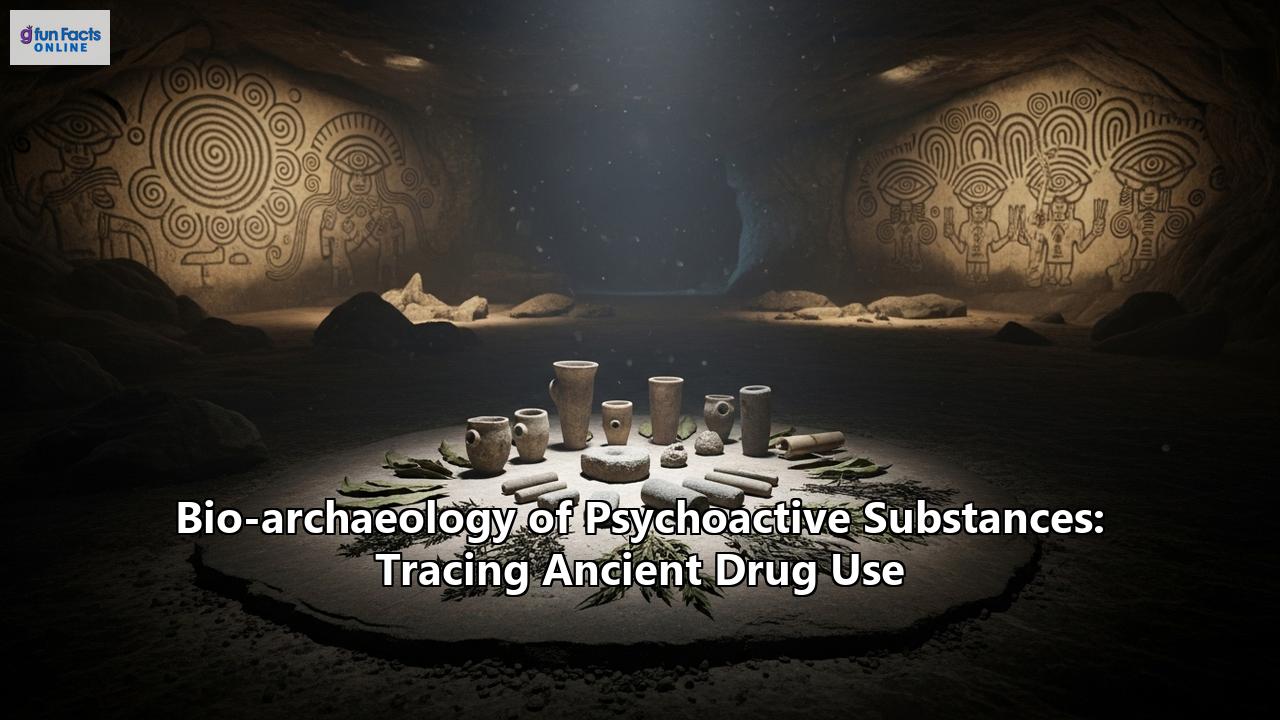
An intoxicating journey through time, the story of humanity's relationship with psychoactive substances is as old as civilization itself, and perhaps even older. It's a narrative woven into the very fabric of our rituals, religions, and remedies. For millennia, this story was pieced together from ambiguous artistic depictions, enigmatic artifacts, and the speculative interpretations of ancient texts. But today, the burgeoning field of bio-archaeology is peeling back the layers of time, using sophisticated scientific techniques to uncover direct, chemical evidence of the drugs our ancestors used. This is not just a history of intoxication, but a deeper exploration of the ancient human mind, its spiritual yearnings, and its profound connection to the chemical keys hidden within the natural world.
Bio-archaeology acts as a molecular detective, tracing the faint chemical fingerprints of psychoactive compounds that have survived for thousands of years. This discipline goes beyond simply identifying ancient plants; it seeks to understand their use and significance by analyzing the contexts in which they are found. By peering into the microscopic and molecular residues left behind, we can begin to answer fundamental questions: What substances did ancient peoples use? How did they consume them? And most importantly, why? Was it for medicine, ritual, religion, or recreation? The answers are revealing a surprisingly complex and deeply ingrained human drive to alter consciousness, a practice that spans every corner of the globe and reaches back to the dawn of our species.
The Archaeologist's Molecular Toolkit: Uncovering Chemical Ghosts
The ability to detect the ephemeral traces of psychoactive substances consumed thousands of years ago is a testament to modern scientific innovation. Bio-archaeologists employ a powerful arsenal of analytical techniques to identify these chemical ghosts, transforming our understanding from speculation to scientific certainty.
The primary approach is residue analysis, which involves the chemical investigation of organic residues preserved on or in ancient artifacts. Porous ceramic vessels are a treasure trove of information, as they can absorb and protect lipids, alkaloids, and other compounds from the foods, drinks, and medicines they once held. Archaeologists also examine smoking pipes, snuffing tubes, mortars, pestles, and even the hardened dental plaque (calculus) on ancient teeth.
The gold standard for identifying these ancient molecules involves techniques like Gas Chromatography-Mass Spectrometry (GC-MS) and Liquid Chromatography-Mass Spectrometry (LC-MS). In essence, these methods separate the complex mixture of molecules within a residue sample and then identify each component by its unique mass and chemical properties. This allows scientists to pinpoint specific biomarkers—the tell-tale chemical signatures of plants like opium poppies, cannabis, or coca. For example, the presence of thebaine, papaverine, and morphine would be strong evidence for opium, while the detection of THC (tetrahydrocannabinol) confirms the presence of cannabis.
Another revolutionary technique is the analysis of human remains themselves. Hair analysis has emerged as a particularly powerful tool. As hair grows, it incorporates chemical compounds from the bloodstream, creating a timeline of a person's substance use. A few strands of ancient hair can reveal which drugs an individual consumed over a period of months or even years leading up to their death. Similarly, chemical analysis of bone and dental calculus can reveal long-term dietary habits, including the regular consumption of certain psychoactive plants.
However, this work is fraught with challenges. The degradation of organic materials over millennia is a constant battle. Furthermore, the risk of contamination is ever-present. Samples can be contaminated by modern sources during excavation or handling, or by other substances in the burial environment through the movement of groundwater. Scientists must use rigorous controls and protocols to ensure that the molecules they detect are genuinely ancient. Interpretation also requires caution; finding the remains of a plant like Ephedra or cannabis doesn't automatically mean it was used for its psychoactive properties, as these plants also provided food, fuel, and fibers for textiles. The context of the find is therefore paramount to understanding its purpose.
A Global Tour of Ancient Highs
Armed with this molecular toolkit, bio-archaeologists have uncovered a world map of ancient psychoactive substance use, revealing distinct traditions and practices on every continent.
Europe: Opium, Hallucinogens, and Bronze Age Shamans
Europe holds some of the earliest evidence for the human manipulation of psychoactive plants. At the Neolithic lakeside village of La Marmotta in Italy, dating back to the 6th millennium BCE, archaeologists discovered an unusually large collection of opium poppy (Papaver somniferum) capsules, suggesting it was one of the first places the plant was cultivated for its narcotic properties.
The evidence for psychoactive use became even more explicit during the Bronze Age. For a long time, the evidence was indirect, such as the discovery of opium alkaloids in ceramic containers or the depiction of poppy capsules in art. However, a groundbreaking 2023 study from the Es Càrritx cave in Menorca, Spain, provided the first direct proof of drug use in Bronze Age Europe. Inside this burial cave, researchers found sealed wooden containers holding locks of human hair dating to around 3,000 years ago. Chemical analysis of this hair revealed a cocktail of potent alkaloids: atropine, scopolamine, and ephedrine.
These compounds are found in plants like henbane (Hyoscyamus albus), mandrake (Mandragora autumnalis), and joint pine (Ephedra). The combination of these hallucinogenic and stimulant substances would have induced a powerful altered state of consciousness, including delirium and out-of-body sensations. The researchers believe this potent mixture was not for pain relief—as it would not have treated the severe dental abscesses and arthritis seen in the skeletons—but was instead consumed during ritual ceremonies led by shamans. These specialists would have possessed the knowledge to handle such toxic plants, using the ensuing trance state for divination or to communicate with the spirit world. This idea is reinforced by the containers themselves, which were decorated with concentric circles, possibly symbolizing the "inner vision" associated with a drug-induced state.
Asia: Ritual Cannabis, Sacred Soma, and Betel Nuts
In Asia, the story of ancient drug use is deeply intertwined with ritual and the great trade routes of antiquity. For years, the 5th-century BCE writings of the Greek historian Herodotus, which described the Scythians of Central Asia inhaling the vapors of burning cannabis in a funerary rite, were the most famous account. Direct evidence remained elusive until recently.
At the 2,500-year-old Jirzankal Cemetery, located high in the Pamir Mountains of western China, archaeologists made a stunning discovery. They unearthed wooden bowls, or braziers, that contained burnt residues. Using GC-MS, scientists analyzed the residue and found it contained cannabis biomarkers with an unusually high concentration of the psychoactive compound THC. This was a crucial detail, as most wild cannabis has very low levels of THC. The finding strongly suggests that these ancient people were not just burning hemp for fiber or oil, but were intentionally selecting or even cultivating plants for their intoxicating effects. The context—lofty tombs filled with ritual objects like harps—points to the cannabis smoke being used to facilitate communication with the spirit world or the deceased during burial ceremonies.
Further west, in ancient Central Asia, bio-archaeology is shedding light on the mysterious divine drink known as Soma in the Vedic texts of India and Haoma in Zoroastrian scripture. For decades, scholars debated the identity of the plant(s) used to make this powerful elixir. Archaeological work at the temple complexes of the Bactria-Margiana Archaeological Complex (BMAC) in modern-day Turkmenistan has provided compelling clues. Vessels found in these 4,000-year-old temples have yielded residues containing not one, but three psychoactive plants: Ephedra, Papaver (opium poppy), and Cannabis. This suggests that Soma may have been a potent brew combining the stimulant effects of ephedra with the narcotic and psychoactive properties of poppy and cannabis. Twigs of Ephedra have also been found in lavish quantities in 4,000-year-old graves of European-looking mummies in China's Tarim Basin, indicating it played a vital role in funerary rituals, perhaps to energize the spirit for its journey to the afterlife.
Meanwhile, in Southeast Asia, the practice of chewing betel nut (Areca catechu) has ancient roots. While the characteristic red-stained teeth have long been observed, a 2024 study on dental calculus from a 4,000-year-old burial in Thailand provided the earliest direct biomolecular evidence of its use. Analysis of tartar from a molar revealed traces of arecoline, the stimulating alkaloid in betel nuts, making the "invisible visible" and confirming a tradition that has been deeply embedded in the region's social and cultural life for millennia.
The Americas: A Hemisphere of Hallucinogens
The ancient Americas were home to a vast and sophisticated pharmacopeia of psychoactive plants, which were central to the spiritual lives of many cultures.
The use of peyote (Lophophora williamsii), a small, spineless cactus containing mescaline, has an exceptionally long history. At Shumla Cave No. 5 on the Rio Grande in Texas, archaeologists unearthed peyote buttons that were later subjected to radiocarbon dating and alkaloid analysis. The results were astounding: the specimens dated to between 3780 and 3660 BCE, and chemical analysis confirmed the presence of mescaline. This demonstrates that Indigenous North Americans have been using peyote for its psychoactive properties for at least 5,700 years, making it one of the oldest continuously used psychoactive substances on record.
Perhaps the most culturally significant substance of the Americas is tobacco (Nicotiana). For a long time, the oldest evidence was a 3,300-year-old pipe from Alabama. But a discovery at the Wishbone site in Utah's Great Salt Lake Desert dramatically pushed back that timeline. In a 12,300-year-old hearth belonging to Ice Age hunter-gatherers, scientists found four charred seeds of a wild tobacco species. Given that tobacco did not grow in the marshland environment of the site, the people must have intentionally gathered it from the foothills many kilometers away. It is thought they used it not by smoking, but by twisting the plant fibers into wads that were chewed or sucked. This find establishes tobacco use in the Americas thousands of years earlier than previously known, cementing its place as one of the most important plants in the continent's deep history.
In South America, a diverse range of powerful hallucinogens was employed. The potent psychedelic snuff known as vilca or yopo, made from the seeds of Anadenanthera trees, has been used for at least 4,000 years. Archaeological sites in Argentina, Chile, and Bolivia have yielded the seeds themselves, as well as the paraphernalia for their use—snuffing trays and tubes—in funerary and ceremonial contexts dating back to 1,000 BCE. The active ingredients are potent tryptamines, similar to DMT.
The famous Amazonian brew, ayahuasca, has a more complex archaeological signature because it is a mixture of at least two plants: the Banisteriopsis caapi vine, which contains harmala alkaloids (MAOIs), and a plant containing DMT, such as Psychotria viridis. Direct evidence of the prepared brew is elusive, but compelling finds point to its antiquity. In a 1,000-year-old shaman's ritual pouch discovered in a cave in the Bolivian Andes, scientists found an incredible array of psychoactive substances, including cocaine, bufotenine (a tryptamine), and, crucially, both harmine (from B. caapi) and DMT-containing plant matter. This shaman had gathered all the necessary ingredients for an ayahuasca-like experience, likely through extensive travel or trade networks. Further evidence comes from hair analysis of Nazca mummies from Peru, which tested positive for the consumption of the B. caapi vine, a key component of ayahuasca.
Africa and the Near East: Lilies of the Nile and Saharan Visions
The cradle of civilization in the Near East and Africa also reveals a deep history of psychoactive plant use. Ancient Egypt, in particular, had a celebrated relationship with the Egyptian Blue Water Lily (Nymphaea caerulea). This beautiful flower, which opens in the morning and closes at night, was a powerful symbol of the sun and rebirth, appearing frequently in art and as a funerary offering in tombs, including that of Tutankhamen.
But its significance went beyond symbolism. The lily contains psychoactive alkaloids, including apomorphine, and was believed to have both relaxing and aphrodisiac properties. Egyptian art often depicts people holding the flowers to their noses, and it is widely thought that the flowers were infused into wine, creating an entheogenic libation consumed at parties and religious festivals.
Perhaps the most ancient, though still debated, evidence for hallucinogen use comes from the Tassili n'Ajjer plateau in the Algerian Sahara. Here, stunning rock art dating back 7,000 to 9,000 years depicts scenes that are highly suggestive of psychoactive mushroom use. One famous image shows a shaman-like figure covered in mushrooms, with more mushrooms sprouting from their body, while holding one in their hand. Another shows a row of dancing figures, also holding mushrooms. These images have been interpreted by scholars as depicting rituals involving Psilocybe mushrooms, hinting at a very ancient tradition of fungal hallucinogen use in Paleolithic Africa.
Between the Sacred and the Mundane: The "Why"
The bio-archaeological evidence does more than just identify what our ancestors were consuming; it provides profound insights into why. Overwhelmingly, the context of these finds points away from simple recreational use and towards deeply significant cultural roles. The use of these substances was not a rejection of societal values, but an integral part of them.
Shamanism and Religion are the most common threads. From the Bronze Age shamans of Menorca to the cannabis-smoking ritualists of ancient China, psychoactive plants were seen as conduits to the spirit world. They were tools for divination, for communicating with gods and ancestors, and for guiding the souls of the dead. In the Americas, substances like peyote and ayahuasca remain central to indigenous religious practices today, viewed as sacred medicines that facilitate healing and spiritual connection. The powerful visions and altered states of consciousness these plants induced were not seen as hallucinations, but as glimpses into a deeper reality. Funerary Rites were another major context. The presence of cannabis and ephedra in the tombs of China and Central Asia, opium poppies scattered over Egyptian mummies, and vilca snuffs in Andean burials all suggest a belief that these substances had a role to play in the afterlife. They may have been intended to ease the passage of the deceased, to protect or guide their spirit on its journey, or to allow the living to commune with them one last time. Medicine and Healing were also key motivations. The line between spiritual and physical healing was often blurred in the ancient world. The god associated with the Egyptian Blue Water Lily, Nefertem, was a god of both healing and beautification. The name given to the opium poppy by the ancient Sumerians translates to the "joy plant," hinting at its euphoric and pain-relieving properties. The use of hallucinogens by shamans was often for the purpose of diagnosing or curing illness, an act made possible through the ecstatic trance state.An Enduring Human Quest
The bio-archaeology of psychoactive substances reveals that the human desire to alter consciousness is not a modern phenomenon but a deeply rooted, ancient impulse. For millennia, our ancestors explored the world around them with incredible ingenuity, identifying plants that could heal their bodies, soothe their minds, and transport their spirits. They cultivated, processed, and combined these substances with a specialized knowledge that was woven into the heart of their cultures.
This journey into our chemical past shows that drugs were not on the fringes of ancient society; they were often at its center, embedded in its most sacred rituals and profound beliefs. By tracing these molecular ghosts through time, we gain a more nuanced understanding of our ancestors and, perhaps, a better perspective on our own species' long, complex, and enduring relationship with the planet's psychoactive pharmacopeia.
Reference:
- https://www.numberanalytics.com/blog/the-science-behind-residue-analysis
- https://www.frontiersin.org/news/2025/07/31/4000-year-old-teeth-earliest-traces-chewing-betel-nuts-thailand
- https://www.researchgate.net/publication/7754322_Prehistoric_peyote_use_Alkaloid_analysis_and_radiocarbon_dating_of_archaeological_specimens_of_Lophophora_from_Texas
- https://apnews.com/article/marijuana-us-news-asia-science-china-58838bed92544a40a5ff9e20f3768498
- https://www.smithsonianmag.com/smart-news/ancient-european-hallucinogenic-drugs-hair-strands-180981956/
- https://www.mdpi.com/2071-1050/11/3/656
- https://digitalcommons.usu.edu/etd2023/200/
- https://www.researchgate.net/publication/301307788_Modern_contaminants_affecting_microscopic_residue_analysis_on_stone_tools_A_word_of_caution
- https://arkeonews.net/first-direct-evidence-of-drug-use-as-part-of-bronze-age-ritual-ceremonies-in-europe/
- https://www.theguardian.com/science/2023/apr/07/bronze-age-people-hallucinogenic-drugs-menorca-study
- https://www.independent.co.uk/news/science/scientists-bronze-age-menorca-europe-spain-b2315531.html
- https://www.washingtoninformer.com/studies-high-potency-cannabis-used-in-ancient-rituals/
- https://en.wikipedia.org/wiki/Botanical_identity_of_soma%E2%80%93haoma
- https://heatherpringle.com/2010/02/15/soma-ephedra-and-journeys-to-the-next-world/
- https://www.researchgate.net/publication/236129074_Interdisciplinary_investigation_on_ancient_Ephedra_twigs_from_Gumugou_Cemetery_3800_BP_in_Xinjiang_region_northwest_China
- https://en.wikipedia.org/wiki/Peyote
- https://www.mdpi.com/2075-471X/8/2/12
- https://arkeonews.net/the-oldest-evidence-of-human-use-of-tobacco-was-discovered-in-utah/
- https://www.sciencenews.org/article/earliest-evidence-tobacco-use-smoking-pipe-burned-seeds-plants
- https://www.ancient-origins.net/news-history-archaeology/oldest-tobacco-north-america-020922?nopaging=1
- https://news.artnet.com/art-world/archaeologists-discover-12300-year-old-tobacco-use-2019581
- https://pubmed.ncbi.nlm.nih.gov/34635825/
- https://pubmed.ncbi.nlm.nih.gov/17610173/
- https://pmc.ncbi.nlm.nih.gov/articles/PMC11397254/
- https://www.researchgate.net/publication/6227936_Ritual_use_of_Anadenanthera_seeds_among_South_America_natives
- https://pmc.ncbi.nlm.nih.gov/articles/PMC11114307/
- https://en.wikipedia.org/wiki/Ayahuasca
- https://www.gaia.com/article/oldest-evidence-of-ayahuasca-use-found-in-ancient-shamans-stash?render=details-v4
- https://archaeology.org/issues/march-april-2023/digs-discoveries/digs-peru-nazca-ayahuasca/
- https://oliverkrentzman.medium.com/the-egyptian-blue-water-lily-nymphaea-caerulea-5977b215fc6b
- https://www.gardenia.net/plant/nymphaea-caerulea
- https://en.wikipedia.org/wiki/Nymphaea_nouchali_var._caerulea
- https://mermadearts.com/i/blue-lotus-of-the-nile-the-narcotic-lily
- https://www.google.com/search?q=time+in+Rome,+IT
- https://en.wikipedia.org/wiki/Entheogenic_drugs_and_the_archaeological_record