
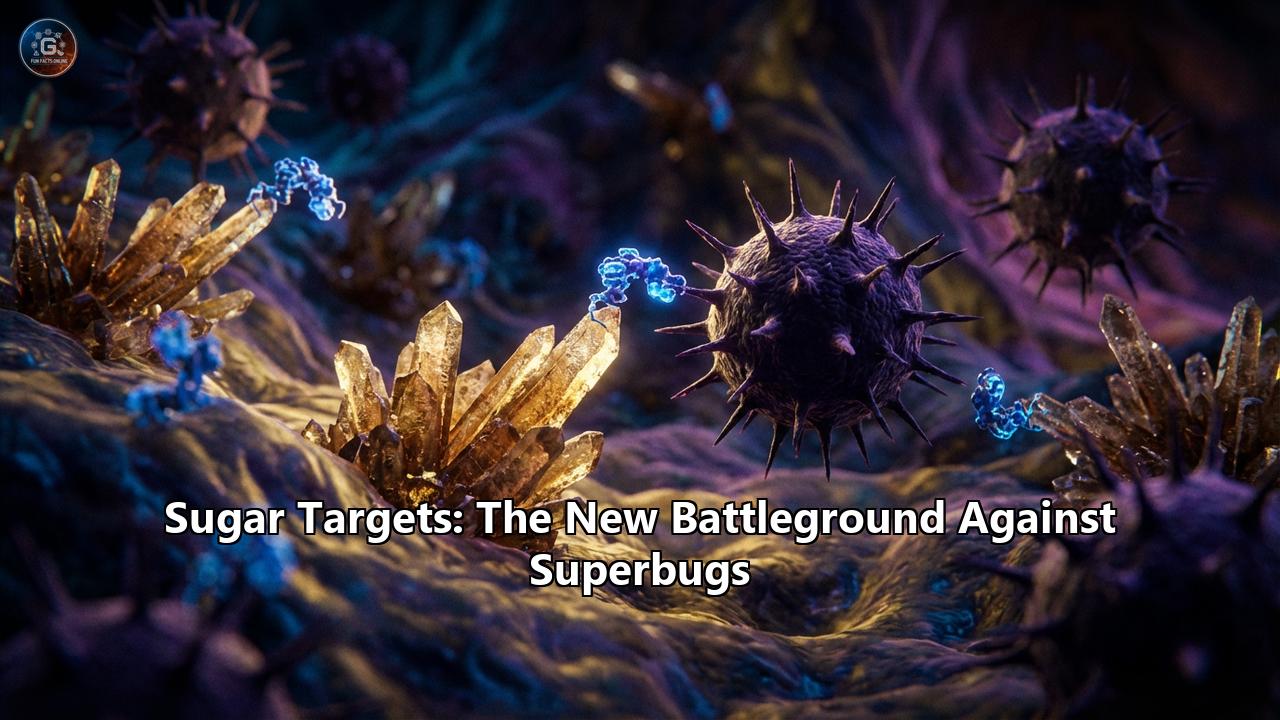
The war against superbugs has entered a new, unexpected phase. For decades, we have relied on a "scorched earth" policy, blasting bacteria with broad-spectrum antibiotics that destroy everything in their path. But the bacteria have evolved. They have built thicker walls, developed pumps to eject our poisons, and learned to hide in dormant states where our drugs cannot touch them. Now, scientists are opening a new front line, one that targets the very structural and metabolic essence of bacterial life: sugar.
This is not about cutting sugar from your diet to starve a cold. This is about the complex, alien world of glycobiology—the study of the sugar structures that coat every living cell. For bacteria, these sugars are their armor, their camouflage, and their primary way of interacting with the world. They are also their fatal weakness. From "Trojan horse" antibiotics that smuggle death inside a sweet wrapper to "anti-adhesion" therapies that grease the slide for bacteria so they cannot hold on, "Sugar Targets" represents the most promising frontier in the fight against antimicrobial resistance (AMR).
In this comprehensive exploration, we will journey into the microscopic battlefield where sugar molecules determine life and death. We will uncover how Australian researchers have recently cracked the code of "pseudaminic acid," how artificial sweeteners like saccharin might be our next great weapon, and how feeding glucose to a sleeping bacteria might just be the trick to killing it.
Part I: The Sugar Fortress
Understanding the Bacterial GlycomeTo understand why sugar is the new battleground, we must first understand the enemy's armor. When we think of "sugar," we think of the white crystals in our coffee. But in biochemistry, sugars (or carbohydrates/glycans) are the most diverse and complex building blocks of life.
Bacteria are, in essence, sugar-coated fortresses. Their survival depends on a complex mesh of sugars that forms their cell wall and outer capsule.
1. The Peptidoglycan MeshThe classic target of penicillin and its descendants is peptidoglycan. This is a massive, mesh-like molecule that surrounds the bacterial cell membrane, preventing it from bursting due to internal pressure. It is made of long chains of two sugars—N-acetylglucosamine (GlcNAc) and N-acetylmuramic acid (MurA)—cross-linked by short peptides.
For 80 years, we have been attacking the enzymes that build this wall. But superbugs like MRSA (Methicillin-Resistant Staphylococcus aureus) have evolved to modify these enzymes, rendering our drugs useless. The new "Sugar Target" approach shifts the focus. Instead of just trying to break the enzymes, we are now targeting the sugars themselves or the specific transport proteins that carry these sugar bricks to the construction site.
2. The Lipopolysaccharide (LPS) ArmorGram-negative bacteria (the "bad guys" of the superbug world, like E. coli and Pseudomonas aeruginosa) have an outer membrane shielded by Lipopolysaccharide (LPS). This is a dense forest of sugar chains that acts as a barrier against antibiotics. It is why many drugs work on Staph (Gram-positive) but fail against E. coli (Gram-negative).
The LPS is unique to bacteria. Our cells don't have it. This makes it a perfect target. If we can disrupt the synthesis of the "Lipid A" sugar core of this armor, the bacterial outer membrane dissolves, and the bug dies.
3. The Capsule of InvisibilityMany superbugs wrap themselves in a thick, slimy "capsule" made of polysaccharides (long sugar chains). This capsule is an invisibility cloak. It prevents our immune system's macrophages from "seeing" or grabbing the bacteria. It also makes the bacteria slippery, so white blood cells can't get a grip.
Recent breakthroughs have focused on stripping away this capsule or teaching our immune system to recognize the specific, alien sugars that compose it. This brings us to one of the most exciting discoveries of the last year.
Part II: The Breakthrough of Pseudaminic Acid
Unmasking the Alien SugarIn early 2026, a team of Australian researchers published a landmark study in Nature Chemical Biology that sent shockwaves through the AMR community. They found a way to target a specific sugar called pseudaminic acid.
The TargetPseudaminic acid is a "bacterial-only" sugar. It is structurally similar to sialic acid (a sugar found on human cells), but different enough that it doesn't exist in the human body. It is found exclusively on the surface of some of the most dangerous pathogens, including Acinetobacter baumannii (often called "Iraqibacter" due to its prevalence in combat wounds) and Pseudomonas aeruginosa.
These bacteria use pseudaminic acid to build their flagella (the tails they use to swim) and their pili (the hooks they use to attach to your cells). Crucially, this sugar acts as a "don't eat me" signal, mimicking host sugars just enough to confuse the immune system.
The Weapon: Engineered AntibodiesThe researchers synthesized pseudaminic acid in the lab—a feat of chemical engineering—and used it to create "pan-specific" antibodies. These are not antibiotics. They are immune homing beacons.
When injected into a host, these antibodies ignore human cells but lock onto the pseudaminic acid on the bacteria with a death grip. Once attached, they light up the bacteria like a Christmas tree for the immune system. In mouse models, this therapy completely cleared multidrug-resistant A. baumannii infections that were resistant to all known antibiotics.
This represents a paradigm shift: Glyco-Immunotherapy. We aren't poisoning the bacteria; we are simply tearing off its disguise by targeting a specific sugar molecule.
Part III: The Trojan Horse Strategy
Siderophores and Sugar SmugglersBacteria are scavengers. To survive and multiply, they need iron. But the human body is stingy with iron, locking it away in hemoglobin and other proteins. So, bacteria send out "siderophores"—small, iron-chelating molecules that go out into the environment, grab iron, and bring it back into the bacterial cell through special transport gates.
Scientists have realized they can hijack this supply line. This is the Trojan Horse strategy.
Cefiderocol: The Iron-Clad AssassinThe most successful example of this is the antibiotic cefiderocol (brand name Fetroja). It is a cephalosporin antibiotic (like penicillin) but with a twist: it has a siderophore-like tail attached to it.
When a superbug like Pseudomonas sees this molecule, it doesn't see a threat; it sees a delicious delivery of iron. It actively grabs the molecule and pumps it inside its own fortress, past the LPS armor and the efflux pumps. Once inside, the "Trojan horse" releases the antibiotic, which destroys the cell wall from the inside out.
The Sugar ConnectionThe newest generation of these Trojan horses uses sugar conjugates. By linking antibiotics to specific sugar molecules that bacteria actively eat (like mannose or glucose), we can trick the bacteria into importing the drug.
Researchers are currently developing Siderophore-Cephalosporin-Sugar conjugates. These triple-threat molecules use the iron transport pathway and sugar transport pathways simultaneously, making it nearly impossible for the bacteria to develop resistance without starving itself to death. If it shuts down the transport gate to stop the drug, it also stops getting food (sugar) and iron. It’s a "checkmate" move.
Part IV: The Sticky Fingers of Death
Lectins and Anti-Adhesion TherapyInfection is, at its core, an act of attachment. You cannot get a urinary tract infection (UTI) if the E. coli flows right out of your bladder. You cannot get pneumonia if the bacteria cannot grip the lining of your lungs.
Bacteria hold on using lectins—proteins on their surface that are shaped specifically to grab onto the sugars on your cells. For example, the FimH lectin on the tip of E. coli pili binds tightly to mannose sugars on your bladder wall.
The Strategy: Greasing the SlideTraditional antibiotics kill bacteria. Anti-adhesion therapy just stops them from sticking. The idea is to flood the system with "decoy sugars."
If you have a UTI caused by E. coli, and you flood the bladder with free-floating mannose derivatives (called glycomimetics), the bacterial lectins will grab the floating sugar instead of the bladder wall. They fill up their "hands" with the decoy, lose their grip on your tissue, and are flushed out in the urine.
Why This is RevolutionaryThe beauty of this approach is that it does not kill the bacteria. This sounds counterintuitive, but it is brilliant. When you kill bacteria, you create "selective pressure"—the only survivors are the mutants that are resistant, leading to superbugs.
If you just gently detach them and flush them away, you apply very little evolutionary pressure. The bacteria survive (in the sewer), but you are cured. Resistance takes much longer to develop.
Recent Breakthroughs in Anti-Adhesion- Mannosides: New synthetic sugars called "mannosides" have been developed that bind to bacterial lectins 1,000 times tighter than natural sugar. These are currently in clinical trials for treating recurrent UTIs without antibiotics.
- Intelectin-2: A 2026 study from MIT identified a human protein called Intelectin-2 that acts as a natural "counter-lectin." It binds to bacterial sugars and traps the microbes in the mucus layer of the gut, preventing them from reaching the intestinal wall. Scientists are now looking to manufacture this protein as a therapeutic drink to prevent gut infections like C. difficile.
Part V: Waking the Sleeping Dragon
Metabolic PotentiationOne of the biggest reasons antibiotics fail is not resistance, but tolerance. When bacteria are under stress, they often shut down their metabolism and go to sleep. These "persister cells" stop building cell walls and stop making proteins. Since antibiotics target cell wall building and protein synthesis, the drugs bounce right off. The bacteria simply nap through the antibiotic storm and wake up when you stop taking your pills.
The Sugar Alarm ClockHow do you kill a sleeping enemy? You wake them up.
Research has shown that adding specific sugars—glucose, mannitol, or fructose—to an antibiotic treatment can "jump-start" the bacterial metabolism. This is called metabolic potentiation.
When the bacteria sense the sugar, they greedily turn their engines back on to digest it. They start the Proton Motive Force (PMF) to pump the sugar in. This metabolic surge does two things:
- It activates the cellular machinery that antibiotics target (like ribosomes).
- It actively pumps the antibiotic into the cell along with the sugar.
In lab tests, adding mannitol to aminoglycoside antibiotics increased the killing of persister E. coli by 1,000-fold. This "sugar spoon" method could turn old, ineffective antibiotics into super-killers against chronic, recurring infections like biofilm-associated wounds.
Part VI: The Sweet Poison
Saccharin and Artificial SweetenersIn a twist that sounds like a tabloid headline, recent research from Brunel University London (April 2025) has found that saccharin—the artificial sweetener in your diet soda—might be a weapon against superbugs.
While we consume saccharin because it tastes sweet but has zero calories, bacteria react to it differently. The study found that saccharin inhibits the growth of aggressive superbugs like MRSA and Pseudomonas aeruginosa.
How It WorksSaccharin acts as a catalytic inhibitor of an enzyme called bacterial carbonic anhydrase. It also seems to damage the bacterial cell wall directly, causing the bacteria to become misshapen and unable to divide.
More importantly, saccharin appears to potentiate other antibiotics. When used in combination, it can lower the dose of toxic antibiotics needed to kill a superbug. It essentially weakens the enemy's shields so the main weapon can penetrate. Researchers are now looking at incorporating saccharin derivatives into wound dressings and hydrogels to treat infected burns.
Part VII: Breaking the Biofilm
Sugar-Based DispersalBiofilms are the ultimate defensive formation. Bacteria excrete a slime made of DNA, proteins, and—you guessed it—sugars (exopolysaccharides or EPS). This slime hardens into a fortress that antibiotics cannot penetrate. 80% of all chronic infections (like those on implants, catheters, and in cystic fibrosis lungs) are biofilm-based.
The Enzymatic ChiselScientists are now using glycoside hydrolases—enzymes that specifically chew up the sugar chains in the biofilm matrix. By analyzing the "sugar code" of a specific biofilm (e.g., Pseudomonas uses alginate and Psl sugars), we can deploy an enzyme cocktail that dissolves the slime.
Once the sugar matrix is dissolved, the bacteria are exposed and vulnerable to standard antibiotics and the immune system. This is currently being tested in inhalable forms for Cystic Fibrosis patients, whose lungs are chronically colonized by biofilm-forming bacteria.
Nitric Oxide DonorsAnother strategy involves modifying sugars to release Nitric Oxide (NO). Low levels of NO signal bacteria to "disperse." It’s a chemical fire alarm. When bacteria in a biofilm sense NO, they detach and try to swim away. By attaching NO-donors to sugar molecules that target the biofilm, we can trick the colony into breaking up voluntarily, making them easy targets for immune cleanup.
Part VIII: The Future of Glyco-Medicine
Vaccines and BeyondThe ultimate goal is to prevent infection entirely. Here, sugars are again the key.
Glycoconjugate VaccinesThe surface sugars of bacteria (capsular polysaccharides) are unique to each strain. However, sugars alone are poor antigens—they don't stimulate a strong memory response in our immune system (which prefers proteins).
The solution is the Glycoconjugate Vaccine. Scientists chemically link the bacterial sugar to a carrier protein (like a harmless toxin). This tricks the immune system into paying attention to the sugar.
This technology has already virtually eliminated Haemophilus influenzae type b (Hib) and significantly reduced Pneumococcal disease. The next frontier is ExPEC (Extra-intestinal Pathogenic E. coli), the primary cause of sepsis and UTIs in the elderly. A new multivalent glycoconjugate vaccine for ExPEC is currently in advanced trials (as of late 2025), promising to save hundreds of thousands of lives annually.
Phage Therapy and the Receptor Trade-OffBacteriophages (viruses that eat bacteria) often use sugar receptors on the bacterial surface to dock. If a bacteria mutates its sugar receptor to hide from the phage, it often loses virulence (because it can no longer attach to human cells) or becomes sensitive to antibiotics again.
This "evolutionary trap" is being exploited in Phage Steering. We treat a patient with a phage that targets the same sugar the bacteria uses to pump out antibiotics. The bacteria is forced to choose: keep the pump and die by the phage, or lose the pump (and the sugar receptor) and die by the antibiotic.
Conclusion: The Sweet Science of Survival
For too long, we ignored the sugar coating of the microbial world, focusing only on DNA and proteins. We were fighting a war while blind to the enemy's armor and communications.
The "Sugar Target" revolution changes everything. It turns the bacteria's greatest strengths—its protective capsule, its sticky lectins, its iron-scavenging hunger—into fatal liabilities. From the atomic precision of pseudaminic acid antibodies to the clever deception of Trojan horse sugars and the brute force of biofilm-dissolving enzymes, we are finally fighting on the terrain where the battle is truly decided.
The next time you stir sugar into your tea, remember: that simple molecule represents the most sophisticated, high-stakes arms race on the planet. And for the first time in decades, we are starting to win.
Reference:
- https://jksus.org/revolutionizing-therapeutics-the-dazzling-world-of-plant-lectins/
- https://www.researchgate.net/publication/385169955_High-Throughput_Discovery_of_Synthetic_Siderophores_for_Trojan_Horse_Antibiotics
- https://www.researchgate.net/publication/331940661_Building_a_Trojan_Horse_Siderophore-Drug_Conjugates_for_the_Treatment_of_Infectious_Diseases
- https://pmc.ncbi.nlm.nih.gov/articles/PMC4053685/
- https://pubs.acs.org/doi/10.1021/acs.jmedchem.2c01489
- https://pubmed.ncbi.nlm.nih.gov/16564136/
- https://academic.oup.com/femspd/article/38/3/181/582831
- https://www.technologynetworks.com/immunology/news/lectin-found-to-trap-and-kill-antibiotic-resistant-gut-bacteria-408571
- https://pmc.ncbi.nlm.nih.gov/articles/PMC5955472/
- https://www.vax-before-travel.com/2025/08/22/3-million-advances-vaccine-against-e-coli-infections