
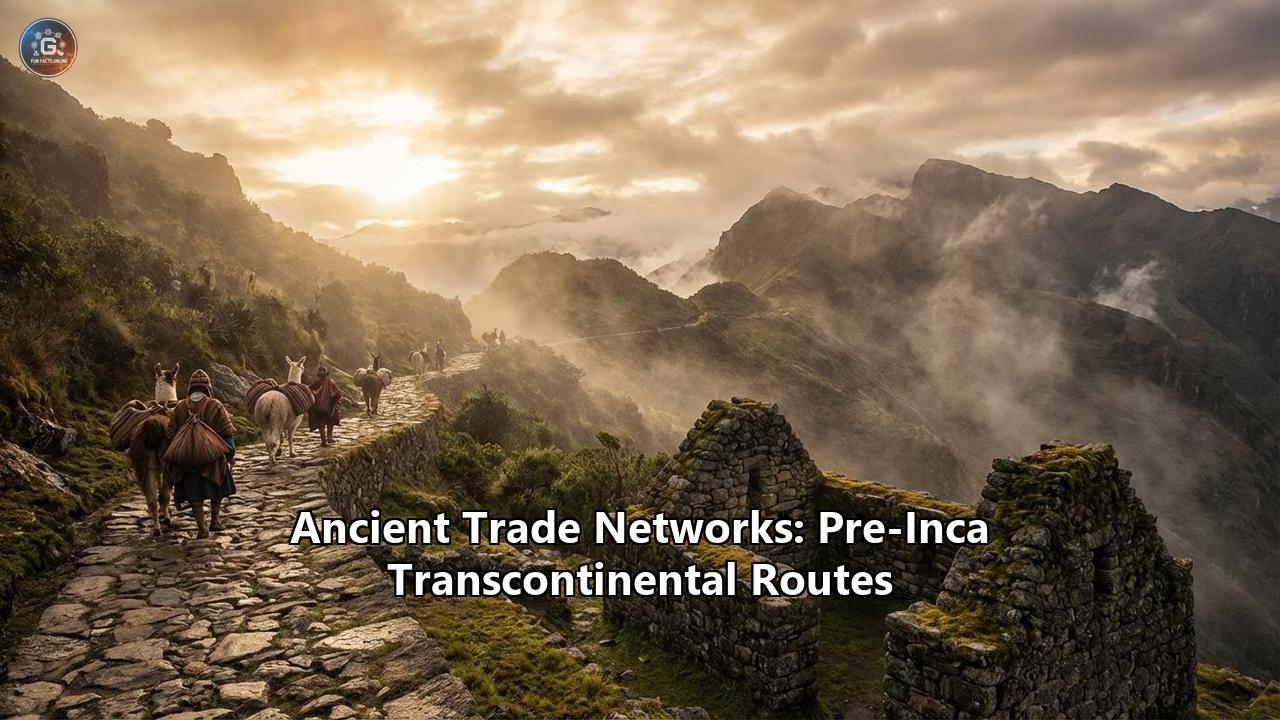
When we envision the ancient history of South America, our minds almost instinctively conjure the majestic stone citadel of Machu Picchu, the vast geometric precision of the Qhapaq Ñan (the Great Inca Road), and the sweeping dominion of the Inca Empire. For centuries, the historical narrative of the Andes was entirely dominated by the Inca, and for good reason: they built a monolithic empire that stretched from modern-day Colombia down to Chile, unified by unparalleled administrative prowess and monumental architecture. However, modern archaeology, advanced isotopic chemistry, and groundbreaking ancient DNA sequencing are fundamentally rewriting this story. The truth, buried beneath the arid sands of the Pacific coast and hidden high within the freezing mountain passes of the Andes, is far more complex and staggering than anyone previously imagined.
Centuries—and in some cases, millennia—before the first Inca emperor ever took the throne, South America was already a bustling, deeply interconnected continent. It was crisscrossed by sophisticated transcontinental trade networks that moved goods, people, ideas, and even live tropical animals across some of the most unforgiving terrain on the planet. From the humid, sweltering depths of the Amazon rainforest, over the jagged, oxygen-deprived peaks of the Andes, and down into the hyper-arid coastal deserts, a staggering pre-Inca economy thrived. This was an ancient globalization, driven not by a single imperial conqueror, but by a patchwork of vibrant, diverse cultures bound together by mutual necessity, spiritual devotion, and an unyielding human drive to connect.
To understand the sheer scale of these pre-Inca transcontinental routes, we must peel back the layers of time and journey through the epochs that preceded the Inca, exploring the societies that forged the first paths through the wilderness. We must examine the sacred commodities that fueled these perilous journeys, the ingenious logistical systems that made them possible, and the remarkable people who dedicated their lives to walking the high spine of the continent.
The Dawn of Andean Synergy: Caral-Supe and the First Exchanges
To trace the origins of transcontinental trade in South America, we must travel back nearly 5,000 years to the Norte Chico civilization, specifically the sacred city of Caral in the Supe Valley of present-day Peru. Flourishing between 3000 BC and 1800 BC, Caral is widely recognized as the oldest known civilization in the Americas. Yet, what makes Caral truly revolutionary is not just its towering stepped pyramids or sunken circular plazas, but the economic engine that allowed it to rise.
Unlike many early cradles of civilization in Mesopotamia or Egypt, which were built almost exclusively on the cultivation of cereal grains, the foundation of Caral’s economy was a profound symbiotic trade network between the coast and the inland valleys. It was built on a simple but world-altering exchange: fish for cotton.
The coastal settlements of the Norte Chico region had access to the Pacific Ocean, specifically the Humboldt Current, one of the richest marine ecosystems on Earth. The waters teemed with anchovies and sardines. However, catching these fish in massive, surplus-generating quantities required nets—nets made from cotton. Inland, cities like Caral possessed the ideal climate and irrigation capabilities to grow vast fields of cotton, but they lacked the protein-rich resources of the sea. Thus, the first great Andean trade network was born. Coastal fishers traded dried anchovies and sardines to inland farmers in exchange for raw cotton and gourds (used as fishing floats).
This symbiotic relationship created a surplus of wealth and calories, freeing up segments of the population to become specialized artisans, priests, and builders. But the trade did not stop at the borders of the Supe Valley. Excavations at Caral have unearthed goods that hint at the nascent beginnings of a much larger transcontinental web. Archaeologists have found the bones of monkeys and the feathers of tropical birds, strongly suggesting that even 5,000 years ago, goods from the Amazon basin were making their way over the formidable barrier of the Andes. They have also discovered remnants of hallucinogenic snuffs originating from jungle flora, hinting at an early spiritual connection to the deep rainforest. Caral proves that the concept of ecological complementarity—the idea of different geographical zones relying on each other for survival and prosperity—was baked into the Andean psyche from the very beginning.
The Cult of the Jaguar: Chavín de Huántar as the Cosmic Crossroads
Fast forward to the first millennium BC, and the nature of Andean trade begins to shift from simple survival to profound spiritual necessity. Between 900 BC and 200 BC, the Chavín culture dominated the cultural landscape of the Andes. Their epicenter was the monumental temple complex of Chavín de Huántar, situated at an elevation of over 10,000 feet (3,150 meters) in the central highlands of Peru.
Chavín de Huántar was not the capital of a sprawling political empire; rather, it was the center of a pan-Andean religious cult. It functioned much like ancient Delphi in Greece or Mecca in the Islamic world—a supreme pilgrimage destination. But strategically, Chavín de Huántar was positioned perfectly at a geographical crossroads. It sat near two mountain passes that connected the Pacific coast to the dense, uncharted Amazon basin to the east.
Because of this strategic location, Chavín became the ultimate clearinghouse for transcontinental trade. But what were they trading? For the priests of Chavín, spiritual power was derived from the exotic. Their stone carvings and iconic artwork are dominated by apex predators: the harpy eagle of the sky, the caiman of the rivers, and, most prominently, the jaguar of the jungle. None of these animals were native to the high, cold altitudes of Chavín de Huántar. They were creatures of the deep Amazon.
Pilgrims and traders journeyed for weeks, scaling sheer cliffs and navigating freezing passes, to bring Amazonian offerings to the temple. They brought jaguar pelts, exotic feathers, and potent hallucinogenic plants like the San Pedro cactus and Anadenanthera colubrina (vilca) seeds. In return, traders from the coast brought sea shells, dried fish, and coastal salt. A particularly crucial trade item was the Strombus shell, a large marine conch brought from the warm waters of the far north (modern-day Ecuador). At Chavín, master artisans carved these shells into intricate trumpets called pututus. When blown, the pututus produced a haunting, booming resonance that echoed through the subterranean labyrinth of the temple, designed to mimic the roar of the jaguar and the thunder of the gods.
The Chavín era solidified a vital concept in pre-Inca trade: distance equaled divinity. The further a good traveled, and the more dangerous the journey required to obtain it, the more sacred power it held. This spiritual demand for exotics laid the permanent groundwork for transcontinental supply chains. The language spoken along these early routes likely laid the foundational roots of Quechua. Recent linguistic and historical analyses suggest that the Quechua language, or runasimi, did not originate with the Inca, but has pre-Inca origins dating back millennia. It was spoken in various dialects across the highlands of Peru, Bolivia, and Ecuador, and its early expansion was deeply tied to these burgeoning pre-Inca trade networks and migrations. Long before the Inca used it to administer an empire, early variants of Quechua served as a lingua franca for merchants and pilgrims navigating the complex cultural terrain of the Chavín sphere.
Masters of the Desert and the Sea: Moche and Nazca
As the influence of Chavín waned in the early centuries AD, power decentralized, giving rise to fiercely independent and brilliant regional cultures. On the northern coast of Peru, the Moche civilization (100 AD – 800 AD) built colossal adobe pyramids and mastered the art of irrigation, turning the coastal desert into an agricultural oasis. Down south, the Nazca culture (100 AD – 800 AD) etched their famous, massive geoglyphs into the arid pampa.
Both cultures, despite being bound to the hyper-arid Pacific coast, were deeply integrated into transcontinental trade. The Moche, in particular, were master metallurgists and bold mariners. While they traded inland for high-altitude staples like quinoa, potatoes, and camelid meat (llama and alpaca), their most astonishing trade routes were maritime.
The Moche constructed large caballitos de totora (reed watercraft) and massive balsa wood rafts equipped with cotton sails. They navigated the treacherous Pacific currents, sailing hundreds of miles north to the Gulf of Guayaquil in modern-day Ecuador. Their objective was not conquest, but the acquisition of the ultimate pre-Columbian status symbol: the Spondylus shell.
Spondylus princeps, the thorny oyster, thrives only in the warm, tropical waters north of the Humboldt Current. Its brilliant crimson and coral-colored shell was considered the "red gold" of the Andes. It was believed to be the literal food of the gods, a sacred harbinger of rain, and a crucial offering to stave off the devastating effects of El Niño climate events. The Moche imported Spondylus by the ton, grinding it into sacred dust to scatter before the feet of their rulers, or carving it into exquisite jewelry.Meanwhile, the Nazca in the south were looking eastward. The hyper-arid Nazca desert lacks significant mineral wealth, yet Nazca tombs are filled with obsidian tools and weapons, as well as brilliantly dyed textiles made from alpaca and vicuña wool. These materials originated high in the Andes. To obtain them, the Nazca engaged in rigorous trade with highland cultures. The famous Nazca Lines—gigantic geoglyphs of spiders, hummingbirds, monkeys (again, hinting at Amazonian knowledge), and geometric shapes—have long puzzled archaeologists. While their ritual purpose is undeniable, many modern scholars believe that the straight, miles-long lines also served as ceremonial pathways and vital waymarkers for trade caravans descending from the mountains to the coast, guiding them to water sources and ritual exchange centers.
The First Empires: The Architects of the Highway
If Caral created the concept of exchange, and Chavín made it sacred, it was the Wari and Tiwanaku who industrialized it. Between 500 AD and 1000 AD, centuries before the Inca, these two contemporary powers dominated the Andean world. The Wari expanded from the central highlands of Ayacucho, Peru, while the Tiwanaku ruled the vast, high-altitude Altiplano surrounding Lake Titicaca, expanding down into modern-day Bolivia, Chile, and Argentina.
The Wari are the true, unsung architects of the Andean road system. While the Inca are credited with the Qhapaq Ñan, they largely paved over, expanded, and co-opted the existing infrastructure built by the Wari. The Wari Empire was militaristic, administrative, and deeply organized. To control their vast, rugged territory, they needed to move troops, administrators, and goods rapidly.
To achieve this, the Wari carved paths into sheer cliff faces, built suspension bridges woven from ichu grass over raging gorges, and laid thousands of miles of stone-paved roads. They were also the pioneers of the tambo system—a network of waystations and storehouses placed exactly one day’s journey apart along the trade routes. These waystations provided food, shelter, and fresh llamas for merchants and messengers. The Wari traded heavily in obsidian, extracting it from massive quarries like Quispisisa, and distributing the volcanic glass across the continent. Variants of Quechua continued to evolve and spread during this period, serving as the connective linguistic tissue that allowed Wari administrators to communicate with diverse subjugated and allied peoples.
Simultaneously, the Tiwanaku Empire was perfecting the art of the llama caravan. At 13,000 feet above sea level, the Tiwanaku heartland was too high to grow maize or cotton. Their survival depended entirely on massive, state-sponsored trade caravans. The Tiwanaku effectively weaponized the llama as a vehicle of economic dominance.
A single llama can carry about 25 to 30 kilograms (55 to 65 pounds) of cargo and traverse roughly 15 to 20 miles a day in high altitudes. While a single animal's capacity is modest, the Tiwanaku moved in herds of hundreds, sometimes thousands. Guided by highly skilled caravaneros, these massive convoys would leave the freezing Altiplano loaded with freeze-dried potatoes (chuño), dried llama meat (ch'arki, the origin of the word 'jerky'), and medicinal herbs. They would travel down into the Moquegua Valley of the coast, or deep into the Atacama Desert of Chile, to trade for maize, hot peppers, coastal cotton, and hallucinogens.
The borderlands where the Wari and Tiwanaku spheres of influence met (around modern-day Moquegua, Peru) were not zones of constant warfare, but cosmopolitan hubs of massive economic and cultural exchange. Here, Wari imperial administrators and Tiwanaku caravaneros mingled, traded, and participated in grand feasts. They drank immense quantities of chicha (fermented corn beer) from elaborate keros (drinking vessels) and inhaled hallucinogenic snuffs to commune with the spiritual realm, cementing diplomatic ties through trade and shared intoxication.
Living Cargo: The Astonishing Amazonian Parrot Trade
Perhaps no discovery in recent years has illuminated the sheer complexity, sophistication, and logistical genius of pre-Inca trade quite like the findings published in early 2026 regarding the transcontinental avian trade. For decades, archaeologists unearthing coastal pre-Inca desert ruins had found the brilliant, iridescent feathers of tropical birds woven into high-status textiles, fans, and headdresses. It was long assumed that these feathers were traded as raw materials—plucked in the Amazon and passed hand-to-hand along the trade routes.
However, groundbreaking research utilizing ancient DNA analysis and stable isotope chemistry has utterly shattered this assumption. By examining parrot feathers found at the ancient ruins of Pachacamac—a massively important pre-Inca religious and trade hub situated on the coastal desert roughly 30 kilometers south of modern Lima—scientists uncovered a truth far more astonishing: the pre-Inca peoples were transporting live Amazonian parrots across the Andes mountains to the coast nearly 1,000 years ago.
The feathers analyzed at Pachacamac belonged to four distinct tropical species: the scarlet macaw, the blue-and-yellow macaw, the red-and-green macaw, and the mealy amazon. None of these birds are capable of living naturally in the hyper-arid coastal desert; their native habitat is the humid, dense, low-altitude Amazon rainforest.
When researchers extracted fragile, ancient DNA and analyzed the carbon and nitrogen isotopes within the feather shafts, they made a startling discovery. The chemical signatures of the birds' diet did not match the wild fruits, nuts, and canopy vegetation of the Amazon. Instead, the isotopes revealed that these captive birds had consumed a highly specialized, nitrogen-enriched diet dominated by maize and coastal seafood. In other words, these birds were eating exactly what their coastal human captors were eating.
This provides undeniable proof of prolonged care and captivity after their removal from the rainforest. These majestic birds were not killed in the jungle for their plumage; they were captured alive, carefully transported over the brutal, freezing passes of the Andes—often exceeding 10,000 feet in elevation—and successfully relocated to the desert coast. There, they were kept alive for years, fed an adapted diet of coastal agriculture and marine scraps, and harvested continuously for their sacred, vibrant feathers. The colorful plumage was a highly prized commodity, heavily utilized in religious rituals, ceremonial garments, and high-status burials, signifying a direct connection to the spiritual power of the deep jungle.
The logistics required to achieve this are staggering. The distance from the Amazonian foothills to Pachacamac spans 300 to 500 kilometers of the most treacherous, oxygen-deprived terrain on Earth. A tropical bird exposed to the freezing temperatures of the high Puna would die of exposure within hours if not carefully protected. Furthermore, parrots and macaws are highly sensitive to dietary changes and stress.
Landscape modeling and historical conjecture suggest these birds were transported along specialized river corridors and ancient mountain passes. This live-animal trade likely involved a deeply organized relay of indigenous groups. Peoples living on the Amazonian slopes, such as the ancestors of the Chachapoyas (the "Cloud Warriors"), likely trapped the birds using specialized nets or blow darts tipped with paralyzing agents that stunned without killing. These trappers would then trade the live birds to highland intermediaries at bustling, multicultural border markets.
The highland caravaneros were the ones tasked with the most perilous leg of the journey. They would have had to carry the squawking, delicate birds in specialized woven cages strapped to llamas or carried on human backs. They would have needed to protect the birds from the biting wind using thick alpaca blankets, while carefully rationing water and transitioning their diets gradually to ensure their digestive systems did not fail.
As Dr. George Olah, one of the lead researchers of the study, noted, this discovery unequivocally challenges the long-held assumptions that pre-Inca societies were isolated, fragmented, or primitive in their capabilities. Instead, it reveals an astonishing level of organized exchange, deep ecological knowledge, and masterful logistical planning. It proves that vastly different environments—the rainforest, the high mountains, and the desert—were intimately connected long before the imperial roads of the Inca ever formalized these routes. The mere survival of these birds speaks to a formalized, highly sophisticated system of animal husbandry and commercial globalization in the ancient world.
The Logistics of Antiquity: How the Networks Functioned
Understanding what was traded—obsidian, Spondylus, live macaws, cotton, hallucinogens, and metallurgy—naturally leads to the question of how. Without the wheel (which was conceptually known in the Americas but never used for transportation due to the verticality of the terrain) and without horses or beasts of draft, how did thousands of tons of goods cross a continent?
The answer lies in an incredible synergy of human endurance and camelid biology.
The Llama: The Ship of the AndesThe llama was the engine of pre-Inca trade. Domesticated thousands of years ago in the high Andes from their wild ancestor, the guanaco, llamas are biologically perfected for high-altitude transport. Their blood contains a high concentration of oval-shaped red blood cells with a unique affinity for oxygen, allowing them to exert heavy physical effort in thin air that would incapacitate a human from sea level. Their feet have leathery pads rather than hard hooves, which provides immense grip on treacherous, rocky mountain slopes and minimizes the erosion of the ancient footpaths.
While a single llama cannot carry the weight of a pack mule, their power lies in numbers. Pre-Inca trade routes were dominated by vast, flowing rivers of llamas. A single caravan could consist of 500 to 1,000 animals, tied in lines and moving to the rhythmic songs and whistles of the drovers. They required very little water and could forage on the harsh, scrubby ichu grass that dotted the high plains, meaning merchants did not need to carry massive amounts of fodder.
Human Porterage and the Chaski PrecursorsHowever, llamas are famously stubborn and refuse to carry loads that exceed their comfort limit. Furthermore, certain terrains—like the dizzying, near-vertical stone staircases carved into the cloud forests of the eastern Andes—were impassable even for llamas. In these regions, human porterage was the only option.
Long before the Inca instituted the famous chaski system (the relay runners who could deliver fresh fish from the coast to the highland capital of Cusco in under two days), pre-Inca societies relied on highly trained classes of runners and porters. These individuals were conditioned from birth to process oxygen efficiently. They utilized the coca leaf—the ancient, sacred plant of the Andes. By chewing coca leaves mixed with a touch of alkaline ash or lime (often made from crushed seashells or quinoa ash), the active alkaloids in the coca were released. This acted as a mild stimulant, suppressed the appetite, warded off the biting cold, and significantly increased physical endurance and oxygen absorption in the blood. Coca was not just a trade good; it was the fuel that powered the human element of the trade network itself.
The Architecture of the JourneyThe paths themselves were engineering marvels. In the desert coast, the routes were wide, sweeping avenues marked by apachetas—stone cairns built by generations of travelers who added a rock to the pile as an offering to the Apus (mountain spirits) for safe passage. In the highlands, the paths transformed into narrow, meticulously paved stone walkways clinging to the edges of abysses.
Where rivers carved impassable gorges through the mountains, pre-Inca engineers pioneered the suspension bridge. Using locally grown grasses, communities would weave massive, thick cables, throwing them across the chasms to be anchored to colossal stone pillars. These bridges, swaying hundreds of feet above raging rapids, were terrifying to cross but absolutely essential for the continuous flow of transcontinental trade. This bridge-building technology, famously preserved today by the community of Q'eswachaka, was a legacy inherited by the Inca from their predecessors.
The Amazonian Tapestry: The Jungle's Bounty
While the coast provided marine wealth and the highlands provided camelids and minerals, the Amazon rainforest was the wild, beating heart of pre-Columbian mysticism and pharmacology. The eastern slopes of the Andes, where the mountains plunge into the green abyss of the jungle, were the most dynamic frontiers of ancient South America.
The cultures inhabiting these cloud forests, such as the ancestors of the Chachapoyas, acted as the vital middlemen between the deep jungle tribes and the highland empires. The goods flowing up from the Amazon were unlike anything found in the rest of the continent.
Beyond the live macaws and jaguar pelts, the Amazon provided a cornucopia of organic wealth. Honey, a rare and highly prized sweetener, was harvested from stingless jungle bees. Powerful medicinal barks, such as cinchona (the source of quinine, which centuries later would cure the world of malaria), were traded for their healing properties. Rare, dense hardwoods like chonta were exported to the highlands to be carved into weapons, staffs of authority, and agricultural tools.
Perhaps most importantly, the Amazon was the source of the most potent entheogens—plants used to generate divine experiences. Ayahuasca vines, Brugmansia (Angel's Trumpet), and the seeds of the vilca tree were traded extensively. In ancient Andean cosmology, there was no hard line dividing the physical world from the spiritual one. Hallucinogens were the sacred technology used by shamans and rulers to cross that boundary, to consult with the ancestors, divine the weather, and ensure the cosmic order. The trade of these psychoactive materials was so crucial that it effectively bound the diverse, warring factions of the Andes into a shared spiritual economy. If a Wari lord in the snowy highlands wanted to speak to the gods, he needed the botanical knowledge of a jungle tribe living a thousand miles away.
The Interregnum and the Rise of the Inca
Around 1000 AD, the great Wari and Tiwanaku empires collapsed. The exact causes remain fiercely debated by archaeologists, but a prolonged period of severe climate volatility, marked by decades-long mega-droughts in the highlands and devastating El Niño flooding on the coast, likely broke the back of their agricultural systems.
With the fall of these centralized powers, the Andes entered a period known as the Late Intermediate Period (roughly 1000 AD to 1450 AD). It was an era of intense political fragmentation, balkanization, and violent warfare. Highland communities abandoned the open valleys and built fortified hilltop settlements known as pukaras.
Yet, astonishingly, the transcontinental trade networks did not die. In fact, as the recent parrot DNA studies proved, the complex logistical exchange of fragile, living cargo like tropical birds continued right through this era of intense violence and political upheaval. The demand for the sacred, the exotic, and the necessary was so deeply ingrained in the Andean psyche that merchants found a way to keep the routes open. Regional powers, like the Chimu Empire on the northern coast and the Chincha merchant confederacy in the south, rose to dominance.
The Chincha, in particular, became the undisputed masters of pre-Inca maritime trade. Operating out of the sun-drenched valleys south of Lima, the Chincha lords commanded fleets of thousands of balsa rafts. They established a triangular trade route that is staggering in its scope. They sailed north to Ecuador to harvest Spondylus, traded it in their coastal valleys for highland copper, and then sent vast llama caravans up into the Altiplano to trade that Spondylus and copper to the Aymara chiefdoms in exchange for massive quantities of camelid wool and dried meat. The Chincha were so incredibly wealthy from this trade that when the Inca eventually conquered them, the Lord of Chincha was the only man permitted to ride in a litter alongside the Sapa Inca himself.
When the Inca Empire (Tahuantinsuyo) finally exploded out of the Cusco valley in the 15th century, they did not have to invent a globalized world; they merely had to conquer one. The Inca possessed an unparalleled genius for administration and statecraft. They recognized the immense value of the existing trade routes, the tambo waystations, the suspension bridges, and the widespread use of Quechua as a language of commerce.
The Inca took the millennia-old Wari roads and expanded them into the Qhapaq Ñan—a 25,000-mile vascular system of stone that connected their vast empire. They took the pre-existing trade language, Quechua, and elevated it to the official language of the state, accelerating its expansion across the continent. They took the ancient Spondylus and feather trades and monopolized them, turning previously free-flowing commercial goods into highly regulated state property.
Because the Spanish conquistadors arrived during the absolute zenith of the Inca Empire, European chroniclers recorded the marvels of the Andes—the roads, the storehouses, the language, the incredible integration of diverse ecologies—as exclusively Inca achievements. For centuries, modern history accepted this narrative.
Conclusion: A Continental Tapestry
Today, as the desert winds uncover ancient waymarkers and modern laboratories sequence the DNA of thousand-year-old feathers, a new, far more magnificent truth is emerging. The story of ancient South America is not a story of isolated, primitive tribes waiting for an empire to unify them.
It is the story of a vibrant, restless, and deeply interconnected continent. It is the story of coastal fishermen exchanging anchovies for cotton with inland farmers at the dawn of civilization. It is the story of mountain priests blowing seashells from distant, warm oceans to summon the roar of jungle jaguars. It is the story of bold mariners sailing reed boats into the open Pacific, and hardy drovers guiding thousands of llamas across the frozen roof of the world. It is the story of incredible human empathy and logistical genius, vividly illustrated by the careful transportation of squawking, colorful Amazonian parrots across the deadliest mountain passes on Earth, keeping them alive on a diet of maize and fish, just so the people of the desert could hold a piece of the rainbow.
These pre-Inca transcontinental routes were the arteries of the ancient Americas. They pumped life, culture, technology, and spirituality across vastly different environments. They prove that the human desire to reach out, to trade, to connect with the unknown, and to bridge the gap between the ocean, the mountains, and the jungle is an impulse as old as humanity itself. The Inca may have built the final, glorious facade of the Andean house, but the foundation—strong, deep, and stretching from the Pacific to the Amazon—was laid millennia before they ever arrived. The true legacy of pre-Inca South America is not found in the ruins they left behind, but in the invisible paths they walked, knitting a continent together, one step at a time. This profound, ancient globalization stands as a monumental testament to human ingenuity and the enduring power of connection.
As we look back at the scope of these ancient endeavors, we are forced to reconsider our definitions of civilization and progress. The intricate web of pre-Inca routes was not merely an economic mechanism; it was a profound ecological dialogue. It was an acknowledgement that no single environment in the extreme geography of South America could provide everything necessary for a civilization to thrive. The coast had the protein, the highlands had the pack animals and the root crops, and the jungle had the spiritual medicines and the exotic wonders. Only by linking these drastically different worlds could greatness be achieved.
The enduring survival of Quechua—a language born on these ancient paths and still spoken by millions today—is a living echo of those first merchants and pilgrims who scaled the peaks. And as archaeologists continue to dig deeper, bringing advanced scientific methods to bear on ancient artifacts, we will undoubtedly find even more evidence of this bustling, continent-wide network. The ancient Andes were never silent, and they were never still. They were alive with the steady march of llamas, the flutter of tropical wings, and the footsteps of people who looked at the impossible barrier of the mountains and decided, not to turn back, but to build a road over them. The transcontinental routes of the pre-Inca world remain one of the greatest, most awe-inspiring achievements of the ancient human spirit. Carefully woven across millennia, the tapestry of ancient Andean trade reveals a society that was complex, organized, and truly, magnificently globalized in its own time. This is the true story of South America—a land forever united by the resilient, unyielding trails of its ancestors. The pathways of the past are now the map to understanding our shared human capability to adapt, connect, and flourish against all odds.
Thus, the history of pre-Inca transcontinental trade stands as a vivid, colorful, and dynamic narrative that continues to evolve with every new scientific discovery. From the humble exchange of fish for cotton to the spectacular relocation of live macaws, the breadth of human achievement in the ancient Andes transcends our modern assumptions. The routes they carved into the stone and sand are testaments to an extraordinary era of ingenuity, proving that long before the modern world conceived of global trade networks, the ancient peoples of South America were already living in an intricately connected, interdependent, and incredibly vibrant world. The paths are still there, etched into the spine of the Andes, waiting to tell the rest of their incredible story to those willing to listen. The legacy of these pre-Inca travelers is immortalized not just in the goods they traded, but in the breathtaking scale of the world they brought together. This ancient synergy—the beautiful, complex dance between the Pacific Coast, the Andean peaks, and the Amazon Basin—will forever remain a testament to the boundless potential of human connectivity.
In a world that often views the past through the lens of primitive isolation, the pre-Inca transcontinental trade routes offer a powerful, necessary correction. They remind us that human beings have always sought out the horizon, have always desired what lies beyond the next mountain range, and have always found ingenious ways to bridge the distance. The next time we think of the ancient Americas, our minds should not just go to the static stones of ruined temples. We should envision the movement: the sweeping sails of the balsa rafts, the endless lines of the llama caravans winding through the snow, and the bright, flashing colors of Amazonian parrots thriving in the coastal desert. This was a living, breathing, profoundly connected ancient world—a masterpiece of human cooperation built upon the high, rugged spine of the Earth. The story of the pre-Inca transcontinental trade routes is, ultimately, a magnificent celebration of humanity's eternal drive to connect, to share, and to build a world larger than the one in which we were born.