
In the sprawling, hyper-competitive, and ruthless arena of mammalian evolution, a peculiar anomaly exists: the caring father. If you survey the vast tapestry of the animal kingdom, particularly the mammalian class, you will find that fatherhood is largely a biological afterthought. In over 90% of mammalian species, the male’s contribution to the next generation begins and ends with copulation. He provides his genetic material and promptly vanishes, leaving the female to shoulder the immense physiological burdens of internal gestation and lactation. This is the mammalian default. Because mammalian mothers are biologically tethered to their offspring through the placenta and the mammary gland, males are naturally emancipated to seek out additional mating opportunities.
Yet, in a small but fascinating fraction of mammals—roughly 5% to 10% of species, including wolves, marmosets, prairie voles, and humans—a radically different evolutionary strategy has emerged. In these species, fathers stick around. They defend the nest, huddle over shivering pups, carry clinging infants across the forest canopy, and regurgitate meat for weaning juveniles. Why? How did evolutionary pressures override the deep-seated drive of the mammalian male to maximize his reproductive output through sheer numbers, replacing it with the profound devotion required for paternal care?
The answer lies hidden in the intricate architecture of mammalian genetics, the quiet tug-of-war of genomic imprinting, and the dynamic, environmentally sensitive realm of epigenetics. The emergence of the mammalian father is not merely a heartwarming behavioral quirk; it is a masterpiece of evolutionary biology and molecular genetics. It involves the rewiring of ancient neural circuits, the precise modulation of neurohormones, and a genetic legacy that stretches back millions of years.
The Evolutionary Calculus of Fatherhood
To understand the genetics of paternal care, we must first understand the brutal evolutionary economics that made it necessary. In evolutionary biology, parental investment is defined as any expenditure of time, energy, and resources by a parent that benefits one offspring at a cost to the parent's ability to invest in other components of fitness. For males, the ultimate biological trade-off is between mating effort (finding and fertilizing new females) and parenting effort (ensuring the survival of already-born offspring).
For paternal care to evolve, the benefits of staying must unequivocally outweigh the benefits of leaving. This tipping point is usually reached under highly specific ecological conditions. When environments are harsh, food is scarce, or predation risks are exceedingly high, the survival of the offspring may depend entirely on the presence of two parents. In evolutionary terms, a male who abandons his mate in such an environment may sire many offspring, but none will survive to carry his genes forward. A male who stays and provisions a single litter, however, ensures the propagation of his lineage.
This strategy is particularly prevalent in species that produce highly altricial (helpless and underdeveloped) young. A newborn foal or calf can stand and run within hours of birth, allowing the herd to move on and the mother to manage alone. But consider the offspring of a wolf or a human: born blind, deaf, hairless, or neurologically underdeveloped, these infants require a staggering amount of caloric and energetic investment. In these scenarios, the mother simply cannot forage, defend, and nurse simultaneously without compromising her own survival and that of her young. The evolutionary pressure demands a second caregiver.
Furthermore, the evolution of paternal care is intimately tied to the concept of paternity certainty. A male mammal will not sacrifice his mating opportunities and expend precious energy raising offspring unless he is genetically guaranteed that the offspring are his own. Therefore, the evolution of paternal care in mammals is almost always inextricably linked to social monogamy and aggressive mate guarding. Once a male successfully guards a female and secures exclusive mating rights, the evolutionary algorithm shifts: his best genetic strategy is no longer to wander, but to protect and nurture the investment he has made.
The Neuropeptide Revolution: The Blueprint of a Paternal Brain
How does evolution actually build a father? It does not invent new neurotransmitters or brain structures from scratch; rather, it repurposes ancient neurobiological systems. The genetic blueprint of mammalian fatherhood is heavily reliant on two closely related nonapeptides (proteins made of nine amino acids): oxytocin and arginine vasopressin.
While oxytocin is widely celebrated as the "cuddle chemical" and the primary driver of maternal bonding, uterine contractions, and milk letdown, vasopressin is the unsung hero of the male paternal brain. The role of vasopressin in mammalian paternal care is best illustrated by one of the most famous success stories in behavioral genetics: the tale of the voles.
In the sweeping grasslands of the American Midwest lives the prairie vole (Microtus ochrogaster). Prairie voles are socially monogamous. They form lifelong pair bonds, fiercely defend their territory together, and most importantly, the males are exceptionally devoted fathers. They huddle over their pups to keep them warm, retrieve them if they wander, and meticulously groom them. Just a few states away lives the closely related meadow vole (Microtus pennsylvanicus). Meadow voles are promiscuous, solitary, and the males exhibit absolutely no paternal care, often abandoning the female immediately after mating.
Genetically, these two rodents are nearly identical. So, what accounts for the staggering difference in their approach to family life? The secret lies in a single gene: AVPR1a, which encodes the vasopressin 1a receptor.
While both species produce the vasopressin hormone, the distribution of the receptors in their brains is vastly different. Prairie voles possess a high density of vasopressin 1a receptors in the ventral pallidum—a brain region deeply involved in the processing of reward, pleasure, and addiction. When a male prairie vole mates and subsequently interacts with his pups, a surge of vasopressin is released into the ventral pallidum. This release triggers a massive dopamine reward cascade. To the male prairie vole, caring for his pups and guarding his mate feels incredibly rewarding, akin to a natural high.
Meadow voles, on the other hand, lack this dense concentration of receptors in the ventral pallidum. When they mate, the vasopressin is released, but there are no receptors to catch it in the reward centers. The behavior is not reinforced; thus, the meadow vole feels no attachment and wanders off to find another mate.
The profound nature of this genetic mechanism was proven in a landmark series of experiments using viral vectors. Scientists took the AVPR1a gene from a prairie vole and, using a harmless virus, injected it into the ventral pallidum of the promiscuous, deadbeat meadow vole. As the meadow vole's brain began to express these new receptors, his behavior underwent a miraculous transformation. The previously solitary and indifferent male suddenly became monogamous. He formed a strong preference for his partner and began exhibiting paternal behaviors toward pups. By merely altering the expression of a single receptor gene, scientists effectively turned a "cad" into a "dad."
Furthermore, research has shown that the length of the microsatellite DNA in the regulatory region of the AVPR1a gene determines the extent of receptor expression. In prairie voles—and surprisingly, in humans as well—variations in this genetic "promoter" region can dictate individual differences in social attachment, marital stability, and paternal warmth. The longer the genetic sequence, the more receptors are built, and the more dedicated the father becomes.
Oxytocin, too, plays a pivotal role in the male brain. Recent studies examining the ontogeny of neural receptors have demonstrated that early-life parenting structures drastically alter oxytocin receptor (OXTR) development in male offspring. Paternal absence during early development has been shown to result in lower densities of oxytocin receptors in the central amygdala and the caudate putamen. This suggests a fascinating transgenerational cycle: a father's presence physically shapes the neurobiology of his son's brain, ensuring the son develops the oxytocinergic circuitry required to become a dedicated father himself in the future.
Genomic Imprinting: The Womb's Genetic Battlefield
While neuropeptides govern the behavior of the adult father, the evolutionary genetics of paternal care begin long before birth, deep within the dark, silent environment of the womb. To understand this, we must delve into one of the most bizarre and fascinating phenomena in molecular biology: genomic imprinting.
In standard Mendelian genetics, it does not matter whether you inherit a gene from your mother or your father; both copies (alleles) are equally active. However, for about 150 to 200 specific genes in the mammalian genome, origin matters. Through a process called DNA methylation, one parent’s copy of the gene is chemically silenced, "imprinted" with a molecular padlock, while the other parent’s copy is actively expressed.
Why would evolution silence a perfectly good gene, leaving the offspring vulnerable to mutations if the single active copy is defective? The prevailing evolutionary explanation is David Haig's Kinship Theory of Genomic Imprinting, often dubbed the "Genetic Conflict" or "Tug-of-War" hypothesis.
In placental mammals, the mother must allocate her biological resources (nutrients, blood sugar, calcium) among her current fetus, her own survival, and her potential future offspring. Her evolutionary strategy is to distribute her resources evenly. The father, however, has a different genetic agenda. In species where females mate with multiple males, a father has no guarantee that the female's future offspring will be his. Therefore, his evolutionary imperative is to extract maximum resources from the mother to ensure the rapid growth and survival of his specific offspring, even at the expense of the mother or her future litters.
This conflict plays out at a molecular level through imprinted genes. Paternally expressed genes (where the mother's copy is silenced) generally promote aggressive fetal growth and placental invasion, acting as greedy molecular extraction machines. Maternally expressed genes (where the father's copy is silenced) act as the brakes, suppressing growth to conserve the mother's resources.
The most famous example is the Igf2 (Insulin-like growth factor 2) gene. The paternal copy of Igf2 is highly active, promoting rapid cell division and fetal growth. The mother counters this by expressing Igf2r, a receptor gene whose sole purpose is to act as a sponge, soaking up and destroying the excess growth factor produced by the father's gene.
But how does this relate to paternal care? Evolutionary biologist Francisco Úbeda extended the kinship theory to explain that imprinting is not just about fetal growth; it is also a driver of post-natal care and the evolution of the family unit. In species with biparental care, paternal genes in the offspring may evolve to manipulate not just the mother, but the father as well. Paternally expressed genes in the infant's brain can influence the baby's behavior—its cry, its suckling reflex, its babyish appearance—specifically to elicit a strong nurturing response from the father after weaning.
The stakes of this genetic tug-of-war are incredibly high. When the imprinting process goes awry in humans, it results in profound developmental disorders. For instance, the deletion of a specific cluster of imprinted genes on Chromosome 15 leads to Prader-Willi Syndrome if the deletion is inherited from the father, or Angelman Syndrome if inherited from the mother. Children with Prader-Willi exhibit a striking biphasic phenotype: poor suckling and low weight before weaning, followed by a voracious, insatiable appetite and obesity after weaning. From an evolutionary perspective, these disorders highlight the delicate, highly regulated balance of maternal and paternal genetic interests that has been negotiated over millions of years of mammalian evolution.
The Epigenetics of Fatherhood: Inheritance Beyond the DNA Sequence
For decades, the scientific consensus was rigidly straightforward: a father contributes nothing to his offspring but a payload of static DNA, half of the genetic blueprint required to build a human, a wolf, or a vole. The mother provided the environment, the nutrition, and the care. But the emerging field of paternal epigenetics has shattered this paradigm, revealing that mammalian sperm provides far more than just DNA at fertilization.
Epigenetics refers to the layer of chemical information that sits on top of the DNA sequence. It does not change the genetic code (the A, C, T, G letters), but it dictates how, when, and where those genes are turned on or off. The primary mechanisms of epigenetic regulation include DNA methylation (adding methyl groups to silence genes), histone modification (altering the proteins that DNA wraps around to make genes more or less accessible), and the transmission of small non-coding RNAs (sncRNAs).
We now know that a male’s life experiences—his diet, his stress levels, his exposure to toxins, and even his age—can alter the epigenetic signature of his sperm. When that sperm fertilizes an egg, these epigenetic marks are not completely wiped clean. Some survive the embryonic reprogramming process and are passed directly to the offspring, a phenomenon known as transgenerational epigenetic inheritance (TEI).
This means that the biological reality of fatherhood begins long before conception. The physical and psychological state of the male sets the epigenetic stage for his offspring's development.
Consider the impact of the father's age. Advanced paternal age has been definitively linked to an increased risk of neurodevelopmental disorders in offspring, including autism spectrum disorder and schizophrenia. A groundbreaking study on older mice revealed the mechanism behind this: as males age, the DNA methylation patterns in their sperm degrade, specifically at binding sites for a transcriptional repressor called REST. In the developing embryonic brain, REST is crucial for regulating neural tissue development. When the sperm from older fathers carries a defective methylation map, the offspring's brain develops abnormally, leading to altered communication and behavioral defects.
Diet and metabolic health are equally impactful. If a male mammal is obese or suffers from malnutrition before conception, the epigenetic marks in his sperm change to reflect this metabolic stress. The resulting offspring are born with altered glucose metabolism, increased fat deposition, and a higher risk of metabolic syndrome. Evolutionarily, this may have originated as an adaptive predictive response: a father's sperm biochemically "warns" the offspring about the nutritional environment they are about to be born into, adjusting the offspring's metabolism accordingly. However, in the modern environment of caloric abundance, this paternal programming often leads to obesity and disease.
Even the father's exposure to toxicants and substances can echo through generations. Paternal alcohol consumption has been shown to significantly reduce the activity of DNA methyltransferases in sperm, leading to the activation of normally silenced genes. Offspring sired by alcohol-treated fathers exhibit impaired spatial learning skills, hyperresponsiveness to stress, and a higher incidence of congenital anomalies, hinting at a paternal route for Fetal Alcohol Spectrum Disorders (FASD).
Moreover, behavioral epigenetics shows that paternal behavior after birth physically alters the offspring's DNA. Just as a mother rat's licking and grooming can remove methyl groups from stress-receptor genes in her pups, making them calmer adults, the rough-and-tumble play, protection, and grooming provided by mammalian fathers trigger epigenetic changes in the brains of their young. Paternal care actively sculpts the genetic expression of the next generation, proving that a father's touch reaches all the way down to the double helix.
Hormonal Cascades: The Transformation of the Male Body
While females undergo massive, undeniable physiological changes during pregnancy, the mammalian father's body does not remain static. The evolution of paternal care has necessitated the development of a unique, highly synchronized hormonal cascade that transforms a mate-seeking, aggressive male into a nurturing, empathetic caregiver.
The most dramatic hormonal shift in the mammalian father is the modulation of testosterone. Testosterone is the primary androgen responsible for male sexual dimorphism, aggression, territoriality, and mating drive. High testosterone is excellent for competing against other males and securing a mate, but it is highly detrimental to parenting. A hyper-aggressive, restless male is a danger to fragile infants.
Consequently, in species with paternal care—including humans—expectant and new fathers experience a significant, measurable drop in testosterone levels. This suppression of testosterone reduces mating effort and redirects the male's energy toward parenting effort. In evolutionary biology, this drop is often linked to the modern colloquialism of the "Dad Bod." The reduction in testosterone and a slight increase in fat storage serve an evolutionary purpose: it keeps the father close to the nest, reduces his wandering eye, and provides him with the energy reserves needed to endure the sleepless nights and caloric demands of provisioning his family.
But the brain must also be masculinized in a way that permits maternal-like behavior. This occurs through a fascinating neurological sleight-of-hand: the aromatization of testosterone into estrogen. Within the male mammalian brain, specific neural circuits in the hypothalamus—the very same circuits that govern maternal behavior in females—are activated when the father interacts with his offspring. The enzyme aromatase converts available testosterone into estradiol (estrogen) locally within the brain, binding to estrogen receptors that trigger nurturing behaviors. Thus, the male brain borrows the female's hormonal toolkit to facilitate fatherhood.
Simultaneously, the male experiences a rise in prolactin. Prolactin, as the name suggests, is famous for promoting lactation in females. But in mammalian fathers, prolactin receptors in the brain proliferate. Elevated prolactin in males is closely associated with increased responsiveness to infant cries, a drive to protect the young, and a suppression of the male's libido. In species like the marmoset, fathers carrying their infants on their backs exhibit sustained high levels of prolactin, reinforcing their dedication to the taxing physical labor of transport.
The paternal brain literally undergoes structural remodeling. Neuroimaging studies of human and primate fathers show increased gray matter volume in regions associated with empathy, social cognition, and threat detection (such as the prefrontal cortex, the amygdala, and the superior temporal sulcus). The longer a father spends directly caring for his offspring, the more profound these neural changes become. The brain of a highly involved father begins to mirror the neuro-architecture of a mother's brain, proving that the capacity for deep, intuitive caregiving is not strictly gendered; it is a flexible, experience-dependent genetic potential unlocked by the presence of a child.
Fascinating Mammalian Case Studies
To truly appreciate the genetic and evolutionary diversity of mammalian paternal care, we must look at the specific species that have broken the matriarchal mold.
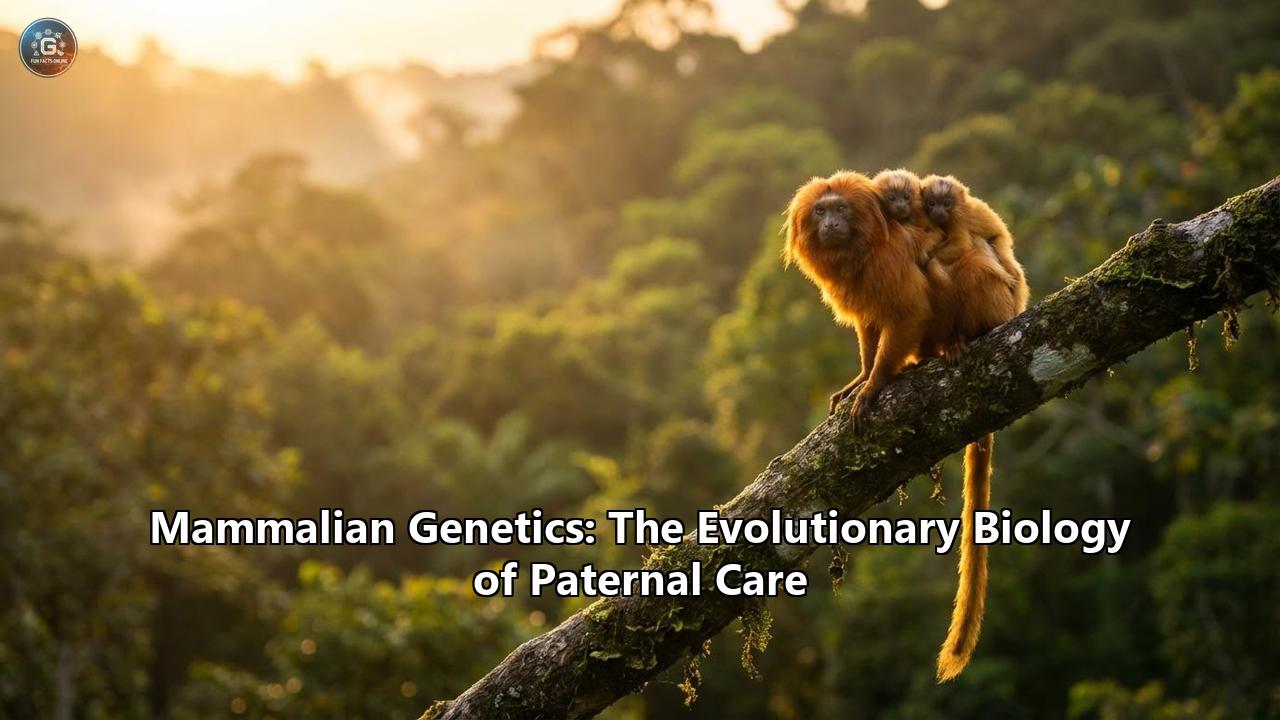
The Primates: Marmosets and Titi MonkeysIn the dense canopies of South America, marmosets and titi monkeys practice some of the most intense paternal care observed in nature. Marmoset females routinely give birth to fraternal twins, which combined can weigh up to 20% of the mother's body weight. The energetic cost of nursing these massive twins is so astronomical that if the mother had to carry them as well, she would starve. Enter the marmoset father. Almost immediately after birth, the father takes the infants, carrying them on his back for weeks. He hands them over to the mother only to nurse, and then promptly takes them back. This carrying behavior is so physically demanding that marmoset fathers typically lose a significant percentage of their body weight during the rearing period. This is an evolutionary compromise: the male sacrifices his own physical condition to ensure the high reproductive output of twins survives.
The Carnivores: Wolves and African Wild DogsAmong carnivores, paternal care is relatively common, observed in roughly 30% to 40% of genera. In wolf packs, the alpha male and female form a monogamous pair. When the pups are born, they are blind and helpless, confined to a den. The mother cannot leave to hunt, so the father provisions both her and the pups. He travels vast distances to hunt, gorging himself on meat, and then returns to the den to regurgitate the partially digested food for his family. Furthermore, wolf fathers are fiercely protective, aggressively defending the den from predators and rival packs. This cooperative, biparental strategy allows wolves to thrive in harsh, unforgiving environments where a single mother would undoubtedly fail.
The Rodents: The California MouseThe California mouse (Peromyscus californicus) is a model organism for studying strict monogamy and paternal care. These mice form lifelong pair bonds, and the fathers are exceptionally attentive. They groom the pups, retrieve them to the nest, and huddle over them to regulate their body temperature while the mother forages. Research on the California mouse has demonstrated the severe biological consequences of an absent father. Pups raised without their fathers show delayed cognitive development, altered stress responses, and impaired social behaviors in adulthood. The father's physical presence provides critical somatosensory stimulation that shapes the developing brain of his offspring.
The Human Father: A Unique Evolutionary TapestryHuman fatherhood represents a complex, highly derived evolutionary adaptation. We are a cooperative breeding species. The human infant is exceptionally altricial, born with a massive brain but a completely helpless body. The caloric requirements to grow a human brain are so immense that human mothers cannot successfully raise offspring sequentially without help.
Evolution solved this through a combination of paternal investment and "alloparenting" (care from grandmothers, siblings, and tribe members). Unlike the rigid, instinctual paternal care of the prairie vole, human fatherhood is highly flexible and culturally mediated, yet deeply rooted in the biological mechanisms we share with other mammals. Human fathers undergo the same hormonal shifts—dropping testosterone, rising prolactin, and oxytocin surges—as they interact with their babies. Furthermore, human males possess the same AVPR1a vasopressin pathways that regulate attachment. We are genetically primed for fatherhood, but our advanced cerebral cortex allows us to consciously shape what that fatherhood looks like, adapting our caregiving to diverse ecological and societal niches.
The Future of Paternal Genetics
As our understanding of mammalian genetics and evolutionary biology deepens, the paradigm of reproduction and developmental health is undergoing a massive shift. For over a century, the medical and scientific communities placed the burden of fetal and offspring health almost entirely on the mother. Maternal diet, maternal age, and maternal stress were the sole focus of prenatal care.
The revelation of paternal epigenetics, genomic imprinting, and the biology of the paternal brain is changing this narrative. We now recognize that a father’s age, his nutritional status, his mental health, and his exposure to environmental toxins play a massive, undeniable role in the genetic and epigenetic legacy he passes to his children. The implications for Assisted Reproductive Technologies (ART), public health, and preconception counseling are profound. Men are not just passive donors of DNA; they are active, biological architects of their children's future.
In Conclusion
The mammalian father is a rare, beautiful defiance of evolutionary norms. In a biological class defined by maternal gestation and lactation, the emergence of the caring male required millions of years of genetic tweaking, hormonal repurposing, and epigenetic programming. From the dense vasopressin receptors lighting up the reward centers of a prairie vole’s brain, to the silent, invisible battles of imprinted genes in the womb, the biology of fatherhood is a testament to the power of evolutionary adaptation.
Fatherhood is not merely a social construct invented by human civilization; it is an ancient, biologically hardwired strategy. It is the evolutionary realization that, under the right conditions, the greatest genetic victory a male can achieve is not to conquer and abandon, but to stay, protect, and nurture. The mammalian genetics of paternal care reveal a profound truth: the bonds of family are written in our DNA, sculpted by evolution, and essential to the survival and flourishing of our species.
Reference:
- https://pmc.ncbi.nlm.nih.gov/articles/PMC2525684/
- https://pmc.ncbi.nlm.nih.gov/articles/PMC2986180/
- https://www.frontiersin.org/journals/endocrinology/articles/10.3389/fendo.2017.00265/full
- https://pmc.ncbi.nlm.nih.gov/articles/PMC3602142/
- https://www.researchgate.net/publication/267194171_avpr1a_microsatellite_length_does_not_affect_parental_care_in_male_prairie_voles_Microtus_ochrogaster
- https://pmc.ncbi.nlm.nih.gov/articles/PMC8486352/
- https://pubmed.ncbi.nlm.nih.gov/34189787/
- https://www.pnas.org/doi/10.1073/pnas.1411253111
- https://www.researchgate.net/publication/343298000_Paternal_epigenetics_Mammalian_sperm_provide_much_more_than_DNA_at_fertilization
- https://pmc.ncbi.nlm.nih.gov/articles/PMC4913293/
- https://academic.oup.com/humupd/article-pdf/29/1/24/48410924/dmac033.pdf
- https://pmc.ncbi.nlm.nih.gov/articles/PMC10965103/
- https://www.embo.org/press-releases/age-of-father-affects-offspring-through-an-epigenetic-mechanism/
- https://jme.bioscientifica.com/view/journals/jme/58/3/R159.xml