
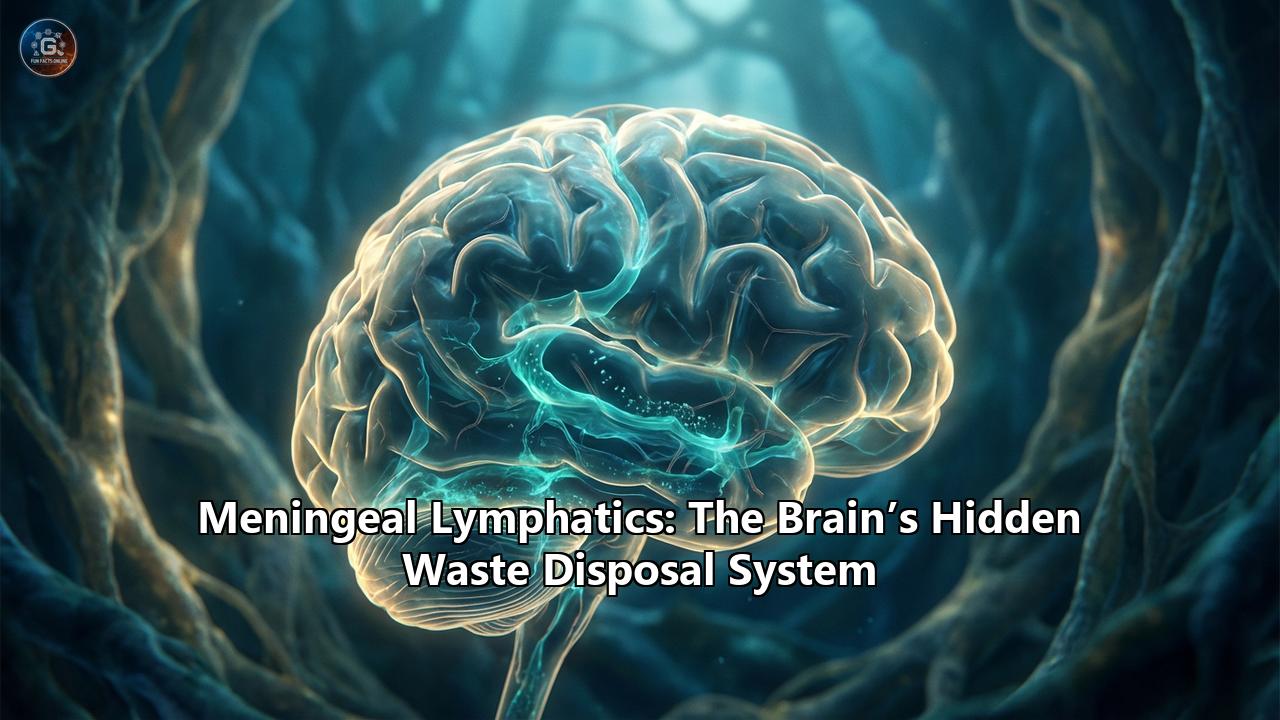
For centuries, the human brain was viewed as a biological fortress, a sovereign island isolated from the rest of the body’s immune landscape. Medical textbooks described it as "immune privileged," meaning it was supposedly devoid of the lymphatic vessels that thread through every other organ to clear waste and transport immune sentries. This dogma held that the brain recycled its own waste or passively dumped it into the cerebrospinal fluid, a primitive solution for the body’s most metabolically active organ.
That dogma has collapsed. In a series of stunning discoveries beginning in 2015 and accelerating through 2026, neuroscientists have mapped a hidden network of plumbing—meningeal lymphatic vessels—that run through the membranes covering the brain. These vessels are the missing link between the brain and the immune system, serving as the critical drainage pipes for the toxic proteins that cause Alzheimer’s, Parkinson’s, and other neurodegenerative diseases.
This article explores the anatomy of this invisible system, the molecular machinery that powers it, the devastating consequences when it clogs, and the futuristic therapies—from gene editing to wearable brain-monitors—that aim to keep our brain’s waste disposal system running smooth well into our final years.
Part I: The Anatomy of the Invisible
The Hidden Network
The lymphatic system is the body’s sewer and security network. It drains excess fluid and waste from tissues and transports immune cells to lymph nodes. For 200 years, anatomists dissected brains and saw nothing but nerve tissue and blood vessels. The lymphatic vessels were there, but they were effectively invisible—collapsed, translucent, and tucked away in the dura mater, the tough, outermost layer of the meninges (the protective membranes covering the brain).
The breakthrough came when researchers used advanced microscopy on whole-mounted mouse meninges. They saw distinct vessels running parallel to the dural venous sinuses (the large veins that drain blood from the brain). These vessels expressed classic lymphatic markers like PROX1, LYVE1, and podoplanin.
Unlike the chaotic web of capillaries in the skin, the brain’s lymphatic architecture is highly organized. It consists of two distinct functional zones that have only recently been fully characterized:
- The Dorsal Network:
These vessels run along the top of the brain, following the superior sagittal sinus and the transverse sinuses. For the first few years after the 2015 discovery, this was thought to be the primary route. These vessels act as a "roof drain," capturing cerebrospinal fluid (CSF) and immune cells from the upper hemispheres and funneling them toward the back of the skull.
- The Ventral Network (The MMA Pathway):
In a major leap forward in 2025-2026, researchers identified a "cleanup hub" at the base of the brain, specifically running along the middle meningeal artery (MMA). This ventral network is anatomically distinct. While the dorsal vessels are like narrow gutters, the ventral vessels are wider and possess a complex, branch-like structure. This area appears to be the heavy-duty industrial drain of the brain, handling a massive volume of fluid and waste clearance. Recent MRI studies using intrathecal contrast agents in humans have shown that this MMA pathway has unique flow dynamics—slower and more passive than blood flow, perfectly matching the profile of lymphatic drainage.
The Drain and the Sink: Connecting to the Glymphatics
To understand how the brain cleans itself, one must understand the relationship between two distinct systems: the glymphatic system (the sink) and the meningeal lymphatics (the sewer pipe).
The glymphatic system, discovered by Maiken Nedergaard’s lab, is a plumbing system inside the brain tissue. It relies on glial cells (specifically astrocytes). These astrocytes wrap their end-feet around blood vessels, creating a "perivascular space"—a tunnel between the blood vessel wall and the brain tissue. Cerebrospinal fluid (CSF) is pumped into the brain through these tunnels, driven by the pulsing of arteries. This fluid washes through the brain tissue, sweeping up metabolic waste like amyloid-beta and tau proteins, and pushes them toward the veins.
Here is where the "handshake" happens. The glymphatic system pushes this waste-laden fluid out of the deep brain tissue and into the subarachnoid space (the area between the brain and the skull). Once there, the fluid doesn't just sit; it is taken up by the meningeal lymphatic vessels in the dura mater.
Think of it this way:
- Glymphatic System: The janitors sweeping the hallways (brain tissue) and dumping the trash into the bins outside the building.
- Meningeal Lymphatics: The garbage trucks that come to the curb, pick up the trash, and haul it away to the dump (the lymph nodes).
If either system fails, the trash piles up.
Part II: The Molecular Machinery
The construction and maintenance of these vessels are governed by a precise molecular code. Understanding this code is the key to repairing the system when it fails.
VEGF-C: The Master Builder
The superstar molecule of the lymphatic world is Vascular Endothelial Growth Factor C (VEGF-C). This protein is the signal that tells the body to grow new lymphatic vessels. It binds to a receptor called VEGFR3 on the surface of lymphatic endothelial cells.
In young, healthy brains, there is an abundance of VEGF-C, keeping the meningeal lymphatic vessels lush, wide, and leak-proof. As we age, VEGF-C levels drop. The vessels begin to wither; they become thinner, more sparse, and less effective at draining fluid. This "lymphatic regression" is a primary driver of brain aging.
PROX1 and FOXC2: The Architects
While VEGF-C provides the "grow" signal, other proteins act as the architects ensuring the vessels are built correctly.
- PROX1 is a transcription factor that maintains the identity of these cells. Without it, they forget they are lymphatic cells and lose their function.
- FOXC2 is crucial for the formation of valves. Just like veins in your legs, lymphatic vessels need one-way valves to prevent fluid from flowing backward. In the brain, where gravity and pressure gradients are complex, these valves are essential. FOXC2 ensures these valves form and mature correctly. Research has shown that without FOXC2, the vessels become "leaky pipes," allowing toxic waste to seep back toward the brain rather than draining away.
The "Zipper" Junctions
The cells lining these vessels (endothelial cells) are connected by specialized buttons and zippers. These junctions are dynamic. When fluid pressure rises (like during deep sleep), the "buttons" open up, creating pores that allow large molecules (like immune cells and protein clumps) to enter the vessel. Once inside, the "zippers" close to seal the vessel, and the waste is pumped away. In neurodegenerative diseases, these junctions often fail—either becoming permanently sealed (blocking drainage) or permanently open (causing leaks).
Part III: The Night Shift – Sleep and Clearance
The old adage "sleep cleans the brain" is now a scientifically proven fact, but the mechanism is far more nuanced than we realized even five years ago.
The Hydraulic Press of Sleep
During sleep, the space between brain cells actually expands by up to 60%. This expansion reduces resistance, allowing the glymphatic fluid to wash through the tissue much faster. Simultaneously, the meningeal lymphatic vessels ramp up their activity.
For years, it was believed that this cleaning process only happened during Slow-Wave Sleep (Deep Sleep). However, 2025 research utilizing new wearable monitoring technology has upended this view. Using electrical impedance spectroscopy—a technique that measures the resistance of brain tissue to safe electrical currents—scientists monitored glymphatic flow in real-time.
They found that waste clearance is not an "on-off" switch triggered by deep sleep. Instead, it is a dynamic cycle that is active during both deep sleep and REM sleep. Crucially, the efficiency of the system accelerates the longer you sleep. The "rinse cycle" is most powerful in the late hours of the night (the early morning hours), which are typically rich in REM sleep. This suggests that cutting sleep short—waking up after 5 hours instead of 7 or 8—doesn't just cut your rest; it aborts the brain's most critical heavy-duty cleaning phase.
The Wearable Glymphometer
Until recently, measuring this flow required an MRI machine and contrast dye injections—hardly something you can do at home. The development of wearable "glymphometers" (caps or headbands) that measure tissue resistance is a game-changer. These devices can now tell us exactly how well a person's brain is clearing waste night by night. This technology is currently being tested as an early warning system for Alzheimer’s, detecting "clogged pipes" years before memory loss begins.
Part IV: When the Drain Clogs – Pathology and Disease
The failure of meningeal lymphatic drainage is now recognized as a "universal aggravator" of neurodegenerative disease. It is not necessarily the cause of the fire, but it is the broken sprinkler system that allows the building to burn down.
Alzheimer’s Disease: The Amyloid Traffic Jam
Alzheimer’s is characterized by the accumulation of Amyloid-beta plaques (outside neurons) and Tau tangles (inside neurons). For decades, we asked: "Why is the brain making too much amyloid?" The lymphatic discovery forces us to ask: "Why isn't the brain clearing the amyloid?"
In mouse models of Alzheimer’s, ablating (destroying) the meningeal lymphatic vessels causes amyloid plaques to accumulate instantly and dramatically. Conversely, boosting the lymphatics with VEGF-C gene therapy reduces plaque load and improves memory.
The gene ApoE4 is the strongest genetic risk factor for Alzheimer’s. Recent studies show that ApoE4 may directly harm the lymphatic vessels. It appears to make the vessels more brittle and less responsive to VEGF-C, essentially pre-disposing carriers to early lymphatic failure.
Parkinson’s Disease: The Alpha-Synuclein Trap
In Parkinson’s disease, the protein alpha-synuclein clumps together to form Lewy bodies. These aggregates are notoriously sticky and difficult to move. The meningeal lymphatics are the primary exit route for alpha-synuclein. When these vessels are blocked, alpha-synuclein backs up, causing inflammation and neuronal death in the substantia nigra (the movement center of the brain).
"Zombie" Astrocytes
A fascinating 2024 finding involves senescent astrocytes. These are support cells that have stopped dividing and entered a "zombie" state, pumping out inflammatory toxins. Normally, the immune system would clear these cells via the lymphatics. However, when the meningeal vessels degrade, these zombie cells are trapped in the brain. They create a feedback loop of inflammation that further damages the vessels, accelerating brain aging.
Traumatic Brain Injury (TBI)
A hit to the head does more than bruise the brain; it can crush or tear the delicate lymphatic vessels in the dura. This explains why TBI is a major risk factor for dementia later in life. The injury creates a permanent "scar" in the drainage system, leading to a slow, chronic accumulation of waste that manifests as dementia decades later.
Part V: The Diagnostic Revolution – "Needle in a Neck Node"
If the brain dumps its trash into the lymph nodes, then looking at the trash can should tell us what's happening in the kitchen.
The meningeal lymphatics drain directly into the Deep Cervical Lymph Nodes (dCLNs) located in the neck. Historically, diagnosing Alzheimer’s required expensive PET scans or painful spinal taps (lumbar punctures) to get cerebrospinal fluid.
In 2024/2025, a team at Oxford University proved that aspirating fluid from these neck lymph nodes (using a fine needle, similar to a routine biopsy) offers a "super-concentrated" view of brain health. They found that levels of pTau181 (a key Alzheimer’s marker) were 266 times higher in the lymph nodes than in the blood.
This "Needle in a Neck Node" technique could revolutionize diagnosis. It is minimally invasive, cheaper than a PET scan, and much more sensitive than a blood test. It allows doctors to "read" the brain's waste output directly. If the lymph nodes are full of amyloid but the blood is empty, it tells us the clearance is happening but the systemic breakdown is elsewhere. If the lymph nodes are empty but the brain is full of plaque, it confirms the "pipe" (meningeal lymphatics) is blocked.
Part VI: Therapeutic Frontiers – Unclogging the Brain
We now have a target. How do we treat it? The race is on to develop therapies that rejuvenate or bypass the brain’s waste disposal system.
1. Gene Therapy: Growing New Pipes
The most direct approach is VEGF-C Gene Therapy. In animal models, injecting a viral vector that codes for VEGF-C into the cisterna magna (the fluid reservoir at the base of the skull) causes old, withered lymphatic vessels to sprout and regrow. The results in mice are staggering: old mice with Alzheimer's pathology treated with VEGF-C show improved flow, reduced plaques, and—most importantly—they regain the ability to learn and remember mazes.
Biotech companies are currently working on translating this to humans. The challenge is delivery: getting the gene therapy to the right place without causing blood vessels to grow where they shouldn't (angiogenesis).
2. The "Drainage Drug"
Researchers are screening for small molecule drugs that can mimic VEGF-C or activate the PROX1 pathway. A drug currently in early clinical trials has shown the ability to lower "parenchymal resistance" (measured by the wearable headset) during sleep, suggesting it physically opens the glymphatic channels.
3. Photobiomodulation (Light Therapy)
Infrared light can penetrate the skull. Recent studies suggest that specific frequencies of Near-Infrared (NIR) light can stimulate the mitochondria in lymphatic endothelial cells, increasing their pumping activity. "Light helmets" that target the major drainage zones (the sagittal sinus and the base of the skull) are being investigated as a non-invasive way to boost clearance.
Part VII: Brain Hygiene – A Lifestyle Protocol
While we wait for gene therapies, science has identified actionable ways to manually assist our brain’s plumbing. The meningeal lymphatics, unlike the heart, do not have a strong pump. They rely on movement, breathing, and gravity.
The "Pump" Exercises
The deep cervical lymph nodes in the neck are the bottleneck of the system. If they are congested, the brain cannot drain. Physical therapists specializing in lymphedema have identified exercises that help:
- Shoulder Shrugs and Rolls: These movements compress and release the tissues around the deep cervical nodes, creating a suction effect that pulls fluid down from the head.
- Diaphragmatic Breathing: The thoracic duct (the body’s main lymph drain) passes through the diaphragm. Deep belly breathing creates a massive pressure vacuum in the chest, effectively sucking lymph fluid from the entire body, including the brain, toward the heart.
- Neck Extension/Flexion: Simple head nods help mechanically milk the vessels in the dura.
Sleep Positioning
Animal studies have suggested that sleeping on your side (lateral position) is the most efficient posture for glymphatic clearance, compared to sleeping on your stomach or back. The lateral position appears to align the vessels and gravity to maximize flow.
Diet and Fasting
Insulin resistance hardens the arteries and damages the delicate lymphatic vessels. A diet low in sugar and processed foods preserves vascular elasticity. Furthermore, intermittent fasting has been shown to boost autophagy (cellular cleanup) and may enhance the "flushing" phase of the glymphatic cycle.
Conclusion: The End of Immune Privilege
The discovery of meningeal lymphatic vessels is one of the most significant anatomical updates of the 21st century. It has bridged the gap between neurology and immunology, turning "brain health" into a fluid dynamics problem.
We no longer view the brain as a static, isolated fortress. It is a dynamic city with a complex waste management infrastructure. We now know that this infrastructure collapses with age, leading to the pollution we call dementia. But for the first time, we have the blueprints to fix the pipes. From the middle meningeal artery to the lymph nodes in our neck, we are mapping the routes that keep our minds clear. The future of treating Alzheimer’s may not just be about clearing plaques, but about fixing the plumbing so the brain can clean itself.