
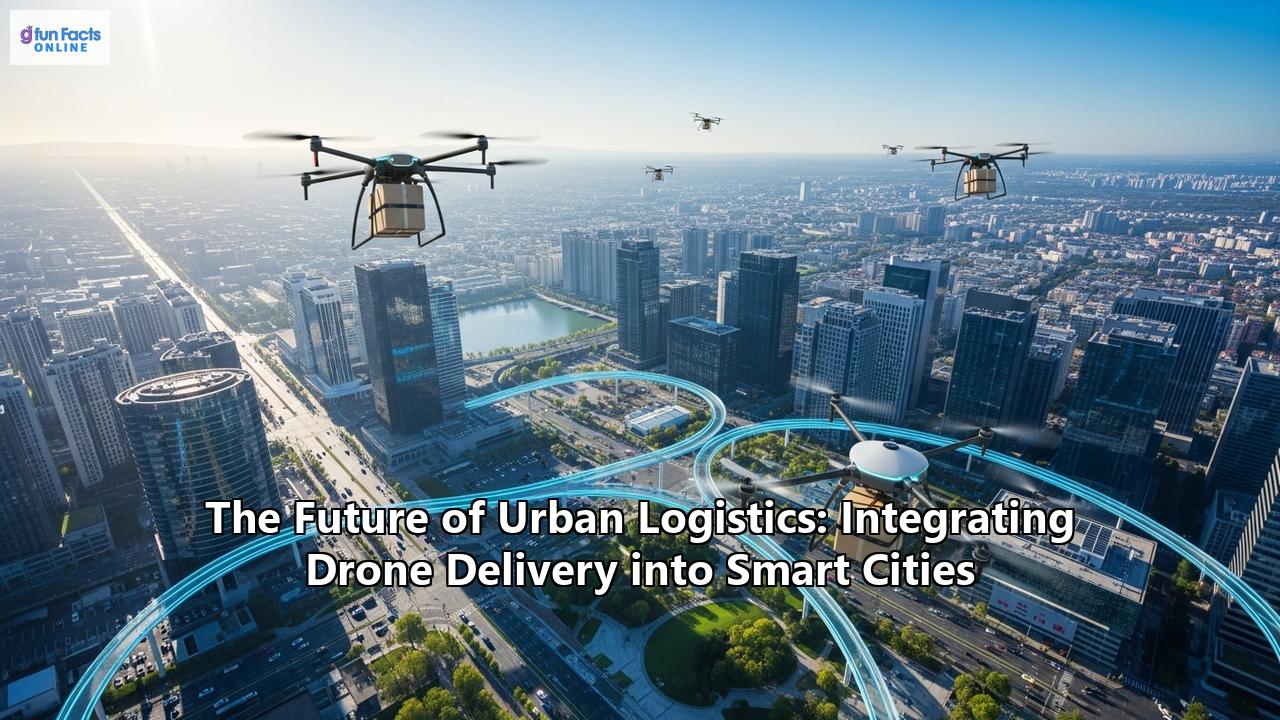
The Dawn of a New Urban Sky: Integrating Drone Delivery into the Fabric of Smart Cities
The relentless pulse of urbanization, coupled with the ever-accelerating demands of e-commerce, has pushed our city's logistical networks to their absolute limits. Streets are choked with delivery vehicles, contributing to a cacophony of noise, frustrating traffic congestion, and a growing cloud of carbon emissions. But what if we could open up a new dimension for transport, a superhighway in the sky, to alleviate these terrestrial woes? This is the promise of drone delivery, a technology poised to revolutionize urban logistics and become a cornerstone of the smart city of tomorrow.
The concept of unmanned aerial vehicles (UAVs) ferrying packages directly to our doorsteps is rapidly moving from the realm of science fiction to a tangible reality. Companies like Amazon, Google, and UPS are heavily investing in and testing drone delivery services, signaling a monumental shift in how we envision the movement of goods through our urban landscapes. This integration is not merely about novelty; it's about creating a more efficient, sustainable, and resilient urban ecosystem. By bypassing gridlocked streets, drones offer the potential for dramatically reduced delivery times, lower operational costs, and a significant reduction in carbon emissions.
The Smart City Imperative: Why Drones are a Perfect Fit
A smart city leverages technology to improve the quality of life for its citizens, enhance sustainability, and optimize city services. Drone delivery aligns perfectly with these goals, offering a myriad of benefits that address some of the most pressing challenges of modern urban living.
A Greener Footprint for Urban LogisticsOne of the most compelling arguments for integrating drone delivery is its potential environmental benefits. Traditional delivery methods, heavily reliant on fossil fuel-powered vehicles, are significant contributors to urban air pollution and greenhouse gas emissions. Electric-powered drones, on the other hand, offer a much cleaner alternative. Studies have shown that in many scenarios, small package delivery by drone can result in significantly lower carbon emissions compared to traditional truck or van deliveries. For instance, research suggests that small drone deliveries could produce 99% fewer emissions than a personal car pickup for the same item. By reducing the number of delivery vehicles on the road, cities can make substantial strides in improving air quality and meeting their sustainability targets.
Slashing Through Congestion and Enhancing EfficiencyTraffic congestion is a chronic ailment in cities worldwide, costing economies billions and citizens countless hours. Drones, operating in the largely underutilized low-altitude airspace, can bypass this terrestrial chaos entirely. This aerial advantage translates to faster, more direct delivery routes, significantly cutting down on the time it takes for a package to travel from a warehouse to a consumer's doorstep. This increased efficiency isn't just a matter of convenience; it can have a profound economic impact by reducing operational costs for logistics companies and potentially lowering delivery fees for consumers. In fact, projections suggest that the average unit cost per drone delivery could drop by more than 70% over the next decade, making it a highly competitive alternative to traditional methods.
Revolutionizing Last-Mile Delivery and AccessibilityThe "last mile" of delivery—the final step in getting a product into a customer's hands—is notoriously the most expensive and inefficient part of the logistics chain. Drones are uniquely positioned to optimize this critical segment. They can facilitate hyper-local, on-demand deliveries with unprecedented speed. This capability is particularly transformative for time-sensitive deliveries, such as medical supplies. Drones have already proven their life-saving potential by transporting medicines, vaccines, and blood to hospitals and remote areas, overcoming the limitations of ground-based transport in emergencies. This enhanced accessibility extends to all residents, including the elderly and those with mobility issues, who can benefit from rapid delivery of essential goods.
The Technological Backbone of Urban Air Mobility
The vision of a sky filled with delivery drones is underpinned by a sophisticated ecosystem of technologies working in concert. These innovations are crucial for ensuring the safety, reliability, and efficiency of autonomous aerial operations in complex urban environments.
Autonomous Navigation: The Brains of the OperationAt the heart of every delivery drone is an advanced autonomous navigation system. This is what allows them to fly without direct human intervention, navigating intricate cityscapes with precision. This capability is a fusion of several key technologies:
- GPS Integration: Provides the fundamental positioning data, allowing drones to follow pre-programmed routes.
- Artificial Intelligence (AI) and Machine Learning: These are the game-changers. AI algorithms enable drones to learn from their environment, analyze data from sensors in real-time to identify and avoid obstacles like buildings, trees, and power lines, and continuously optimize their flight paths for maximum efficiency.
- Computer Vision: Through high-resolution cameras, drones can "see" and interpret their surroundings, which is vital for precise landings and collision avoidance.
- Advanced Sensors: A suite of sensors, including LiDAR (Light Detection and Ranging) for creating detailed 3D maps, and ultrasonic sensors, provide a constant stream of data about the drone's environment, ensuring safe and stable flight.
Seamless and robust communication is non-negotiable for managing a fleet of urban drones. The advent of 5G and the development of future 6G networks are critical enablers. This high-speed, low-latency connectivity allows for:
- Real-time Data Transmission: Drones can constantly send back data on their status and surroundings while receiving commands and updates from a central control system.
- Fleet Management: Enables the coordination of a large number of drones operating simultaneously, preventing collisions and optimizing overall traffic flow.
- Enhanced Safety: Reliable connectivity ensures that emergency responders can receive real-time video feeds from drones in disaster situations, and that drones can be rerouted or landed safely if issues arise.
Widespread drone delivery will require new forms of infrastructure. This includes:
- Droneports and Vertiports: These will serve as centralized hubs for drone take-off, landing, charging, and maintenance. Cities like Singapore and Dubai are already in the process of developing these specialized facilities.
- Designated Airspace Corridors: To ensure safety and prevent conflict with other aircraft, dedicated "drone highways" or U-Space airspaces will need to be established. This will involve creating invisible, monitored flight paths for drones to follow.
Navigating the Hurdles: Challenges on the Path to Integration
While the future of drone delivery is bright, the path to widespread adoption is not without its obstacles. Overcoming these challenges will require a concerted effort from technologists, regulators, and the public.
The Regulatory MazeOne of the most significant hurdles is the complex and evolving regulatory landscape. Aviation authorities around the world are grappling with how to safely integrate unmanned aircraft into airspace that is already used by commercial and private planes. Key regulatory issues include:
- Airspace Management: Developing sophisticated Unmanned Aircraft Systems (UAS) Traffic Management (UTM) systems is crucial to manage the high volume of drone traffic and ensure separation from manned aircraft.
- Beyond Visual Line of Sight (BVLOS): Current regulations in many regions require drones to be operated within the pilot's visual line of sight, which severely limits the range of delivery operations. Gaining widespread approval for BVLOS flights is essential for the viability of drone delivery.
- Safety and Certification: Drones will need to meet stringent safety and certification standards to be allowed to operate over populated urban areas.
Despite rapid advancements, some technological limitations remain.
- Battery Life and Range: The flight time and range of current drones are constrained by battery capacity, which limits the distance they can travel for deliveries. Continued innovation in battery technology is needed to extend operational capabilities.
- Payload Capacity: Most delivery drones are designed to carry small, lightweight packages. While perfect for many e-commerce items and food deliveries, this limits their use for heavier goods.
- Weather Resilience: Adverse weather conditions such as high winds, heavy rain, and snow can impact drone operations, potentially causing delays or grounding fleets.
The success of drone delivery also hinges on public acceptance. Concerns about safety, privacy, and noise pollution must be addressed proactively.
- Safety: The public needs to be confident that drone operations are safe and that the risk of accidents is minimal.
- Privacy: Drones equipped with cameras flying over residential areas raise legitimate privacy concerns. Clear regulations and transparent operational procedures will be needed to protect individual privacy.
- Noise Pollution: The sound of multiple drones flying overhead could become a significant nuisance. Manufacturers are working on quieter drone designs to mitigate this issue.
Pioneers of the Urban Sky: Real-World Case Studies
The integration of drone delivery is already underway in pioneering cities and regions around the globe.
- Dublin, Ireland: The city has integrated drones into its urban management for tasks like infrastructure mapping and monitoring, providing a safer and more efficient alternative to traditional methods.
- Freetown, Sierra Leone: Drones are being used for environmental protection and urban planning, including monitoring reforestation efforts and assessing risks from landslides and floods.
- United States: Major players like Amazon, Walmart, and UPS, in conjunction with the Federal Aviation Administration (FAA), are conducting extensive trials in various states to refine technology and operational models for last-mile delivery.
- China: A leader in drone technology, China has been leveraging its advanced 5G infrastructure to test autonomous drone deliveries in both dense urban centers and remote rural areas.
- Dubai, UAE: As part of its smart city initiatives, Dubai has been actively exploring the use of drones to ease traffic congestion and is studying the energy consumption and efficiency of drone delivery systems.
The Sky's the Limit: The Future is Autonomous and Integrated
The journey towards fully integrated urban drone delivery is an incremental one, but the trajectory is clear. The global market for last-mile drone delivery is projected to grow exponentially, with some forecasts predicting a market value of nearly $90 billion by 2050.
Looking ahead, we can expect to see several key developments:
- AI-Driven Fleet Management: Advanced AI will not just navigate individual drones but will orchestrate entire fleets, optimizing routes, managing battery life, and responding dynamically to changing urban conditions.
- Integration with Other Modes of Transport: Drones will not replace traditional delivery vehicles entirely but will work in concert with them. We may see "truck-assisted" models where drones are launched from and return to moving vans to cover the final leg of a delivery.
- Expansion of Services: Beyond e-commerce packages, drone delivery will expand further into critical services like healthcare and emergency response, as well as everyday conveniences like food delivery.
The integration of drone delivery into smart cities represents a paradigm shift in urban logistics. It is a future where our skies become a vital part of our transport infrastructure, leading to cities that are cleaner, quieter, more efficient, and ultimately, more livable. While the challenges are real, the immense potential benefits make the pursuit of this aerial revolution a critical endeavor for the future of our urban world. The hum of drones overhead may soon become the familiar soundtrack of a truly smart city.
Reference:
- https://www.mdpi.com/2571-8797/7/1/24
- https://www.urbanairmobilitynews.com/commentary/advanced-air-mobility-the-future-will-arrive-on-drones/
- https://www.sesarju.eu/sites/default/files/documents/sid/2018/papers/SIDs_2018_paper_3.pdf
- https://airmacs.com/the-exciting-future-of-urban-air-mobility/
- https://www.meegle.com/en_us/topics/supply-chain/drone-delivery
- https://feds.group/industry/logistics/
- https://www.freightamigo.com/blog/drone-delivery-in-rural-vs-urban-environments/
- https://medium.com/@aeronuts.developer/the-role-of-drones-in-smart-city-development-f1e4bb2433d2
- https://www.researchgate.net/publication/332249057_Impact_of_drone_delivery_on_sustainability_and_cost_Realizing_the_UAV_potential_through_vehicle_routing_optimization
- https://www.strixdrones.com/why-are-drones-good-for-delivery/
- https://www.enbridge.com/energy-matters/news-and-views/delivering-packages-with-drones-might-be-good-for-the-environment
- https://cee.pwc.com/drone-powered-solutions/drone-deliveries-taking-retail-and-logistics-to-new-heights.html
- https://www.factmr.com/report/last-mile-drone-delivery-market
- https://www.uasolutions.ch/urban-air-mobility-and-drones-regulation-for-the-future/
- https://www.flyeye.io/drone-delivery-technology-systems/
- https://www.igi-global.com/viewtitle.aspx?TitleId=349784&isxn=9798369320938
- https://www.rolandberger.com/en/Insights/Global-Topics/Urban-Air-Mobility/
- https://ijrti.org/papers/IJRTI2309043.pdf
- https://eudroneport.com/blog/drone-delivery/
- https://thecsruniverse.com/articles/urban-air-mobility-soaring-towards-a-cleaner-congestion-free-future
- https://www.iotforall.com/5-biggest-hurdles-blocking-delivery-drones
- https://roboticsbiz.com/drone-delivery-in-urban-areas-challenges-and-opportunities/
- https://www.researchgate.net/publication/381688696_Traffic_Management_in_Smart_Cities_Using_Unmanned_Aerial_Vehicles
- https://idstch.com/military/air/urban-air-mobility-the-future-of-urban-transportation-and-the-challenges-ahead/
- https://sdglocalaction.org/drones-map-cities/
- https://repository.rit.edu/cgi/viewcontent.cgi?article=12668&context=theses
- https://www.atct.ba/conference-proceedings/2023/1-uav-in-smart-cities-integration-in-the-aviation-system-and-solutions-for-safe-operations.pdf