
The Unseen Dance: Deconstructing the Masterful Architecture of Landmark US Fiscal Bills
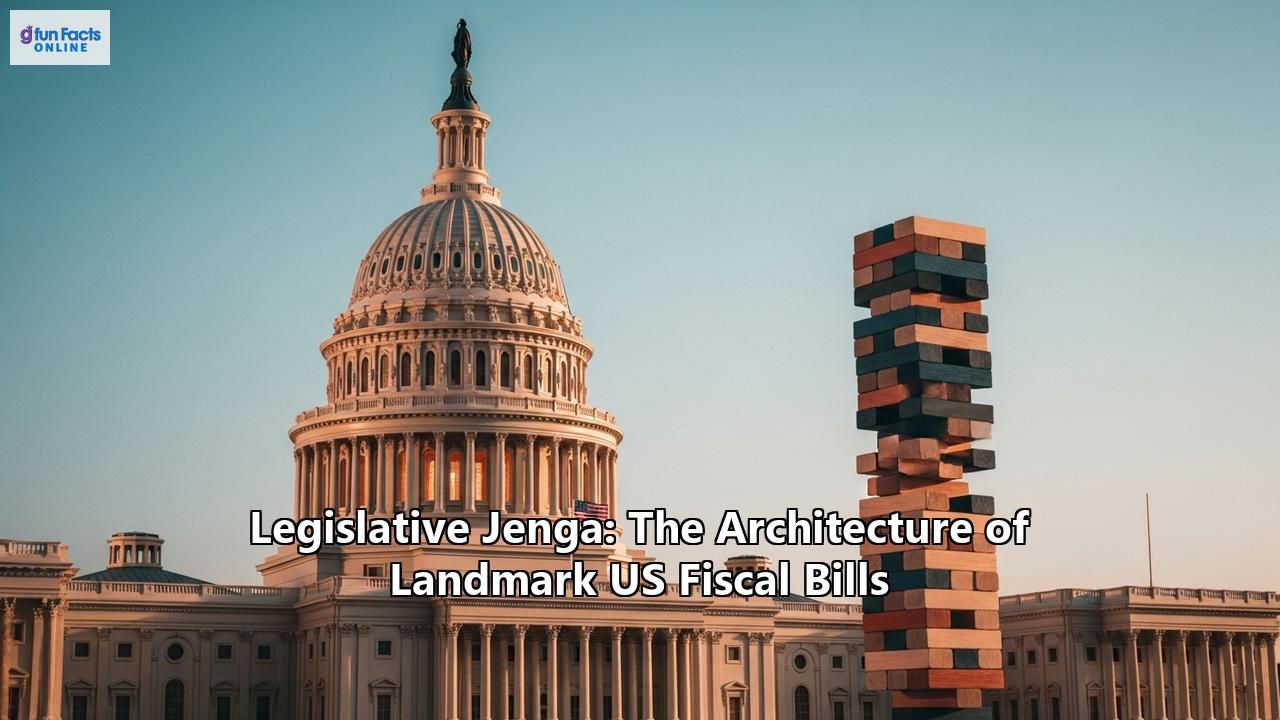
In the grand theater of American politics, the creation of landmark fiscal legislation is a high-stakes performance of strategy, compromise, and sheer political will. It is a process often shrouded in jargon and complexity, yet it shapes the economic and social fabric of the nation for generations. To the casual observer, it may appear as a chaotic flurry of debates, amendments, and votes. But beneath the surface lies a delicate and often perilous process, a game of "Legislative Jenga" where every move, every addition or subtraction of a policy "block," risks toppling the entire structure. This is the story of the architecture of change, an exploration of how monumental fiscal bills are painstakingly assembled, piece by piece, against a backdrop of competing ideologies, intense negotiations, and the ever-present threat of political collapse.
From the sweeping reforms of the New Deal that pulled a nation from the brink of economic despair, to the societal reshaping of the Great Society, the controversial "Reaganomics" revolution, the contentious passage of the Affordable Care Act, and the unprecedented response to a global pandemic in the CARES Act, the DNA of these legislative behemoths reveals a common thread: a complex dance of political maneuvering where every step is critical. To truly understand these landmark acts is to understand the intricate game of Legislative Jenga that brought them into existence. It is a game of building consensus, of strategic concessions, and of navigating the treacherous crosscurrents of American democracy to erect a legislative tower that can withstand the political storms and leave an enduring mark on the nation's landscape.
The Blueprint: How Fiscal Legislation is Forged in the Fires of Washington
Before delving into the dramatic case studies of Legislative Jenga in action, it is essential to understand the formal, and often labyrinthine, process through which fiscal legislation is born. The journey of a major fiscal bill from a mere idea to the law of the land is a testament to the checks and balances inherent in the American system of government, a system designed for deliberation, and at times, for gridlock.
At its core, the power to tax and spend resides with Congress, a authority explicitly granted by the U.S. Constitution. However, the President of the United States plays a crucial role in initiating and shaping the fiscal agenda. The process typically begins with the President's budget request, a detailed proposal submitted to Congress that outlines the administration's spending priorities and revenue projections for the upcoming fiscal year. This document, often the product of months of internal deliberations between the White House's Office of Management and Budget (OMB) and various federal agencies, serves as the opening move in the legislative game.
Once the President's budget arrives on Capitol Hill, it is dissected, debated, and often significantly altered by the House and Senate Budget Committees. These committees are responsible for drafting their own budget resolution, a non-binding framework that sets overall spending limits and revenue targets. The budget resolution is a critical, yet often overlooked, piece of the puzzle. It is here that the broad strokes of fiscal policy are painted, and it can include instructions for other committees to draft legislation that aligns with the resolution's goals, a process known as "reconciliation."
With the budget resolution as a guide, the real legislative heavy lifting begins in the various committees of Congress. For tax-related measures, the House Ways and Means Committee and the Senate Finance Committee take the lead. These powerful committees hold hearings, markup bills, and ultimately decide the fate of tax proposals. For spending, the process is bifurcated. "Mandatory spending," which includes entitlement programs like Social Security and Medicare, is under the jurisdiction of the authorizing committees, such as the House Energy and Commerce Committee and the Senate Finance Committee for Medicaid. "Discretionary spending," which covers everything from defense to education, is handled by the House and Senate Appropriations Committees, which are divided into 12 subcommittees, each responsible for a specific area of government.
It is within these committees that the first rounds of Legislative Jenga are played. Members add amendments, strike deals, and build coalitions to shape the legislation to their liking. Once a bill is approved by a committee, it moves to the full House or Senate for a vote. Here, the political maneuvering intensifies, with floor debates, more amendments, and the ever-present threat of a filibuster in the Senate, a procedural tactic that can be used to block a vote unless a supermajority of 60 senators agrees to move forward.
To overcome the filibuster and other procedural hurdles, the budget reconciliation process has become an increasingly important tool. This expedited process, created by the Congressional Budget Act of 1974, allows certain tax and spending bills to pass the Senate with a simple majority, making it a powerful weapon for the party in power.
If the House and Senate pass different versions of a bill, they must be reconciled into a single, identical piece of legislation. This is typically done through a conference committee, where members from both chambers negotiate a compromise. The final, unified bill is then sent back to both the House and Senate for a final vote. If it passes, it goes to the President's desk to be signed into law or vetoed. A presidential veto can be overridden by a two-thirds vote in both the House and Senate, but this is a rare occurrence.
This intricate process, with its multiple veto points and opportunities for strategic maneuvering, is the backdrop against which the great fiscal dramas of American history have unfolded. It is a system that demands not just a vision for change, but also the political skill to navigate its complexities and build a legislative tower that can withstand the forces of opposition.
The New Deal: Building a Tower of Hope in the Ruins of Despair
The Great Depression was more than an economic crisis; it was a crisis of faith in the American system. As the nation spiraled into unprecedented levels of unemployment and poverty, President Franklin D. Roosevelt's New Deal became a bold and audacious experiment in government intervention, a desperate attempt to rebuild a shattered economy and restore a sense of hope to a demoralized populace. The legislative architecture of the New Deal was as revolutionary as its policies, a rapid-fire construction of programs and agencies that fundamentally reshaped the role of the federal government in American life.
The "First Hundred Days" of Roosevelt's presidency, from March to June 1933, were a whirlwind of legislative activity, a period of intense collaboration between the White House and a willing Congress. This was Legislative Jenga on an unprecedented scale, with bills being drafted, debated, and passed at a breathtaking pace. The Emergency Banking Relief Act, the first major piece of New Deal legislation, was passed in a single day, a testament to the sense of crisis that gripped the nation. This act, which gave the President broad powers to regulate the banking system, was the first "block" in the foundation of the New Deal, a move designed to stabilize the financial system and restore public confidence.
Following this initial success, a flurry of other "alphabet soup" agencies and programs were created, each a carefully placed block in the growing legislative tower. The Civilian Conservation Corps (CCC) put young men to work on conservation projects, while the Public Works Administration (PWA) funded large-scale infrastructure projects. The Agricultural Adjustment Act (AAA) sought to raise farm prices by paying farmers to reduce production, and the National Recovery Administration (NRA) attempted to stabilize industry by establishing codes of fair competition.
The political genius of the New Deal was Roosevelt's ability to build a broad coalition of support for his programs. The New Deal Democratic coalition brought together a diverse array of groups, including a working class, various ethnic and minority groups and the already existing strength in the south. This coalition was built on the promise of economic relief and a more active role for the federal government in addressing the needs of ordinary Americans.
However, the construction of the New Deal tower was not without its challenges. The Supreme Court, which was dominated by conservative justices, proved to be a major obstacle, striking down several key New Deal programs, including the NRA and the AAA, as unconstitutional. This led to Roosevelt's infamous "court-packing" plan, a bold but ultimately unsuccessful attempt to add more liberal justices to the Court. This episode was a stark reminder of the delicate balance of power in the American system and the ever-present threat of a "Jenga" block being removed by the judicial branch.
The "Second New Deal," which began in 1935, saw the passage of some of the most enduring pieces of New Deal legislation, including the Social Security Act, which created a national system of retirement pensions and unemployment insurance, and the National Labor Relations Act (Wagner Act), which guaranteed workers the right to unionize. These programs represented a fundamental shift in the social contract between the government and its citizens, creating a safety net that has endured for generations.
The legislative process for these bills was a masterclass in political negotiation. The Social Security Act, for example, was a complex compromise between various competing interests. The final bill was a carefully constructed tower, with different "blocks" representing different concessions to different groups. For example, the exclusion of agricultural and domestic workers from the initial program was a concession to Southern Democrats who feared it would disrupt the racial and economic hierarchy of the South.
The long-term impact of the New Deal is still debated by historians and economists. While it did not single-handedly end the Great Depression—that would take the massive government spending of World War II—it did provide crucial relief to millions of Americans and fundamentally reshaped the role of the federal government in the economy. The New Deal created a new baseline for what Americans could expect from their government, a legacy that continues to shape political debates to this day. It was a monumental feat of legislative construction, a tower of hope built in the midst of despair, and a powerful testament to the transformative potential of Legislative Jenga.
The Great Society: A War on Poverty and the Politics of Abundance
In the prosperous years following World War II, America was a nation of seemingly boundless potential. Yet, beneath the surface of this "affluent society" lurked the persistent shadows of poverty and racial injustice. It was in this context that President Lyndon B. Johnson, a master of the legislative process, unleashed his "Great Society" agenda, a sweeping series of programs that aimed to build a more just and equitable America. The Great Society was a bold and ambitious undertaking, a legislative Jenga tower of immense proportions, built on the foundations of the New Deal and fueled by a belief in the power of government to solve society's most intractable problems.
Johnson, who inherited the presidency after the assassination of John F. Kennedy, was a force of nature in the legislative arena. With his legendary "Johnson treatment"—a combination of charm, flattery, and intimidation—he was able to push through Congress an unprecedented wave of legislation. He was aided by a landslide victory in the 1964 election, which gave the Democrats a supermajority in both the House and Senate, creating the most liberal Congress since the New Deal. This political alignment provided the perfect conditions for the construction of the Great Society tower.
The "War on Poverty" was the centerpiece of Johnson's agenda. The Economic Opportunity Act of 1964, the first major piece of Great Society legislation, created a host of new programs, including the Job Corps for vocational training, VISTA (Volunteers in Service to America) as a domestic Peace Corps, and the Head Start program for preschool education. These programs were the initial "blocks" in the War on Poverty tower, designed to provide a "hand up, not a handout" to those in need.
The legislative battles over the Great Society were fierce, but Johnson's political skills and the lopsided Democratic majorities in Congress proved to be a formidable combination. The Civil Rights Act of 1964, which outlawed segregation in public accommodations and discrimination in employment, was a landmark achievement that had been stalled in Congress for years. Johnson, a Southerner himself, used all of his political capital to break the filibuster by Southern Democrats and push the bill through. The Voting Rights Act of 1965, which eliminated literacy tests and other discriminatory voting practices, was another monumental victory for the civil rights movement.
The creation of Medicare and Medicaid in 1965 was another towering achievement of the Great Society. These programs, which provided health insurance for the elderly and the poor, respectively, represented a massive expansion of the social safety net. The legislative process for Medicare was a classic example of Legislative Jenga. The final bill was a compromise between various competing interests, with different "blocks" representing concessions to doctors, hospitals, and insurance companies. For example, the bill allowed for private insurance companies to play a role in administering the program, a key concession to the powerful American Medical Association, which had long opposed national health insurance.
The Elementary and Secondary Education Act of 1965, which provided federal funding to schools with low-income students, was another major pillar of the Great Society. This bill was a major breakthrough in the long-standing debate over federal aid to education, a debate that had been deadlocked for years over the issue of aid to parochial schools. Johnson, a former teacher, was able to break the deadlock by framing the bill as a poverty measure, with aid going to students rather than directly to schools.
The Great Society was not without its critics. Conservatives argued that the programs were too expensive and created a culture of dependency on government. The escalating cost of the Vietnam War also diverted resources and political attention away from the Great Society, ultimately limiting its reach.
Despite the criticisms and the challenges, the Great Society had a profound and lasting impact on American society. It dramatically reduced poverty rates, particularly among the elderly and African Americans. It expanded access to healthcare and education for millions of Americans. And it solidified the federal government's role in addressing social and economic inequality. The Great Society was a testament to Lyndon Johnson's legislative genius and his audacious vision of a more just and compassionate America. It was a legislative tower built on a foundation of hope and a belief in the power of government to create a better world, a tower whose legacy continues to shape the American landscape to this day.
Reagan's Revolution: The Jenga Game of Tax Cuts and a New Economic Order
The 1980s heralded a dramatic shift in American politics and economic policy. The "stagflation" of the 1970s—a debilitating combination of high inflation and high unemployment—had shattered the post-war consensus on Keynesian economics and paved the way for the rise of a new conservative movement. At the forefront of this movement was Ronald Reagan, a charismatic former actor and governor of California who promised a "revolution" in government. The centerpiece of this revolution, known as "Reaganomics," was a bold and controversial experiment in supply-side economics, a theory that held that cutting taxes, particularly on the wealthy and corporations, would unleash a wave of economic growth that would benefit everyone. The legislative embodiment of this theory was the Economic Recovery Tax Act of 1981 (ERTA), a landmark piece of fiscal legislation that would fundamentally reshape the American economy and the political landscape for decades to come.
The passage of ERTA was a masterstroke of political strategy, a high-stakes game of Legislative Jenga that demonstrated the power of a determined president and a disciplined political party. Reagan, who had won a landslide victory in the 1980 election, came into office with a clear mandate for change. He made the passage of his tax cut proposal his top domestic priority, and he pursued it with a single-minded focus.
The legislative battle over ERTA was fought on two fronts. The first was in the Republican-controlled Senate, where the administration's bill, co-sponsored by Senator William Roth, moved relatively smoothly through the legislative process. The real challenge was in the Democrat-controlled House of Representatives. Here, the Reagan administration employed a brilliant and audacious strategy. They enlisted the help of a group of conservative Democrats, known as the "Boll Weevils," led by Representative Phil Gramm of Texas. The administration offered these Democrats a series of concessions, or "Jenga blocks," in exchange for their support. These concessions included sweeteners for the oil and gas industry, a key constituency for many of the Boll Weevils, and other targeted tax breaks.
The administration also took its case directly to the American people. Reagan, the "Great Communicator," used his powerful rhetorical skills to build public support for his tax cut plan. In a series of televised addresses, he framed the tax cuts not as a giveaway to the wealthy, but as a necessary measure to revive a struggling economy. This public relations offensive put immense pressure on congressional Democrats to support the bill.
The final legislative showdown was a dramatic affair. The Democratic leadership in the House, led by Speaker Tip O'Neill, offered a competing tax cut proposal that was more modest and targeted towards the middle class. However, the Reagan administration, with the help of the Boll Weevils, was able to defeat the Democratic alternative and pass their own bill. The passage of ERTA was a stunning victory for Reagan and a clear demonstration of his political power. It was a legislative tower built on a foundation of ideological conviction, strategic compromise, and masterful political salesmanship.
ERTA was a sweeping piece of legislation. It included a 25 percent across-the-board cut in individual income tax rates, phased in over three years. It also slashed the top marginal tax rate from 70 percent to 50 percent, and it introduced a new system of accelerated depreciation for businesses, which allowed them to write off the cost of new investments more quickly. The bill was also closely linked to the Omnibus Budget Reconciliation Act of 1981 (OBRA), which made deep cuts in domestic spending. Together, ERTA and OBRA represented a fundamental reordering of the federal government's fiscal priorities, with a new emphasis on tax cuts and defense spending.
The long-term impact of the Reagan tax cuts is a subject of intense debate to this day. Supporters credit them with unleashing a period of sustained economic growth and creating millions of new jobs. They argue that the tax cuts spurred investment and innovation, leading to a more dynamic and competitive economy. Critics, on the other hand, point to the massive increase in the national debt that occurred during the Reagan years. They argue that the tax cuts disproportionately benefited the wealthy and exacerbated income inequality.
The story of the Reagan tax cuts is a powerful illustration of the transformative potential of Legislative Jenga. It shows how a determined president, with a clear vision and a willingness to play the political game, can fundamentally reshape the economic and political landscape. It is a story of a legislative tower built on a foundation of bold ideas and political audacity, a tower whose shadow still looms large over the American economy and the ongoing debate about the proper role of government in a free society.
The Affordable Care Act: A High-Wire Act of Legislative Construction
The passage of the Affordable Care Act (ACA) in 2010 was one of the most significant and contentious legislative battles in modern American history. The culmination of a century-long quest for universal health coverage, the ACA was a sprawling and complex piece of legislation that aimed to fundamentally reshape the American healthcare system. Its journey into law was a masterclass in Legislative Jenga, a high-wire act of political negotiation and procedural maneuvering that pushed the American political system to its limits.
The election of Barack Obama in 2008, with large Democratic majorities in both the House and Senate, created a historic opportunity to achieve comprehensive healthcare reform. Obama made it his top domestic priority, and his administration worked closely with congressional leaders to craft a bill that could overcome the political and procedural hurdles that had doomed previous reform efforts.
The legislative process for the ACA was a marathon, not a sprint. It involved months of intense negotiations, with countless public hearings, committee markups, and backroom deals. The goal was to build a legislative tower that could withstand the fierce opposition of the Republican Party and the powerful healthcare industry lobby.
The architecture of the ACA was a complex web of interlocking provisions, each a carefully placed "Jenga block" designed to achieve a specific policy goal while also attracting the necessary political support. The three main pillars of the law were: new regulations on insurance companies, including a ban on denying coverage for pre-existing conditions; an individual mandate requiring most Americans to have health insurance; and a system of subsidies to help low- and middle-income families afford coverage.
The individual mandate was one of the most controversial provisions of the bill, and it became a major flashpoint in the political debate. Republicans argued that it was an unconstitutional overreach of federal power, while some liberal Democrats were wary of forcing people to buy a private product. In the end, the mandate was included in the final bill, but with a series of exemptions and a relatively small penalty for non-compliance, a classic example of a "Jenga" compromise designed to make a bitter pill easier to swallow.
The public option, a government-run insurance plan that would have competed with private insurers, was another key battleground. Many progressives saw the public option as essential to keeping costs down and ensuring a truly competitive marketplace. However, it was fiercely opposed by the insurance industry and moderate Democrats, who feared it would be a stepping stone to a single-payer system. In the end, the public option was dropped from the final bill, a major concession to the center-right of the Democratic caucus. This was a critical "Jenga" move that, while disappointing to many on the left, was seen as necessary to keep the entire legislative tower from collapsing.
The final legislative push for the ACA was a dramatic and nail-biting affair. After months of debate, the House passed its version of the bill in November 2009. The Senate then took up the bill, and after a series of all-night sessions and procedural maneuvers, it passed its version on Christmas Eve of 2009, with a filibuster-proof majority of 60 votes.
However, the game was not over yet. In a stunning turn of events, a special election in Massachusetts in January 2010 resulted in the election of a Republican senator, Scott Brown, who had campaigned on a promise to be the 41st vote against the ACA, thus breaking the Democrats' filibuster-proof majority. This development threw the entire healthcare reform effort into jeopardy, threatening to topple the legislative tower just as it was nearing completion.
In a bold and risky move, the Democratic leadership decided to use the budget reconciliation process to pass the final bill. This procedural maneuver allowed them to bypass the need for 60 votes in the Senate and pass the bill with a simple majority. The House first passed the Senate's version of the bill, and then both chambers passed a separate "reconciliation" bill that made a series of changes to the original legislation. This complex and unconventional strategy was a testament to the Democrats' determination to get the bill over the finish line.
The Affordable Care Act was signed into law by President Obama on March 23, 2010. Its passage was a monumental achievement, a legislative tower built on a foundation of political will, strategic compromise, and procedural ingenuity. The law has had a profound and lasting impact on the American healthcare system, extending coverage to millions of uninsured Americans and enacting a series of sweeping insurance market reforms.
However, the ACA remains one of the most controversial pieces of legislation in recent memory. Republicans have made repealing and replacing the law a central tenet of their political platform, and the law has been the subject of numerous legal challenges, including two major Supreme Court cases. The story of the Affordable Care Act is a powerful reminder of the deep ideological divisions in American politics and the extraordinary lengths to which political actors will go to achieve their goals. It is a story of a legislative tower built on a precarious foundation, a tower that continues to be a major source of political conflict and a testament to the enduring power of Legislative Jenga.
The CARES Act: Building a Lifeline in the Midst of a Global Storm
The COVID-19 pandemic of 2020 unleashed a public health and economic crisis of unprecedented proportions. As the nation went into lockdown and the economy ground to a halt, Congress responded with a series of massive fiscal stimulus packages designed to keep the country afloat. The largest and most significant of these was the Coronavirus Aid, Relief, and Economic Security (CARES) Act, a $2.2 trillion behemoth that was passed with breathtaking speed and near-unanimous bipartisan support. The story of the CARES Act is a remarkable tale of Legislative Jenga played in fast-forward, a story of how, in a moment of profound national crisis, the often-gridlocked machinery of Washington was able to come together to build a legislative lifeline for the American people.
The legislative process for the CARES Act was a blur of activity. In the span of just a few weeks, as the scale of the pandemic became clear, Congress went from debating a relatively modest stimulus package to passing the largest economic rescue package in American history. The sense of urgency was palpable, and it created a political environment in which the normal rules of partisan warfare were suspended.
The architecture of the CARES Act was a complex and multifaceted response to a multifaceted crisis. The bill included a wide range of provisions, each a carefully placed "Jenga block" designed to address a specific aspect of the economic fallout from the pandemic. The major pillars of the law were: direct payments to individuals and families; expanded unemployment benefits; loans and grants to small businesses; and aid to large corporations and state and local governments.
The direct payments, which provided up to $1,200 for individuals and $2,400 for married couples, were one of the most popular and visible provisions of the bill. The idea of sending checks directly to Americans had bipartisan support, and it was seen as a quick and effective way to get money into the hands of people who needed it most.
The expanded unemployment benefits were another critical component of the bill. The CARES Act provided an additional $600 per week in federal unemployment benefits, on top of what states already provided. This was a major lifeline for the millions of Americans who had lost their jobs due to the pandemic.
The Paycheck Protection Program (PPP), which provided forgivable loans to small businesses to help them keep their workers on the payroll, was another key innovation of the CARES Act. The PPP was a massive undertaking, and it was designed to be implemented quickly and with minimal red tape.
The legislative negotiations over the CARES Act were intense, but they were also characterized by a surprising degree of bipartisan cooperation. While there were disagreements over the size and scope of the package, and over specific provisions, there was a general consensus that something big needed to be done.
One of the key sticking points in the negotiations was the issue of aid to large corporations. Democrats were concerned that the bill would be a "slush fund" for big business, and they pushed for stronger oversight and restrictions on how the money could be used. In the end, a compromise was reached that included the creation of a new inspector general and a congressional oversight commission to monitor the use of the funds. This was a classic example of a "Jenga" compromise, with one side getting the funding it wanted and the other side getting the oversight it demanded.
Another major point of contention was the issue of aid to state and local governments. Democrats pushed for a large infusion of cash to help states and cities deal with the fiscal crisis caused by the pandemic, while Republicans were more hesitant. In the end, the CA-RES Act included a significant amount of aid to state and local governments, but not as much as Democrats had wanted.
The CARES Act was passed with overwhelming bipartisan support in both the House and the Senate, and it was signed into law by President Donald Trump on March 27, 2020. Its passage was a remarkable achievement, a legislative tower built in record time and on a foundation of bipartisan consensus.
The law has had a profound and lasting impact on the American economy. It is widely credited with preventing a much deeper and more prolonged recession. The direct payments and expanded unemployment benefits provided a crucial lifeline to millions of American families, and the PPP helped to keep millions of small businesses afloat.
However, the CARES Act was not without its critics. Some argued that it was too expensive and that it would lead to a massive increase in the national debt. Others argued that it did not do enough to help those who were most in need. The implementation of the law was also fraught with challenges, with reports of fraud and abuse in the PPP program.
The story of the CARES Act is a powerful reminder of the ability of the American political system to respond to a crisis. It shows that, even in a time of deep political polarization, it is possible to find common ground and to come together to address the nation's most pressing challenges. It is a story of a legislative tower built in the midst of a storm, a testament to the enduring power of Legislative Jenga and the resilience of American democracy.
The Unstable Tower: A Concluding Reflection on Legislative Jenga
The art of crafting landmark fiscal legislation in the United States is, at its heart, a masterful game of Legislative Jenga. As we have seen through the lens of the New Deal, the Great Society, Reagan's tax cuts, the Affordable Care Act, and the CARES Act, the process is a delicate dance of addition and subtraction, of strategic compromise and bold maneuvering. Each bill, a towering structure of policy and political will, is assembled piece by piece, with every "block"—every amendment, every concession, every hard-won provision—threatening to destabilize the entire edifice.
The metaphor of Jenga is more than just a clever analogy; it captures the very essence of the American legislative process. It highlights the inherent fragility of consensus-building in a system of divided government and competing ideologies. It underscores the critical importance of every single vote, every alliance, every backroom deal. And it reminds us that the final product, the law of the land, is often a messy and imperfect compromise, a teetering tower that reflects the messy and imperfect nature of democracy itself.
The architects of these landmark bills, from Roosevelt to Johnson to Reagan to Obama, were all master players of this game. They understood that to build something that would last, they needed not just a bold vision, but also the political skill to navigate the treacherous terrain of Capitol Hill. They knew when to push, when to pull back, and when to make the strategic concession that would keep the tower from toppling.
The legacy of these legislative battles is all around us. It is in the Social Security check that arrives every month, the Medicare card in our wallet, the tax rates we pay, the health insurance we have, and the economic safety nets that catch us when we fall. These are the enduring monuments to the game of Legislative Jenga, the tangible results of a political process that is often frustrating, often messy, but ultimately, capable of producing profound and lasting change.
As the nation continues to grapple with new and complex challenges, the game of Legislative Jenga will continue to be played. New architects will emerge, with new visions for the future. They will attempt to build their own legislative towers, to add their own "blocks" to the ever-evolving structure of American society. And as they do, they would be wise to study the lessons of the past, to understand the delicate art of building consensus, and to remember that in the high-stakes game of Legislative Jenga, every move matters. The stability of the tower, and the future of the nation, depends on it.
Reference:
- https://en.wikipedia.org/wiki/Economic_Recovery_Tax_Act_of_1981
- https://en.wikipedia.org/wiki/Omnibus_Budget_Reconciliation_Act_of_1981
- https://www.ebsco.com/research-starters/law/economic-recovery-tax-act-1981
- https://www.reaganlibrary.gov/reagans/reagan-administration/reagan-presidency
- https://www.britannica.com/topic/Economic-Recovery-Tax-Act
- https://www.history.com/this-day-in-history/august-13/reagan-signs-economic-recovery-tax-act-erta
- https://www.thebalancemoney.com/omnibus-budget-reconciliation-act-3305757
- https://www.nber.org/system/files/chapters/c5417/c5417.pdf
- https://www.britannica.com/topic/Reaganomics
- https://library.cqpress.com/cqalmanac/document.php?id=cqal81-1171841
- https://www.numberanalytics.com/blog/reaganomics-ultimate-guide
- https://www.investopedia.com/terms/e/economic-recovery-tax-act.asp
- https://www.reaganfoundation.org/ronald-reagan/the-presidency/economic-policy
- https://reagan.blogs.archives.gov/2016/08/15/reaganomics-the-economic-recovery-tax-act-of-1981/
- https://www.google.com/search?q=time+in+Nyong-et-Kell%C3%A9,+CM
- https://www.politico.com/magazine/story/2015/05/reagan-attempted-assassination-tax-cut-117840
- https://digitalcommons.law.uga.edu/cgi/viewcontent.cgi?article=1907&context=gjicl
- https://www.cbo.gov/sites/default/files/99th-congress-1985-1986/reports/doc20a-entire.pdf
- https://news.gallup.com/vault/211076/spending-cuts-popular-reagan-1981-budget.aspx
- https://en.wikipedia.org/wiki/Gramm%E2%80%93Latta_Budget