
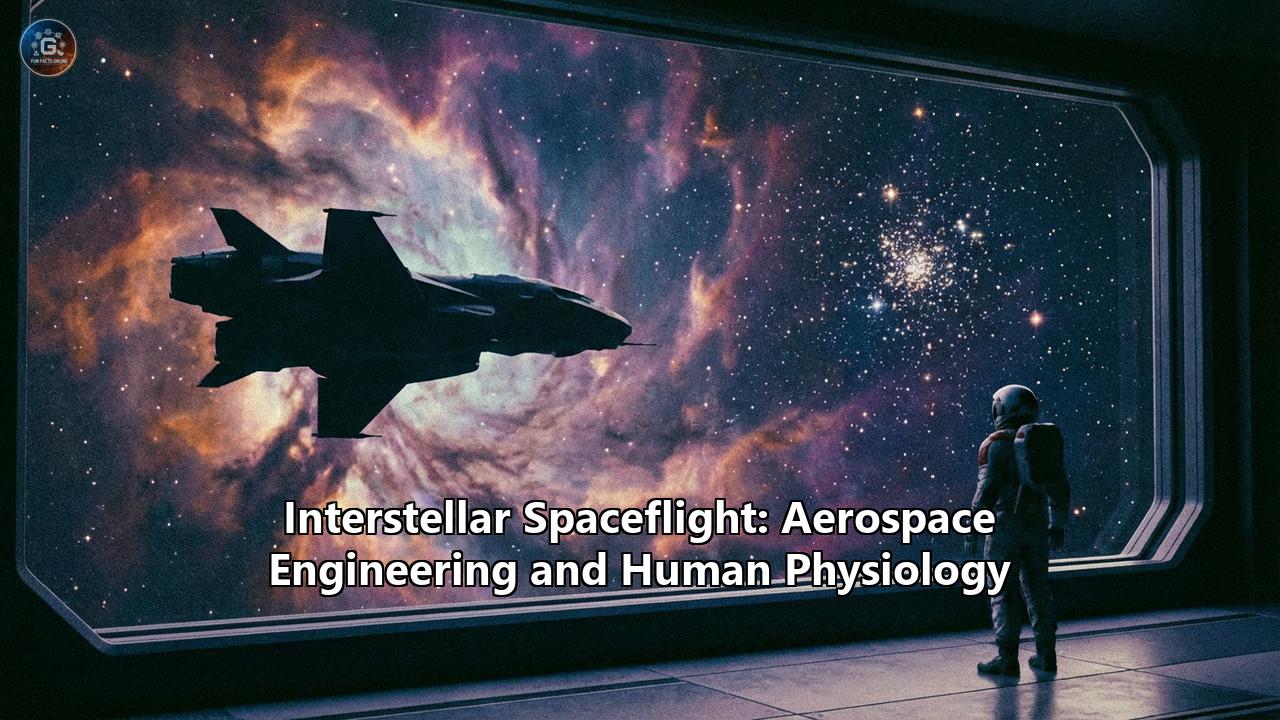
For as long as humanity has possessed the capacity to look upward, the stars have served as a canvas for our myths, our navigation, and our deepest existential curiosities. Today, the distant points of light that once guided ancient mariners are the target of the most ambitious engineering and biological endeavors ever conceived: interstellar spaceflight. Moving beyond our solar system is no longer a fringe concept relegated to speculative fiction; it is a burgeoning field of active research within both aerospace engineering and human physiology.
The scale of the challenge is almost incomprehensible. The nearest star system to our own, Alpha Centauri, is located approximately 4.34 light-years away—a distance of more than 25 trillion miles (40 trillion kilometers). To put this into perspective, if a spacecraft powered by traditional chemical rockets launched today, it would take roughly 40,000 years to reach this neighboring system. Thus, conquering the cosmic ocean requires a radical paradigm shift. We must not only design propulsion systems capable of shattering our current speed limits, but we must also engineer solutions to preserve the extraordinarily fragile human vessel across the dark, irradiated, and gravity-less void of deep space.
Part I: Aerospace Engineering – Designing the Chariots of the Gods
Chemical propulsion, the fiery, explosive technology that took humanity to the Moon and continues to power our planetary probes, is fundamentally bound by the Tsiolkovsky rocket equation. This mathematical reality dictates that carrying the immense amount of fuel required to achieve interstellar speeds adds exponential mass to the ship, rendering chemical rockets entirely useless for voyages beyond the Oort Cloud. To reach the stars within a human lifetime, spacecraft must achieve a significant fraction of the speed of light, demanding energy densities that push the limits of modern physics.
Breaking the Speed Limit: Advanced Propulsion Systems
To traverse the interstellar gulf, aerospace engineers are currently evaluating several theoretical and experimental propulsion paradigms:
Nuclear Thermal and Fission-Fragment RocketsAs a stepping stone toward true interstellar capability, nuclear fission offers a leap in specific impulse (a measure of propulsion efficiency). In a Nuclear Thermal Rocket (NTR), a fission reactor generates extreme heat, which is transferred to a liquid propellant—typically hydrogen—that expands and exhausts through a nozzle to produce thrust. While NTRs are highly promising for rapid interplanetary transit, such as crewed missions to Mars, their energy output is still insufficient for the light-years between stars. More advanced concepts, such as fission-fragment rockets, attempt to harness the kinetic energy of the radioactive decay products themselves, but even these represent only the beginning of interstellar architectures.
Nuclear Fusion and the Bussard RamjetFusion—the process that powers the stars themselves—represents the most viable near-term solution for heavy, crewed interstellar spacecraft. By fusing light isotopes like deuterium and helium-3, a fusion rocket could theoretically achieve exhaust velocities capable of pushing a craft to 10% of the speed of light. However, fusion engines require heavy containment systems and fuel supplies.
In 1960, physicist Robert W. Bussard proposed an elegant solution to the fuel-weight problem: the Bussard Ramjet. Rather than carrying heavy tanks of propellant, this theoretical spacecraft would use an immense, powerful magnetic field—spanning hundreds or thousands of kilometers—to scoop up the sparse, ionized hydrogen gas present in the interstellar medium. This collected hydrogen would then be funneled into a fusion reactor, continuously generating thrust. While the exact feasibility of the ramjet has been heavily debated due to the incredible drag produced during the scooping process, it remains a foundational concept in advanced propulsion physics.
Antimatter PropulsionFor the ultimate in energy density, engineers look to antimatter. When matter and antimatter collide, they annihilate each other, converting 100% of their mass into pure energy according to Einstein's E=mc². An antimatter rocket would offer a specific impulse far higher than any other proposed engine class, hypothetically allowing a spacecraft to reach tens of percent of the speed of light. The primary hurdles are currently production and containment. Creating even a single gram of antimatter requires massive amounts of energy, and storing it safely for decades without it interacting with the walls of its containment vessel requires flawless magnetic bottling systems. Some modern proposals suggest combining antimatter with fusion propulsion to act as a catalyst, reducing the amount of pure antimatter required while still achieving high specific impulse.
Riding the Light: Solar Sails and Directed Energy
Perhaps the most mature concept for near-term interstellar exploration abandons onboard fuel entirely. Light possesses momentum; when photons strike a reflective surface, they impart a microscopic push. By deploying vast, ultra-thin reflective sails, a spacecraft can be accelerated by the pressure of sunlight. However, for interstellar distances, sunlight diffuses too rapidly. The solution is directed energy: firing an immensely powerful array of Earth-based or orbit-based lasers at the sail.
This is the foundational principle behind Breakthrough Starshot, a $100 million research and engineering program founded in 2016 by Yuri Milner, Stephen Hawking, and Mark Zuckerberg. The initiative aims to send an uncrewed "nanocraft"—a tiny, gram-scale space probe known as a StarChip—to the Alpha Centauri system. By focusing a 100-gigawatt laser array on an incredibly thin light sail, the StarChip could be accelerated to 20% of the speed of light (approximately 100 million miles per hour) in just a few minutes, experiencing forces up to 10,000 Gs. At this velocity, the probe would reach Alpha Centauri in just over 20 years, allowing it to capture data and images of Proxima Centauri b, an Earth-sized exoplanet residing in the system's habitable zone.
The engineering required for such a feat is staggering. The sail must be incredibly robust, capable of reflecting 99.9% of the laser light, as absorbing even a fraction of the 100-gigawatt beam would vaporize the material instantly. Recent breakthroughs in this field, such as the development in 2025 by researchers from Brown University and TU Delft of a 200-nanometer-thick AI-optimized light sail punctured with billions of nanoscale holes, have significantly increased reflectivity while reducing weight.
Surviving the Void: Shielding and Communication
Traveling at relativistic speeds introduces violent hazards. At 20% the speed of light, a collision with a microscopic grain of interstellar dust or a stray hydrogen atom carries the kinetic energy of a small explosive. Protecting a crewed spacecraft or a delicate StarChip requires advanced shielding. Proposed solutions range from physical "Whipple shields" (sacrificial layers that vaporize incoming dust before it hits the main hull) to active magnetic and plasma deflectors that sweep charged particles out of the flight path.
Furthermore, once a craft reaches its destination, it must communicate its findings. Over a distance of 4.34 light-years, communication experiences years of delay. An interstellar probe must be fully autonomous, relying on advanced artificial intelligence to navigate, target sensors, and transmit data back to Earth using onboard lasers. For Breakthrough Starshot, the transmission of data back to Earth requires the probe to use its light sail as a massive antenna, focusing a tiny laser pulse across trillions of miles of space so that faint photons can be caught by giant telescopes on Earth.
Part II: Human Physiology – The Fragile Vessel
While probes and nanocrafts will be our first emissaries, the ultimate dream remains human settlement among the stars. Yet, the human body is an organism meticulously adapted over billions of years to a very specific environment: Earth's 1G gravity well, atmospheric pressure, and magnetic shielding. Subjecting human physiology to the deep space environment for decades—or centuries—presents biochemical and psychological challenges as daunting as the physics of propulsion.
The Gravity of the Situation: Bone, Muscle, and Fluid
Without the constant pull of Earth's gravity, the human body begins to rapidly adapt to weightlessness. In microgravity, the musculoskeletal system degrades; astronauts can lose up to 20% to 30% of their muscle mass and strength within just six months if vigorous countermeasures are not employed. Bones demineralize, excreting calcium into the bloodstream and significantly raising the risk of renal stones.
Furthermore, the absence of gravity causes a massive upward shift of bodily fluids. This fluid redistribution not only challenges the cardiovascular system but also increases intracranial pressure. The cerebrospinal venous system, a valveless network dependent on gravity and posture for proper flow, becomes congested. This phenomenon has been heavily linked to Spaceflight-Associated Neuro-ocular Syndrome (SANS), which causes vision degradation and changes in the structure of the eye during prolonged missions.
To survive an interstellar voyage lasting years or decades, artificial gravity is not a luxury; it is a strict biological necessity. The most viable engineering solution is centrifugal force generated by a rotating spacecraft or habitat ring. By calculating the radius of the ship and its rate of rotation, engineers can simulate a 1G environment, tricking human physiology into maintaining its terrestrial baseline and preventing the rapid deterioration of bone and muscle.
The Invisible Fire: Cosmic Radiation
Perhaps the most insidious threat to human survival in deep space is radiation. On Earth, we are protected by a thick atmosphere and a powerful magnetosphere. In the interstellar void, astronauts will be bombarded by Galactic Cosmic Rays (GCRs)—high-energy particles originating from distant supernovae—and unpredictable solar proton events from our own or other stars.
These highly charged particles act like microscopic cannonballs, tearing through human tissue and causing severe DNA double-strand breaks. Prolonged exposure leads to a massive increase in the risk of radiation-induced cancers, severe damage to the central nervous system, cognitive impairment, and degenerative tissue diseases. Traditional shielding, such as thick lead, is often counterproductive; when a high-energy cosmic ray strikes a heavy metal, it produces a shower of secondary radiation (bremsstrahlung) that can be even more damaging to the crew.
Consequently, aerospace engineers are turning to low-atomic-weight, hydrogen-rich materials. Water, polyethylene plastics, and even the spacecraft's fuel reserves can be layered around the crew habitat to absorb radiation without creating hazardous secondary showers. Still, physical shielding alone may not be enough to ensure survivability over a multi-decade journey.
To Sleep, Perchance to Reach the Stars: Synthetic Torpor and Hibernation
Faced with the immense logistical challenges of carrying decades worth of food, water, and breathable oxygen, space agencies have begun looking at a concept once confined to science fiction: human hibernation, or "synthetic torpor". Torpor is an energy-conserving state observed in certain animals—such as ground squirrels and bears—characterized by a deep, active reduction in metabolic rate, core body temperature, and brain activity.
Lowering astronauts' core body temperature by roughly 5°C (9°F) could induce a state of hypothermic stasis, depressing metabolic rates by 50% to 70%. The benefits of a crew in stasis are revolutionary. It drastically reduces the mass of life support consumables required, which in turn exponentially reduces the fuel needed to launch and accelerate the spacecraft. A NASA Innovative Advanced Concepts (NIAC) study, conducted by SpaceWorks Enterprises, suggested that placing a crew in a state of rotating synthetic torpor could result in a 25% reduction in overall mission launch costs.
More remarkably, biology itself may offer the ultimate radiation shield. Decades of research have demonstrated that animals in a state of natural torpor exhibit a profound, innate resistance to radiation. The deep metabolic depression somehow protects cellular structures and mitigates the damage of ionizing radiation compared to their awake counterparts. If this radioprotective effect can be translated to humans in synthetic torpor, it would fundamentally change the safety architecture of deep space travel.
In 2024, NASA's NIAC program took a monumental step forward by funding the STASH (Studying Torpor in Animals for Space-health in Humans) experiment. Developed by Fauna Bio Inc., STASH is designed to study the effects of hibernation in a microgravity environment aboard the International Space Station. The experiment houses rodents in chambers kept at temperatures as low as 4°C, monitoring their metabolism in real-time to observe if hibernation prevents bone and muscle loss in zero-gravity as effectively as it protects against radiation.
Inducing shallow metabolic depression in humans is already technically possible; it is utilized in modern medicine via targeted temperature management and sedative agents to treat traumatic brain injuries and cardiac arrest. A comprehensive 2025 systematic review of sedative agents, specifically inhalation anesthetics, showed varying degrees of success in replicating torpor-like states, noting promising metabolic effects but acknowledging hurdles in prolonged administration and rewarming protocols. Ensuring the safe, reversible induction of long-term stasis remains one of the premier challenges in aerospace medicine, requiring breakthroughs in neuromuscular electrical stimulation to prevent muscle wasting while the astronauts sleep.
The Mind in the Void: Psychology and Closed-Loop Life Support
Beyond the physiological decay, interstellar spaceflight poses an unprecedented psychological challenge. In the history of human exploration, no individual has ever completely lost sight of Earth. Even Apollo astronauts could cover their home planet with their thumb, but they could still see it. An interstellar crew will experience the "Earth-Out-Of-View" phenomenon, a total severing of visual and physical connection to the home world.
Confinement in a small, closed environment for years, combined with the extreme distance and communication delays, will inevitably subject the human mind to severe stress, isolation, and potential interpersonal conflict. If synthetic torpor is not utilized for the entire journey, astronauts will need to rely on incredibly robust psychological screening, immersive virtual reality environments designed to simulate terrestrial nature, and deep-space closed-loop life support systems.
These life support systems—often termed Controlled Ecological Life Support Systems (CELSS)—must be flawlessly circular. Every drop of sweat, breath of carbon dioxide, and gram of solid waste must be recycled into breathable air, potable water, and nutrient-dense food, likely through advanced synthetic biology and onboard hydroponic agriculture. Over an interstellar timescale, a spacecraft ceases to be a mere vehicle; it must become an artificial biosphere, a miniature Earth hurtling through the dark.
If faster-than-light travel or near-light-speed transit proves biologically impossible, humanity may have to turn to "Generation Ships." In this scenario, whole communities would embark on a voyage lasting centuries. The original crew would die in transit, leaving their descendants to maintain the ship and eventually colonize the target exoplanet. This introduces staggering ethical and psychological dilemmas regarding the rights of individuals born in transit, bound to a mission they never chose, surviving in an isolated tin can moving through the interstellar medium.
The Synthesis of Human and Machine
Interstellar spaceflight represents the ultimate synthesis of humanity's macro-engineering prowess and micro-biological resilience. It is a discipline where the physics of laser-driven nanocrafts intersecting with the speed of light must be met by the delicate biochemical engineering of inducing torpor in the human brain.
From the Breakthrough Starshot probes aiming their sails at Alpha Centauri to the rodents sleeping in the STASH module aboard the ISS, the fundamental building blocks of an interstellar civilization are already being laid. The stars have indeed set strict bounds on human destiny, but through the unrelenting pursuit of advanced propulsion and the adaptation of human physiology, those bounds are beginning to look less like an impenetrable wall, and more like an open door.
Reference:
- https://en.wikipedia.org/wiki/Interstellar_travel
- https://www.space.com/21789-interstellar-spaceflight-technology-challenges.html
- https://en.wikipedia.org/wiki/Breakthrough_Starshot
- https://www.researchgate.net/publication/216573468_Interstellar_Spaceflight_Using_Nuclear_Propulsion_And_Advanced_Techniques
- https://www.quora.com/What-forms-of-propulsion-offer-the-most-promise-for-Interstellar-spaceflight
- https://www.fromspacewithlove.com/star-shot/
- https://breakthroughinitiatives.org/initiative/3
- https://scielo.isciii.es/pdf/rmc/v17n4/1585-5210-rmc-17-04-337.pdf
- https://smd-cms.nasa.gov/wp-content/uploads/2023/05/194_4ed6e97e79c39f2f69c20b8a5d320550_GRIKOYURI.pdf
- https://www.nasa.gov/general/studying-torpor-in-animals-for-space-health-in-humans/
- https://medium.com/@vfarsadaki/hibernation-for-deep-space-travel-a-leap-towards-interstellar-exploration-ac4b9a57870a
- https://astrobiology.com/2025/06/adapting-human-physiology-to-long-term-space-missions.html
- https://pmc.ncbi.nlm.nih.gov/articles/PMC7099441/
- https://www.space.com/33894-mars-colonization-hibernating-astronauts-torpor.html
- https://www.universetoday.com/articles/nasa-2024-niac-program-selects-deep-space-hibernation-technology-for-development