
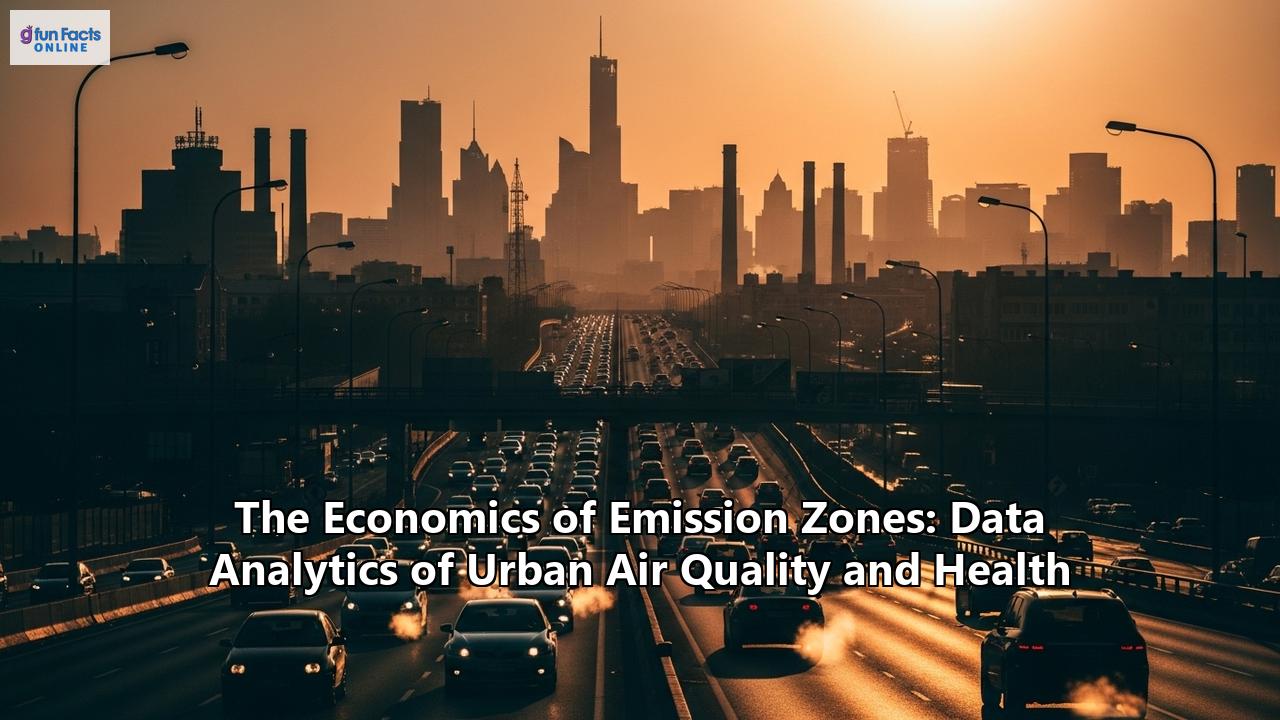
The Price of Fresh Air: A Deep Dive into the Economics of Emission Zones and the Health of Our Cities
The air in our cities, the very element that sustains us, has become a casualty of our progress. The relentless hum of traffic, a symbol of urban vibrancy, has a toxic underbelly. The exhaust fumes spewing from millions of vehicles contribute to a silent and deadly public health crisis. In response, a growing number of cities across the globe are drawing a line in the sand—or more accurately, on the map—by implementing emission zones. These designated areas, where the most polluting vehicles are restricted or charged a fee, represent one of the most significant urban policy interventions of our time. But what is the true cost of cleaner air? This is not just a question of environmental policy; it is a complex economic equation with profound implications for public health, social equity, and the future of our urban centers.
This article delves into the intricate economics of emission zones, exploring the critical role of data analytics in understanding their impact on urban air quality and human health. We will journey through the experiences of pioneering cities like London, Stockholm, and Milan, dissecting the data to reveal the multifaceted consequences of these ambitious schemes. From the heated debates in city halls to the quiet relief of a child with asthma breathing easier, the story of emission zones is a compelling narrative of our collective struggle to reconcile the demands of a modern economy with the fundamental right to clean air.
The Rise of Emission Zones: A Global Response to a Silent Killer
The concept of emission zones, in its various forms, is not new. Swedish cities first introduced them in the 1990s. However, their proliferation across Europe and beyond is a recent phenomenon, driven by mounting scientific evidence of the harmful effects of air pollution and the failure of other policies to meet air quality standards. These zones are known by many names—Low Emission Zones (LEZs), Ultra Low Emission Zones (ULEZs), Clean Air Zones (CAZs), and Congestion Charging Zones—but they all share a common goal: to reduce the number of polluting vehicles on city streets.
The primary targets of these zones are often older, more polluting vehicles, particularly those with diesel engines, which are significant sources of nitrogen oxides (NOx) and particulate matter (PM). These pollutants are linked to a wide range of health problems, including respiratory illnesses like asthma and chronic obstructive pulmonary disease (COPD), cardiovascular diseases, and even cancer. Children are especially vulnerable, as toxic air can stunt the growth of their lungs and put them at risk of lifelong health issues. The World Health Organization (WHO) estimates that 9 out of 10 people worldwide breathe polluted air, leading to 7 million premature deaths annually. This staggering statistic has transformed urban air quality from an environmental concern into a pressing public health emergency.
Emission zones can be broadly categorized into two types: charging and non-charging. Non-charging zones focus on improving air quality through measures like promoting sustainable transport options, such as cycle lanes and enhanced public transport. Charging zones, on the other hand, require owners of non-compliant vehicles to pay a daily fee to enter the designated area. These schemes are typically enforced using a network of automatic number plate recognition (ANPR) cameras.
The implementation of these zones is often a contentious issue, sparking debates about their economic impact on businesses and individuals, particularly those with lower incomes who may not be able to afford to upgrade their vehicles. However, proponents argue that the long-term health and economic benefits far outweigh the initial costs. As we will see, the evidence from cities that have implemented these zones provides valuable insights into this complex cost-benefit analysis.
The Economic Equation: Costs, Benefits, and the Bottom Line
The decision to implement an emission zone is a significant economic one, with far-reaching consequences for a city's residents, businesses, and government. The economic debate often centers on the direct costs of implementation and compliance versus the less tangible, but arguably more significant, long-term benefits of improved public health and a cleaner environment.
The Cost Side of the Coin
The most immediate and visible costs of emission zones are those borne by individuals and businesses who own non-compliant vehicles. For many, this means either paying a daily charge, which can amount to thousands of pounds or euros a year, or replacing their vehicle with a compliant one. Small businesses, such as tradespeople and delivery services, can be particularly hard-hit, as their livelihoods often depend on vehicle use. In London, it was estimated that the expansion of the Ultra Low Emission Zone (ULEZ) would impact nearly 700,000 drivers of non-compliant cars in Greater London.
To mitigate these financial burdens, some cities have introduced scrappage schemes and financial support to help low-income households and small businesses transition to cleaner vehicles. In London, for instance, a scrappage scheme offers grants to eligible residents. Furthermore, in a move to ease the financial pressure, HM Revenue and Customs (HMRC) in the UK confirmed that ULEZ charges can be claimed as a tax-deductible business expense for those who file Self Assessment tax returns, provided the journey is exclusively for business purposes.
Beyond the costs to vehicle owners, there are also the administrative and operational costs for the city itself. These include the installation and maintenance of enforcement infrastructure, such as ANPR cameras, and the costs of running the payment and penalty systems. For example, the investment cost for the Stockholm congestion charging system introduced in 2006 was approximately €200 million.
A 2020 study on a proposed LEZ for light vehicles in Stockholm suggested that the social costs, including drivers' losses and higher driving costs, could be substantial and potentially outweigh the health benefits. The study highlighted that the benefits of the LEZ were relatively small because the banned vehicles were responsible for only a small share of NO2 levels, and Stockholm already had relatively low pollution levels that were predicted to decline naturally over time due to the renewal of the vehicle fleet. This underscores the importance of a carefully tailored approach, as the cost-benefit analysis can vary significantly depending on the specific context of a city.
The Benefits: A Return on Investment in Health and Productivity
While the costs of emission zones are often more immediate and easily quantifiable, the benefits, though sometimes harder to measure, are vast and far-reaching. The primary benefit is, of course, improved air quality, which translates directly into significant public health improvements.
A study by the University of Bath on London's LEZ and ULEZ found that these policies delivered significant public health and economic benefits. The research, which analyzed over a decade of data, revealed that the introduction of the LEZ in 2008 led to a 13% reduction in particulate matter (PM10) in Greater London between 2008 and 2013 compared to pre-LEZ levels. The ULEZ, introduced in 2019, had an even more substantial impact, reducing nitrogen dioxide (NO2) by 18.4% in Central London compared to pre-ULEZ levels.
These improvements in air quality have had a tangible impact on the health of Londoners. The study found a 4.5% reduction in long-term health problems and an 8% decrease in respiratory issues like asthma and bronchitis due to the LEZ. It also led to a reduction in hospital admissions for respiratory conditions, avoiding 12 respiratory admissions per 10,000 people in Greater London. The ULEZ was found to have improved general health by 3% and reduced anxiety by 6%.
The economic benefits of these health improvements are substantial. The University of Bath study estimated that the LEZ and ULEZ have generated cost savings of over £963 million in Greater London, driven by fewer respiratory illnesses and reduced job absenteeism. Another analysis from the same university estimated annual public health savings of more than £37 million due to the LEZ, with an 18.5% reduction in sick leave and a 10.2% decrease in respiratory issues. Professor Eleonora Fichera from the University of Bath summarized the findings succinctly: “Clean air makes for healthier, happier, more productive communities.”
The Mayor of London's office projected that air quality policies, including the ULEZ and its expansion, would avoid almost 300,000 new cases of air-quality-related diseases and over 1 million hospital admissions in London by 2050. These figures paint a clear picture of the long-term economic returns of investing in cleaner air.
The Power of Data: How Analytics Drives Emission Zone Strategies
The success or failure of an emission zone hinges on a deep understanding of a city's unique characteristics, from its traffic patterns and pollution hotspots to the socioeconomic makeup of its population. This is where data analytics plays a pivotal role. Modern emission zone strategies are not based on guesswork; they are built on a foundation of robust data collection, sophisticated modeling, and continuous evaluation.
From Monitoring to Modeling: The Data-Driven Approach
The first step in designing an effective emission zone is to establish a comprehensive air quality monitoring network. This involves deploying sensors across the city to collect real-time data on key pollutants like NO2, PM10, and PM2.5. This data helps to identify pollution hotspots and understand the sources of pollution, which is crucial for defining the boundaries of the zone and setting appropriate emission standards.
Once a baseline is established, cities use a variety of data analytics techniques to model the potential impacts of different LEZ scenarios. These models can simulate how changes in traffic volume and vehicle fleet composition will affect air quality. For example, researchers in Lyon, France, used a combination of urban freight transport models, environmental models, and cost-benefit analysis to examine the impacts of different LEZ scenarios with varying perimeters and environmental requirements. Their findings suggested that increasing the size of the perimeter was more economically and environmentally efficient than simply tightening the emission standards.
In Madrid, machine learning algorithms were used to forecast air pollution concentrations in a "business-as-usual" scenario, which was then compared to the actual data collected after the implementation of the LEZ. This allowed researchers to estimate the effectiveness of the policy while accounting for seasonal and meteorological factors. The models showed significant reductions in NO2 concentrations, which was consistent with the observed decrease in traffic volume.
Evaluating Success: The Ongoing Role of Data
The role of data analytics does not end once an emission zone is implemented. Continuous monitoring and evaluation are essential to assess the effectiveness of the policy and make adjustments as needed. This is evident in the case of London's ULEZ, where regular reports on its impact are published, providing transparency and accountability. A progress report on the ULEZ expansion revealed that the number of the most polluting vehicles driven in London had fallen by almost half, with more than 95% of vehicles now compliant.
Data from various sources, including traffic sensors, air quality monitors, and public health records, are integrated and analyzed to build a comprehensive picture of the zone's impact. This data-rich environment allows for a quasi-experimental approach to evaluation, where changes in the affected area are compared to a control group of similar areas without an emission zone. This method was used in the University of Bath's study of London's LEZ and ULEZ, which compared London to other large UK cities like Manchester and Liverpool.
The insights gained from this data analysis are not only crucial for refining existing policies but also for informing the design of new emission zones in other cities. The wealth of data from London, Stockholm, and Milan provides a valuable blueprint for other urban centers grappling with the challenge of air pollution.
Case Studies in Urban Transformation: London, Stockholm, and Milan
The real-world experiences of cities that have implemented emission zones offer invaluable lessons in the complexities and triumphs of these ambitious policies. London, Stockholm, and Milan stand out as pioneers, each with a unique story to tell.
London's Multi-Phased Approach: From LEZ to ULEZ
London has been at the forefront of the emission zone movement, implementing a series of increasingly stringent policies over the past two decades. The Low Emission Zone (LEZ) was introduced in 2008, initially targeting heavy-duty vehicles. It was followed by the world's first 24-hour Ultra Low Emission Zone (ULEZ) in central London in 2019, which set even stricter standards for all vehicles. The ULEZ was subsequently expanded to cover a much larger area of Greater London.
The data from London is compelling. As mentioned earlier, the LEZ and ULEZ have led to significant reductions in air pollution and substantial health benefits. The number of the most polluting vehicles on London's roads has plummeted, and compliance with the ULEZ standards is now over 95%. The success of London's schemes is a testament to the power of a phased approach, with progressively tighter standards and expanding boundaries.
However, the journey has not been without its challenges. The expansion of the ULEZ was met with fierce opposition from some residents and businesses concerned about the financial impact. The city has had to navigate these concerns through public consultations, financial support schemes, and a concerted effort to communicate the health benefits of the policy. The London experience highlights the critical importance of public engagement and support for the successful implementation of emission zones.
Stockholm's Congestion Charge: A Tale of Shifting Public Opinion
Stockholm's congestion charging system, introduced as a trial in 2006, is a classic example of how a well-designed policy can win over a skeptical public. The primary goal of the Stockholm system was to reduce traffic congestion, but it also had significant environmental and health benefits.
During the seven-month trial, traffic across the cordon decreased by about 20%, and congestion was reduced by 30-50%. This led to a 10-14% reduction in emissions in the inner city. The improvements in travel times and the urban environment were so noticeable that public opinion shifted dramatically. A referendum held after the trial resulted in a majority vote in favor of making the system permanent.
The Stockholm case study demonstrates the importance of a trial period to allow citizens to experience the benefits of a congestion charge firsthand. It also shows that a single-cordon toll can have a positive impact on traffic over a large area, not just in the immediate vicinity of the charging points. The Stockholm system has remained in place for over a decade, with the traffic reductions holding steady, a testament to its long-term effectiveness.
Milan's Dual-Zone Strategy: Area C and Area B
Milan has adopted a unique dual-zone approach to tackling traffic and pollution. "Area C" is a congestion charge zone in the city center, introduced in 2012 after a public referendum in which 79% of voters supported the measure. It charges a fee for most vehicles entering the central zone during weekdays. "Area B" is a much larger low-emission zone, covering about 72% of the city's territory, which was introduced in 2019. Area B is free to enter, but it has stricter environmental rules, banning the most polluting vehicles altogether.
The results from Milan have been positive. The introduction of Area C led to a significant drop in traffic. More recently, data from Area B shows a progressive shift in the vehicle fleet towards less polluting engines. Between 2022 and 2024, the number of hybrid cars entering Area B almost doubled, while the share of diesel vehicles decreased from 40% to 30%. It is estimated that between 2022 and 2023, Area B prevented the emission of 150 tonnes of NOx.
Milan's experience is particularly interesting because it combines a congestion charge with a larger, more restrictive low-emission zone. This dual approach addresses both congestion and pollution, and it has been implemented with strong public support. The city has also demonstrated a commitment to social equity, with exemptions and discounted access for residents.
Social Equity and Public Acceptance: The Human Dimension of Emission Zones
While the economic and environmental cases for emission zones are strong, their success ultimately depends on public acceptance and their ability to address concerns about social equity. The implementation of these zones can have a disproportionate impact on low-income individuals and families who are less likely to be able to afford to replace an older, non-compliant vehicle.
This is a critical challenge that cities must address to ensure that the transition to cleaner air is a just one. Financial support schemes, such as scrappage grants and subsidies for public transport, are essential tools for mitigating the financial burden on the most vulnerable. It is also important to consider the needs of essential workers, such as those who work at night when public transport options may be limited.
Public engagement and communication are also key. Cities that have been successful in implementing emission zones, such as Stockholm and Milan, have often done so after extensive public consultation and even referendums. When people understand the health benefits of cleaner air and feel that their concerns are being heard, they are more likely to support these policies. In Barcelona, a study on the public acceptance of the city's LEZ found that most residents had a positive attitude, perceiving it as a fair and effective measure to reduce air pollution.
The debate around emission zones often becomes a proxy for broader discussions about the future of our cities. They raise fundamental questions about who our cities are for, how we move around them, and what kind of environment we want to live in. As we move towards a future of cleaner urban mobility, it is essential that we do so in a way that is both environmentally effective and socially just.
The Road Ahead: The Future of Emission Zones
The evidence is clear: well-designed and properly implemented emission zones are a powerful tool for improving urban air quality and protecting public health. The data from cities like London, Stockholm, and Milan demonstrates that these policies can deliver significant environmental, health, and economic benefits.
However, the journey towards cleaner urban air is far from over. As technology evolves, so too will the nature of emission zones. We are likely to see a move towards more dynamic and flexible systems that can adapt to real-time traffic and pollution data. The integration of artificial intelligence and machine learning will enable cities to optimize their emission zone strategies for maximum effectiveness.
The ultimate goal is to create cities where clean air is not a luxury, but a given. This will require a holistic approach that goes beyond simply restricting polluting vehicles. It will involve investing in high-quality public transport, creating safe and attractive infrastructure for walking and cycling, and accelerating the transition to zero-emission vehicles.
The economics of emission zones is not just about a simple cost-benefit analysis. It is about investing in the long-term health and well-being of our urban populations. It is about creating cities that are not just economically vibrant, but also livable, breathable, and sustainable. The price of fresh air may seem high, but the cost of inaction is infinitely greater. As we stand at this critical juncture, the data and experiences of cities around the world provide a clear roadmap for a healthier, cleaner, and more prosperous urban future.
Reference:
- https://www.mdpi.com/2071-1050/13/3/1168
- https://www.diva-portal.org/smash/get/diva2:1612376/FULLTEXT01.pdf
- https://www.openaccessgovernment.org/the-benefits-of-introducing-clean-air-zones/121325/
- https://www.utilimarc.com/blog/low-emission-zones-in-urban-cities
- https://www.sherwincurrid.com/understanding-the-effects-of-ulez-on-businesses/
- https://lowemissionzones.scot/news/the-health-benefits-of-low-emission-zones-clean-air-day-2022
- https://www.cwejournal.org/vol16no2/urban-air-pollution-and-human-health-a-review
- https://www.numberanalytics.com/blog/low-emission-zones-urban-air-quality
- https://roadsafetygb.org.uk/news/londons-ulez-expansion-to-cause-massive-financial-impact-on-motorists-and-businesses/
- https://www.bath.ac.uk/announcements/low-emission-zones-improve-air-quality-health-and-peoples-well-being-new-ipr-policy-brief/
- https://www.fleetnews.co.uk/news/clean-air-zone-impact-on-health-revealed-in-new-study
- https://www.rapidformations.co.uk/blog/ulez-small-business-impact/
- https://ieep.eu/wp-content/uploads/2024/06/Social-aspects-of-low-emission-zones-Milan-case-study-IEEP-2024.pdf
- https://www.itf-oecd.org/sites/default/files/docs/swedish-congestion-charges.pdf
- https://ideas.repec.org/p/hhs/vtiwps/2020_007.html
- https://www.bath.ac.uk/announcements/londons-low-emission-zones-save-lives-and-money-new-study-finds/
- https://transportandenergy.com/2025/04/24/study-proves-health-benefits-of-low-emission-zones/
- https://futuretransport-news.com/data-reveals-impact-of-londons-lez-ulez-on-public-health-economy/
- https://www.london.gov.uk/who-we-are/what-london-assembly-does/questions-mayor/find-an-answer/improvements-public-health-ulez
- https://openproceedings.org/2018/conf/edbt/paper-339.pdf
- https://www.citylogistics.info/research/research-environmental-and-economic-evaluation-of-a-low-emission-zone-for-city-logistics/
- https://www.mdpi.com/2076-3417/15/6/2915
- https://www.mdpi.com/2071-1050/17/8/3582
- https://www.clausiuspress.com/assets/default/article/2024/09/30/article_1727702745.pdf
- https://www.london.gov.uk/who-we-are/what-london-assembly-does/questions-mayor/find-an-answer/financial-impacts-ulez
- https://f.hubspotusercontent30.net/hubfs/4056033/The%20Stockholm%20congestion%20charging%20trial%202006%20Overview%20of%20effects.pdf
- https://toolsofchange.com/en/case-studies/detail/670
- https://rue-avenir.ch/wp-content/uploads/2022/05/Presentation_Milan_Area_C-Area_B.pdf
- https://www.areacmilano.it/en/milan-area-b.html
- https://www.agenzianova.com/en/news/in-Milan-fewer-and-fewer-polluting-vehicles-in-the-BEC-area/
- https://www.agenzianova.com/en/news/a-milano-sempre-meno-veicoli-inquinanti-in-area-b-e-c/
- https://www.researchgate.net/publication/275059001_Review_of_the_efficacy_of_low_emission_zones_to_improve_urban_air_quality_in_European_cities