
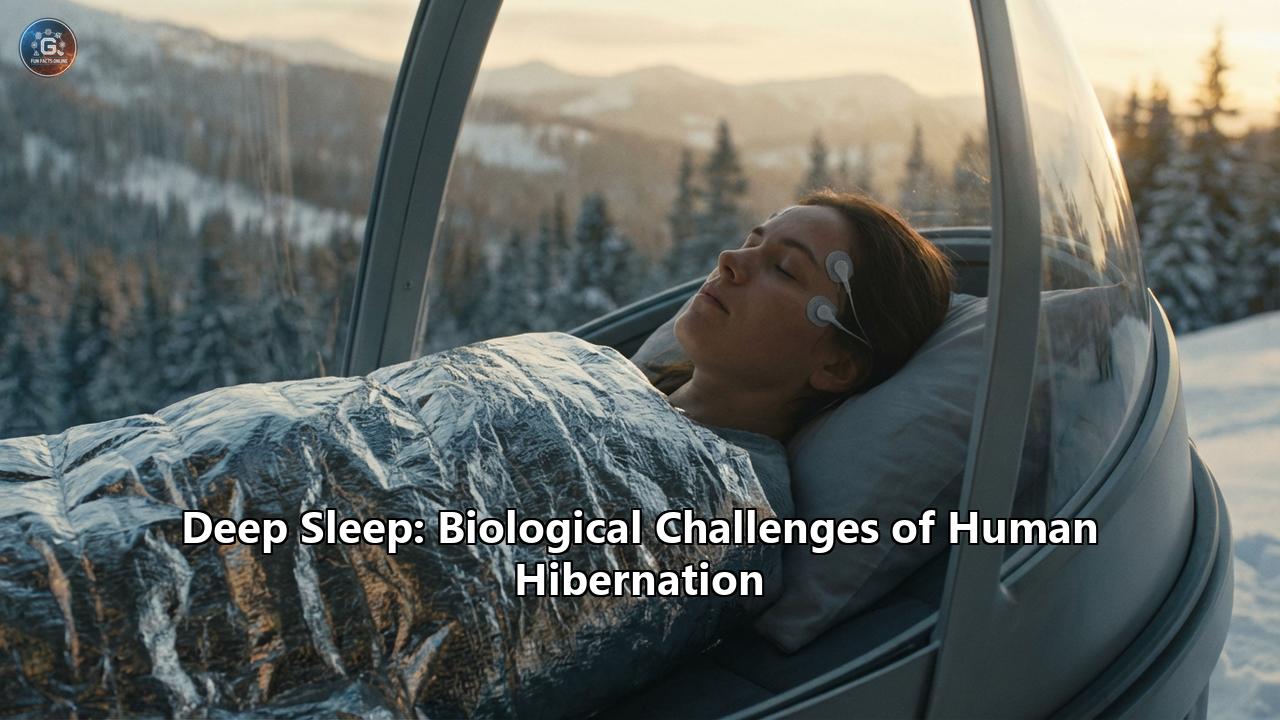
The hum of the starship’s life support, the slow hiss of a cryogenic pod unsealing, and the astronaut who steps out, stretching after a hundred-year sleep, perfectly preserved and ready to explore a new world. It is one of the most enduring tropes in science fiction, from Alien to Interstellar. In the cinematic universe, human hibernation is a solved equation—a simple matter of lowering the temperature and pressing pause on life.
But biology tells a far more violent and complicated story.
If you were to take a human being, lower their core body temperature, and force them into a state of prolonged immobility, the results would not be peaceful preservation. Within hours, the heart’s electrical grid would devolve into chaotic spasms. Within days, blood would pool and clot. Over weeks, muscles would wither, bones would become brittle, and the kidneys would fail under the toxic weight of the body's own metabolic waste. Even if the body could be kept alive, the brain might wake up fundamentally broken.
Yet, as space agencies like NASA and the European Space Agency (ESA) look toward crewed missions to Mars and beyond, the concept of human hibernation—or "synthetic torpor"—has moved from the realm of science fiction into serious biomedical research. Putting a crew into a hypometabolic state could reduce spacecraft mass by a third, cut down on food and oxygen requirements, alleviate the extreme psychological stress of deep-space confinement, and even offer mysterious protections against cosmic radiation.
To get there, however, scientists are realizing that we cannot just invent our way into hibernation; we have to reverse-engineer it from nature. By studying natural hibernators like the black bear, the Arctic ground squirrel, and the Syrian hamster, researchers are uncovering the staggering biological hurdles of human hibernation—and the extraordinary evolutionary hacks required to overcome them.
The Chill That Kills: Temperature and the Human Heart
To understand why human hibernation is so difficult, one must first understand what hibernation actually is. It is not simply a long, deep sleep. It is a highly regulated physiological state known as torpor, characterized by an intentional, active suppression of the metabolic rate. During torpor, animals drop their energy consumption to a fraction of their normal levels, and their core body temperature often plummets to match the ambient environment.
For the human cardiovascular system, profound cold is an immediate death sentence. Humans are endotherms, evolved to operate within a very narrow thermal band. When human core temperature drops below 28°C (82°F), the heart muscle experiences a deadly malfunction. The cellular pumps that regulate calcium ions—the chemical triggers that tell the heart muscle fibers to contract—begin to fail. Calcium builds up inside the cells, causing the heart’s electrical signaling to short-circuit. The result is ventricular fibrillation: the heart stops pumping blood and instead merely quivers, leading rapidly to death.
Natural hibernators possess a cardiac resilience that seems almost alien. An Arctic ground squirrel can drop its core body temperature below freezing, yet its heart continues to beat a few times a minute, keeping the blood flowing. A black bear’s body temperature only drops a few degrees during its winter sleep (staying around 31°C or 88°F), but its heart rate plummets from a normal 40-50 beats per minute to a mere 8 to 10 beats per minute.
To put a human into synthetic torpor, researchers must find a way to decouple our metabolism from our core temperature, or chemically alter the calcium-handling channels in our heart cells to prevent fibrillation. Current medical practices involving "therapeutic hypothermia" for trauma and cardiac arrest patients only drop the body temperature by a few degrees and can only be sustained for a few days without severe complications. True spaceflight hibernation will require a fundamental rewiring of our cardiovascular limits.
The Wasting Flesh: Defeating Muscle and Bone Atrophy
If a human lies in a hospital bed for a month, they will lose a devastating amount of muscle mass and bone density. In the microgravity of space, this deterioration accelerates. Astronauts on the International Space Station must exercise vigorously for over two hours every single day just to mitigate the loss of strength. If an astronaut were rendered unconscious and immobile for a six-month journey to Mars, they would arrive so weak that they might not be able to stand, let alone explore a rugged alien landscape.
Enter the grizzly and black bears. A bear can remain completely motionless in a den for five to seven months and emerge in the spring with its muscle mass, bone density, and strength almost perfectly preserved. How do they achieve this biological miracle?
Recent research published in Nature Communications has uncovered the bear's cellular secret. The muscles of hibernating bears undergo a drastic shift in protein and energy metabolism. Scientists found that bears actively reduce the activity of an enzyme called myosin ATPase in their resting skeletal muscle. Myosin is the molecular motor responsible for muscle contraction; by dialing down its enzymatic activity, the bear's body dramatically limits the energy (ATP) turnover required to maintain the tissue.
Furthermore, bears shift their muscle phenotype toward "slow-oxidative" fibers and streamline their mitochondrial function. While humans suffer mitochondrial decay during immobility, bears actually reorganize their cellular engines to run flawlessly on alternative energy pathways, primarily burning stored fat. If researchers can develop pharmacological therapies that mimic this reduced myosin ATPase activity and mitochondrial streamlining, it could not only allow humans to hibernate but also revolutionize treatments for bedridden patients, the elderly, and those suffering from muscle-wasting diseases on Earth.
The Toxic Buildup: Alchemy in the Kidneys
Metabolism, even when slowed, produces waste. When proteins are broken down, they produce ammonia, which the human liver converts into urea. This urea is then filtered by the kidneys and excreted as urine. If a human cannot urinate, urea builds up in the blood to toxic levels, leading to uremia, kidney failure, and death.
During a five-month hibernation, a bear does not eat, drink, defecate, or urinate. A human attempting this would be dead from kidney failure in a matter of days. Yet, the hibernating bear’s blood shows no elevated levels of urea or ammonia.
The bear's solution to this problem is nothing short of biological alchemy. While their kidneys significantly reduce the filtration rate, the bears do actually produce a small amount of urine. However, instead of passing it, the bear's bladder reabsorbs the water and the urea back into the bloodstream.
What happens next is a marvel of evolutionary engineering. The bear’s body—likely aided by specialized urease-producing microbes in its gut—breaks down the toxic urea into its base component: nitrogen. This nitrogen is then scavenged and recycled to synthesize new amino acids, the building blocks of proteins. Instead of allowing waste to kill them, bears use their own waste to constantly rebuild and maintain their muscle tissue while they sleep.
For humans to survive deep-space torpor, we will likely require total parenteral nutrition (intravenous feeding) and catheterization to manage waste, which introduces severe risks of infection and thrombosis. Unlocking the bear’s urea-recycling pathway could entirely eliminate the need for waste management systems in hibernation pods, allowing the human body to sustain itself in a closed biological loop.
The Tangled Brain: The Alzheimer's Paradox
Perhaps the most terrifying challenge of human hibernation is what happens to the mind.
When a brain is cooled and metabolism slows, neuronal activity grinds to a halt. In hibernating animals, scientists have observed a phenomenon known as "synaptic retraction." The connections between neurons literally break apart and pull away from each other. In a human, this level of neural degradation is usually associated with severe brain damage or advanced neurodegenerative disease.
But in hibernating animals, the brain is doing this on purpose. Slow cooling makes neurons highly vulnerable to over-excitement and toxicity. By retracting their synapses, hibernators protect their brain cells from frying themselves.
The mechanism behind this protection has sent shockwaves through the neuroscience community. To induce this synaptic retraction, hibernating animals utilize a protein called tau. During torpor, the tau protein undergoes a chemical modification called hyperphosphorylation.
If that sounds familiar, it is because hyperphosphorylated tau is the exact same mechanism that causes Alzheimer's disease in humans. In the human brain, this modified tau curls up into toxic "tangles" that choke and kill neurons, permanently destroying memory and cognition.
Yet, when an Arctic ground squirrel or a Syrian hamster hibernates, its brain is flooded with these exact same Alzheimer's-like tau proteins. The difference? In the hibernator, it operates as a reversible "master switch." When the animal wakes up and its brain rewarms (crossing the threshold of about 28°C), the phosphate groups are rapidly stripped away from the tau proteins. The tangles dissolve, the synapses rapidly re-extend, and the neural networks reconnect. The animal wakes up with its memories completely intact, remembering exactly where it buried its food months prior.
Understanding how hibernating mammals prevent tau proteins from becoming permanently toxic could be the key to waking astronauts up with their minds intact. More importantly, it provides a vital, living model for curing Alzheimer’s disease on Earth.
The Invisible Fire: Surviving Cosmic Radiation
Even if we can stabilize the heart, recycle waste, preserve muscle, and protect the brain, deep-space travel introduces an external threat: galactic cosmic radiation. Outside the protective magnetic bubble of the Earth, astronauts are bombarded by high-energy particles that shred DNA, increasing the risk of cancer and radiation sickness.
Common sense would suggest that a hibernating astronaut is more vulnerable to radiation. After all, if cell division and metabolic repair mechanisms are slowed to a crawl, the body cannot patch up the DNA damage as it happens.
However, studies conducted by ESA's Advanced Concepts Team have revealed a paradoxical and highly encouraging effect: torpor actually protects against radiation. When scientists induced synthetic torpor in non-hibernating animals like rats and exposed them to heavy ion radiation, they found that the animals had significantly higher survival rates and less organ damage than awake animals.
The exact mechanism is still being unraveled, but it appears that in a hypometabolic state, the pathways that trigger cell death (apoptosis) in response to DNA damage are suppressed. Furthermore, there is a notable downregulation in the genes responsible for DNA damage signaling during torpor. Because the cells are metabolically quiet, they do not blindly replicate damaged DNA, effectively pausing the clock on radiation toxicity until the body is awake and its full suite of repair mechanisms can be brought to bear. Additionally, keeping astronauts in a confined hibernation pod allows engineers to surround that single small space with thick radiation shielding—like a water jacket—which is vastly more practical than attempting to shield an entire spaceship.
The Bleeding Edge: Hacking Synthetic Torpor
We do not have the genetics of a black bear or a Syrian hamster. So, how close are we to actually inducing synthetic torpor in humans?
The timeline is accelerating faster than many realize. NASA has already funded initial phase studies through companies like SpaceWorks Enterprises, exploring the feasibility of placing astronauts into mild hypothermic states for 14-day intervals, rotating the crew through shifts of sedation.
But the real breakthrough may not come from lowering the ambient temperature or administering heavy, toxic sedatives. The future of synthetic torpor lies in tricking the central nervous system.
In a groundbreaking leap, biomedical engineers and neuroscientists have recently successfully induced a reversible torpor-like state in non-hibernating rodents using purely non-invasive technology: ultrasound. By targeting transcranial focused ultrasound at a specific region of the brain called the hypothalamus preoptic area (POA)—the brain’s master thermostat—researchers successfully activated a specific ion channel (TRPM2).
The ultrasound pulse effectively "hacked" the brain's temperature controls. In response, the animals' bodies naturally shut down thermogenic fat burning, dropped their heart rates by roughly 47%, and entered a hypothermic, hypometabolic state while sitting at room temperature. Because the technique uses closed-loop automated tracking, the torpor could be safely sustained for over 24 hours and instantly reversed without the lingering, dangerous side effects of pharmacological sedatives.
This ultrasound neuromodulation represents one of the most viable pathways to human hibernation. If scalable to humans, an astronaut could wear a specialized helmet that gently pulses acoustic waves into their hypothalamus, safely guiding them into a metabolic pause.
The Long Sleep Ahead
The biological challenges of human hibernation are immense. We are fighting millions of years of mammalian evolution that specialized our bodies for constant warmth, daily movement, and relentless energy consumption. Ventricular fibrillation, muscle atrophy, uremic toxicity, and synaptic degradation stand like guardians at the threshold of the deep cosmos.
Yet, nature proves that these challenges are not insurmountable physical laws; they are simply engineering problems. The blueprints for the solutions are already written in the DNA of the bears resting in the winter snow and the hamsters burrowed in the earth.
As we inch closer to solving the hibernation equation for spaceflight, the collateral benefits will transform medicine on Earth. We are not just learning how to sleep out the transit to Mars; we are learning how to pause traumatic bleeding in an emergency room, how to stop the wasting of muscles in the elderly, and how to untangle the devastating brain chemistry of Alzheimer's disease. To conquer the stars, we must first master the inner universe of human biology—and in doing so, we may conquer some of our oldest earthly afflictions.
Reference:
- https://pmc.ncbi.nlm.nih.gov/articles/PMC4510630/
- https://journals.physiology.org/doi/full/10.1152/ajpregu.00117.2013
- https://www.nps.gov/katm/blogs/hibernation-in-bears.htm
- https://www.renalfellow.org/2010/09/29/do-hibernating-bears-urinate/
- https://www.rug.nl/news/2012/03/030-12winterslaap?lang=en
- https://www.reddit.com/r/todayilearned/comments/1k5tqa5/til_that_bears_maintain_muscle_mass_during/
- https://www.researchgate.net/publication/395967083_Reversible_tau_hyperphosphorylation_in_hibernation_a_blood_biomarker_and_brain_tissue_study
- https://www.youtube.com/watch?v=D3QAIwUyO-4
- https://alzheimersnewstoday.com/news/brain-metabolism-hibernating-hamsters-may-reveal-novel-therapeutic-targets-for-alzheimers-disease/
- https://pmc.ncbi.nlm.nih.gov/articles/PMC12479634/