
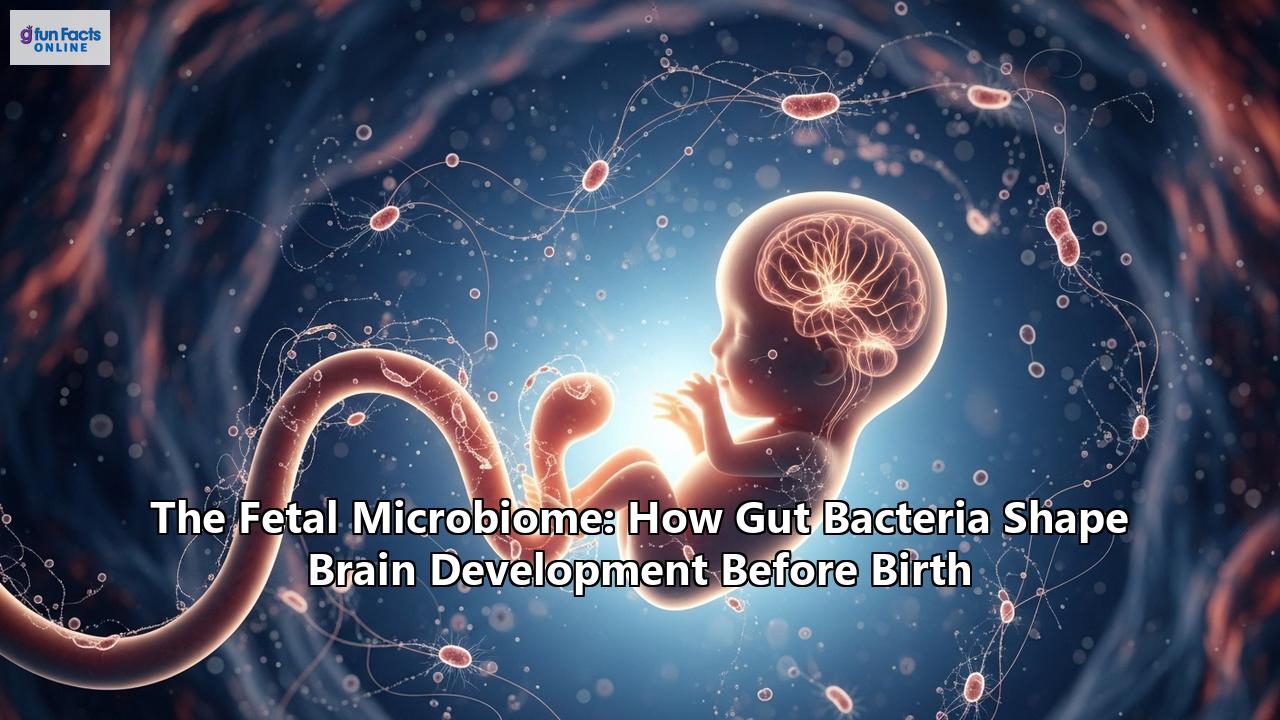
An intricate dance of life unfolds in the womb, a process meticulously orchestrated by a symphony of biological cues. For centuries, this prenatal world was considered a sterile sanctuary, devoid of any microbial life. However, emerging scientific inquiry is beginning to challenge this long-held belief, suggesting the possibility of a "fetal microbiome." While the existence of live bacteria colonizing the fetus remains a topic of hot debate, a compelling body of evidence reveals a profound connection between the mother's gut bacteria and the developing brain of her child. This article delves into the fascinating and controversial world of the fetal microbiome, exploring how the microbial inhabitants of a mother's gut may shape the very architecture of the fetal brain.
The "In Utero Colonization Hypothesis": A New Frontier or a Contamination Conundrum?
The traditional "sterile womb" paradigm, a cornerstone of medical teaching for over a century, posits that a healthy fetus develops in a sterile environment, and microbial colonization begins only during and after birth. This belief was largely based on studies using culture-based methods that failed to detect bacteria in the placenta, amniotic fluid, and the infant's first stool, known as meconium.
However, with the advent of advanced molecular techniques like next-generation sequencing, which can detect the DNA of even non-culturable and low-abundance microbes, this dogma has been challenged. Several studies have reported the presence of bacterial DNA in the placenta, amniotic fluid, and meconium from healthy pregnancies. These findings gave rise to the "in utero colonization hypothesis," which proposes that the acquisition of a gut microbiome begins before birth. Proponents of this hypothesis suggest that bacteria or their components could be transferred from the mother to the fetus, potentially influencing the development of the fetal immune system and other organs. For instance, some studies have found that the microbial communities in meconium share similarities with those in the amniotic fluid.
Despite these intriguing findings, the "in utero colonization hypothesis" is met with significant skepticism. A major criticism is the high risk of contamination. The low microbial biomass in fetal samples makes them particularly susceptible to contamination from maternal tissues during delivery, laboratory reagents, and the environment. In fact, some researchers argue that the detected microbial signatures in fetal tissues are indistinguishable from those of negative controls when stringent methodologies are applied.
Furthermore, the ability to derive germ-free animals via cesarean section provides strong evidence against the routine existence of a fetal microbiome. These animals, born and raised in a completely sterile environment, would not be possible if microbial colonization was a universal prenatal event. Therefore, an international consensus of experts has largely refuted the concept of a fetal microbiome, concluding that the detection of microbes in fetal tissues is likely due to contamination. They emphasize that while the womb is not always sterile, particularly in cases of infection or premature birth, there is no evidence of a healthy, stable microbiome in the fetus.
The Uncontested Influence: The Maternal Gut-Brain Axis and Fetal Development
While the debate over a true fetal microbiome continues, there is widespread scientific agreement on a crucial, indirect connection: the profound influence of the mother's gut microbiome on fetal brain development. This communication occurs through a complex network known as the microbiota-gut-brain axis. The trillions of bacteria residing in a mother's intestines produce a vast array of molecules that can enter her bloodstream, cross the placental barrier, and reach the developing fetus, impacting everything from brain structure to future behavior.
Microbial Metabolites: The Brain's Building Blocks
One of the primary ways the maternal gut microbiome exerts its influence is through the production of metabolites. Research in mice has shown that gut bacteria regulate key metabolites essential for healthy fetal brain development. When pregnant mice are treated with antibiotics to deplete their gut microbiota or are raised in a germ-free environment, their offspring exhibit disrupted fetal brain development. Specifically, these studies found alterations in the expression of genes involved in axonogenesis—the formation of axons, the long, slender projections of nerve cells that transmit information to other neurons. The axons connecting the thalamus to the cortex, which are crucial for sensory processing, were found to be reduced in number and length.
Conversely, when these microbiota-depleted mice were supplemented with the missing key metabolites, the defects in axon development and the associated sensory behaviors in the offspring were prevented. These findings strongly suggest that the maternal gut microbiota provides essential biochemicals that are actively involved in building the fetal brain.
Short-chain fatty acids (SCFAs), such as butyrate, propionate, and acetate, are among the most well-studied microbial metabolites. Produced by the fermentation of dietary fibers in the gut, SCFAs can cross the placenta and play a role in the development of the fetal nervous system and the blood-brain barrier.
Immune System Modulation and Neurodevelopment
The maternal microbiome also shapes the developing brain by influencing the maternal immune system. A state of heightened maternal inflammation, known as maternal immune activation (MIA), can have detrimental effects on fetal neurodevelopment. The gut microbiota is a key regulator of the maternal immune system, and an imbalance in these microbes can trigger an inflammatory response. Studies in mice have shown that MIA can increase the risk of offspring developing behaviors similar to those seen in autism spectrum disorder (ASD).
The Vagus Nerve: A Direct Line of Communication
The vagus nerve forms a direct communication pathway between the gut and the brain. While this connection is primarily studied in the context of the individual's own gut-brain axis, emerging research suggests that signals originating from the maternal gut microbiota can be transmitted via the vagus nerve, influencing maternal physiology and, consequently, the fetal environment.
The Impact of Maternal Lifestyle on the Fetal Brain
The composition and function of the maternal gut microbiome are not static; they are dynamically shaped by various factors, including diet, stress, and medication use. These maternal exposures can, in turn, have lasting consequences for the developing fetus.
Maternal Diet: You Are What Your Mother Ate
A mother's diet during pregnancy is a critical factor influencing her gut microbiome and, by extension, her baby's brain development. A high-fat diet, for example, can lead to dysbiosis—an imbalance in the gut microbial community—which is associated with abnormal brain function and behavior in offspring. Conversely, a balanced diet rich in fiber can promote a healthy and diverse microbiome, supporting the production of beneficial metabolites like SCFAs.
Emerging research highlights the potential benefits of specific probiotics during pregnancy. A study in mice found that supplementing the maternal diet with Bifidobacterium breve supported healthy fetal brain development and increased nutrient transport to the brain. This suggests that targeted modulation of the maternal gut microbiome through probiotics could be a promising strategy for improving fetal growth and neurodevelopment.
Maternal Stress: A Ripple Effect on the Fetus
Maternal stress during pregnancy has long been linked to adverse neurodevelopmental outcomes in children. The gut microbiome is now understood to be a key mediator in this relationship. Stress can alter the composition of the maternal gut microbiota, leading to changes in the production of metabolites and neurotransmitters that can cross the placenta and affect the fetal brain. For instance, chronic stress can impact tryptophan metabolism, a precursor to the neurotransmitter serotonin, which plays a vital role in brain development and mood regulation. Rat studies have demonstrated that maternal stress alters the gut microbiome and metabolite production, leading to neurotransmitter imbalances and inflammation in the offspring's prefrontal cortex, a region critical for mood regulation.
Antibiotics in Pregnancy: A Double-Edged Sword
While antibiotics are sometimes necessary to treat infections during pregnancy, their use can have unintended consequences for the developing fetus. Antibiotics can disrupt the maternal gut microbiome, potentially altering the microbial signals that reach the fetus. Several large-scale epidemiological studies have found associations between prenatal antibiotic exposure and an increased risk of neurodevelopmental disorders in offspring, such as attention-deficit/hyperactivity disorder (ADHD) and epilepsy. However, it is important to note that other studies have not found a significant link, and the untreated infection itself can also pose risks.
Long-Term Consequences: Seeding the Future of Health
The influence of the early microbial environment extends far beyond birth. The composition of an infant's gut microbiome in the first few years of life is critical for the maturation of their immune system and brain. Disturbances in the early-life microbiome have been linked to an increased risk of a wide range of conditions later in life, including neurodevelopmental disorders like ASD and ADHD, as well as anxiety and depression.
The initial microbial colonization at birth, heavily influenced by the mother's microbiome, sets the stage for this lifelong relationship between our gut bacteria and our brain. Infants born vaginally have gut microbiomes that are typically rich in bacteria from the mother's gut and vagina, while those born via C-section tend to be colonized by skin microbes and bacteria from the hospital environment. This early difference in colonization can have lasting effects on the development of the immune and nervous systems.
Conclusion: A New Understanding of Prenatal Health
The concept of a fetal microbiome has ignited a fascinating scientific debate, pushing the boundaries of our understanding of human development. While the jury is still out on whether a true microbial colonization occurs in the womb, the evidence for the profound influence of the maternal gut microbiome on fetal brain development is undeniable.
This burgeoning field of research underscores the critical importance of maternal health during pregnancy. A mother's diet, stress levels, and use of medications can all shape her gut microbiome, with cascading effects on the developing brain of her child. This knowledge opens up exciting new avenues for promoting lifelong health, starting even before birth. By focusing on nurturing a healthy maternal microbiome, we may one day be able to reduce the risk of neurodevelopmental disorders and foster optimal brain development for generations to come. The conversation has shifted from whether the womb is sterile to understanding the intricate and vital communication that occurs between a mother's microbes and her developing child.
Reference:
- https://www.proquest.com/openview/9e6d2beb92ccf5ce66dc04c2e979b0dc/1?pq-origsite=gscholar&cbl=2040205
- https://pmc.ncbi.nlm.nih.gov/articles/PMC5410102/
- https://pubmed.ncbi.nlm.nih.gov/28454555/
- https://www.researchgate.net/publication/316569142_A_critical_assessment_of_the_sterile_womb_and_in_utero_colonization_hypotheses_Implications_for_research_on_the_pioneer_infant_microbiome
- https://pubmed.ncbi.nlm.nih.gov/31231319/
- https://pmc.ncbi.nlm.nih.gov/articles/PMC6558212/
- https://www.frontiersin.org/journals/microbiology/articles/10.3389/fmicb.2019.01124/full
- https://pmc.ncbi.nlm.nih.gov/articles/PMC7524391/
- https://www.the-microbiologist.com/features/the-usually-sterile-womb/57.article
- https://scitechdaily.com/experts-debunk-scientific-claims-that-human-babies-are-colonized-by-bacteria-before-birth/
- https://www.frontiersin.org/journals/microbiology/articles/10.3389/fmicb.2021.626421/full
- https://www.youtube.com/watch?v=MSVrsEFy4sM
- https://embryo.asu.edu/pages/germ-free-animals
- https://pmc.ncbi.nlm.nih.gov/articles/PMC10538154/
- https://www.uclahealth.org/news/release/guts-and-brains-how-microbes-in-a-mothers-intestines-affect-fetal-neurodevelopment
- https://pmc.ncbi.nlm.nih.gov/articles/PMC10990016/
- https://newsroom.ucla.edu/releases/maternal-microbiota-and-the-fetal-brain
- https://pmc.ncbi.nlm.nih.gov/articles/PMC7554197/
- https://pmc.ncbi.nlm.nih.gov/articles/PMC12329284/
- https://www.mdpi.com/2072-6643/14/21/4515
- https://pmc.ncbi.nlm.nih.gov/articles/PMC8540774/
- https://ijbpe.com/news/47-news/846-maternal-gut-microbiome-and-baby%E2%80%99s-brain-development
- https://www.sciencedaily.com/releases/2024/08/240820221803.htm
- https://www.cam.ac.uk/research/news/mothers-gut-microbiome-during-pregnancy-shapes-babys-brain-development
- https://www.biospace.com/pregnant-mother-s-stress-affects-baby-s-gut-and-brain-university-of-pennsylvania-study
- https://pmc.ncbi.nlm.nih.gov/articles/PMC10884954/
- https://neurosciencenews.com/pregnancy-stress-microbiome-depression-29492/
- https://pmc.ncbi.nlm.nih.gov/articles/PMC9732381/
- https://open.bu.edu/items/141264c5-dde7-48be-9383-d30f06a7ae0a
- https://pubmed.ncbi.nlm.nih.gov/36504646/
- https://neurosciencenews.com/pregnancy-infection-brain-development-29460/
- https://www.frontiersin.org/journals/nutrition/articles/10.3389/fnut.2023.1241303/full
- https://www.mdpi.com/2227-9067/11/7/796
- https://www.frontiersin.org/journals/pediatrics/articles/10.3389/fped.2022.815885/full