
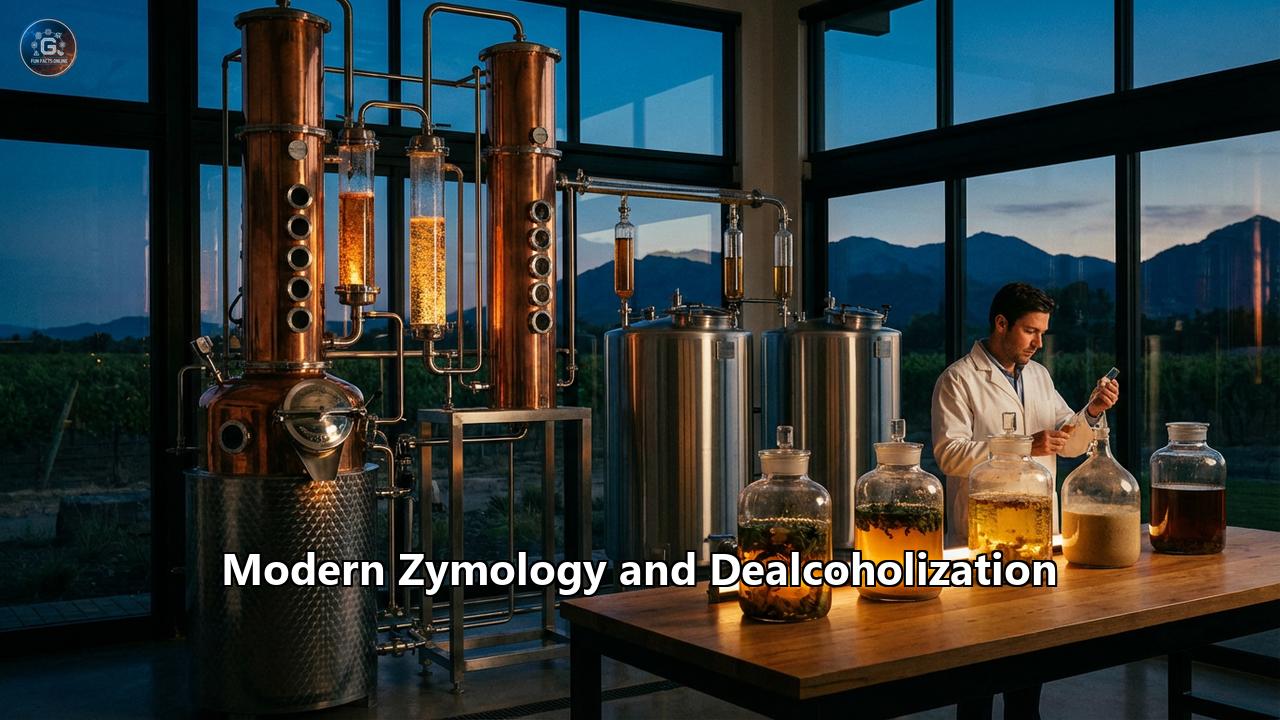
The clinking of glasses has echoed through human history for millennia, a universal sound of celebration, ritual, and relaxation. For thousands of years, the contents of those glasses were dictated by the caprices of wild yeast and the preservative necessity of alcohol. Fermentation was a mystical gift, a way to purify water and store the caloric energy of grain and fruit. But in the 21st century, the script is being rewritten. We are witnessing the dawn of a new epoch in beverage science—a renaissance driven not by the need for intoxication, but by the desire for flavor, health, and mastery over the very molecules that define what we drink. This is the era of Modern Zymology and Dealcoholization.
This is not merely a trend of "sober curiosity" or a fleeting dietary fad. It is a profound technological and microbiological shift. It is the transition from passive observation of fermentation to active, precise molecular engineering. It is the decoupling of ethanol from the sensory experience of fine wine and craft beer.
In this comprehensive exploration, we will descend into the microscopic world of non-conventional yeasts that refuse to ferment maltose, stand before the towering stainless steel cathedrals of spinning cone columns, and peer through the nanometer-sized pores of reverse osmosis membranes. We will uncover how scientists are creating wines that never saw a grape and beers that offer the complex bouquet of a double IPA without a single drop of alcohol. This is the story of how we learned to separate the spirit from the spirits.
Part I: The Evolution of Zymology
From Pasteur to Precision: A Historical Pivot
Zymology, the science of fermentation, was formally christened in the mid-19th century when Louis Pasteur peered through his microscope and connected the "life without air" of yeast cells to the conversion of sugar into alcohol. For over a century, the goal of zymology was singularity: efficiency. How do we maximize alcohol yield? How do we ensure consistent fermentation? How do we breed Saccharomyces cerevisiae—the workhorse of the industry—to be more robust, more alcohol-tolerant, and more neutral in flavor?
Traditional zymology was an exercise in more. More alcohol, more stability, more predictability. Modern zymology, however, is often an exercise in less. It is the science of subtraction and precise modulation. The modern zymologist is no longer just a shepherd of yeast; they are a metabolic engineer.
The shift began in earnest in the late 20th century but accelerated violently in the 2020s. As the health impacts of ethanol became undeniable and consumer habits shifted toward wellness, the industry faced an existential crisis: How do you remove the defining ingredient of your product without destroying its soul? The answer lay in two distinct paths: biological attenuation (stopping the alcohol before it starts) and physical dealcoholization (removing the alcohol after it’s made).
The Biological Approach: The Rise of the "Lazy" Yeasts
For decades, a brewer’s worst nightmare was a "stuck fermentation"—a batch where the yeast stopped eating sugar before the job was done, leaving a sweet, worty, unpalatable mess. Today, that nightmare is a feature, not a bug.
Modern zymology has turned its attention to maltose-negative yeasts. In a standard wort (unfermented beer), the sugar profile is roughly 10-15% glucose (simple sugar) and 50-60% maltose (complex disaccharide). Traditional brewer's yeast (Saccharomyces cerevisiae) is a glutton; it devours the glucose first, then switches on specific genes (the MAL loci) to transport and break down maltose, converting almost everything into ethanol and CO2.
But what if you used a yeast that was genetically incapable of eating maltose?
Enter Saccharomyces cerevisiae var. chevalieri, Saccharomycodes ludwigii, and Torulaspora delbrueckii. These are the new stars of the non-alcoholic brewing world. They are "lazy" by design. They consume the small amount of glucose in the wort, creating a tiny amount of alcohol (usually under 0.5% ABV) and a burst of flavor compounds (esters and phenols), but they leave the maltose untouched.
The Biochemistry of LazinessTo understand why this is revolutionary, we must look at the cell membrane. In standard yeast, the AGT1 permease is a protein channel that acts like a gatekeeper, ushering maltose and maltotriose into the cell. In maltose-negative strains, the gene encoding AGT1 is either absent, silenced, or mutated. The yeast literally cannot "see" the maltose. It eats the "low-hanging fruit" (glucose), produces a small fizzy kick of fermentation flavor, and then goes dormant.
This approach, known as arrested fermentation or limited fermentation, is far superior to the old method of just boiling the beer to remove alcohol, which resulted in a cooked, cardboard-like taste. However, it comes with a challenge: the "worty" flavor. Because the maltose is left behind, the resulting beverage can taste unpleasantly sweet and grain-like, reminiscent of raw dough.
This is where the artistry of modern zymology comes in. Brewers are now pairing these lazy yeasts with specific hop profiles and grain bills designed to mask the sweetness. They are using Metschnikowia pulcherrima, a yeast found on fruits and flowers, which produces distinct floral and fruity notes that can trick the brain into perceiving a "fermented" complexity even in the absence of ethanol. We are seeing the use of Pichia kluyveri, a yeast that produces massive amounts of thiols (tropical fruit aromas) to distract the palate from the lack of alcohol body.
Part II: The Physics of Separation
While biological methods are elegant, they have limits. You cannot easily make a dry, full-bodied Cabernet Sauvignon using a yeast that refuses to ferment sugar. For wine, and for fully fermented zero-alcohol beers, we must turn to the brute force of physics—refined into an art form.
Dealcoholization is the process of taking a fully fermented, alcoholic beverage and chemically dissecting it. The goal is to remove the ethanol molecule (C2H5OH) while leaving behind the thousands of other molecules that contribute to flavor, aroma, texture, and color. This is infinitely harder than it sounds because ethanol is a solvent. It holds aromatic compounds in solution. When you rip the alcohol out, the aromas tend to cling to it and leave too.
There are three primary technologies dominating this field today: Vacuum Distillation, Spinning Cone Columns, and Membrane Filtration (Reverse Osmosis).
1. Vacuum Distillation: Boiling Without the Burn
We all learn in high school physics that the boiling point of a liquid depends on the surrounding pressure. At sea level, water boils at 100°C (212°F) and ethanol at 78.37°C (173.1°F). Boiling wine at 78°C destroys it. The delicate esters that smell like strawberry and the terpenes that smell like pine are cooked off or broken down, leaving a stewed, jammy mess.
Vacuum distillation solves this by lowering the atmospheric pressure inside the vessel. Under a strong vacuum (often around 40-50 mbar), the boiling point of ethanol drops dramatically, often to as low as 28-30°C (82-86°F). This is cool enough to touch.
In a modern vacuum rectification column, the wine gently cascades down through a series of plates while the vacuum pulls the volatile ethanol vapors up and out. The wine never gets hot enough to "cook." However, even at 30°C, the most volatile aroma compounds—the "top notes" of the wine—are extremely eager to evaporate along with the alcohol. This is the "aroma loss" problem.
To combat this, engineers have developed "aroma traps" and multi-stage condensers that attempt to catch these fleeing essence molecules and condense them back into liquid, which can be added back to the dealcoholized wine later. It is a game of molecular catch-and-release.
2. The Spinning Cone Column (SCC): The Gold Standard
If you walk into a major non-alcoholic winery in California or Australia, you might encounter a device that looks like a piece of a rocket ship: a gleaming, vertical steel cylinder, humming with precision. This is the Spinning Cone Column, widely considered the Rolls-Royce of dealcoholization.
The SCC was originally developed for the food industry to recover flavors from coffee and fruit juice, but it found its true calling in wine. The mechanism is a masterpiece of fluid dynamics.
Inside the column is a central rotating shaft fitted with dozens of inverted metal cones. Interleaved with these are stationary cones attached to the column wall. The wine is fed into the top of the column under vacuum. As it hits the first spinning cone, centrifugal force spins the liquid out into an incredibly thin film—thinner than a piece of paper. This film flows over the edge, drops onto the stationary cone below, flows back to the center, drops to the next spinning cone, and so on.
This thin-film creation is the secret. It creates a massive surface area for the liquid. Simultaneously, cool "stripping steam" (generated from the wine's own water) rises from the bottom. Because the liquid film is so thin and the surface area so vast, the volatile molecules can be stripped out of the wine with incredible efficiency and very little thermal energy.
The SCC process is usually performed in two passes:
- Pass One (Aroma Recovery): The column is run at a very specific, gentle setting to strip out only the ultra-volatile aroma compounds (the fruit, the floral notes). This produces a small volume of clear, intensely aromatic liquid called the "aroma essence," which is set aside and safeguarded.
- Pass Two (Dealcoholization): The remaining wine (now aroma-less but still alcoholic) is run through the column again, this time more aggressively to strip out the ethanol. The ethanol is removed and sold (often for industrial use or to distilleries), leaving a dealcoholized wine base.
Finally, the "aroma essence" from Pass One is blended back into the dealcoholized base. The result is a wine that retains the fresh, varietal character of the original grape, minus the booze.
3. Reverse Osmosis (RO): The Membrane Sieve
While SCC uses centrifugal force and steam, Reverse Osmosis uses pressure and porosity. It is a molecular filtration technique.
In an RO system, wine is pumped at high pressure (often 30-40 bar, sometimes up to 70 bar) against a semi-permeable membrane. The pores in this membrane are infinitesimally small—less than 0.001 micrometers, or about 100 Daltons in molecular weight cutoff.
These pores are tight enough to block the large molecules: the tannins, the anthocyanins (color), the complex sugars, and the larger flavor compounds. However, water and ethanol are tiny molecules. They are small enough to be squeezed through the pores.
So, on one side of the membrane (the retentate), you get a concentrated syrup of wine flavor, color, and structure. On the other side (the permeate), you get a clear mixture of water and alcohol.
The alcohol is then separated from the water (usually by thermal distillation of the permeate), and the dealcoholized water is fed back into the retentate loop. This cycle repeats until the desired ABV is reached.
RO is favored for its "cold" operation—no heat is applied to the main wine stream, which theoretically preserves heat-sensitive flavors better than distillation. However, it requires massive amounts of energy to generate the pressure, and the membranes can sometimes strip out desirable texture-building macromolecules.
Nanofiltration (NF) is a cousin of RO, with slightly larger pores (200-1000 Daltons). NF is "looser," allowing some salts and small organic acids to pass through. It is often used to fine-tune the sugar and acid profile of the dealcoholized beverage, correcting the balance that is often lost when alcohol is removed.Part III: The Sensory Void and How to Fill It
Removing alcohol is only half the battle. The other half—and arguably the harder half—is putting the sensation of alcohol back in.
Ethanol is not just a psychoactive drug; it is a sensory powerhouse. It provides:
- Body/Viscosity: Alcohol is more viscous than water. It gives wine its "legs" and its weight on the palate.
- Sweetness: Ethanol has a perceived sweetness. Removing it makes a beverage taste harsher and more acidic.
- The "Burn": That trigeminal sensation of warmth in the throat is a key signal of an "adult" drink.
- Volatility: As a solvent, alcohol helps lift aromas out of the glass and into your nose.
When you take alcohol out, you are often left with a thin, acidic, watery, and flat beverage. Modern zymology addresses this through Function Stacking and Reconstruction.
Rebuilding the BodyTo replace the viscosity of alcohol, producers are turning to natural hydrocolloids and mannoproteins. Mannoproteins are sugary proteins found in the cell walls of yeast. By aging non-alcoholic wine on "lees" (dead yeast cells) or adding purified mannoproteins, winemakers can restore a creamy, weighty mouthfeel. Glycerol, a natural byproduct of fermentation, is also crucial. Some non-conventional yeasts, like Candida zemplinina, are "glycerol hyper-producers," creating a thick, mouth-coating texture naturally.
Simulating the BurnHow do you mimic the alcohol burn without alcohol? The answer lies in botany. Capsaicin (from chili peppers) is too aggressive. Gingerol (from ginger) is too recognizable. The industry has moved toward more subtle extracts. Szechuan pepper (containing hydroxy-alpha-sanshool) creates a tingling, numbing sensation. Grains of Paradise offer a peppery warmth. Some biotech firms are developing proprietary blends of botanical irritants that target the same TRP (Transient Receptor Potential) channels in the throat that ethanol activates, creating a "phantom burn" that fools the brain.
Flavor Masking and EnhancingWithout the solvent power of alcohol, aromas don't "pop" as much. To counter this, zymologists often over-index on aromatic yeasts during the initial fermentation. They might choose a yeast that produces 10x the normal amount of isoamyl acetate (banana/pear) or ethyl hexanoate (apple/anise) so that even after the dampening effect of dealcoholization, enough aroma remains to satisfy the nose.
Part IV: The Future - Molecular Assembly and Synthetic Spirits
If dealcoholization is the deconstruction of traditional beverages, the future may be the construction of entirely new ones from the atom up. This is the realm of Molecular Assembly.
Companies like Endless West in San Francisco are challenging the very definition of wine and whiskey. Instead of fermenting grapes or grain, they analyze the molecular fingerprint of a target beverage. They identify the exact ratio of acids, esters, aldehydes, tannins, and water that makes a 1982 Bordeaux taste like a 1982 Bordeaux.
Then, they simply... build it.
They source the molecules from more efficient plants (e.g., getting a citrus note from lemon peel rather than waiting for a grape to ferment) and blend them in a lab. The result is a "synthetic" wine that has never seen a vineyard.
For the non-alcoholic sector, this is a game-changer. It bypasses the trauma of dealcoholization entirely. You don't have to remove the alcohol; you simply never put it in. You can build the perfect non-alcoholic Pinot Noir by assembling the tannins, the acids, the berry esters, and the body-building glycerol, and simply skipping the ethanol. This allows for perfect consistency and eliminates the "cooked" or "flat" off-flavors that can plague dealcoholized products.
Precision FermentationAnother frontier is Precision Fermentation. This involves genetically modifying microbes (yeast, bacteria, or fungi) to produce specific complex molecules. Imagine a yeast that doesn't produce alcohol, but instead pumps out valencene (orange aroma) or linalool (floral/spice). Or a yeast engineered to produce CBD or other adaptogens instead of ethanol.
This leads to the trend of Function Stacking, mentioned in market forecasts for 2026. The beverage of the future is not just "free from alcohol"; it is "full of function." It is a non-alcoholic beer brewed with yeast that produces B-vitamins and electrolytes for post-workout recovery. It is a synthetic wine infused with L-theanine and ashwagandha to provide relaxation without intoxication. The binary choice between "drinking" and "not drinking" is dissolving into a spectrum of functional, mood-altering (but sober) experiences.
Part V: Sustainability and the Environmental Equation
A critical but often overlooked aspect of modern zymology is the environmental footprint. Traditional dealcoholization is energy-intensive. Heating wine, creating vacuums, and pressurizing RO systems to 40 bar consumes significant electricity.
A standard thermal dealcoholization process can increase the carbon footprint of a beverage by 20-30% compared to its alcoholic counterpart. Furthermore, for every liter of dealcoholized wine, you produce a liter of waste ethanol (or weak spirit) and use liters of water for cooling and steam generation.
This is why the Biological Approach (maltose-negative yeast) is gaining such traction. It requires no extra energy steps. You brew it, you package it. It uses less water (no steam stripping) and less electricity.
However, the "Synthetic/Molecular" approach claims the sustainability crown. By skipping agriculture entirely—no water for irrigation, no pesticides, no land use, no glass bottle transport weight (if concentrated)—molecular beverages claim to reduce water use by 90% and carbon emissions by over 80%. As climate change threatens traditional vineyards with heat and drought, the idea of "lab-grown" non-alcoholic wine becomes not just a novelty, but a necessity.
Part VI: The Global Regulatory Mosaic
Navigating the world of modern zymology requires a law degree as much as a chemistry degree. The definitions of "non-alcoholic," "alcohol-free," and "dealcoholized" vary wildly across borders, creating headaches for global brands.
- USA: "Non-alcoholic" means < 0.5% ABV. "Alcohol-free" means 0.0% ABV (no detectable alcohol).
- UK: Historically, "alcohol-free" meant < 0.05% ABV (a much stricter standard), though recent consultations aim to align this with the 0.5% international norm.
- EU: Generally uses the 0.5% ABV threshold for "non-alcoholic" beer, but regulations for wine are stricter and evolving. The recent CAP reform allowed for "dealcoholized wine" to be a protected category, legitimizing the sector.
- Islamic Market (Halal): For a product to be Halal, it often must be 0.0% (or close to it) and, crucially, cannot have been derived from an alcoholic product. This rules out dealcoholized wine (which started as Haram alcohol) for many strict certifications, pushing the market toward the "Molecular Assembly" or "arrested fermentation" methods where alcohol never existed in high quantities.
These regulations drive the technology. A brewery exporting to the UK might choose a 0.0% biological method, while one targeting the US might use a 0.4% limited fermentation method to maximize flavor.
Conclusion: The Third Wave of Drinking
We are currently surfing the "Third Wave" of non-alcoholic beverages.
- First Wave: The "Near Becks" and O'Doul's of the 90s—thin, watery, punitive drinks for those who "couldn't" drink.
- Second Wave: The Craft Revolution (2015-2023)—Athletic Brewing, Seedlip. Better branding, better flavor, but still relying largely on modified traditional brewing.
- Third Wave (2025 and beyond): High-Tech Zymology. Genetically tuned yeasts, spinning cone precision, molecular assembly, and functional ingredients.
Modern zymology has transformed the non-alcoholic aisle from a place of compromise to a place of innovation. It has proven that ethanol is not the only path to complexity, terroir, or enjoyment. Through the clever manipulation of biology and physics, we have learned to keep the ritual while changing the result. We have learned to uncork the wine without uncorking the consequences. The glass is no longer half empty; it is full of science.
Deep Dive Sections
To fully appreciate the scope of this revolution, we must detail the specific mechanisms and biochemical pathways that make it possible.
Technical Detail: The Biochemistry of Maltose-Negative Strains
The primary difference between a "standard" brewer's yeast (Saccharomyces cerevisiae) and a "maltose-negative" strain like Saccharomycodes ludwigii lies in the MAL gene cluster.
In S. cerevisiae, the MAL locus contains three genes:
- MALx1 (Transporter): Encodes a permease protein that sits in the cell membrane and actively pumps maltose into the cell.
- MALx2 (Maltase): Encodes the enzyme alpha-glucosidase, which cleaves the maltose (a disaccharide) into two glucose molecules inside the cell.
- MALx3 (Regulator): Encodes a protein that turns on the other two genes when maltose is present.
In Saccharomycodes ludwigii, this system is fundamentally different. It lacks the specific transporters to bring maltose across the cell wall. It can only transport glucose, fructose, and sucrose. Since wort is roughly 60% maltose, this yeast effectively starves itself in a banquet hall. It eats the hors d'oeuvres (glucose), produces a tiny amount of ethanol (usually 0.3-0.5%), and then stops.
The challenge for the zymologist is that the unfermented maltose is sweet. To balance this, brewers must adjust the "mashing" temperature. By mashing at a higher temperature (e.g., 76-78°C), the brewer favors alpha-amylase activity over beta-amylase. Alpha-amylase creates long-chain dextrins (unfermentable sugars) rather than maltose. These dextrins add body without as much sweetness, helping to mimic the mouthfeel of a real beer without the cloying sugariness of unfermented maltose.
Technical Detail: Membrane Pore Sizes and Pressure
The distinction between Reverse Osmosis (RO) and Nanofiltration (NF) is a matter of Angstroms and Bars.
- Reverse Osmosis (RO):
Pore Size: < 1 nanometer (< 10 Angstroms).
Molecular Weight Cutoff (MWCO): ~100 Daltons.
Operating Pressure: 20 to 60 Bar (290 - 870 PSI).
Mechanism: Diffusion-controlled. The membrane is so tight that it essentially acts as a solid wall to anything larger than water (18 Da) and ethanol (46 Da). Even sodium ions are largely rejected. This is ideal for pure alcohol removal but requires high energy to overcome the osmotic pressure of the wine (which increases as the alcohol is removed and the wine concentrates).
- Nanofiltration (NF):
Pore Size: 1 - 10 nanometers.
MWCO: 200 - 1000 Daltons.
Operating Pressure: 5 to 20 Bar (70 - 290 PSI).
Mechanism: Sieving. NF is "looser." It allows water and ethanol to pass, but also some salts and small organic acids. It retains sugars, proteins, and larger aroma compounds. NF is often used in a "diafiltration" mode, where water is added to the retentate to wash out more alcohol without concentrating the wine too much.
Case Study: Athletic Brewing Co. vs. The "Big Beer" Approach
Athletic Brewing Co. (USA) revolutionized the market not by discovering a single magic bullet, but by tweaking the entire brewing process. While they guard their exact secrets, their patents and methods suggest a "multi-hurdle" approach: a combination of low-fermentable mash regimes (high temp mashing), specific yeast selection (likely a maltose-negative or attenuated strain), and careful pasteurization to prevent the remaining sugar from fermenting in the can.Contrast this with Heineken 0.0. The giant Dutch brewer uses a traditional "A-Class" fermentation to make a full-strength beer (creating all the classic Heineken esters), and then uses Vacuum Distillation to strip the alcohol out. They then blend back the "aroma essence" and dose the beer with natural flavorings to restore the lost notes. This creates a flavor profile that is remarkably close to the original lager because it was the original lager, just deconstructed.
The craft approach (Athletic) prioritizes "native" flavors created during a limited fermentation. The industrial approach (Heineken) prioritizes "reconstructed" flavors derived from a full fermentation. Both are valid; both are science.
The Human Element: The Sommelier's Dilemma
As these technologies advance, they create a fascinating problem for the wine expert. A sommelier is trained to recognize terroir—the taste of the soil and climate in the grape. But in a dealcoholized wine, is the terroir still there?
Studies show that removing alcohol alters the "partition coefficient" of aroma molecules. Some aromas (like fruitiness) become less volatile and "hide" in the liquid without the lift of alcohol. Others (like green, vegetative notes) can become overpowering.
Modern zymology helps the winemaker adjust for this. Knowing that the "green" notes will spike after dealcoholization, a winemaker might harvest the grapes slightly later (riper) to minimize pyrazines (green bell pepper flavors) in the base wine. They might use oak aging before dealcoholization to add vanilla and spice compounds that are robust enough to survive the stripping process.
The winemaker of the future is not just a farmer; they are a flavor architect, designing a wine not for the glass, but for the machine that will process it.
Epilogue: The Sober Renaissance
We are living in the golden age of choice. No longer does the designated driver have to suffer through a lime and soda. No longer does the pregnant woman have to toast with apple juice. Thanks to the rigors of modern zymology—the spinning cones, the hungry membranes, the lazy yeasts—the glass is full. The alcohol is gone, but the spirit remains. This is the triumph of science over solvent. This is modern zymology.
Reference:
- https://cleanhealthyliving.net.au/technology/
- https://www.researchgate.net/publication/26658120_Dealcoholized_Wines_by_Spinning_Cone_Column_Distillation_Phenolic_Compounds_and_Antioxidant_Activity_Measured_by_the_11-Diphenyl-2-picrylhydrazyl_Method
- https://www.moju-zero.com/blog/how-are-alcohol-free-wines-made
- https://pmc.ncbi.nlm.nih.gov/articles/PMC12113238/
- https://water-membrane-solutions.mann-hummel.com/content/dam/water-membrane-solutions/download/bulletins---guides/turboclean/turboclean-wine-beer-dealcoholization-technical-applications-dup.pdf/_jcr_content/renditions/original./turboclean-wine-beer-dealcoholization-technical-applications-dup.pdf
- https://tomorrowcellars.com/blogs/blog/how-non-alcoholic-wine-is-made-the-technology-behind-flavorful-alcohol-free-wines
- https://www.futurefoodtechlondon.com/articles/reimagining-nutrition-innovations-shaping-future-food
- https://futurefoodtechsf.com/articles/breakthrough-innovators-shaping-s-next
- https://wine-wize.com/alcohol-free-wine-kristi-mayfield/
- https://www.atombrands.com/atom-dna/our-story
- https://endlesswest.com/about/