
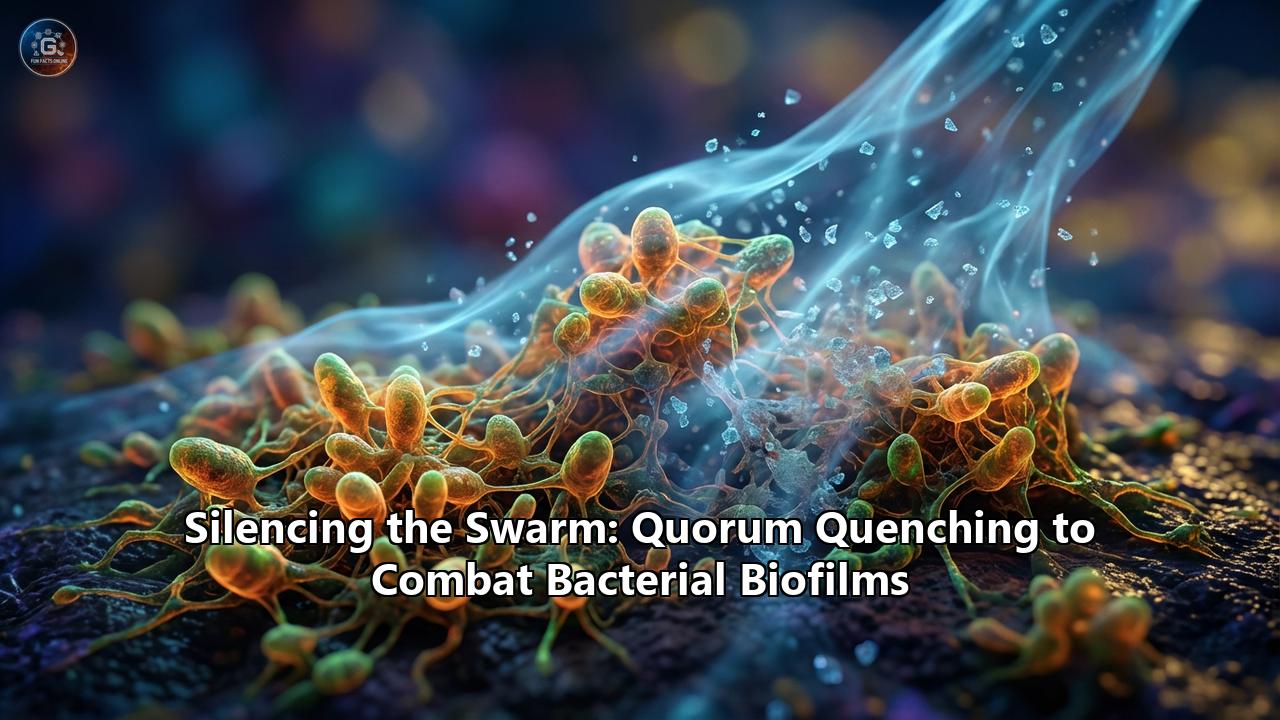
In the microscopic realm, a war is being waged—not with weapons of mass destruction, but with chemical whispers. For over a century, humanity has relied on a strategy of "shock and awe" to fight bacterial infections: antibiotics designed to kill pathogens or halt their growth. But this "kill-all" approach has driven an evolutionary arms race, creating multidrug-resistant "superbugs" that shrug off our most potent drugs. As the golden age of antibiotics fades, a new paradigm is emerging. Instead of killing the enemy, what if we simply silenced them?
This is the promise of Quorum Quenching (QQ)—a revolutionary strategy that targets the communication systems of bacteria, effectively blinding them to their own numbers and preventing them from launching coordinated attacks. By jamming the signals bacteria use to form invincible fortresses known as biofilms, scientists are unlocking new ways to treat chronic infections, save billions in industrial damage, and protect our food supply.
Part 1: The Social Life of Bacteria
To understand how to silence bacteria, we must first understand how they speak. For decades, bacteria were viewed as solitary, asocial organisms. We now know this is false. Bacteria are highly social creatures that exhibit group behaviors, a phenomenon known as Quorum Sensing (QS).
The Language of the Swarm
Quorum sensing is a density-dependent communication system. Bacteria continuously produce and secrete small chemical signal molecules called autoinducers (AIs).
- Low Density: When bacterial numbers are low, these molecules diffuse away into the environment, and their concentration remains low. The bacteria act as individuals, often flying "under the radar" of the host immune system.
- High Density (The Quorum): As the population grows, the concentration of autoinducers rises. Once a critical threshold is reached, these molecules bind to specific receptor proteins within or on the surface of the bacteria. This binding event triggers a synchronized alteration in gene expression across the entire population.
Suddenly, the bacteria stop acting as individuals and start acting as a multicellular organism. They simultaneously switch on genes for virulence factors (toxins, proteases) and, crucially, biofilm formation.
The Dialects of Disease
Different bacteria speak different chemical languages, and understanding these dialects is the key to jamming them.
- Gram-Negative Bacteria (The AHL System):
Most Gram-negative pathogens, like Pseudomonas aeruginosa, use N-acyl homoserine lactones (AHLs). These molecules consist of a homoserine lactone ring linked to a fatty acid acyl chain. The length and modification of this chain act as a specific "frequency," ensuring species-specific communication.
Mechanism: The enzyme LuxI synthesizes the AHL. When the concentration is high enough, the AHL binds to the LuxR receptor, forming a complex that binds to DNA and activates virulence genes.
- Gram-Positive Bacteria (The AIP System):
Gram-positive bacteria, such as Staphylococcus aureus, use small modified oligopeptides called Autoinducing Peptides (AIPs).
Mechanism: These peptides are secreted via specific transporters. They are detected not inside the cell, but by two-component sensor kinases on the cell membrane, which then relay a phosphorylation signal to the interior of the cell to alter gene expression.
- The Universal Signal (AI-2):
A molecule known as Autoinducer-2 (AI-2), a furanosyl borate diester, is produced by both Gram-positive and Gram-negative bacteria. It is often described as the "Esperanto" of the bacterial world, allowing for interspecies communication.
Part 2: The Fortress of Slime – Biofilms
The most devastating consequence of quorum sensing is the formation of biofilms. A biofilm is not just a clump of bacteria; it is a sophisticated city. Bacteria attach to a surface and secrete a sticky matrix of extracellular polymeric substances (EPS) composed of DNA, proteins, and polysaccharides.
Inside this matrix, bacteria are up to 1,000 times more resistant to antibiotics than their free-floating (planktonic) counterparts. The matrix acts as a physical shield, preventing drugs from penetrating. Furthermore, the bacteria deep inside the biofilm enter a dormant, metabolically inactive state ("persister cells"), making them immune to antibiotics that target active cellular processes.
From the lungs of cystic fibrosis patients to the surfaces of knee implants and the membranes of water treatment plants, biofilms are the primary reason for persistent, untreatable infections and industrial biofouling. Quorum quenching aims to stop this fortress from ever being built.
Part 3: The Weapons of Silence – Mechanisms of Quorum Quenching
Quorum quenching is the process of interrupting QS communication. If the bacteria cannot "hear" that they have reached a critical mass, they remain in their harmless, planktonic state, making them easy targets for the host immune system or conventional antibiotics. There are three main strategies to achieve this:
1. Enzymatic Degradation (The Signal Destroyers)
This is the most promising and widely researched method. Nature has evolved enzymes that specifically hunt down and destroy bacterial communication signals.
- Lactonases: These enzymes (e.g., AiiA from Bacillus species) hydrolyze the lactone ring of AHLs, rendering the molecule biologically inactive. It effectively "opens" the ring, silencing the signal.
- Acylases: These enzymes (e.g., PvdQ from P. aeruginosa) slice the amide bond connecting the fatty acid chain to the lactone ring. This destroys the signal's specificity.
- Oxidoreductases: These enzymes modify the chemical structure of the signal (e.g., oxidizing the acyl chain), making it unrecognizable to the receptor.
2. Receptor Antagonists (The Signal Jammers)
These are molecules that mimic the structure of autoinducers but do not trigger the response. They bind to the receptor (like LuxR) and occupy the seat, preventing the real signal from sitting down.
- Halogenated Furanones: Originally discovered in the marine red alga Delisea pulchra, these compounds mimic AHLs. The algae use them to prevent bacteria from colonizing their fronds. Synthetic derivatives (like Compound C-30) are potent inhibitors of QS in P. aeruginosa.
3. Inhibition of Synthesis (The Gags)
This strategy involves blocking the enzymes (like LuxI) responsible for producing the signal in the first place. If the bacteria cannot speak, they cannot coordinate.
Part 4: Medical Frontiers – Treating the Untreatable
The medical application of QQ is moving from the petri dish to preclinical and clinical realities.
The "Invisible" Chronic Infection: Cystic Fibrosis
In Cystic Fibrosis (CF), thick mucus in the lungs becomes a breeding ground for Pseudomonas aeruginosa. Once P. aeruginosa forms a biofilm, it is virtually impossible to eradicate.
- The Role of QS: P. aeruginosa uses a complex hierarchical QS system (Las, Rhl, and PQS systems) to coordinate the production of virulence factors like pyocyanin (which damages lung tissue) and elastase. Clinical studies have shown a direct correlation between the concentration of QS molecules in patient sputum and the severity of pulmonary exacerbations.
- QQ Therapy: Research has focused on inhaling QQ enzymes. For instance, the lactonase SsoPox-W263I, an engineered enzyme from the extremophile Sulfolobus solfataricus, has shown exceptional stability and efficacy in degrading P. aeruginosa signals in rat pneumonia models, significantly reducing mortality without using antibiotics.
Skin and Wound Infections: Staphylococcus aureus---
Methicillin-resistant S. aureus (MRSA) is a major cause of persistent wound infections. Its virulence is controlled by the Agr (Accessory Gene Regulator) peptide-based QS system.
- Staquorsin: A novel synthetic inhibitor named Staquorsin has been developed to target the AgrA response regulator. In murine skin abscess models, Staquorsin effectively shut down the production of toxins and hemolysins, allowing the immune system to clear the infection. Crucially, because Staquorsin does not kill the bacteria (it only disarms them), the bacteria did not develop resistance even after repeated exposure.
- Probiotic Bandages: A cutting-edge approach involves "probiotic" therapy. Commensal skin bacteria like Staphylococcus epidermidis naturally produce autoinducing peptides that cross-inhibit the virulence of S. aureus. Scientists are exploring the use of live S. epidermidis or their specific peptides in wound dressings to silence MRSA naturally.
The Resistance Debate: Is QQ Evolution-Proof?
For years, QQ was touted as "resistance-proof" because it exerts low selective pressure (it doesn't kill). However, recent evidence suggests a more nuanced reality.
- Intracellular vs. Extracellular: Inhibitors that must enter the cell (like furanones) can be thwarted by efflux pumps—mechanisms bacteria use to pump out toxins. Bacteria can evolve to pump out these inhibitors just as they do antibiotics.
- Nutritional Stress: If the QS system controls the digestion of nutrients (e.g., extracellular proteases needed to break down protein food sources), then blocking QS starves the bacteria. In this specific scenario, resistance will evolve because the QQ agent is effectively halting growth.
- The Consensus: While not strictly "resistance-proof," QQ induces significantly slower resistance development than antibiotics, especially when using extracellular enzymes (lactonases) that degrade signals outside the cell, bypassing the need to penetrate the bacterial wall.
Part 5: Dentistry – Silencing the Plaque Fortress
Oral diseases like caries (cavities) and periodontitis are classic biofilm infections.
- The Enemy: Streptococcus mutans is the primary architect of dental plaque. It uses two distinct signaling peptides: CSP (Competence Stimulating Peptide) for bacteriocin production and XIP (SigX Inducing Peptide) for genetic competence.
- The Solution: Traditional mouthwashes kill indiscriminately, disrupting the healthy oral microbiome. QQ offers a surgical strike.
Peptide Inhibitors: Synthetic analogs of CSP have been designed to competitively block the ComD receptor, preventing S. mutans from producing the glue-like glucans that anchor plaque to teeth.
Smart Implants: Dental implants are prone to peri-implantitis (inflammation around the implant). Researchers are developing "smart coatings" for titanium implants loaded with specific QQ inhibitors (like brominated furanones) or immobilized lactonase enzymes. These coatings prevent biofilm formation at the gum line without requiring systemic antibiotics.
Part 6: Industrial Revolution – The Silent Treatment for Water
Perhaps the most commercially advanced application of QQ is in wastewater treatment, specifically in Membrane Bioreactors (MBRs).
The Problem: Biofouling
MBRs use fine membranes to filter treated water, producing high-quality effluent. However, bacteria inevitably form biofilms on these membranes (biofouling), clogging the pores. This requires high pressure (energy) to force water through and frequent, damaging chemical cleaning. This "biofouling" accounts for up to 60% of the operating costs of MBRs.
The Solution: Encapsulated QQ Beads
Directly adding enzymes to a sewage tank is too expensive and unstable. The breakthrough came with immobilization.
- QQ Beads: Scientists have engineered "QQ Beads"—highly porous alginate or polymer capsules containing living QQ bacteria (such as Acinetobacter pittii or Comamonas sp.) or purified enzymes.
- Mechanism: These beads are physically retained in the reactor. As water flows past them, the QS signal molecules diffuse into the beads and are degraded by the entrapped bacteria. The "clean" water flows out, but the signal to form a biofilm never reaches the membrane surface.
- Success: This technology has moved from the lab to pilot-scale plants, demonstrating massive energy savings (by reducing pumping pressure) and extending membrane life by delaying cleaning cycles.
Part 7: Feeding the World – Agriculture and Aquaculture
Aquaculture: The Shrimp Pandemic
The global shrimp industry has been devastated by Early Mortality Syndrome (EMS), caused by a virulent strain of Vibrio parahaemolyticus. Antibiotics are often banned or ineffective in aquaculture.
- Probiotic QQ: Farmers are turning to Bacillus species (like B. velezensis and B. licheniformis) that naturally produce powerful lactonases. When added to shrimp ponds as probiotics, these bacteria degrade the Vibrio signals.
- Results: Field trials indicate that while Vibrio is still present in the shrimp gut, it remains "blind" and does not produce the toxins that cause EMS, significantly increasing shrimp survival rates and yield.
Agriculture: The Soft Rot War
Crops like potatoes and tomatoes are plagued by "soft rot" caused by Pectobacterium and Dickeya species. These bacteria wait until they reach a high density before releasing a massive pulse of plant-cell-wall-degrading enzymes, turning a potato into mush overnight.
- Transgenic Plants: Genetic engineers have successfully created tobacco and potato plants that express the AttM lactonase gene (from Agrobacterium). These plants essentially "scrub" the soil of signals.
- Safety: Rigorous studies have shown that these transgenic plants effectively stop soft rot but do not harm beneficial soil bacteria (like nitrogen fixers), proving that QQ can be a highly specific biopesticide.
Part 8: Future Perspectives and Challenges
While the potential is vast, challenges remain:
- Delivery: Getting enzymes to the site of infection (e.g., deep inside a CF lung or a chronic wound) without them being degraded by the host's own proteases is difficult. Nanoparticle encapsulation and hydrogel delivery systems are current hot topics of research.
- Stability: Enzymes are fragile. The search for "extremophiles"—bacteria from hot springs or deep-sea vents—has yielded QQ enzymes (like SsoPox) that are hyper-stable and heat-resistant, making them suitable for industrial use.
- Combination Therapy: The future likely lies not in replacing antibiotics, but in aiding them. "Hurdle therapy" combines QQ agents to strip away the biofilm shield, re-sensitizing the bacteria to traditional antibiotics.
Conclusion
We are witnessing a shift in our relationship with the microbial world. For too long, we have treated bacteria as enemies to be annihilated. Quorum quenching teaches us that they are complex, communicative societies. By learning their language and learning how to interrupt it, we can negotiate a truce—disarming pathogens without destroying the delicate microbial ecosystems that sustain life. In the battle against superbugs, silence may indeed be golden.
Reference:
- https://www.mdpi.com/2073-4425/8/1/15
- https://academic.oup.com/femsre/article/40/1/86/2467695
- https://office2.jmbfs.org/index.php/JMBFS/article/download/5753/3295/34081
- https://www.frontiersin.org/journals/marine-science/articles/10.3389/fmars.2022.780055/full
- https://pmc.ncbi.nlm.nih.gov/articles/PMC10966274/
- https://www.researchgate.net/publication/357179791_Isolation_and_Screening_of_Quorum_Quenching_Rhizobacterial_Isolates_from_the_Experimental_Farms_of_Gandhi_krishi_vigyana_Kendra_Bengaluru_Karnataka_India
- https://pubmed.ncbi.nlm.nih.gov/38523339/
- https://www.frontiersin.org/journals/plant-science/articles/10.3389/fpls.2022.1063393/full
- https://www.researchgate.net/figure/Model-of-competence-development-in-S-mutans-Two-quorum-sensing-pathways-are-operating_fig5_279989579
- https://www.researchgate.net/publication/327428269_Quorum_sensing_and_quenching_in_membrane_bioreactors_Opportunities_and_challenges_for_biofouling_control
- https://www.ntu.edu.sg/innovates/tech-portal/tech-offers/detail/improving-membrane-bioreactors-using-quorom-quenching