
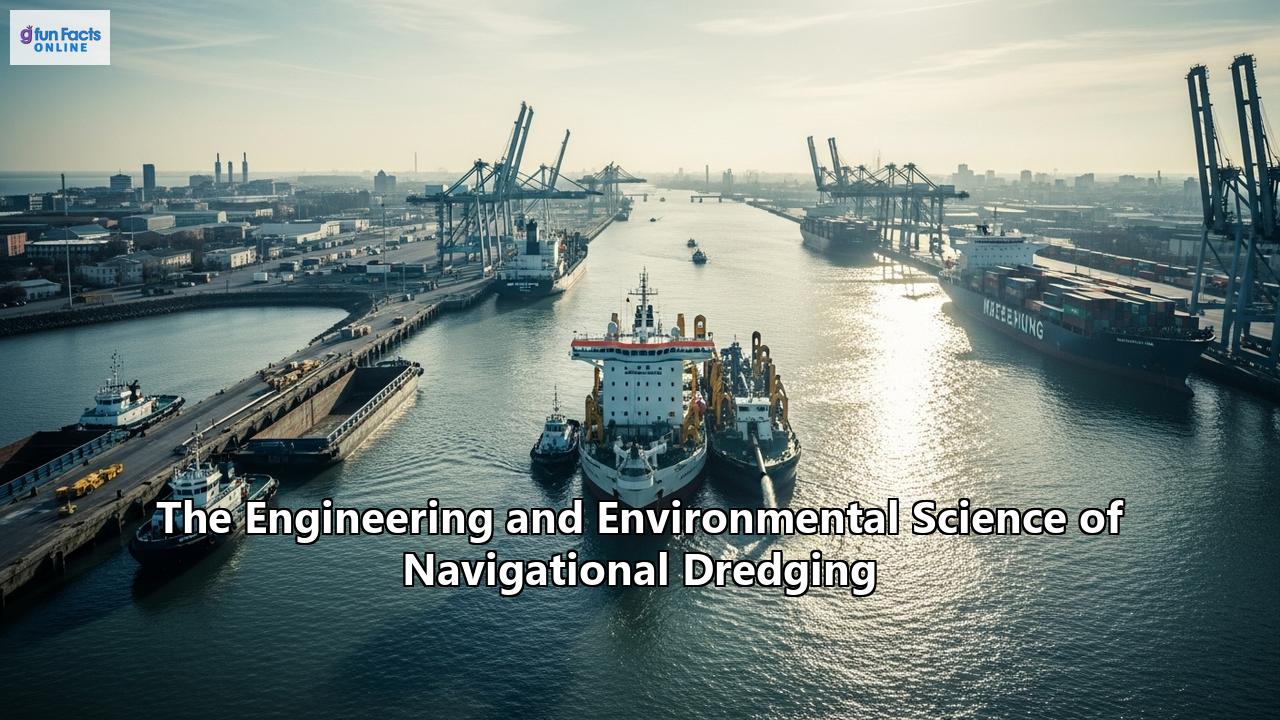
Navigational dredging, the practice of excavating sediment and debris from the bottom of water bodies, is a cornerstone of modern maritime commerce and coastal infrastructure. This essential engineering practice ensures that ports, harbors, and shipping channels remain deep and wide enough for the safe passage of vessels, from small recreational boats to the massive supertankers and container ships that fuel the global economy. However, this vital activity does not come without its environmental challenges. The very act of disturbing the seabed can have profound effects on aquatic ecosystems, water quality, and the distribution of contaminants.
This article delves into the intricate world of navigational dredging, exploring the sophisticated engineering required to undertake these massive projects and the complex environmental science that seeks to understand and mitigate their impacts. From the powerful machinery that reshapes underwater landscapes to the delicate ecological balance that must be protected, the story of navigational dredging is one of a dynamic interplay between human ingenuity and the natural world.
The Imperative of Navigational Dredging: Keeping Waterways Open
The primary driver for navigational dredging is the relentless process of sedimentation. Rivers carry silt and sand downstream, which naturally settles in calmer waters like harbors and channels, gradually making them shallower. Without intervention, these waterways would become impassable, severing critical trade routes and crippling port operations. The global shipping fleet is also characterized by ever-larger vessels, which require deeper and wider channels to operate safely and efficiently.
Dredging, therefore, is a routine necessity to maintain and enhance the navigability of hundreds of ports and thousands of miles of channels worldwide. This can be broadly categorized into two types:
- Capital Dredging: This involves dredging an area to a depth that has not been previously dredged, or has not been dredged in the last ten years. It is typically undertaken to create new harbors, berths, or channels, or to significantly deepen existing ones to accommodate larger ships.
- Maintenance Dredging: This is the more common type of dredging, performed periodically to remove recently accumulated sediments and maintain a channel or berth at its designed depth.
The economic benefits of a well-maintained waterway are substantial. Efficient shipping keeps the cost of consumer goods lower and facilitates international trade, which is a backbone of the global economy. Beyond commerce, dredging also supports recreational boating and is crucial for national defense, ensuring naval vessels can access strategic ports.
The Engineering of Dredging: Machinery and Methods
The removal of vast quantities of underwater material is a significant engineering feat, requiring specialized equipment and precise techniques. Dredging operations are broadly classified into two main methods: mechanical and hydraulic. The choice of method and specific equipment depends on numerous factors, including the type of material to be dredged, the quantity, the depth of the water, and the environmental sensitivity of the area.
Mechanical Dredging: The Power of the Bucket
Mechanical dredging involves the physical excavation of sediment using a bucket or grab, much like a terrestrial excavator. This method is often preferred for removing compacted sediments, debris, or materials in confined spaces. The excavated material is then typically loaded onto barges for transport to a disposal or placement site. Key types of mechanical dredgers include:
- Clamshell/Grab Dredgers: These consist of a crane, mounted on a pontoon or self-propelled vessel, which operates a clamshell grab. The grab is lowered to the seabed, closes to scoop up the material, and is then lifted to deposit the load. They are particularly useful for working close to structures like docks and for removing loose to moderately stiff materials.
- Backhoe/Dipper Dredgers: Essentially a marine-based hydraulic excavator, a backhoe or dipper dredger uses an articulated arm and bucket to dig into the sediment. These are powerful machines capable of exerting significant force, making them suitable for dredging harder materials like clay and even some types of rock. Their maneuverability makes them effective around structures like piers and bridges.
While effective, mechanical dredging can be a slower process compared to hydraulic methods.
Hydraulic Dredging: The Force of Suction
Hydraulic dredging utilizes powerful centrifugal pumps to create a suction force that lifts sediment from the seabed. The material is mixed with water to form a slurry, which can then be transported over long distances via pipelines or loaded into hoppers. This method is generally more efficient for removing large volumes of looser materials like sand and silt.
- Cutter Suction Dredgers (CSD): These are among the most powerful and versatile dredgers. A CSD is a stationary dredger that uses a rotating cutter head to loosen hard-packed soils, clays, and even rock, which is then sucked up by the dredge pump. It swings in an arc around a spud pole driven into the seabed, allowing for precise and systematic removal of material. The dredged slurry is typically pumped directly to a nearby reclamation site or into barges. Large CSDs can achieve enormous production rates, making them ideal for major capital dredging and land reclamation projects.
- Trailing Suction Hopper Dredgers (TSHD): A TSHD is a self-propelled, seagoing vessel that operates like a giant floating vacuum cleaner. It sails slowly over the dredging area, trailing one or two suction pipes (drag arms) with drag heads that collect sediment from the seabed. The slurry is pumped into the ship's own hopper. Once the hopper is full, the TSHD sails to a designated disposal or placement site. The material can be released through doors in the bottom of the hopper, pumped ashore via a pipeline, or sprayed out in a technique known as "rainbowing," often used for beach nourishment. Their mobility and ability to work in rough seas make TSHDs the workhorses for maintenance dredging in busy shipping channels and harbors.
- Plain and Dustpan Suction Dredgers: A plain suction dredger simply uses a suction pipe, sometimes aided by water jets, to draw up loose material like sand. A variation is the dustpan dredger, which features a wide, dustpan-shaped suction head equipped with high-pressure water jets to loosen and capture sediment. These are commonly used in river systems to maintain navigation channels, with the dredged material often discharged back into the water adjacent to the channel.
The Critical Role of Hydrographic Surveying
Modern dredging is a high-precision operation, a far cry from simply digging holes in the seabed. Central to this precision is hydrographic surveying, the science of measuring and mapping the physical features of underwater areas. Surveys are conducted before, during, and after a dredging project for several key reasons:
- Planning and Design: An initial survey provides a detailed topographic map of the seabed, revealing water depths, contours, and the nature of the sediment. This data is crucial for determining the exact volume of material that needs to be removed and for selecting the most appropriate dredging equipment and method.
- Operational Guidance: During dredging, advanced positioning and monitoring systems are integrated with the dredger. GPS technology allows operators to track the exact location of the dredge head in real-time, ensuring material is removed only from the designated areas and to the specified depth.
- Progress and Payment: Regular surveys monitor the progress of the work, allowing for accurate calculations of the volume of material removed, which often forms the basis for contractual payment.
- Quality Control: Post-dredging surveys confirm that the project has met its design specifications, ensuring the channel is clear and safe for navigation.
The tools of hydrographic surveying have evolved dramatically. While lead lines were once the standard, today's surveyors employ sophisticated acoustic technologies:
- Sonar (Sound Navigation and Ranging): This is the primary tool for measuring water depth.
Single-beam echosounders emit a single pulse of sound directly beneath the survey vessel to measure depth along a line.
Multibeam echosounders emit a fan-shaped array of sound beams, allowing them to map a wide swath of the seabed with each pass. This provides a much more detailed and complete 3D picture of the underwater terrain.
Side-scan sonar creates detailed images of the seabed, which are excellent for identifying objects, debris, and different sediment textures.
- GPS (Global Positioning System): High-precision differential GPS provides real-time, accurate positioning of the survey vessel and the dredging equipment, often to within a few centimeters.
- Lidar (Light Detection and Ranging): In shallower, clear waters, airborne Lidar systems can be used to measure water depth using laser pulses.
Innovation in Dredging: Towards a Smarter, Greener Future
The dredging industry is continuously evolving, driven by the need for greater efficiency, safety, and environmental stewardship. Key innovations include:
- Automation and Remote Control: Modern dredgers are increasingly automated, with systems that can control dredge head position, pump power, and vessel movement in real-time to optimize performance. Remote-controlled and even autonomous dredgers are being developed, which can enhance safety by removing operators from hazardous environments and improve precision.
- Eco-Friendly Designs: There is a growing trend towards more environmentally friendly equipment. This includes the development of electric and hybrid-powered dredgers to reduce greenhouse gas emissions and noise pollution. Innovations in dredge head design and closed-loop systems aim to minimize turbidity and sediment spill during the dredging process.
- Advanced Monitoring: The integration of GPS, sonar, and other sensors provides a constant stream of data, allowing for real-time adjustments to dredging operations to minimize environmental impact and maximize efficiency. This data can be used to create highly detailed models and track performance with unprecedented accuracy.
- Water Injection Dredging (WID): This innovative technique involves injecting large volumes of water at low pressure into the sediment layer. This fluidizes the sediment, causing it to flow as a density current, guided by gravity and ambient currents, to deeper parts of the waterway. It is a specialized method suitable for recently deposited, fine sediments in areas where some displacement is acceptable.
The Environmental Science of Dredging: Understanding the Impacts
While essential for navigation, the act of dredging fundamentally alters the aquatic environment, presenting a range of potential ecological impacts. The primary disturbances stem from the physical removal of the seabed, the resuspension of sediments into the water column, and the potential release of trapped contaminants.
Physical and Ecological Impacts
- Habitat Removal and Destruction: Dredging directly removes the benthic habitat—the community of organisms living on or in the seabed. This can destroy the homes of countless species, including worms, mollusks, crustaceans, and other invertebrates that form the base of the aquatic food web. Sensitive habitats like seagrass beds and coral reefs are particularly vulnerable to physical removal and smothering. The recovery of these benthic communities can be a slow process.
- Increased Turbidity and Sedimentation: The dredging process inevitably stirs up sediment, creating a plume of suspended particles in the water column. This increase in turbidity (cloudiness) can have several negative effects:
It reduces light penetration, which can inhibit photosynthesis in aquatic plants and phytoplankton, affecting the primary productivity that underpins the marine food web.
High concentrations of suspended sediment can clog the gills of fish and other organisms, causing physical stress.
The hunting and foraging abilities of visual predators, including some marine mammals, can be impaired.
* As the suspended sediment eventually settles, it can smother nearby habitats, burying benthic organisms and preventing the settlement of larvae.
- Alteration of Hydrodynamics: Deepening or widening a channel can alter water circulation patterns, current velocities, and salinity regimes. These changes can have long-term consequences for the distribution of habitats and the behavior of marine species.
Contaminant Remobilization and Bioavailability
Sediments, particularly in industrialized harbors and urban waterways, can act as sinks for a variety of pollutants, including heavy metals, polychlorinated biphenyls (PCBs), polycyclic aromatic hydrocarbons (PAHs), and pesticides. These contaminants are often bound to sediment particles and may lie dormant in anoxic (oxygen-poor) layers.
Dredging can disturb these contaminated sediments, resuspending them into the water column. This can lead to two primary types of contaminant release:
- Particulate Release: Contaminants remain attached to the resuspended sediment particles and are transported with the plume, potentially settling in previously uncontaminated areas.
- Dissolved Release: The change in chemical conditions when anoxic sediment is exposed to oxygenated water can cause contaminants to desorb from the particles and dissolve into the water column. This dissolved form is often more bioavailable, meaning it can be more readily taken up by aquatic organisms.
Once in the food web, these contaminants can bioaccumulate, reaching higher concentrations in organisms at successively higher trophic levels, posing a risk to wildlife and potentially human health.
Mitigation and Management: A Balancing Act
Recognizing these potential impacts, a significant part of the science of dredging is focused on developing and implementing effective mitigation and management strategies. The goal is to balance the economic and navigational needs with the protection of the marine environment.
- Environmental Windows: One of the most common strategies is to schedule dredging activities to avoid sensitive periods for local species, such as fish spawning and migration seasons or bird nesting periods.
- Containment Measures: To control the spread of sediment plumes, various physical barriers can be deployed around the dredging site. Silt or turbidity curtains are floating barriers that hang down into the water column, helping to contain suspended sediments and allow them to settle within a confined area.
- Precision Dredging: Using advanced equipment with precise GPS guidance helps to minimize the dredging footprint, ensuring that only the required material is removed and reducing unnecessary disturbance.
- Equipment Selection and Operation: The choice of dredger and its method of operation can significantly influence the environmental impact. For example, some dredge heads are specifically designed to minimize sediment resuspension. Operational controls, such as limiting the overflow from hopper dredges or reducing the speed of a cutter head, can also reduce turbidity.
- Monitoring: Comprehensive environmental monitoring is a critical component of modern dredging projects. This includes real-time monitoring of water quality parameters like turbidity and dissolved oxygen, allowing for adaptive management where operations can be modified or temporarily halted if certain thresholds are exceeded.
Beneficial Use of Dredged Material: From Waste to Resource
Historically, dredged material was often viewed as a waste product to be disposed of as cheaply as possible, typically in open-water sites. However, there is a growing recognition that dredged sediment, when clean, is a valuable resource. The practice of using dredged material for productive purposes is known as "beneficial use," and it is increasingly becoming the preferred management option.
Beneficial use projects can provide both economic and significant environmental benefits:
- Habitat Creation and Restoration: Dredged sand and mud can be used to create, restore, or enhance a variety of habitats. This includes building intertidal wetlands and salt marshes that provide critical nursery grounds for fish and protection from coastal erosion. It can also be used to construct bird nesting islands or restore oyster reefs.
- Beach Nourishment: Clean sand dredged from navigation channels is often a perfect match for replenishing eroding beaches. This helps to protect coastal communities and infrastructure from storms and rising sea levels while also maintaining recreational areas.
- Construction and Land Reclamation: Sand and gravel from dredging can be used as a construction material for projects like road foundations, dikes, and levees. It is also fundamental to land reclamation projects, where new land is created for port expansion, industrial development, or other uses.
- Capping Contaminated Sites: Clean dredged material can be used to cap and isolate contaminated sediments that are left in place, preventing the pollutants from entering the wider environment.
The key to successful beneficial use is early planning to match the supply of dredged material with a suitable project, ensuring the sediment's physical and chemical properties are appropriate for the intended use.
The Regulatory Landscape: Permitting and Oversight
Given the potential environmental impacts, navigational dredging is a highly regulated activity. In most countries, dredging projects require permits from multiple government agencies. In the United States, key players include the U.S. Army Corps of Engineers (USACE) and the Environmental Protection Agency (EPA).
The permitting process is typically rigorous and involves several steps:
- Application and Environmental Assessment: A dredging proponent must submit a detailed application that includes an assessment of the potential environmental impacts of the project. For larger projects, a comprehensive Environmental Impact Assessment (EIA) or Environmental Impact Report (EIR) is often required. This involves extensive studies of the existing environment and modeling of potential impacts.
- Sediment Testing: The material to be dredged must be thoroughly tested for contaminants to determine its suitability for different disposal or placement options.
- Public Review: The public and other stakeholders are typically given an opportunity to review and comment on proposed dredging projects.
- Permit Issuance: Based on the assessment, regulatory agencies will either issue or deny a permit. If issued, the permit will contain specific conditions to minimize environmental harm, such as requirements for mitigation measures, monitoring, and reporting.
International agreements, such as the London Convention and Protocol, also regulate the disposal of dredged material at sea, with the overarching goal of protecting the marine environment from pollution. This complex regulatory framework ensures that dredging is conducted in a manner that is as environmentally responsible as possible.
Conclusion: A Continuous Voyage
Navigational dredging is an indispensable activity that underpins the modern world's economic and logistical fabric. The engineering involved is a testament to human innovation, with powerful and precise machines capable of reshaping the underwater world to meet our needs. Yet, this power comes with a profound responsibility. The environmental science of dredging has illuminated the complex and sometimes delicate balance of coastal and riverine ecosystems, revealing the potential consequences of disturbing the seabed.
The future of dredging lies in the continued integration of these two fields. It will be defined by smarter, more efficient, and increasingly autonomous dredgers guided by real-time data to minimize their physical footprint. It will involve a deeper understanding of ecosystem dynamics, leading to more effective mitigation strategies and a greater emphasis on turning dredged material from a disposal problem into a beneficial resource for habitat restoration and coastal resilience. The journey of navigational dredging is a continuous voyage—one that must navigate not only the physical channels of our waterways but also the complex currents of environmental stewardship and sustainable development.
Reference:
- https://www.researchgate.net/profile/Osita-Okeke/publication/374708192_Dredging_of_Harbours_and_Rivers_Review_of_Practices_and_Associated_Environmental_Impacts/links/65d57c23e7670d36abc5ec49/Dredging-of-Harbours-and-Rivers-Review-of-Practices-and-Associated-Environmental-Impacts.pdf
- https://www.portcorpuschristiprojects.com/beneficial-use-of-dredged-materials/
- https://www.abpmer.co.uk/blog/guidance-restoring-estuarine-and-coastal-habitats-with-dredged-material/
- https://semspub.epa.gov/work/11/174460.pdf
- https://www.azocleantech.com/article.aspx?ArticleID=1750
- https://www.daepumps.com/resources/environmental-dredging/
- http://ukmpa.marinebiodiversity.org/uk_sacs/activities/ports/ph5_1.htm
- https://dredging.org/media/ceda/org/documents/resources/cedaonline/fact-sheet-beneficial-use-of-dredged-material-ceda-iadc-final.pdf
- https://www.azocleantech.com/article.aspx?ArticleID=1752
- https://pubmed.ncbi.nlm.nih.gov/20872643/
- https://pubmed.ncbi.nlm.nih.gov/15327845/
- https://www.cbrain.com/case-study/dredging
- https://academic.oup.com/icesjms/article/72/2/328/676320
- https://www.iadc-dredging.com/article/environmental-management-and-mitigation-measures-addu-city-project/
- https://www.waterboards.ca.gov/sanfranciscobay/water_issues/programs/dredging.html
- https://www.ospar.org/documents?v=6987
- https://qsr2010.ospar.org/media/assessments/p00366_Dredging.pdf
- https://www.isa.org.jm/wp-content/uploads/2022/12/copy_of_environmental_and_dredging_guidelines_applicable_to_dsm-nodules_rev0.xlsx
- https://www.sfei.org/sites/default/files/biblio_files/no_560.pdf
- https://clu-in.org/download/contaminantfocus/sediments/presenters-manual-dredging.pdf
- https://www.icpdr.org/sites/default/files/P05_HAKSTEGE_Dredging_CEDA.pdf