
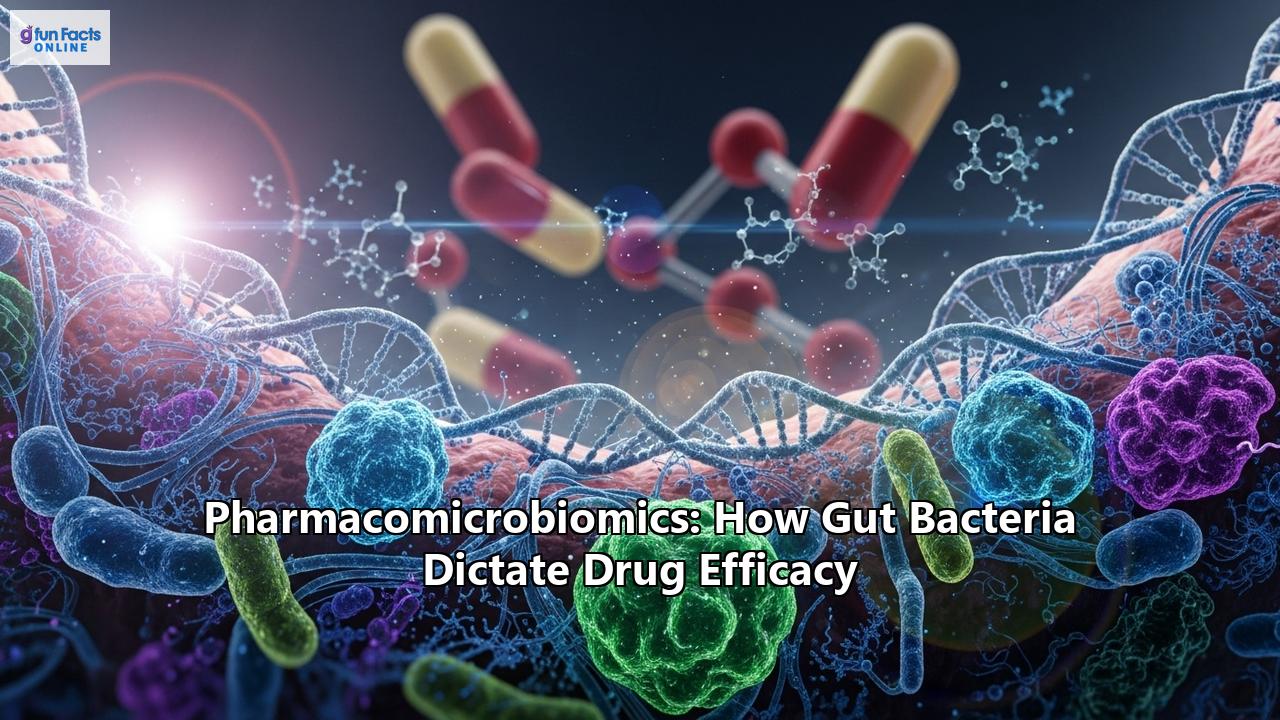
The Silent Partners Within: How Gut Bacteria Are Revolutionizing a New Field of Medicine Called Pharmacomicrobiomics
Imagine a bustling metropolis hidden deep within you, a complex ecosystem teeming with trillions of microscopic inhabitants. This isn't science fiction; it's the reality of the human gut microbiome, a world of bacteria, fungi, and viruses that plays a much more significant role in our health than we ever imagined. Beyond aiding digestion and bolstering our immune system, these microbial residents are powerful chemical factories, silently influencing how our bodies respond to medication. This intricate dance between our gut microbes and the drugs we take has given rise to a revolutionary field: pharmacomicrobiomics.
Pharmacomicrobiomics is the study of how the vast and varied community of microorganisms in our gut dictates the efficacy, toxicity, and overall impact of the medicines we rely on. It's a field that is rapidly reshaping our understanding of pharmacology, moving us away from a "one-size-fits-all" approach to a future of truly personalized medicine. The implications are staggering, suggesting that the key to unlocking more effective and safer treatments may lie not just in our own genetics, but in the collective genomes of our microbial partners.
The Gut Microbiome: Your Body's Second Liver
For decades, the liver was considered the primary site of drug metabolism, the place where medications are broken down, activated, or deactivated. While the liver is undoubtedly a powerhouse of metabolic activity, we now know it doesn't work alone. The gut microbiome acts as a second, highly variable metabolic organ, possessing an immense and diverse arsenal of enzymes that can perform a vast range of chemical transformations on the drugs that pass through our digestive system.
This microbial influence is a two-way street. Not only do our gut bacteria affect drugs, but the medications we take can, in turn, alter the composition and function of our microbiome. This bidirectional relationship creates a complex feedback loop that can have profound consequences for our health. For instance, commonly used drugs like proton pump inhibitors, metformin, and even certain antidepressants have been shown to significantly alter the gut microbial landscape.
The Mechanisms of Microbial Influence: How Bacteria Shape Drug Fate
The gut microbiome employs a variety of strategies to interact with the medications we ingest. These can be broadly categorized into several key mechanisms:
- Drug Activation: Some drugs, known as prodrugs, are administered in an inactive form and require metabolic conversion to become therapeutically effective. In many cases, it's the enzymes produced by our gut bacteria that perform this crucial activation step. A classic example is sulfasalazine, a medication used to treat inflammatory bowel disease (IBD). This drug travels largely untouched through the upper gastrointestinal tract until it reaches the colon, where gut bacteria cleave an azo bond, releasing the active anti-inflammatory compound, 5-aminosalicylic acid (5-ASA), directly at the site of inflammation.
- Drug Inactivation: Conversely, gut bacteria can also render drugs less effective or completely inert. A prime example is the heart medication digoxin. For some individuals, a specific gut bacterium, Eggerthella lenta, can metabolize and inactivate digoxin, leading to lower-than-expected drug levels in the bloodstream and reduced therapeutic benefit. This explains, in part, why patients can have vastly different responses to the same dose of this medication.
- Toxicity Modulation: The metabolic activities of our gut microbes can sometimes transform drugs into toxic byproducts, leading to adverse side effects. A well-studied case is the chemotherapy drug irinotecan. While effective in treating certain cancers, its use can be limited by severe diarrhea. This toxicity is a direct result of gut bacteria producing an enzyme called β-glucuronidase, which converts an inactive metabolite of irinotecan back into its toxic form in the gut.
- Drug Sequestration: A more recently understood mechanism is bioaccumulation, where bacteria can essentially "soak up" a drug, storing it within their cells without chemically altering it. This process reduces the amount of the drug available for absorption by the body, potentially lowering its efficacy.
- Indirect Effects: The influence of the gut microbiome isn't always direct. These microbes can produce a wide array of metabolites that can enter our circulation and influence the expression and activity of our own drug-metabolizing enzymes in the liver and other tissues. They can also modulate the immune system, which in turn can affect how we respond to certain therapies, particularly in the realm of cancer immunotherapy.
The Clinical Kaleidoscope: Pharmacomicrobiomics Across Therapeutic Areas
The impact of the gut microbiome on drug efficacy is not limited to a few isolated examples. Its influence spans a wide range of medical specialties:
- Oncology: The gut microbiome has emerged as a critical factor in determining the success of cancer treatments. The response to immune checkpoint inhibitors, a revolutionary class of drugs that unleash the body's own immune system to fight cancer, has been strongly linked to the composition of a patient's gut microbiota. Patients with a more diverse and specific gut microbial profile often show a better response to these therapies. Furthermore, the microbiome can influence the efficacy and toxicity of traditional chemotherapy drugs like cyclophosphamide and gemcitabine.
- Cardiology: As mentioned with digoxin, the gut microbiome can significantly impact cardiovascular drugs. The metabolism of statins, a class of cholesterol-lowering drugs, can also be influenced by gut bacteria. Additionally, the gut microbiome plays a role in the metabolism of certain antihypertensive drugs, and modulating the microbiome through probiotics is being explored as a potential strategy to help manage blood pressure.
- Neurology and Psychiatry: The "gut-brain axis," the intricate communication network connecting our digestive system and central nervous system, is heavily influenced by the microbiome. This has implications for drugs that target the brain. For instance, the metabolism of L-dopa, a primary treatment for Parkinson's disease, can be altered by gut bacteria, potentially affecting its efficacy. Similarly, the response to selective serotonin reuptake inhibitors (SSRIs), a common class of antidepressants, may also be shaped by our microbial inhabitants.
- Inflammatory and Autoimmune Diseases: In conditions like IBD, the gut microbiome is not only implicated in the disease itself but also in the metabolism of the drugs used to treat it, such as sulfasalazine and other mesalazine-based drugs. The metabolism of methotrexate, another drug used for autoimmune conditions, can also be influenced by gut bacteria.
The Road Ahead: Challenges and the Dawn of Personalized Medicine
Despite the incredible potential of pharmacomicrobiomics, the field is still in its relative infancy. Several challenges must be addressed to translate these fascinating discoveries from the laboratory to the clinic. One of the biggest hurdles is the sheer complexity and variability of the human microbiome. Unlike our relatively static human genome, the microbiome is dynamic and can be influenced by a multitude of factors including diet, lifestyle, age, and even stress.
Standardization of research methods is another critical challenge. Developing uniform protocols for sample collection, data analysis, and interpretation is essential for ensuring that research findings are consistent and comparable across different studies.
Despite these challenges, the future of pharmacomicrobiomics is incredibly bright. The ultimate goal is to integrate microbiome analysis into routine clinical practice, paving the way for a new era of personalized medicine. Imagine a future where, before prescribing a medication, a doctor could analyze a patient's microbiome to predict their response, select the most effective drug, and tailor the dosage to maximize efficacy and minimize side effects.
This could involve:
- Microbiome-based Diagnostics: Developing tests that identify specific microbial biomarkers to predict a patient's response to a particular drug.
- Microbiome Modulation: Using interventions like diet, prebiotics, probiotics, or even fecal microbiota transplantation (FMT) to purposefully alter the gut microbiome to enhance drug efficacy or reduce toxicity.
- AI-Driven Insights: Employing artificial intelligence and machine learning to analyze vast microbiome datasets, uncovering complex patterns and predicting drug-microbe interactions with greater accuracy.
The integration of pharmacomicrobiomics with pharmacogenomics (the study of how our genes affect drug response) promises an even more powerful approach to personalized medicine. By considering both our "first" and "second" genomes, we can achieve a truly holistic understanding of how an individual will respond to a given therapy.
In conclusion, the silent, teeming world within our gut is no longer a passive bystander in our health. It is an active and influential partner, a key determinant of how we respond to the medicines we depend on. The burgeoning field of pharmacomicrobiomics is just beginning to decipher the complex language of these drug-microbe interactions. As our understanding grows, we move closer to a future where medical treatments are no longer a matter of trial and error, but a precisely tailored strategy, designed not just for the patient, but for the unique microbial ecosystem they host. The journey into the world of pharmacomicrobiomics is a journey into the future of medicine itself.
Reference:
- https://www.news-medical.net/news/20200302/Challenges-for-translating-pharmacomicrobiomics-to-personalized-medicine.aspx
- https://gut.bmj.com/content/69/8/1510
- https://sushantuniversity.edu.in/blog/exploring-the-potential-of-pharmacomicrobiomics-and-ai-in-personalized-medicine/
- https://pmc.ncbi.nlm.nih.gov/articles/PMC5960471/
- https://research.rug.nl/en/publications/pharmacomicrobiomics-a-novel-route-towards-personalized-medicine
- https://www.labroots.com/trending/microbiology/14940/gut-bacteria-impacting-drug-metabolism
- https://pmc.ncbi.nlm.nih.gov/articles/PMC5683181/
- https://academic.oup.com/gastro/article/doi/10.1093/gastro/goac009/6565278
- https://www.researchgate.net/publication/341392913_Interaction_between_drugs_and_the_gut_microbiome
- https://pmc.ncbi.nlm.nih.gov/articles/PMC11483048/
- https://academic.oup.com/ecco-jcc/article/15/2/307/5870328
- https://pmc.ncbi.nlm.nih.gov/articles/PMC10813426/
- https://www.researchgate.net/publication/360659101_Pharmacomicrobiomics_Influence_of_gut_microbiota_on_drug_and_xenobiotic_metabolism
- https://www.contagionlive.com/view/pharmacomicrobiomic-study-shows-significant-gut-bacteria-role-in-drug-metabolism-and-exposure
- https://www.jocpr.com/articles/evaluating-the-role-of-gut-microbiota-in-drug-metabolism-and-efficacy.pdf
- https://pmc.ncbi.nlm.nih.gov/articles/PMC7136083/
- https://pmc.ncbi.nlm.nih.gov/articles/PMC10707377/
- https://www.tandfonline.com/doi/abs/10.1080/17425255.2018.1530216
- https://www.frontiersin.org/journals/medicine/articles/10.3389/fmed.2021.742394/full