
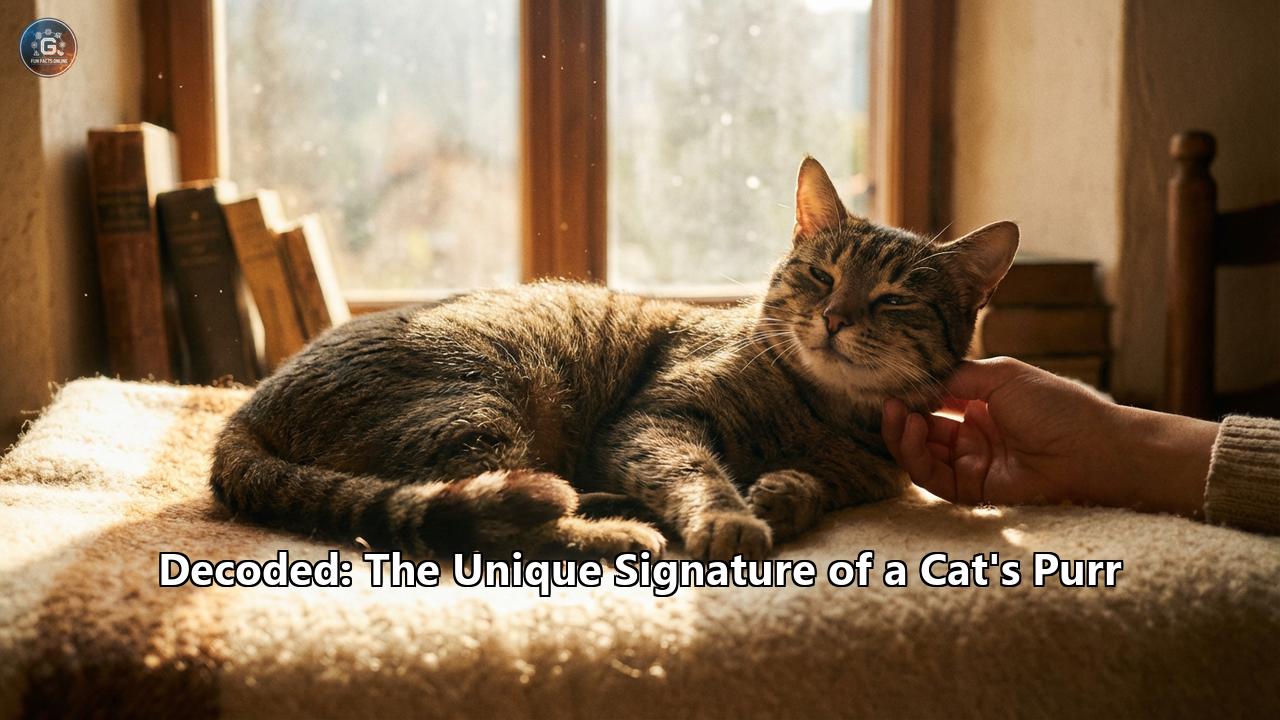
In the quiet hours of the night, when the world has stilled and the shadows stretch long across the floorboards, a sound emerges from the curled form of a house cat. It is a rhythmic, low-frequency thrum, a vibration that seems to emanate not just from the throat, but from the very core of the animal’s being. It is the purr—a sound so ubiquitous that we often take it for granted, yet so biologically complex that it has baffled scientists for centuries.
To the casual observer, a purr is merely a sign of contentment, the acoustic equivalent of a smile. But to the evolutionary biologist, the bio-acoustician, and the feline behaviorist, the purr is a masterpiece of natural engineering. It is a multi-functional tool used for communication, self-repair, and psychological manipulation. It is a survival mechanism honed over millions of years, a unique acoustic fingerprint that distinguishes every individual cat, and a biological anomaly that blurs the line between voluntary communication and autonomic reflex.
This is the decoded story of the cat’s purr—a journey into the anatomy, physics, and evolutionary purpose of nature’s most healing sound.
Part I: The Anatomical Enigma
For decades, the mechanism behind the purr was a subject of fierce debate. Unlike the bark of a dog or the chirp of a bird, the purr is continuous. A cat purrs while inhaling and while exhaling, maintaining a seamless loop of sound that can last for minutes or even hours. This respiratory versatility is rare in the animal kingdom; most vocalizations, including human speech, occur only during expiration.
The Neural Oscillator HypothesisFor much of the 20th century, the prevailing theory was that the purr was the result of a "neural oscillator" deep within the feline brain. Scientists believed that a specific repetitive signal was sent from the central nervous system to the laryngeal muscles, causing them to twitch in time with the diaphragm. This theory suggested that purring was an active, energy-consuming process—a deliberate muscular contraction happening 20 to 30 times every second.
According to this view, the cat’s brain was acting like a conductor, signaling the glottis to open and close rapidly. As the cat breathed, air would rush through these fluttering vocal cords, creating the staccato bursts of sound that we perceive as a continuous hum. This "Active Muscle Contraction" (AMC) theory explained the rhythm, but it failed to account for how effortless the purr seemed. If a cat had to consciously twitch its throat muscles thousands of times a minute, why could it purr while asleep? Why did the purr not falter when the cat was under deep anesthesia?
The 2023 Breakthrough: The "Purring Pads"The understanding of feline vocalization was revolutionized in late 2023 and early 2024 by a team of researchers led by voice scientists at the University of Vienna. Their study challenged the AMC theory and proposed a paradigm shift: the purr is likely a passive aerodynamic phenomenon, much like the "vocal fry" in human speech.
By examining the larynges of deceased cats, researchers discovered a previously overlooked anatomical feature: pads of connective tissue embedded within the vocal folds. These pads, up to 4 millimeters in diameter, add mass to the vocal cords. In the world of acoustics, mass lowers frequency. Just as the thick string of a double bass produces a lower note than the thin string of a violin, these heavy, collagen-rich pads allow the small larynx of a house cat to produce remarkably low-frequency sounds.
This discovery suggests that a cat does not need to constantly signal its muscles to twitch. Instead, the cat likely sets its vocal cords to a "purr-ready" position, and the airflow from breathing automatically causes the heavy pads to oscillate. This "flow-induced self-sustained oscillation" means that purring is incredibly energy-efficient. It is an automatic hum that requires little more effort than breathing itself, explaining why a cat can purr for hours without fatigue, and why the sound persists even in states of deep relaxation or unconsciousness.
Part II: The Evolutionary Schism—Roarers vs. Purrers
To understand the purr, one must look at the family tree of Felidae. The cat family is sharply divided by the structure of the throat, a divergence that occurred millions of years ago.
The Hyoid Bone DivideThe ability to purr comes at a cost: the inability to roar. This trade-off is dictated by the hyoid apparatus, a series of small bones that support the tongue and larynx.
In the subfamily Pantherinae—the "big cats" which include lions, tigers, jaguars, and leopards—the hyoid apparatus is only partially ossified. It contains an elastic ligament that allows the larynx to move extensively. This flexibility is what enables the lion to produce a terrifying, resonant roar that can be heard five miles away. However, this loose, elastic throat structure cannot vibrate with the tight, rapid precision required for a purr. A lion can make a chuffing sound or a grunt, but it cannot produce the continuous, two-way hum of a true purr.
In contrast, the subfamily Felinae—which includes domestic cats, bobcats, cougars, cheetahs, and ocelots—possesses a completely ossified, rigid hyoid bone. This stiff framework acts as a resonating chamber. It prevents the larynx from stretching to create a roar, but it provides the perfect stability for the high-frequency vibration of purring.
The Cheetah's DilemmaThe cheetah occupies a fascinating middle ground in the popular imagination, but anatomically, it sits firmly with the small cats. Despite its size, a cheetah cannot roar. Instead, it produces a loud, bird-like chirp and a deep, rumbling purr. This places the cheetah in the unique position of being a "big cat" by size and ecology, but a "small cat" by vocal anatomy. The sight of a 120-pound predator resting after a hunt, emitting a purr that shakes the ground, serves as a reminder that this vocalization is not about size—it is about the architecture of the throat.
Evolutionary AdvantagesWhy did nature select for purring in smaller cats? The leading hypothesis involves camouflage and maternal bonding. A roar is a projection of power, a long-distance broadcast of territory suitable for apex predators who have little to fear. A purr, however, is a near-field signal. It travels through the body of the cat and into those touching it, but it dissipates quickly in the air.
For a mother bobcat or an ancestor of the domestic cat, hiding kittens in a den was a perilous task. A loud vocalization would attract predators (coyotes, eagles, hyenas). The purr allowed the mother to communicate with her kittens—signaling "I am here, you are safe, feed now"—without alerting enemies. Kittens, born blind and deaf, can feel the vibration of the mother’s purr long before they can hear or see her. It is a tactile beacon in the darkness, a survival mechanism rooted in silence and vibration.
Part III: The Acoustic Fingerprint
We often speak of "the cat's purr" as a singular sound, but recent advancements in bio-acoustics and artificial intelligence have revealed that no two purrs are alike. Just as every human has a unique voice and a unique fingerprint, every cat possesses a unique "purr signature."
The Spectrographic SignatureWhen analyzed through a spectrogram—a visual representation of sound frequencies—a purr reveals itself as a complex tapestry of harmonics. The "fundamental frequency" usually sits between 20 Hz and 150 Hz, but the timbre is colored by higher harmonics.
A 2025 study utilizing AI analysis of feline vocalizations found that purrs are more individually distinct than meows. Meows are highly plastic; cats modify them to suit the situation, pitching them up to sound like human babies or shortening them into greetings. The purr, however, is more anatomically fixed. It reflects the physical dimensions of the cat’s larynx, the density of their vocal pads, and the unique resonance of their chest cavity.
Biometric IdentificationThe stability of the purr has led researchers to propose it as a form of biometric identification. In studies where machine learning algorithms were fed hours of audio from different cats, the AI could identify the individual cat with over 85% accuracy based solely on the micro-fluctuations and harmonic spacing of their purr.
This "acoustic fingerprint" suggests that in the wild, cats may use purring not just to say "I am content," but to say "I am this specific cat." In a colony of feral cats, where visual cues might be obscured by night or undergrowth, the specific resonance of a colony member’s purr could serve as an identification badge, reinforcing social bonds and preventing conflict.
Part IV: The Solicitation Signal—Manipulation Decoded
While the purr may be an involuntary fingerprint, it is also a tool of high-level psychological manipulation. Domestic cats, in their ten-thousand-year co-evolution with humans, have learned to weaponize their vocalizations.
The Cry Within the PurrGroundbreaking research by Dr. Karen McComb at the University of Sussex identified a specific type of vocalization known as the "solicitation purr." This is not the lazy, low rumble of a cat napping in a sunbeam. This is the sound a cat makes when it wants to be fed, usually in the early morning.
McComb’s team found that during solicitation purring, cats embed a high-frequency component—a sharp, peaked sound around 220 to 520 Hz—within the low-frequency rumble. This specific frequency range perfectly mimics the distress cry of a human infant.
Hijacking the Human BrainThe genius of the solicitation purr lies in its psycho-acoustic impact. The low rumble provides the soothing, non-threatening baseline that humans associate with a happy cat. But the embedded high-frequency "cry" triggers the human brain’s urgency centers. It taps into the innate biological imperative to nurture a distressed child.
When researchers played recordings of "non-solicitation purrs" and "solicitation purrs" to humans, the participants consistently rated the solicitation purrs as "less pleasant" and "more urgent," even if they had never owned a cat. The cats had effectively hacked the human auditory system, creating a sound that is impossible to ignore but also difficult to punish, because it is wrapped in the guise of affection. It is a "Trojan Horse" of vocalizations—a demand for food hidden inside a purr of love.
Part V: The Bio-Mechanics of Healing
Perhaps the most profound aspect of the purr is its potential medical function. For years, veterinarians were puzzled by a phenomenon known as "the paradox of the purr." Cats purr when they are happy, but they also purr when they are critically injured, in labor, or even dying. If a purr is a smile, why smile in the face of death?
The answer lies in the physics of the frequency.
The Anabolic FrequencyBio-acoustic research has shown that sound frequencies between 20 Hz and 50 Hz have anabolic (building) effects on the body. Specifically, these frequencies can:
- Increase Bone Density: Bones are piezoelectric; they convert mechanical stress into electrical signals that stimulate remodeling. The vibration of a purr provides a low-level, constant mechanical stress that encourages bone growth and prevents atrophy.
- Repair Soft Tissue: Vibrational therapy is used in sports medicine to accelerate the healing of strained muscles and tendons.
- Reduce Pain and Swelling: The vibration acts as a form of internal massage, increasing circulation and reducing edema.
The healing potential of these frequencies is so significant that space agencies have investigated vibrational therapy to prevent bone density loss in astronauts during zero-gravity missions. The domestic cat, remarkably, comes equipped with this technology naturally.
This "purr therapy" hypothesis explains why cats recover from surgical procedures and broken bones faster than dogs. It also explains why cats rarely suffer from hip dysplasia or bone cancers compared to their canine counterparts. A cat that spends 16 hours a day sleeping is not merely lazy; it is engaging in a period of vibrational maintenance. By purring while they rest, they are keeping their bones strong and their muscles conditioned without expending the energy of exercise.
The Dying PurrWhen a cat purrs on its deathbed, it is likely not an expression of contentment, but a desperate, instinctive attempt to heal itself. The cat is flooding its body with restorative frequencies, trying to knit together failing tissues and soothe pain. It is a biological Hail Mary, a testament to the evolutionary resilience of the species.
Part VI: The Human Connection
The benefits of the purr extend beyond the cat. The relationship between human and cat is a symbiotic bio-feedback loop.
Cardiovascular BenefitsStudies conducted by the University of Minnesota Stroke Research Center found that cat owners have a 40% lower risk of heart attack than non-cat owners. While part of this is the stress-reducing benefit of companionship, the specific acoustic properties of the purr play a role. The frequency of a cat’s purr lowers human blood pressure and slows the heart rate. It induces a state of relaxation similar to meditation.
The Oxytocin LoopWhen a human strokes a purring cat, the tactile vibration and the auditory cue stimulate the release of oxytocin (the bonding hormone) and decrease cortisol (the stress hormone) in the human. Simultaneously, the human’s touch stimulates the cat to purr louder, which in turn calms the human further. This positive feedback loop creates a profound physiological bond.
In therapy settings, "purr therapy" is becoming a recognized tool. Recorded purrs or robotic therapy cats are used in nursing homes to soothe dementia patients and in hospitals to aid in pain management. The sound of a purr seems to bypass the logical brain and speak directly to the limbic system, signaling safety and comfort.
Part VII: The Future of Decoding
As we move deeper into the 21st century, technology is allowing us to understand the purr in ways never before possible.
Cymatics and VisualizationUsing cymatics—the study of visible sound—researchers have begun to visualize the purr. By playing recordings of cat purrs through a membrane covered in sand or liquid, scientists can see the geometric patterns created by the sound waves. These patterns are intricate and symmetrical, visually demonstrating the complexity of the harmonics involved. Each cat’s purr creates a slightly different mandala-like pattern, a visual representation of their acoustic signature.
AI and TranslationArtificial Intelligence is currently being trained to detect emotional nuance in animal vocalizations. While we cannot yet "translate" a purr into English words, AI models are learning to distinguish between "pain purrs," "hunger purrs," and "contentment purrs" with increasing accuracy. In the near future, we may have apps that can analyze our cat’s purr and alert us to underlying health issues before clinical symptoms appear, acting as an early warning system based on micro-changes in vocal frequency.
Conclusion: The Enduring Mystery
The cat’s purr is a phenomenon that bridges the gap between the primal and the profound. It is a sound born in the prehistoric dens of the Felidae ancestors, evolved to hide vulnerable kittens from predators. It is a mechanism of biomechanical engineering, utilizing advanced aerodynamics to create a self-sustaining vibration. It is a medical device, capable of knitting bone and soothing pain. And it is a language, nuanced and manipulative, capable of enslaving the human heart.
When a cat settles onto your chest and begins that deep, rhythmic rumble, they are not just saying "I like you." They are engaging in an ancient, complex biological process. They are scanning you with sound, healing their own bodies, signaling their identity, and perhaps, in their own way, trying to heal you too.
The purr is not just a noise. It is the heartbeat of the wild, surviving in the comfort of our living rooms—a unique signature written in the ink of sound and vibration.
Reference:
- https://www.oreateai.com/blog/the-enigmatic-purr-more-than-just-a-sign-of-happiness/ea3852231a19c1d1e0016a22ba3b4517
- https://otakivets.nz/it-is-all-in-the-purr/
- https://www.sciencealert.com/important-news-scientists-think-theyve-finally-figured-out-how-cats-purr
- https://www.reddit.com/r/explainlikeimfive/comments/2af1va/eli5why_have_cats_evolved_to_pur_and_if_you/
- https://www.youtube.com/shorts/JA5bwcdGq6Y
- https://www.nationalgeographic.com/science/article/cats-manipulate-their-owners-with-a-cry-embedded-in-a-purr
- https://www.latimes.com/archives/blogs/la-unleashed/story/2009-07-13/cats-know-what-they-want-and-a-new-study-shows-they-know-how-to-get-it-by-purring
- https://sussex.figshare.com/articles/journal_contribution/The_cry_embedded_within_the_purr/23325722?utm_campaign=Bundle&utm_medium=referral&utm_source=Bundle
- https://www.researchgate.net/publication/26671018_The_cry_embedded_within_the_purr
- https://www.oreateai.com/blog/decoding-the-purrmeow-what-your-cat-is-really-saying/e3bc0ed042588fe06946b4df6656200b
- https://www.loc.gov/everyday-mysteries/zoology/item/why-and-how-do-cats-purr/
- https://www.meowingtons.com/blogs/lolcats/cymatics-shows-what-a-cats-purr-looks-like-and-its-beautiful
- https://bigcatrescue.org/conservation-news/the-quiet-code-what-your-cats-purr-reveals-about-evolution-and-our-shared-story
- https://www.museumfuernaturkunde.berlin/en/museum/media/press/cats-purrs-reveal-whos-who-better-their-meows
- https://en.wikipedia.org/wiki/Felidae
- https://www.bio-rad-antibodies.com/blog/pitch-purrfect-how-do-cats-produce-purring-vocalizations.html