
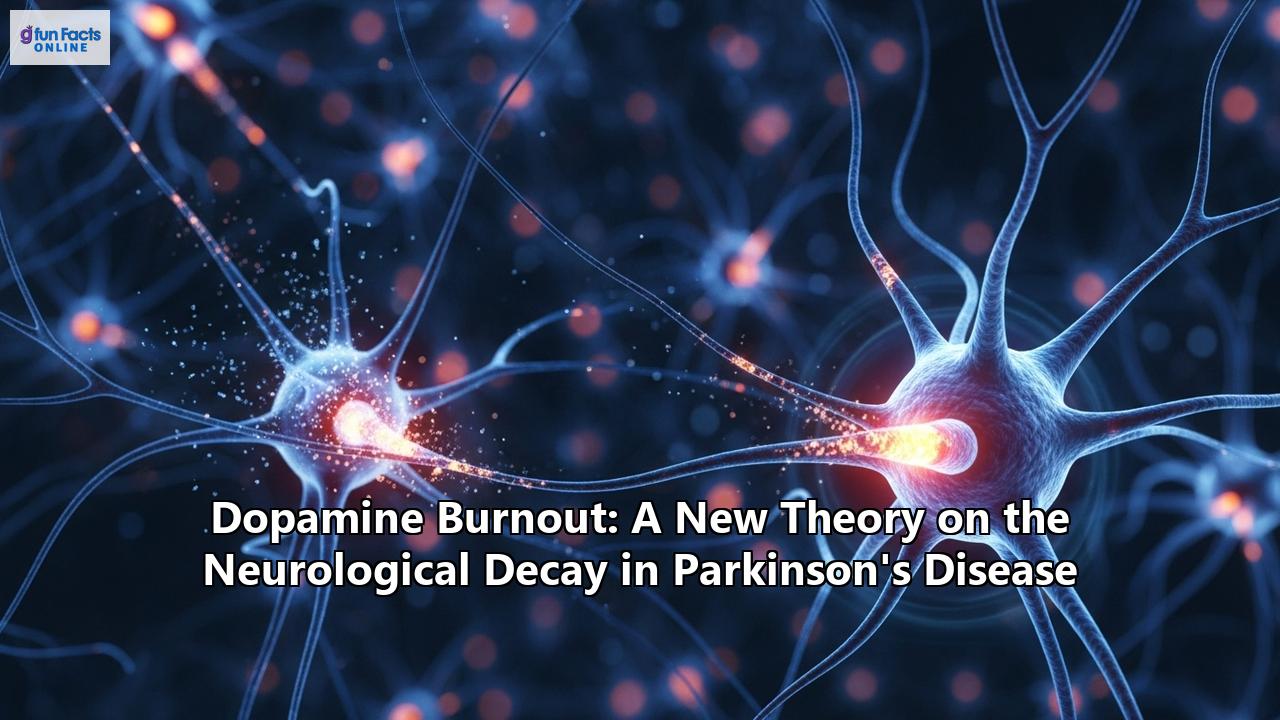
The Relentless Decline: A New Perspective on Neurological Decay in Parkinson's Disease
Parkinson's disease (PD) has long been understood as a tragic and relentless loss. At its heart is the progressive death of a specific group of brain cells: the dopamine-producing neurons nestled in a midbrain region called the substantia nigra. For decades, the prevailing theories have centered on a mysterious assailant, possibly a combination of genetic predispositions and environmental insults, that triggers a toxic cascade involving protein clumps, cellular power failures, and inflammation. However, a compelling and more nuanced theory is gaining traction, one that reframes the narrative from a simple murder mystery to a story of a system being pushed to its absolute limit and beyond. This is the theory of "dopamine burnout"—the idea that the very neurons that define the disease may be working themselves to death.
This emerging perspective doesn't discard the established hallmarks of Parkinson's—the toxic aggregation of alpha-synuclein protein into Lewy bodies, mitochondrial dysfunction, and oxidative stress—but rather provides a unifying framework that explains why these particular neurons are so exquisitely vulnerable. It suggests that the decay is not just a passive process of succumbing to toxins, but an active, catastrophic failure driven by the cell's own desperate attempts to compensate in a failing system.
The Classic View: A Foundation of Misfolded Proteins and Cellular Stress
To understand the dopamine burnout theory, one must first appreciate the foundational pillars of Parkinson's research. The primary pathological feature of PD is the profound and selective loss of dopaminergic neurons in the substantia nigra pars compacta. These neurons are crucial for controlling voluntary movement, and their demise leads to the cardinal motor symptoms of Parkinson's: tremors, rigidity, slowed movement (bradykinesia), and postural instability. By the time these symptoms become apparent, an estimated 60 to 80 percent of these vital cells have already been lost.
For years, research has focused on several key mechanisms to explain this neuronal death:
- Alpha-Synuclein and Lewy Bodies: The microscopic hallmark of PD is the presence of Lewy bodies, which are abnormal clumps composed primarily of a misfolded protein called alpha-synuclein. The "prion hypothesis" suggests that these misfolded proteins can act as templates, causing healthy alpha-synuclein to misfold and aggregate, allowing the pathology to spread from cell to cell. These aggregates are believed to be toxic, disrupting numerous cellular processes.
- Mitochondrial Dysfunction: The mitochondria, known as the powerhouses of the cell, are consistently found to be impaired in the dopamine neurons of PD patients. This leads to an energy deficit and the production of harmful reactive oxygen species (ROS), which are highly unstable molecules that cause damage to cellular components.
- Oxidative Stress: Dopamine neurons are under a great deal of baseline oxidative stress. The very process of synthesizing and breaking down dopamine can generate ROS. When combined with mitochondrial dysfunction, this creates a vicious cycle of oxidative damage that the cell's antioxidant defenses cannot handle, leading to DNA damage, lipid peroxidation, and ultimately, cell death.
- Neuroinflammation: The brain's immune cells, known as microglia, become activated in PD. While initially a protective response, chronic activation contributes to the damage by releasing inflammatory molecules that are toxic to neurons, a process sometimes called immunoexcitotoxicity.
These mechanisms are not mutually exclusive and are known to interact in a complex, destructive feedback loop. However, a crucial question has always lingered: why are the dopaminergic neurons of the substantia nigra so uniquely susceptible? Why not other neurons, or even dopamine neurons in a neighboring region called the ventral tegmental area (VTA), which are largely spared? The answer may lie in the intrinsic nature of these cells themselves.
The Burnout Hypothesis: A System Pushed to the Breaking Point
The dopamine burnout theory proposes that the death of these neurons is a direct consequence of their unique and demanding physiology. It suggests that long before the cells die, they enter a state of chronic hyperactivity, a relentless "on" state that ultimately proves unsustainable. This overactivation isn't a primary cause of the disease but rather a final common pathway resulting from a combination of factors.
1. The Intrinsically Vulnerable NeuronDopaminergic neurons in the substantia nigra are not like other neurons. They possess a unique set of characteristics that makes them natural-born workaholics, living on a perpetual metabolic knife-edge:
- Vast Axonal Networks: A single human SNc neuron can have an incredibly long and highly branched axon, with hundreds of thousands of synapses. Maintaining these vast connections requires a colossal amount of energy.
- Autonomous Pacemaking: These neurons are pacemakers; they fire action potentials spontaneously and continuously, even without external input. This constant firing is driven by the influx of calcium ions through specific channels (L-type calcium channels).
- High Metabolic Demand: The combination of their massive size and constant pacemaking activity means SNc neurons have an exceptionally high basal energy requirement. They are always "on," constantly producing ATP in their mitochondria to fuel their activity. This high metabolic rate inherently produces more oxidative stress than in less active neurons.
These intrinsic properties create a baseline vulnerability. These cells are high-performance engines that, even under normal conditions, operate close to their maximum capacity.
2. The Vicious Cycle of CompensationThe burnout begins when the system is first perturbed. This initial insult could be genetic mutations, exposure to environmental toxins like pesticides, or simply the gradual effects of aging. As the first few dopamine neurons begin to malfunction or die, the brain's remarkable capacity for compensation kicks in.
To maintain normal motor function and dopamine levels in the striatum, the remaining healthy neurons ramp up their activity. They increase their firing rate and boost their dopamine synthesis and release. This compensatory hyperactivity is a short-term solution with devastating long-term consequences. It's akin to forcing the remaining workers in a factory to work double or triple shifts indefinitely to make up for a shrinking workforce.
3. The Cellular Cascade of BurnoutThis state of chronic overactivation triggers a cascade of self-destructive events:
- Calcium Overload and Excitotoxicity: The increased firing rate leads to a massive and sustained influx of calcium ions into the cell. While calcium is essential for neuronal signaling, excessive levels are profoundly toxic. This overload overwhelms the cell's ability to buffer and sequester the calcium, leading to a state of excitotoxicity. Mitochondria work overtime to absorb the excess calcium, but this comes at a cost, disrupting their primary function of energy production.
- Metabolic Collapse: The neuron's energy demands skyrocket. To cope, mitochondria are pushed to their absolute limit. This high-energy state paradoxically makes them less resilient and more prone to damage from the increased oxidative stress that accompanies this metabolic frenzy. Research suggests that in this state, neurons have a limited "reserve respiratory capacity," meaning they have no buffer to handle additional stress. Eventually, the mitochondria fail, leading to an energy crisis and a massive surge in ROS production.
- Oxidative Stress Overdrive: The metabolism of the excess dopamine being produced, coupled with failing mitochondria, unleashes a firestorm of oxidative stress. This damages lipids, proteins, and DNA. A particularly toxic byproduct, oxidized dopamine, has been shown to accumulate and contribute to the pathological stress on the cell.
- Linking Burnout to Alpha-Synuclein: The dopamine burnout state creates the perfect storm for alpha-synuclein aggregation. Oxidative stress can damage the protein, causing it to misfold. Elevated neuronal activity has been shown to increase the release and subsequent aggregation of alpha-synuclein. Furthermore, both calcium dysregulation and mitochondrial dysfunction have been directly linked to the accumulation of toxic alpha-synuclein species. In turn, aggregated alpha-synuclein can further impair mitochondria and other cellular machinery, accelerating the death spiral.
In this model, synaptic dysfunction—the failure of the neuron to properly release dopamine—occurs long before the cell body dies. The neuron, in a desperate attempt to protect itself from the toxic effects of overactivation and dopamine synthesis, may actually begin to shut down its own dopamine production, worsening symptoms and forcing the remaining healthy neurons to compensate even harder. The cell essentially burns out its connections before the cell body itself finally succumbs to apoptosis, or programmed cell death.
Implications of the Burnout Theory: New Avenues for Treatment
This shift in perspective from a foreign invader to an internal system failure opens up exciting new therapeutic possibilities. If chronic overactivation is a key driver of the neurodegenerative process, then calming these overworked neurons could be a powerful neuroprotective strategy.
This has led to significant interest in therapies that can reduce this hyperactivity:
- Targeting Calcium Channels: A logical approach is to use drugs that block the L-type calcium channels responsible for the pacemaking activity of these neurons. Antihypertensive drugs known as calcium channel blockers, such as isradipine, have been investigated for this purpose. The idea is that by partially reducing the calcium influx, one could ease the metabolic burden on the neurons without shutting them down completely. While large-scale clinical trials of isradipine did not ultimately show a significant effect in slowing disease progression, the hypothesis remains compelling, and researchers suggest that the dosage or specific drug might not have been optimal. Meta-analyses still suggest a potential risk reduction for developing PD in individuals using these blockers.
- Reducing Metabolic Stress: Another strategy is to directly bolster the cell's ability to handle metabolic and oxidative stress. This could involve developing therapies that improve mitochondrial function, boost the cell's natural antioxidant defenses, or provide alternative energy sources to reduce the strain on mitochondrial respiration. Studies are exploring how to promote metabolic "rewiring" in neurons to make them more resilient. Natural compounds with antioxidant and anti-inflammatory properties are also being investigated for their neuroprotective potential.
- Modulating Neuronal Activity: Techniques like deep brain stimulation (DBS), already used to treat motor symptoms, could potentially be adapted to modulate and normalize the firing patterns of these vulnerable neurons early in the disease, preventing them from entering the burnout phase.
The dopamine burnout theory represents a significant evolution in our understanding of Parkinson's disease. It paints a picture not of a passive victim, but of a cell population with an inherent vulnerability that is pushed into a self-destructive frenzy by its own vital functions. By understanding this tragic internal struggle, researchers hope to move beyond merely replacing lost dopamine and develop strategies that can protect these precious neurons from their own exhaustive, fatal efforts, potentially slowing or even halting the relentless progression of this devastating disease.
Reference:
- https://www.sciencedaily.com/releases/2014/09/140930143448.htm
- https://www.researchgate.net/figure/Novel-therapeutic-strategies-for-Parkinsons-disease-PD-New-therapeutic-approaches-for_fig1_280121721
- https://today.ucsd.edu/story/phase_iii_clinical_trial_to_evaluate_calcium_channel_blocker_for_parkinsons
- https://pmc.ncbi.nlm.nih.gov/articles/PMC2597567/
- https://pmc.ncbi.nlm.nih.gov/articles/PMC5552548/
- https://www.jneurosci.org/content/31/12/4524
- https://news.ki.se/neurons-protect-themselves-from-degeneration-by-adapting-their-metabolism
- https://www.frontiersin.org/journals/molecular-neuroscience/articles/10.3389/fnmol.2024.1431079/full
- https://www.youtube.com/watch?v=tr5qOe0XGJk
- https://www.mdpi.com/2076-3921/13/9/1033
- https://www.frontiersin.org/journals/cellular-neuroscience/articles/10.3389/fncel.2022.826193/full
- https://www.uspharmacist.com/article/calciumchannel-blocker-didnt-reduce-parkinsons-progression-in-trial
- https://pmc.ncbi.nlm.nih.gov/articles/PMC4810987/
- https://www.researchgate.net/publication/359533063_Initiation_and_progression_of_a-synuclein_pathology_in_Parkinson's_disease
- https://www.frontiersin.org/journals/neuroanatomy/articles/10.3389/fnana.2014.00152/full
- https://pmc.ncbi.nlm.nih.gov/articles/PMC3578396/
- https://pmc.ncbi.nlm.nih.gov/articles/PMC5919958/
- https://pmc.ncbi.nlm.nih.gov/articles/PMC11104025/
- https://parkinsonsnewstoday.com/news/new-targeted-approach-protects-neurons-degeneration-study/
- https://www.news-medical.net/health/Lychee-Health-Benefits-Antioxidant-Neuroprotective-and-Anti-Cancer-Insights.aspx
- https://www.mdpi.com/2673-5261/3/4/21
- https://pmc.ncbi.nlm.nih.gov/articles/PMC4926438/