
In 1991, five years after the catastrophic meltdown of Reactor No. 4 at the Chernobyl Nuclear Power Plant, researchers sent a remote-controlled robot into the sarcophagus to survey the damage. The environment inside was hellish—bathed in gamma radiation intense enough to kill a human in minutes. They expected a biological wasteland.
Instead, they found life.
Clinging to the ruined walls of the reactor, black mold was growing. It wasn’t just surviving; it was thriving. Even more bizarrely, the fungi appeared to be growing toward the sources of the most intense radiation, exhibiting a behavior scientists had never seen before. They called it radiotropism.
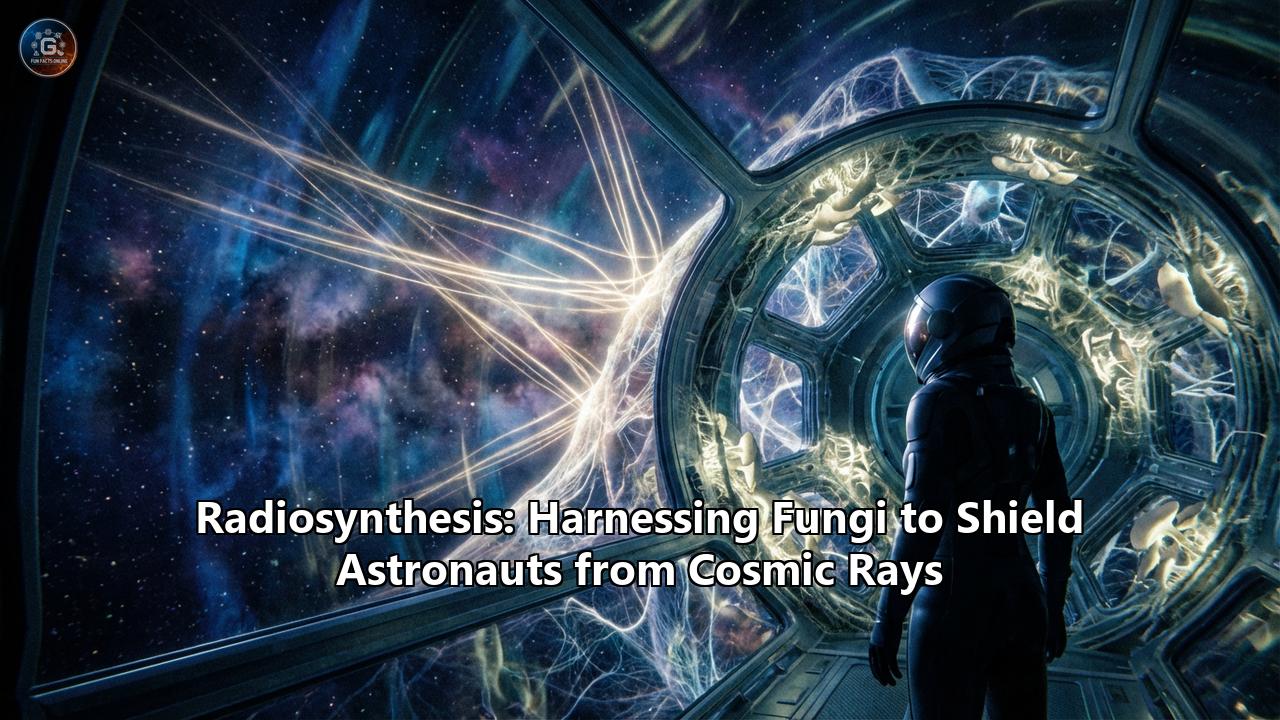
This discovery sparked a scientific detective story that has led us from the radioactive ruins of Ukraine to the pristine laboratories of NASA’s Ames Research Center, and soon, potentially, to the surface of Mars. We have discovered that these fungi possess a superpower called radiosynthesis—the ability to capture ionizing radiation and convert it into chemical energy, much like plants use chlorophyll to harvest sunlight.
As humanity prepares to leave the protective cradle of Earth’s magnetosphere, this biological anomaly offers a solution to our greatest problem: Galactic Cosmic Radiation (GCR). We are on the verge of a paradigm shift in space architecture, moving from "tins can" habitats we bring with us, to living, breathing structures we grow upon arrival.
PART I: THE INVISIBLE ENEMY
The Radiation Problem
To understand why a patch of black mold is so revolutionary, one must first understand the brutality of the environment beyond Low Earth Orbit (LEO). On Earth, we are shielded by a thick atmosphere and a powerful magnetic field that deflects the solar wind and cosmic rays. The International Space Station (ISS) still sits largely within this magnetic bubble.
But a trip to Mars exposes astronauts to the full fury of the cosmos.
- Solar Particle Events (SPEs): Sudden eruptions from the sun that shower the solar system with high-energy protons. Without shielding, an acute dose can cause radiation sickness or death.
- Galactic Cosmic Rays (GCRs): The real killer. These are heavy atomic nuclei—stripped of their electrons and accelerated to nearly the speed of light by supernova explosions in distant galaxies. They are like subatomic bullets. When a GCR hits a traditional metal shield (like the aluminum hull of a spacecraft), it shatters the metal atoms, creating a spray of "secondary radiation" (neutrons and lighter particles) that can be even more damaging to human tissue than the original ray.
To block GCRs effectively using traditional materials, you need mass. Lead is too heavy to launch. Water is excellent (hydrogen-rich materials are best at stopping GCRs without secondary spray), but water is heavy and precious. Aluminum, the standard aerospace material, is mediocre at shielding and dangerous due to secondary radiation.
Engineers call this the "mass penalty." Every kilogram launched to Mars costs thousands of dollars and requires massive amounts of fuel. Building a lead-lined shelter on Mars is logistically impossible with current propulsion technology.
This is where the fungi come in.
PART II: THE BIOLOGY OF RADIOSYNTHESIS
The Chernobyl Discovery
The fungi found at Chernobyl—primarily Cladosporium sphaerospermum, Cryptococcus neoformans, and Wangiella dermatitidis—share a defining characteristic: they are melanized. They are rich in melanin, the same pigment that gives human skin, hair, and eyes their color.
For years, biologists thought melanin in fungi was merely a stress protectant—a way to shield cells from UV light, extreme temperatures, or heavy metals. But Dr. Ekaterina Dadachova and Dr. Arturo Casadevall, working at the Albert Einstein College of Medicine, proposed a radical hypothesis: What if melanin is to radiation what chlorophyll is to light?
The Mechanism: How It Works
The process of radiosynthesis is a masterclass in quantum biology.
- Electronic Alteration: Melanin is a complex, disordered polymer. When a high-energy photon (gamma ray) strikes a melanin molecule, it doesn't just break bonds (damage); it alters the electronic structure of the pigment.
- Electron Transfer: This interaction "excites" electrons within the melanin matrix. In experiments, irradiated melanin showed a 4-fold increase in its ability to transfer electrons compared to non-irradiated melanin.
- NADH Reduction: The fungi use this high-energy electron state to drive a reduction-oxidation (redox) reaction. Specifically, they reduce NAD+ (nicotinamide adenine dinucleotide) to NADH.
- Chemical Energy: NADH is a primary carrier of energy in cellular metabolism. The cell uses this NADH to drive the production of ATP (adenosine triphosphate), the universal fuel of life.
In laboratory tests, Cladosporium sphaerospermum grew significantly faster when exposed to radiation 500 times higher than background levels. The radiation was not a stressor; it was a food source.
The ISS Experiments
In 2018 and 2019, NASA and student researchers (via the "Go For Launch!" program) sent samples of Cladosporium sphaerospermum to the ISS. They monitored the growth of the fungus over 30 days and measured the radiation levels beneath the petri dish.
The Results:A lawn of fungus just 1.7 millimeters thick absorbed approximately 2.1% to 2.17% of the incoming radiation.
While 2% sounds small, the implications are massive when scaled up. The attenuation followed linear physics. Researchers calculated that a layer of this fungus 21 centimeters (about 8 inches) thick would be sufficient to negate the annual dose equivalent of radiation on the surface of Mars.
Unlike lead or polyethylene, this shield is alive.
- Self-Regeneration: If a micrometeoroid punctures a water tank, the water leaks out. If it punctures a fungal wall, the fungus grows back and seals the hole.
- Self-Replication: You do not need to launch a 21-cm thick wall from Earth. You only need to launch a few grams of spores and a nutrient medium. Upon arrival, you "add water," and the shield grows itself.
PART III: MYCOTECTURE – GROWING HOMES ON MARS
The "Turtle vs. Bird" Philosophy
Dr. Lynn Rothschild, a senior research scientist at NASA Ames, describes the current approach to space travel as the "Turtle Strategy": we carry our house (the habitat) on our back. This is safe but energetically expensive.
The new paradigm is the "Bird Strategy": the bird carries nothing but itself (and its DNA/knowledge) and builds a nest using resources found at the destination.
This has given rise to the field of Mycotecture (Mycelium Architecture). The goal is to use fungal mycelium—the vegetative, root-like threads of fungi—as a building material.
The Architecture of a Living Habitat
How do you build a house out of mold? You don't build it; you bake it, then you revive it. Or better yet, you let it grow into the shape you need.
The Mycotecture Off Planet project, funded by NASA's Innovative Advanced Concepts (NIAC) program, proposes a three-tiered "living shell" design:
Layer 1: The External Ice ShellWater is an excellent radiation shield. On Mars or the Moon, water can be extracted from subsurface ice. This outer layer provides the first line of defense against GCRs and protects the inner biological layers from the extreme vacuum and temperature swings.
Layer 2: The Cyanobacteria (The "Farm")Fungi are heterotrophs; they cannot make their own food from sunlight. They need sugar. This layer contains cyanobacteria (blue-green algae). Using sunlight passing through the ice shell and CO2 from the Martian atmosphere (or astronaut waste), the cyanobacteria perform photosynthesis to produce oxygen and sugar.
- Input: Sunlight + CO2 + Water.
- Output: Oxygen (for astronauts) + Sugar (for the fungi).
The inner layer is the Cladosporium or a genetically modified variant. It feeds on the sugar produced by the cyanobacteria layer. As the mycelium grows, it binds together a substrate—this could be imported lightweight mesh or local Martian regolith (soil).
- Binding: Mycelium acts like a biological glue. It forms a dense, tangled mat that is stronger than concrete by weight, fire-resistant, and an excellent insulator.
- Melanization: As it grows, the fungus deposits melanin into its cell walls, creating a black, radiation-absorbing inner lining.
The Construction Sequence
- Launch: A compact, folded plastic shell is launched from Earth. It weighs very little. Inside are pockets containing dormant fungal spores and freeze-dried cyanobacteria.
- Landing: The package lands on Mars. Rovers or astronauts deploy the folded structure.
- Inflation: The structure is inflated to its full shape.
- Hydration: Water (harvested from Martian ice) is pumped into the shell. This wakes up the dormant biology.
- Growth: Over a period of days or weeks, the cyanobacteria bloom, feeding the fungi. The fungi expand, filling the mold and solidifying into a rigid, airtight, radiation-proof structure.
- Sterilization (Optional): Once the structure is fully grown, the fungi can be heat-treated (baked) to kill them, leaving behind a strong, inert biological brick. Alternatively, they can be kept alive to provide self-healing capabilities.
PART IV: SYNTHETIC BIOLOGY – THE ULTIMATE TOOLKIT
Beyond Shielding: The Multi-Functional Habitat
The true power of fungi lies in their genetic malleability. We can use synthetic biology (SynBio) to edit the DNA of these organisms, turning the walls of a Martian habitat into a biological factory.
1. The Pharmacy in the WallsResearchers like Dr. Clay Wang at USC are already sending fungi like Aspergillus nidulans to the ISS to study how microgravity affects their metabolism. On Earth, fungi give us penicillin and statins.
- Scenario: An astronaut on Mars develops a bacterial infection or suffers from bone density loss. Instead of waiting 9 months for a resupply from Earth, the crew could genetically trigger the living walls of their habitat to secrete antibiotics or osteoporosis medication. They would literally scrape their medicine off the wall.
Fungi are excellent at extracting minerals from rock. Radiotrophic fungi could be engineered to extract rare earth metals from Martian regolith during the growth phase, purifying them for human use. They can also filter wastewater, breaking down urea and complex toxins into usable nutrients.
3. Food ProductionWhile Cladosporium itself isn't a salad ingredient, the biomass produced by a mycotecture system could be processed into protein-rich food sources. If the system includes edible fungi (like oyster mushrooms) growing on the same nutrient loops, the house becomes a farm.
PART V: THE TERRESTRIAL CONNECTION
Redhouse Studio and Earthly Analogues
The technology being developed for Mars is already solving problems on Earth. Christopher Maurer, principal architect of Redhouse Studio in Cleveland, has partnered with NASA researchers to apply mycotecture principles to humanitarian crises.
In Namibia, the "MycoHAB" project uses mycelium to solve two problems at once:
- Encroacher Bush: An invasive species of bush thickens the savannah, destroying groundwater supplies and killing grass for cattle.
- Housing Shortage: There is a dire need for sustainable housing.
The MycoHAB project harvests the invasive bush, grinds it up, and uses it as a substrate to grow oyster mushrooms.
- The mushrooms are sold for food (revenue/nutrition).
- The leftover "root" material (mycelium + bush) is pressed into bricks.
- These bricks are baked to become inert construction blocks. They are stronger than concrete, carbon-negative, and provide excellent insulation against the African heat.
This creates a "closed-loop" economy. The same logic applies to Mars: Waste is just a resource in the wrong place.
PART VI: CHALLENGES AND ETHICS
The Planetary Protection Dilemma
The greatest risk of fungal habitats is contamination.
If we bring a hyper-resilient, radiation-eating fungus to Mars, and it escapes the habitat, it could theoretically colonize the planet. Mars has high radiation and subsurface ice—the exact conditions Cladosporium loves.
This creates two massive problems:
- Science Contamination: If we later find life on Mars, how will we know if it is native or if it is just the descendants of the fungus we brought?
- Ecological Disaster: If there is native Martian life, our aggressive fungus could outcompete or consume it, causing an interplanetary extinction event.
NASA’s planetary protection protocols are strict.
- Genetic Firewalls: Scientists are working on "kill switches" in the fungal DNA. For example, the fungus could be engineered to rely on a specific amino acid that does not exist in nature and must be supplied artificially. If it escapes the habitat, it starves.
- Sterilization: The most likely operational model is to grow the habitat and then kill the fungus (bake it) before humans move in. This retains the material properties (shielding, insulation) but removes the biological risk. However, it sacrifices the "self-healing" and "active radiosynthesis" benefits.
Water and Resources
While "just add water" sounds simple, water is heavy. To save launch mass, the water must be harvested on Mars (ISRU). This requires drilling machinery and power systems to melt ice before the habitat can be inflated. The timing is critical: the robots must land, drill, extract water, and inflate the habitat months or years before the astronauts arrive.
CONCLUSION: A NEW ERA OF EXPLORATION
For the entire history of human spaceflight, we have fought against the environment. We have built thick metal walls to shut out the cold, the vacuum, and the radiation. We have viewed space as a hostile void to be conquered with brute force engineering.
Radiosynthesis and mycotecture suggest a different path: cooperation with nature.
By harnessing an organism that evolved in the radioactive ruins of our own mistakes (Chernobyl), we may find the key to our future among the stars. We are moving toward a future where our spacecraft are not built, but grown; where our shields are not dead metal, but living skin; and where the harsh radiation of the cosmos is not just a threat, but a fuel source.
The first house on Mars might not be made of steel and glass. It might be a mushroom—dark, quiet, and quietly eating the cosmic rays that would otherwise kill us.
Key Technical Summary for Enthusiasts
| Metric | Aluminum Shielding | Fungal Mycelium (Melanized) |
| :--- | :--- | :--- |
| Primary Mechanism | Physical stopping power (Density) | Radiosynthesis & Scattering |
| Secondary Radiation | High (Bremsstrahlung/Neutron spray) | Low (High hydrogen content) |
| Mass Cost | High (Must launch 100% of mass) | Low (Launch <10% mass as spores) |
| Self-Repair | No | Yes (if kept alive) |
| Mars Equivalent Shield| Thick, heavy walls needed | ~21 cm layer estimated |
| Additional Utility | None | Insulation, Fire Resistance, Potential Food/Drug source |
This article aggregates findings from NASA’s NIAC program, published research in PLOS One and Frontiers in Microbiology, and architectural proposals from Redhouse Studio and the Mycotecture Off Planet project.Reference:
- https://timesofindia.indiatimes.com/science/nuclear-shield-chernobyl-fungus-blocks-radiation-and-could-be-a-breakthrough-for-mars-missions/articleshow/125700334.cms
- https://www.youtube.com/watch?v=MM5di5bdMUs
- https://www.researchgate.net/publication/361766007_Cultivation_of_the_Dematiaceous_Fungus_Cladosporium_sphaerospermum_Aboard_the_International_Space_Station_and_Effects_of_Ionizing_Radiation
- https://www.nasa.gov/centers-and-facilities/ames/could-future-homes-on-the-moon-and-mars-be-made-of-fungi/
- https://scitechdaily.com/frontiers-of-fungal-engineering-nasas-mycotecture-for-lunar-and-martian-habitats/
- https://materialdistrict.com/article/nasa-grows-the-future-mycelium-based-habitats-for-earth-and-beyond/
- https://inspenet.com/en/noticias/nasa-create-space-habitats-with-fungi/
- https://www.designboom.com/technology/nasa-grow-habitats-space-explorers-bricks-mycelium-06-26-2025/
- https://desertforest.net/nasas-fungi-based-space-habitats-the-future-of-off-planet-living/
- https://astrobiology.com/2024/06/nasa-advances-research-to-grow-habitats-in-space-from-fungi.html
- https://www.researchgate.net/publication/259768477_Implementing_Planetary_Protection_Measures_on_the_Mars_Science_Laboratory
- https://dornsife.usc.edu/news/stories/usc-scientists-to-send-fungi-into-orbit-in-quest-to-develop-space-meds/
- https://www.popsci.com/how-fungus-and-synthetic-biology-could-save-astronauts-on-mars/
- https://www.hou.usra.edu/meetings/lowcostmars2022/program/presentation/06-Benardini.pdf
- https://science.nasa.gov/biological-physical/stories/why-is-nasa-studying-fungi/
- https://www.hou.usra.edu/meetings/lpsc2022/pdf/2544.pdf
- https://www.currentsneo.com/redhouse-studio-a-cleveland-firm-creating-sustainable-habitats/
- https://ecospeakscle.buzzsprout.com/1862346/episodes/15012786-mycelia-and-mycotecture-with-chris-maurer-redhouse-studio
- https://qazinform.com/news/growing-mushroom-houses-on-the-moon-nasas-fungus-filled-plan-8fed5a
- https://bigthink.com/hard-science/radiation-on-mars-fungus/
- https://en.wikipedia.org/wiki/Planetary_protection
- https://pubmed.ncbi.nlm.nih.gov/11538130/
- https://www.frontiersin.org/journals/microbiology/articles/10.3389/fmicb.2022.877625/full