
The global pursuit of a truly sustainable energy ecosystem has long fixated on hydrogen. As the most abundant element in the universe, hydrogen carries immense energy potential and burns with zero carbon emissions, yielding only pure water. Yet, the hydrogen economy has wrestled with a stubborn paradox: the methods used to produce it are either heavily polluting or prohibitively expensive. Currently, the vast majority of industrial hydrogen is "grey," generated through Steam Methane Reforming (SMR)—a process that releases staggering amounts of carbon dioxide into the atmosphere. On the other end of the spectrum is "green" hydrogen, produced via water electrolysis powered by renewable energy. While ecologically pristine, green hydrogen demands massive amounts of electricity, making scaling a steep economic challenge.
However, a revolutionary paradigm is quietly reshaping the frontier of clean energy. By converging the volatile physics of the fourth state of matter with the ultra-fast computational prowess of machine learning, scientists and engineers are unlocking a new pathway: AI-integrated plasma technology for clean hydrogen. This synthesis of artificial intelligence and plasma physics is rapidly advancing the production of "turquoise" hydrogen—a method that promises the environmental benefits of green hydrogen but at a fraction of the energetic and financial costs.
To understand why this technological marriage is so disruptive, one must first look at the mechanics of plasma-assisted methane pyrolysis. Unlike traditional SMR, which burns methane in the presence of steam, methane pyrolysis utilizes high-temperature plasma discharges to fundamentally fracture the molecular bonds of hydrocarbons in an oxygen-free environment. Without oxygen, carbon dioxide cannot form. Instead, the methane (CH4) splits cleanly into two highly valuable outputs: pure hydrogen gas (H2) and solid carbon (C).
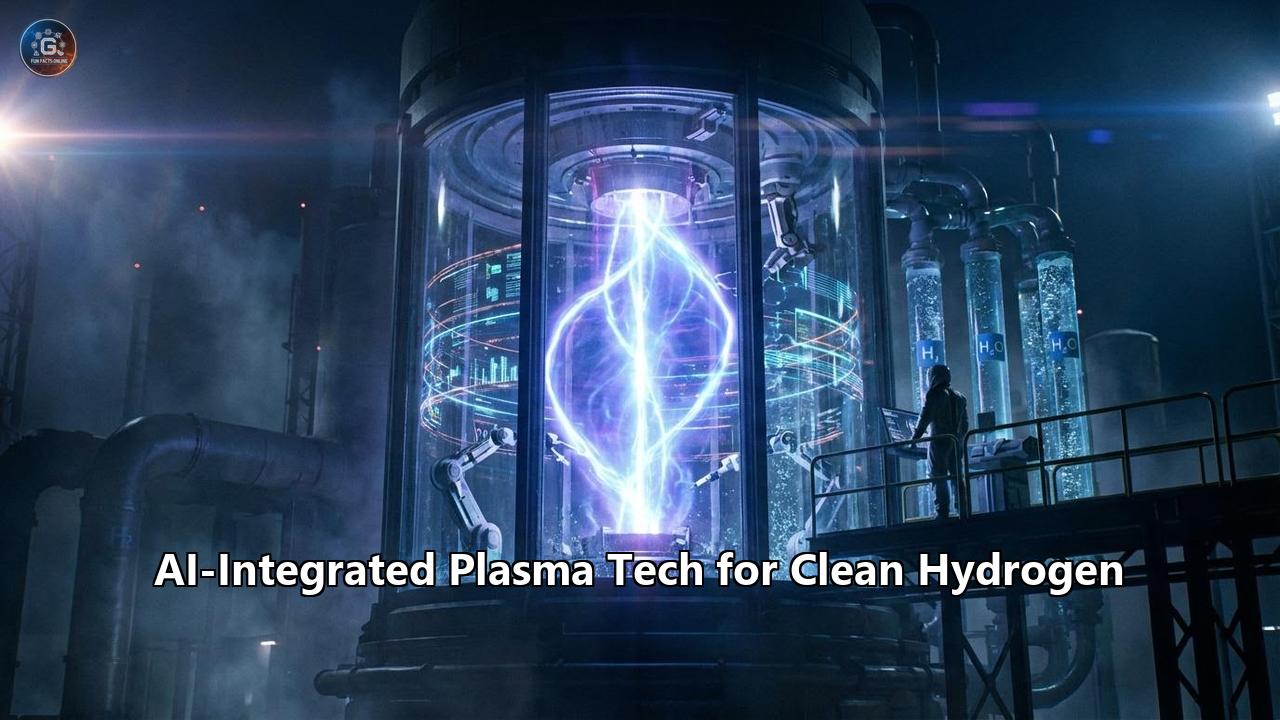
At the heart of this process is the microwave plasma reactor. Through custom-designed swirling vortex nozzles, methane gas is injected into a chamber where it is bombarded by concentrated microwave energy. This energy strips electrons from the gas molecules, igniting a glowing, highly energized plasma field. The sheer thermal and kinetic energy within this plasma environment instantly cleaves the carbon-hydrogen bonds. Yet, while the fundamental chemistry is elegant, the execution is phenomenally complex. Plasma is inherently chaotic, highly non-linear, and notoriously difficult to stabilize at an industrial scale. Microscopic fluctuations in pressure, gas flow, or electromagnetic energy can extinguish the plasma or lead to inefficient conversion rates.
This is precisely where artificial intelligence becomes the indispensable missing link. Advanced plasma systems are now being integrated with sophisticated machine learning frameworks that essentially act as the central nervous system of the reactor. Through networks of high-fidelity sensors, the AI continuously monitors a vast array of operational parameters in real time, including microwave power levels, gas feed rates, electron density, emission spectra, and plasma temperature.
Operating on a millisecond basis, machine learning algorithms dynamically optimize the reaction pathways. If the system detects a micro-fluctuation in the plasma's electron density, the AI instantaneously adjusts the microwave power and the trajectory of the swirling gas nozzles to maintain the optimal thermodynamic "sweet spot." This level of predictive control goes far beyond human capability. It maximizes the hydrogen yield, drastically enhances energy efficiency, and prevents system degradation, ensuring continuous, stable operation at commercial scales.
But the implications of AI-driven plasma tech extend far beyond just producing clean energy; it is fundamentally altering the economics of hydrogen through a dual-revenue model. In traditional hydrogen production, carbon is a costly liability—a greenhouse gas that must be captured and sequestered at great expense. In plasma pyrolysis, carbon becomes an incredibly lucrative asset.
Because the machine learning algorithms can meticulously govern the precise temperature gradients and cooling rates within the plasma reactor, they can essentially "program" how the solid carbon atoms recombine. Instead of merely producing low-grade soot, these AI-integrated reactors can tailor the synthesis of high-value functional carbon materials. Recent technological partnerships, such as a landmark Indo-Singapore collaborative project supported by the Technology Development Board (TDB) of India, are pioneering this exact approach. Pilot facilities are being designed to produce around 4 kilograms of clean hydrogen per hour alongside roughly 12 kilograms of advanced carbon nanomaterials.
The carbon output includes battery-grade graphite, carbon black, graphene, and extraordinary diamond-graphene hybrid materials. These functional nanostructures are in critical demand across the globe for electric vehicle batteries, advanced electronics, aerospace composites, and next-generation semiconductors. By commercializing these premium carbon byproducts, energy producers can entirely offset the operational costs of hydrogen production. For the first time, clean hydrogen can be produced at a net-negative cost, aggressively undercutting the economics of deeply entrenched, fossil-fuel-based grey hydrogen.
The integration of artificial intelligence into clean hydrogen technologies is also accelerating the discovery and optimization of next-generation catalysts. While non-thermal and microwave plasma can operate without catalysts, combining plasma with highly specialized metallic surfaces can further lower the energy barriers required to split molecules. Historically, discovering these catalysts was a slow, trial-and-error process confined to physical laboratories. Today, researchers are utilizing Density Functional Theory (DFT) databases combined with deep learning to screen thousands of potential materials in silico.
One major breakthrough in this domain involves Single-Atom Alloy (SAA) surfaces for methane decomposition. Machine learning models trained on quantum mechanical calculations can accurately predict the carbon-hydrogen dissociation energy barriers across a vast matrix of metal combinations. By identifying optimal atomic structures, AI pinpoints catalysts that offer uniform active sites and high selectivity, completely eliminating the formation of unwanted byproducts and significantly reducing the time and capital required for experimental testing.
Furthermore, AI-integrated plasma technology is cracking the code on one of the hydrogen economy's biggest logistical nightmares: transportation and storage. Because hydrogen gas is exceptionally light and requires massive compression or cryogenic cooling to transport, many engineers advocate for converting hydrogen into ammonia (NH3) for shipping, and then "cracking" it back into hydrogen at the destination point. Traditional ammonia cracking requires intense heat and highly expensive, rare metals like ruthenium to act as a catalyst.
Recent studies, including landmark research published in Nature Chemical Engineering, have demonstrated how AI and plasma can disrupt this bottleneck. Machine learning algorithms were deployed to computationally identify much more abundant and affordable metal alloys—such as iron-copper and nickel-molybdenum—that perform exceptionally well under plasma conditions. By utilizing plasma technology to excite the ammonia molecules, the decomposition process can occur at significantly lower temperatures than conventional thermal cracking. The AI-selected catalysts, combined with the low-temperature plasma environment, radically reduce the carbon footprint, energy consumption, and capital costs associated with decentralized, modular hydrogen production.
The intelligence of these systems does not stop at the edge of the reactor; it extends outward into the broader energy grid. To maximize the environmental benefits of plasma pyrolysis and electrolysis, the electricity powering the microwave generators must come from renewable sources like solar and wind. However, renewable energy is famously intermittent, leading to highly volatile wholesale electricity prices. Running a high-power plasma facility during a peak demand grid event could ruin the financial viability of the operation.
To solve this, advanced AI predictive simulation models utilizing Recurrent Neural Networks (RNNs) and Gated Recurrent Units (GRUs) are being deployed. These ensemble forecasting algorithms analyze massive datasets encompassing historical weather patterns, real-time grid demand, natural gas flow, and local hydrogen storage capacities. The AI predicts electricity price fluctuations with striking accuracy, allowing the plant to dynamically adjust its production schedule. When the grid is flooded with excess wind or solar power—often driving electricity prices to zero or even negative—the AI automatically throttles the plasma reactors to maximum capacity, effectively converting cheap, stranded electrons into high-value hydrogen and graphene. When grid power is scarce and expensive, the system powers down, relying on stored hydrogen to meet off-take demands. This level of systemic efficiency ensures that hydrogen production is not only environmentally clean but relentlessly optimized for lowest-cost operation.
As the global community races against the clock to decarbonize heavy industry, aviation, and maritime shipping, the synergy of artificial intelligence and plasma physics offers a profoundly optimistic path forward. We are moving beyond the era of brute-force chemical engineering into a new epoch of intelligent matter manipulation. By taming the raw, lightning-like power of plasma with the predictive precision of machine learning, we are solving multiple crises simultaneously. We are replacing planet-warming emissions with solid, high-tech carbon materials; we are circumventing the need for rare-earth metals by computationally designing synthetic alternatives; and we are harmonizing the erratic nature of renewable grids with the steady demand for chemical fuels.
AI-integrated plasma technology is no longer a theoretical concept relegated to academic journals. With international pilot projects breaking ground and heavy industries pivoting toward these integrated systems, turquoise hydrogen stands poised to aggressively capture the market. It represents a rare technological triumph where ecological responsibility and immense economic profitability are not mutually exclusive, but are instead forged together in the glowing heart of a plasma reactor.
Reference:
- https://uh-ir.tdl.org/server/api/core/bitstreams/9a0f9c10-6b69-4436-8930-53b76bf1bf2b/content
- https://solarquarter.com/2026/03/13/smart-plasma-systems-the-next-frontier-for-clean-hydrogen-and-advanced-carbon-materials/
- https://www.pib.gov.in/PressReleasePage.aspx?PRID=2239424®=3&lang=2
- https://pmc.ncbi.nlm.nih.gov/articles/PMC12006496/
- https://www.wpi.edu/news/announcements/using-ai-optimize-hydrogen-fuel-production-and-reduce-environmental-impact-wpi-research-published
- https://www.mdpi.com/3042-4011/2/3/9