
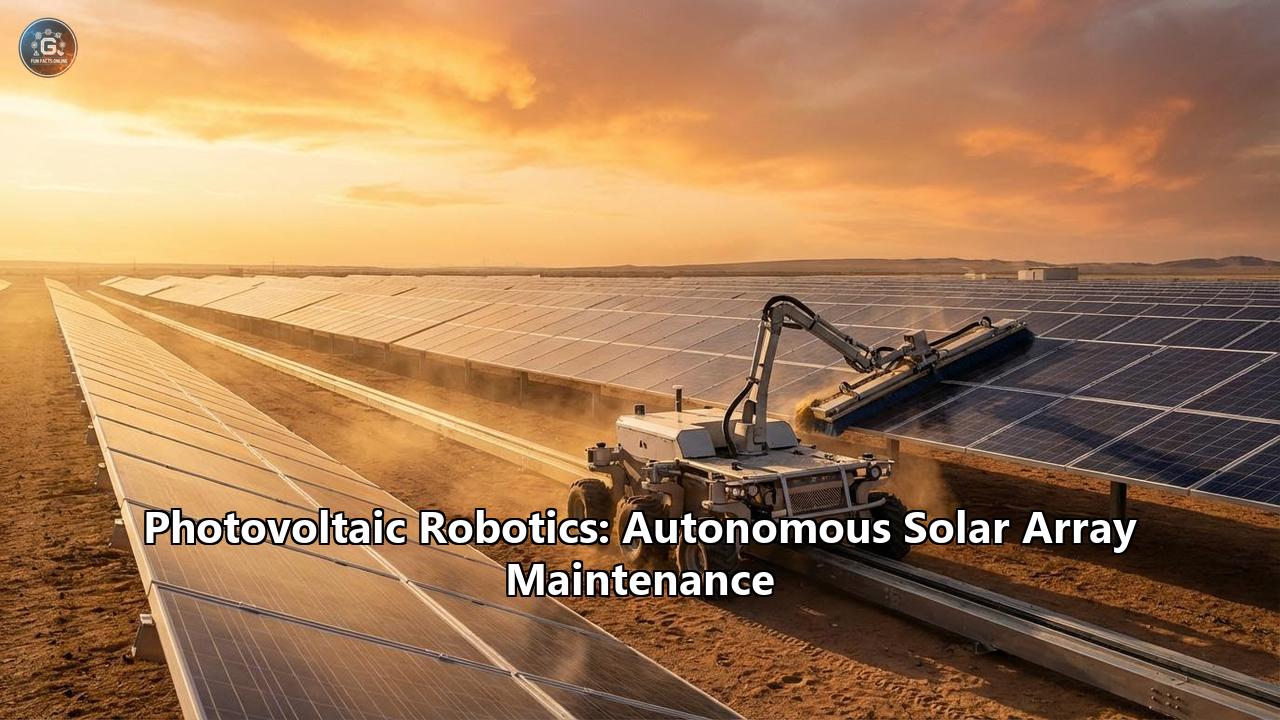
Imagine a sea of gleaming glass stretching infinitely across the sun-scorched expanse of the Mojave Desert, the arid plains of Rajasthan, or the high-altitude plateaus of Chile. These are the engines of the modern world, silently capturing photons and converting them into the electrical lifeblood that powers our cities, factories, and homes. The global transition toward renewable energy has driven solar capacity to unprecedented heights, with utility-scale solar capacity projected to surpass a staggering 1.2 terawatts by 2029. However, the silent, static nature of solar farms hides a relentless, ongoing battle against an inescapable enemy: dirt.
The global solar industry is currently facing a massive operational bottleneck known simply as "soiling." Dust, desert sand, agricultural pollen, industrial ash, and bird droppings accumulate on the delicate anti-reflective coatings of photovoltaic (PV) modules. This microscopic layer of debris acts as a physical barrier, deflecting sunlight before it can ever reach the silicon cells beneath. The consequences are staggering. Studies consistently demonstrate that soiling losses can range from 5% to over 20% depending on the climate, and in particularly harsh desert or agricultural environments, uncleaned panels can lose up to 30% of their operational efficiency.
For a massive 500-megawatt utility-scale solar farm operating on razor-thin financial margins, a 30% drop in yield equates to millions of dollars in lost revenue, fundamentally disrupting Levelized Cost of Energy (LCOE) calculations and threatening the financial viability of the asset. Historically, the industry's response to this problem was brute force: armies of manual laborers armed with hoses, squeegees, and thousands of gallons of precious water. But as solar farms have grown from small roadside installations to sprawling megaprojects covering thousands of acres, manual cleaning has become economically impractical, hazardous, and environmentally unsustainable.
Enter the era of Photovoltaic Robotics. Driven by advancements in artificial intelligence, computer vision, autonomous navigation, and advanced materials, a new breed of robotic systems is taking the helm. From waterless cleaning rovers traversing single-axis trackers to autonomous AI-powered drones scanning for thermal anomalies from the sky, the maintenance of solar arrays is undergoing a radical, automated transformation.
The Physics and Economics of Soiling
To understand the necessity of PV robotics, one must first understand the physics of a solar array. Photovoltaic cells are strung together in series. When a single cell is shaded by a concentrated patch of dirt or a heavy bird dropping, it does more than just stop producing power; it becomes a point of electrical resistance. The current generated by the other clean cells in the string is forced through this shaded cell, causing it to heat up. This phenomenon creates a "hotspot," which not only drains the power output of the entire string but can cause permanent thermal degradation, micro-cracks, and even localized fires.
The financial compounding of these undetected faults is immense. A solar string quietly delivering 18% less power because of localized soiling or a failed bypass diode represents a silent bleed on the balance sheet. Traditional maintenance strategies were entirely reactive—operators waited for a noticeable drop in output at the inverter level before sending a technician into the field to manually hunt for the problem. This reactive maintenance cycle creates costly downtime, lowers solar panel yields, and often results in emergency repairs that drain operations and maintenance (O&M) budgets.
The modern economic imperative demands proactive, continuous, and autonomous intervention. By replacing manual labor with robotic consistency, solar asset managers can shift O&M from a volatile cost center to a predictable, optimized strategy.
The Anatomy of a Solar Cleaning Robot
The modern solar panel cleaning robot is a marvel of mechatronic engineering, designed to operate in some of the most hostile environments on Earth. High UV radiation, extreme temperature fluctuations, abrasive sandstorms, and remote locations demand ruggedized, highly reliable hardware.
While designs vary, most autonomous PV cleaning robots share several core anatomical features:
1. Waterless Cleaning Mechanisms:Because the world's most productive solar farms are often located in arid, water-scarce regions, the use of wet cleaning is increasingly prohibitive. Modern robots rely on sophisticated dry-cleaning technologies. They utilize ultra-soft microfiber brushes rotating at high speeds, combined with controlled, regulated airflow and gravity, to dislodge and sweep away dust particles without scratching the panel's delicate anti-reflective coating. Some advanced models, like those developed by Airtouch Solar, even incorporate heavy wind-blowing technology to clear larger debris before the microfiber wipers engage.
2. Autonomous Locomotion and Track Navigation:Depending on the mounting structure of the solar farm, robots must navigate varied terrain. For fixed-tilt ground-mounted systems, robots often use polyurethane wheels or specialized caterpillar tracks that grip the aluminum frames of the panels. For single-axis trackers—which follow the sun throughout the day—the challenge is more complex. Companies like Ecoppia have engineered robots (such as the Ecoppia T4) specifically designed to traverse single-axis trackers seamlessly, passing over gaps and adjusting to the changing tilt of the panels.
3. Energy Independence:A PV robot would be highly inefficient if it required manual charging. Therefore, most top-tier solar cleaning robots are completely energy-independent. They are equipped with their own onboard solar panels and deep-cycle lithium-ion batteries. They rest at a docking station during the day, charging their batteries, and initiate their cleaning cycles autonomously at night to avoid casting shadows on the panels during peak generation hours.
4. IoT Connectivity and AI Brains:The true power of these robots lies in their silicon brains. Utilizing the Internet of Things (IoT), these robots are constantly connected to a centralized cloud platform. They transmit terabytes of telemetry data, including weather conditions, cleaning performance, battery health, and mechanical diagnostics. AI algorithms integrated into the cloud system allow for real-time monitoring and dynamic adjustments, optimizing cleaning schedules based on predictive weather patterns and localized soiling rates.
Leaders in the Terrestrial Cleaning Vanguard
The market for automatic solar panel cleaning robots is experiencing exponential growth. Valued at roughly $355.4 million in 2024, the global market is projected to skyrocket to over $1.2 billion by 2034, registering a Compound Annual Growth Rate (CAGR) of between 13.2% and 16.5%. This massive influx of capital has spurred fierce technological competition among several key industry leaders:
- Ecoppia: Widely regarded as the pioneer and global heavyweight in robotic solar cleaning, Israel-based Ecoppia specializes in fully autonomous, water-free cleaning for utility-scale PV sites. Their robots are utilized extensively in the Middle East and Asia, securing long-term contracts with major energy providers. Their flagship cloud-based platform translates the flood of data from the robots into actionable O&M insights, while their newer T4 models are revolutionizing the maintenance of single-axis tracker installations.
- Airtouch Solar: Another major player hailing from Israel, Airtouch provides advanced linear, water-free robotic cleaners. Their systems are notable for their wind-blowing technology that removes heavy soiling particles before micro-wiping, capable of cleaning up to 2,000 meters of panels on a single charge. They have rapidly expanded their footprint, notably signing multi-million dollar supply agreements with mega-developers like Adani Green Energy in India.
- SolarCleano: Based in Luxembourg, SolarCleano has carved out a massive niche by offering highly flexible and adaptable robotic solutions. Their F1 robot is renowned for its modularity, catering not only to massive ground-mounted farms but also to complex commercial rooftop installations where agility and lightweight design are paramount.
- Sunpure & SolaBot: Representing the massive Asian market, companies like Sunpure and Indian startup SolaBot are making significant waves with waterless, automated solutions tailored for the extreme dust environments of the Asia-Pacific region.
- Aegeus Technologies: An innovative developer focusing on automated, waterless systems that use microfiber wiping, controlled airflow, and gravity, catering to both rooftop and ground-mounted solar farms.
These companies are not just selling hardware; they are selling yield insurance. By guaranteeing that panels remain perfectly clean, they allow financial modelers to remove soiling degradation from their risk equations, instantly improving the bankability of solar megaprojects.
The Drone Inspection Revolution: AI in the Sky
While terrestrial robots keep the glass clean, a parallel revolution is occurring in the sky. Keeping a solar farm clean is only half the battle; ensuring that the underlying electrical infrastructure is sound is equally critical. A typical utility-scale solar farm can feature hundreds of thousands, or even millions, of individual panels spread over thousands of acres. Inspecting them manually on foot is a Herculean task that is time-consuming, expensive, and deeply prone to human error. Manual visual inspections typically catch obvious surface failures—like shattered glass or disconnected wires—but miss the vast majority of revenue-eroding micro-faults, covering only 10% to 25% of a PV system's potential fault surface.
The solution? Autonomous AI-powered drones.
Drones have completely transformed solar farm inspection and monitoring by bridging the gap between efficiency, safety, and actionable intelligence. Outfitted with multi-spectral payloads, these autonomous aerial vehicles can cover a 20-megawatt solar farm in just two to four hours—a task that would take a human inspector over 2,500 hours on foot.
The Sensorial Payload of a Solar Drone:- Thermal Imaging (Radiometric Infrared): This is the ultimate diagnostic tool for solar O&M. Drones equipped with high-resolution thermal cameras scan the arrays, looking for precise temperature anomalies. Because defective cells generate heat instead of electricity, they glow brightly on a thermal map. Drone thermal AI reliably detects bypass diode failures, Potential Induced Degradation (PID) patterns, string-level outages, and micro-cracks causing "snail-trail" heat signatures that are entirely invisible to the naked human eye.
- Visual RGB Imaging: High-resolution optical cameras capture detailed visuals of the panels, mounting structures, and wiring, identifying delamination, moisture ingress, vegetation encroachment, and physical impact damage.
- LiDAR and 3D Mapping: Advanced drones utilize Light Detection and Ranging (LiDAR) to shoot millions of laser pulses at the ground, creating hyper-precise 3D topographical maps of the solar farm. This is crucial for detecting subtle shifts in the mounting structures, monitoring drainage issues, and calculating precise shading angles from encroaching trees or terrain.
Capturing the data is the easy part; processing it is where the true value lies. A single drone flight over a large farm can generate tens of thousands of images. Human review of this data is a bottleneck. Instead, companies like vHive, EasyFlow, and Oxmaint feed this aerial data into advanced Machine Learning (ML) platforms.
These AI algorithms process vast amounts of visual and thermal data, utilizing techniques like background subtraction, normalization, and neural network classification. The AI automatically detects anomalies, classifies the exact type of damage, flags the severity of the issue, and drops a precise GPS pin on the exact defective module out of a million others. It has been reported that AI defect detection accuracy on thermal scans can reach an astonishing 99%.
This level of precision has a monumental financial impact. In 2025, it was reported that autonomous drone inspections generated $788 million in annual savings across PV systems.
The Software Ecosystem: Digital Twins and Predictive Maintenance
The convergence of terrestrial cleaning robots and aerial inspection drones is culminating in the creation of "Digital Twins." A digital twin is a living, data-driven virtual replica of the physical solar farm.
By layering drone inspection data, cleaning robot telemetry, IoT sensor readings from the inverters, and historical performance records into a single digital model, AI can perform holistic predictive maintenance. Instead of waiting for a part to break, predictive maintenance algorithms—such as random forests or advanced regression models—forecast potential future failures before they escalate.
For example, if a drone detects a slight thermal elevation in a specific string, and the cleaning robot reports increased motor torque when passing over that same string (indicating structural warping), the AI synthesizes this data. It then automatically generates a work order in a Computerized Maintenance Management System (CMMS). The O&M team is dispatched to fix the exact component before it fails completely and causes an arc fault. Maintenance shifts from a frantic scramble to a highly orchestrated strategy, transforming O&M from a cost center into a direct revenue enabler.
Ground-Level Challenges: Autonomous Vegetation Management
While cleaning robots manage the glass and drones manage the macro-diagnostics, another robotic force is needed on the ground: vegetation management. Solar panels need unobstructed access to the sky, but nature is relentless. Grass, weeds, and brush constantly grow beneath and around the mounting structures. If this vegetation grows high enough to cast even a small shadow on the lower edge of a panel, it triggers the bypass diodes, knocking out power generation for that entire section and causing localized thermal hotspots.
Historically, solar operators relied on herbicides (which face increasing environmental regulation and soil toxicity concerns), manual landscaping crews with weed whackers (expensive and dangerous due to the risk of striking high-voltage cables or throwing rocks at the glass), or "solar sheep" (flocks of sheep deployed to graze the site).
Today, autonomous robotic mowers are entering the PV space. Resembling ruggedized versions of robotic lawnmowers or small agricultural tractors, these machines use RTK GPS (Real-Time Kinematic positioning) and LiDAR to navigate the complex maze of steel pilings beneath the arrays. They autonomously trim the vegetation to a precise height, operating continuously to ensure that shading never becomes an issue. This ground-level automation completes the trifecta of total solar site robotics: cleaning the top, scanning from above, and clearing from below.
The Commercial Rooftop and Agri-PV Frontier
While utility-scale desert farms represent the largest total addressable market, urban and agricultural solar installations face their own unique challenges that robotics are stepping up to solve.
Commercial and Industrial (C&I) Rooftops:Massive logistics warehouses, factories, and big-box retail stores boast vast flat roofs perfect for solar. However, urban environments are rife with industrial smog, exhaust soot, and localized pollution that creates a sticky, stubborn grime on panels. Furthermore, sending human cleaning crews onto elevated rooftops introduces severe safety liabilities and OSHA compliance hurdles.
Automatic solar panel cleaning robots designed for rooftops are typically lighter, highly portable, and feature all-directional movement, allowing them to cross complex panel layouts seamlessly. Because urban grime is often stickier than dry desert sand, hybrid robots (Technology Readiness Level 5-7) that combine dry brushing with minimal, targeted water washing modes are highly effective here. These robots provide standardized, repeatable cleaning performance without the severe operational risks of manual rooftop labor.
Agri-PV (Agricultural Photovoltaics):The emerging trend of Agri-PV involves co-locating solar panels with active agriculture—growing crops beneath elevated solar arrays. Farming generates immense amounts of dust through plowing, harvesting, and fertilizer application. Solar robots in these environments prevent thick soil accumulation, ensuring that the dual-use land maintains peak electrical output without interfering with the agricultural cycles below.
Environmental Stewardship and Water Conservation
Beyond pure financial ROI, the rise of PV robotics is an environmental triumph. The solar energy proposition is fundamentally about sustainability, yet traditional maintenance practices were glaringly unsustainable.
In arid regions like the Middle East, India, and the American Southwest, water is a precious and rapidly depleting resource. A large solar farm can easily consume millions of gallons of highly purified, deionized water every year just for cleaning. Trucking this water into remote desert locations generates massive carbon emissions from diesel tanker fleets, effectively undermining the clean energy the panels are producing.
Dry-cleaning robots eliminate this paradox. By utilizing microfiber technology and airflow, they achieve a 99% cleaning efficiency with zero water consumption. Companies like Ecoppia highlight that a single year of their robotic dry cleaning saves enough water to sustain hundreds of thousands of people. Furthermore, because the robots are self-powered by the sun and remain on-site, the carbon footprint of O&M logistics—driving trucks, transporting crews, hauling water—is virtually eradicated. The solar farm becomes a closed-loop, self-sustaining ecosystem.
Future Horizons: The 2030 Vision of Autonomous Energy
As we look toward the late 2020s and early 2030s, the trajectory of photovoltaic robotics points toward complete, unmitigated autonomy. The market is projected to see several paradigm-shifting advancements:
1. Swarm Robotics and Interconnectivity:Future PV cleaning robots will not operate as isolated units but as intelligent, communicating swarms. If one robot detects an unusually heavy localized dust event (perhaps a micro-sandstorm or a flock of birds), it will communicate this data in real-time to the rest of the fleet, dynamically reallocating cleaning resources to the most affected zones before the human operators are even aware of the event.
2. Drone-in-a-Box Ecosystems:The concept of "drone-in-a-box" will become standard. Instead of a pilot driving to the site to launch a drone, heavy-duty weather-proof enclosures will be permanently stationed across the solar farm. These boxes will house the drones, manage their charging, and automatically open their roofs to deploy the aircraft on daily, AI-scheduled thermal scanning missions. The data will be beamed directly to the digital twin platform, completely removing humans from the routine inspection loop.
3. Nanocoatings Synergy:Materials science is advancing parallel to robotics. Researchers are developing ultra-hydrophobic and electrodynamic self-cleaning nanocoatings for the panel glass. When these advanced coatings are paired with robotic cleaners, the robots will require even less energy and time to clear the surface. For instance, MIT researchers have developed a waterless, contactless solution utilizing electrostatic repulsion to lift dust off the panels, a technology that could be integrated directly into the robotic traversal units.
4. Fully Unmanned Solar Facilities:The ultimate endpoint of this technological convergence is the fully unmanned solar generation facility. Sites will be built, commissioned, and then handed over to the machines. Drones will monitor the infrastructure from the sky, ground-mowers will manage the earth, and cleaning robots will maintain the glass. AI master-control systems will orchestrate the entire symphony, interacting directly with energy markets to sell power while autonomously dispatching robotic repair units to swap out degraded modules.
Conclusion: The Silent Guardians of the Grid
The shift toward Photovoltaic Robotics is not a mere luxury or a futuristic novelty; it is an absolute operational necessity. As the global footprint of solar energy expands to Terawatt scales, the old paradigms of reactive maintenance, manual labor, and water-wasting cleaning methods are collapsing under their own inefficiency.
Today’s solar panel cleaning robots and AI-powered inspection drones are the silent, tireless guardians of the renewable energy grid. They endure blistering heat, navigate endless rows of glass, and process billions of data points to ensure that every possible photon is captured and converted. By mitigating soiling losses, predicting catastrophic failures, and conserving millions of gallons of water, these autonomous systems are fundamentally altering the economics of solar power. They represent the perfect synthesis of hardware and software, ensuring that the clean energy revolution remains exactly that: clean, efficient, and infinitely sustainable.
Reference:
- https://www.vhive.ai/4-ways-ai-driven-analytics-are-unlocking-new-revenue-for-solar-operators/
- https://www.intelmarketresearch.com/robots-for-cleaning-photovoltaic-panel-market-9404
- https://www.wlsolarcleaning.com/automatic-solar-panel-cleaning-robot-for-rooftop-solar-systems.html
- https://patentskart.com/solar-panel-cleaning-robots/
- https://oxmaint.com/industries/power-plant/drone-inspection-wind-turbines-solar-farms-ai
- https://www.ecoppia.com/
- https://tracxn.com/d/trending-business-models/startups-in-solar-panel-cleaning-robots/__BCMRNLRQ-RLSHKSasfdzMJjthGjowNdcFSGTLJkGdFU/companies
- https://renewableaffairs.com/solar-panel-cleaning-robots/
- https://www.pv-tech.org/ecoppia-launches-robotic-cleaning-solution-for-single-axis-trackers/
- https://www.accio.com/business/trending-solar-cleaning-robot-2025
- https://market.us/report/solar-panel-cleaning-robot-market/
- https://tracxn.com/d/trending-business-models/startups-in-solar-cleaning-robots/__JVw3gK2I96IT2wPM6jQmUOHuncptqY9V1z2JThAhHNU/companies
- https://times.solar/drone-technology-solar-farm-inspection/
- https://easyflow.tech/ai-drone-solar-farm-inspection/
- https://aai-drones.com/the-future-of-autonomous-drones-in-infrastructure-inspection/